Housing was wildly unaffordable for half of renters in 2022, report shows

Add Axios as your preferred source to
see more of our stories on Google.
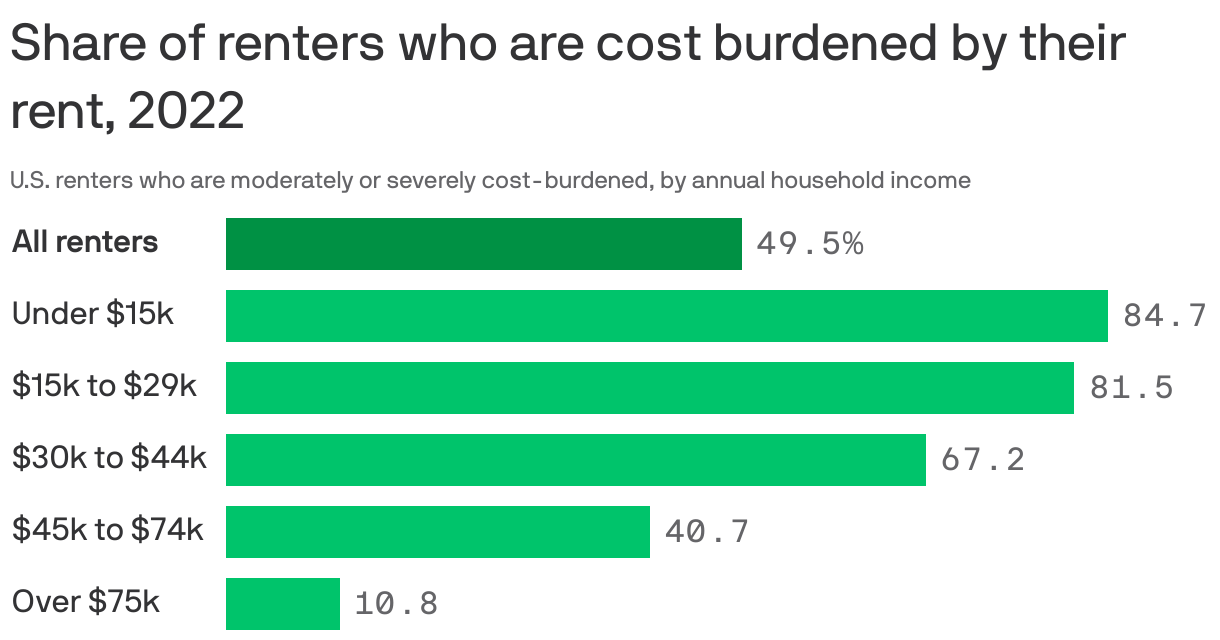
Half of all renters in the U.S. were burdened by the cost of their rent in 2022, a report released by the Harvard Joint Center for Housing Studies this week found.
Why it matters: The increasing lack of affordable housing over the past few years has plagued millions of people across the country, just as homelessness reached an all-time high last year.
Meanwhile, soaring home prices and mortgage rates pushed homeownership increasingly out of reach.
What they found: An extended period of rising rent prices during the COVID-19 pandemic "put unaffordability at an all-time high," researchers said.
- The financial strain was felt across the income spectrum, with the share of cost-burdened renters rising to 50%.
- But the burden rose the most for middle-income renter households earning between $30,000 and $74,999 annually.
By the numbers: The number of renter households spending more than 30% of their income on rent and utilities rose by 2 million in three years to a record high of 22.4 million, according to the study.
- Among them, 12.1 million people paid over half of their income for housing, with housing costs also at an all-time high.
Yes, but rent hikes have almost completely stopped after historically high increases in 2021 and 2022 during the COVID-19 pandemic, researchers said.
- In the third quarter of 2023, rent for professionally managed apartments fell to just 0.4% — down from 15.3% in early 2022.
- "This abrupt deceleration was geographically widespread, with rents even falling in some markets," lead author of the report Whitney Airgood-Obrycki said. "While the slowdown is a welcome change for renters, asking rents still remain well above pre-pandemic levels."
Between the lines: Rent increases are significantly outpacing income gains.
- In 2022, median rents were 21% higher than they were in 2001. During the same period, renters' incomes have risen just 2%.
The bottom line: Increased resources for renters during the pandemic "demonstrated that financial assistance and supports keep tenants stably housed and landlords solvent," researchers concluded.
- "As these resources have expired, however, the housing safety net is once again overwhelmed and underfunded," Chris Herbert, managing director of the Harvard Joint Center for Housing Studies, said.
Go deeper: Why renters are feeling worse about their finances than homeowners
