For expectant parents, making a leave plan can feel like putting together a confusing puzzle that might have missing pieces.
Why it matters: Employees who don't take advantage of time-off policies could miss out on payments and benefits crucial for recovery and family bonding.
Medicare Advantage beneficiaries account for a growing share of patients admitted to hospitals, making facilities increasingly reliant on private insurers and subject to pre-treatment approvals or claims denials, according to a new KFF analysis.
Why it matters: The findings help explain the growing tensions between hospitals and insurers that have seen some health systems cancel their Medicare Advantage contracts, citing low reimbursements and administrative hassles.
The Federal Trade Commission is expanding its scrutiny of the health care industry to the growing dialysis market and investigating whether dialysis giants DaVita and Fresenius Medical Care are squeezing out competitors by restricting kidney doctors from changing jobs.
Why it matters: The antitrust probe is part of a wider FTC focus on noncompete agreements that are often used in the health care labor force butthat the agency says stifle business innovation.
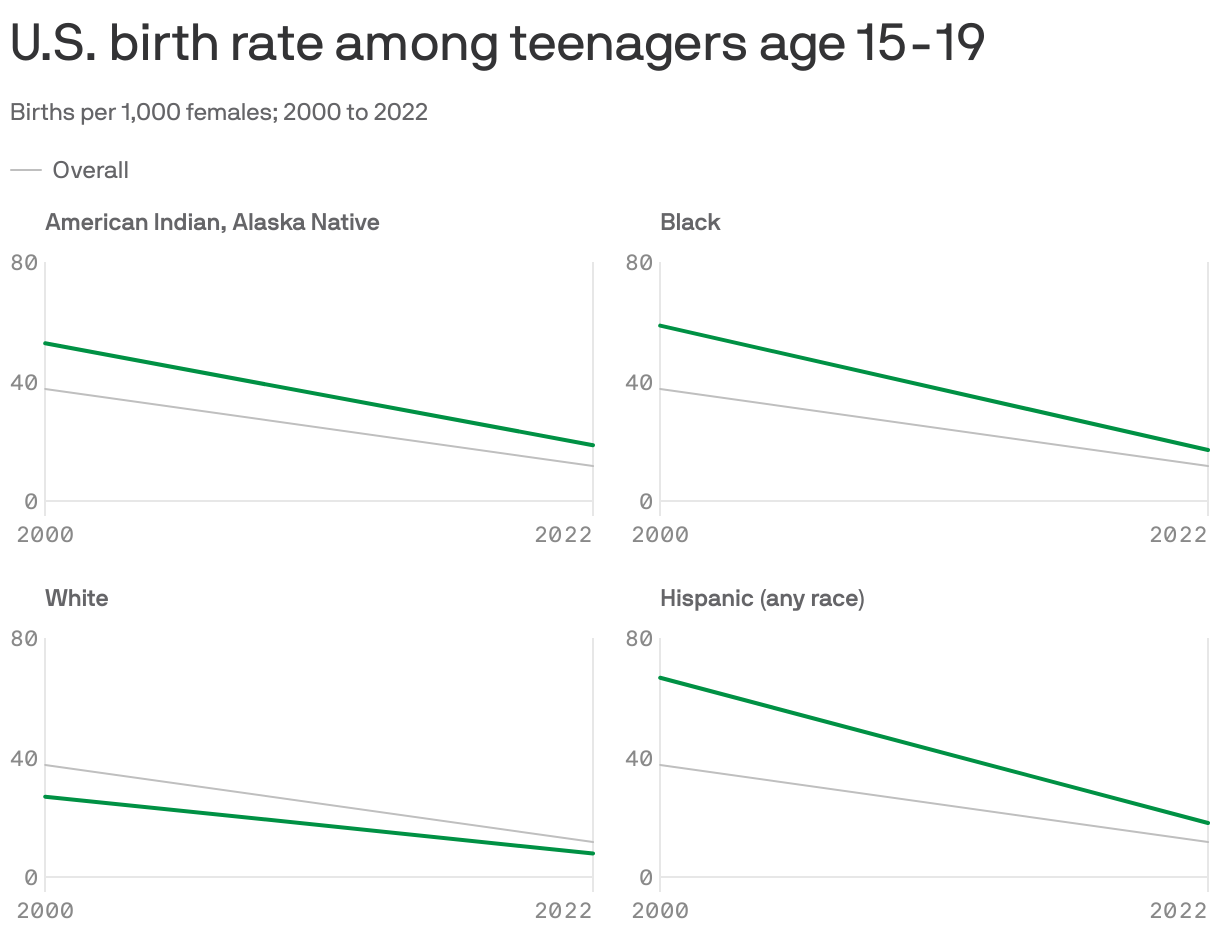
Data: National Vital Statistics System; Chart: Axios Visuals
Teen birth ratesin the United States have continued to decline significantly across the board since 2000, but racial and ethnic disparities still exist, federal data released Wednesday shows.
Why it matters: Decreasing teen births can positively affect adolescents' physical and mental health, lifetime income and education attainment, according to research organization Child Trends.
Taking extended time off to welcome a newborn is crucial for the health of parents, babies and businesses, but the U.S. still has no federal law mandating paid family leave.
Why it matters: Six months leave or more — paid — is associated with significantly better physical and mental health outcomes for mothers, researchsuggests.
The Centers for Disease Control and Prevention on Monday announced it is rolling back new requirements for bringing dogs into the U.S. from countries without a high risk for dog rabies.
Why it matters: The CDC eased the requirements, which take effect Aug. 1, following public pressure from senators, Canadian government officials and some animal advocacy groups.
Critics said the original rules could make veterinary care more difficult for people living in cities that border the U.S. and Canada, and would limit a crucial source of companionship for truckers.
About 20% of cross-border truckers travel with dogs, according to the Canadian Trucking Alliance.
State of play: Dogs that have only been in rabies-free or low-risk countries for the past six months will now only need to appear healthy and have a completed dog import form in order to enter the U.S., the CDC said.
That's a change from the CDC's announcement in May that all dogs entering the U.S. from other countries must be at least 6 months old and have a microchip, as well as the completed import form.
The U.S. eliminated dog rabies in 2007, but the virus still exists in other countries around the world. Unvaccinated dogs in the U.S. can contract rabies from wild animals.
Regulators in 2021 temporarily halted importing dogs from 113 countries amid rabies concerns.
The bottom line: Dogs coming into the U.S. from high-risk countries that have not beenvaccinated against rabies in the past six months will not be allowed into the country, the CDC says.
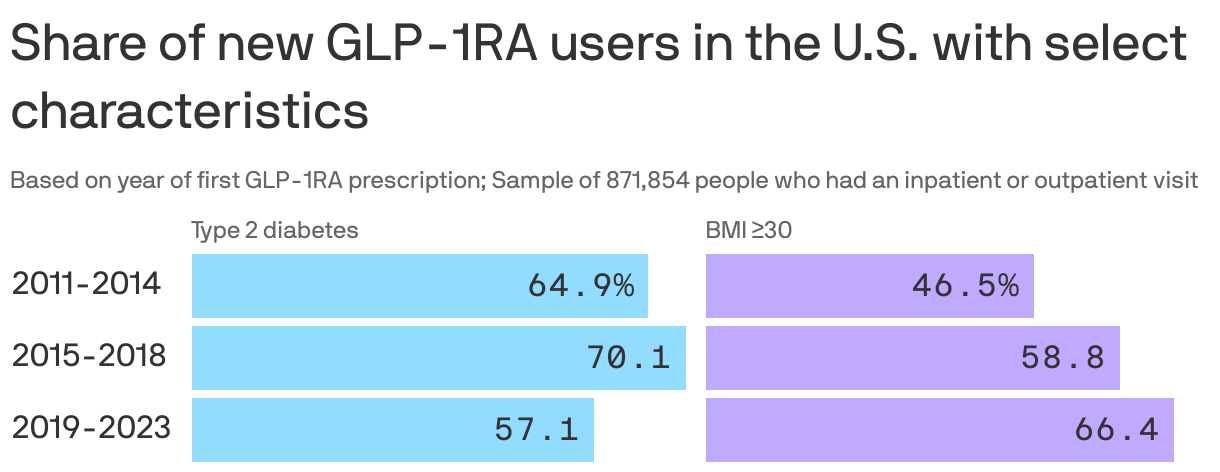
Data: Yeo and Rezaie, et al., 2024, "Shifting Trends in the Indication of Glucagon-like Peptide-1 Receptor Agonist Prescriptions: A Nationwide Analysis"; Note: BMI as measured within year before first GLP-1RA prescription. Patients with both Type 2 diabetes and a BMI ≥ 30 are included in each characteristic's share; Chart: Axios Visuals
More new prescriptions for blockbuster GLP-1 weight-loss drugs were written in the past few years for people with obesity than with Type 2 diabetes — an accelerating trend that may worsen drug shortages and health disparities, according to a study in the Annals of Internal Medicine.
Why it matters: It's the latest evidence of how large numbers of Americans are embracing drugs developed for the treatment of diabetes for weight loss and raising cost and equity concerns.
A Pfizer-led effort to develop the first new Lyme disease vaccine in more than two decades passed a key milestone last week, putting the drug on a timeline to potentially hit the market in 2026 if trial results are favorable.
Why it matters: Climate change is driving the proliferation of ticks and transforming Lyme disease from a summertime nuisance into the most common vector-borne illness in the Northern Hemisphere, affecting an estimated 476,000 people in the U.S. annually.
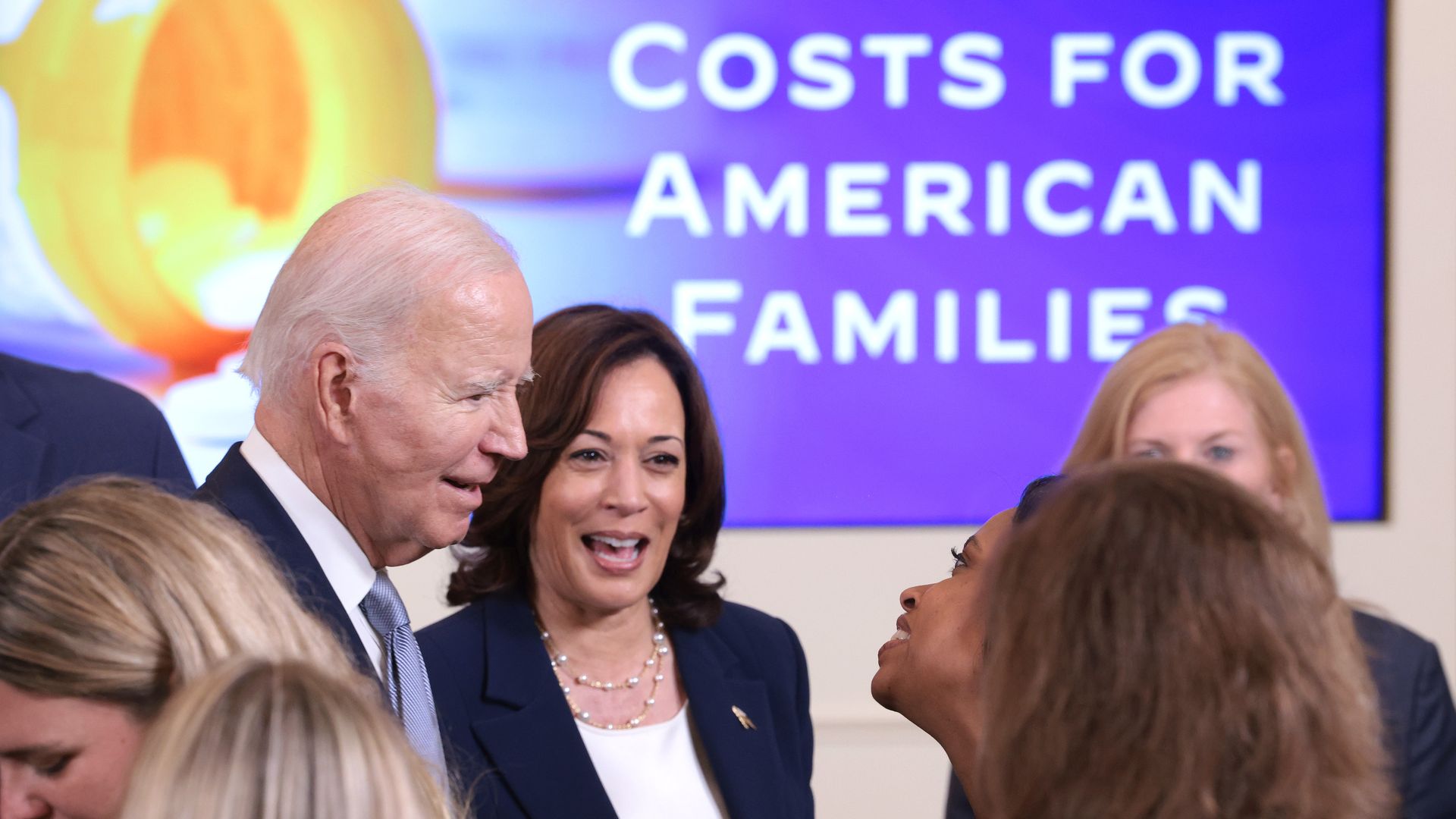
Vice President Kamala Harris is expected to pick up President Biden's policy torch as the presumptive Democratic presidential nominee, but the reality is that she's stepping into a role leading the party at a time when it's biggest long-term health care goals have to some extent been realized.
Why it matters: Should Harris clinch the nomination, she likely won't have the time — nor the political incentives — to develop much of a health care policy agenda of her own before November.










/2024/07/22/1721677949348.gif?w=3840)