Harris' chance to forge a new Dem health agenda


Add Axios as your preferred source to
see more of our stories on Google.
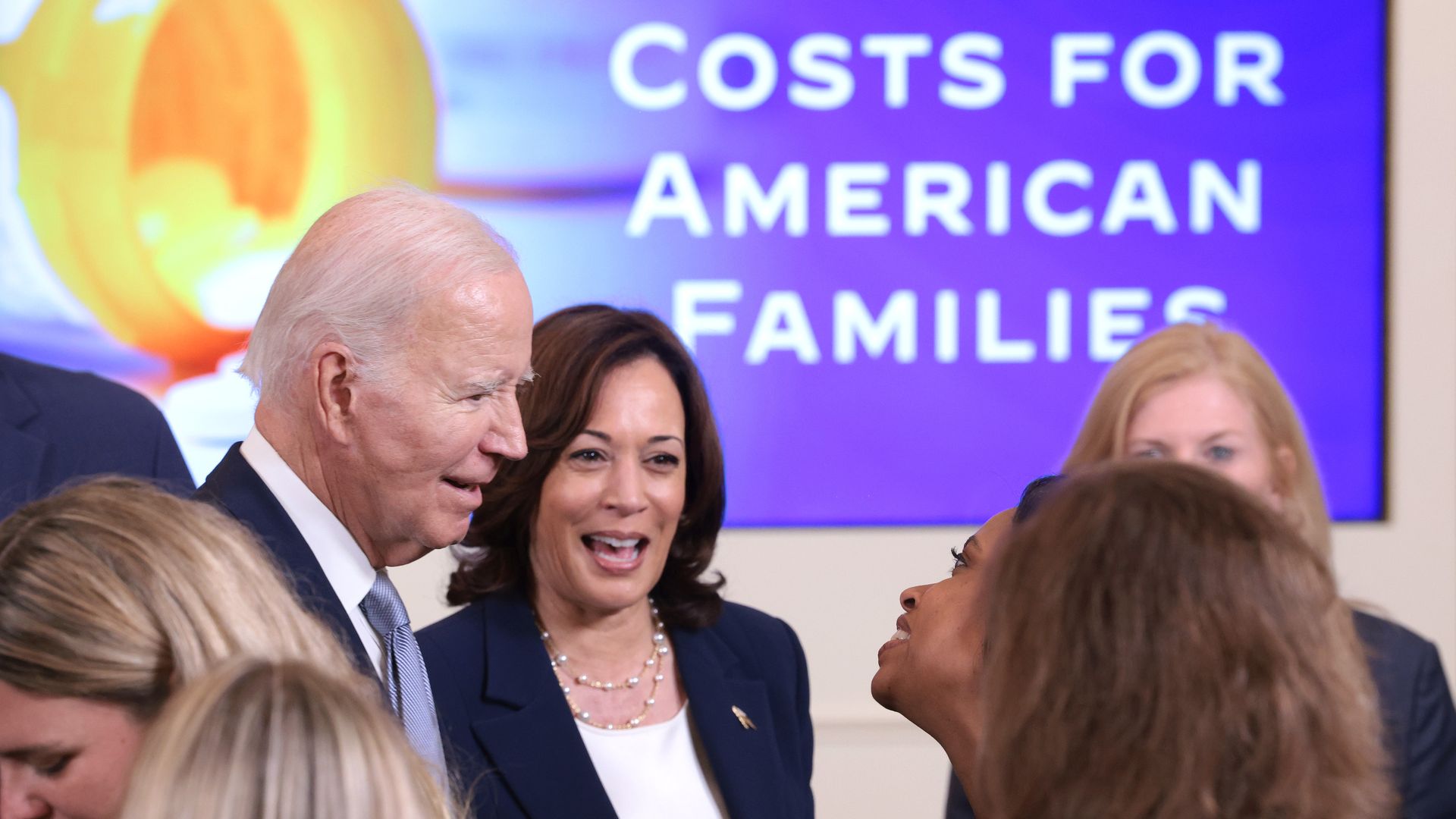
President Biden and Vice President Kamala Harris at a 2023 event promoting lower health costs. Photo: Win McNamee/Getty Images
Vice President Kamala Harris is expected to pick up President Biden's policy torch as the presumptive Democratic presidential nominee, but the reality is that she's stepping into a role leading the party at a time when it's biggest long-term health care goals have to some extent been realized.
Why it matters: Should Harris clinch the nomination, she likely won't have the time — nor the political incentives — to develop much of a health care policy agenda of her own before November.
- But she'd become the standard-bearer at a time when transformations in health care are pushing a new era of policymaking, giving Harris an opportunity to eventually create an agenda that's more uniquely hers.
The big picture: Biden had been running on what he called a "finish the job" agenda, which featured extending the scope of Medicare's price negotiations with pharmaceutical companies, further reducing the uninsured rate and renewing beefed-up Affordable Care Act subsidies when they expire next year.
- Harris is expected to largely adopt this plank as her own.
- "I don't think there is a need, desire or even an advantage to striking out with a brand-new big vision," said Democratic health care consultant Chris Jennings.
- "While she obviously will choose her own personal priorities within the existing Biden-Harris agenda to highlight, she will likely conclude it is best to build on, not run away from, what has been a very successful record," he added.
Yes, but: The country faces several looming health care crises, including an aging population, workforce shortages, a dearth of rural health care providers, a worsening drug-overdose epidemic and a youth mental health crisis.
- And perhaps most prominently, even as Democrats have inched toward their goal of universal coverage — getting closer than ever under the Biden administration — the cost of care has made it inaccessible to a large share of even insured Americans, making their coverage less meaningful.
- A tidal wave of new scientific and technological innovation is also poised to swamp the existing regulatory and payment systems.
- This evolving on-the-ground reality has, in many ways, yet to dominate political agendas, leaving the next generation of political leadership an opening to evolve and own a new set of goals.
Between the lines: Harris could also tack left, which would be consistent with her record before joining the Biden administration.
- Harris famously signed onto Sen. Bernie Sanders' Medicare for All bill when she joined the Senate in 2017 but pulled back during her 2020 presidential bid.
- Her version of Medicare for All straddled the line between Sanders' plan and a public option and allowed private insurers to offer their own Medicare plans that adhered to certain requirements.
- People younger than 65 could buy into Medicare immediately, but the plan would have a 10-year phase-in to help lower the cost. Harris backed taxing the wealthy to pay for the plan.
Flashback: As a presidential candidate, Harris also endorsed the use of "march-in rights" to break the patent on certain drugs to help introduce competition and lower the price when manufacturers were price-gouging.
- Biden has taken some steps toward using march-in rights, including releasing a framework for when they can be used but has not actually exercised the power on any drug.
- Like many Democrats, Harris has also touted the Inflation Reduction Act's ability for Medicare to negotiate drug prices and embraced the $35 insulin cost cap.
What they're saying: TD Cowen analyst Rick Weissenstein said there isn't much for Harris to do in the way of big items, with the exception of reupping calls on Congress to renew enhanced Affordable Care Act exchange subsidies.
- "There isn't that much daylight" between Harris and former President Trump on drug pricing, he added, noting a Medicare for All push won't get any traction.
One area where Harris is certain to make an immediate difference is abortion rights — a subject Biden never felt comfortable leading with that barely rated a mention in his State of the Union addresses or last month's presidential debate.
- Harris has been on a "Fight for Reproductive Freedoms" speaking tour and visited a Minnesota abortion clinic earlier in the cycle. She's blamed Trump directly for the overturning of Roe v. Wade and referred to the state abortion curbs that popped up in its aftermath as "Trump abortion bans."
What we're watching: During her time as attorney general of California, Harris was very active in pursuing antitrust health care cases — a background that could come in handy during a potential presidency.
- She was instrumental in putting together the landmark Sutter Health consolidation case which investigated whether market concentration affected prices.
- Harris also led California in joining a Department of Justice antitrust case that blocked the insurers Anthem and Cigna from merging.
- "Issues that play to her strength [beyond reproductive health] could include supporting policies that reduce cost burdens that sandwich generation caregivers of children and elderly face, improve on our shameful maternal and child health record, and address anti-competitive practices in overly consolidated health care markets," Jennings said.
