Iowa's abortion ban, one of the nation's strictest, takes effect

Add Axios as your preferred source to
see more of our stories on Google.
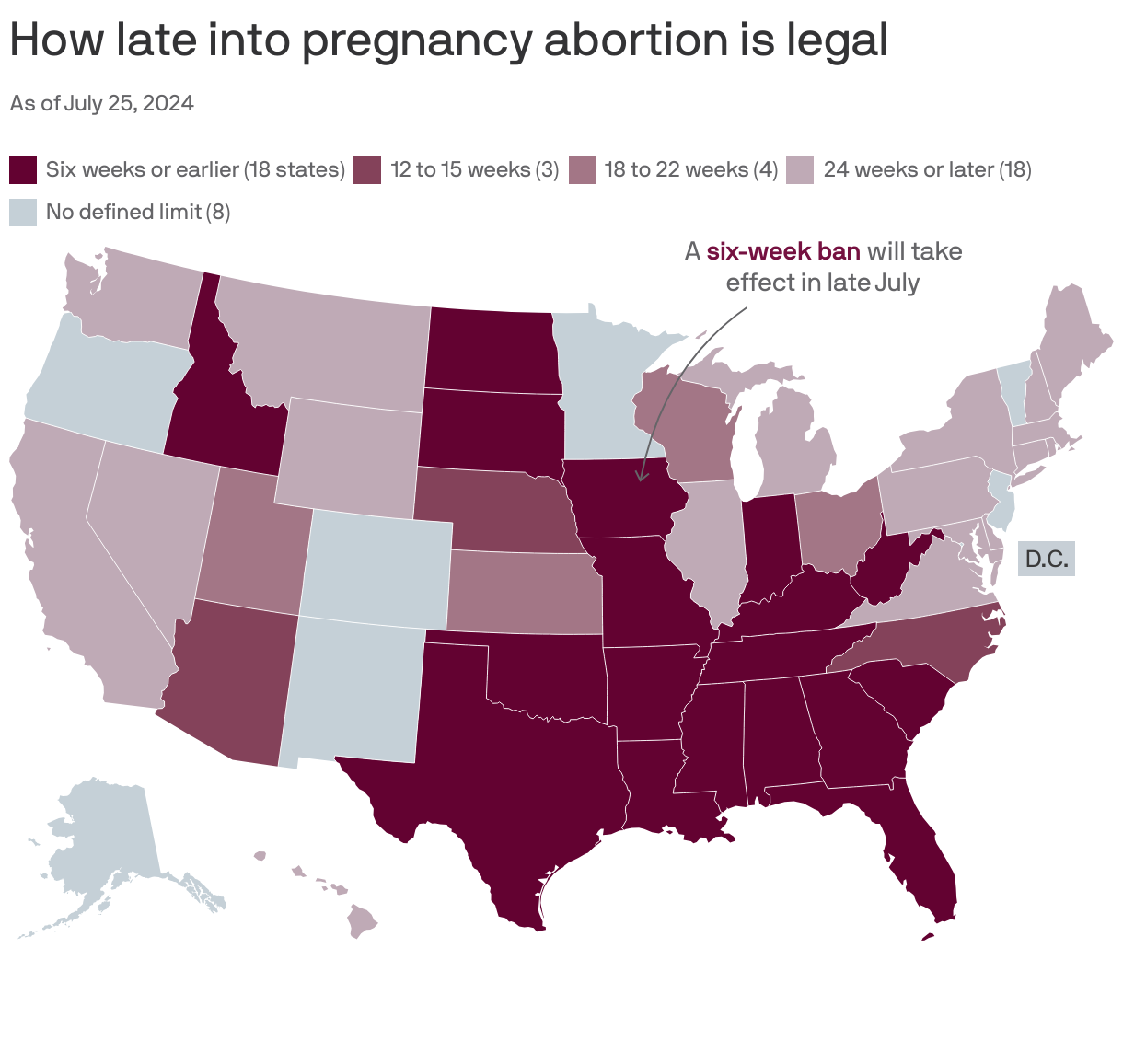
One of the strictest abortion bans in the nation came into force in Iowa on Monday.
Why it matters: Most abortions are now prohibited after about six weeks of pregnancy, with exceptions in the cases of rape, incest or to save the life of the patient.
- Until now, abortion in Iowa has been available until up to about 22 weeks of pregnancy.
Driving the news: Iowa joins states including Florida, South Carolina and Georgia in banning abortion when cardiac activity is detected in an embryo.
- With Iowa, 18 states in total have laws banning nearly all abortions after about six weeks gestation.
Catch up quick: Last month, the Iowa Supreme Court reversed a temporary injunction blocking the most recently passed law. Last week, it denied Planned Parenthood of the Heartland's petition for rehearing its case.
- A district court judge ruled that the current injunction blocking the law would lift at 8am Monday.
State of play: Planned Parenthood has increased abortion capabilities in surrounding states, including Nebraska and Minnesota, the Iowa Capital Dispatch reports.
What they're saying: Iowa Republican Gov. Kim Reynolds issued a statement calling the latest decision "a victory for life," saying she remains committed to supporting women in planning for motherhood.
The other side: "Women will die" because of the new law, Iowa Democratic Party Chair Rita Hart, told the Dispatch.
- "We know that Iowans will now face unjust and, for some, impossible obstacles in getting abortion care," Rita Bettis Austen, legal director for the ACLU of Iowa, said in a news conference last month.
Zoom in: The earliest most women know they're pregnant is at four weeks, giving little time to consider options and schedule appointments, Sonia Suter, a law professor at George Washington University Law School, tells Axios.
- "That's why these are effectively like abortion bans," Suter says.
Flashback: Iowa Republicans passed a similar "fetal heartbeat" law in 2018, but it was struck down by a district court judge who cited a past state supreme court ruling that had declared abortion a state constitutional right.
Yes, but: The legal landscape changed after Roe v. Wade, which granted federal abortion protections, was overturned in 2022.
- Reynolds called a special one-day legislative session in July 2023 during which her party once again passed a "fetal heartbeat" law.
Editor's note: This story has been updated to include a quote from Sonia Suter, and to reflect that the ban came into effect on Monday morning.
