Feds push farmworker vaccines to prevent bird, seasonal flus from mingling

Add Axios as your preferred source to
see more of our stories on Google.
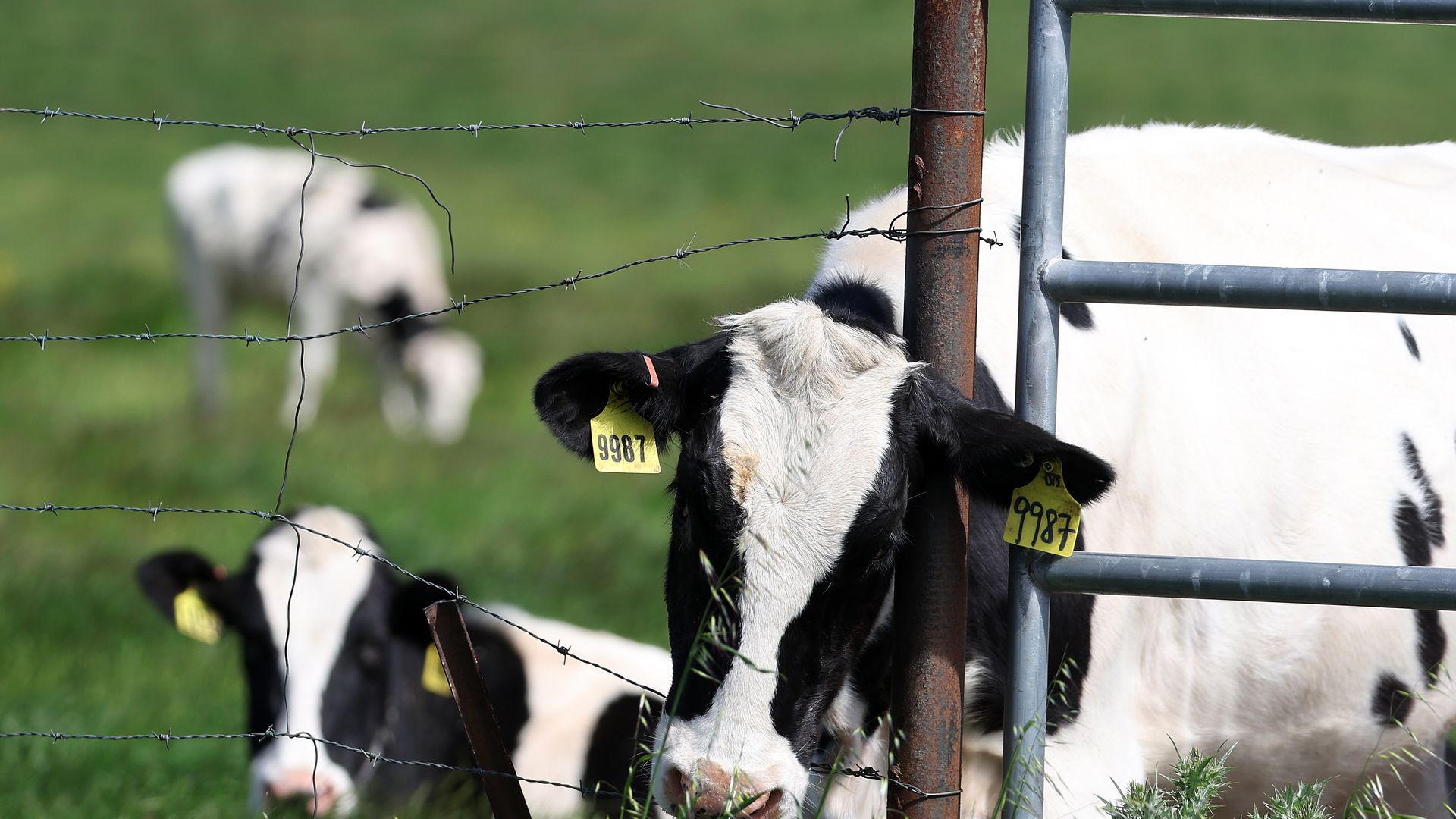
Photo by: Justin Sullivan/Getty Images
The federal government is pouring money into getting more farmworkers vaccinated to prevent them from being infected by the seasonal flu and bird flu viruses at the same time.
Why it matters: Officials said the mitigation efforts part of a wider effort to reduce a "theoretical" risk that the viruses could mix and become more transmissible in humans.
- The seasonal flu vaccine will not prevent infection against bird flu but officials say the primary goal is to prevent severe illness in workers who work closely with livestock.
- The Centers for Disease Control and Prevention say the risk to the general public from the virus remains "low."
Driving the news: Officials announced on Tuesday a $5 million allocation to help states with outbreaks of bird flu in dairy farms to increase the uptake of seasonal flu vaccinations among livestock workers ahead of the upcoming respiratory virus season.
- Of that funding, $3 million is aimed at helping implementation, such as holding educational or vaccination events at known social gatherings of livestock workers and $2 million is for the vaccines themselves.
- Officials estimate there are roughly 200,000 livestock workers in the U.S. and, if they were to follow vaccination patterns of the general population, roughly half might get a shot. The goal is for everyone to get vaccinated, officials said.
- The federal government is also allocating $4 million for the National Center for Farmworker Health to boost training and education about H5N1 and work with partners to improve access to training, testing, treatment, PPE and the seasonal flu shot.
"Such dual infection, while rare, could potentially result in an exchange of genetic material between the two different influenza viruses," Nirav Shah, principal deputy director at Centers for Disease Control and Prevention, said in a call with reporters on Tuesday.
- "In theory, reassortment could lead to a new influenza virus that could pose a significant public health concern, a virus that has the transmissibility of seasonal influenza and the severity of H5N1," Shah said.
- He pointed to an example in 2009 where the H1 virus, a close cousin of the currently circulating H5 virus, was thought to have emerged from a genetic reassortment of influenza A in pigs.
- "We want to do everything we can to reduce the risk that the virus may change because of this co-infection and reassortment," he said.
