U.S. will pay Moderna $176M to create bird flu vaccine

Add Axios as your preferred source to
see more of our stories on Google.
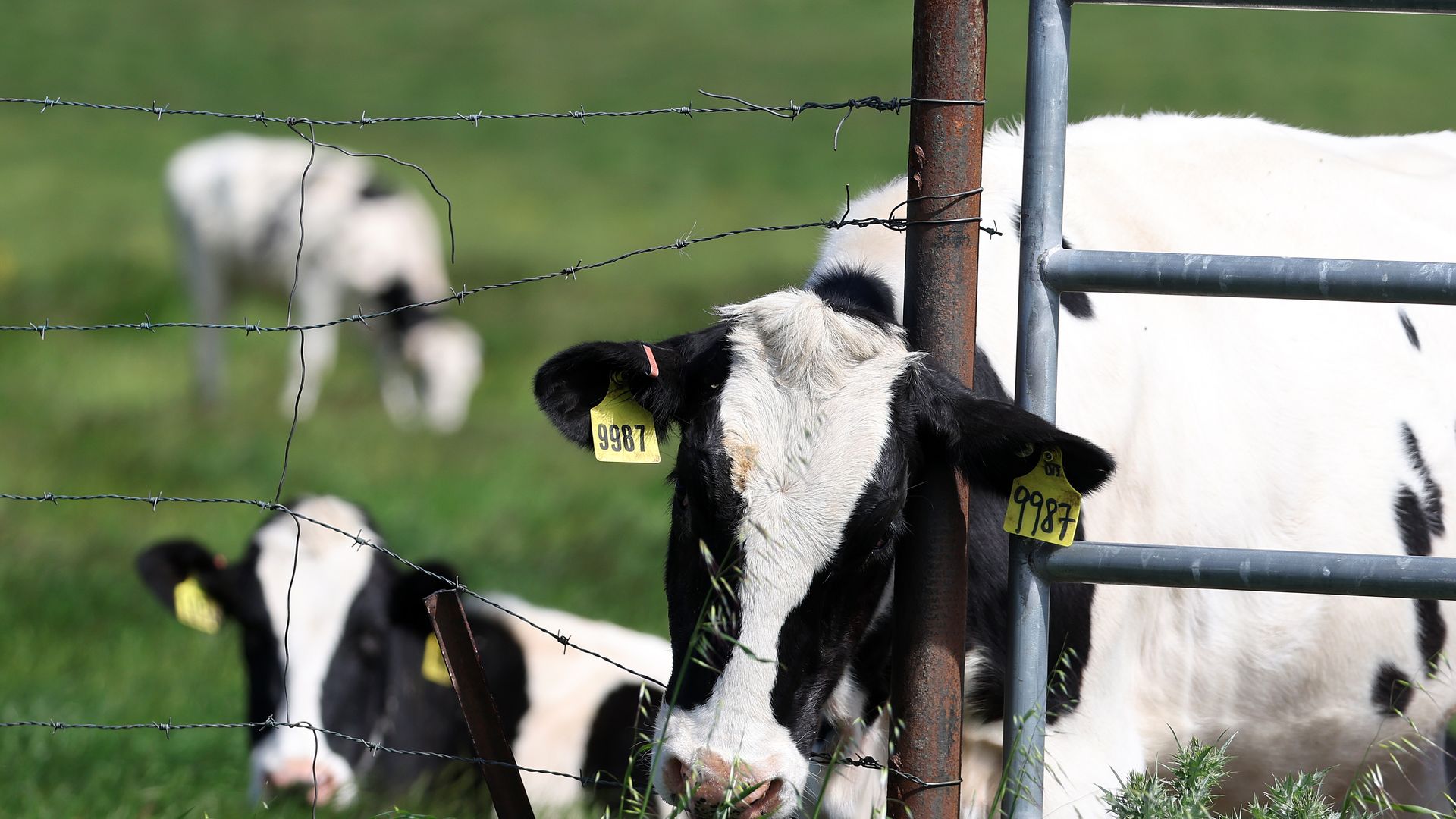
Photo by: Justin Sullivan/Getty Images
The U.S. government has awarded vaccine maker Moderna a $176 million federal contract to help create a vaccine against pandemic influenza for people as concerns rise about a bird flu outbreak in cattle on U.S. dairy farms.
Why it matters: There is no evidence the virus is spreading from human to human and the risk for the general public is still considered low, but that could change if the virus were to evolve.
- Three dairy workers have been confirmed to be infected since the outbreak began in March but experts say that figure will grow.
Catch up quick: Funds from the Biomedical Advanced Research and Development Authority (BARDA) will support the late-stage development of an mRNA-based vaccine that uses the same technology as Moderna's COVID-19 vaccine developed at the height of the global pandemic.
- Moderna has a candidate bird flu vaccine in phase one trials and data about its effectiveness should be available coming weeks, Health and Human Services Assistant Secretary for Preparedness and Response Dawn O'Connell said during a call Tuesday with reporters.
- If the vaccine candidate is determined safe and effective, a phase three trial is expected to begin in 2025, O'Connell said.
- The contract between BARDA and Moderna has an option to accelerate development "if it looks like we're starting to see some pressure regarding what is happening with the dairy cows and starting to get extraordinarily concerned about additional human cases, severity of human cases, human-to human-transmission," O'Connell said.
What to watch: The first doses of an existing vaccine against bird flu that uses a traditional vaccine platform are expected to be complete later this month. The federal government contracted CSL Seqirus to produce 4.8 million doses of the vaccine.
- Officials confirmed they are considering making the first doses of the traditional vaccine available to farm workers who are at higher risk of exposure to the virus but the finished doses would need to undergo final FDA and CDC approvals.
- "At this point, we remain extraordinarily watchful," O'Connell said, adding the Administration for Strategic Preparedness and Response is "working very closely with our other public health partners and trying to understand if and when we should move these vaccines from the lines and out into deployment."
- Among the considerations is whether other methods, such as increased use of anti-virals in cows may be more effective than human vaccine campaigns, which may have low uptake.
The big picture: The U.S. Department of Agriculture and Food and Drug Administration also released a study on Tuesday confirming flash pasteurization of milk destroys the bird flu virus, confirming the ability to keep dairy products safe.
- Federal officials reiterated that individuals should continue to avoid consuming raw milk products.
