New data reveals Americans demand caregiving solutions

A message from: Pivotal Ventures
Caregivers power the U.S. economy, but insufficient investment in the care system forces families — especially women — to bear unsustainable costs.
What you need to know: A recent survey commissioned by Pivotal Ventures and Bipartisan Policy Center Action, and conducted by Morning Consult, reveals the widespread demand for caregiving solutions.
Why it's important: Caregivers — whether they are parents, adult children caring for aging parents or partners supporting loved ones living with disabilities — play a vital role in our society. Yet, their invaluable contributions frequently go unrecognized.
- Research shows the average caregiver spends 45 hours each week on unpaid care, often in addition to another full-time job.
The deets: Two in three caregivers surveyed say that being there for their loved ones has impacted their finances.
- Over a third reported they've had to accrue credit card debt due to their caregiving responsibilities.
- Plus, plus, plus: Caregiving is one of the main reasons women — who constitute 57% of surveyed caregivers — are forced to cut back at work or leave their positions altogether.
These challenges can cost the U.S. economy billions of dollars every year.
Here's the deal: A robust caregiving system is crucial for economic growth, gender equality and societal well-being.
The positive news: There are proven solutions to the care crisis, and, as data from Morning Consult shows, Americans are demanding change from leaders across sectors such as government, business and technology.
🧑⚖️ The policy case
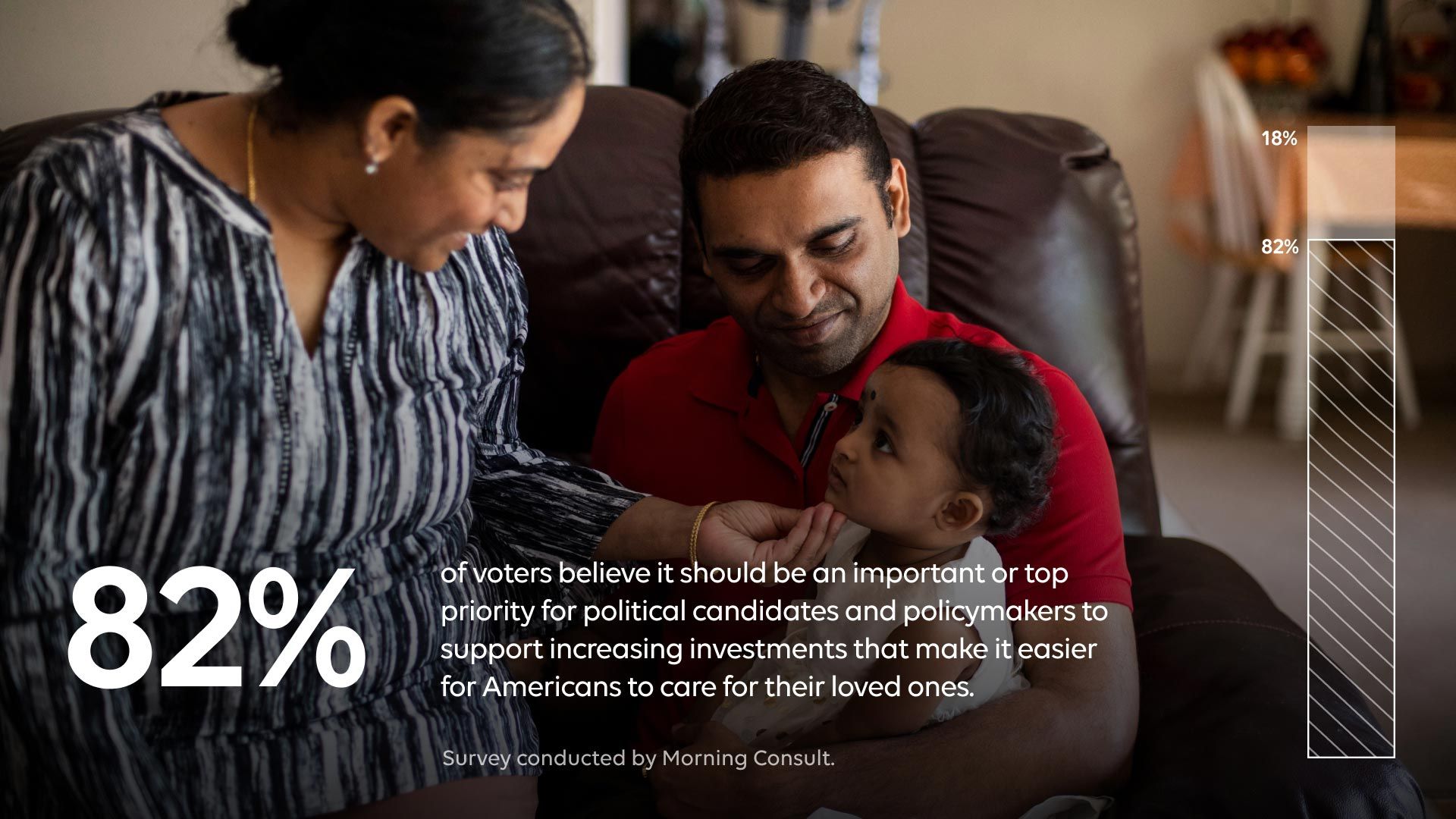
82% of U.S. voters across party lines say it should be an important or top priority for political candidates and policymakers to support investments that make it easier for Americans to care for their loved ones.
- 67% of caregivers think the government needs to do more to address the needs, challenges and financial costs of being a caregiver.
- 64% of voters say they would be somewhat or much more likely to vote for a political candidate who pledges to make caregiving easier and more affordable for American families.
The solution: Public officials should enact policies to support families, build a modern caregiving system and strengthen the U.S. economy. The Morning Consult survey found high support across party lines for policies including:
- Government tax credits or subsidies to make caregiving more affordable.
- A national paid family and medical leave policy.
💼 The business case
Americans don't just expect more support from their elected officials, but also from their employers.
Worth a mention: Child care and other caregiving support for employees are now must-haves for businesses that want to recruit and retain top talent and keep pace with global competitors.
- Pivotal's survey found that for 65% of registered voters, caregiving benefits would be very or somewhat important to their decision to accept a job if it were offered today.
The challenge: Despite one-third of employed voters being caregivers, caregiving benefits are uncommon.
- Just 36% of those surveyed said their employer offers paid family caregiving leave, while even fewer said their employer offers other types of caregiving benefits.
- To illustrate the impact, Harvard research shows that 73% of U.S. employees have some type of current caregiving responsibility.
The impact: Employee turnover costs businesses in the U.S. more than $1 trillion every year. Helping employees with child care and other caregiving needs could save employers more than it costs.
The proof: In a review of five companies, the return on investment of providing child care benefits reached up to 425%, according to a report by Pivotal partner Moms First.
💸 The innovation opportunity
There's a huge under-tapped market opportunity for investors and entrepreneurs to create products and services that make caregiving easier and more joyful for everyone.
The breakdown: Americans spend $648 billion on care every year, according to a landmark report from The Holding Co., created in partnership with Pivotal.
- Caregivers also control $6 trillion of household income.
What to expect: The care economy is only going to get bigger, and now is the time for funders, founders and innovators to bring their ideas and resources to the table.
The takeaway: Today's caregiving crisis is an issue that impacts families, businesses and the broader economy — and one that can be addressed with increased investments and policy changes.
- "It's time that our leaders understand what women and families have grasped for decades: Care is an issue that affects everyone," says Renee Wittemyer, Pivotal's VP of Program Strategy.