Patients who are operated on by female surgeons are less likely to experience future complications than those treated by male surgeons, two studies looking at cases in Canada and Sweden found.
Why it matters: Though women now make up more than half of medical school enrollments in the U.S., they remain vastly underrepresented in surgical professions.
The Biden administration on Thursday announcedit's providing an additional $450 million toward expanding overdose prevention strategiesto beat back an epidemic killing more than 100,000 Americans each year.
Why it matters: The new money could help address system-wide failures that experts say have allowed overdose deaths to soar in recent years, such as limited treatment options, housing services and data to track the crisis.
The Omicron wave of the pandemic was the deadliest for cancer patients, reinforcing how much high-risk individuals can succumb to COVID-19 strains that pose less severe threats to the rest of the population, according to research inJAMA Oncology.
What they found: Mortality for cancer patients overall was 4% higher during the winter Omicron surge that peaked in January 2022 compared with when the original, or wild type, lineage of the virus was peaking in January 2021.
Influential conservative policy groups are sketching out health care plans for a potential Republican administration over a year before the election.
Why it matters: Republicans have moved on from "repeal and replace" — the Affordable Care Act didn't even get a mention in the first GOP presidential debate last week —but still haven't settled on new health care agenda.
The Biden administration is ordering states to check if kids are falling through the cracks in their Medicaid eligibility systems and to pause procedural disenrollments if those systems are faulty.
Why it matters: Federal health officials on Wednesday said a "number of states" are using automatic renewal systems that are not properly checking eligibility data.
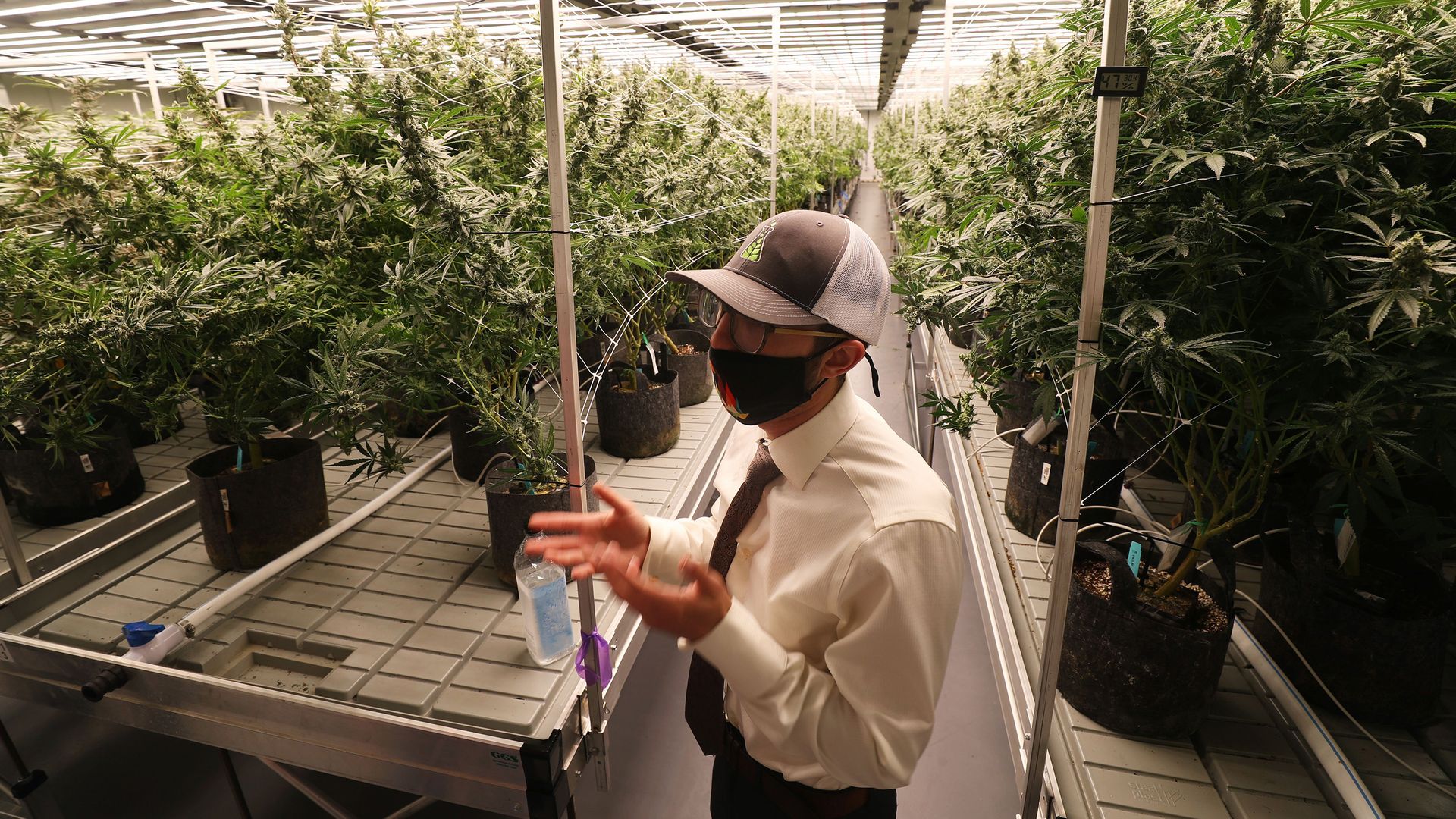
Officials with the Department of Health and Human Services (HHS) recently recommended the Drug Enforcement Administration (DEA) to move marijuana to a lower-risk category under the Controlled Substances Act.
Why it matters: Easing federal restrictions on marijuana could eliminate some of the hurdles facing the country's growing cannabis industry, such as access to banking services, and would potentially allow it to expand, according to Bloomberg, which first reported on HHS's recommendation.
Indeed, the online job search company, is offering transgender employees who want to relocate for care or support a $10,000 benefit to cover expenses, the company confirmed to Axios on Wednesday.
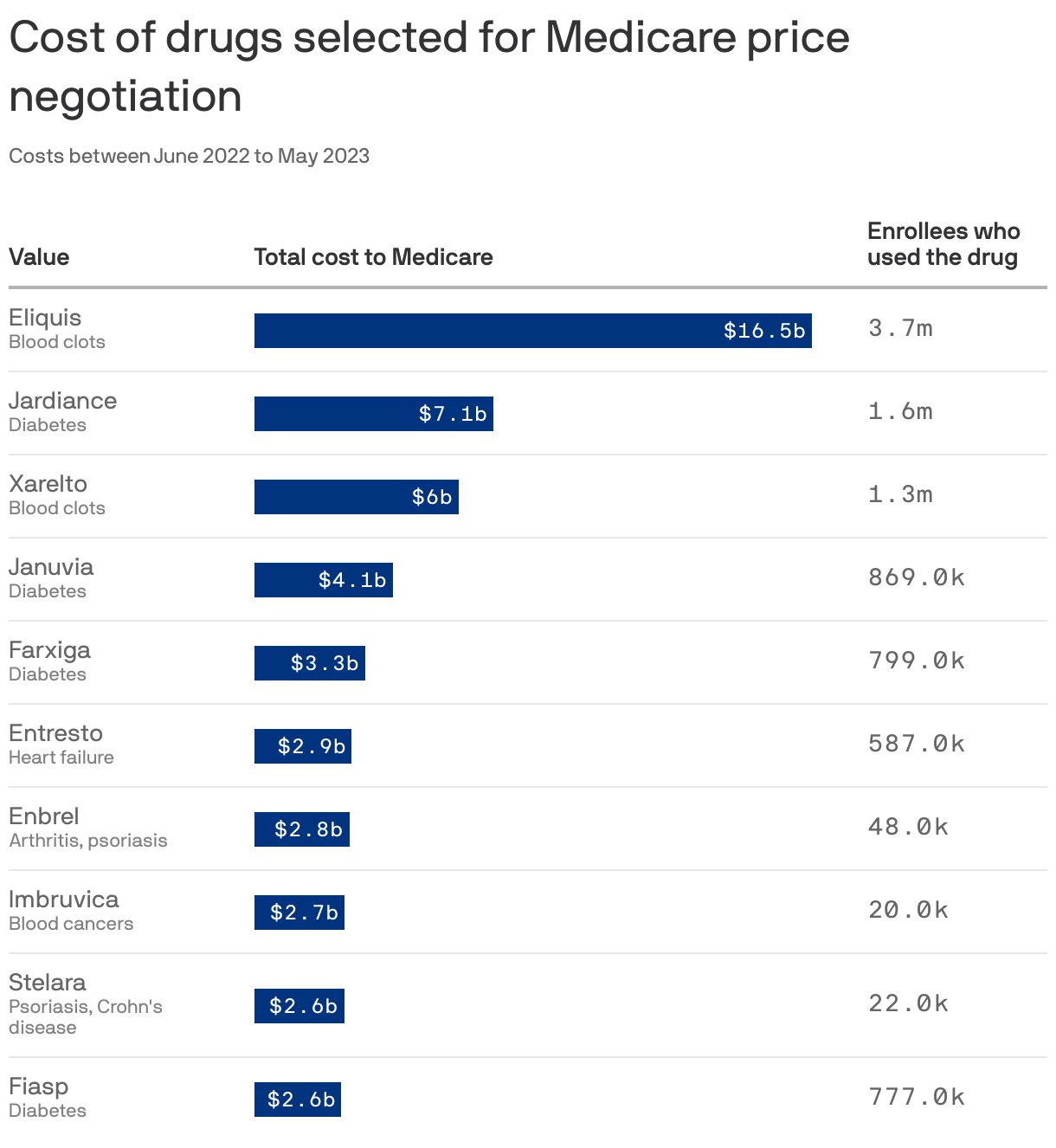
Data: Centers for Medicare and Medicaid Services; Chart: Erin Davis/Axios Visuals
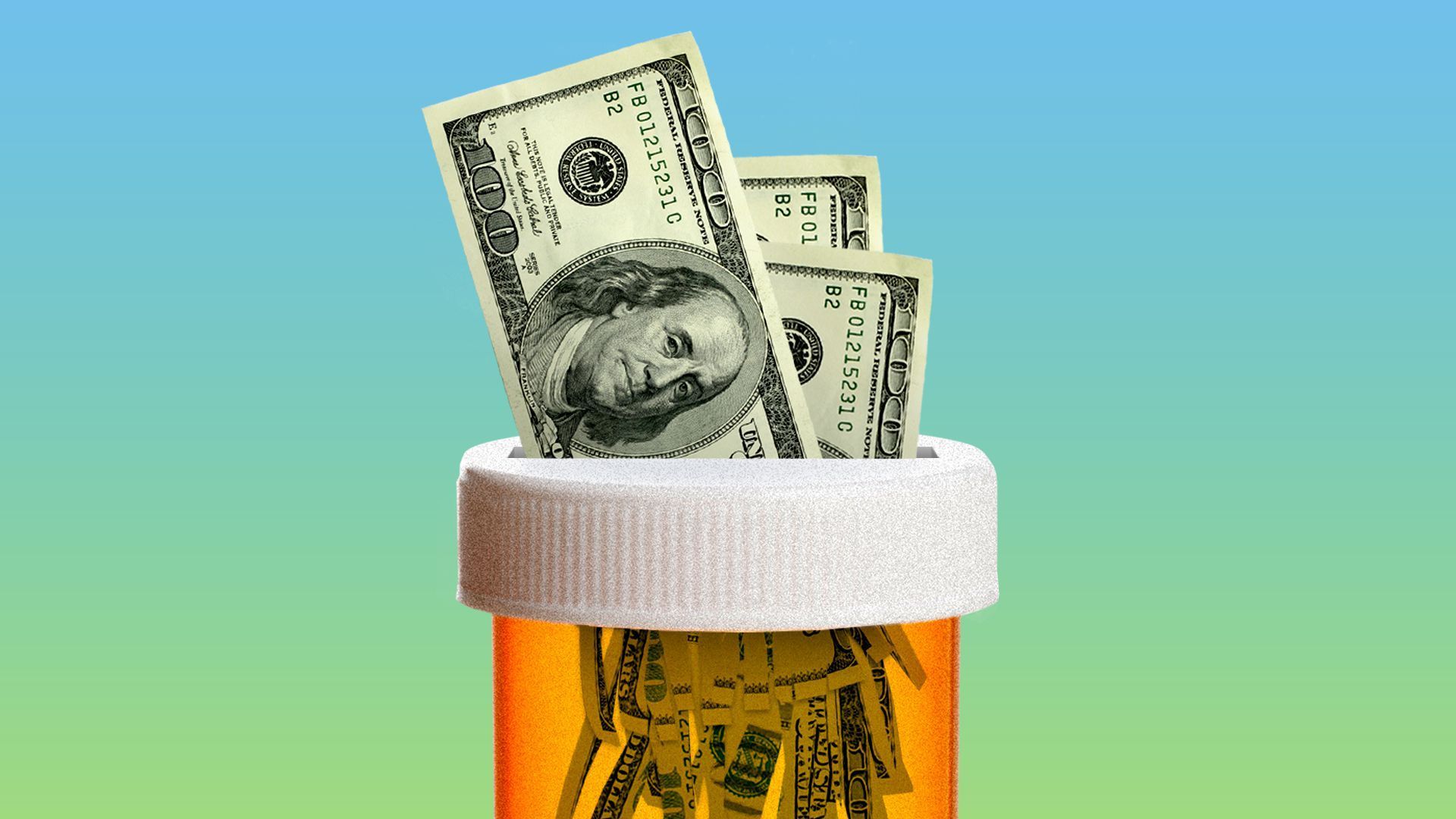
The Biden administration says the 10 medicines selected for the first round of negotiations cost Medicare $50 billion in the last year.
Yes, but: The numbers don't account for discounts from manufacturers, or rebates secured by health insurers and drug benefit managers.
By the numbers: The blood thinner Eliquis, made by Bristol Myers Squibb and taken by 3.7 million Medicare enrollees, cost the federal government more than $16 billion between June 2022 and May 2023.
The first opioid overdose treatment to be sold without a prescription will hit store shelves next month — but at a price some experts worry is too high for widespread use.
Why it matters: The individuals with the greatest need might not be able to afford a co-pay, if health plans even opt to cover over-the-counter Narcan, which will retail for $44.99.
U.S. companies are spending big on employees' health, often with little insight into whether they're paying for quality care.
Why it matters: Whether patients are given and stick with the best documented course of care — such as statins for heart disease — can have everything to do with what doctor they go to.
Electrolyte supplements have become a shockingly big market considering they're supported by limited scientific evidence.
Why it matters: Although influencers and marketers consider electrolyte powders hydration hacks, doctors say that regularly drinking them instead of plain water is a waste of money.
Depending on who you ask, the first-ever Medicare drug negotiations announced yesterday will either mean huge pocketbook relief for seniors or the demise of America's pharmaceutical industry — but the immediate impact will likely be relatively small, experts told Axios.
Why it matters: There are still questions about how the Biden administration will arrive at what it thinks is a fair price for the drugs and how much of the savings from lower prices will ultimately be passed on to seniors.