As federal policymakers step up oversight of hospital mergers, more states are taking steps to encourage consolidation in the industry — or to have the final say on whether such moves are anti-competitive.
Why it matters: The policies are a sign of the power some hospital lobbies continue to wield in statehouses, where they've argued mergers are a way to expand the patient base and keep otherwise unprofitable facilities open.
Minnesota is poised to expand its state-funded health insurance program, becoming the latest to add a public option for residents with incomesabove 200% of the federal poverty level.
Why it matters: States like Colorado and Washington state have turned to public option plans to control health costs but are encountering lackluster interest and resistance from providers.
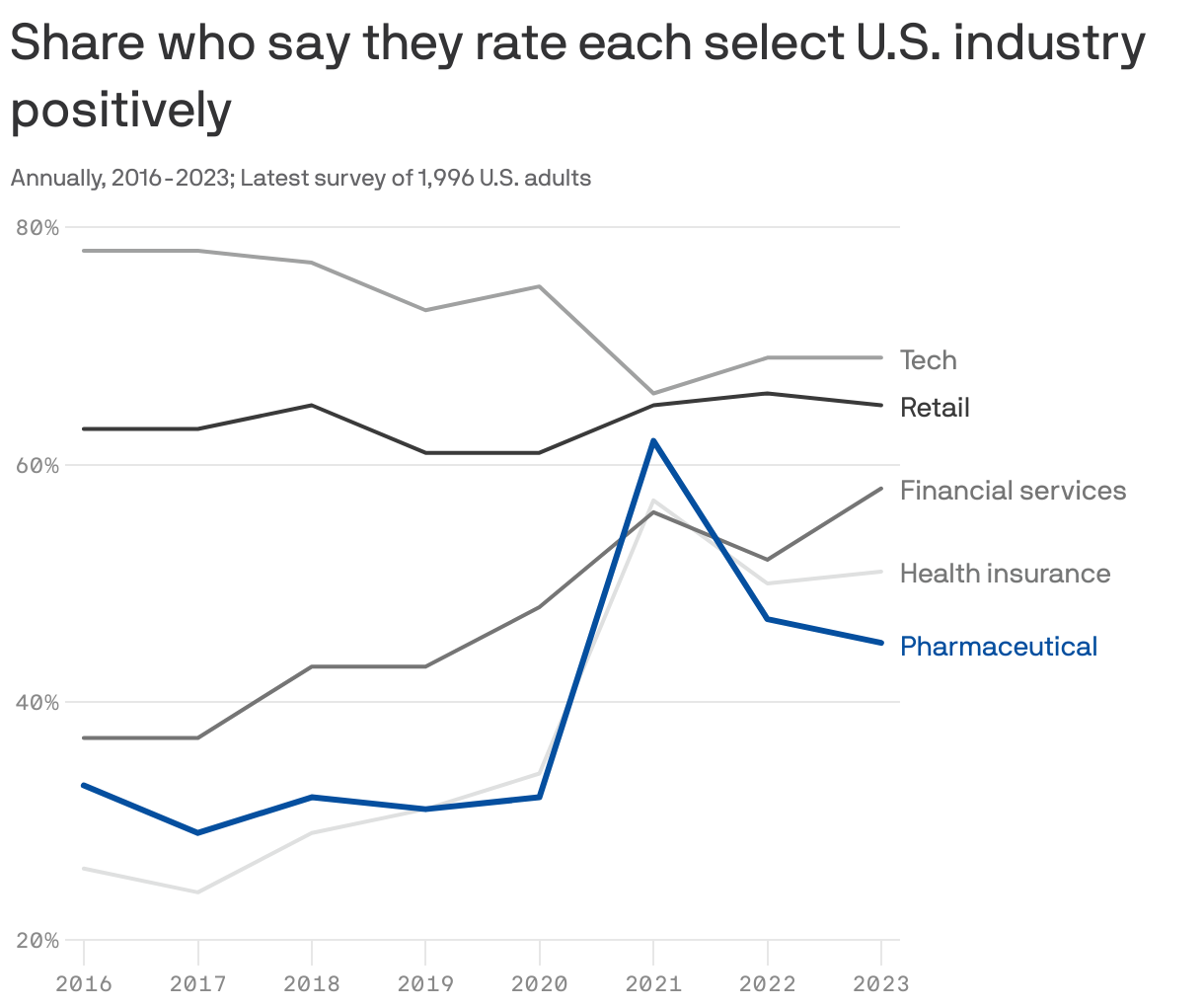
Why it matters: The crisis put drugmakers, insurers and other health sector players at the top of most everyone's mind. Now, Americans have shifted their focus to companies that offer more tangible services.
South Carolina's GOP-controlled State Senatevoted to ban abortions after about six weeks of pregnancy on Tuesday despite opposition from the chamber's five women, including three Republicans.
The big picture: Planned Parenthood South Atlantic's South Carolina office praised the three Republican, one Democrat and one independent women lawmakers for their attempted filibuster and vowed to challenge the legislation, which Gov. Henry McMaster (R) pledged to sign soon.
New HIV infections among young people have plummeted in recent years, according to updated Centers for Disease Control and Prevention (CDC) data published on Tuesday shows.
Why it matters: The sharp decrease in HIV infections among 13- to 24-year-olds contributed to substantial drop in new cases for all age groups, due in part to improved HIV testing and treatment and advances in medications that prevent infections.
The share of Americans who skipped medical treatment last year because of costs rose substantially from the lows of 2020 and 2021, per a Federal Reserve Survey out Monday.
Why it matters: The ability to afford health care often translates into better health.
State legislators around the country have passed more laws expanding gun access than they have measures on gun control in the year since the Uvalde, Texas, mass shooting that left 19 children and two teachers dead, according to an Axios analysis of data provided by the Giffords Center.
By the numbers: More than 1,700 gun-related bills have been introduced in state legislatures since the Uvalde shooting, and 93 of them were signed into law.
The women's health startup FemTec Health is out of money and winding down operations, according to public legal documents and social media posts seen by Axios.
Why it matters: It's a culmination of troubles plaguing FemTec, once envisioned as the launchpad for a one-stop women's health shop.
Congressional Democrats are having second thoughts about taking back unspent coronavirus funds as part of a debt limit deal, concerned that doing so could have serious consequences for myriad public health initiatives.
Why it matters: The COVID-19 relief funds were supposed to be the low-hanging fruit in any debt ceiling compromise and have been overshadowed by more contentious issues like spending caps and Medicaid work requirements.
FTX and Tesla, once seen as shining examples of innovation and opportunity, took two of the biggest reputational hits in this year's Axios Harris Poll 100 brand reputation survey.
Why it matters: Amid a crypto collapse and Musk madness, Americans have grown wary and weary of big ideas and powerful moguls who they feel have overpromised and underdelivered.
U.S. Surgeon General Vivek Murthy issuing a warning today that social media poses a threat to kids' mental health, escalating calls for new safeguards aimed at minors.
Why it matters: The advisory adds to scrutiny over the effects of excessive use and harmful content, which has been blamed for consequences ranging from disrupting kids' sleep to promoting suicidal thoughts.
The Biden administration called on Congress Monday to pass a bill aimed at tackling fentanyl trafficking in the U.S., which would see the synthetic opioid raised to the highest classification of illegal drugs.
Why it matters: The administration's public support for the Republican-led Halt All Lethal Trafficking of (HALT) Fentanyl Act comes amid a growing synthetic opioid crisis in the U.S.