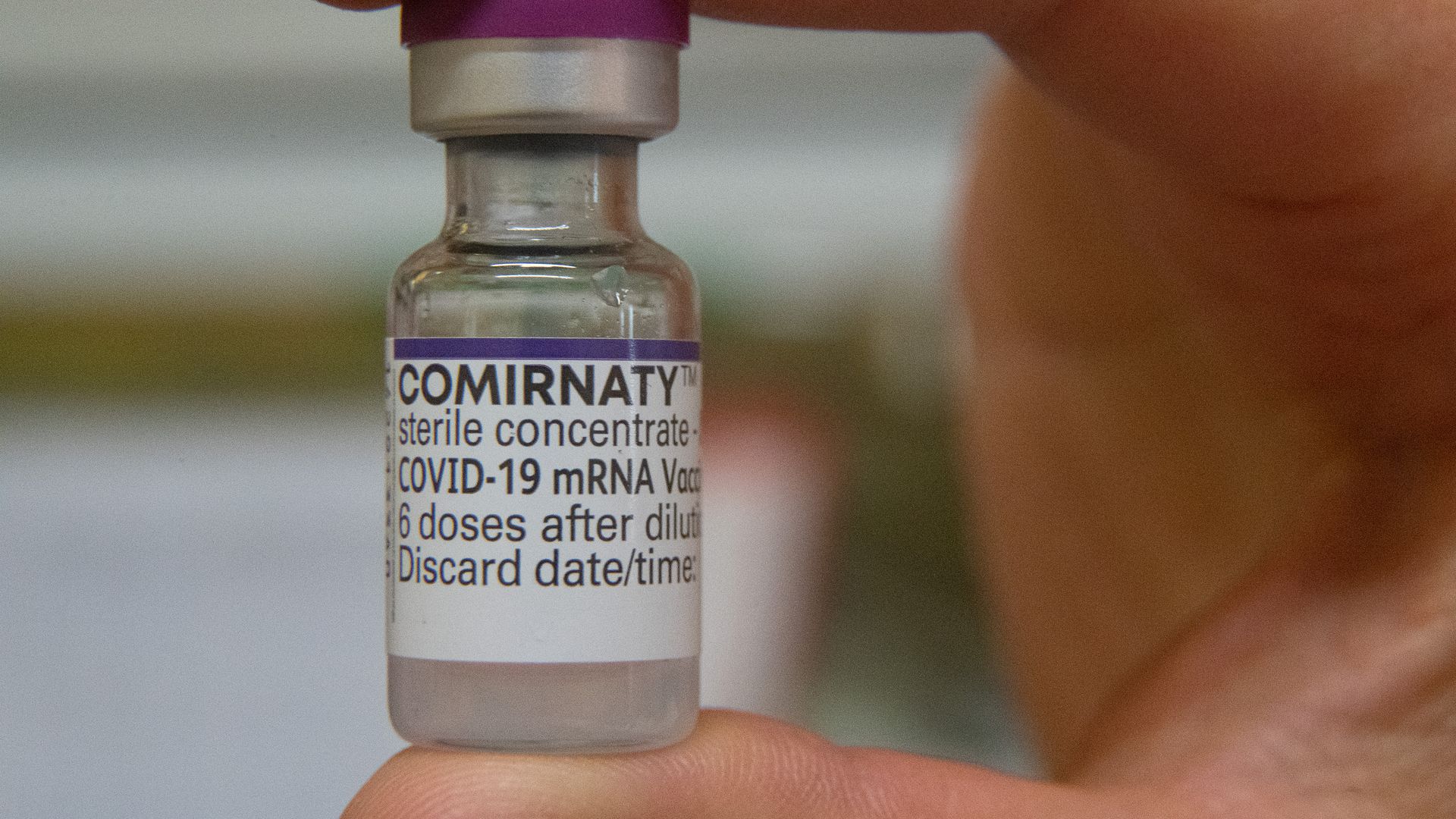
Pfizer-BioNTech said Saturday that a trial of its two Omicron-modified COVID-19 vaccine candidates elicited a "substantially higher immune response" against Omicron BA.1 compared to the companies’ current COVID-19 vaccine.
California Gov. Gavin Newsom (D) on Friday signed into law a bill to protect abortion providers and patients from bans, lawsuits and penalties in other states.
Driving the news: The measure is in response to laws like those in TexasandOklahoma, which ban most abortions at early points in the pregnancy and encourage private citizens to sue those believed to be involved in obtaining an abortion.
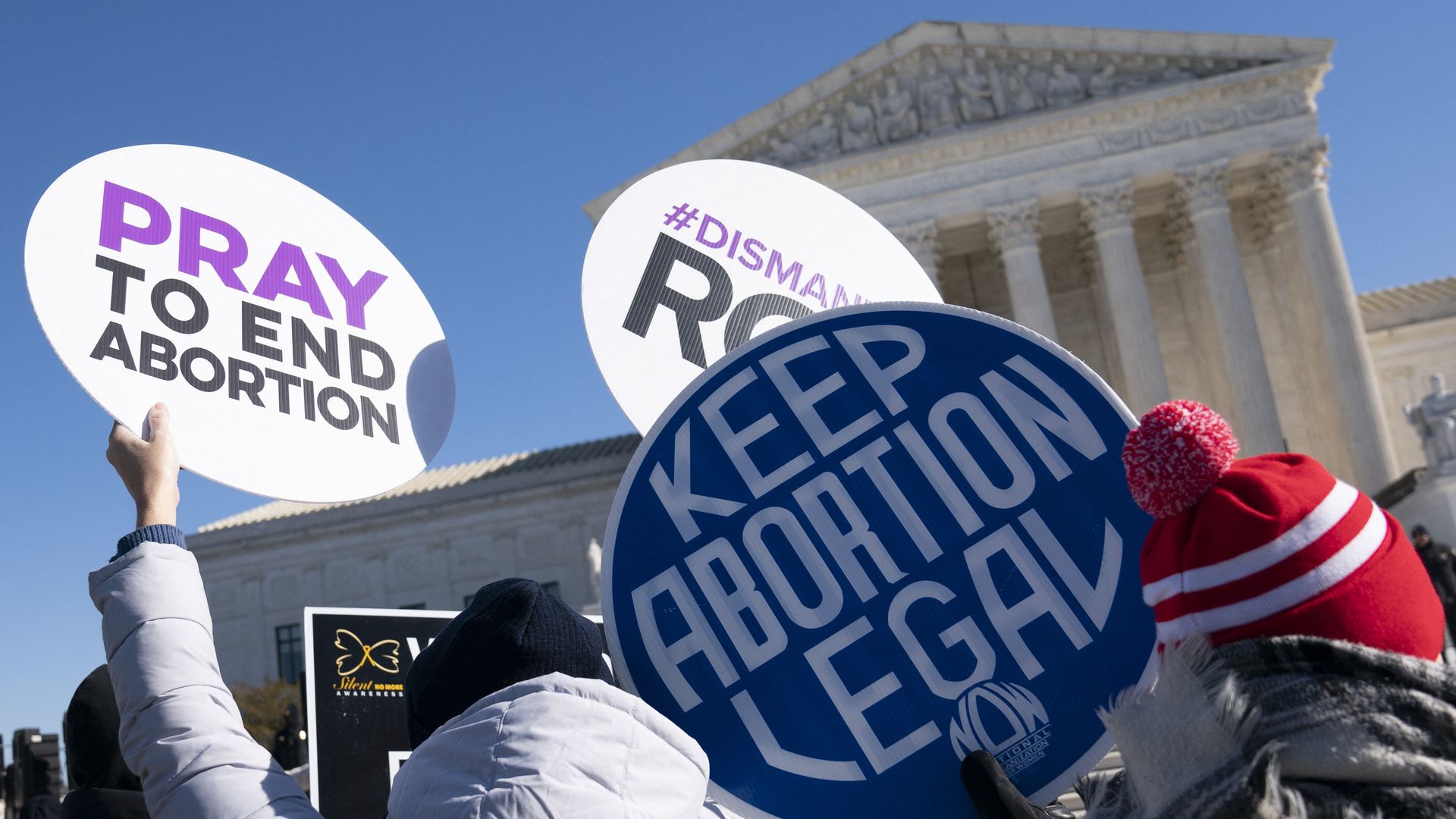
The Supreme Court's decision to overturn Roe v. Wade on Friday and send the question of abortion rights back to the states kickstarted a period of legal uncertainty that effectively halted abortion access across some red states.
Why it matters: For many Americans, especially those residing in the bluest parts of red states, abortions might not technically become illegal for a few more weeks — but they've instantly become almost impossible to obtain.
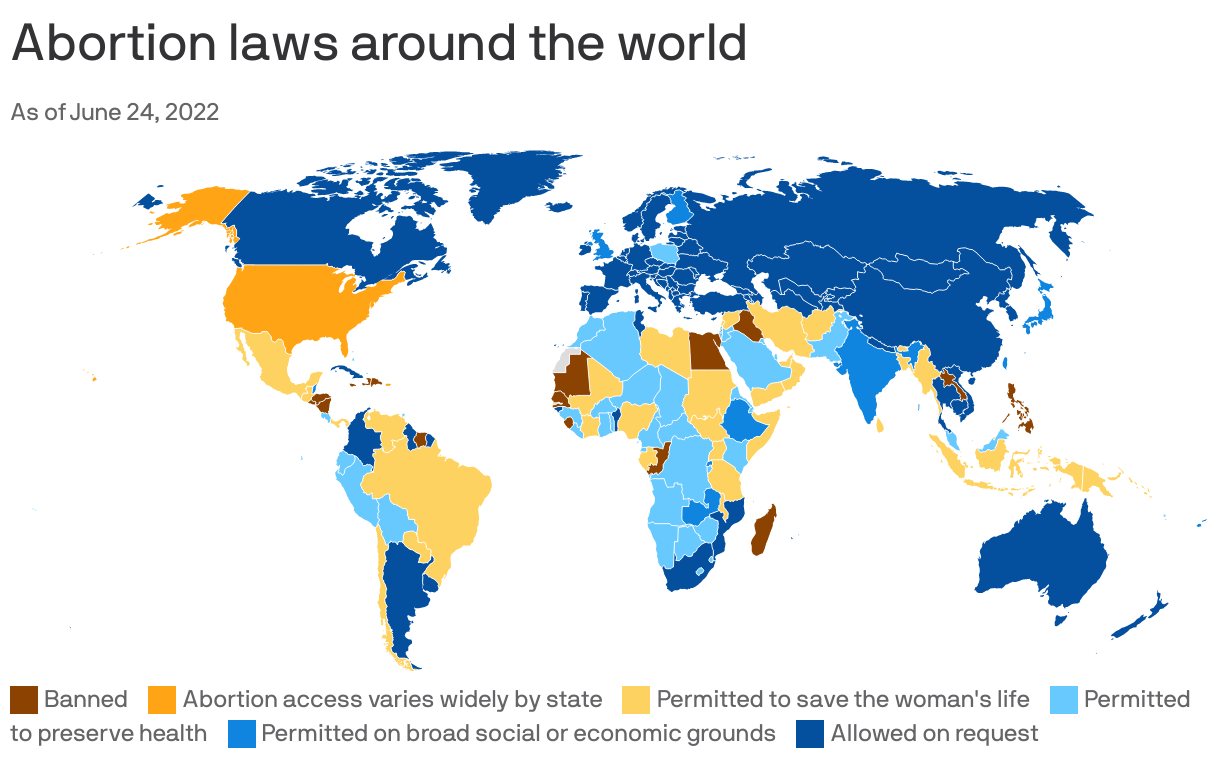
Data: Center for Reproductive Rights; Map: Axios Visuals
With the Friday's Supreme Court decision overturning Roe v. Wade, the U.S. joined only three other countries — El Salvador, Nicaragua and Poland — that have rolled back abortion rights since 1994, according to the Center for Reproductive Rights.
The big picture: Nearly 60 countries have liberalized their abortion laws — though some only incrementally — over the last 25 years.
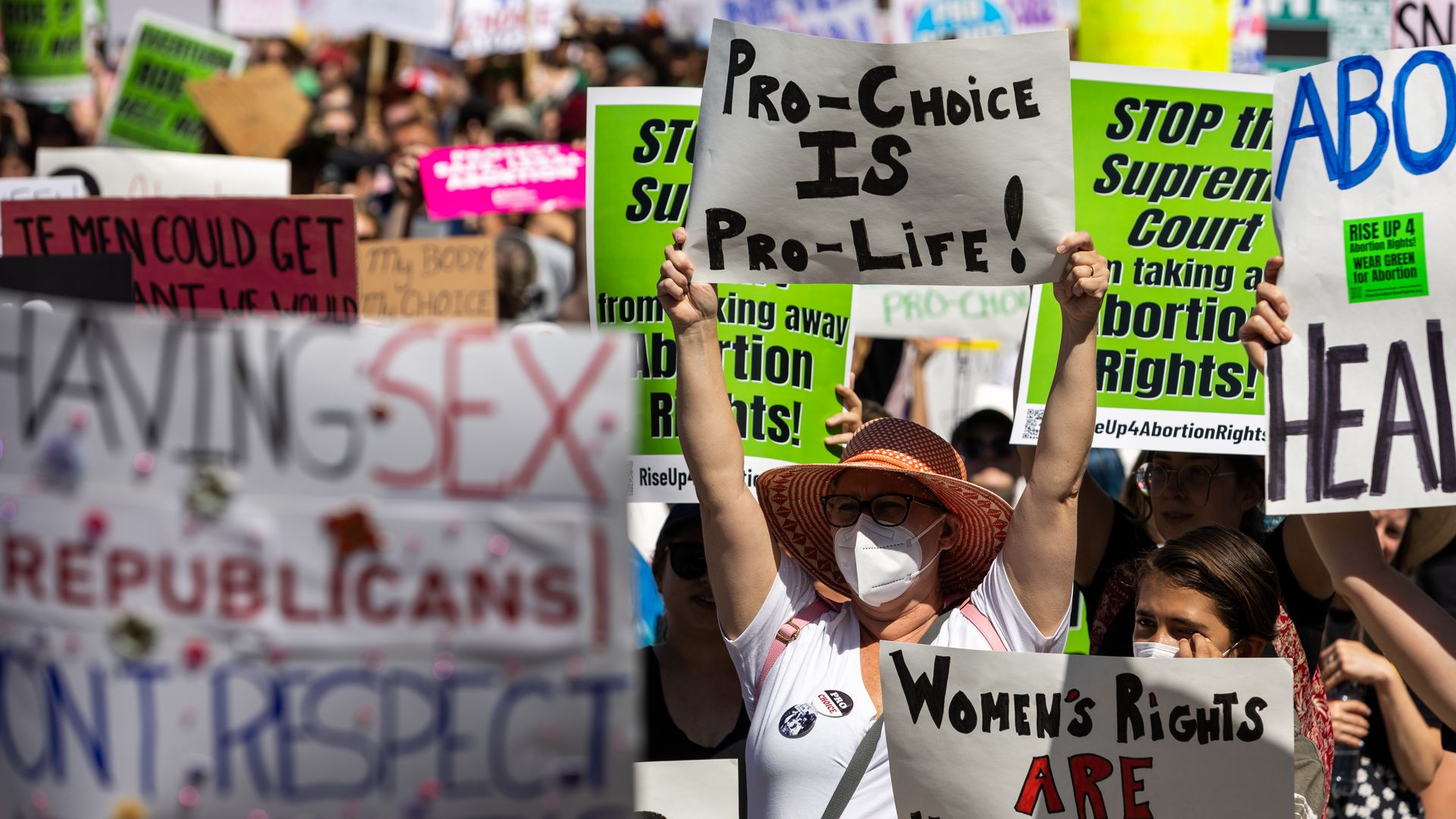
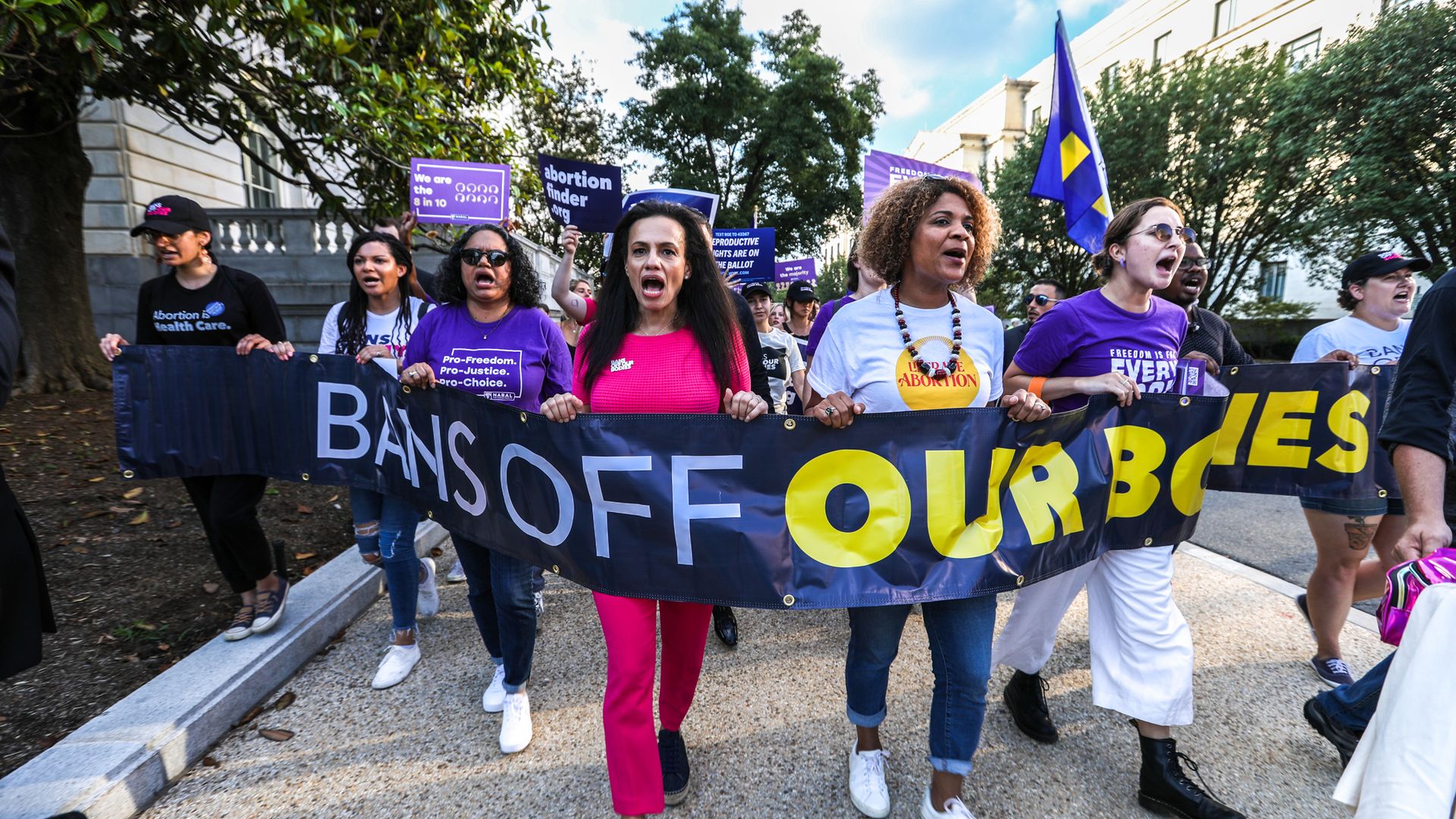
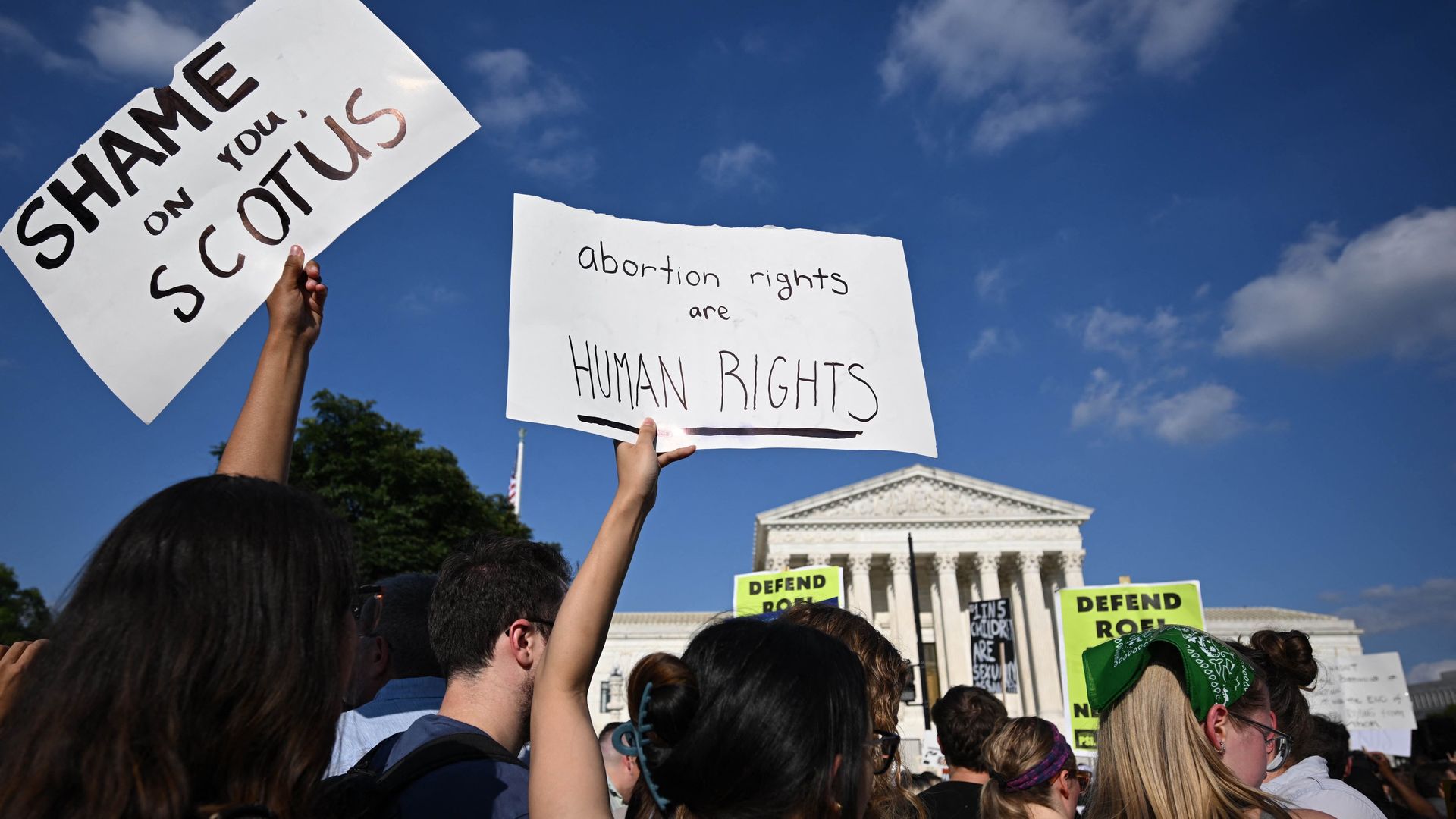
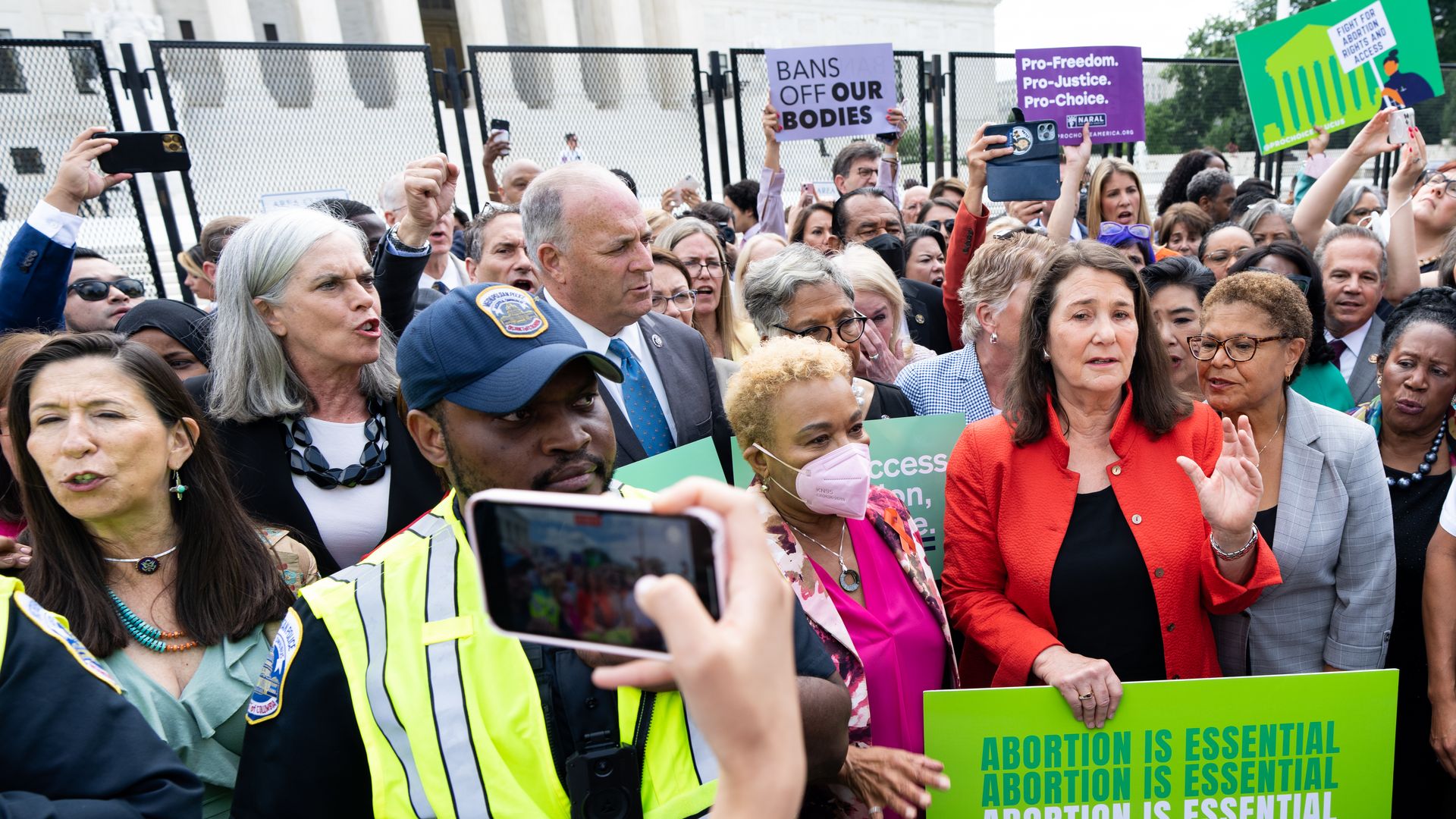
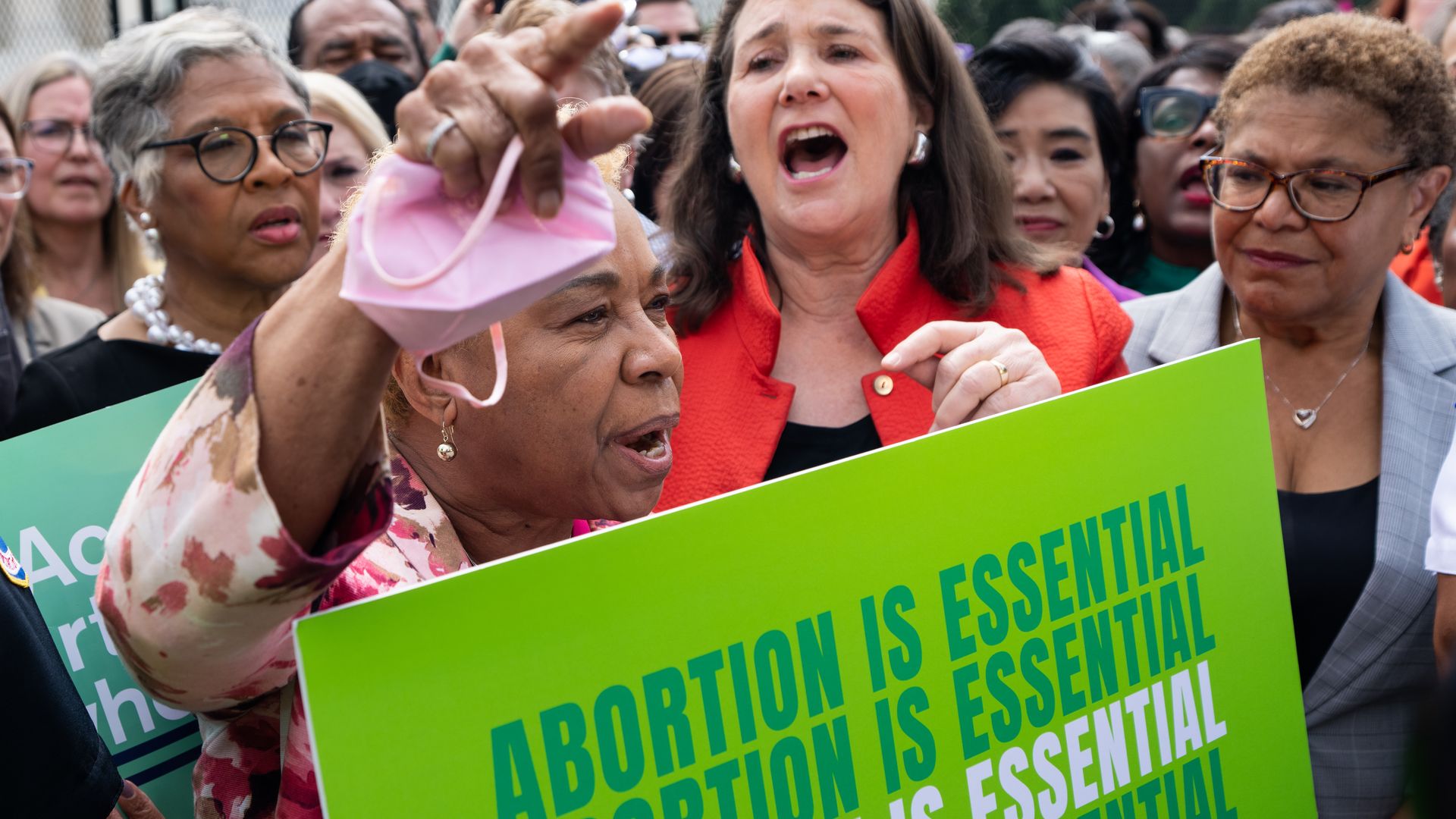
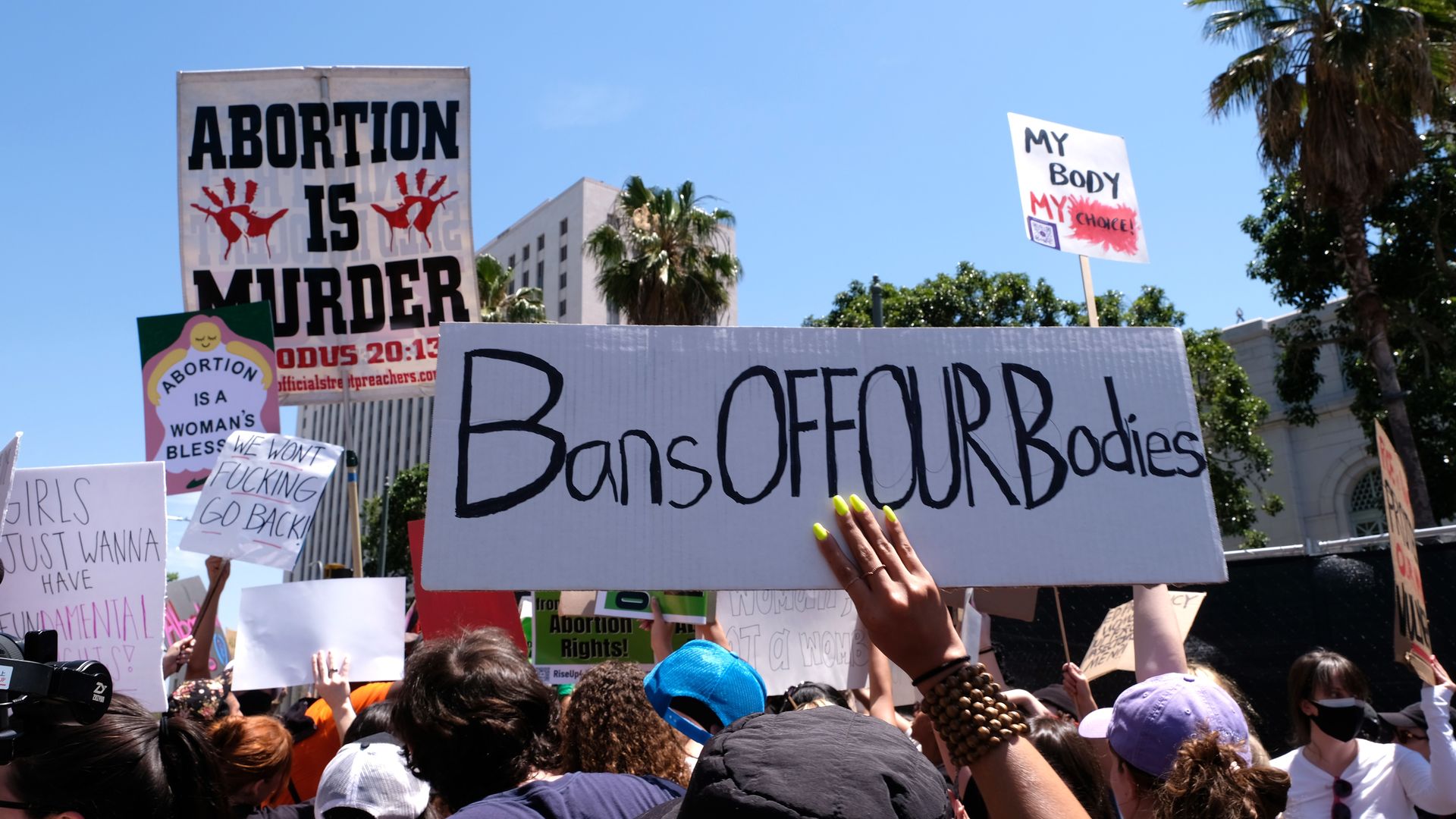
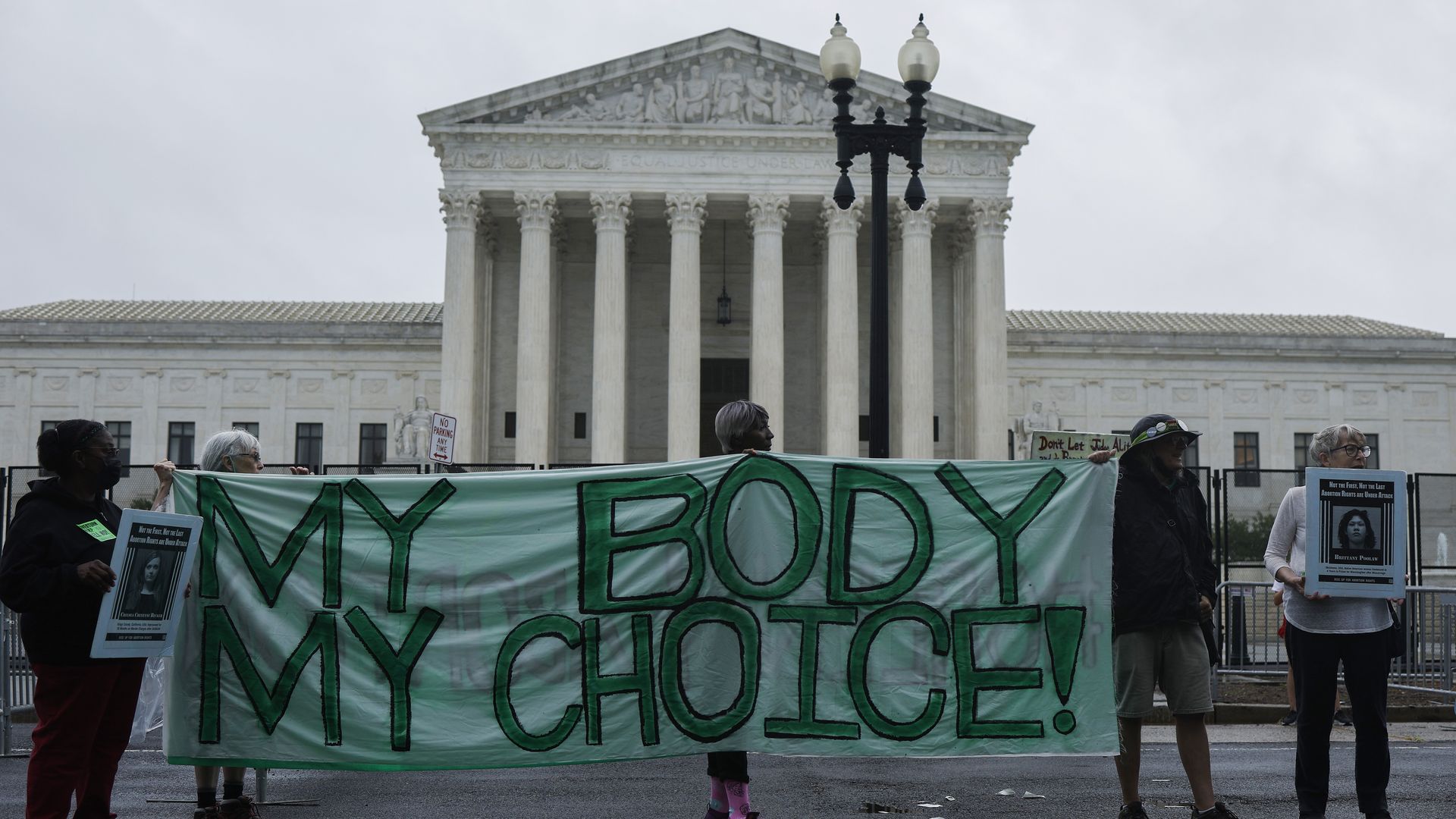
Thousands took to the streets across the nation on Friday to protest the Supreme Court's decision to overturn Roe v. Wade, as red states enacted trigger laws and blue states raced to protect abortion rights.
Why it matters: The ruling effectively made abortion immediately illegal in 13 states and cast a shadow over the future of abortion rights across the nation.
Abortion rights activists who've spent months preparing for the Supreme Court to overturn Roe v. Wade said their task now is convincing voters who are frightened or angry to turn out in November and in 2024.
The big picture: With control of Congress, governors' races and state legislatures on the line this year, and the White House in two years, these groups are seeking to mobilize their networks.
Many world leaders and international human rights groups condemned Friday's U.S. Supreme Court decision overturning Roe v. Wade and effectively ending all federal protections on abortion in the United States. Others, including the Vatican's Pontifical Academy for Life, praised it.
The big picture: With Friday's decision, the U.S. became a global outlier on abortion rights, joining just three other countries that have rolled back abortion access since 1994, according to the Center for Reproductive Rights. In the last 25 years, nearly 60 countries have liberalized their abortion laws.
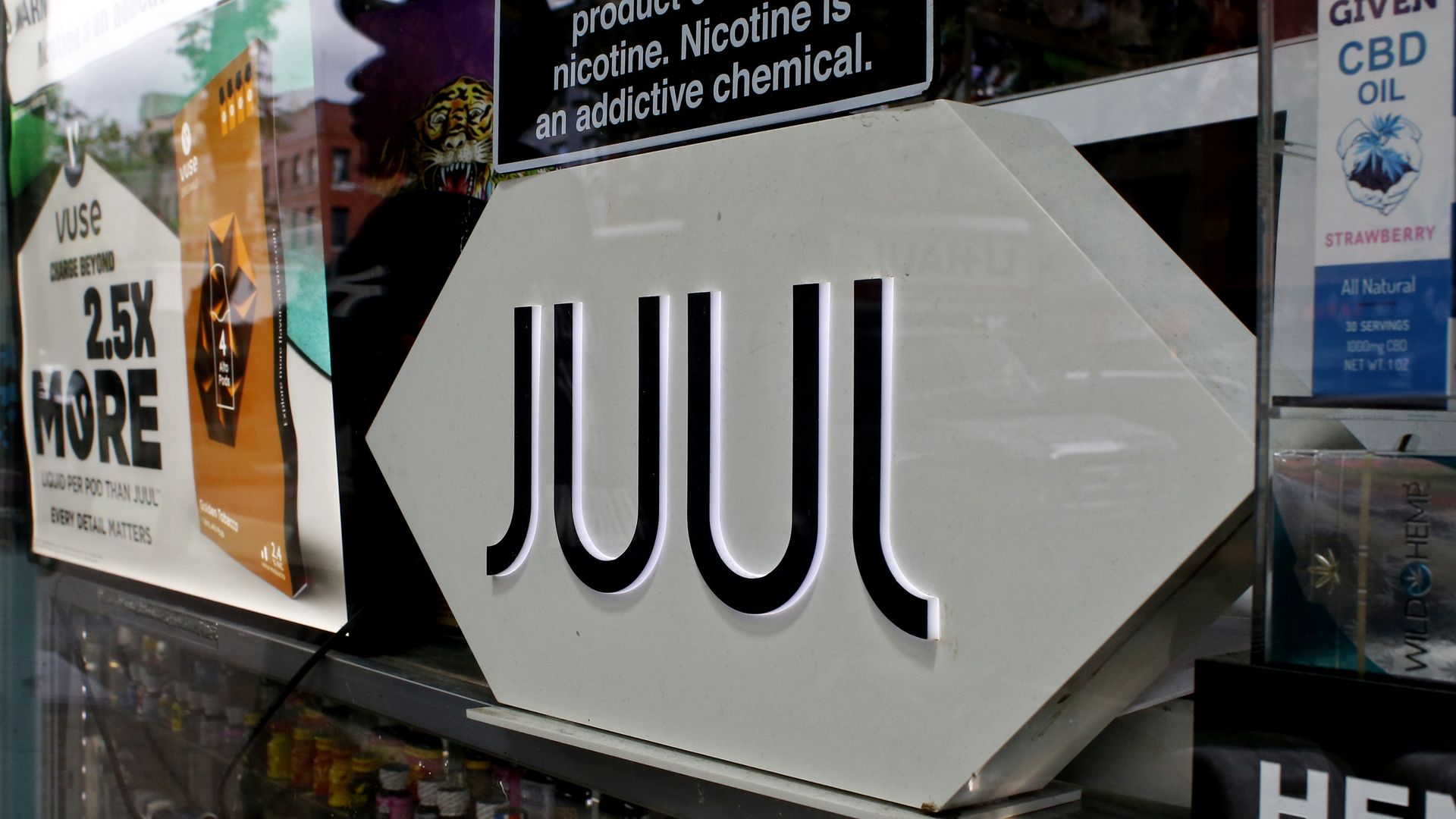
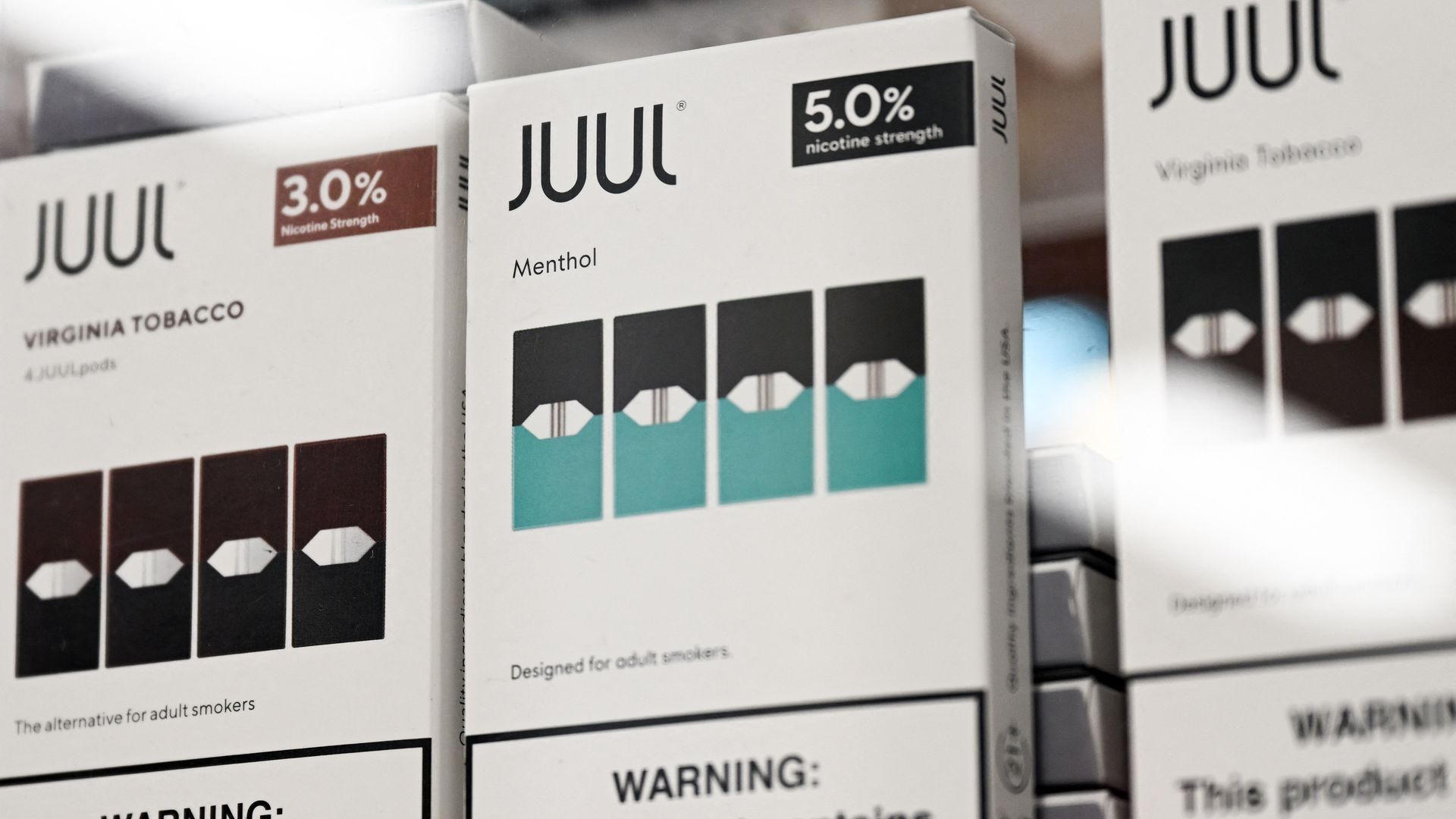
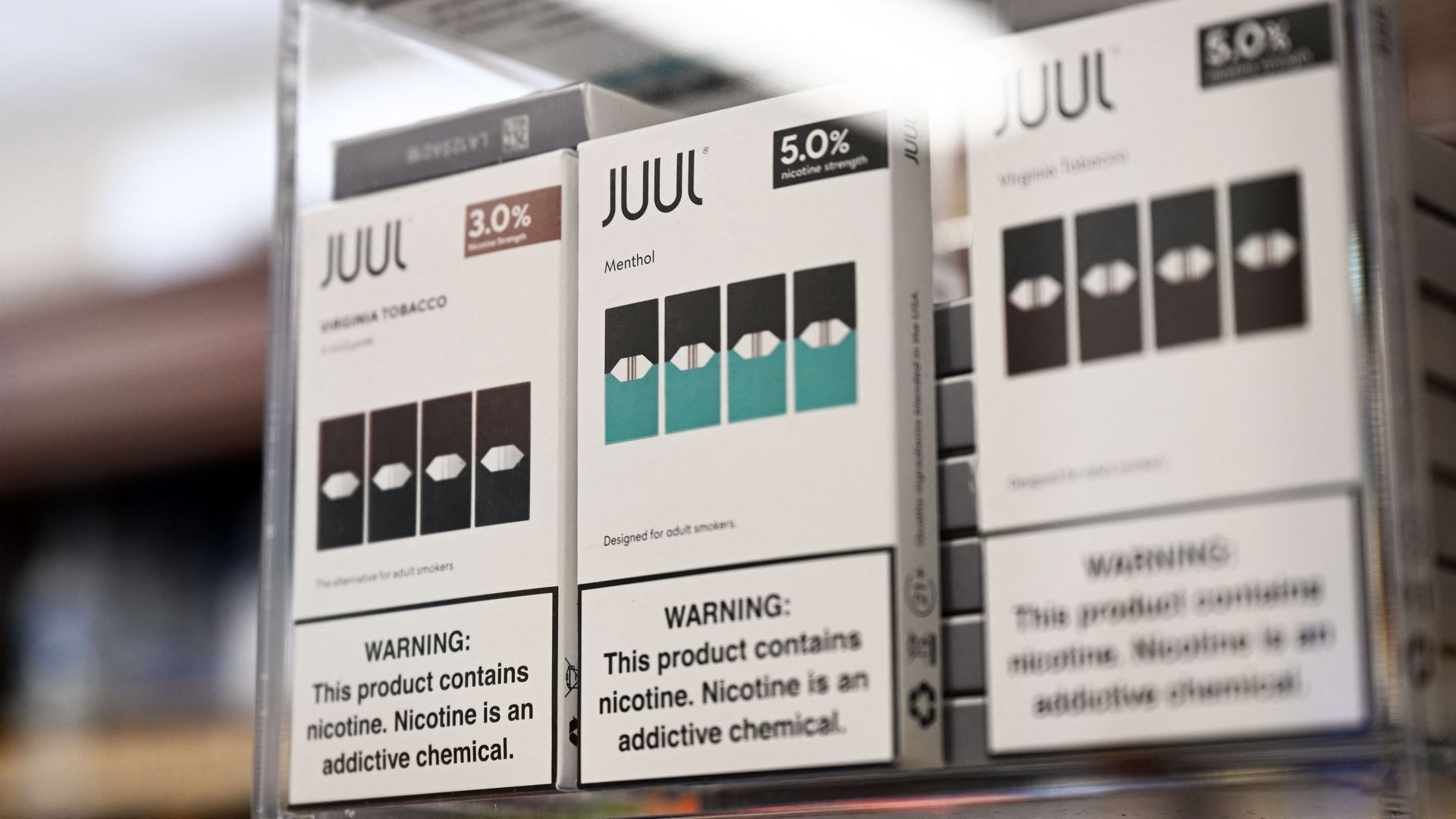
A federal appeals court on Friday temporarily blocked the Food and Drug Administration's order for Juul to stop selling e-cigarettes.
Driving the news: Juul filed an emergency motion earlier Friday with the U.S. Court of Appeals in Washington to appeal the sales ban, which looked to remove Juul e-cigarettes from the U.S. market.
California, Washington and Oregon are launching a "West Coast offense" to protect reproductive rights following the Supreme Court's decision to overturn Roe v. Wade, the states' Democratic governors announced Friday.
Michigan Gov. Gretchen Whitmer (D) on Friday filed a motion asking the state Supreme Court to consider her abortion lawsuit in a bid to recognize it as a right under the Michigan constitution.
Why it matters: A 1931 ban criminalizes abortion in the state, but it has been dormant since Roe v. Wade took effect in 1973. The ban is still part of the state's penal code, however, and Whitmer is pushing to officially have it declared unconstitutional now that the Supreme Court has overturned Roe.
More abortion pills are expected to be ordered online and delivered through the mail after Friday's Supreme Court decision to overturn Roe v. Wade.
Driving the news: Abortion care through telemedicine is expected to increase, but with Roe overturned, the prescribed drugs that terminate pregnancies are likely to become the next major point of contention between abortion rights activists and opponents of abortion rights, Axios’ Jacob Knutson reports.
National Republican campaign arms are looking to stay focused on inflation, crime and immigration after the Supreme Court overturned Roe v. Wade on Friday, while Democrats seized on the loss of federal abortion protections as a game-changer that could turn out their voters in November.
Why it matters: Friday's decision has the potential — but no guarantee — to upend some key midterm contests and give Democrats a shot in the arm ahead of elections otherwise poised to hand Republicans majorities in Congress.
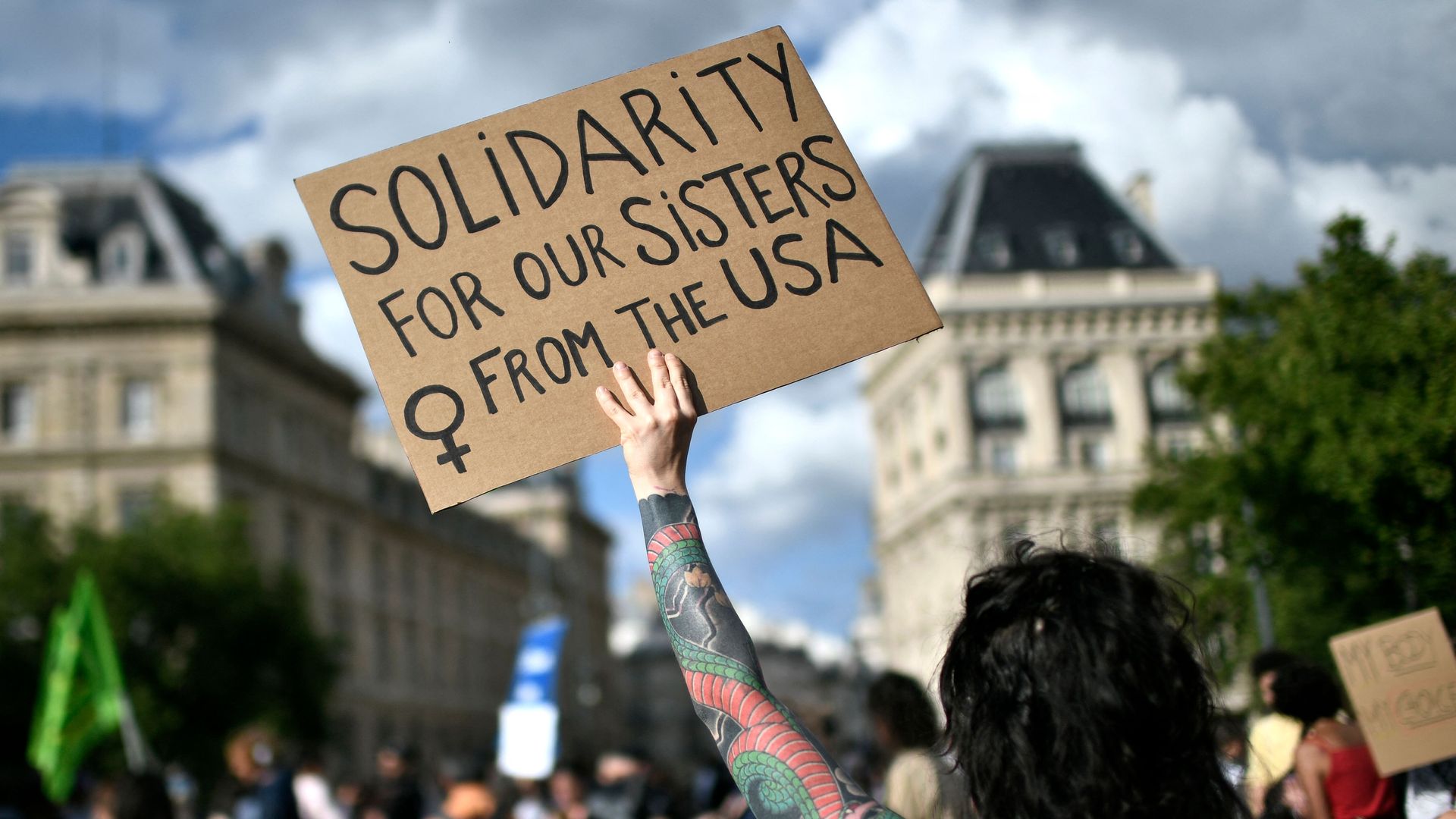
The U.S. Supreme Court decision overturning Roe v. Wade could have wide-reaching consequences for reproductive rights worldwide, human rights groups and global leaders warned Friday.
The big picture: The U.S. has joined only three other countries — El Salvador, Nicaragua and Poland — that have rolled back abortion rights since 1994, according to the Center for Reproductive Rights.
The Congressional Black Caucus is calling on President Biden to declare attacks on abortion a national public health emergency after the U.S. Supreme Court overturned Roe v. Wade on Friday.
Multiple clinics that provide abortions closed down Friday in the immediate aftermath of the Supreme Court's ruling that will end federal protections on abortion.
Driving the news: The Supreme Court issued a ruling Friday that overturns Roe v. Wade, making it so states can legally regulate or ban abortion.
The Supreme Court ruling overturning Roe v. Wade immediately pivots the fight over abortion access to state efforts to restrict medication abortions or so-called "abortion pills."
The big picture: The pills used to terminate a pregnancy — mifepristone and misoprostol — are FDA-approved for use in the first 10 weeks of pregnancy and are frequently prescribed online and mailed to patients.
State efforts to restrict their use will pose thorny questions about how to enforce bans and challenge the notion of patients' rights, experts say.
"During the last 50 years or more in the abortion culture wars, there has been a line drawn that punishments should be meted out against providers and not against women themselves," Lawrence Gostin, a law professor at Georgetown University told Axios. "I think we're about to cross that line."
State of play: Medication abortion accounted for 54% of all U.S. abortions in 2020, up from 39% in 2017, according to the Guttmacher Institute.
The FDA in December lifted long-standing restrictions, making the pills more widely available, via telemedicine appointments and online prescribing that enables delivery to someone's door.
Between the lines: Republican states looking to limit access to the pills could encounter practical challenges and legal problems doing so.
Experts say legal precedent holds that states don't have the authority to ban FDA-approved drugs, as was the case when Massachusetts in 2014 tried to impose an emergency ban of an opioid. A federal judge struck down the ban, saying a state couldn't take a drug off the market that the FDA had deemed safe.
Attorney General Merrick Garland weighed in after the Supreme Court ruling on Friday, saying, "States may not ban mifepristone based on disagreement with the FDA’s expert judgment about its safety and efficacy."
President Joe Biden said he was directing HHS to ensure such medications would be available to the “fullest extent possible,” the Hill reported.
But that won't stop states from trying.
Lawmakers in at least 20 states have proposed restrictions or bans on the pills, per Pew's Stateline.
They range from bans on dispensing the drugs to requirements that physicians tell patients that medication abortions can be reversed by administering doses of progesterone, a controversial option.
Indiana last year prohibited medication abortions after 10 weeks of pregnancy, and Texas banned medication abortion after seven weeks of pregnancy, according to Stateline.
That all could lead to legal fights over federal preemption.
"The reason we have an FDA is to set a uniform standard for what's safe and effective and approved by our top public health regulatory agency," Gostin said. "If states were to start to undermine that, it would be catastrophic. Nonetheless, that's what some states are doing and, with this conservative Supreme Court and indeed conservative judiciaries throughout, the outcome of that is by no means certain."
Reality check: The efforts to ban pills will dovetail with broader state efforts to restrict abortion access now that the Supreme Court struck the federal right to the procedure.And those state laws may ultimately need to be revisited as the wider health implications become clear.
Health experts have warned that health providers may be reluctant to intervene and help people manage miscarriages, which often use the same methods as abortions.
Fertility services such as in vitro fertilization could also be deemed illegal in some places, depending on how states define unborn human beings and whether that applies to embryos created through the IVF process.
Emergency contraception like Plan B and certain types of intrauterine devices could also be restricted under some state laws, Cathren Cohen, a scholar of law and policy at the UCLA Law Center told NBC News last month.
“Anything that would prevent a fertilized egg from turning into a pregnancy and being born into a baby could be considered a homicide,” she said, per NBC.
A key piece of OB-GYN training — how to perform an abortion — could soon be stricken from medical schools' curriculum in states that make the practice illegal.
Why it matters: The Supreme Court decision overturning Roe v. Wade Friday will not only affect patients but could drastically alter medical education and force young doctors to find workarounds to develop a skill deemed essential by professional bodies.
In the wake of the Supreme Court overturning Roe v. Wade and its other precedents, penalties for abortion providers are expected to become more severe, and abortion rights advocates fear they could more forcefully target patients seeking abortions.
Where it stands: Currently, penalties for violating abortion laws vary widely by state, and many state laws specifically say a patient getting an abortion cannot be prosecuted. But that may soon change.
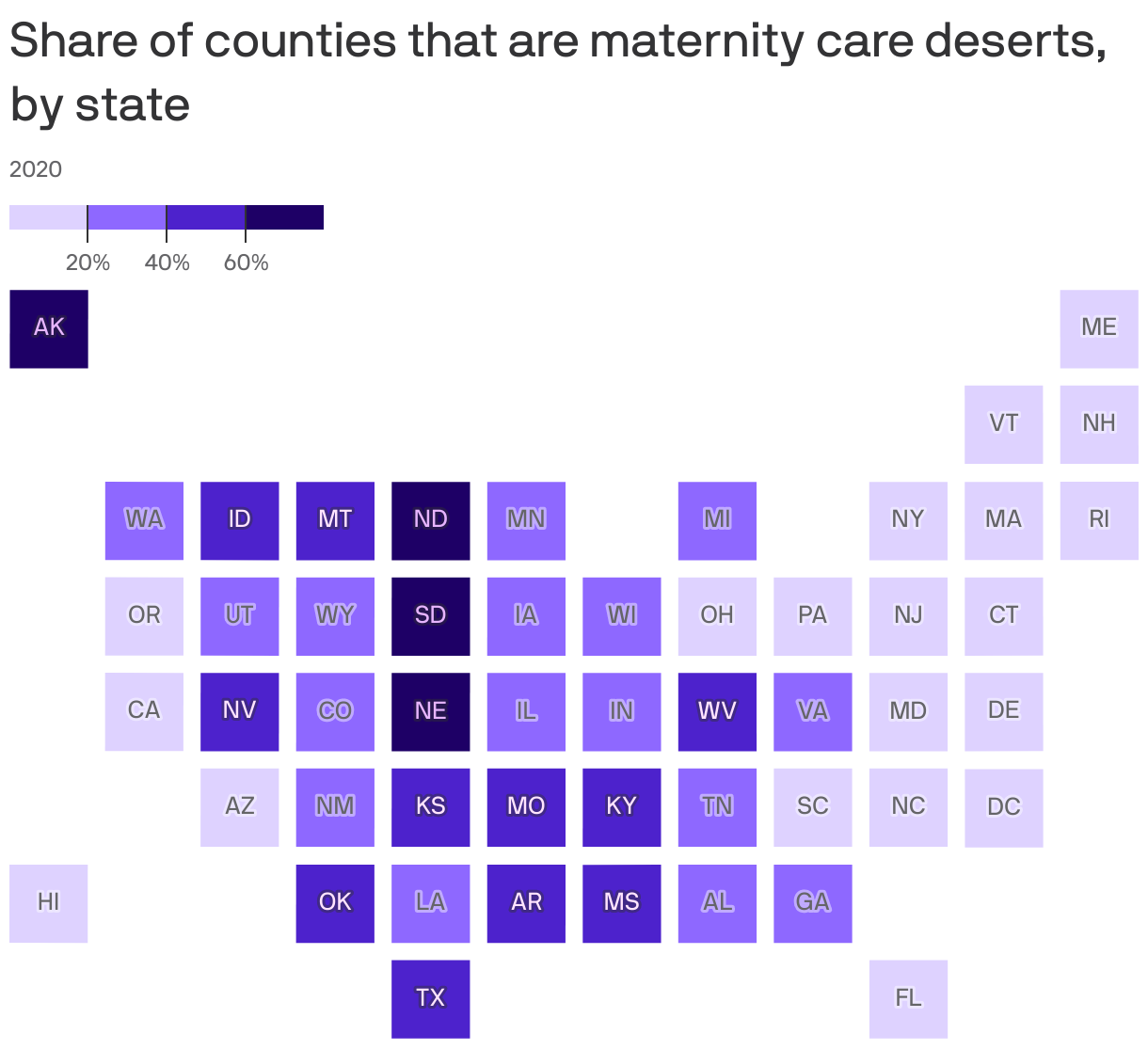
The red states poised to ban or severely limit abortion in the absence of Roe v. Wade already tend to have limited access to health care, poor health outcomes and fewer safety net programs in place for mothers and children.
Why it matters: With the Supreme Court's decision to overturn Roe v. Wade, the ensuing increase in births will likely leave families in tough circumstances and strain systems that are already hanging by a thread.
The Supreme Court on Friday issued a ruling overturning Roe v. Wade, effectively ending all federal protections on abortion.
Driving the news: "The Constitution does not confer a right to abortion; Roe and Casey are overruled, and the authority to regulate abortion is returned to the people and their elected representatives," Justice Samuel Alito wrote in the court's ruling.
Juul is seeking a temporary ban on the Food and Drug Administration's order to remove its e-cigarettes from the U.S. market, writing in a court filing Friday that it was "extraordinary and unlawful."
Driving the news: Juul asked a federal appeals court for a temporary administrative stay until the court grants an emergency review of the order, according to the court filing with the U.S. Court of Appeals for the D.C. Circuit.
The Department of Veterans Affairs has begun offering psychedelic substances to patients in a series of clinical trials that may shed light on the therapeutic value of such drugs, the New York Times reports.
Why it matters: MDMA, psilocybin and LSD — combined with psychotherapy — have been touted as a potentially revolutionary tool in treating addiction and other mental health conditions, Axios' Alison Snyder reports.
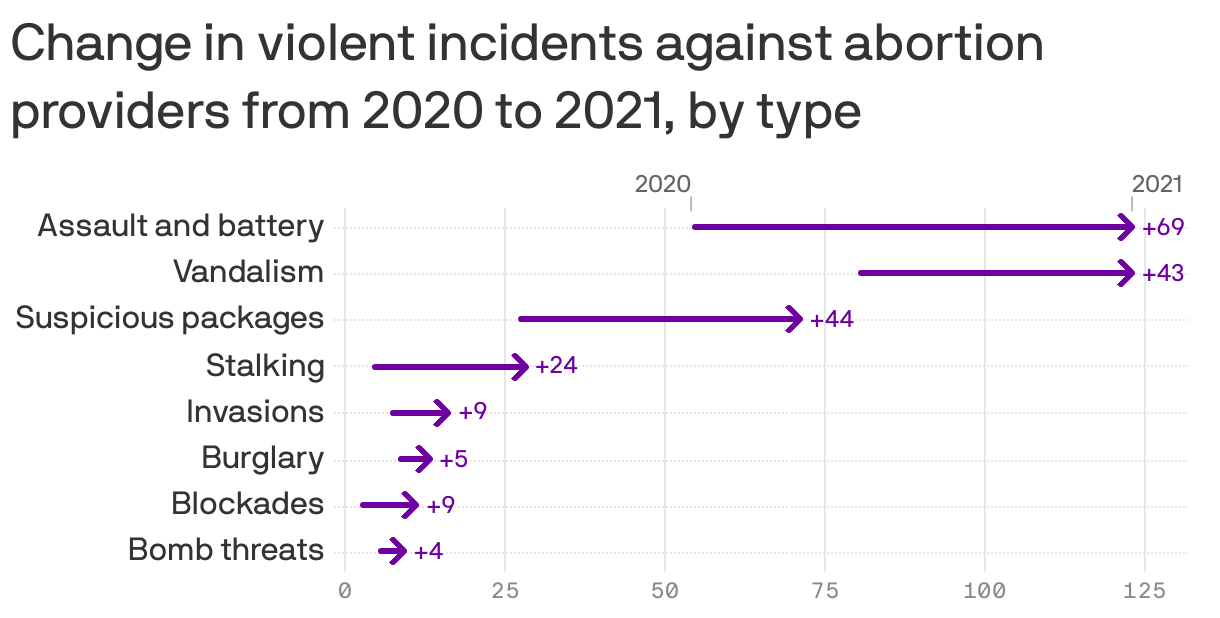
Data: National Abortion Federation; Chart: Nicki Camberg/Axios
Assaults directed at abortion clinic staff and patients increased 128% last year over 2020, according to a new report from the National Abortion Federation.
Why it matters: Heated political rhetoric, the passage of more restrictive state abortion bans and increased media coverage all factored in the increase in violence, emboldening those "who want to harass and terrorize abortion providers," Melissa Fowler, NAF Chief Program Officer, told reporters.
Dressed in a suit and a pair of white Yeezy Boost 700 sneakers on Thursday, TV personality Phil McGraw — better known as Dr. Phil — said he was "ready to do a lot of walking" through the Capitol to talk to lawmakers about America's mental health.
The big picture: The U.S. is grappling with a behavioral health crisis, including record levels of depression and anxiety and substance abuse.
The FDA's decision to order Juul e-cigarette products off the U.S. market opens a new and grinding battle in the push to revamp the government’s rules for smoking and vaping.
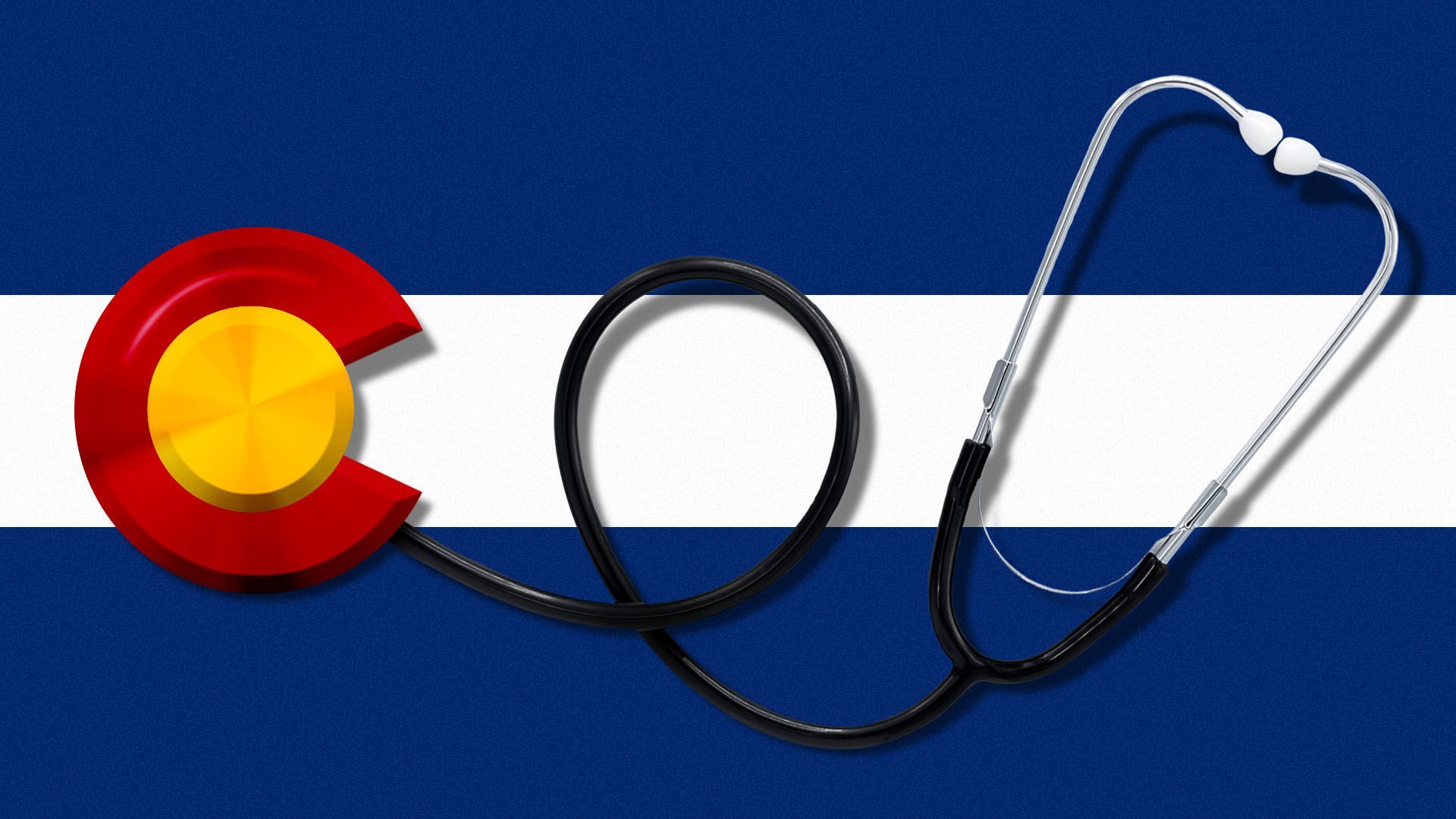
Colorado is reviving an old progressive health care goal with a new twist, creating a public health insurance option that could be a model for other states trying to expand affordable coverage as they move past the pandemic.
Why it matters: Using flexibilities the Biden administration granted on Thursday, the state is trying to prove a government-run health plan can attract more consumers and save money while avoiding the political pitfalls associated with single-payer systems.
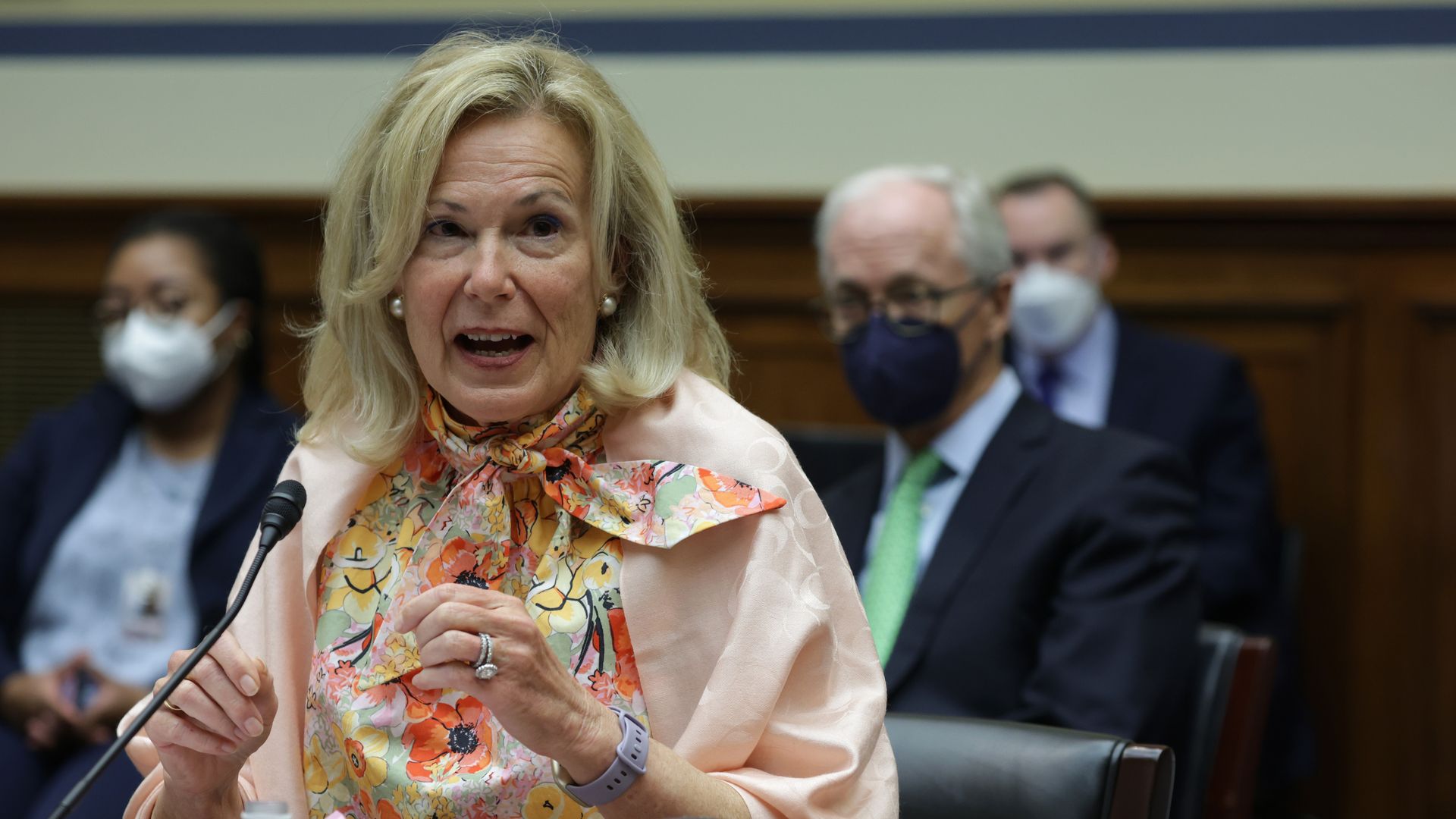
Deborah Birx, former President Trump's coronavirus response coordinator, told a congressional hearing Thursday people were communicating "dangerous ideas" on the pandemic with him "on a daily basis."
Driving the news: In her first testimony before a House panel about her time in the Trump administration, Birx said there was "continued communication of underplaying the seriousness of this pandemic" that led to inaction early on across government agencies, which "created a false sense of security in America."
Vaccines prevented nearly 20 million COVID deaths between December 2020 and December 2021, according to a new study published Thursday in the journal The Lancet Infectious Diseases.
Why it matters: The study provides a better understanding of the impact of global vaccination — both successes and missteps — during the first year vaccines were available.