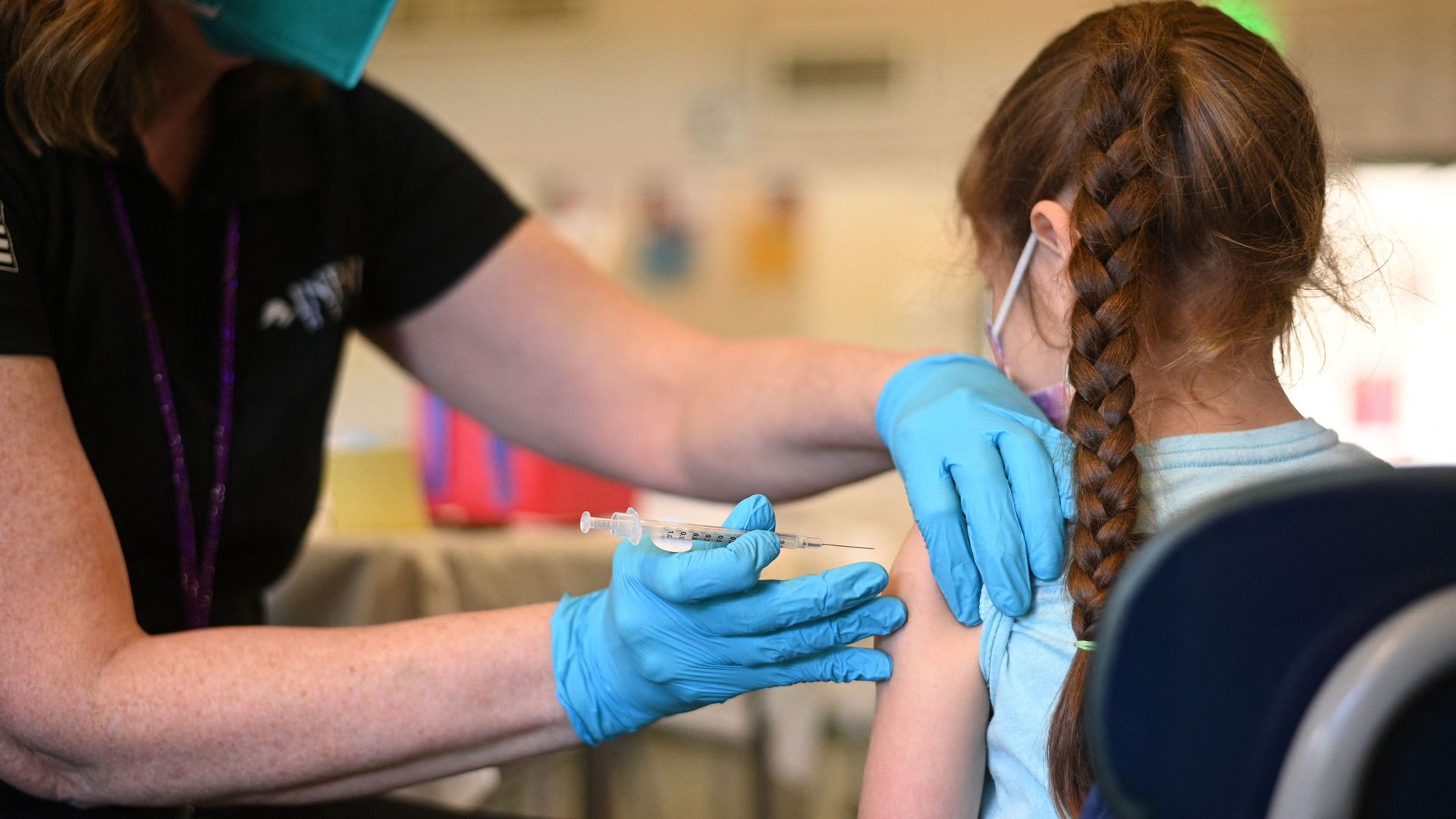
The Centers for Disease Control and Prevention director Rochelle Walensky authorized booster doses of the Pfizer-BioNTech coronavirus vaccine for children between the ages of 5 and 11, according to a CDC statement on Thursday.
Driving the news: Walensky's decision comes days after the FDA expanded authorization for the age group and after the CDC panel also made the same recommendation.Children will now be able to receive the boosters immediately.
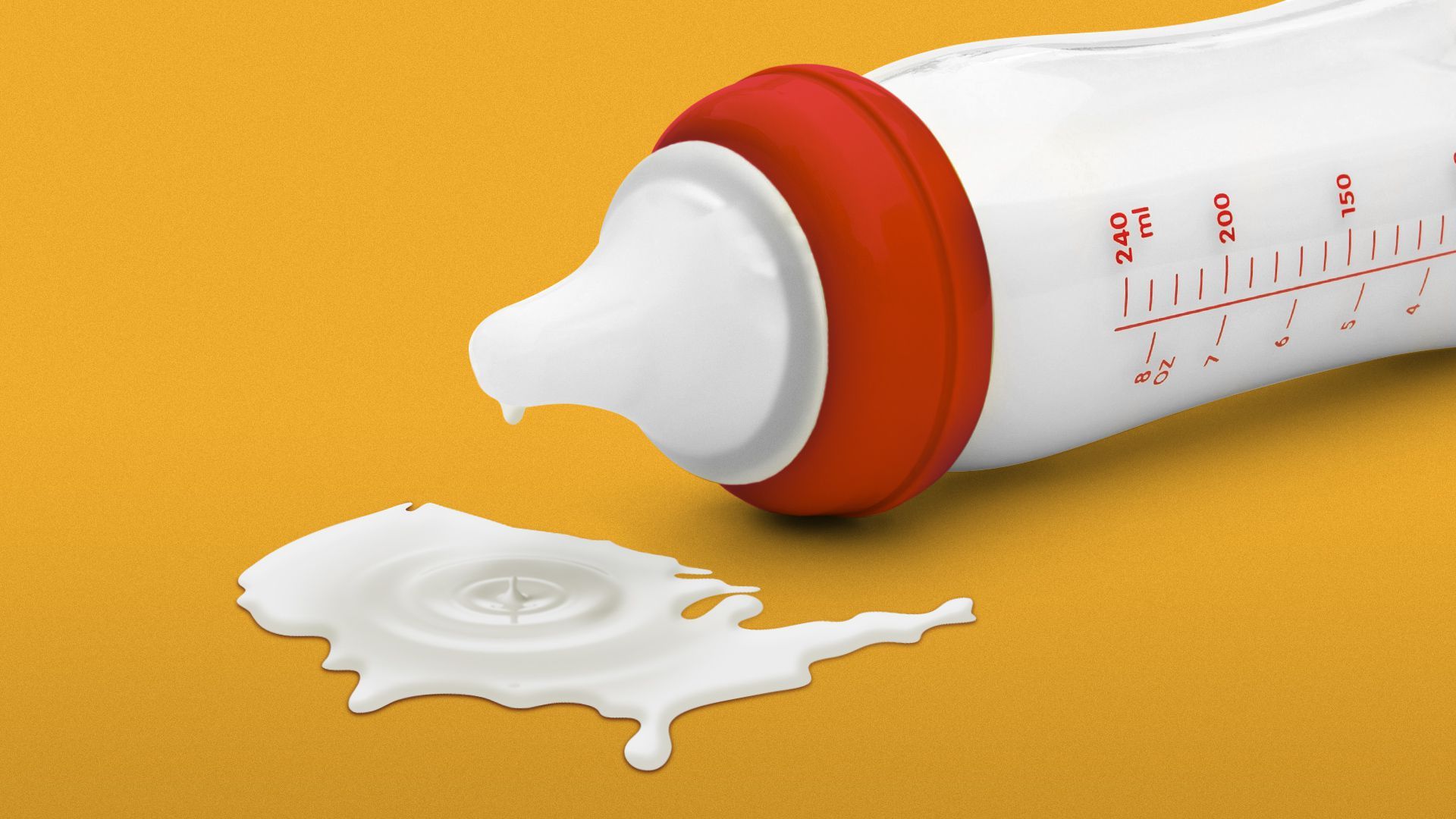
The Department of Defense will be using its contracts with commercial air cargo to transport Nestlé S.A. formula from Switzerland to Indiana and to help speed up the import of infant formula amid a nationwide shortage, the White House said Thursday.
Driving the news: The effort, dubbed Operation Fly Formula, is the latest in a series of steps taken by the Biden administration to address a shortage that is causing panic among millions of parents and caregivers in the U.S.
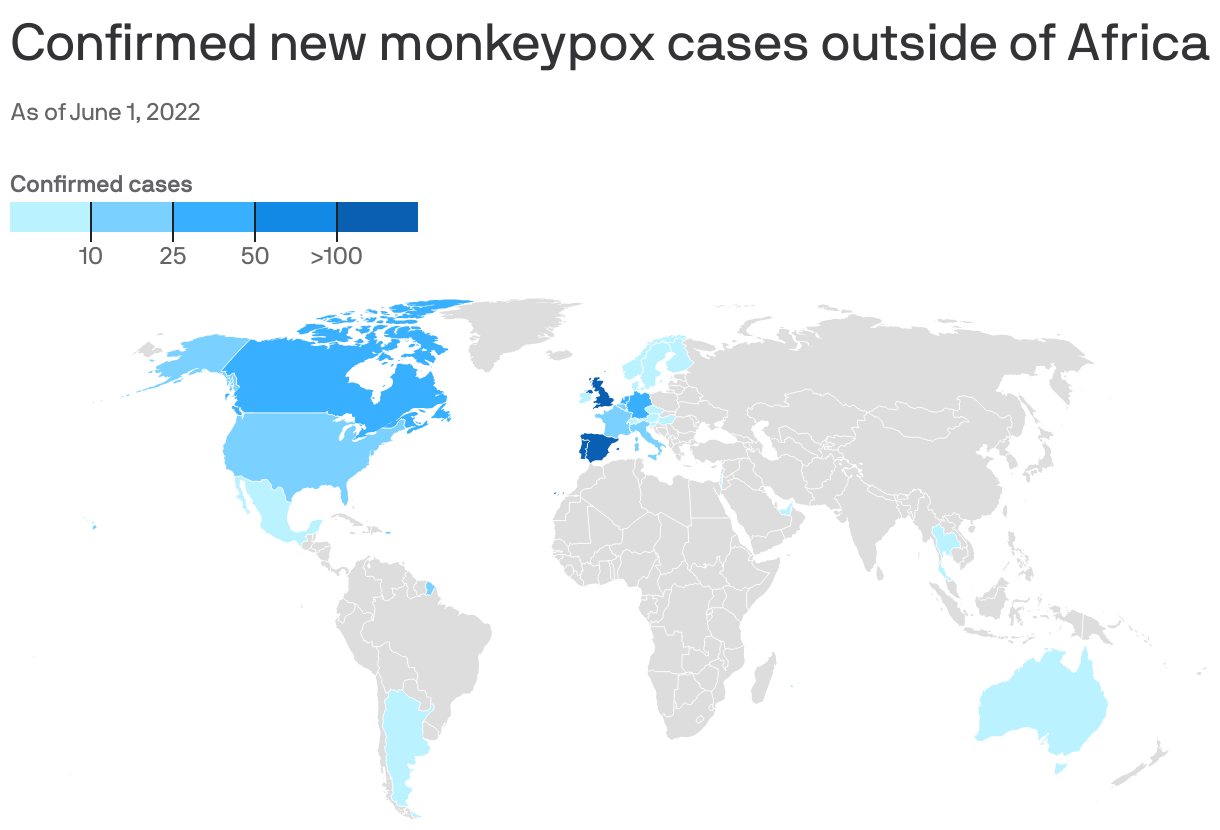
Note: Monkeypox is more common and locally transmitted in west and central Africa; Data: WHO, Axios reporting; Map: Axios Visuals
A monkeypox outbreak in several European countries and one U.S. state may become the largest outbreak of the virus outside of Africa, but it's not likely to cause a global pandemic like COVID, an infectious disease expert tells Axios.
Why it matters: The CDC has confirmed at least nine cases in the United States. The current outbreak is small so far and scientists continue gathering data, but there may be community transmission of the virus.
Parents and caregivers struggling to find infant formula should notice improvement in the availability of the product on shelves “within days,” FDA commissioner Robert Califf told a House subcommittee on Thursday.
Driving the news: The relief should come thanks to higher production from manufacturers and an uptick in imports, Califf said. President Biden on Wednesday invoked the Defense Production Act requiring "suppliers to direct needed resources to infant formula manufacturers before any other customer who may have ordered that good."
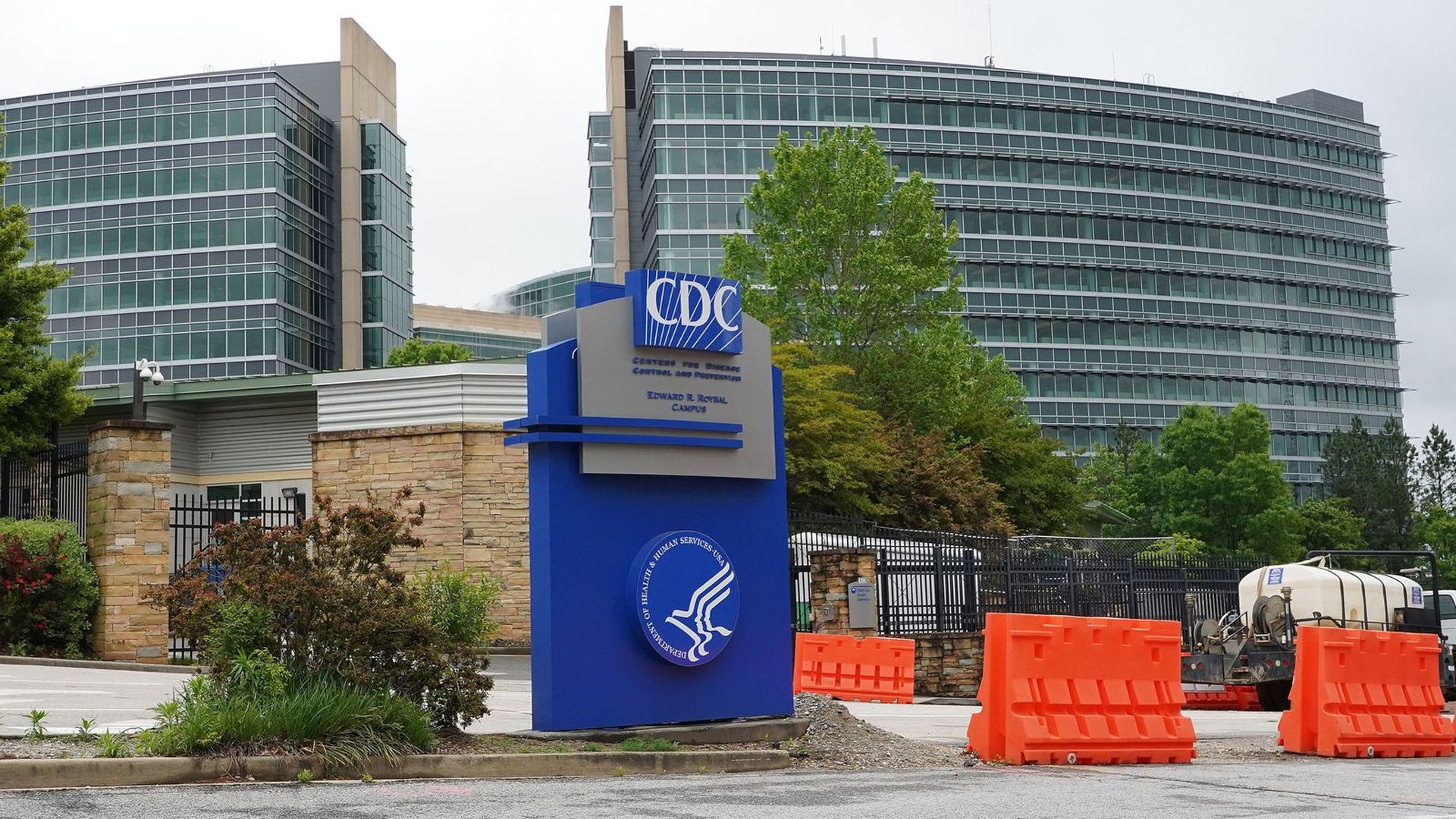
An internal CDC review has found deep concerns about the agency's culture and responsiveness to public health threats, Bloomberg reports.
Why it matters: The findings could usher in big changes at an agency that's caught flack from public health experts, Congress and local officials for its handling of the COVID-19 crisis.
America's in the midst of yet another coronavirus surge, setting up a high-stakes test of whether the country really is ready to live with the virus.
Between the lines: A third of Americans say the pandemic is over, and the spike in cases hasn't prompted much noticeable policy or behavioral change. But vaccines and therapeutics are now widely available, making the virus much less dangerous — at least for people who have access to and choose to use them.
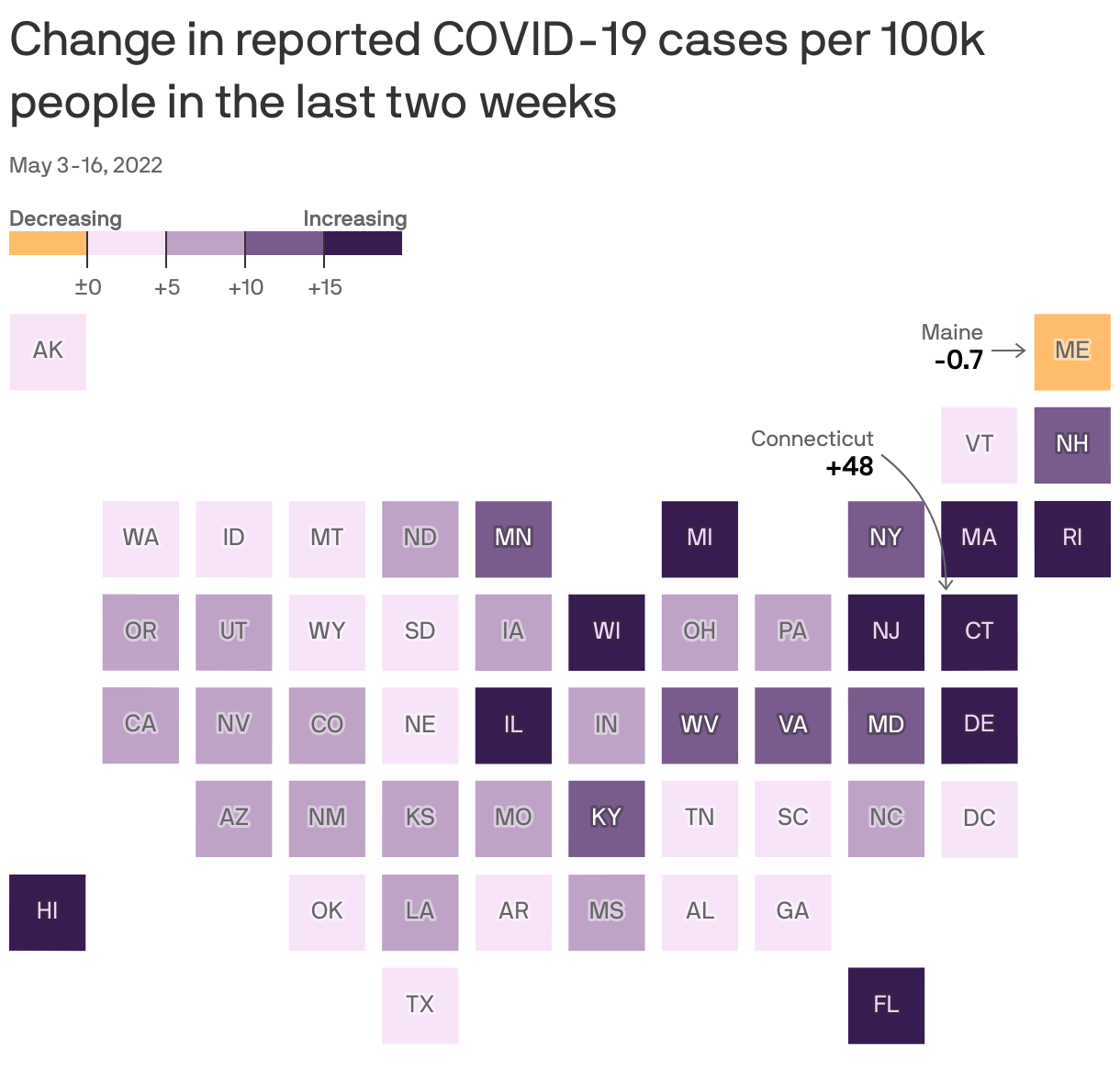
The COVID wave is accelerating across the U.S., with Maine being the only state to report a slight decline in the last two weeks.
Why it matters: A 53% jump in cases and a rise in hospitalizations reflects how case growth has moved beyond the Northeast, with metropolitan areas with high vaccination rates increasingly accounting for a higher share of disease spread.
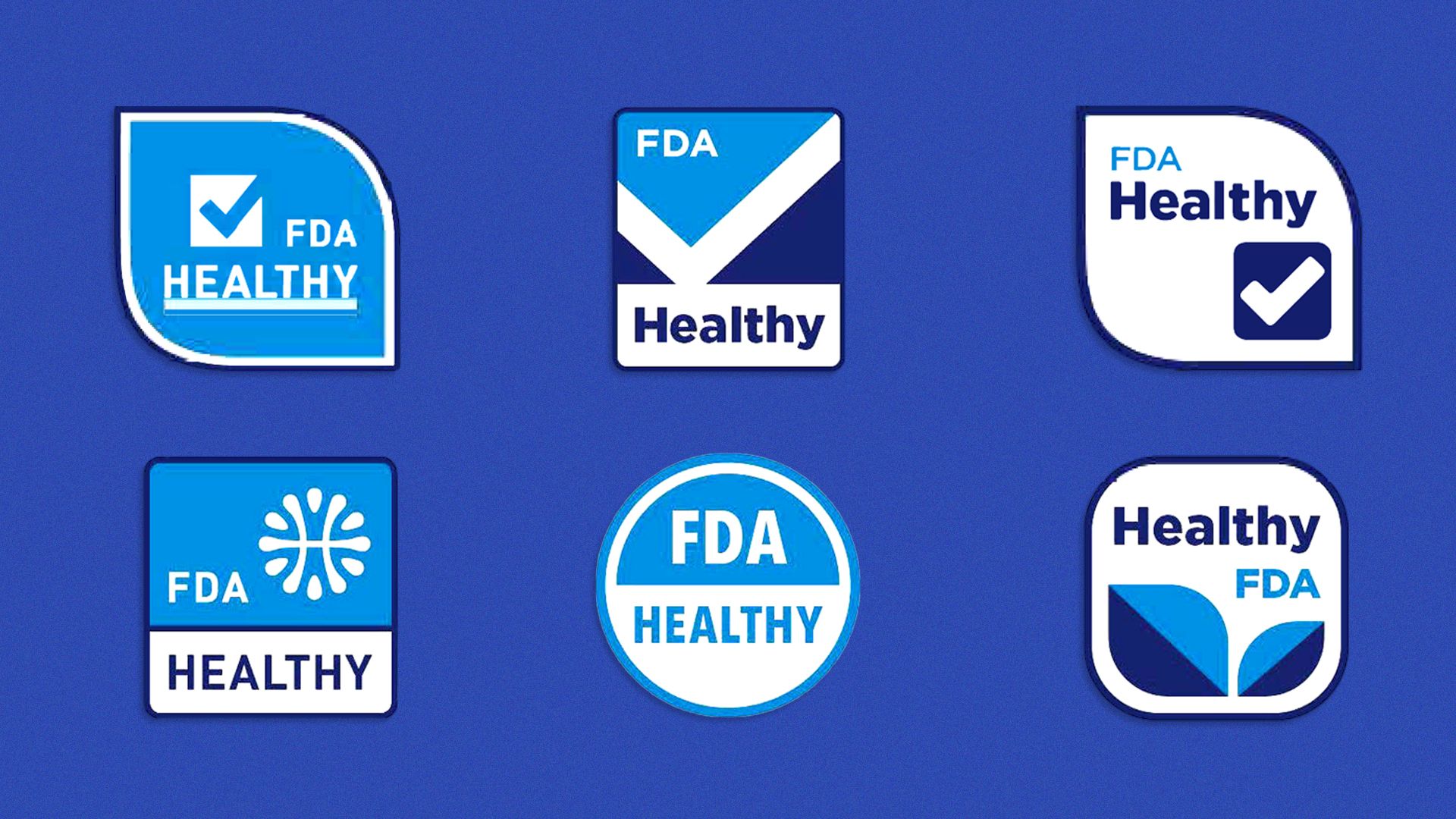
The Food and Drug Administration is testing designs of a label that food manufacturers could voluntarily put on the front of packages indicating that a product is "healthy."
Why it matters: The effort is controversial, in part because the meaning of "healthy" continues to evolve. The FDA itself is in the process of updating its definition, which dates back to 1994.
Other concerns are that such a label could be of dubious value, used too liberally by food makers, or seen by consumers as a product endorsement by the FDA.
Nutritionists make the point that a balanced diet matters more to health than any individual food.
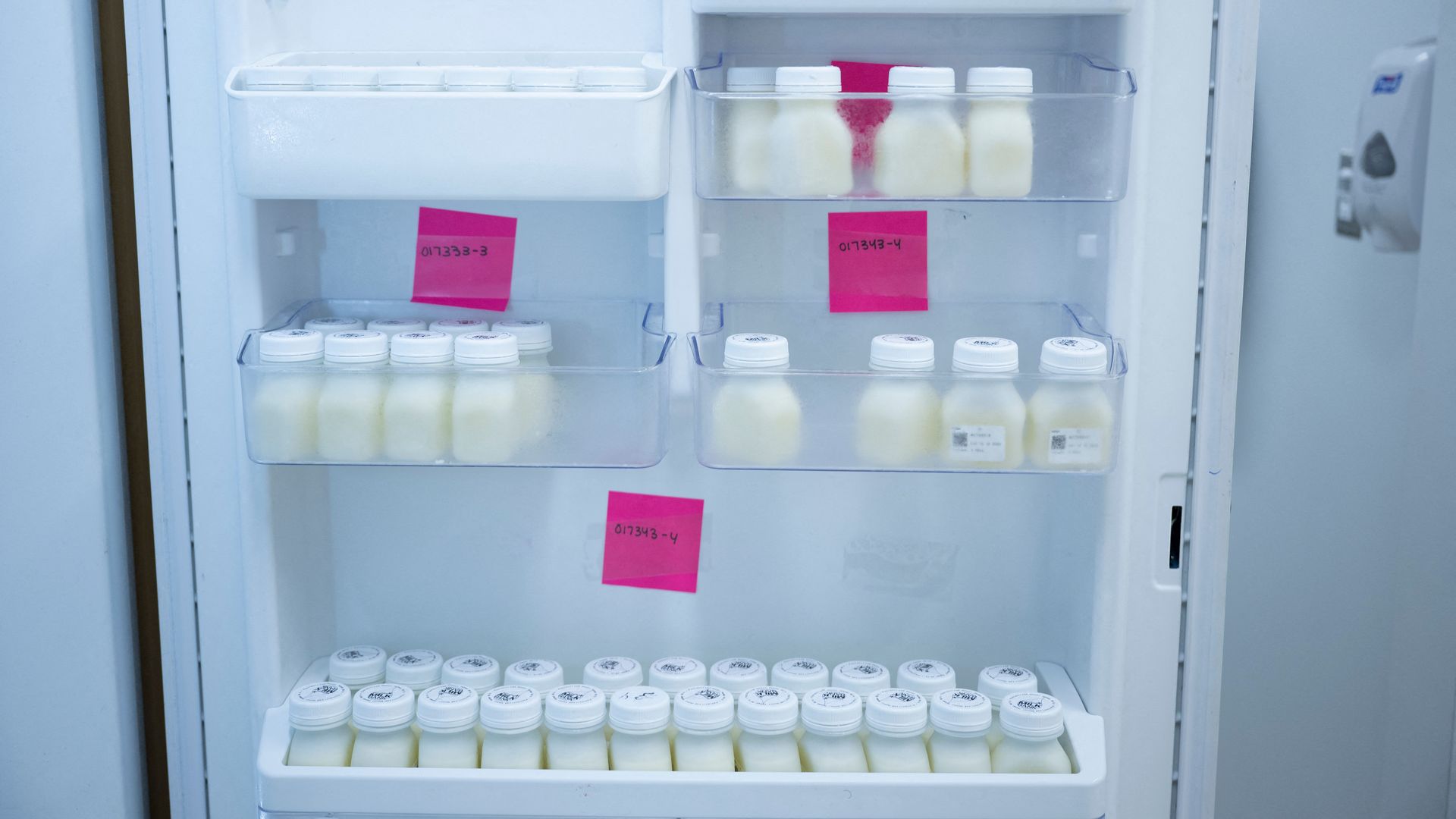
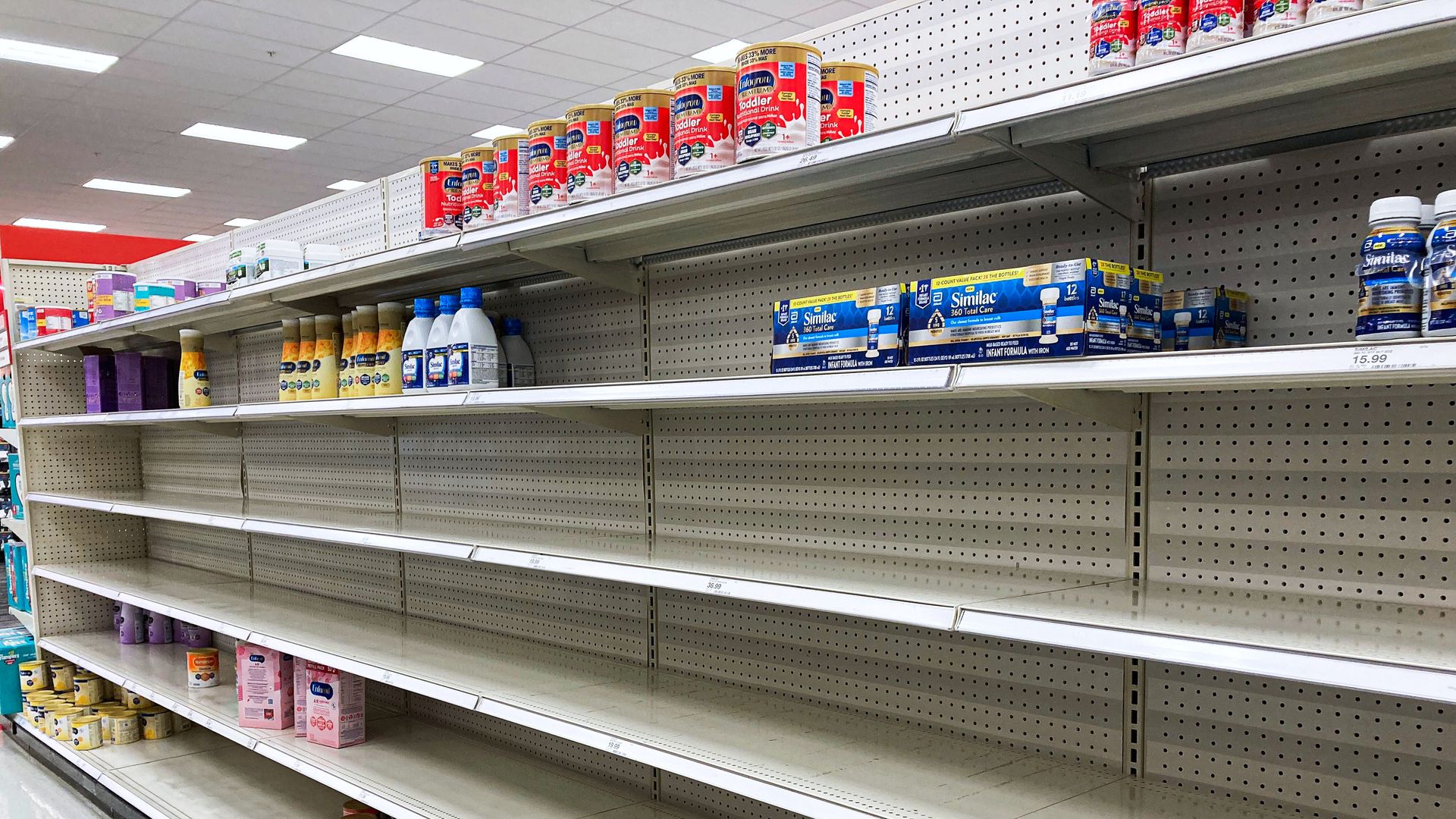
The ongoing baby formula shortage may not end anytime soon as retailers and manufacturers are now expecting a months-long delay until a full supply of formula hits shelves again.
The big picture: The shortage has caused panic among the millions of parents and caregivers in the U.S. who rely on formula to feed their children.
Health officials have confirmed the first known case of monkeypox in the United States this year, the Massachusetts Department of Public Health announced Wednesday.
Driving the news: The CDC is growing concerned about a recent and rare monkeypox outbreak in the U.K., per STAT News. It is not clear yet if the case in Massachusetts is connected to the cases in the U.K.
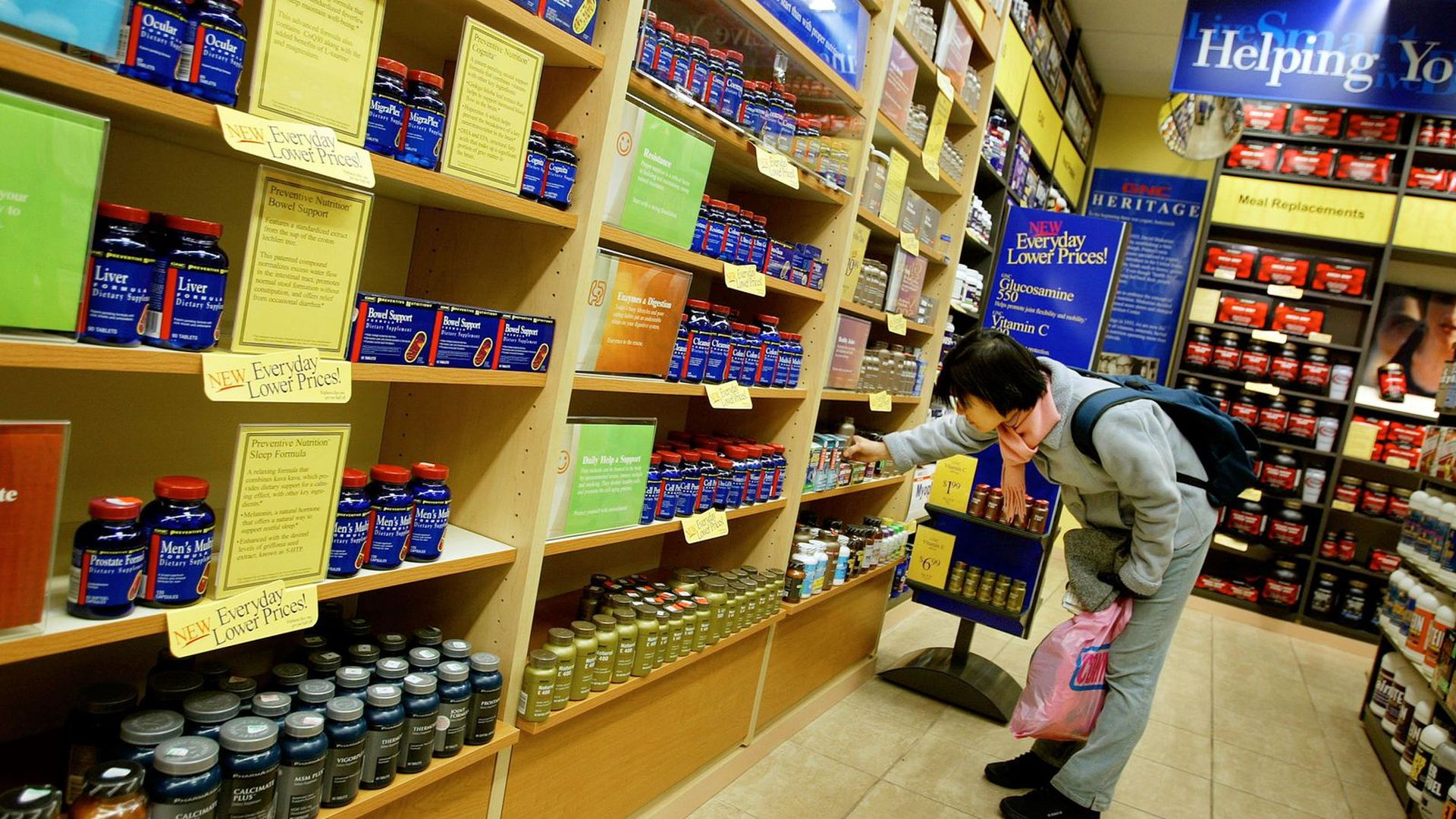
Top lawmakerson the Senate health committee are proposing to beef up FDA oversight of dietary supplements, cosmetics and lab-developed tests as part of a sweeping plan to reauthorize regulatory programs.
Why it matters: The agency has faced challenges looking out for unproven claims or companies that aren't safely manufacturing products.
About 76% of patients with long COVID had not been hospitalized for their initial infection, a new study conducted by the non-profit FAIR Health released Wednesday indicates.
Driving the news: While the patients weren't sick enough to be hospitalized, they experienced "abnormalities of breathing, cough, and malaise and fatigue" months after being diagnosed, the study says. The research has not been formally peer-reviewed.
NASA's Artemis missions, which aim to send a human crew — including a woman and a person of color — to the moon by 2025, will shoot female dummies into space first to test the effects of radiation on them.
Why it matters: Artemis is a prelude to sending human astronauts to Mars, NASA says, and "women appear to be at a greater risk of suffering from the harmful effects of space radiation" than men, Gizmodo reports.
America's dependence on baby formula has come under the spotlight as a national shortage sparked a nutritional crisis.
Why it matters: The U.S. Dietary Guidelines for Americans and the American Academy of Pediatrics recommend infants be exclusively breastfed for about the first six months. But, in practice, most babies get some type of formula.
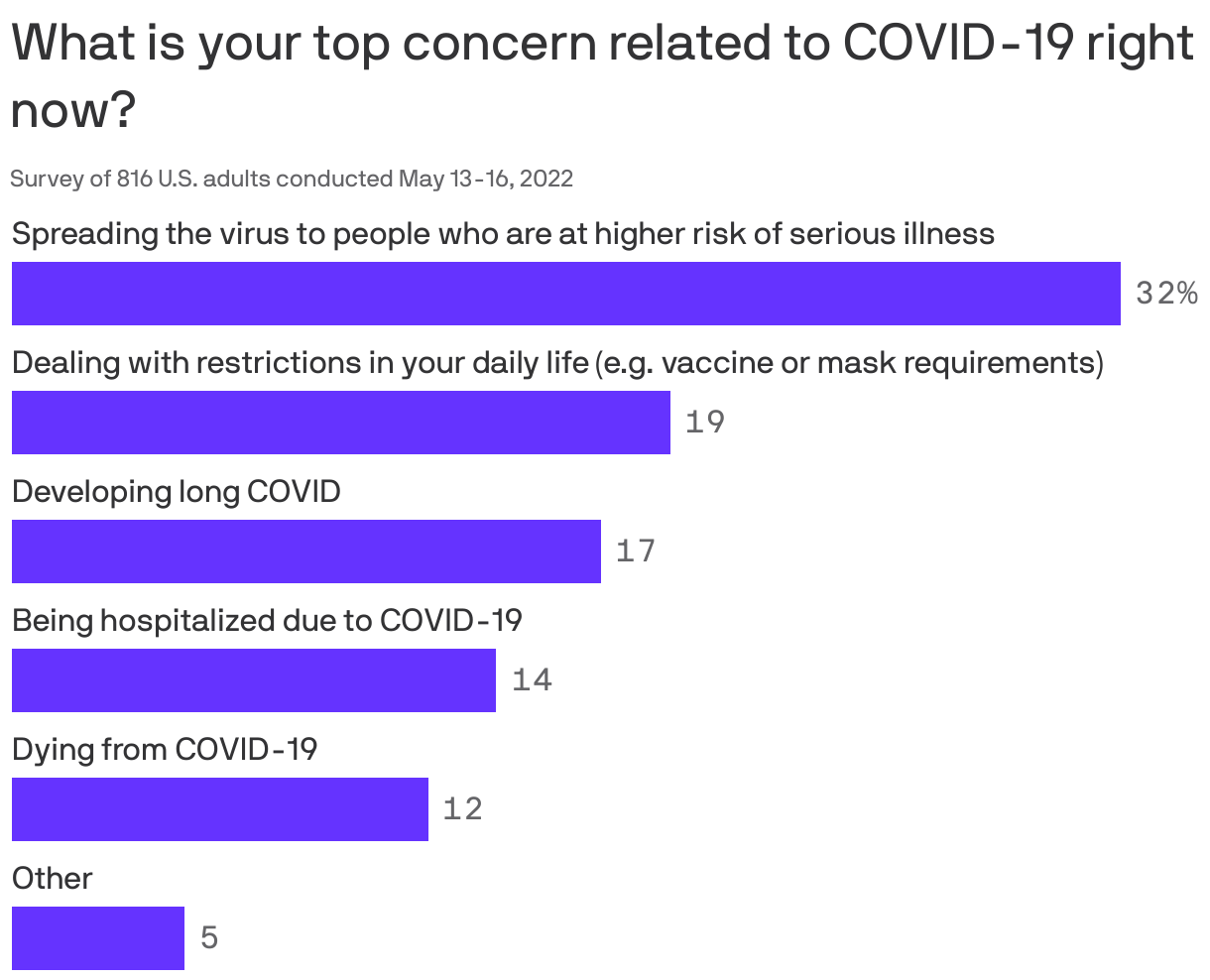
One in three Americans now says the pandemic is over — despite rising cases and hospitalizations — according to the latest installment of the Axios/Ipsos Coronavirus Index.
The big picture: Respondents are more concerned about spreading COVID-19 to others or being inconvenienced by restrictions than getting sick or dying.