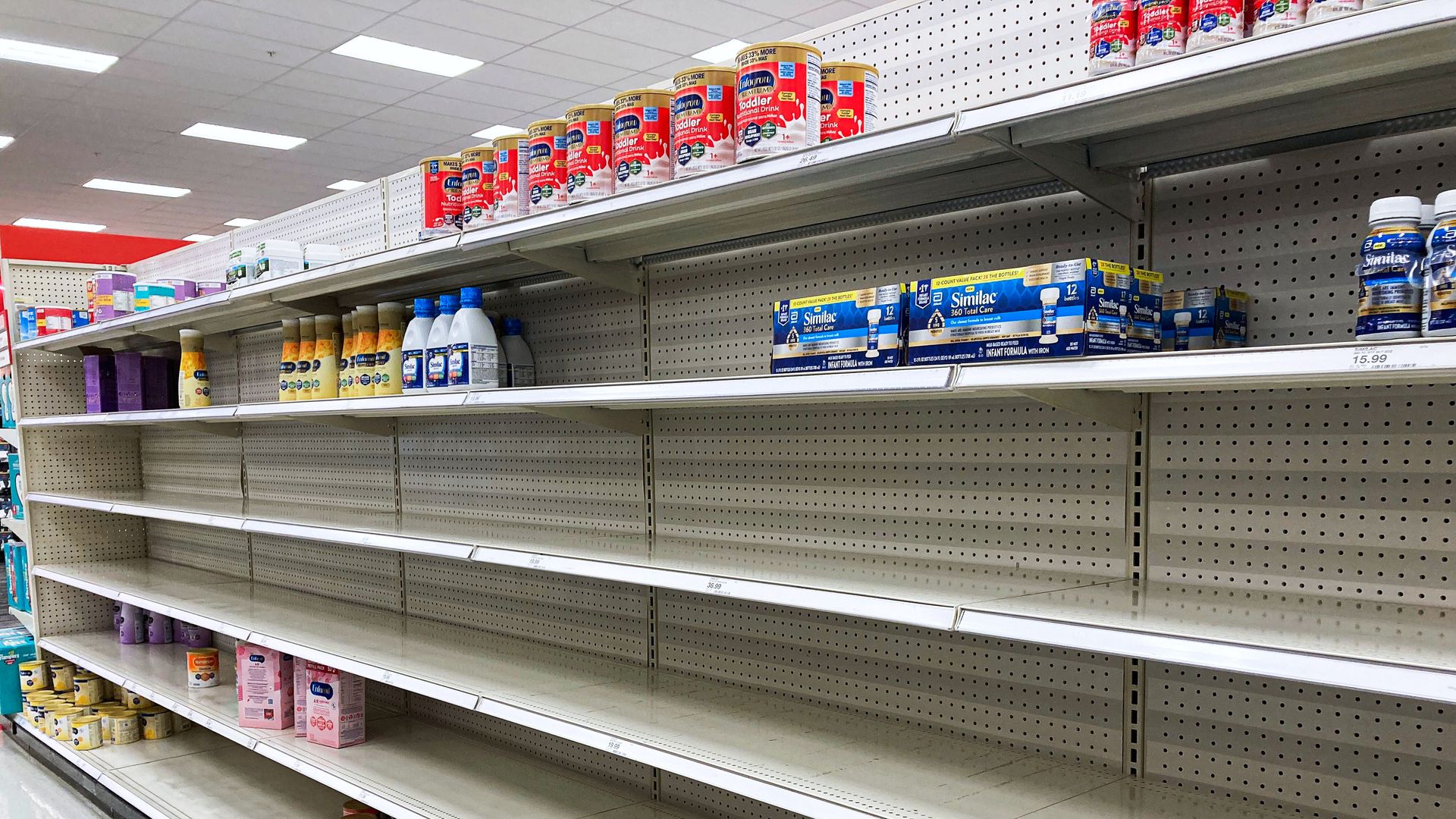
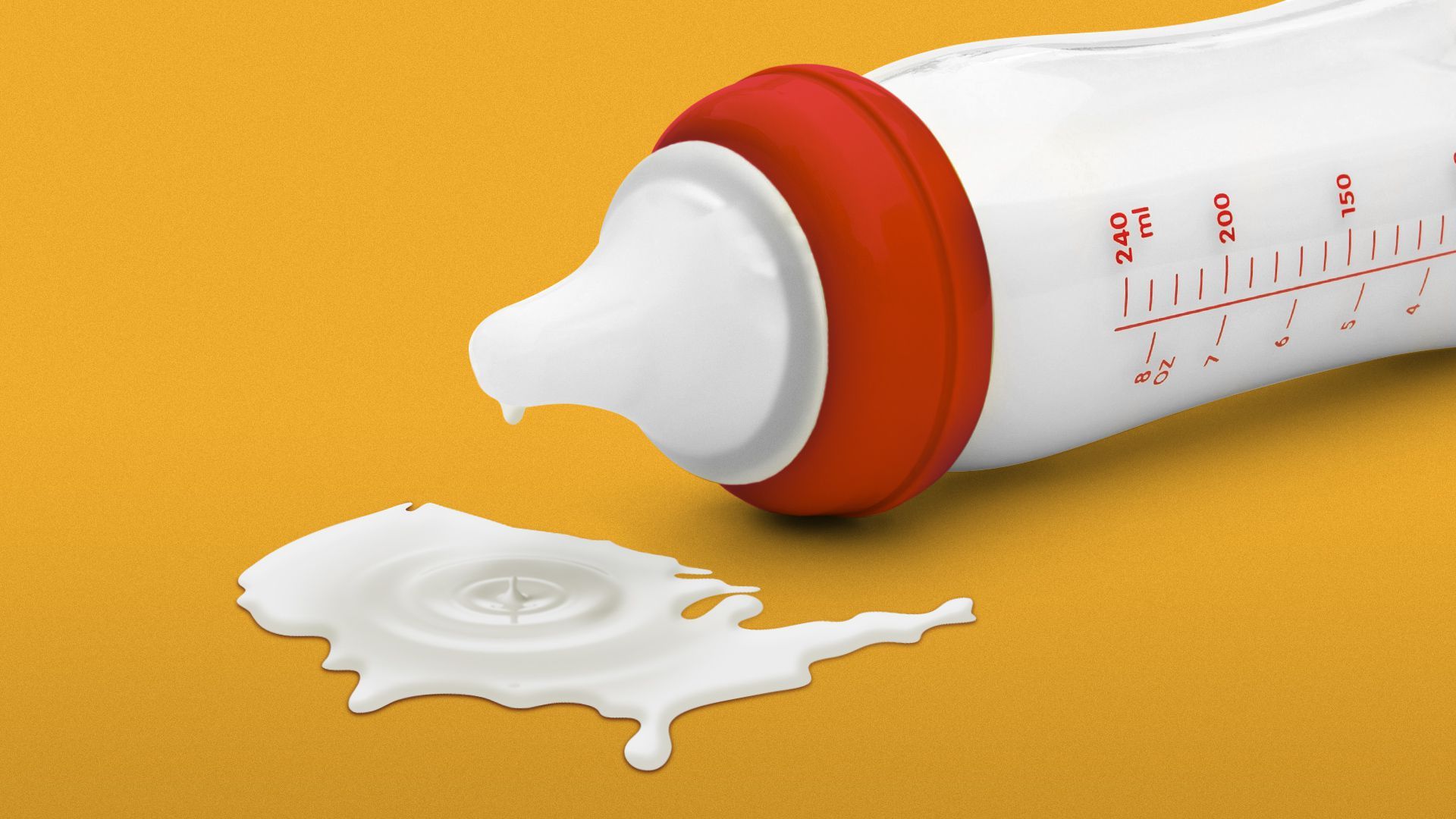
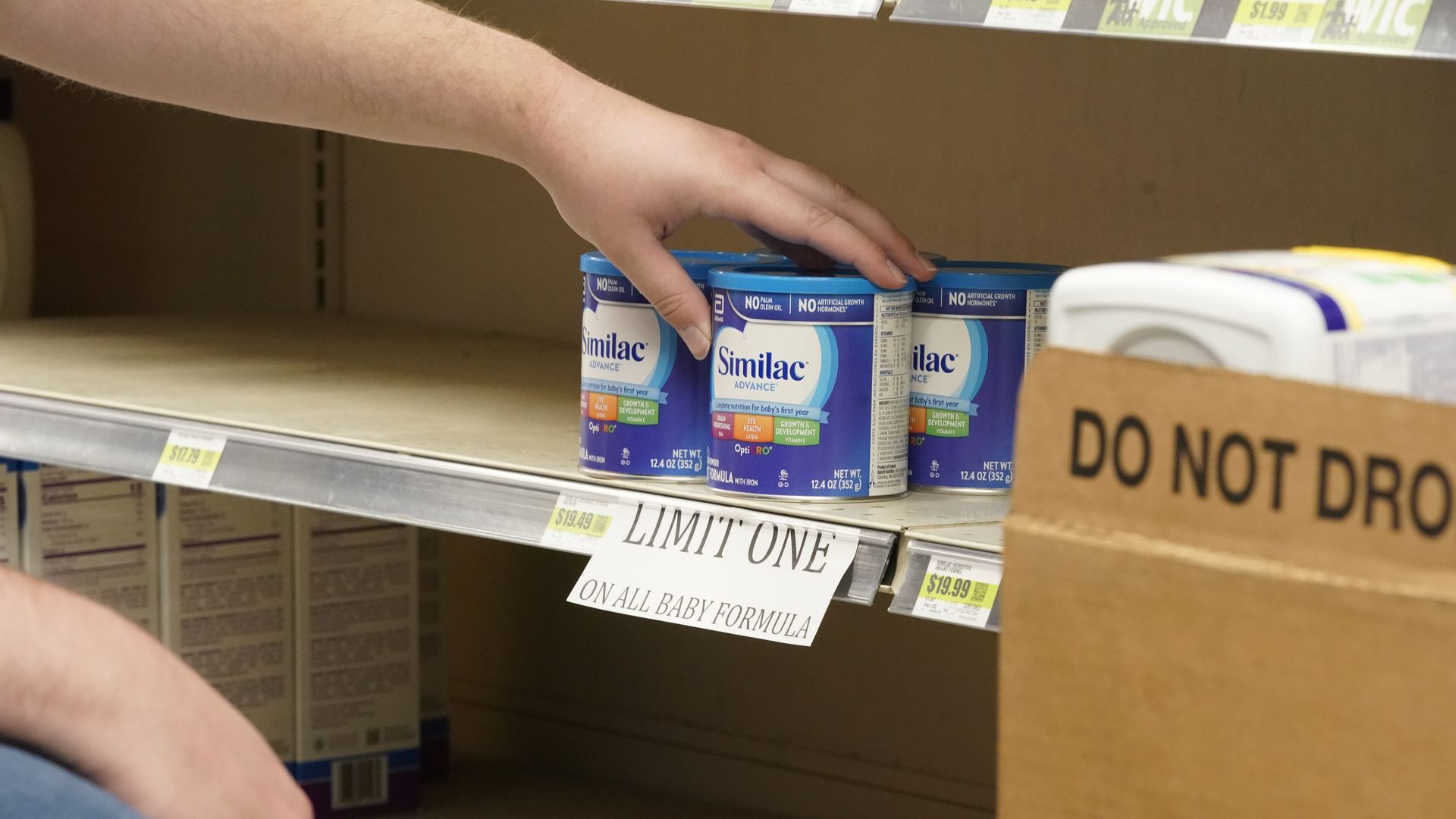
The ongoing baby formula shortage may not end anytime soon as retailers and manufacturers are now expecting a months-long delay until a full supply of formula hits shelves again.
The big picture: The shortage has caused panic among the millions of parents and caregivers in the U.S. who rely on formula to feed their children.
Health officials have confirmed the first known case of monkeypox in the United States this year, the Massachusetts Department of Public Health announced Wednesday.
Driving the news: The CDC is growing concerned about a recent and rare monkeypox outbreak in the U.K., per STAT News. It is not clear yet if the case in Massachusetts is connected to the cases in the U.K.
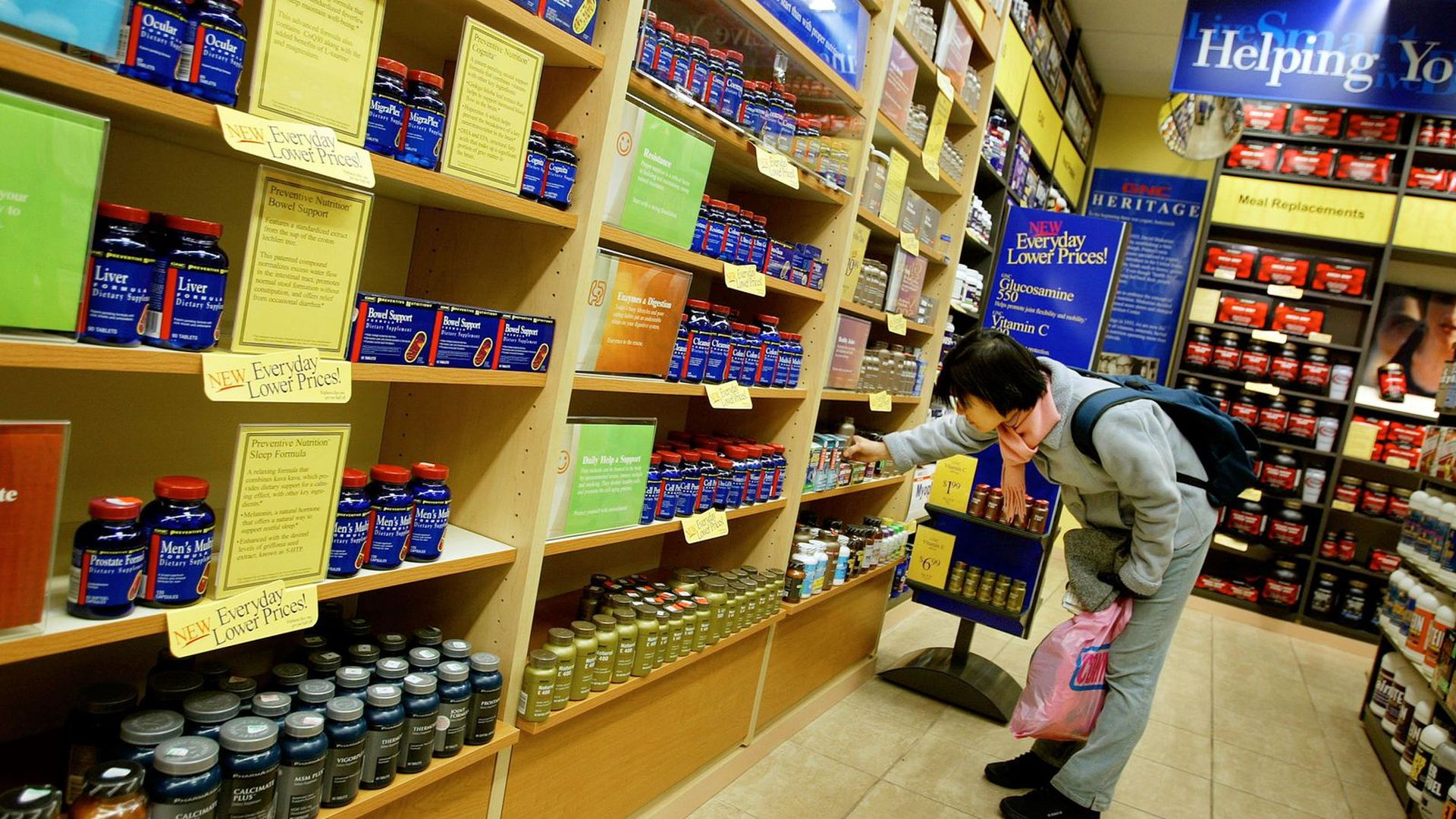
Top lawmakerson the Senate health committee are proposing to beef up FDA oversight of dietary supplements, cosmetics and lab-developed tests as part of a sweeping plan to reauthorize regulatory programs.
Why it matters: The agency has faced challenges looking out for unproven claims or companies that aren't safely manufacturing products.
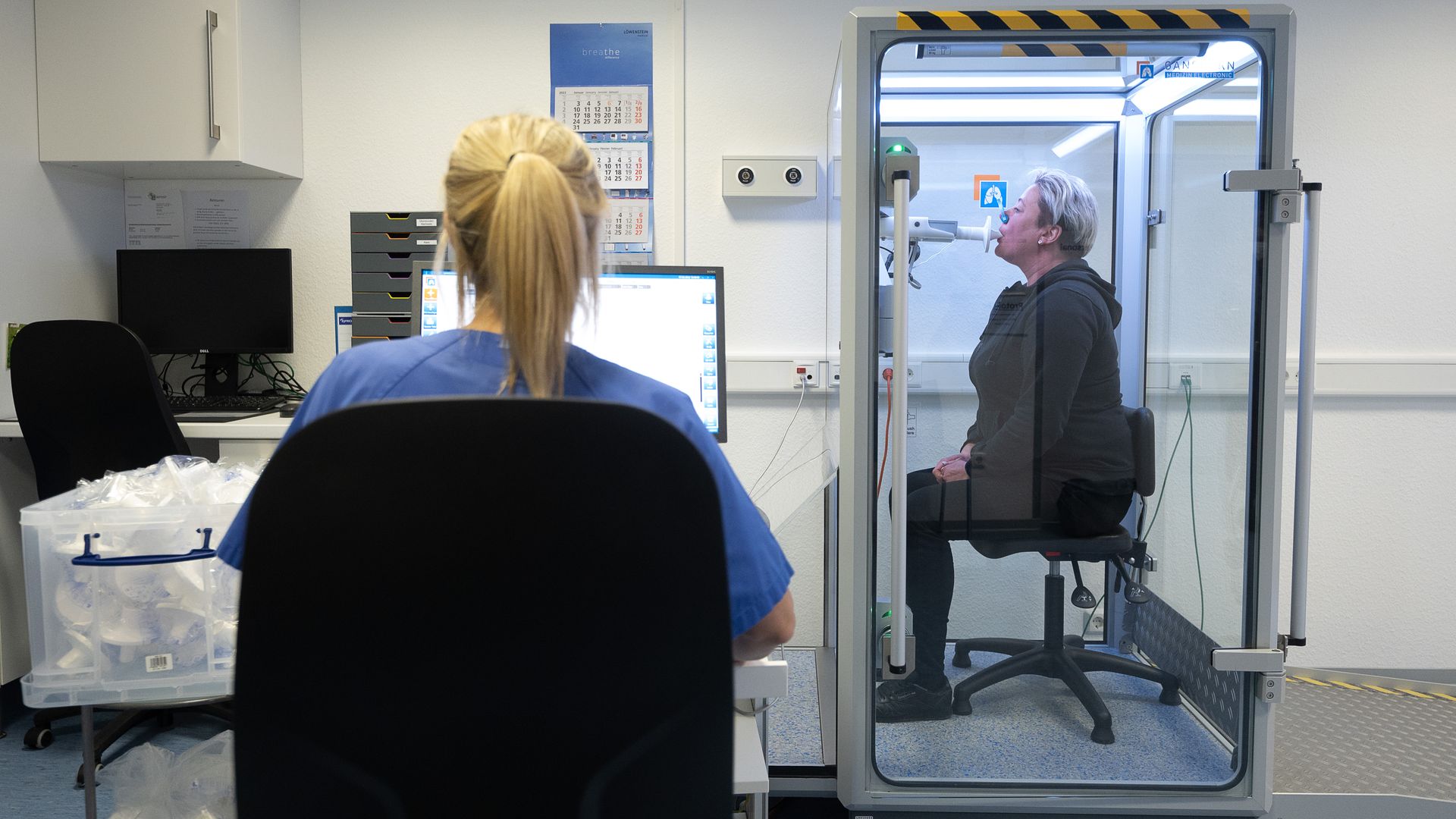
About 76% of patients with long COVID had not been hospitalized for their initial infection, a new study conducted by the non-profit FAIR Health released Wednesday indicates.
Driving the news: While the patients weren't sick enough to be hospitalized, they experienced "abnormalities of breathing, cough, and malaise and fatigue" months after being diagnosed, the study says. The research has not been formally peer-reviewed.
NASA's Artemis missions, which aim to send a human crew — including a woman and a person of color — to the moon by 2025, will shoot female dummies into space first to test the effects of radiation on them.
Why it matters: Artemis is a prelude to sending human astronauts to Mars, NASA says, and "women appear to be at a greater risk of suffering from the harmful effects of space radiation" than men, Gizmodo reports.
America's dependence on baby formula has come under the spotlight as a national shortage sparked a nutritional crisis.
Why it matters: The U.S. Dietary Guidelines for Americans and the American Academy of Pediatrics recommend infants be exclusively breastfed for about the first six months. But, in practice, most babies get some type of formula.
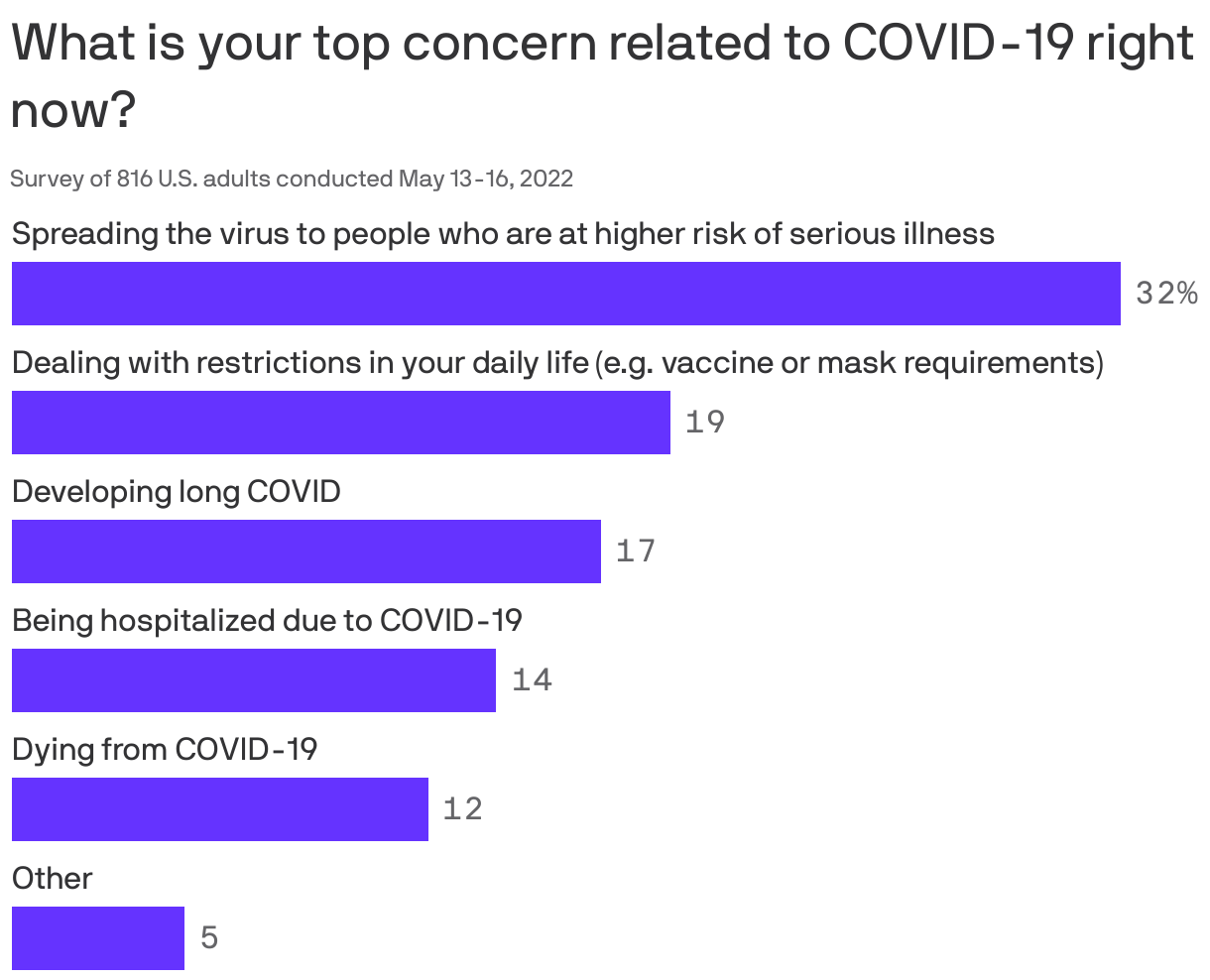
One in three Americans now says the pandemic is over — despite rising cases and hospitalizations — according to the latest installment of the Axios/Ipsos Coronavirus Index.
The big picture: Respondents are more concerned about spreading COVID-19 to others or being inconvenienced by restrictions than getting sick or dying.
House Democrats on Tuesday proposed an emergency funding bill that would give the Food and Drug Administration $28 million to address the nationwide baby formula shortage.
Why it matters: The bill intends to give the FDA funds to increase its staff to help inspect baby formula before it arrives on grocery store shelves and to prepare for potential future shortages.
A Michigan court has temporarily blocked a currently unenforced 1931 state law that banned abortion in the state, Planned Parenthood of Michigan announced on Tuesday.
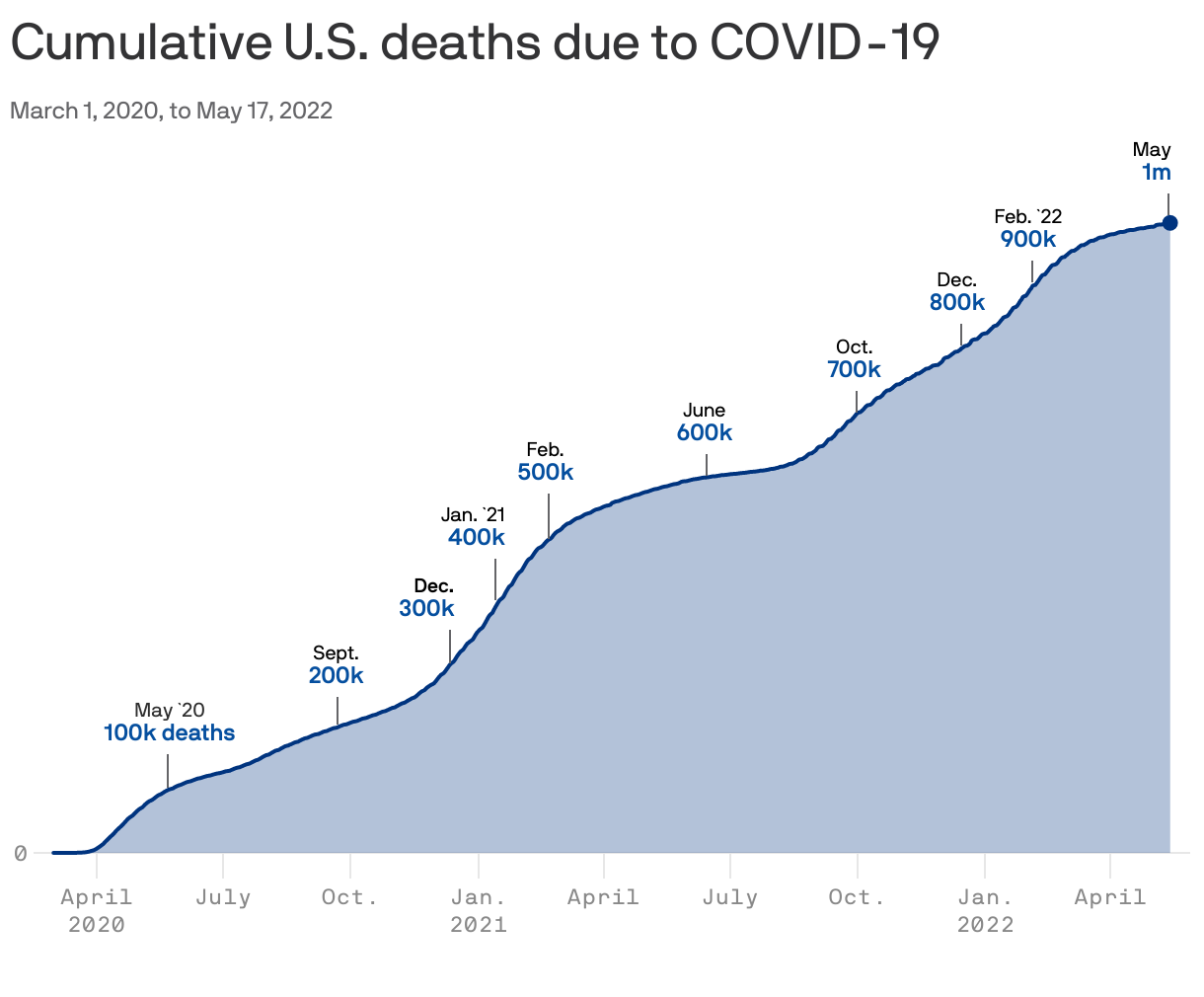
About two years after the U.S. confirmed its first COVID case, more than 1 million people in the nation have now died from the coronavirus, according to data collected by Johns Hopkins University that posted on Tuesday.
The big picture: The gruesome milestone comes three months after the U.S. topped 900,000 COVID deaths. The coronavirus has killed people in the U.S. at higher rates than in other affluent countries, the New York Times reports.
Giving Americans over 60 access to Medicare would add about 7.3 million people to the program's rolls and swell the budget deficit by $155 billion over a five-year period, the Congressional Budget Office and Joint Committee on Taxation project said in a new analysis.
Why it matters: While it's a popular idea with voters, the big price tag illustrates why Medicare expansion isn't gaining centrist support and remains a legislative long shot.
The availability of Spanish-language mental health services is shrinking even as the U.S. Latino population continues to grow, according to a recent study.
Why it matters: Spanish is the second-most spoken language in the U.S., and the number of Latinos who speak Spanish at home has grown from 24.6 million in 2000 to 39.1 million in 2019, according to the Pew Research Center.
Drug-related deaths among adults 65 and older doubled over the course of a decade, with overdoses and misuse of prescription medications from 2018 to 2020 weighing hardest on Black communities, a new report from UnitedHealth Group finds.
Why it matters: While adolescents and young adults have received much of the attention as U.S. overdose deaths hit new records, seniors have posted the largest increase in intentional and unintentional deaths compared with other age groups 15 and older, according to the report.
It's been over a year and a half since the first COVID-19 vaccines were administered in the U.S. In the months since, vaccine eligibility has changed, additional doses have been recommended and more shots have been delivered.
The big picture: An initial two-shot series is considered "fully vaccinated," but boosters are recommended for many age groups to be considered "up to date." Here's the latest on which type of COVID vaccine you're eligible to get and when.
Employers and private insurance plans in 2020 paidhospitals 224% of what Medicare paid for the same services, with rates for inpatient and outpatient care varying widely from site to site, a new report from RAND finds.
The intrigue: The report found that hospital prices had no significant correlation with hospitals' share of Medicare and Medicaid patients, which hospitals say factor into private rates. Price did positively correlate with hospital market share.