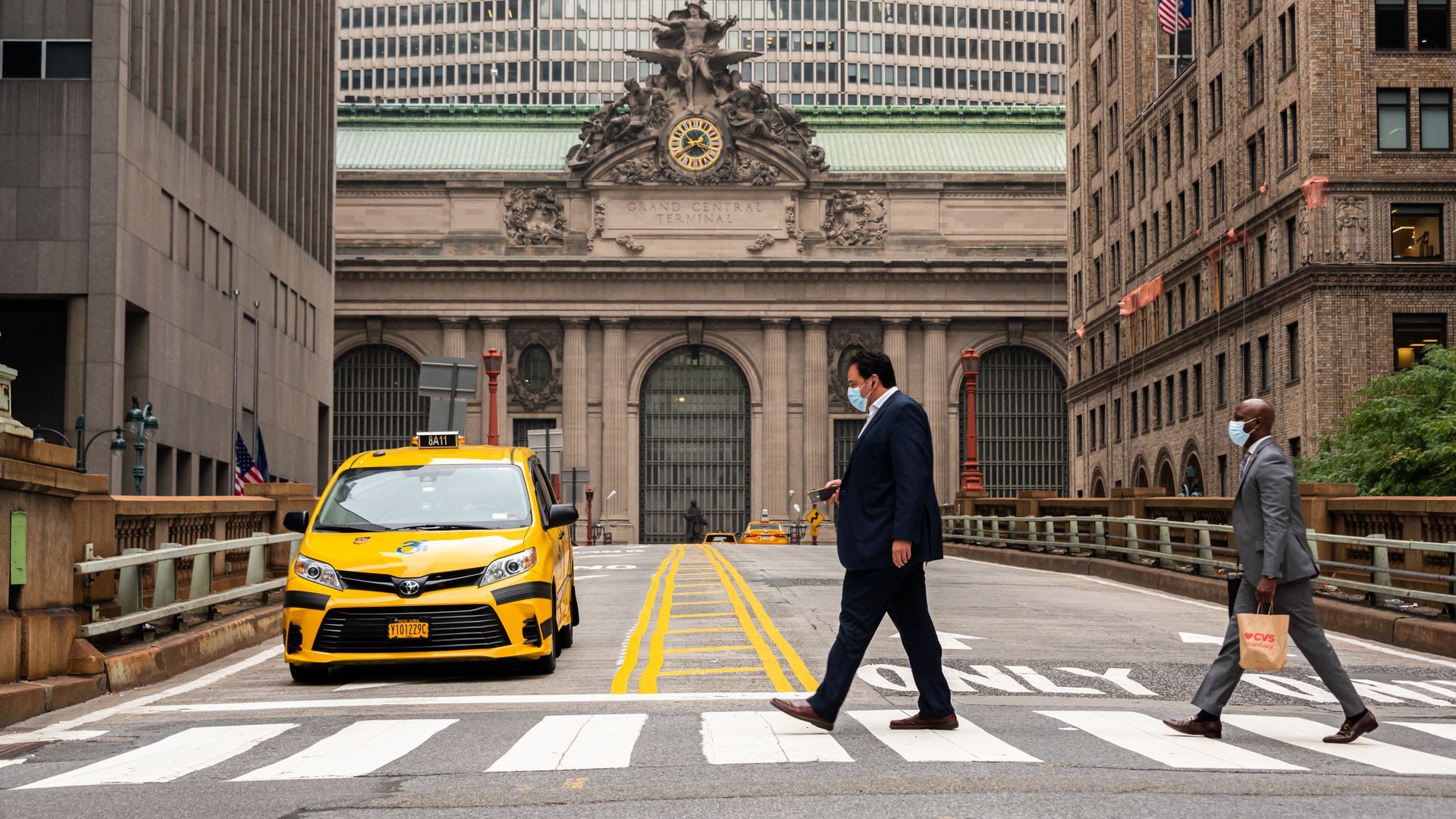
The U.S. confirmed at least 83,010 coronavirus cases on Friday, the country's highest daily total since the pandemic started, according to data from the COVID Tracking Project.
By the numbers: Friday's total surpassed the U.S.'s previous record set on July 17 when 76,842 cases were recorded.
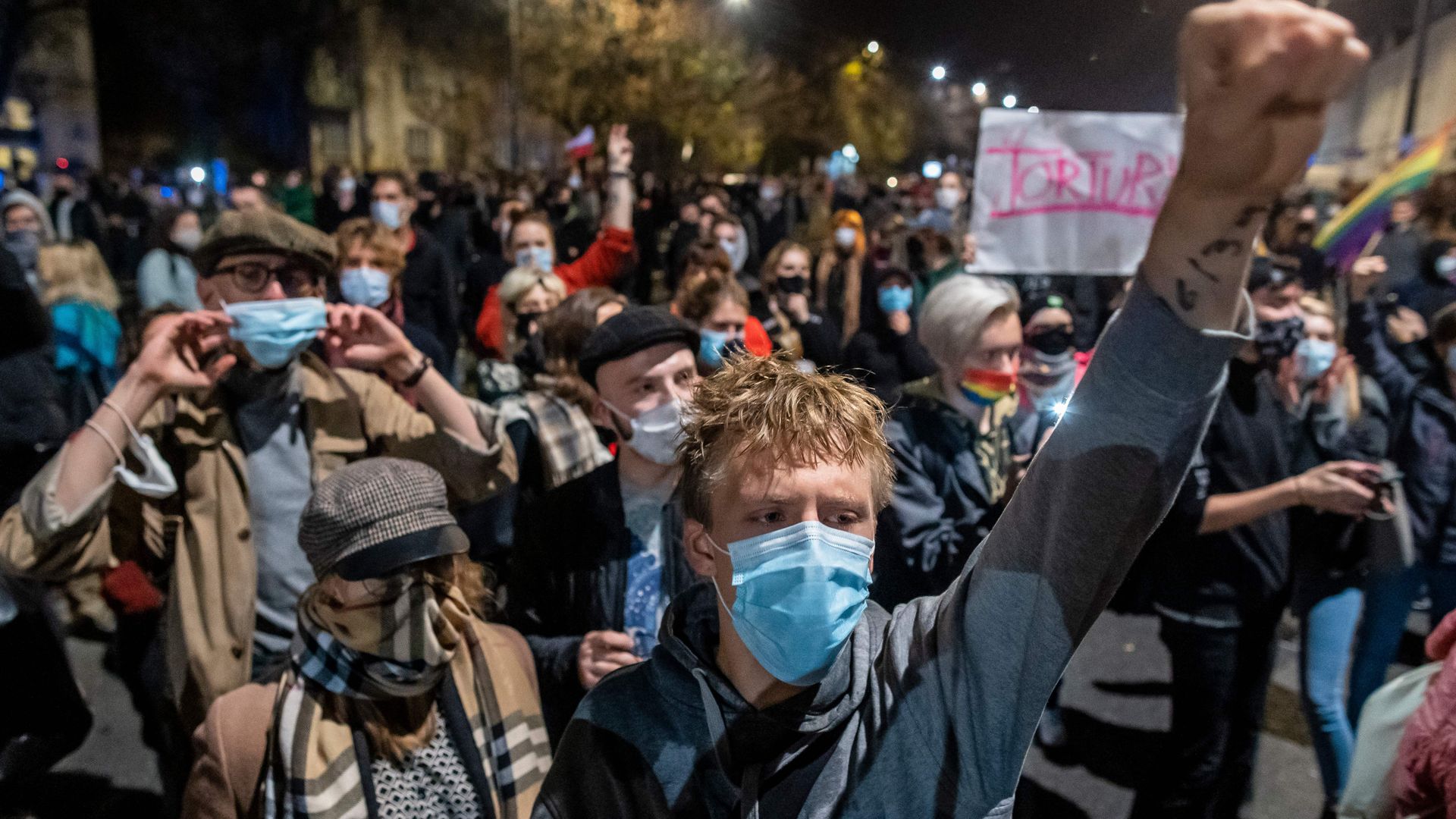
Thousands of protesters turned out on Friday in cities across Poland following a Thursday court ruling banning almost all abortions, the BBC reports.
Why it matters: Opinion polls show a "clear majority" against further restricting abortions in the country, per BBC. Poland, a Roman Catholic country, was already said to have one of the strictest abortion laws in Europe.
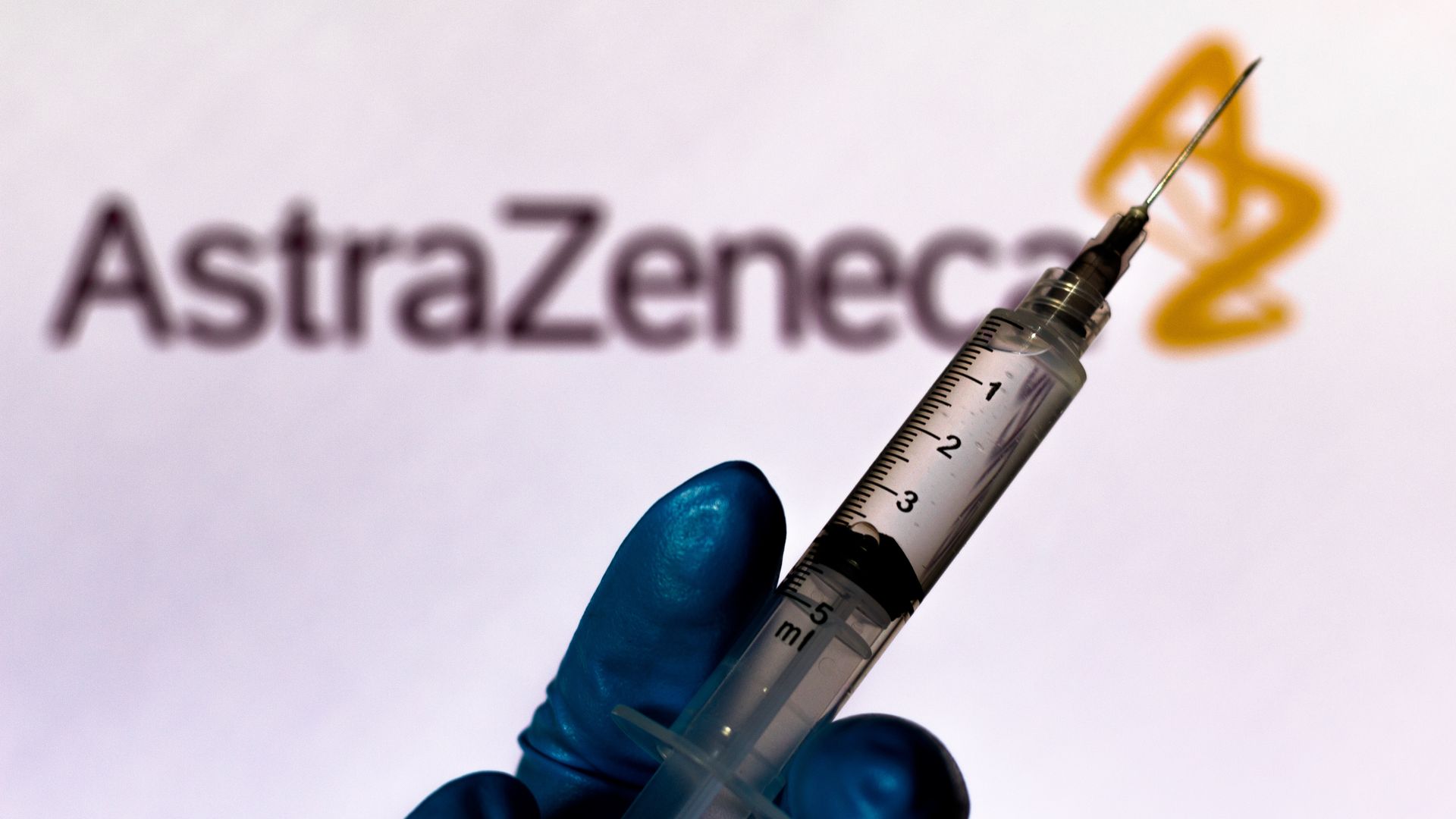
AstraZeneca announced on Friday that the Food and Drug Administration has authorized the company to restart phase 3 clinical trials for its coronavirus vaccine, which were paused in early September.
Why it matters: All clinical trials were temporarily halted in September after a volunteer became ill with transverse myelitis upon receiving a second dose of the vaccine.
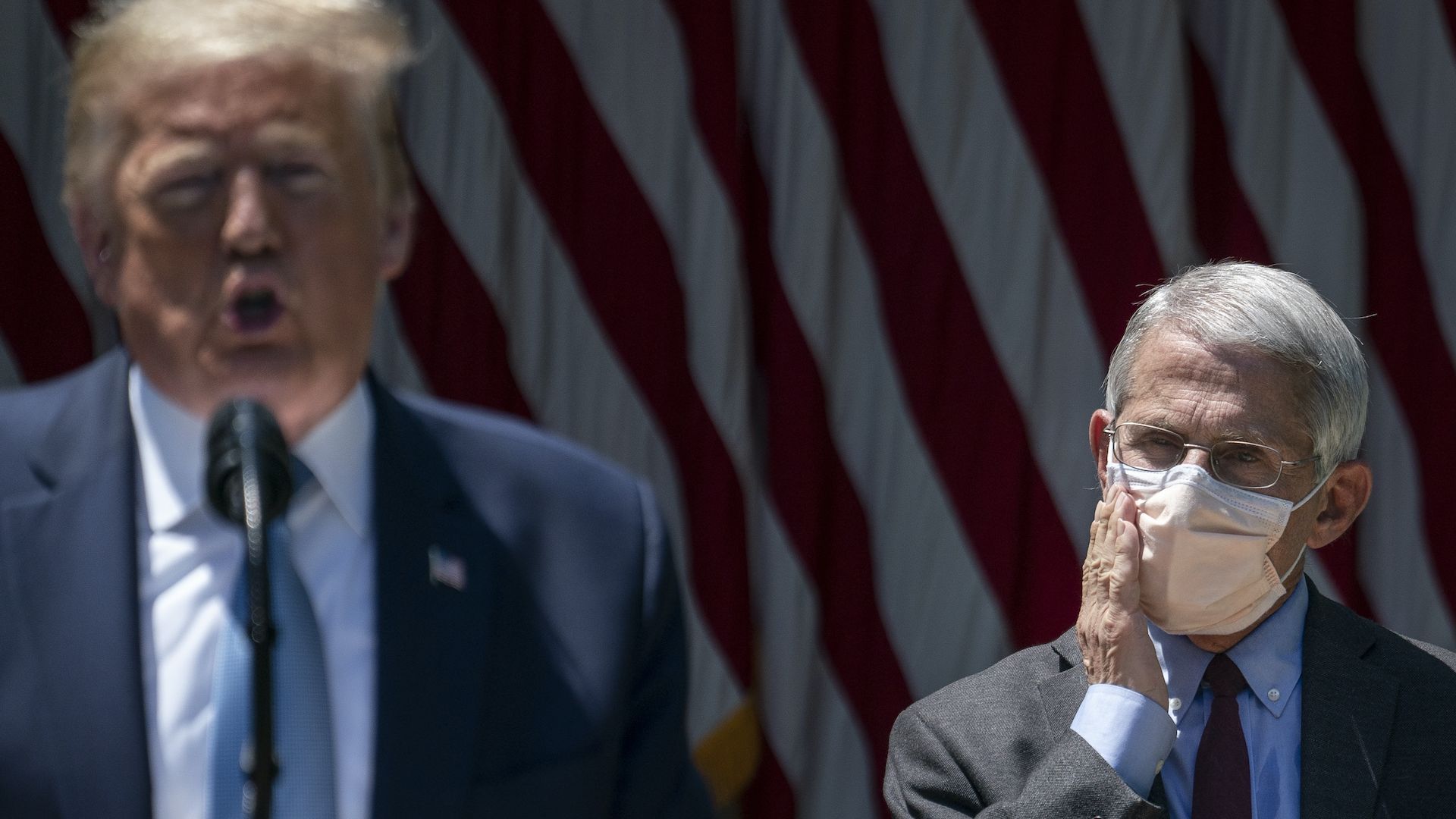
President Trump has not attended a White House coronavirus task force meeting in “several months,” NIAID director Anthony Fauci told MSNBC on Friday.
Why it matters: At the beginning of the pandemic, the task force, led by Vice President Mike Pence, met every day, but in the "last several weeks," members have held virtual meetings once a week, Fauci said, even as the number of new cases continues to surge in the country.
Nearly 130,000 fewer people will die of COVID-19 this winter if 95% of Americans wear face masks in public, according to research published Friday.
Why it matters: “Increasing mask use is one of the best strategies that we have right now to delay the imposition of social distancing mandates," Dr. Christopher Murray of the University of Washington told the N.Y. Times.
Macy's said Santa Claus won't be greeting kids at its flagship New York store this year due to the coronavirus, interrupting a holiday tradition started nearly 160 years ago, AP reports.
The state of play: Before taking a picture with the jolly old man, crowds walk in tight quarters through a maze-like Santaland that's filled with Christmas trees, running toy trains and elves in green costumes.
A new AI model is able to predict future onset of Alzheimer's disease around 7 years in advance of diagnosis using short speech tests, according to a new study published in The Lancet eClinicalMedicine.
The big picture: There's still no treatment for Alzheimer's, meaning that there could be limited real-world demand by patients for such a tool today. But it could also be valuable for recruiting patients for clinical trials for potential treatments.
"He's a very confused guy," Joe Biden said during the final presidential debate on Thursday after President Trump cited Sen. Bernie Sanders' attempt to make single-payer health care work in Vermont. "He thinks he's running against somebody else"
Why it matters: The Trump campaign has sought to paint Biden as an empty vessel for radical socialism, despite the former vice president's more moderate positions compared to candidates he ran against in the Democratic primary. Biden said the public health insurance option in his plan is not an example of socialized medicine, but is meant to ensure that Americans "have the right to have affordable health care."
President Trump repeated baseless claims at the final presidential debate that the coronavirus "will go away" and that the U.S. is "rounding the turn," while Joe Biden argued that any president that has allowed 220,000 Americans to die on his watch should not be re-elected.
Why it matters: The U.S. is now averaging about 59,000 new coronavirus infections a day, and added another 73,000 cases on Thursday, according to the Covid Tracking Project. The country recorded 1,038 deaths due to the virus Thursday, the highest since late September.
Gilead Sciences on Thursday received approval from the Food and Drug Administration for remdesivir, an antiviral treatment that has shown modest results against treating COVID-19.
Why it matters: It's the first and only fully FDA-approved drug in the U.S. for treating the coronavirus.
It's still the early days of the coronavirus pandemic, but history, biology and the knowledge gained from our first nine months with COVID-19 point to how the pandemic might end.
The big picture: Pandemics don't last forever. But when they end, it usually isn't because a virus disappearsor is eliminated. Instead, they can settle into a population, becoming a constant background presence that occasionally flares up in local outbreaks.
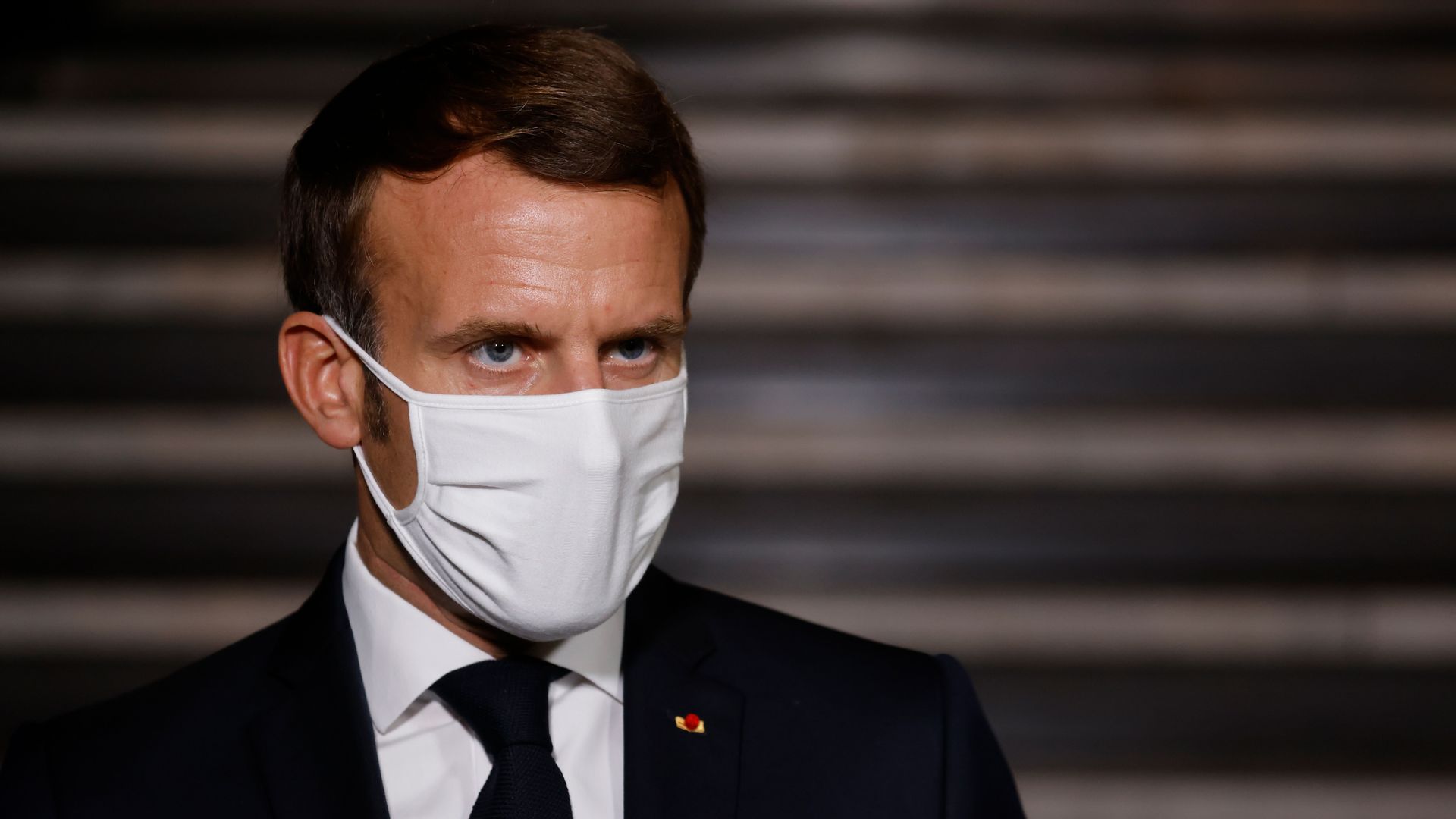
France has become the second country in Western Europe to surpass 1 million COVID-19 cases, Johns Hopkins University data shows
The big picture: France had reported 1,000,369 cases and 34,075 deaths from the coronavirus by Thursday morning, per JHU. French President Emmanuel Macron declared a state of health emergency and imposed a curfew on virus hot spots earlier this month. Spain on Wednesday became the first Western European nation to top 1 million cases.
If the U.S. death rate had matched that of other wealthy countries, between about 55,000 and 215,000 Americans would still be alive, according to a scathing new analysis by Columbia University's National Center for Disaster Preparedness.
Why it matters: These countries have taken a significantly different approach to the virus than the U.S., providing yet another example that things didn't have to be this way.
Every available piece of data proves it: The coronavirus pandemic is getting worse again, all across America.
The big picture: As the death toll ticks past 212,000, at a moment when containing the virus ought to be easier and more urgent than ever, we are instead giving it a bigger foothold to grow from.
Large school districts that were in a hybrid reopening phase reverted back to virtual learning in response to growing community spread of the coronavirus.
Driving the news: Both Boston and Chicago's public school districts closed for in-person learning as health officials investigate what caused the spikes in nearby suburbs.
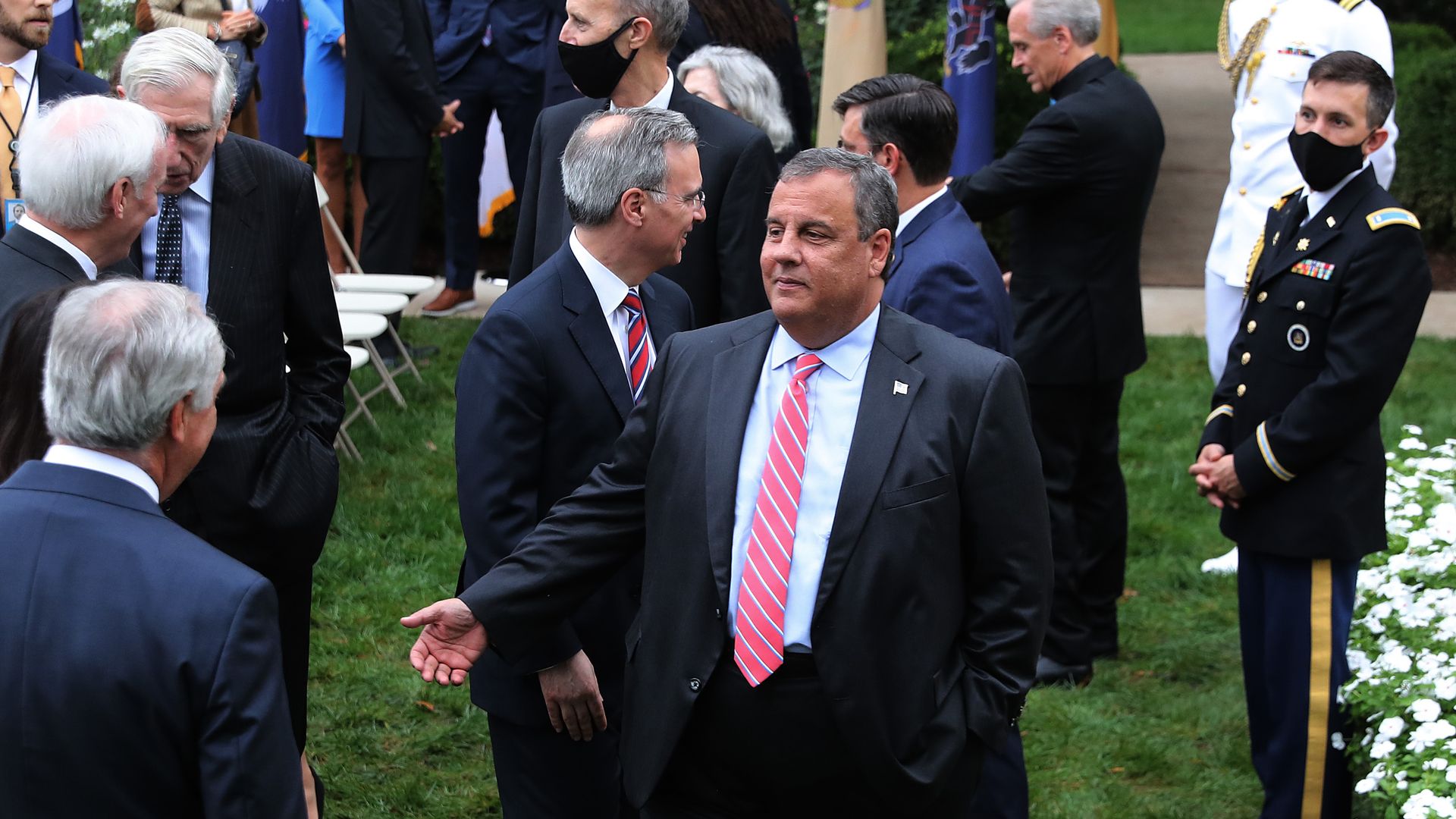
Former New Jersey Gov. Chris Christie (R), who was hospitalized with COVID-19, implored people in a Wall Street Journal op-ed Wednesday to wear masks "or you may regret it — as I did."
The big picture: Christie didn't wear a mask when he helped President Trump prepare for the first presidential debate nor during the White House Rose Garden ceremony for Supreme Court nominee Judge Amy Coney Barrett in September. "I let my guard down and left my mask off," Christie wrote in the WSJ article.