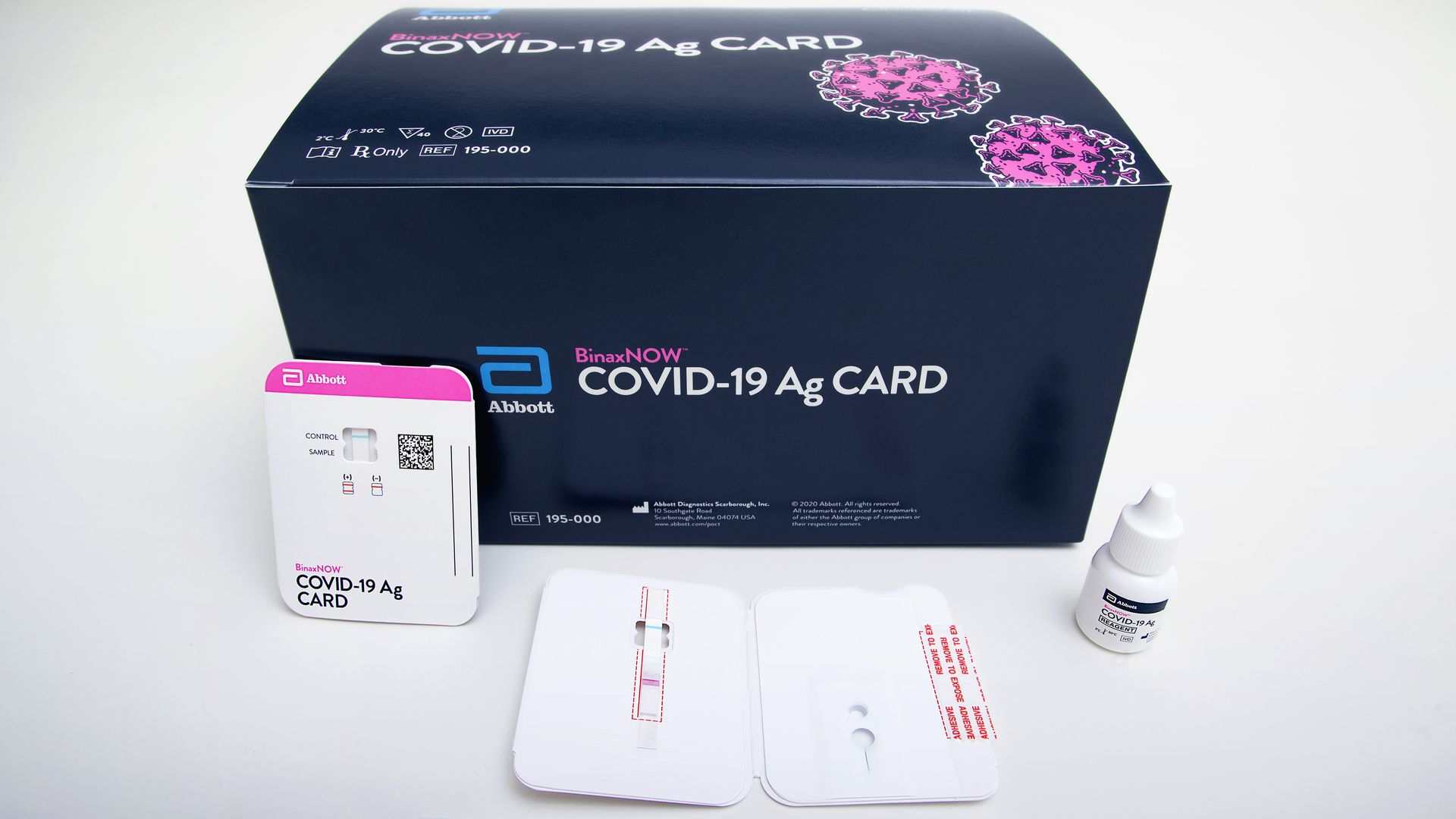
The Trump administration plans to purchase 150 million rapid coronavirus tests from Abbott Laboratories, the White House announced Thursday.
Why it matters: Abbott said Wednesday it plans to make 50 million of the $5 coronavirus tests by the start of October. COVID-19 testing, which is essential to tracking the spread of the virus, declined across the U.S. this month.
House Speaker Nancy Pelosi said after a 25-minute phone call with White House chief of staff Mark Meadows on Thursday that the two sides remain at a "tragic impasse" over a coronavirus relief package.
The state of play: Democrats are willing to agree to a $2.2 trillion stimulus deal — $1.2 trillion less than the HEROES Act that the House passed in May, Pelosi said. She called on the Trump administration to meet them in the middle, and she said talks would not resume unless they do so.
Iowa Gov. Kim Reynolds (R) on Thursday ordered all bars, nightclubs and breweries to close in six counties across the state after a spike in positive coronavirus cases, specifically among young adults, the Des Moines Register reports.
The state of play: The order will remain in effect until at least Sept. 5, and counties containing major universities were specifically targeted. Restaurants in the affected counties will also be ordered to stop serving alcohol after 10 p.m.
About half of school districts across the country will return to school buildings in the fall — but the majority of the big-city school districts that also serve large numbers of at-risk students will be doing remote learning for the foreseeable future.
The big picture: There's a stark divide in school reopening plans between urban and rural districts, according to an analysis by the Center for Reinventing Public Education at the University of Washington Bothell.
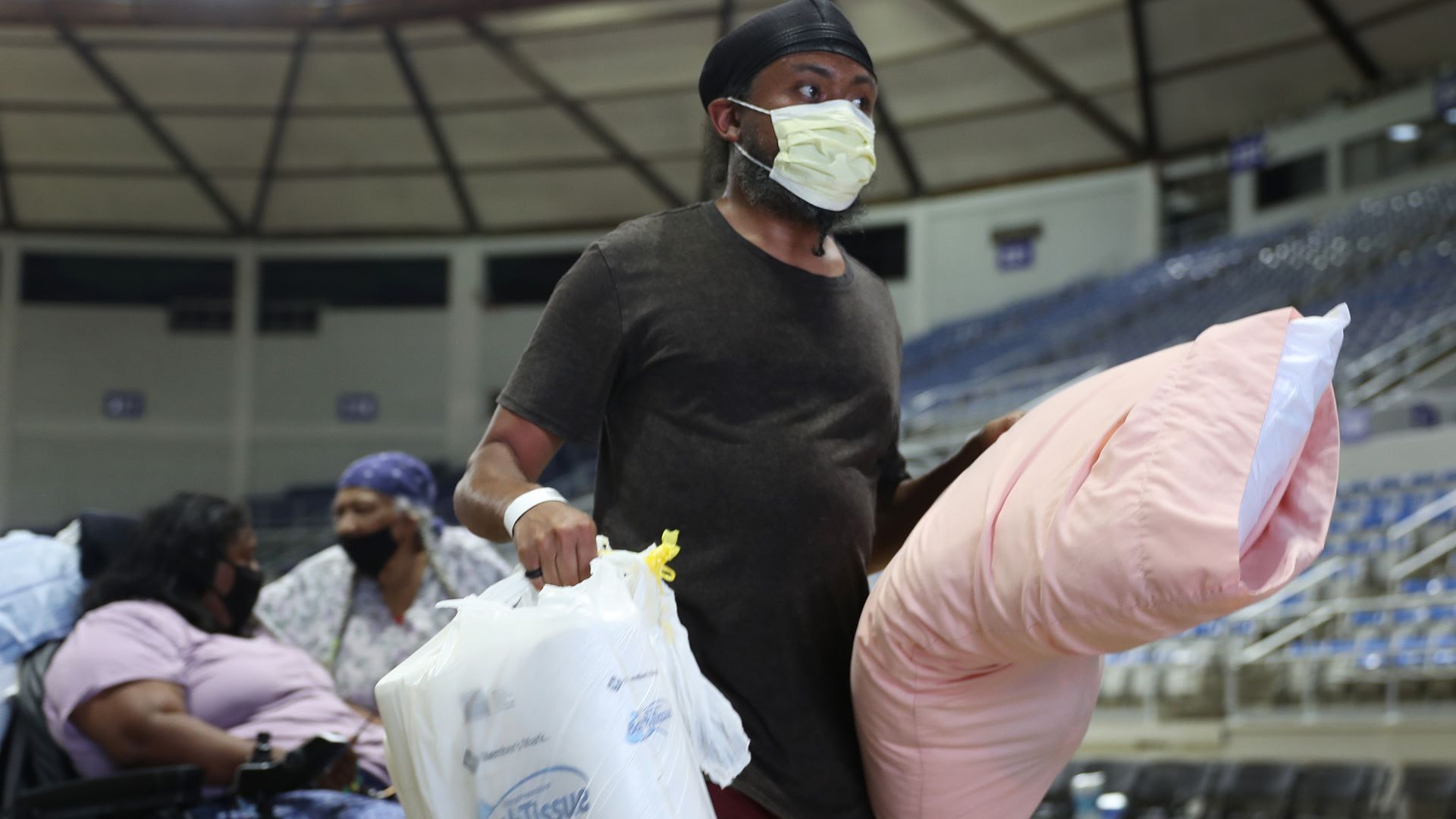
The hazards posed by a hurricane are already worrying enough, but when one collides with a pandemic, disaster on both sides will likely follow.
What we're watching: This is a two-way street: The hurricane will increase the risk from the coronavirus, and the coronavirus will increase the risk from the hurricane.
The U.S. has never really managed to get coronavirus testing right for any extended period of time, and now we're entering a new phase of potential dysfunction.
Driving the news: Democrats and some health care experts are livid over the Centers for Disease Control and Prevention's latest change to its testing guidelines, which now recommend against testing for asymptomatic people.
New coronavirus infections fell by almost 15% over the past week, continuing a steady downward trend.
Why it matters: The standard caveats still apply — progress can always fall apart, the U.S. is climbing down from a very high number of cases, and this is far from over. But this is undeniably good news. Things are getting better.
Abbott Laboratories said Wednesday it received emergency use authorization (EAU) from the Food and Drug Administration for its COVID-19 test that works without lab equipment.
The big picture: Abbott said it will ramp up production of its "highly portable," $5 tests to 50 million by the beginning of October.
Anthony Fauci was in the operating room under general anesthesia last Thursday when the White House coronavirus task force approved the narrowing of CDC testing recommendations to exclude asymptomatic individuals, according to CNN's Sanjay Gupta.
Why it matters: Fauci, who had vocal cord surgery last week, told Gupta that he is "concerned about the interpretation of these recommendations and worried it will give people the incorrect assumption that asymptomatic spread is not of great concern. In fact, it is."
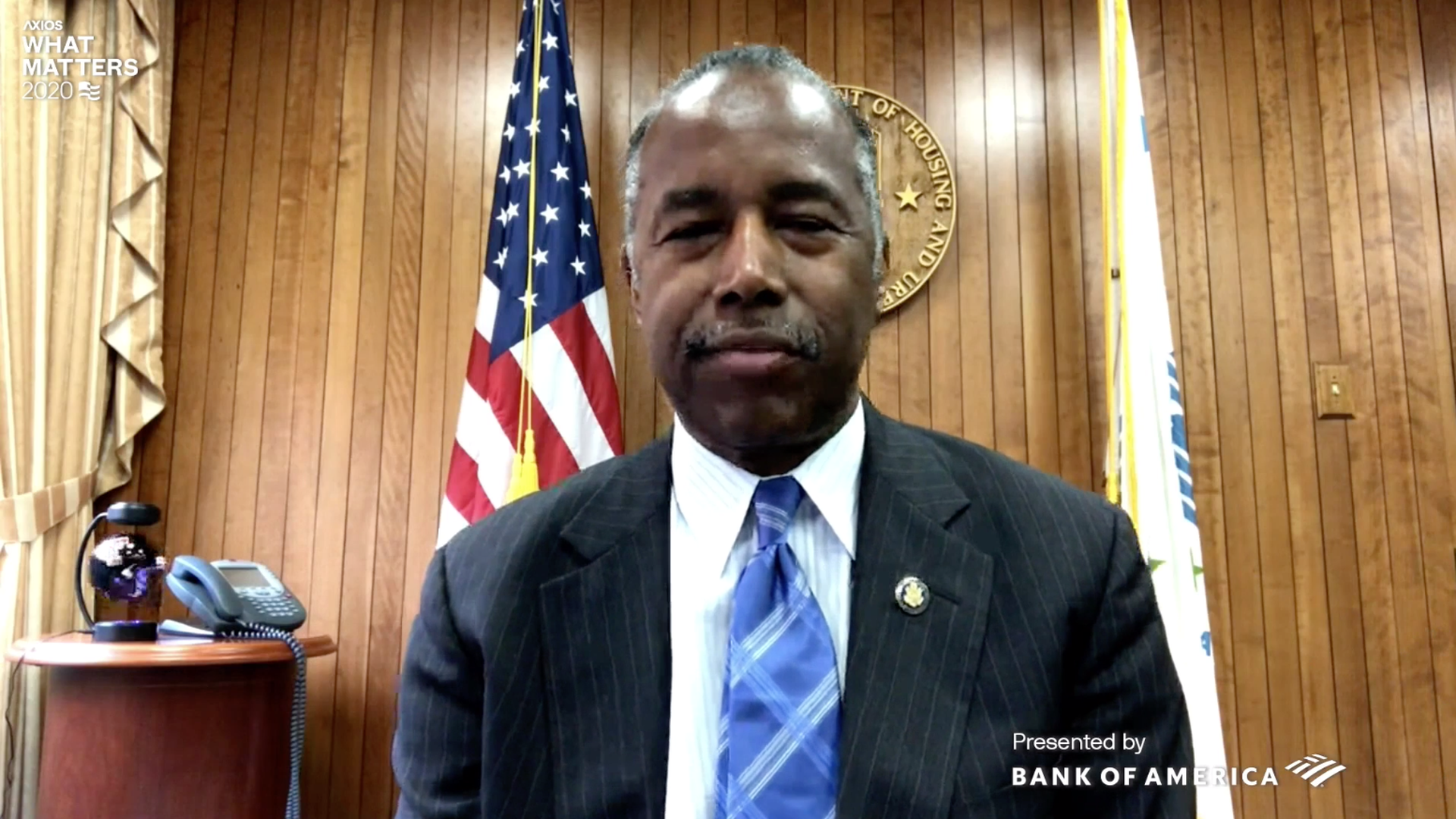
Housing and Urban Development Secretary Ben Carson says "this is not necessarily the time to take everything slowly" when it comes to the Trump administration's approach to getting vaccines and treatments to the public.
Why it matters: Carson's comments, made Wednesday during an Axios virtual event, came days after the Food and Drug Administration announced an emergency use authorization (EUA) for treating the coronavirus with convalescent plasma. President Trump accused the agency of slow-walking the development and approval of vaccines and therapeutics to hurt him politically.
After months of empty stadiums, the ancient practice of attending in-person sporting events is coming back — and in a hurry.
Driving the news: Sporting Kansas City became the second MLS team to play in front of fans on Tuesday, joining FC Dallas, which played its first home game in front of a reported 2,912 people two weeks ago.
The uproar over the FDA's authorization for the use of convalescent plasma in coronavirus patients is only partially about convalescent plasma. It's also about a vaccine that doesn't exist yet, and trust in the FDA's eventual stamp of approval.
The state of play: The FDA has been forced to defend itself on both fronts.
Some percentage of coronavirus patients experience symptoms that last well beyond their "recovery" — which can leave them on the hook for thousands in medical bills they may not be able to pay.
Why it matters: Its not clear whether guarantees from insurers and the federal government about covering coronavirus treatment costs will still cover long-term health effects, as the Wall Street Journal notes. And because some people never tested positive back when testing was scarce, they don't have a formal diagnosis — further hampering their issue.
Black Americans are less likely than white Americans to say they plan to get a flu vaccine this year, and significantly less likely to say they'll take a first-generation coronavirus vaccine, according to numbers from the latest edition of the Axios-Ipsos Coronavirus Index.
Why it matters: Black Americans have suffered disproportionately from COVID-19, which means they also stand to benefit from a successful vaccine. But a legacy of medical mistreatment, systematic racism in health care and targeted efforts by anti-vaxxers means that a wide trust gap needs to be closed first.
More than 70% of residential treatment programs in the U.S. don’t offer the medical standard of care for opioid addiction, a new report published in JAMA shows.
The big picture: Many facilities pushed clinically irrelevant therapies or outright discouraged widely accepted medication-based therapies.
Hospitals owned by private equity firms rake in almost 30% more income than hospitals that aren’t, according to new research published this week in JAMA Internal Medicine.
Why it matters: Private equity is gobbling up more and more of the health care industry. Investors are buying up physicians’ practices, hospitals and the firms that negotiate prices with insurers.