There's a hot new executive position at big companies: chief medical officer.
Why it matters: The coronavirus exposed a slew of vulnerabilities within our society, and one of them was the inability of large corporations to protect workers. Now, many firms are putting physicians in their C-suites to address some of those problems.
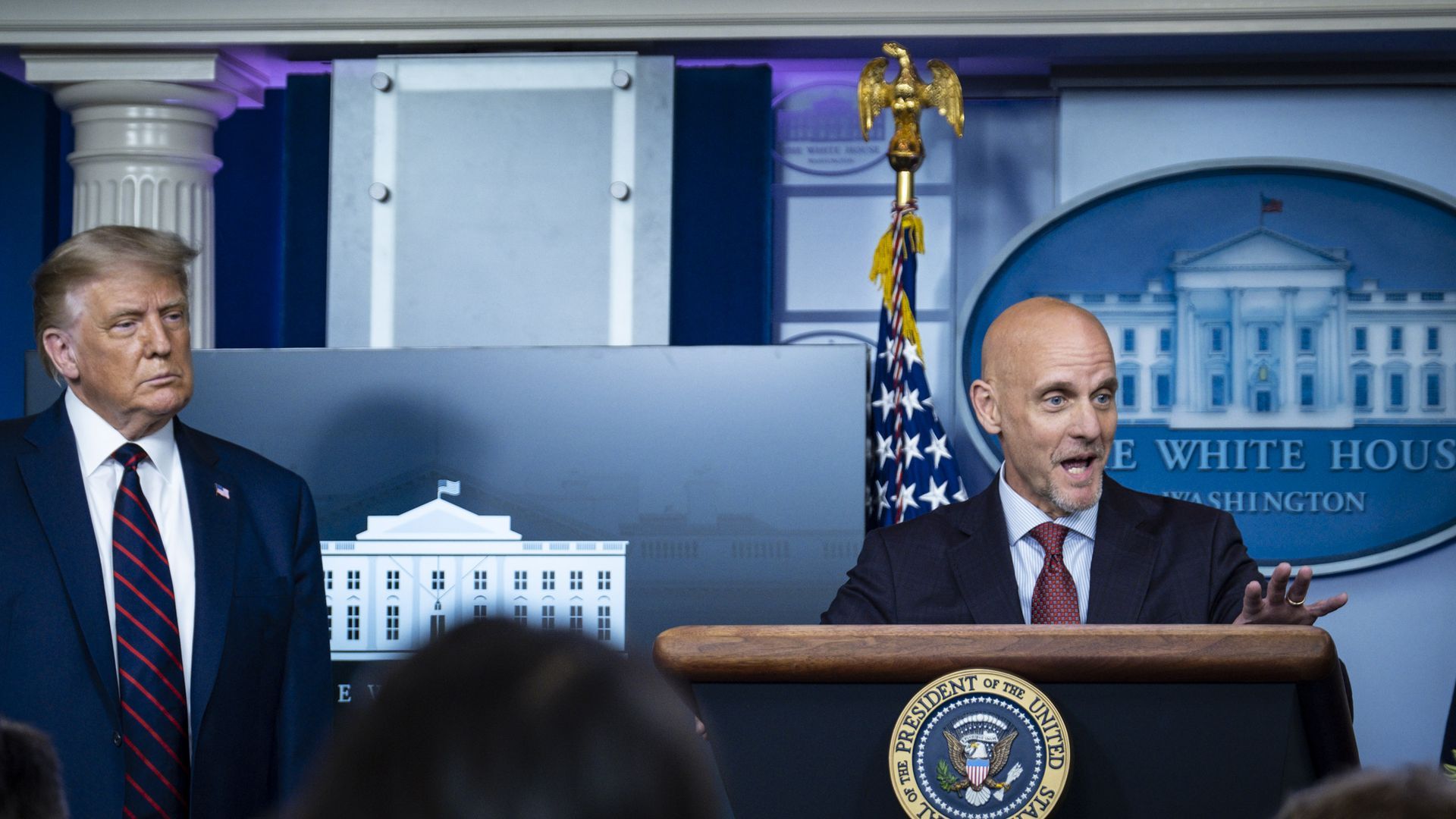
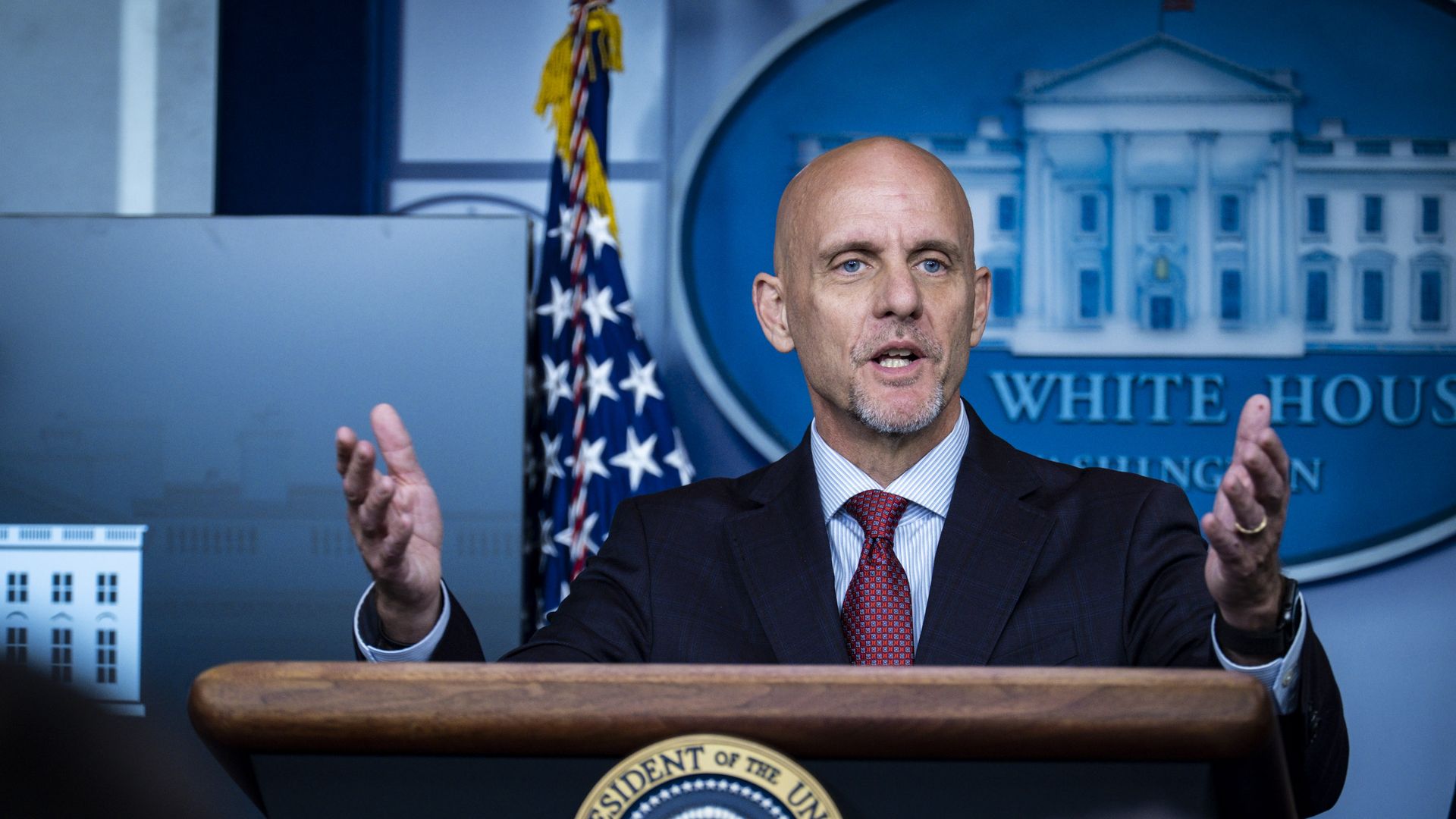
A big story that slipped under the radar during last night's RNC: The FDA commissioner apologized for overselling the benefits of convalescent plasma for treating the coronavirus.
Why it matters: The FDA is supposed to be a Switzerland of neutrality within government, able to act based on science instead of pressure from politicians and big business.
Miami-Dade County, Florida, Mayor Carlos Gimenez announced on Thursday that restaurant dining rooms can reopen at the end of August, the Miami Herald reports.
Why it matters: The move comes after Gimenez faced pressure from local leaders and restaurant owners to lift emergency restrictions on indoor dining to fight the spread of the coronavirus. The limits had been in place for nearly two months.
White House economic adviser Peter Navarro said on Tuesday that recommendations from health experts that convalescent plasma undergo a randomized trial as a COVID-19 treatment before receiving an emergency authorization are a "crazy talking point."
Why it matters: Top federal health officials urged the FDA last week to hold off on issuing an emergency use authorization for the safe, but unproven treatment, but the agency went ahead with it on Sunday amid pressure from Navarro and Trump.
College media outlets are calling out their universities for failing to address the potentially-devastating communal spread of COVID-19 in their college towns.
Why it matters: With local newspapers in decline, campus papers have increasingly become the default for how students and community members get their news.
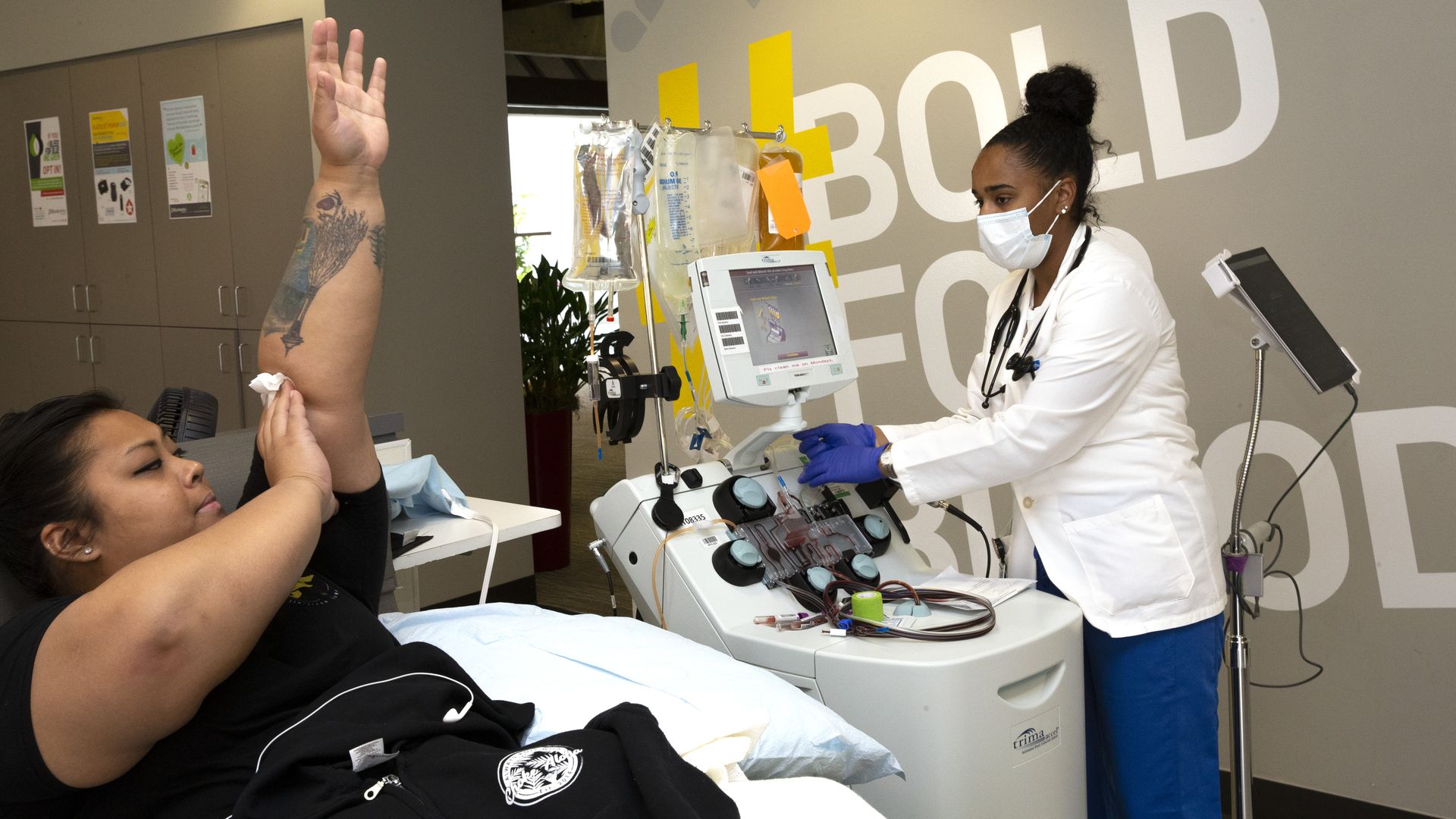
The FDA's controversial decision on Sunday to issue an emergency use authorization for convalescent plasma to treat COVID-19 patients has put new attention on the process of giving plasma.
Why it matters: If convalescent plasma does help mitigate the disease — a big and entirely unsettled if — then donating could be one of the most important things recovered patients could do. But the experience is a little different from standard blood donation.
President Trump wins significantly less trust than Joe Biden on who provides accurate information about the coronavirus — but neither one is trusted by even half the country, in the latest installment of the Axios-Ipsos Coronavirus Index.
Why it matters: Week 22 of our national survey exposes new depths of the virus' politicization as the two major political parties hold their nominating conventions — and it shows the challenges of governing that lie ahead for whoever wins in November.
FDA commissioner Stephen Hahn said in a Twitter thread Monday night criticisms of his comments about granting an emergency use authorization (EUA) of convalescent plasma as a treatment for the coronavirus were "entirely justified."
The big picture: Hahn also addressed in his post the politicization of the FDA, in an apparent reference to President Trump and his trade adviser, Peter Navarro, accusing senior health officials of being part of the "Deep State" amid a decision to put the plasma treatment on hold.
The race is on to test and produce billions of doses of the myriad coronavirus vaccines currently in development — and to determine how they will be distributed if approved for use.
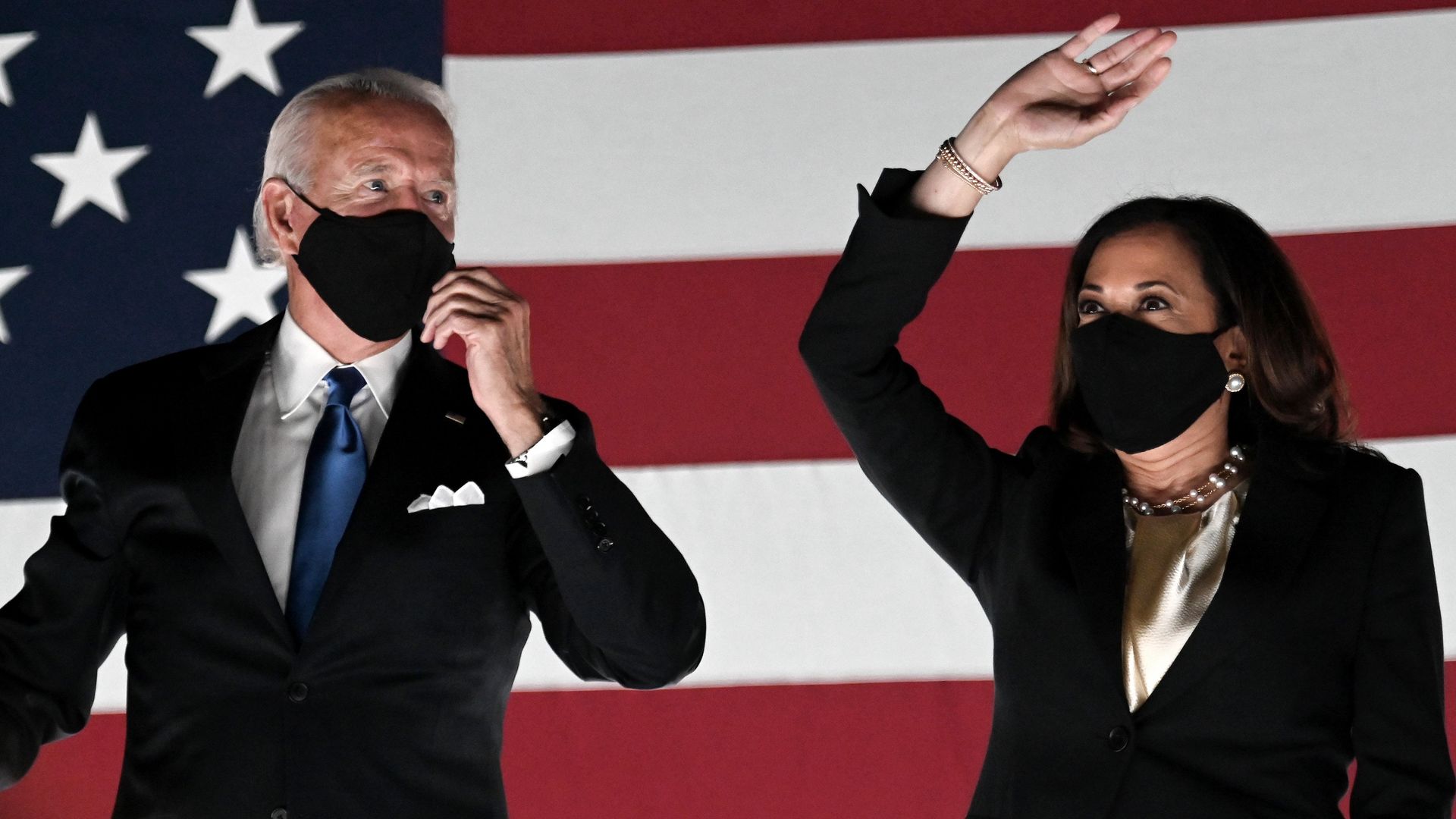
Former Vice President Joe Biden and Sen. Kamala Harris plan to get regularly tested as they ramp up in-person campaigning ahead of Election Day, a Biden campaign spokesperson confirmed Monday.
Why it matters: Biden had not received a coronavirus test as of this weekend, his deputy campaign manager Kate Bedingfield told ABC's "This Week" on Sunday. Bedingfield said that Biden did not have the virus, but did not clarify how that was determined without a test.
A Florida judge on Monday struck down an emergency order from the Florida Department of Education that would have required all schools to reopen for in-person learning this month, the Tampa Bay Times reports.
Why it matters: Leon County Judge Charles Dodson ruledthat Florida had "essentially ignored the requirement of school safety" in pushing to reopen schools and that the state's order overrode school boards' constitutional authority to make decisions for their school systems, per the Times.
Researchers in Hong Kong say they've confirmed a case of coronavirus reinfection for the first time, the New York Times reports.
Why it matters: A confirmed reinfection would mean that immunity to the virus can be short-lived. As a result, we shouldn't expect any sort of back-to-work magic bullet from any potential source or indicator of immunity — whether that's antibody testing, the use of blood plasma as a treatment, or perhaps even a vaccine.
Researchers in Germany staged a tightly controlled concert on Saturday to see whether there's a way to bring them back safely, even in a pandemic, per the AP.
The intrigue: Roughly 1,500 people filed into an arena in Leipzig — all after testing negative for coronavirus infections and while wearing masks — for the simulation.
If the U.S. is the first country to develop a coronavirus vaccine, most Americans don't want to share it right away with the rest of the world — but they're OK putting high-risk people at the front of the line within the U.S., according to a new Harris poll shared exclusively with Axios.
Why it matters: Whenever the first vaccine comes, there won't be enough to go around. Experts say both of those tiers of rationing — divvying up the available doses internationally, and then a risk-based system to decide who gets it first within each country — will be necessary.
Florida's confirmed coronavirus cases exceeded 600,000 on Sunday, the state's health department data shows.
Why it matters: Florida joins California as the only two states to surpass this milestone. Texas, which is reporting the third-most confirmed COVID-19 cases in the U.S. is not far behind, according to state figures and Johns Hopkins data. Florida has added over 100,000 cases since Aug. 5.