The Los Angeles County Board of Supervisors voted on Tuesday to ban the sale of flavored tobacco products, and urged California Gov. Gavin Newsom to enact a statewide vaping ban, per City News Service via L.A. Times.
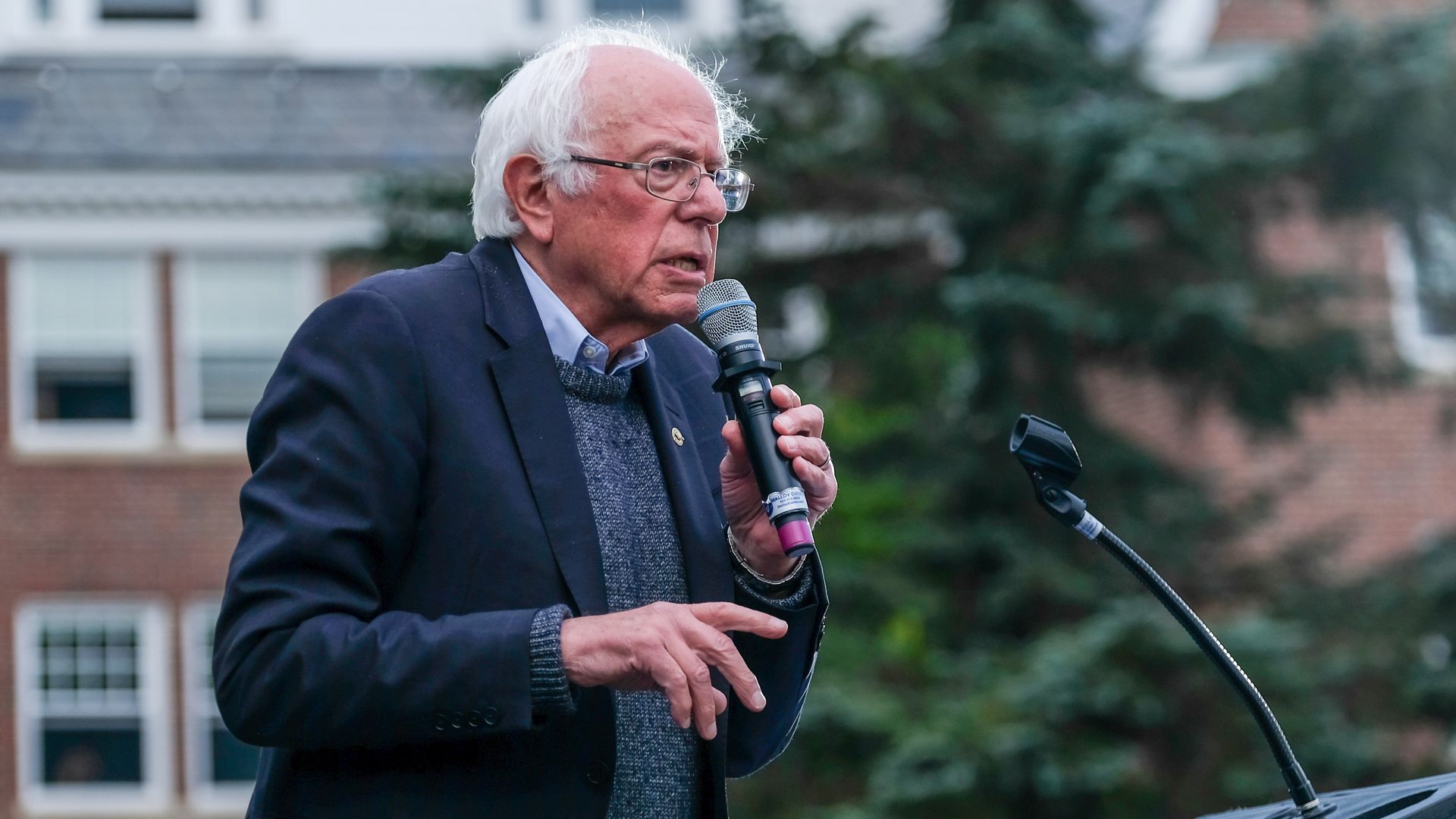
2020 contender Sen. Bernie Sanders' campaign announced Wednesday that he underwent a medical procedure to insert two stents after blockage was found in an artery.
Why it matters: Senior adviser Jeff Weaver said the 78-year-old candidate would be canceling all campaign events "until further notice," but noted that Sanders was "conversing and in good spirits." The news comes one day after the campaign announced a $25.3 million fundraising haul for Q3, the biggest yet among the wide Democratic field.
The House Ways and Means Committee is considering banning surprise medical bills and forcing the administration to decide how providers get paid for out-of-network care, according to a letter sent by Chairman Richard Neal to Democratic members.
The big picture: Payment resolution has sparked an intense fighting among insurers, hospitals and doctors.
The Obama-era FDA tried to ban flavored vaping products in order to protect kids, but White House officials blocked the plan following aggressive lobbying from the vaping industry, according to hundreds of documents obtained by the LA Times.
Why it matters: The evidence suggesting that flavors could have a significant impact on youth vaping was essentially covered up.
Northwell Health, one of the biggest not-for-profit hospital systems in the country, is planning to develop its own system for electronic medical records, with the ultimate goal of selling the technology to other hospitals and clinics.
Why it matters: Physicians, nurses and others generally dislike most of the existing electronic health record systems. But this is an unusually proactive effort from a hospital system to actually solve those problems.
Johnson & Johnson said on Tuesday that it has reached a $20.4 million settlement with 2 Ohio counties ahead of a massive opioid trial, under what the Washington Post describes as a "tentative" deal.
The big picture: These Ohio counties — Cuyahoga and Summit County — were set to be one of the first cases to go to trial from lawsuits brought by over 2,500 counties, cities, Native American tribes and others against nearly 2 dozen pharmacies, drug manufacturers, and distributors for their role in the U.S. opioid epidemic, the Post reports.
The Drug Enforcement Agency authorized manufacturers to continue producing substantial amounts of the narcotic painkiller oxycodone between 2002 and 2013, despite the dramatic increase in deaths from opioid overdoses, according to a report by the Justice Department's inspector general released Tuesday.
Why it matters: Drug companies have been the target of blame for the drastic climb in opioid overdose deaths in the U.S. over the past 2 decades, and they're now facing thousands of lawsuits from cities and other communities. The companies' defense in many of these lawsuits is that they were producing pills at a level permissible by the DEA.
Juul, the nation's largest producer of e-cigarettes, said Monday that it is ending its support for Proposition C, a ballot measure in San Francisco that would overturn an anti-vaping law in the city, per the AP.
Why it matters: Because Juul was virtually the only financial backer of the measure, its decision effectively killed the proposition's campaign after spending nearly $19 million to fund it.
Patients are getting blindsided by "facility fees" in their hospital bills, a controversial charge that some medical facilities defend as necessary for additional income.
The state of play: Hospitals argue that facility fees help with overhead costs so that care can be provided to sick patients 24/7, all year-round.
Wellness programs that reward people for exercising or stopping smoking are common in employer plans, and soon they will be an option in individual health plan marketplaces, the Trump administration said in a bulletin yesterday.
The big picture: 10 states will get to experiment with wellness programs in their Affordable Care Act markets, and they generally have to comply with federal rules for employer wellness programs.
Sheriffs across Alabama are relying on what's known as "medical bond" to avoid paying for inmates' hospital bills, ProPublica reports.
How it works: Jails release the inmates from custody when they need medical care. This includes treatment that is only necessary because an inmate didn't receive adequate care while incarcerated. After they're treated, some inmates are quickly rearrested and head back to jail.
Drug companies facing expansive litigation over their role in the opioid crisis are exploring settling the cases by participating in Purdue Pharma's bankruptcy, the Wall Street Journal reports.
Why it matters: If successful, this would either end or shrink the massive federal case pending in Ohio, but it would require a lot of buy-in, including from state attorneys general. The companies — Endo, Johnson & Johnson, Teva, Allergan and Mallinckrodt — want to contribute money to a trust while being released from all liability.