Tuesday's health stories

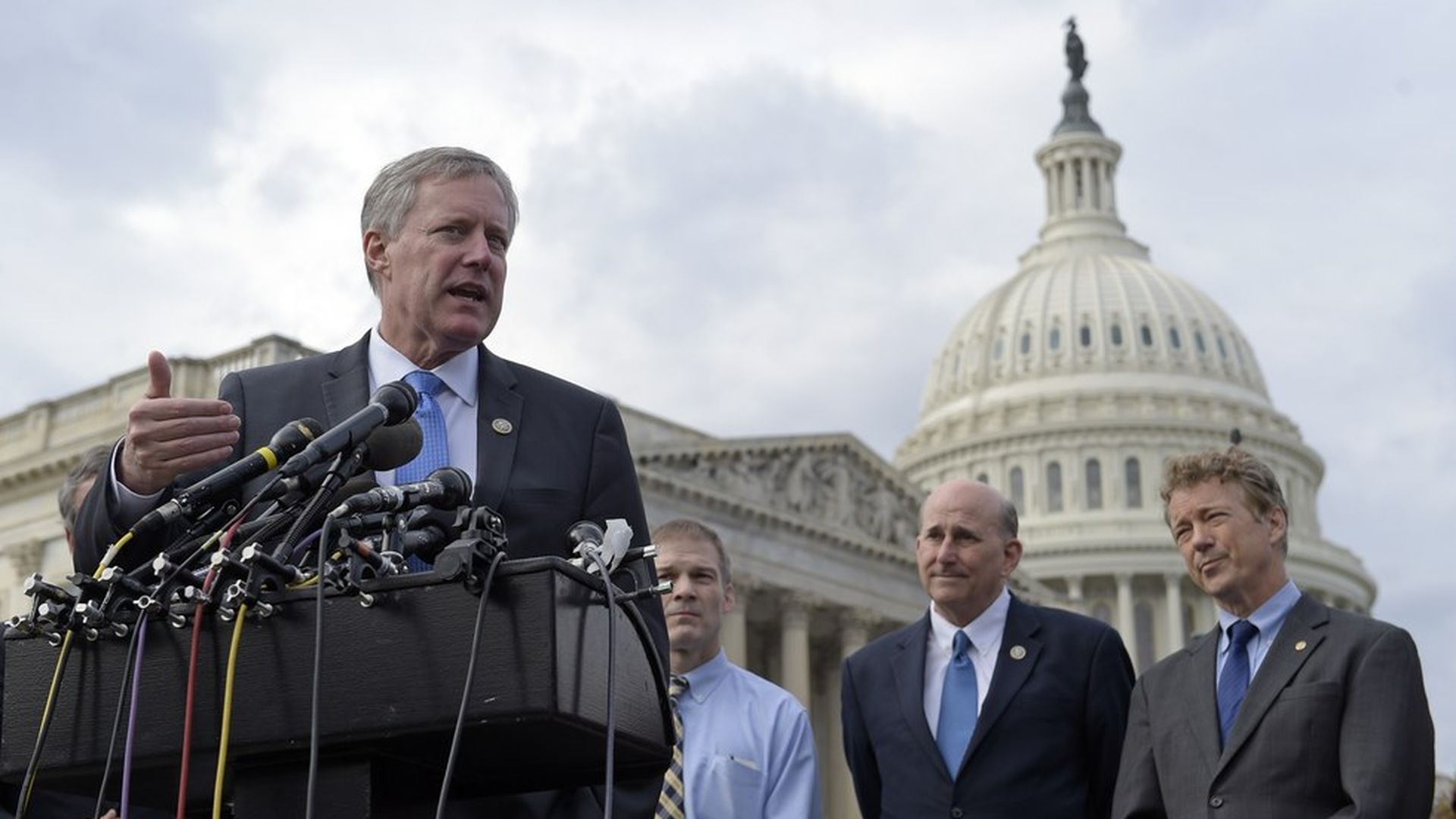
The Freedom Caucus chair is trying to make a deal on Trumpcare
Rep. Mark Meadows, chairman of the House Freedom Caucus, says he's really trying to find a deal on Obamacare repeal and replacement. Not only has he — along with plenty of other conservatives — been in conversations with the administration, but he's also reaching out to senators who are on the fence about the House bill to try to find middle-ground solutions.
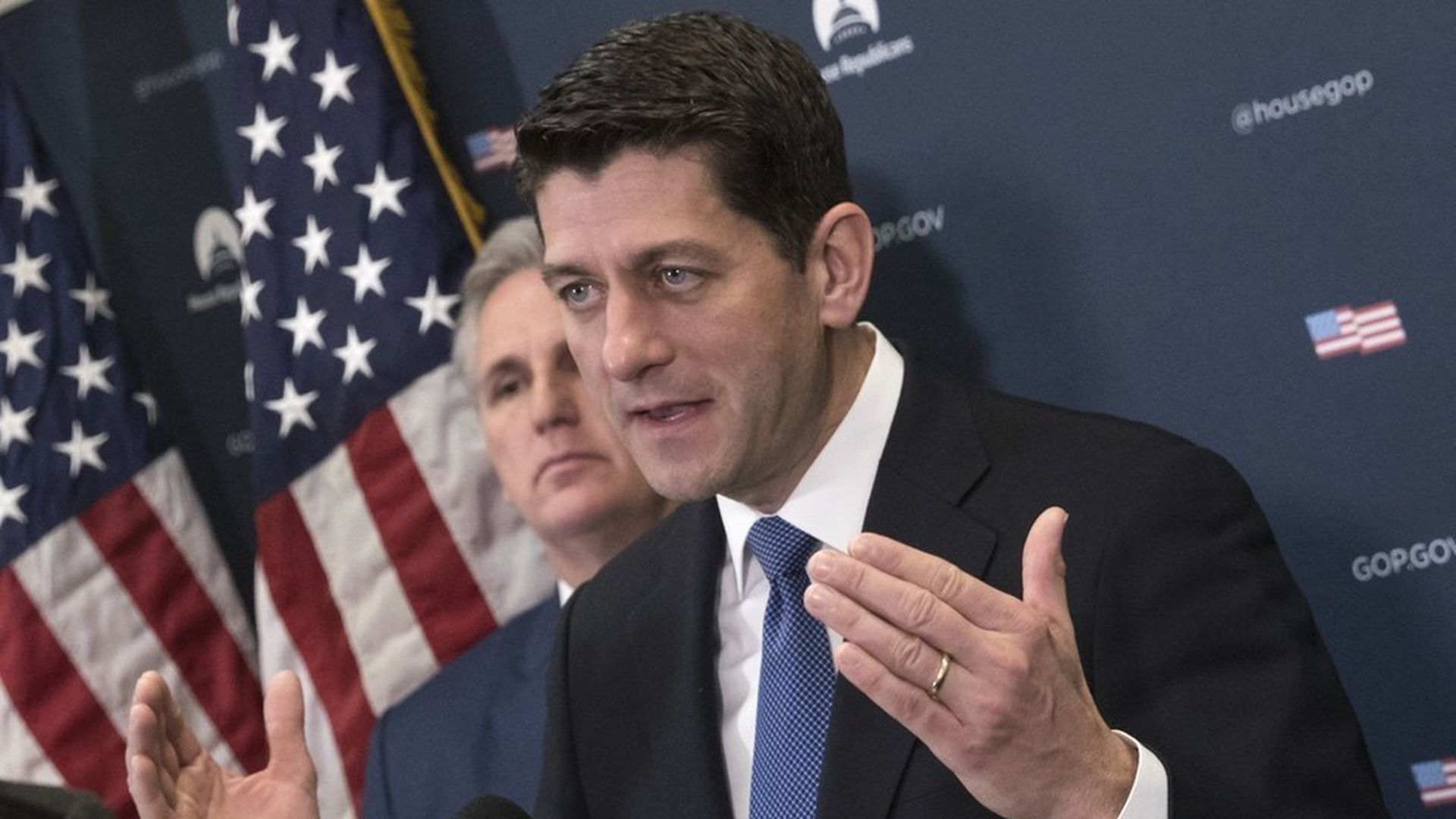
Why it matters: House leadership says the bill isn't going to change. Meadows, who says the current bill won't pass, is trying to work with everyone else to make sure the bill does, in fact, change.

Adeptus Health ponders a sale
Things have gotten so bad at Adeptus Health that the emergency room chain has hired a chief restructuring officer and retained investment bank Houlihan Lokey to help explore "various strategic alternatives," the company disclosed in a federal filing. Adeptus, backed by private-equity firm Sterling Partners, still hasn't released its 2016 financial documents.
If Adeptus chooses to sell and is able to find a buyer, which is far from guaranteed given its precipitous fall since its initial public offering in 2014, it would likely sell for pennies on the dollar. Adeptus' stock cratered to an all-time low of $1.48 on Tuesday, its market cap is $21 million today compared with a high of $2.5 billion in 2015, and it is facing class-action securities lawsuits.
Data: Money.net; Chart: Andrew Witherspoon / Axios
The lesson: Adeptus heralded freestanding emergency rooms as a more convenient way to get care, but the facilities have been expensive to run and have led to exorbitant charges for some patients.

Full list: the conservatives against Trumpcare
House GOP leadership released the text of their plan to repeal and replace Obamacare last week, and they got quite a bit of pushback on their own side of the aisle. With a less-than-stellar CBO report yesterday, more Republicans are expected to run for the hills. Here's a running list of conservative organizations and congresspeople across speaking out against the American Health Care Act.

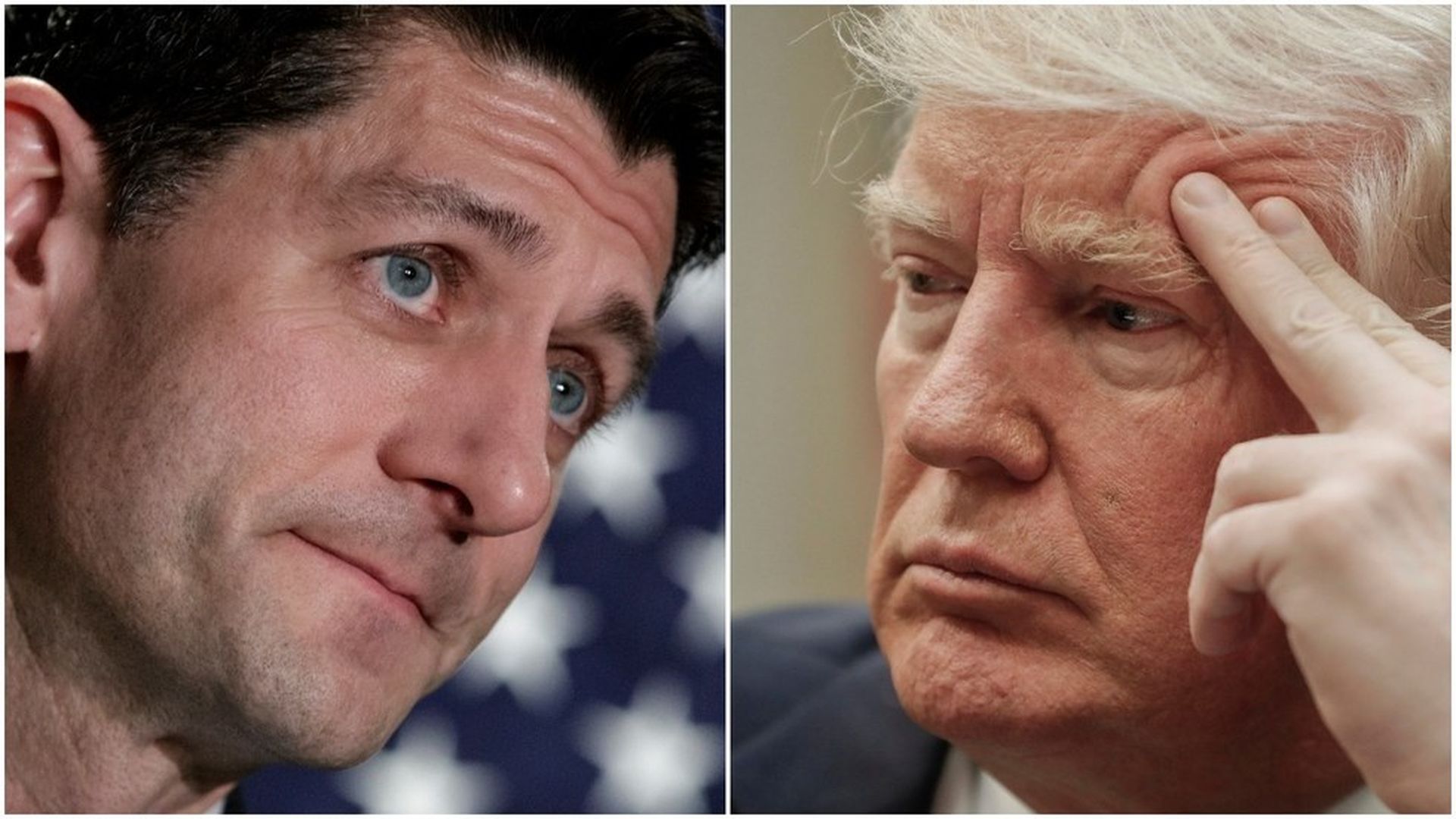
Trump-Ryan face a pair of tests
When the nonpartisan Congressional Budget Office released its worst-than-expected estimate just after 4 p.m. that 24 million people would lose coverage under Trumpcare in 10 years (14 million next year), Axios' David Nather accompanied his flash post with a GIF of a mushroom cloud.

Trumpcare and the CBO freakout
The next few days will tell us whether Republican leaders prepared adequately for the disastrous Congressional Budget Office estimates of the House Obamacare replacement bill. It's one thing to say, "we're not going to compete with a law that forces everyone to buy coverage." It's another thing to fight headlines about 24 million Americans losing coverage.

Senators not thrilled with the CBO score of the House bill
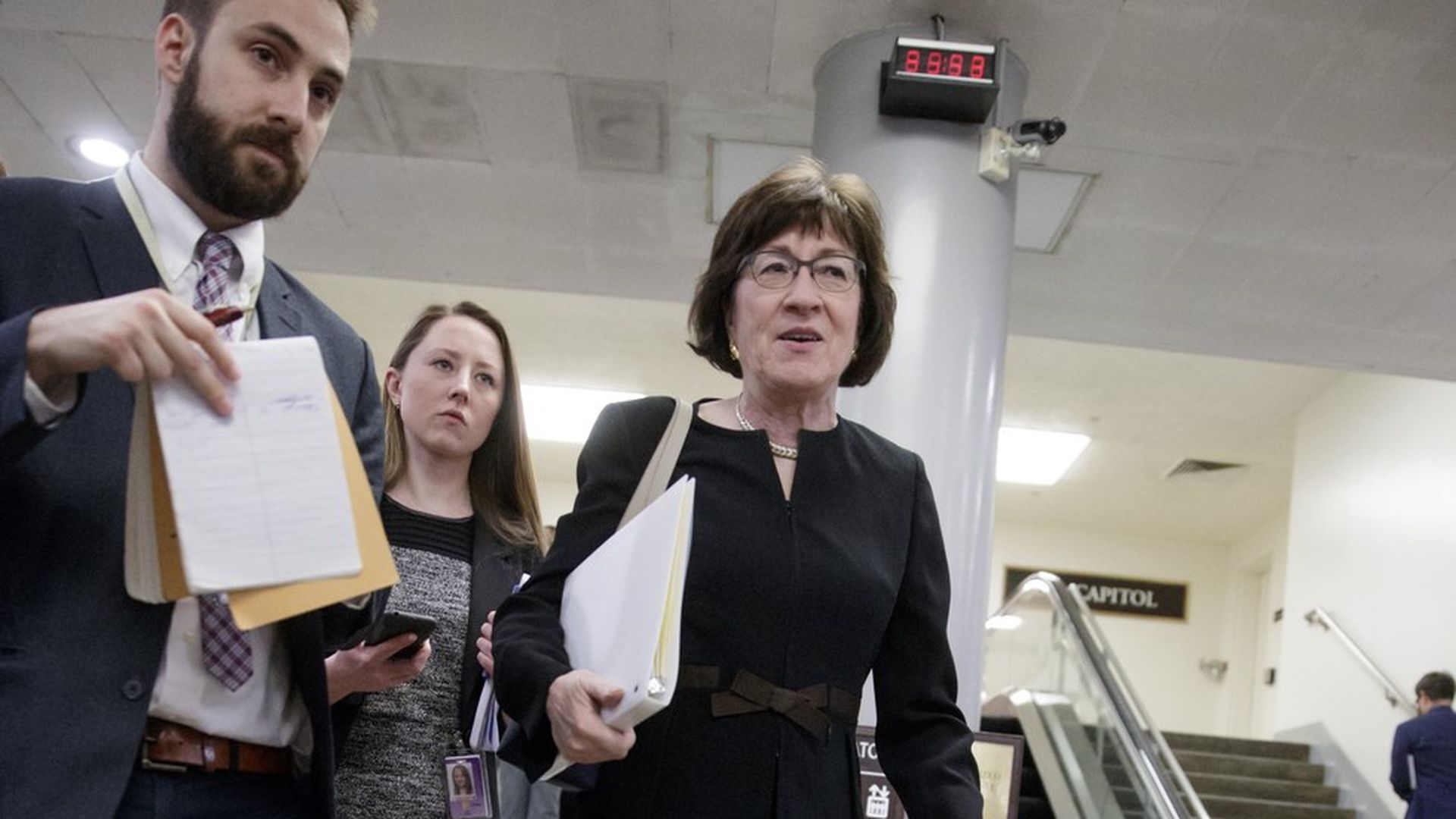
It's not every day that Senators Susan Collins and Mike Lee have the same opinion on policy, but the Congressional Budget Office estimate on the impact of the House Obamacare repeal and replacement bill made them feel the same way: Concerned.
It's not just them. Most GOP senators asked about the estimate that 24 million people will lose their coverage told reporters they're not finished reading the CBO report. But some had things to say, none of them good.
- Lee: "I have some concerns with the bill. They have not been eliminated by the CBO report."
- Collins: "The topline numbers are alarming on the loss of coverage."
- Sen. Steve Daines: "Better is possible."
- Sen. Ron Johnson: "Interesting, wasn't it?"
What to watch: What happens to the bill in the House. Unless leadership has some magic solution up their sleeves, this bill is very, very unlikely to pass in the Senate, despite the current plan to take the House-passed bill directly to the Senate floor (if and when the bill passes the House). It's even unclear how it will fare with moderates in the House, who don't come back into town until later this week.

Health insurer group suggests Congress redo Obamacare repeal
The Alliance of Community Health Plans, a trade group representing large not-for-profit health insurance companies and hospital networks such as Kaiser Permanente and UPMC, is not happy about the Congressional Budget Office's score of the Republican Obamacare replacement. The group called the CBO's estimate of 24 million people losing health coverage over 10 years "extremely troubling" and suggested Congress start over.
It's time to take a step back and thoughtfully consider viable alternatives. — Ceci Connolly, CEO of Alliance of Community Health Plans
Many of the companies in the Alliance of Community Health Plans are also members of America's Health Insurance Plans, the country's largest health insurance lobbying group.

CBO Trumpcare estimate: 24 million would lose coverage


The Congressional Budget Office bomb has gone off. Here's what it says about the House Republican Obamacare replacement plan:
- Coverage: 24 million fewer than Obamacare in 10 years (14 million in 2018)
- Savings: $337 billion in deficit reduction over 10 years
- Premiums: 15 to 20 percent higher in 2018-19; 10 percent lower in 10 years
What it means: It's not a surprise that CBO predicted people would lose coverage — most health care experts predicted it, and Republicans have been prepared for it. They've insisted they're not trying to compete with Obamacare, which required people to buy coverage. But today's estimates are worse than expected — the Brookings Institution predicted the number losing coverage would be 15 million over 10 years.


Experts: Premiums will rise under GOP health care plan
Seven experts responded to a NYT request to predict what the Congressional Budget Office might say about the Republican Obamacare replacement bill in five different areas: long-term costs, how many people will lose health insurance, how much premiums will change, how many people will lose Medicaid coverage, and how employer-based insurance will change.
What stood out to us:
- Most experts surveyed expect premiums to rise under the GOP plan.
- All of the experts who responded think Americans will lose coverage, but the question remains: How many? They also all think Medicaid enrollment will drop, likely due to the fact that the bill cuts federal funding for the program.
- The jury is still out on how the bill will affect the number of Americans who use employer-based insurance. This number is a little bit of a dark horse, since the GOP bill doesn't directly touch employer insurance, but could have big political consequences if it shows this market will be impacted.
Why it matters: Last week the Republicans' plan made it through two committees — but it had no CBO score, and the Republicans are trying to pass the plan through reconciliation, which requires the CBO to say it will save the federal budget at least $2 billion over 10 years. That score is expected to roll out this week, but if long term costs are higher than they are now, not only is that bad, but the bill must also be changed to hit the $2 billion savings target.

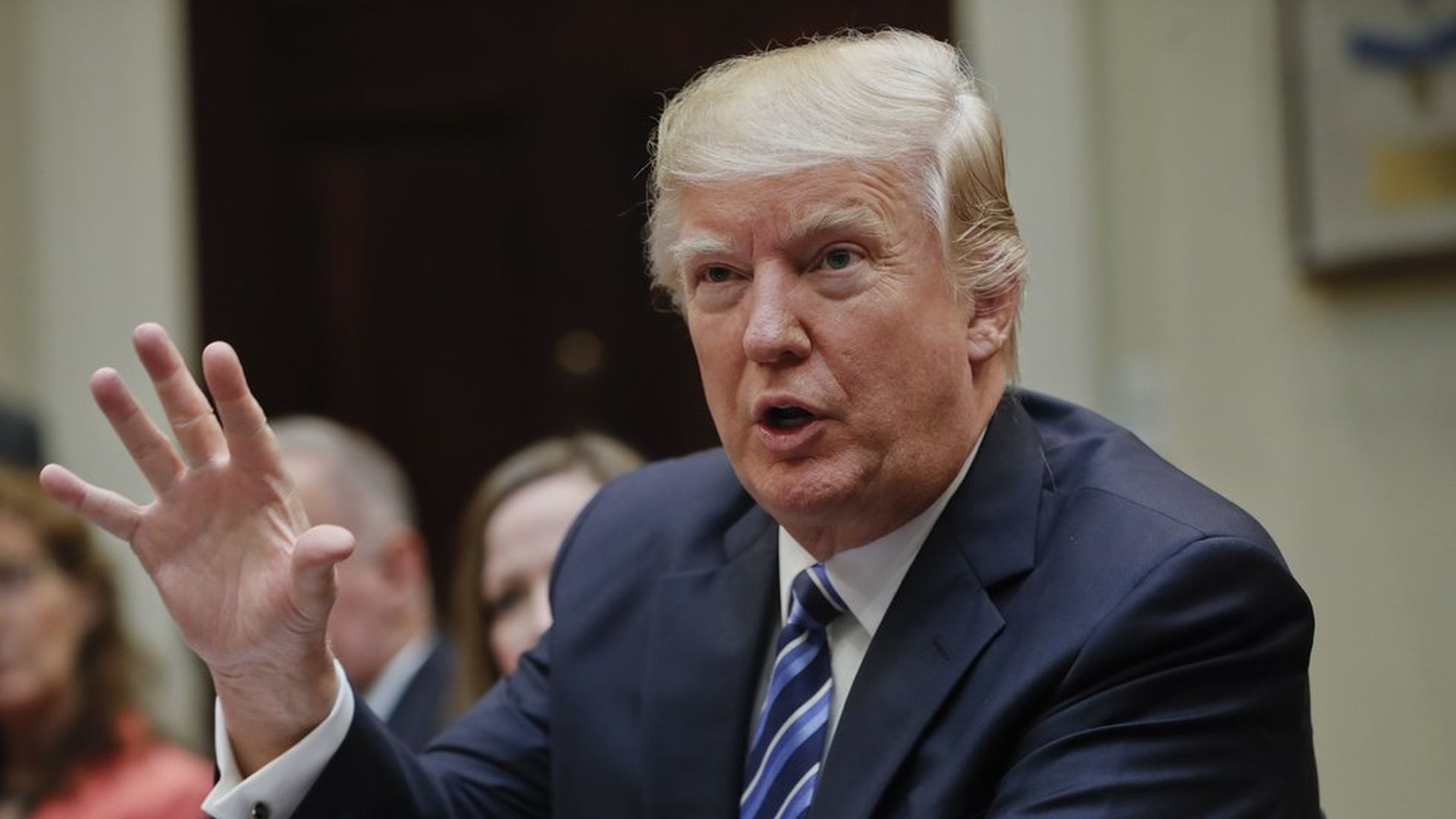
Trump talks up competition in Obamacare replacement
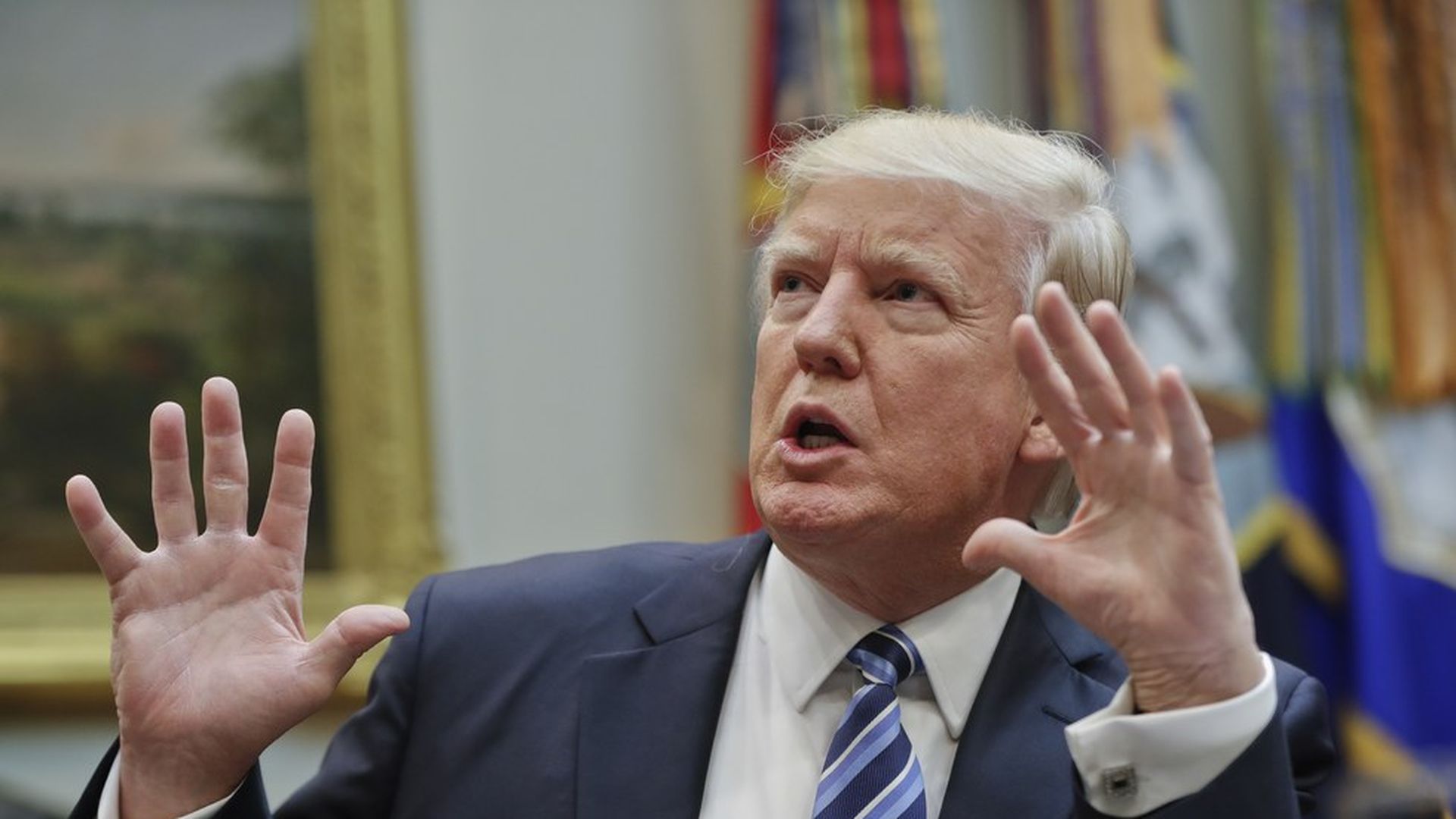
The president today held a "listening session" at the White House with people who say they've been hurt by Obamacare. Trump used it as a chance to also talk up the Republican replacement:
You'll see rates go down, down, down and you'll see plans go up, up, up. You'll have a lot of choices. You'll have plans that nobody is even thinking of today.
Why it matters: It shows that Trump is all-in on the theory that a greater variety of health plans will help control premiums — but people are likely to remember it if rates don't actually go down. (Just like Barack Obama never lived down his promise that his law would save families $2,500 a year.)

The Obamacare nightmare scenario
The nightmare scenario for Obamacare is a meltdown of the individual health insurance market. If health insurers lose confidence as Republicans struggle with their repeal efforts — or because of the turmoil and price hikes that have already been underway — even more could withdraw, leaving Obamacare customers with nowhere to turn to keep their coverage.
Humana has already done this, raising fears that the meltdown could actually happen. But it's always a vague threat, with no real specifics. Katherine Hempstead and her research team at the Robert Wood Johnson Foundation helped Axios map out the likely impact if other insurers that have been on the fence decide to pull out.
Here's what it would look like: If insurers like Anthem decide to exit the exchanges for 2018, hundreds of thousands of people would be stranded without any available insurers. Some state marketplaces would almost certainly fall apart.

/2017/12/15/1513300945601.gif?w=3840)


/2017/12/15/1513300932206.gif?w=3840)