No one saw the ZIRP* boom coming. When Lehman Brothers was allowed to go bankrupt, it was clear that the crisis was entering a new and much more dangerous phase and there would be a lot of financial carnage.
The big picture: But bears didn't make the really big money. Bulls did. Central banks slashed the cost of capital to zero and kept it there for the best part of a decade, encouraging capital-intensive investment. Austere governments demurred, but the private sector made trillions of dollars.
The number of undernourished people around the globe increased to nearly 821 million in 2017, the third straight year of growth and the highest figure since 2009, according to a new report from the UN's Food and Agriculture Organization.
Why it matters: Along with conflict and instability, this rise in global hunger is driven increasingly by climate change and related extreme weather events, putting some of the world's most vulnerable citizens at even greater risk.
FEMA administrator Brock Long said on CBS' Face the Nation that studies estimating the death toll from Hurricane Maria in Puerto Rico are "all over the place," after President Trump baselessly claimed this week that Democrats inflated the numbers in a new study that put the total number of deaths from the storm near 3,000.
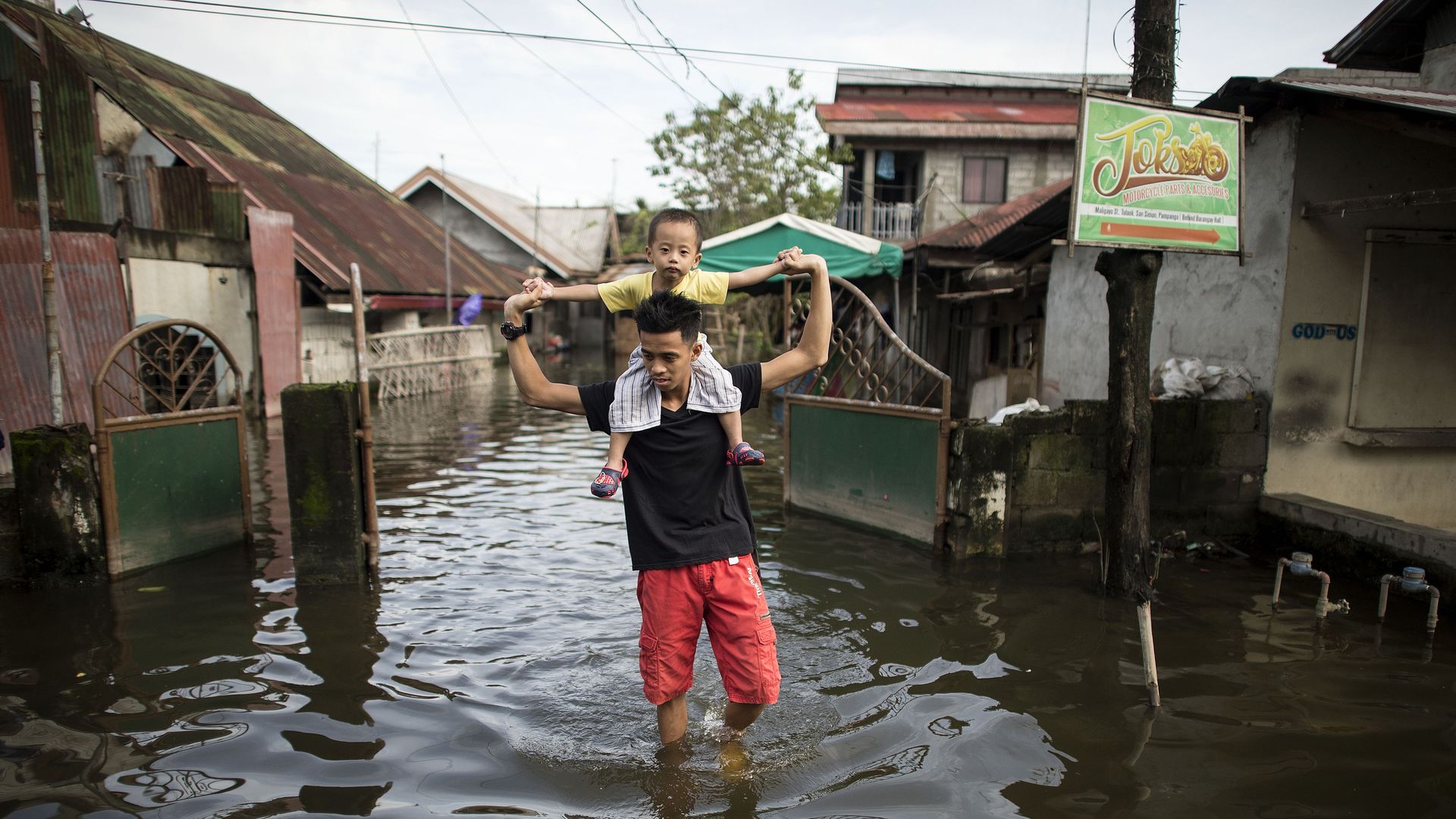
Typhoon Mangkhut forced more than 2.4 million people in China’s Guangdong province to relocate Sunday, where it made landfall after killing at least 64 people in the northern Philippines, AP reports.
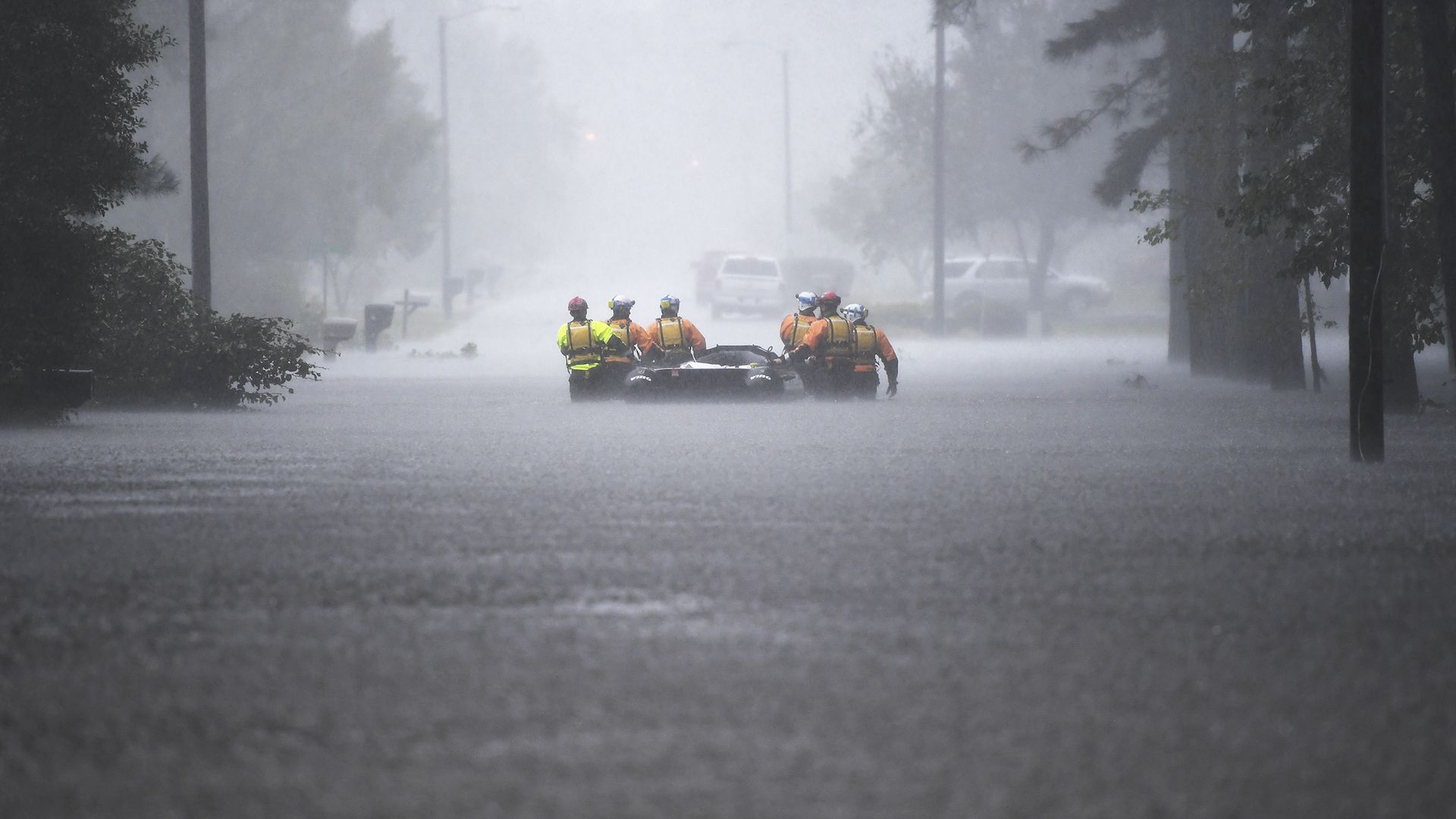
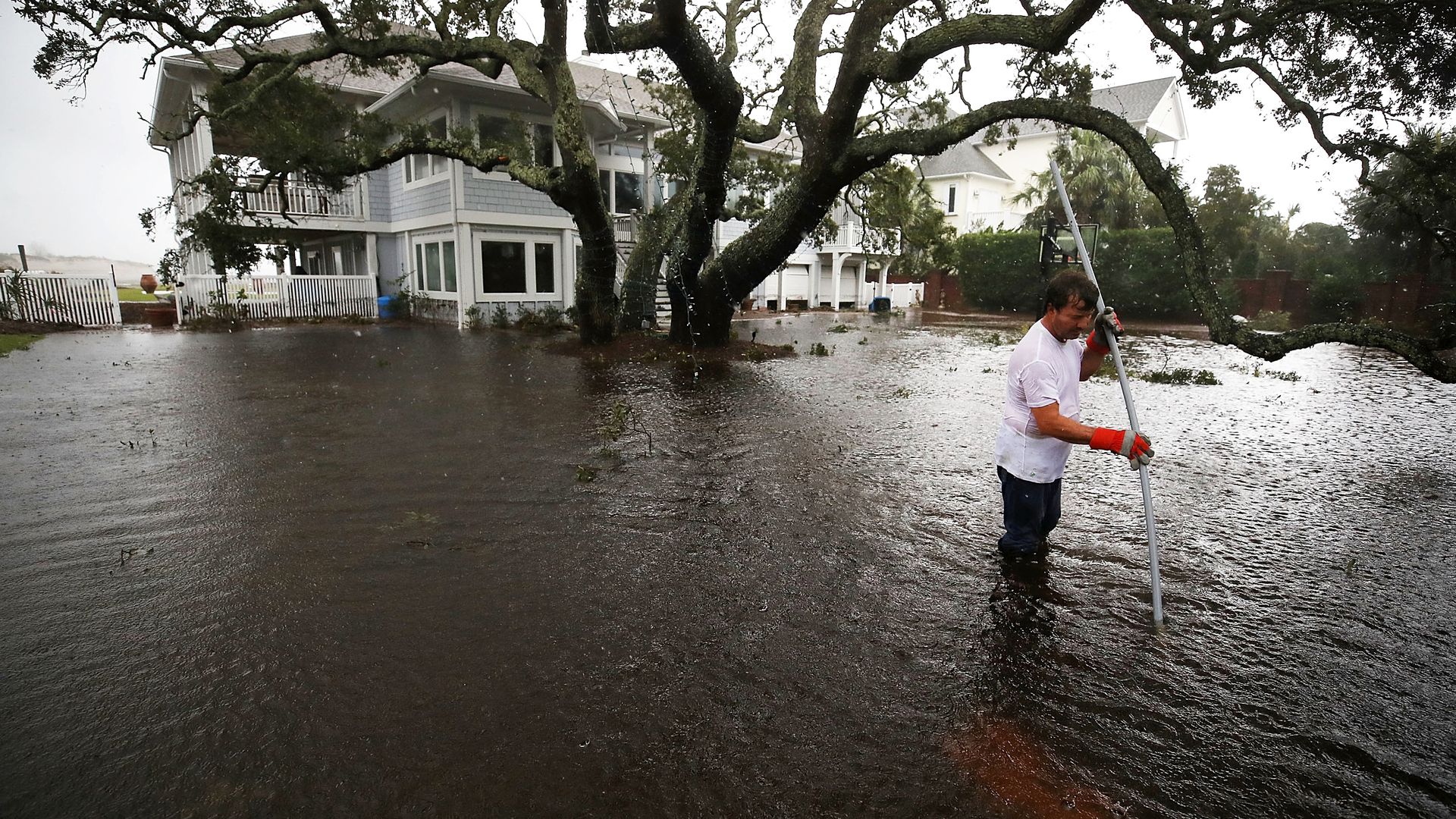
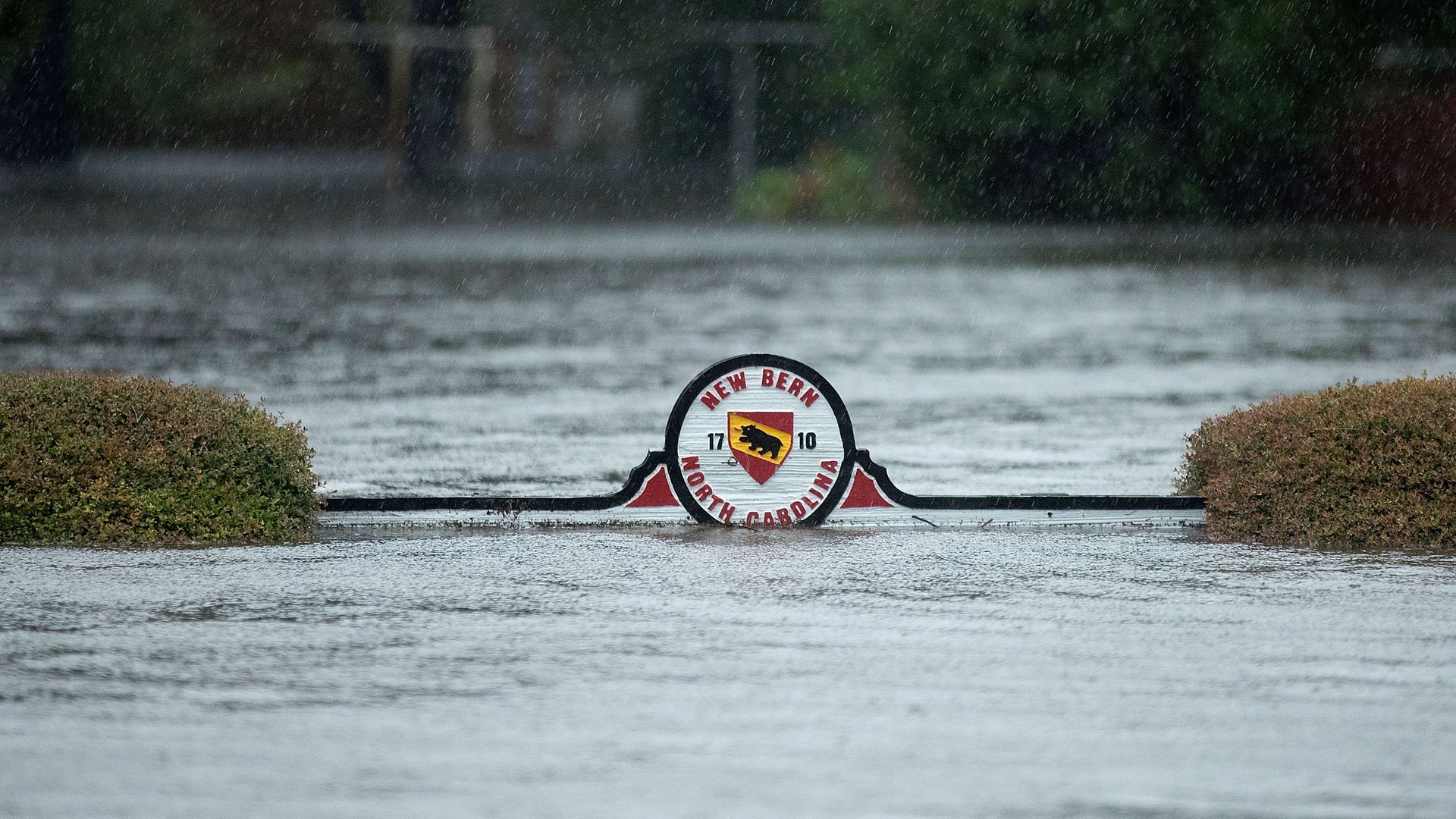
Historic rainfall continues to wreak havoc in the Carolinas, where all-time rainfall records have already been broken. A swath of land between Wilmington and New Bern, North Carolina, is closing in on 40 inches of rainfall, as the heaviest rains begin to shift into a new, treacherous area: the Blue Ridge Mountains.
The big picture: The National Weather Service continues to warn of "catastrophic" and "life-threatening" flash flooding on Sunday as coastal North Carolina receives up to another half a foot of rain, since the circulation around the storm is still pulling in copious amounts of Atlantic moisture. The storm has killed at least a dozen people so far, and this number is likely to rise.
Portions of the Carolinas have been inundated by the heaviest amount of rain on record for this region, and torrential rain is still falling. Parts of southern North Carolina and northeastern South Carolina could see another foot or more of rain through the weekend, according to the National Weather Service.
The big picture: Flood levels could hit record highs at multiple locations during the next week. For example, the Cape Fear River near Fayetteville is projected to rise nearly 45 feet, to near 62.4 feet by Tuesday. Homes within 1 mile of the river were evacuated on Saturday.
Hotels and airlines are relaxing their policies to offer refuge and support for those fleeing Tropical Storm Florence, including opening their doors for free and waving traditionally pricey rebooking fees for travelers.
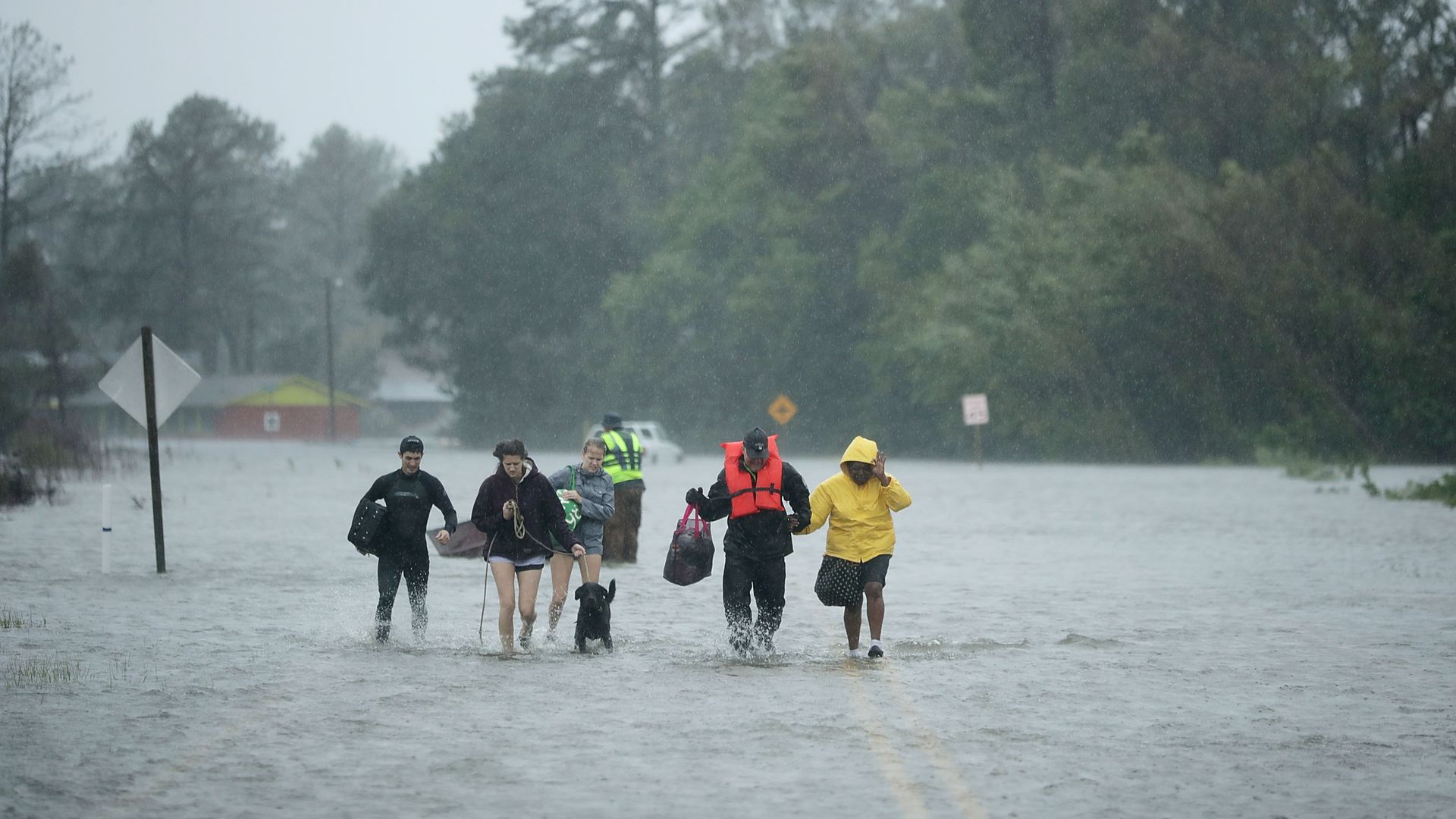
The big picture: Millions were forced to evacuate before Florence hit the Carolinas hard on Friday. Conditions haven't let up as mandatory evacuations continue in parts of North Carolina. As of Saturday morning, at least seven had been killed as the storm crawls along the coast.
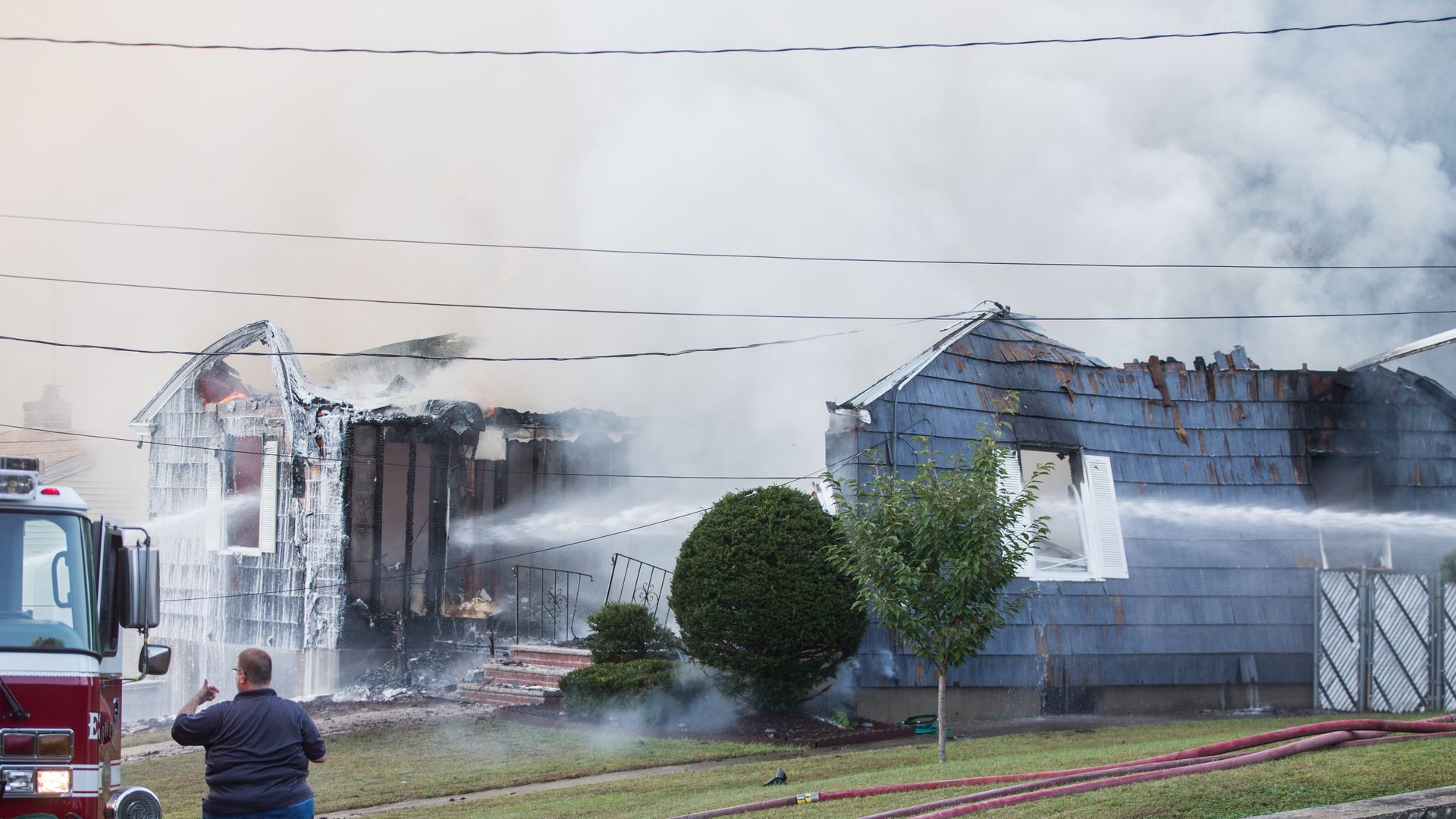
Massachusetts governor Charlie Baker declared a state of emergency two days after fires and explosions caused by over-pressurized natural gas lines ravaged dozens of homes throughout Lawrence, Andover and North Andover and forced evacuations of thousands of residents.
The latest: A new leak was detected Saturday morning in Lawrence as emergency crews swept the area. CBS reports that a teenager was killed and about 25 were injured from Thursday's explosions.
Speaking to the Global Climate Action Summit, California Governor Jerry Brown told the crowd that the state is working to launch a satellite to track climate change and "help the world dramatically reduce these destructive emissions."
The details: California is partnering with San Francisco-based Earth imaging company Planet Labs to build the satellite which aims to track pollutants with "unprecedented precision," and is expected to be able to detect the "point source" of climate pollutants, including super pollutants. Initial funding for the project is coming from private donors. "With science still under attack and the climate threat growing, we’re launching our own damn satellite," Gov. Brown told the audience.
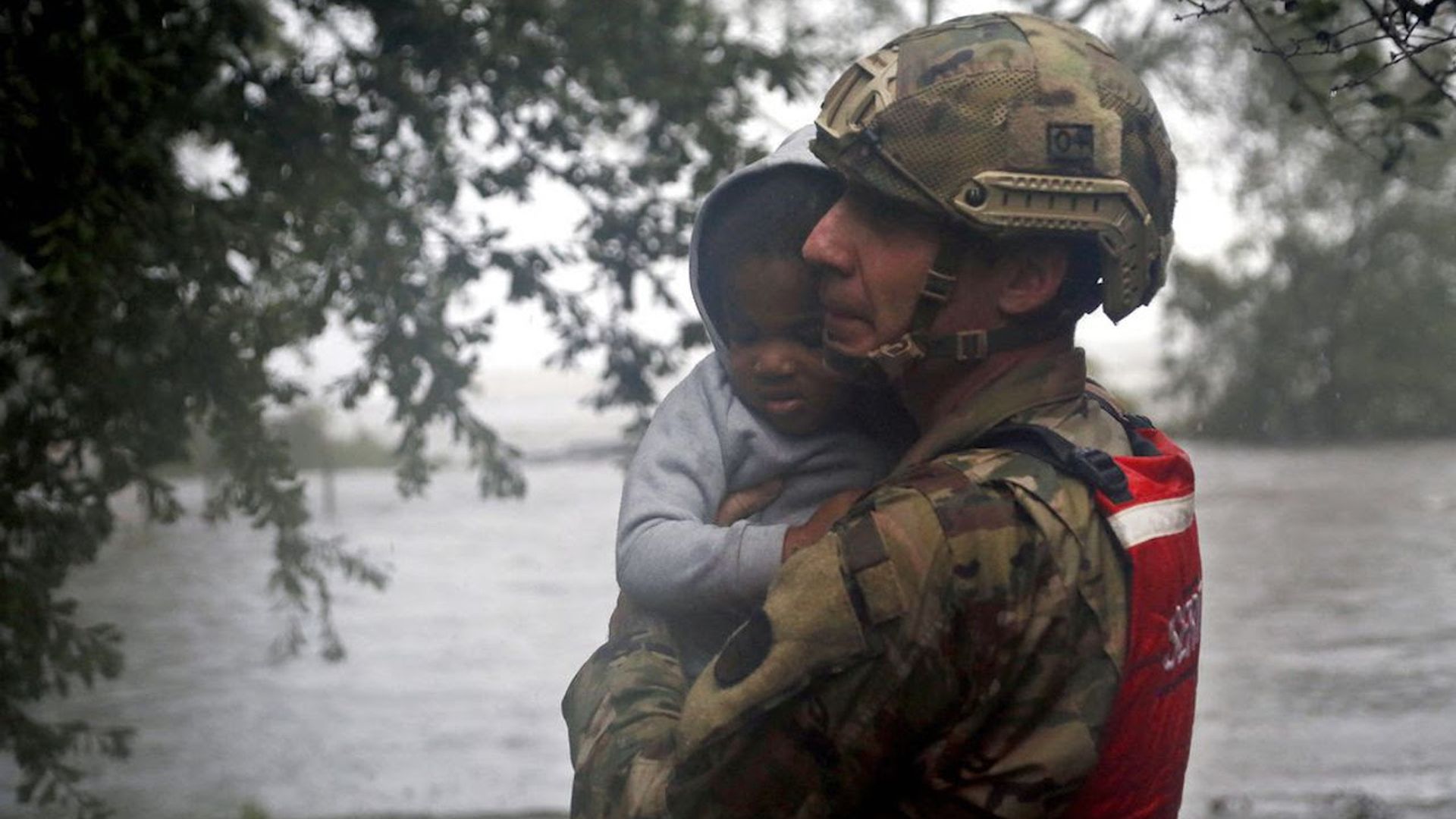
North and South Carolina were hammered by Hurricane Florence after it made landfall on Friday. As of Saturday morning, at least seven have been killed as the storm continues its crawl along the coast.
The big picture: Axios' Andrew Freedman explains that the danger of Florence lies in "the surge and inland flooding from what is likely to be the worst tropical cyclone-related rainstorm in North Carolina history."
Tropical Storm Florence's relentless rain is causing devastating flooding in the Carolinas and promises even more today.
The latest: A least seven are dead — including a baby, per CNN. The National Hurricane Center reported gusts over 105 mph on the Outer Banks. "The storm's center is crawling inland over South Carolina, but its main rain bands largely are over already-saturated North Carolina — setting up what may be days of flooding for some communities."
The 2008 financial collapse did not take the renewables industry down with it — and in several ways it even proved a blessing.
The big picture: The 2009 stimulus law funneled some $90 billion into low-carbon energy initiatives, including grants for renewable electricity development in lieu of tax credits. Those grants proved vital. Longstanding tax credits are key to building wind and solar power projects, but the tax equity market collapsed alongside the financial sector.
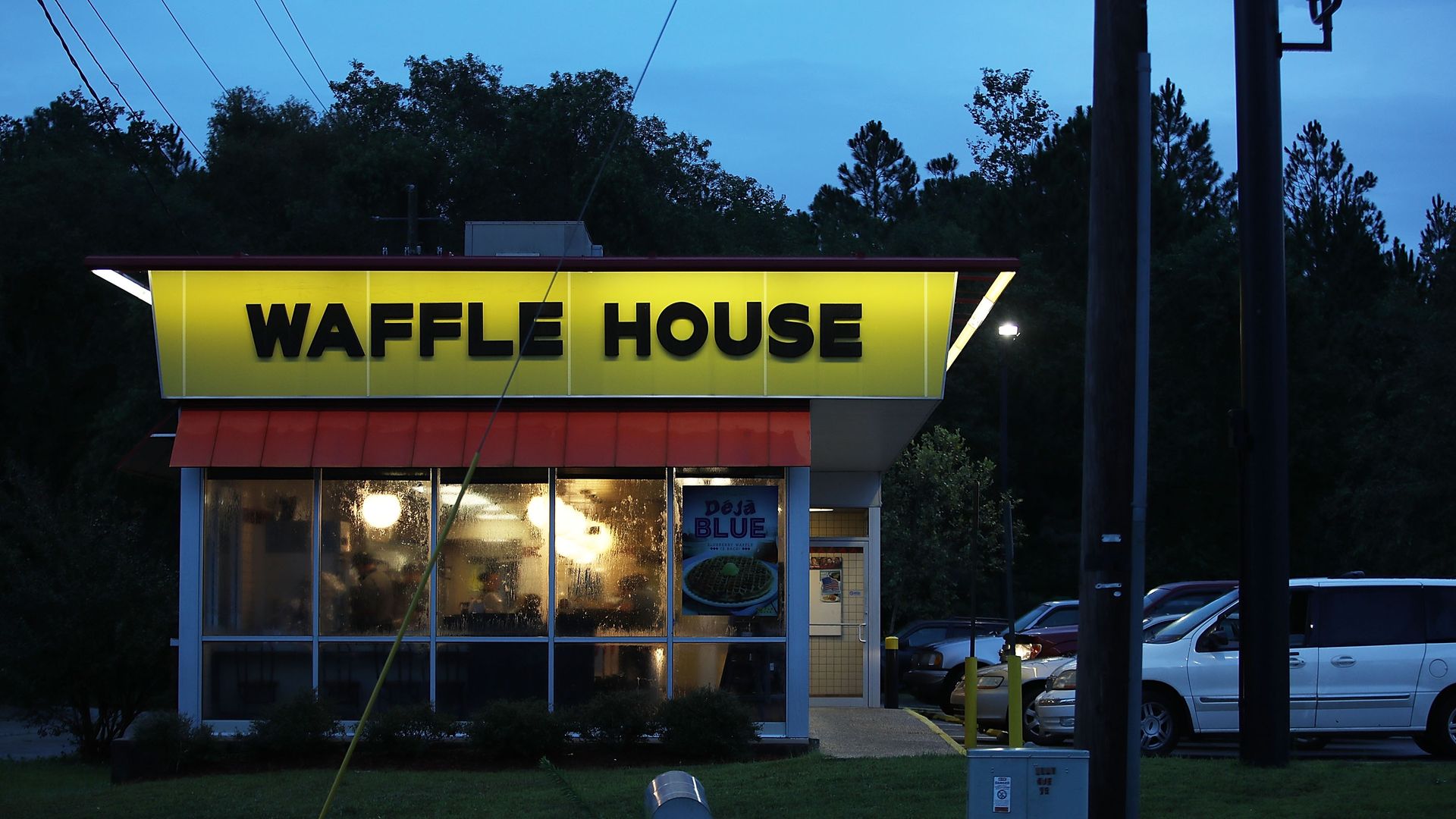
Waffle Houses throughout the South are being used to determine the damage and stability of communities in North and South Carolina as the state rides out Hurricane Florence.
How it works: The Federal Emergency Management Agency uses the "Waffle House Index" to determine if an establishment is offering a full menu. According to FEMA, "If a Waffle House can serve a full menu, they’ve likely got power (or are running on a generator). A limited menu means an area may not have running water or electricity, but there’s gas for the stove to make bacon, eggs, and coffee: exactly what hungry, weary people need."