Wednesday's economy stories


Energy Department hikes 2027 diesel price outlook
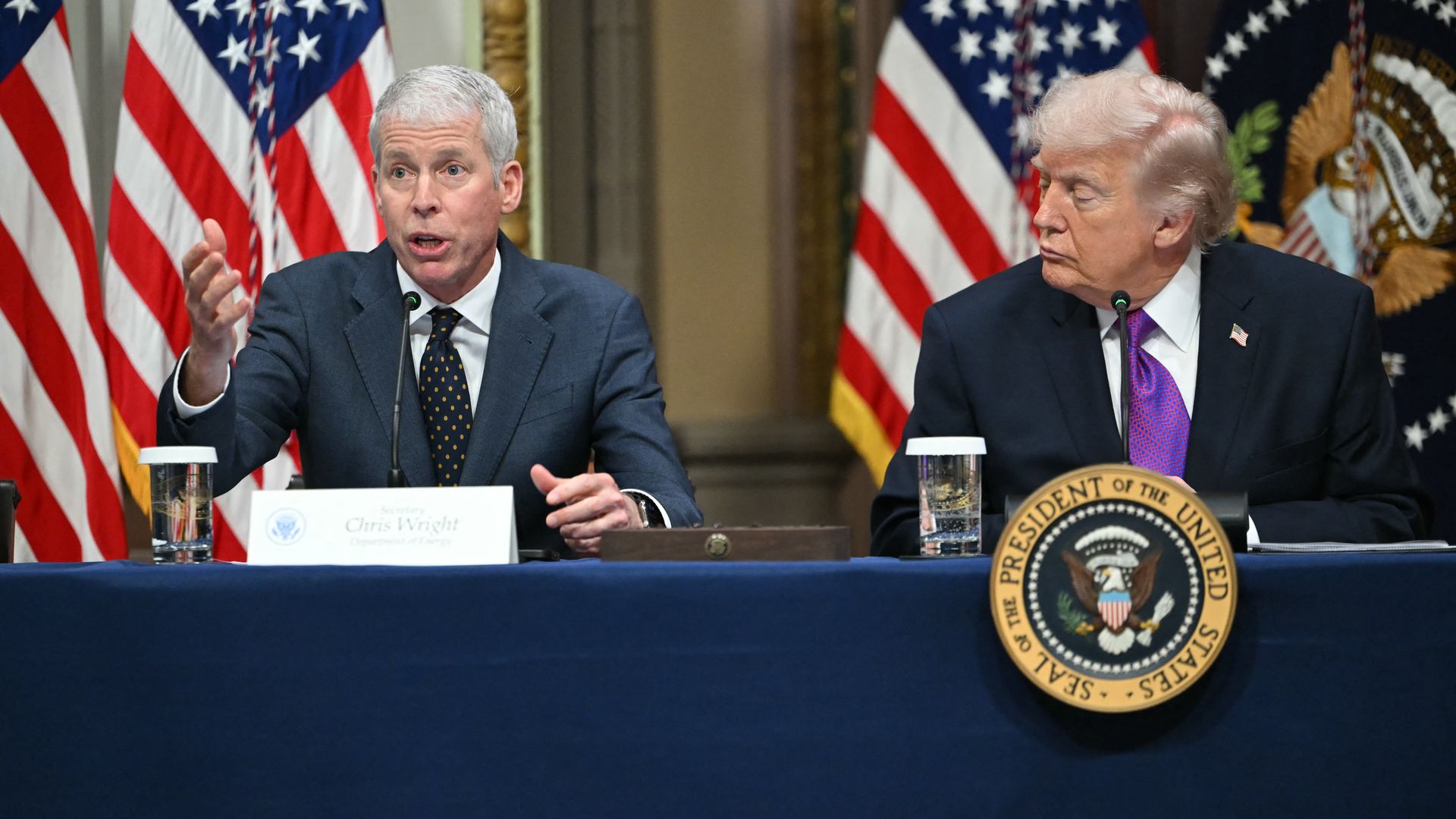
The Energy Department's statistics arm on Wednesday sharply raised its forecast for U.S. diesel prices next year as tight global supplies keep domestic inventories unusually low.
Why it matters: The outlook suggests Americans could face elevated fuel costs well into 2027, as President Trump acknowledged Wednesday that oil prices may not fall until after November's midterm elections.

Fed's interest rate decision may come down to hair-splitting inflation data
It looks like a jump ball as to whether the Fed will raise interest rates at a meeting concluding a week from today — and the decision may hinge on a few hundredths of a percent of a single month's inflation data.
The big picture: This is the opposite of what chairman Kevin Warsh wants. He has long criticized the Fed's proclivity for fine-tuning policy based on the smallest blips in economic data.
- But in the absence of a persuasive, fully developed alternative framework for setting monetary policy, much of the Federal Open Market Committee seems to be focused on parsing the numbers.
- As such, two August inflation reports on tap this week could tip the decision on whether to hike rates or not.
State of play: The Labor Department will release the August Producer Price Index tomorrow and the Consumer Price Index on Friday.
- Analysts can crunch those numbers to arrive at a good estimate of where the Fed's preferred inflation measure — the Personal Consumption Expenditures Price Index — will land when it is announced Sept. 30.
- If the month-over-month core PCE inflation number is on track to be 0.2% or lower, it would suggest that inflation is falling toward the Fed's target. If it is 0.3% or higher, it implies a worrying re-acceleration. If it's somewhere in between, well, that's where things get interesting.
- A 0.2% monthly inflation rate, sustained for a full year, would translate to 2.43% annual inflation, while 0.3% works out to 3.66%. (It would take 12 months of 0.165% monthly inflation to achieve the Fed's 2% target.)
Zoom in: This has Fed watchers turning to extraordinarily granular detail of how this week's numbers will map onto PCE inflation, and in turn how various levels of August PCE inflation are likely to shape Fed policymakers' debate this coming Tuesday and Wednesday.
- Deutsche Bank economists led by Matthew Luzzetti published an elaborate table last week with their best guess on the policy stance of each of the 18 non-Warsh members of the Federal Open Market Committee in the event that August inflation looks to be 0.19% or lower, 0.2-0.24% and 0.25% or higher.
- "To give you a sense of how close call the September rate hike decision is, my team is operating on 1000th decimal points for our [PCE] inflation forecasts," wrote Bloomberg chief U.S. economist Anna Wong on X last week.
- "This precision is ludicrous," writes Krishna Guha at Evercore ISI in a note, "but for what it is worth," he sees a reading of 0.21 or 0.22% (or lower) as favoring a hold on interest rates, while 0.23 or 0.24% "could well go to a hike."
Of note: The government is tweaking the calculation method for some components of PCE inflation, including portfolio management fees, at the end of the month, another factor for modelers to grapple with.
Reality check: A frequent criticism that Warsh made of the 2010s-era Fed was that it got overly worked up over false precision. Officials fretted that inflation was undershooting the 2% target because it was routinely coming in around 1.8%.
- That looks downright sensible compared with a policy call hanging on a couple of hundredths of percent of one month's projected data.

High gas prices revving up EV interest
Fifty-six percent of drivers say gas prices have raised their interest in EVs, according to HERE Technologies and SBD Automotive's annual survey.
Why it matters: As gas prices remain high, drivers increasingly see EVs as a way to save money.

Entrepreneurs could hold the key to Tesla's Cybercab plans

Tesla's traditional do-it-yourself instinct could be tested by its nationwide robotaxi ambitions.
The big picture: Manufacturing self-driving taxis is one thing. Financing, parking, charging, cleaning and maintaining enough of them to blanket the country is another — and Tesla is signaling that it might want entrepreneurs to help shoulder the load.

New research sketches out how AI might reshape the economy


New research from Anthropic outlines radically different paths for how AI will transform the economy in the next four years.
Why it matters: In one, AI's impact resembles that of the internet. In another, its impact resembles the arrival of the internet and electricity at once, while the most extreme AI economic scenario has no historical precedent.

Home heating oil bills are rising
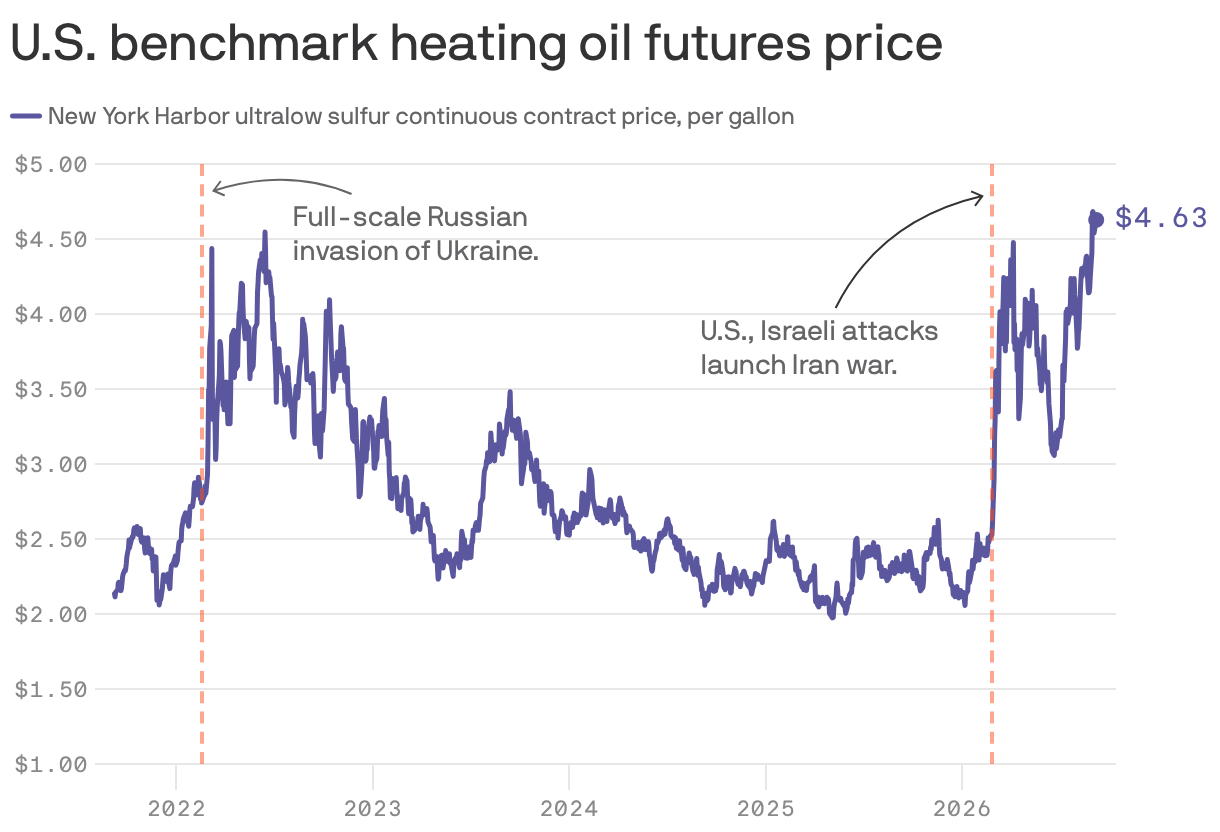
Home heating oil bills are likely to be massive this winter in the Northeast — and as one such homeowner, I am terrified.
Why it matters: Beyond my ability to keep my daughter and dog alive through the long, dark suburban winter, the looming shadow of the oil delivery truck underscores the costs consumers are bearing as a result of parallel wars in Iran and Ukraine.
- U.S. gasoline prices averaged $4.15 for a gallon of regular on Tuesday, according to AAA.
- Diesel hit an all-time high price of $5.90 a gallon on Monday and stayed there on Tuesday.

Tariff worries drive copper prices to record high


Copper is trading at an all-time high.
Why it matters: A rise in the metal's price usually serves as an informal gauge of global economic growth, but right now Doctor Copper's diagnosis is muddled by U.S. tariffs and other supply issues.
Scoop: Best states for EV charging
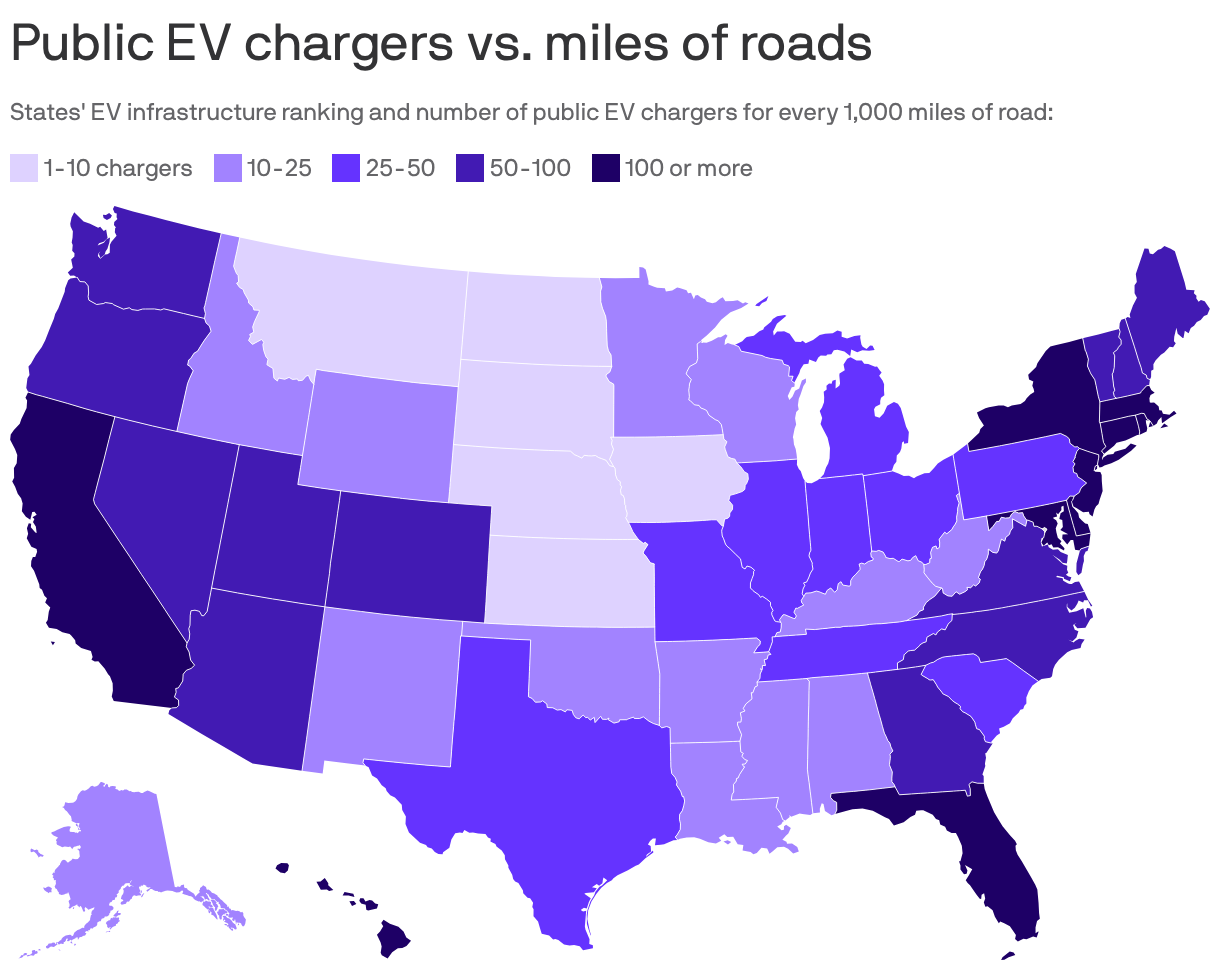
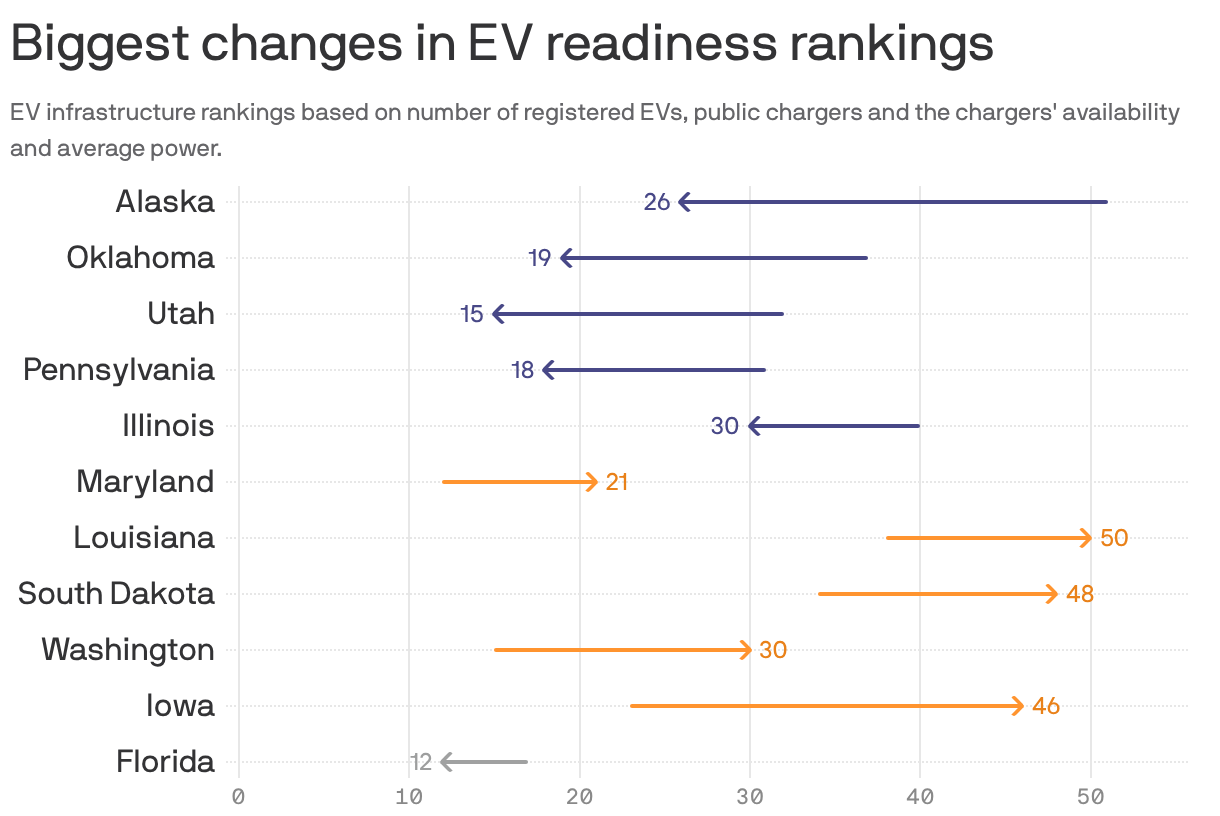
The chances of finding a public EV charger are much better in the Northeast compared to the Great Plains.
Why it matters: While U.S. public charging options grew 13% since last year, that growth hasn't been evenly distributed, according to HERE Technologies and SBD Automotive's annual ranking.
Trump bans some Canadian imports as North America trade war intensifies
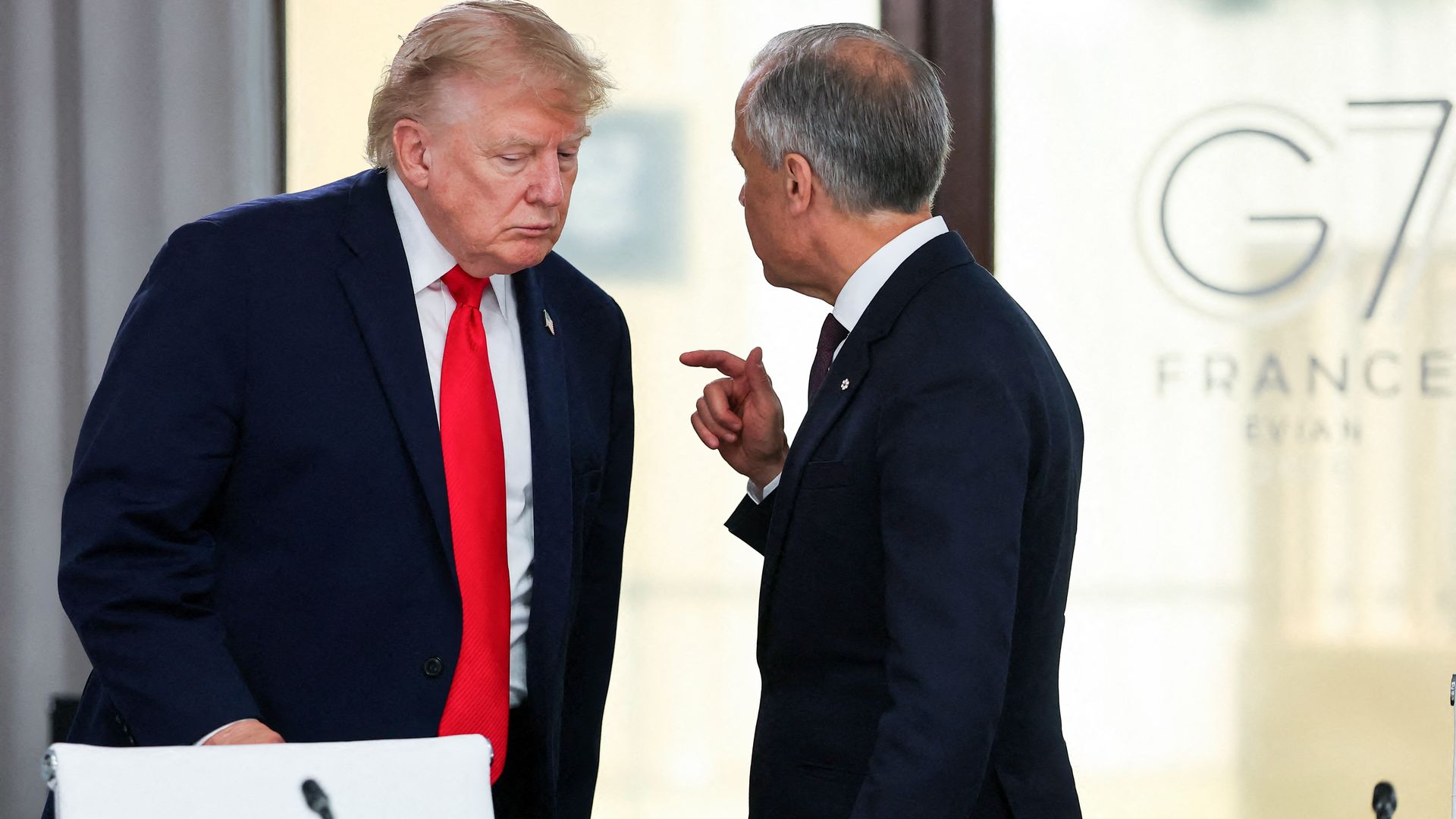
President Trump said the U.S. would ban Canadian alcohol, some dairy products and large motorcycles, sharply escalating a trade war largely fought with tariffs.
Why it matters: The measures deepen the economic rift between countries that have spent decades interlinking commerce, threatening disruption for businesses and consumers on both sides of the border.


Trump's summer of sabotage
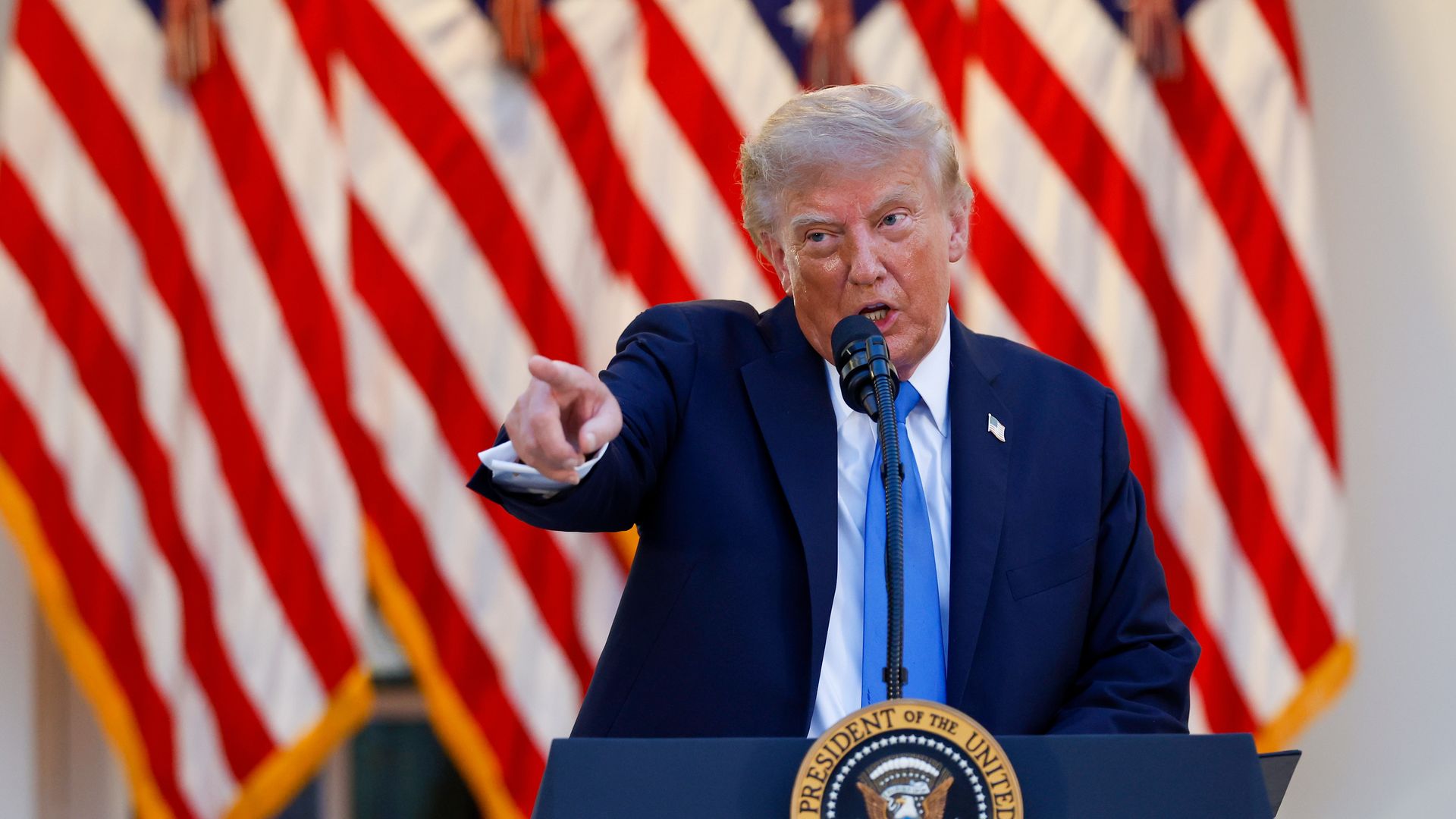
Congressional Republicans are preparing to share the stage with a president who has spent the August recess complicating their efforts to run their races on their own terms.
Why it matters: Republican lawmakers fled Washington for the latter part of the summer, eager to localize their races.

Robinhood expands prediction markets despite legal uncertainty

Robinhood is expanding its prediction markets offerings, defying critics and plunging ahead despite looming uncertainty over the regulatory future of event contracts.
Why it matters: Robinhood has more than 28 million funded customers, making it a seamless entry point into prediction markets for many retail investors.
Saudi-backed LIV Golf files for bankruptcy protection

LIV Golf — the Saudi-backed league that upended the sport with a costly splash but failed to identify a viable business model — filed for Chapter 11 bankruptcy protection on Tuesday.
Why it matters: It's an ignominious turn of events for a brash organization that lured some of the biggest stars away from the PGA Tour with enormous paydays that proved to be unsustainable.
Trump's next trade weapon

Trump is reaching for a more drastic trade war weapon, with new threats to shut foreign goods out of the U.S. altogether.
Why it matters: It would mark a significant evolution of the administration's trade agenda, with potentially bigger economic fallout than the tariffs that have defined it so far.
- Trump may also have firmer legal footing for some import bans than emergency tariffs. Federal trade laws explicitly give presidents the power to prohibit imports under certain conditions, even where courts have rejected their authority to impose tariffs.
- Businesses can absorb the cost of a tariff, pass it on to customers, or some combination of both. But losing access to a key part or product altogether can result in shortages, stalled production and a chaotic scramble to find new suppliers.
Driving the news: Trump threatened to ban Canadian aircraft manufacturer Bombardier from selling jets in the U.S., just hours before Canada's retaliatory tariffs on $20 billion worth of U.S. goods took effect this morning.
- "NO MORE SELLING BOMBARDIER IN THE UNITED STATES!" Trump wrote on Truth Social. "If they want our Market, they must build here, and stop treating America like a 'piggybank.'"
- The Bombardier threat came days after Trump responded to the strong jobs report with a social media post demanding that the Federal Reserve lower interest rates, tying the demand to a sweeping threat to cut off trade with nations that would in theory include countries like Canada, Japan and China.
- "LOWER THE RATE OR I'LL STOP TRADING WITH COUNTRIES WITH WHICH WE HAVE A DEFICIT," Trump wrote. Notably, he added: "IT'S BETTER THAN TARIFFS!"
Between the lines: Top Trump trade official Jamieson Greer has also floated outright bans, saying last month that it could be an option to hit back at Canada's retaliatory tariffs.
- "We've never done these bans; it's quite extreme. But maybe we need to," Greer said in an interview with the CBC late last month.
- Greer also said in July that Trump "for sure can" use emergency powers to restrict trade, after the president threatened to cut off trade with Spain.
- At the time, Greer pointed to the Supreme Court's ruling that blocked Trump's emergency tariffs, noting that law "clearly says you can prohibit trade."
The intrigue: The U.S. has banned imports before, though usually as part of sanctions against adversaries rather than as leverage in a trade dispute with a close economic partner like Canada.
The Supreme Court ruling that blocked Trump's emergency tariffs highlighted that a more potent option was available to him.
- The Court ruled that IEEPA doesn't authorize tariffs, but the law explicitly allows presidents to prohibit imports. Trump seized on that distinction the day the ruling came down. "I can embargo, but I can't charge one dollar," he told reporters.
- Justice Brett Kavanaugh called that an "odd donut hole" in oral arguments, noting that a president could shut down trade entirely, but couldn't impose even a 1% tariff.
- Section 338 of the Tariff Act of 1930, which Trump has already invoked against Canada, also allows the president to exclude a country's goods under certain conditions.
What to watch: Trump's Bombardier threat is already showing the political realities that can complicate such drastic trade moves.
- The company — and the firms that supply it — are deeply embedded in the U.S. economy, particularly in Kansas. It employs over 1,000 people in Wichita and buys from roughly 2,800 U.S. suppliers across 47 states.
- Kansas Republicans were quick to hint at the potential for economic fallout of an outright import ban.
- "I reached out to the Trump administration to make certain the President is aware of the significant contributions of Bombardier to Kansas," Sen. Jerry Moran posted on X.
Perplexing labor market views
Americans are as pessimistic about the overall job market as they have been since the depths of the pandemic. But they think they, personally, will be just fine.
The big picture: That it the perplexing combination of views displayed in the New York Fed's latest Survey of Consumer Expectations, which matches other survey-based evidence that Americans are doing well individually but are deeply negative about the overall economic outlook.
By the numbers: Survey respondents put average odds that the unemployment rate will be higher a year from now at 44.4% in August, the highest since April 2020 and up 1.6 percentage point from July.
- Yet survey respondents' average perceived odds of losing their own job in the next 12 months decreased by 0.4 percentage points to 13.8%, the lowest since February.
- Perceived odds of voluntarily quitting their job voluntarily increased as well, by 0.9 percentage points — a sign of confidence in respondents' personal job prospects.
State of play: Labor market data has firmed up so far this year, with the unemployment at 4.1% the last two months after ending last year at 4.4%. That firming is reflected in peoples' perceptions of their personal job prospects, but not in their macro views.
Zoom in: This curious mix of views aligns with other public opinion data.
- The Conference Board's consumer confidence index, for example, showed a July surge in the "present situation index" of current conditions, which was up 6.8 points to 121.2
- Meanwhile the expectations index — consumers' outlook for income, business, and the job market — fell 5.8 points to 68.2.
Between the lines: Survey responses about economic questions increasingly seem to bring sour responses that reflect broadly negative attitudes about the direction of the world.
- When you narrow the question to ask about peoples' immediate economic circumstances, the responses get a lot more favorable.

SEC wants to end pay-to-play prohibition for private equity

The Trump administration is seeking to rescind a rule that was put in place to stop private equity funds from bribing public officials, following a raft of pay-to-play scandals.
The big picture: The Securities and Exchange Commission claims that the Rule 206(4)-5 of the Investment Advisers Act stifles "free speech" and had too many unintended consequences.
- It did not propose any sort of replacement, instead arguing that existing state and local laws would suffice — even though it was the failure of those very laws that led to the rule's creation in the first place.
Exclusive: Split Pay raises $125 million for rent and mortgage lending
Split Pay, a lending startup initially focused on renters, tells Axios that it's raised $125 million in Series A and Series B funding. Khosla Ventures led both rounds, joined by Thrive Capital and Max Levchin.
Why it matters: It's an effort to make the consumer economy work more like the invoice-based business economy — which recognizes that income can be lumpy — by reconciling the timing discrepancy between large bills (once per month) and paychecks (twice per month).
Bluecore raises $50 million for port-powering nuclear barges

Bluecore Energy, a developer of small nuclear reactors on barges that could power ports, on Tuesday announced that it's raised $50 million in seed funding.
Why it matters: This could enable the startup to begin ordering nuclear fuel, thus charting a path toward criticality and helping to power the Port of Long Beach.
Retail investors were less bullish in August

Retail investors were less eager buyers of stocks in August, taking advantage of gains early in the month to trim some of their positions and leading to a 3.9% decline in Charles Schwab's index of stock positions and trading activity, per data shared exclusively with Axios.
Why it matters: That caution, seen during a month of rising Treasury yields and surging energy prices, may indicate a willingness to tap the brakes on this long-running bull market.
An exercise in thinking about the unthinkable: a U.S. debt default
In a Virginia law school classroom, students are grappling with an event once considered unimaginable: a U.S. government debt default.
Why it matters: This semester's class is indicative of a nervousness that has become more widespread about America's standing in the global financial system.
Job losses in the information sector are piling up


The information sector lost 23,000 jobs in August, and its employment is now down by about 12% since peaking in 2022.
Why it matters: That's 370,000 lost jobs over four years across the movie and music industries, telecom and media, as well as data processing, web hosting and other information services.
- The decline got less attention last week when the August employment report showed surprisingly strong hiring.

Exclusive poll: GOP's gains among Latinos fade in House battlegrounds


Democrats have gained sharply with Latino voters in some of the country's most competitive House districts since 2024, a new Hart Research/TelevisaUnivision poll shared exclusively with Axios shows.
Why it matters: President Trump came close to erasing Democrats' longtime advantage among Latinos in the last presidential election. Now, with control of Congress at stake and Trump's approval ratings hitting new lows, that breakthrough appears to have eroded.
Hyundai Motor Group builds on 40 years of U.S. investment

On Sept. 4, Hyundai Motor Group held a ceremonial event marking the start of a new steel mill project at the RiverPlex MegaPark site in Ascension Parish, Louisiana — the latest chapter in a partnership with the United States that spans four decades.
The background: Since first investing in U.S. manufacturing in 1986, South Korean multinational automotive manufacturer Hyundai Motor Group had committed more than $20.5 billion by 2024.