Friday's economy stories

Record diesel prices squeeze food, transport
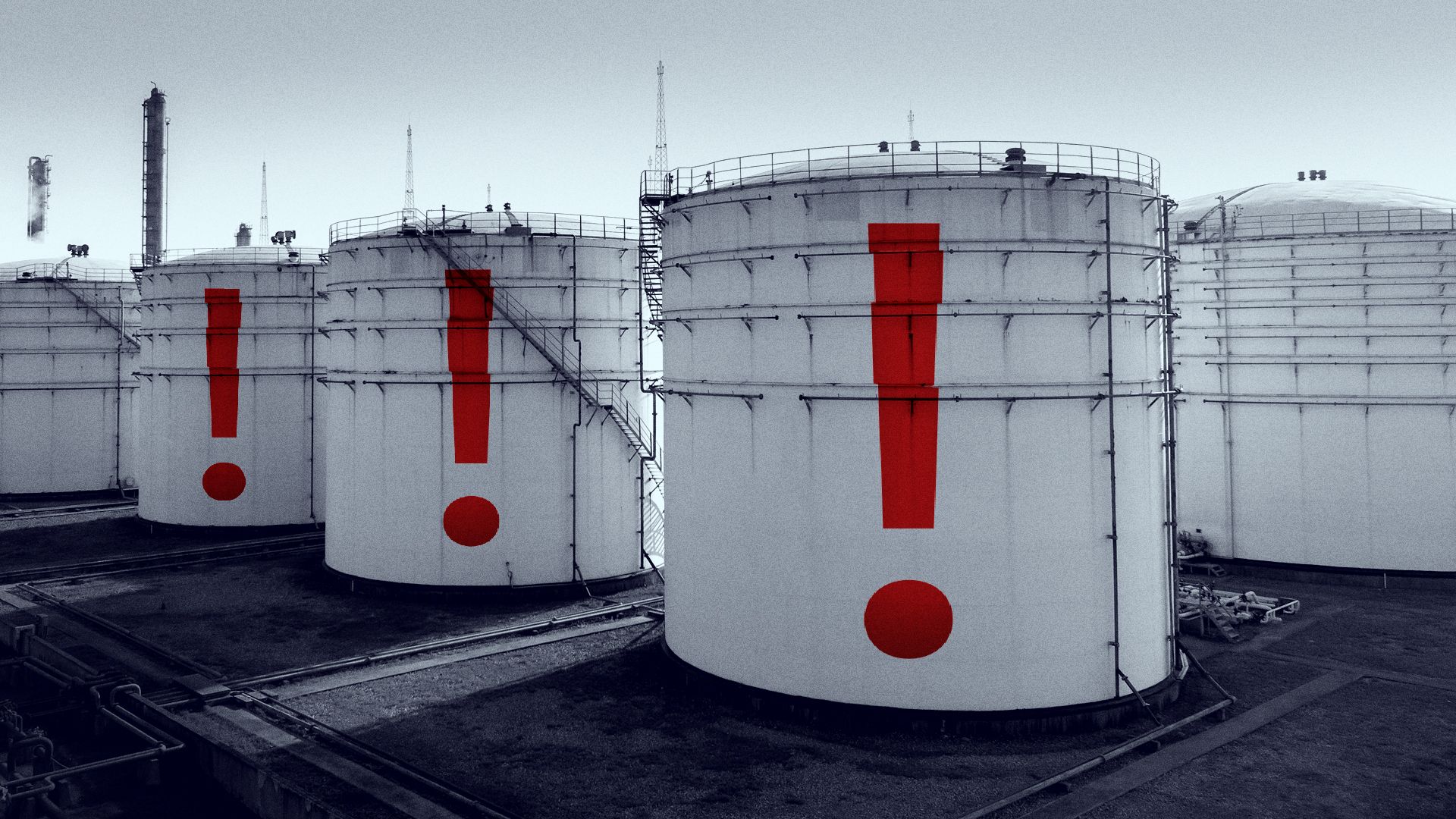
The record price of diesel threatens to stoke inflation at a time when consumers are already price-sensitive and businesses are reeling from higher costs due to trade tensions.
Why it matters: Diesel is a key cost throughout the supply chain, meaning soaring prices could eventually show up in what consumers pay for everything from groceries to household goods.

The rising energy cost dilemma


Headline CPI rose 0.4% in August, its biggest monthly increase since May, with gasoline accounting for more than a third of the increase.
- The Fed typically looks through temporary supply shocks, but a sustained energy surge risks spilling into other prices — and energy price pressures have only escalated further in September.
Zoom out: Central banking orthodoxy would suggest not responding to energy price shocks directly, but responding to the extent that swings in fuel prices are filtering through to broader prices.
- Unfortunately for anyone seeking lower borrowing costs, there is evidence that this is indeed happening, risking energy-driven inflation becoming more entrenched.
- Soaring diesel fuel prices are affecting the price of transportation of all sorts of goods, with the biggest effects on bulky or heavy items.
- Airline fares were up 2.7% in August alone and are up 23.4% over the last 12 months.
Between the lines: If energy price relief were in progress, it would be easier to look through those price surges. No relief is in sight, however.
- Those figures are already backward-looking. The energy shock has since worsened this month, with oil prices around $100 a barrel and diesel topping $6 a gallon for the first time on record — all pointing to more inflation pressure still to come.

The Fed's big inflation test
The Fed looks boxed into raising interest rates next week after Friday morning's hot inflation report. Less certain is what comes after that.
Why it matters: August inflation was shaping up to be a crucial test ahead of next week's interest rate decision, after Fed chairman Kevin Warsh signaled that stubborn price pressures could warrant tighter policy.
- Since then, a run of economic data has bolstered the case for a rate hike: a surprisingly strong jobs report, hot wholesale inflation and now a pickup in core consumer prices. That all comes alongside a fresh burst in energy costs that is on track to keep inflation elevated once September data starts rolling in.
- A hike would put Warsh on a collision course with President Trump, who threatened an escalation of his trade war if the Fed did not cut rates.
- Assuming the Fed's policy committee raises rates on Wednesday, Warsh will face immediate pressure to communicate whether it is a one-off adjustment or the start of a tightening campaign — the kind of forward guidance that he is determined to avoid.
Driving the news: Underlying inflation picked up last month, with the core Consumer Price Index — which excludes volatile food and energy costs — showing more momentum than the headline figures alone suggest.
- Core prices rose 0.3% in August, after increasing 0.2% the previous month. Over the past three months, core inflation has been running at a 2% annualized rate, up from 1.6% through July.
- In the 12 months through August, core CPI edged down to 2.4% from 2.5%, though the unrounded figures show only a marginal decline.
- Services prices excluding housing climbed 0.5% in August, the biggest monthly increase since the start of 2026 — a sign of firmness in the economy, less directly tied to housing and energy.
What they're saying: "The upside surprise to core inflation means that the Fed is running out of reasons to wait," Angelo Kourkafas, a senior global strategist at Edward Jones, wrote in a note this morning.
What to watch: Investors now see an 85% chance of a rate increase at the Fed's meeting that concludes next Wednesday — up from 72% before today's inflation data, according to CME's FedWatch tool.
- New projections alongside the decision will offer clues about where policymakers see rates this year and next.
The intrigue: In a note this morning, ING economist James Knightley said that it might be akin to 1997, when the Fed raised rates once to head off inflation risks as the economy boomed — then stopped as those pressures failed to materialize.
- "We ... think this is merely a recalibration of Fed policy, similar to the single hike implemented by Alan Greenspan's Fed," Knightley wrote.
Friction point: Bond markets currently price in multiple interest rate increases, which puts Warsh on a tightrope.
- If he suggests that an interest rate hike is a one-and-done affair, or just sticks to his guns on avoiding any kind of guidance about further moves, that could put the Fed's credibility at risk and repeat the bond selloff that occurred after the last Fed policy meeting.
The bottom line: Just two weeks ago in Jackson Hole, Warsh laid out a test for action. "We must be confident that underlying inflation is moving to our objective, clearly and at sufficient speed," he said. "Otherwise, we have work to do."
- The August inflation data has offered no reason for such confidence. Ergo, it's time for Warsh and his colleagues to get to work.

Dollars and doomers in the AI safety debate
I don't know if AI is going to destroy humanity. Neither do you.
- But here's what I do know: It's very difficult to have a sober conversation about AI risk when there's so much money at stake.
Inflation stays hot in August as Iran war drives energy costs higher


Consumer prices remained elevated in August as the Iran war's energy shock fueled a fresh burst of inflation.
Why it matters: The renewed price pressures are squeezing household budgets, with signs that underlying inflation is proving stubborn across the broader economy.
- The data could strengthen the case for the Federal Reserve to raise interest rates next week.

Higher oil and rates are set to test the markets
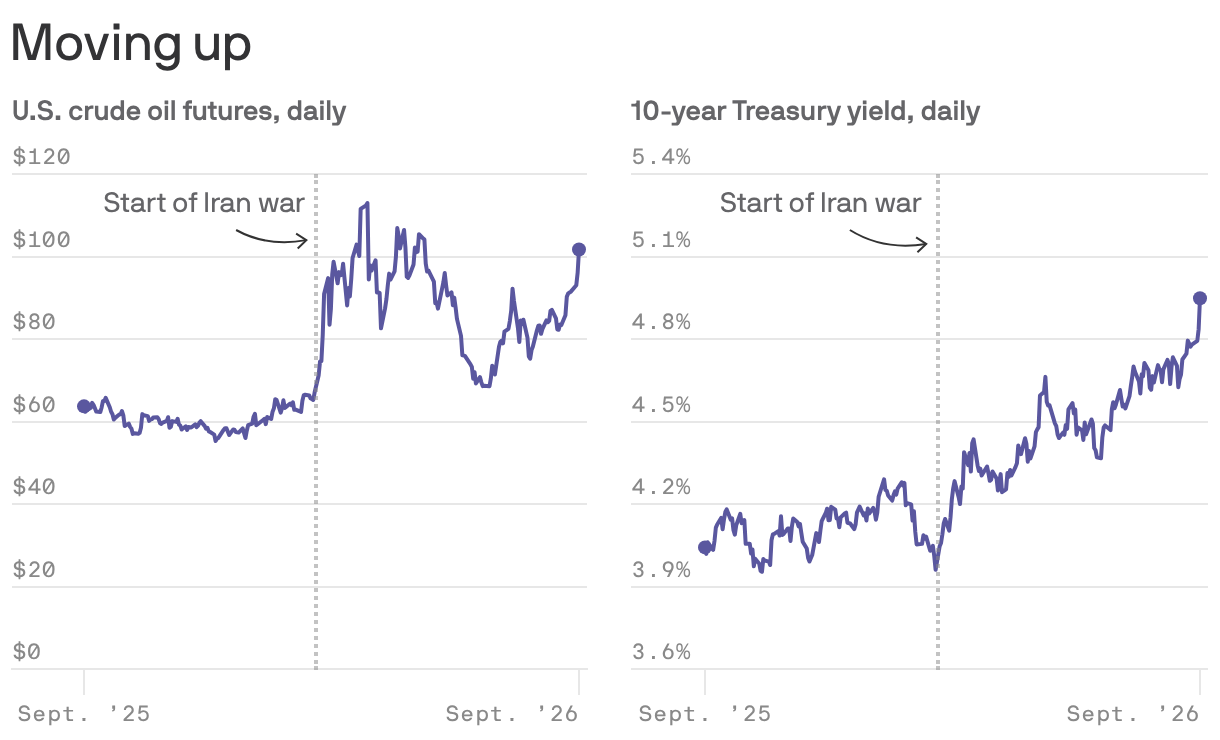
Oil prices surged and borrowing costs rose Thursday as the nervousness percolating through the global economy intensified.
Why it matters: Investors are now pricing in a higher-cost world that could test the resilience of the markets and hurt Americans' wallets.

The post-9/11 national security apparatus is still evolving

Twenty-five years after the Sept. 11 attacks, some lessons remain deeply ingrained in the national security apparatus — while others have faded.
The big picture: A vast majority of Americans say the attacks forever changed the country. But some key post-9/11 security norms — like airport screening, intelligence gathering and international cooperation — have evolved with new technology and shifting political whims.

Diesel hits $6 a gallon for the first time, fueling more inflation

The national average price of a gallon of diesel jumped over $6 for the first time ever, AAA said on Friday.
Why it matters: The fuel that runs the economy is getting more expensive by the day, costing businesses and consumers alike billions of dollars.

Trump reveals why $5,000 checks can wait until after the midterms
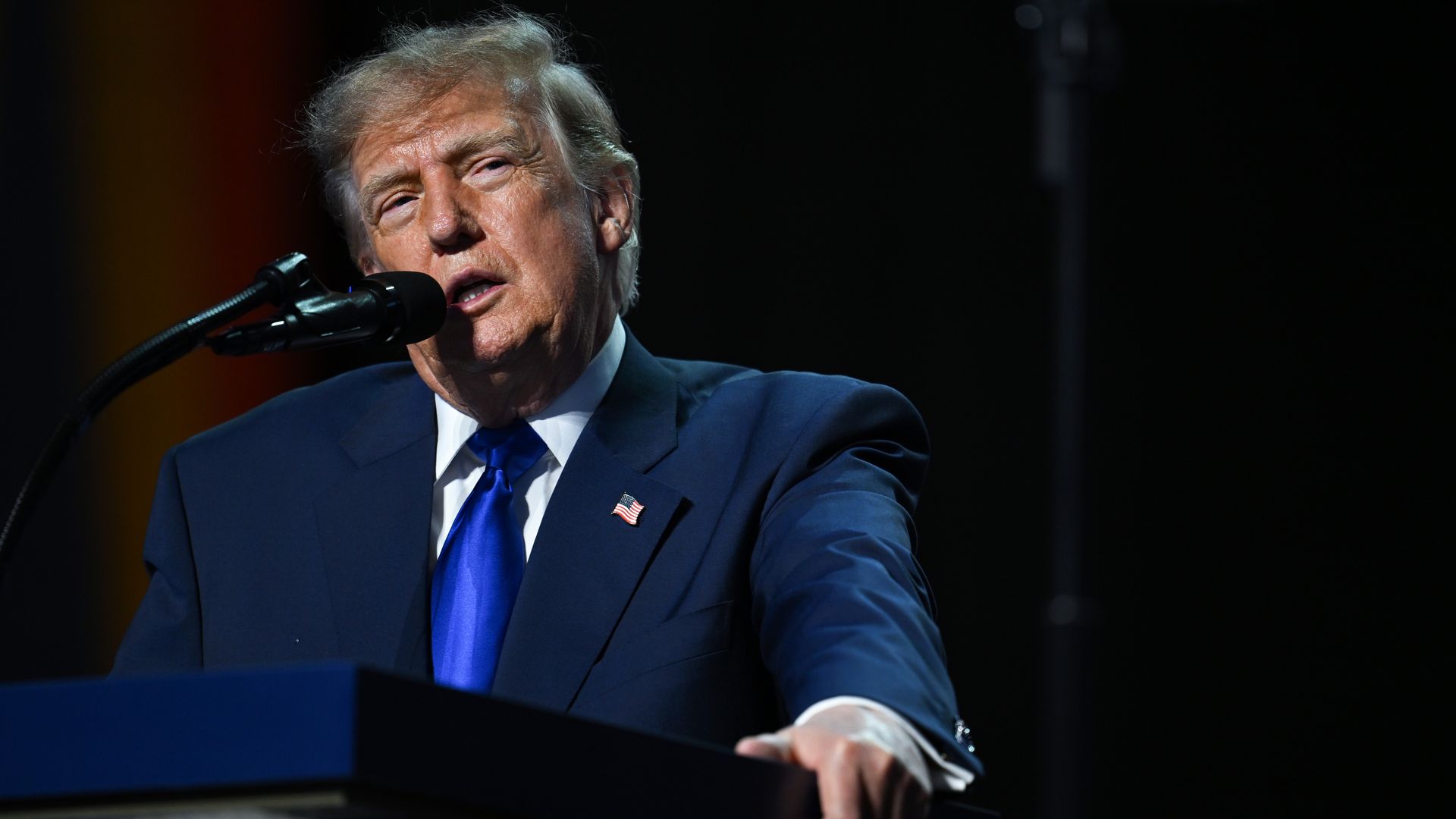
President Trump defended waiting until after the midterms to send Americans $5,000 "dividend" checks, telling Fox News Channel's "The Ingraham Angle" on Thursday that Democrats "can't do it" now.
The big picture: Trump is teasing the checks as Americans remain frustrated by inflation, expensive groceries and high gas prices ahead of the midterms.
Nvidia CEO Jensen Huang: AI fears designed to generate cybersecurity business
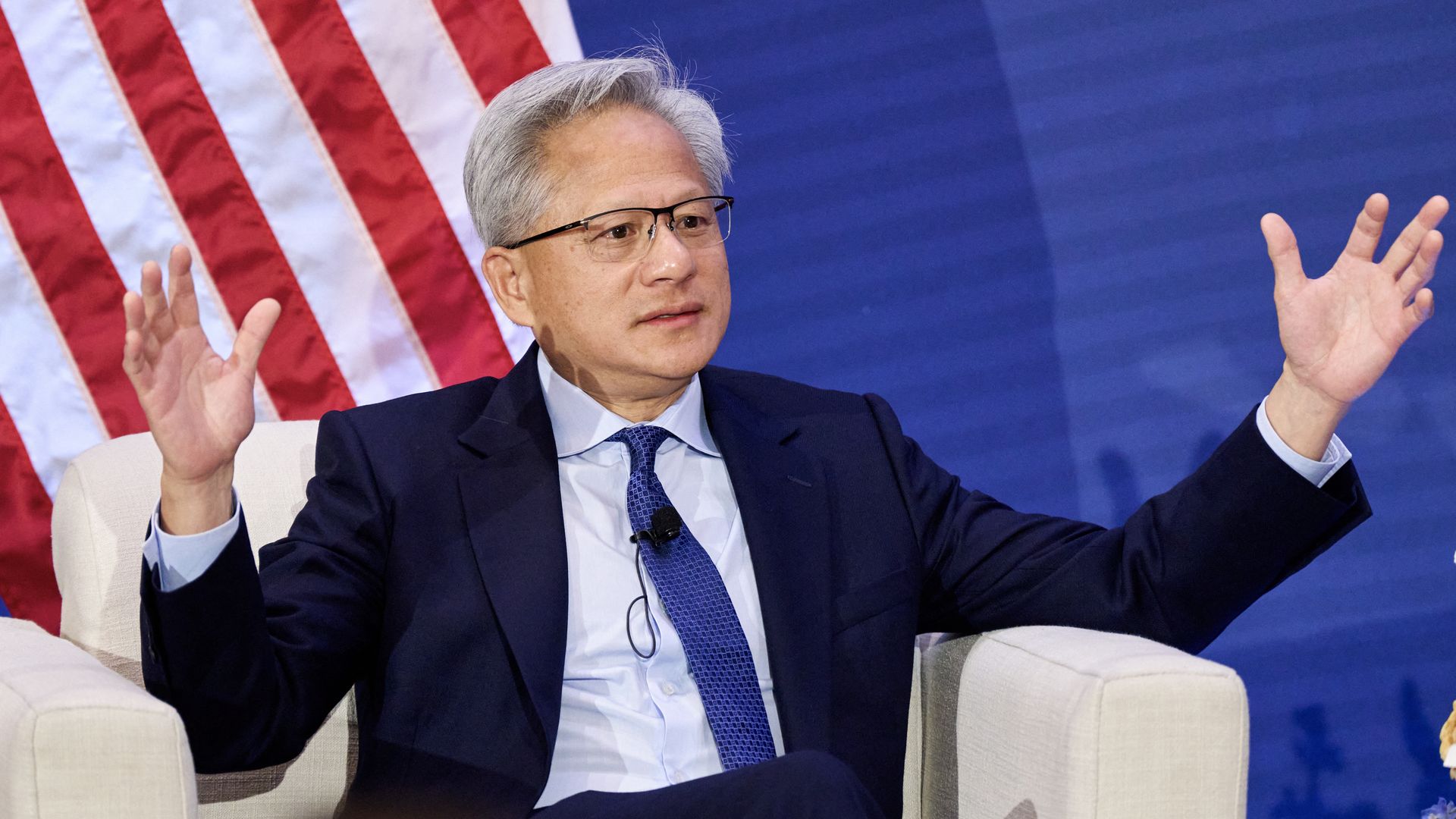
Nvidia CEO Jensen Huang dismissed recent AI fears as a way for the cybersecurity sector to generate new business.
Why it matters: Huang — whose comments on AI are highly influential among investors — risks losing control of the narrative amid growing fears of widespread destruction.
DOJ investigates Nvidia's deal with Groq
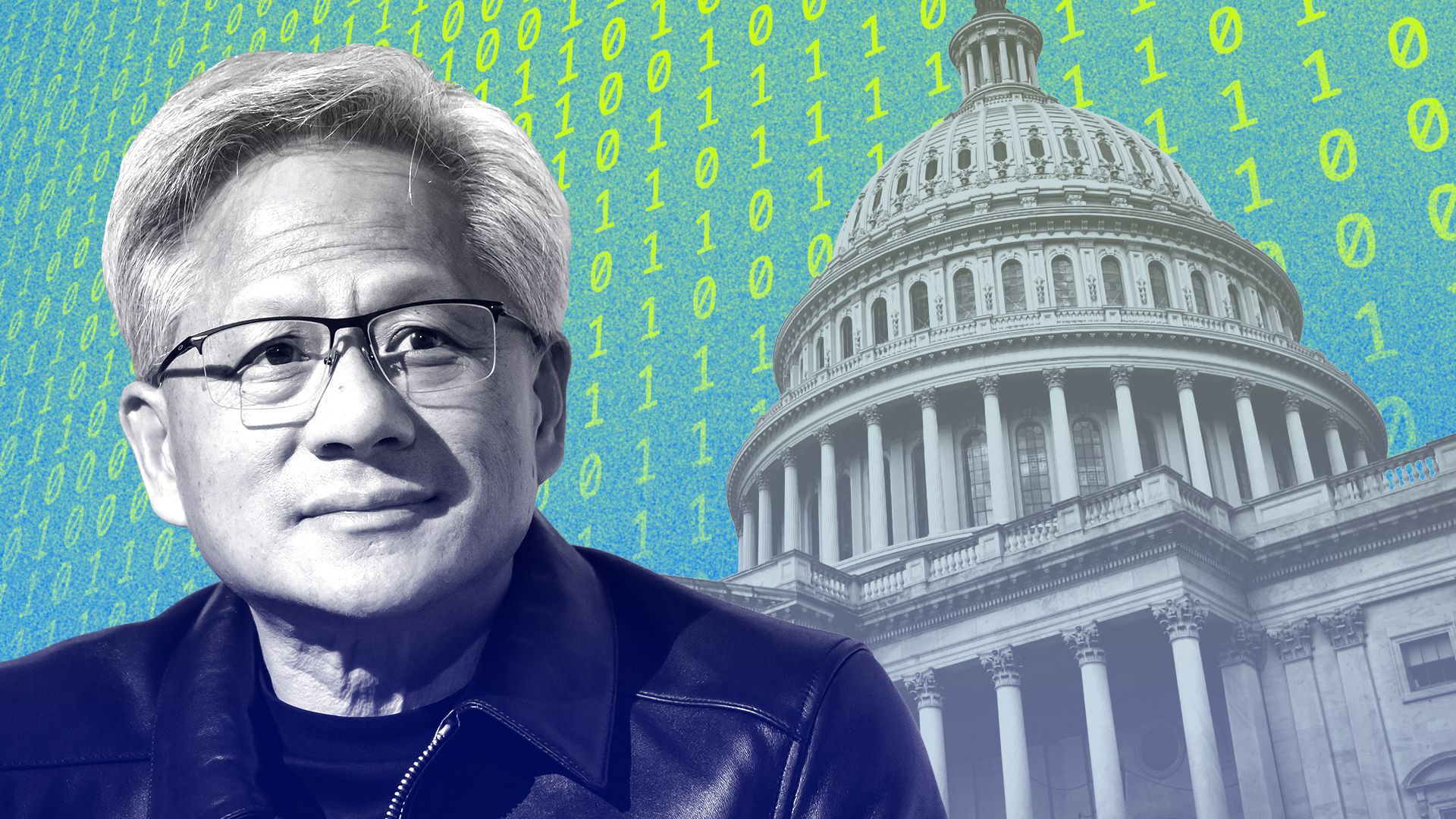
The Justice Department is investigating Nvidia's $20 billion non-exclusive" licensing agreement with Groq to determine if it "tried to skirt antitrust scrutiny," according to the NY Times.
Why it matters: If this sort of arrangement is determined to be illegal, it could extend to a raft of other AI industry deals.
Inflation pressures build


Renewed inflation risks are complicating the economic outlook on both sides of the Atlantic.
- In the U.S., wholesale prices accelerated in August, boosting expectations for a Fed rate hike next week.
- In Europe, the European Central Bank raised rates for the second time since June as the Iran war keeps inflation risks tilted to the upside.
Why it matters: Inflation pressures were already building in August, and the latest surge in oil prices suggests there may be more to come. Brent crude blew past $105 a barrel, while the U.S. benchmark, West Texas Intermediate, topped $100 a barrel for the first time since May.
What they're saying: "The longer energy prices stay high, the more likely they are to drive up broader inflation through indirect and second-round effects," ECB president Christine Lagarde told reporters this morning.
- Lagarde said eurozone growth has held up better than expected, helped by AI-related activity that the ECB expects will contribute to slightly higher core inflation.
By the numbers: U.S. wholesale prices rose 0.4% in August and 5.4% from a year earlier, largely reflecting higher energy costs.
- Goods prices jumped 1.1%, reversing two months of declines.
- Diesel surged 24% in a single month, accounting for more than a third of the goods increase and raising costs for moving goods.
- Transportation and warehousing costs gained 2.3%, a sign higher fuel costs may be bleeding into shipping.
Perhaps more troubling for the Fed is that some components that feed into its preferred inflation gauge, the Personal Consumption Expenditures Price Index, including airfares and hospital care, were firmer than expected.
- As Axios reported Tuesday, next week's Fed decision could hinge on a few hundredths of a percentage point in August core PCE inflation.
What to watch: After Wednesday morning's Producer Price Index data, Bank of America now estimates that core PCE could rise by 0.26% — enough in its view to green-light a rate increase, though tomorrow's Consumer Price Index data could shift that estimate.
- CME's FedWatch tool puts the odds of a rate hike at the meeting concluding on Sept. 16 at about 70%, up from 60% before the PPI data.
The macroeconomics of $5K checks
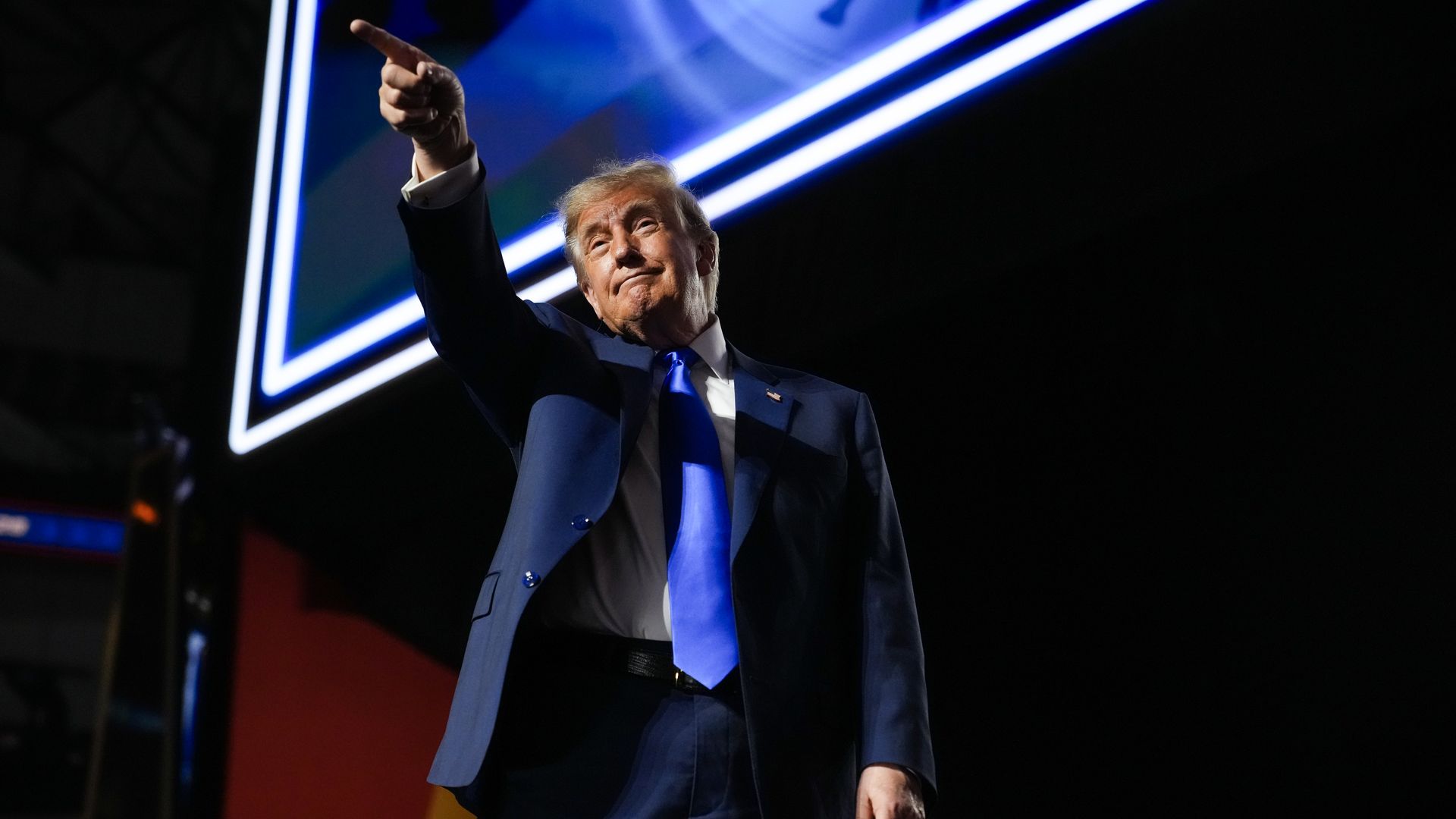
President Trump said last night that if Republicans prevail in the midterm elections, the government will send $5,000 payments to each adult citizen. That would come with serious economic risks.
The big picture: The federal deficit is already running around $2 trillion a year, bond markets are starting to demand higher rates to finance government borrowing, the economy is at full employment, and inflation has been high for nearly six years.
- Borrowing an extra trillion dollars or so and sending it to households would risk overheating the economy and making debt, interest rates and inflation worse.
- It would have echoes of the $1.9 trillion stimulus that President Biden pushed through in early 2021, which included $1,400 payments to individuals — except that then unemployment was higher, inflation had not yet taken off, and the national debt was lower.
- Even against that macroeconomic backdrop that made fiscal stimulus more justifiable, the American Rescue Plan contributed to the inflation surge in 2021 and 2022 that undermined the Biden presidency.
By the numbers: There are around 260 million adult U.S. citizens, so $5,000 payments would amount to around $1.3 trillion, plus administrative costs, minus any reductions if high earners are excluded from the program.
- Vice President Vance said last night that tariffs would pay for the "Trump dividends," but tariff revenue has been tracking something on the order of $300 billion per year, with high uncertainty given volatile policy and legal challenges.
- It all comes as the Treasury Department has been intervening to try to suppress longer-term interest rates.
- This morning, the yield on the 10-year U.S. Treasury note — the benchmark for mortgages and other loans — has been a hair's width away from a 19-year high. At 11:15am ET, it was at 4.92%.
What they're saying: "President Trump is talking about stimulating an economy with an existing inflation problem and without a lot of slack," Michael Strain of the American Enterprise Institute tells Axios. "I think there's a real risk that we would have an acceleration of inflation if the president's proposal became law."
- "Financial markets are registering concern about the structural deficit, the Treasury secretary is engaged in increasingly aggressive efforts to put downward pressure on long-term yields, and the Fed chairman has made very clear the economy has an inflation problem."
- "Now is a strange time to be stimulating the economy," said Strain, AEI's director of economic policy studies.
Reality check: The president's proposal seems more like a rhetorical get-out-the-vote device than a buttoned-down policy proposal. He has previously spoken of offering a "tariff dividend" and a "DOGE dividend" that have not materialized.
- If Republicans maintain control of Congress, it will likely be with narrow margins, and lawmakers will face continued bond market pressure to restrain deficits.
- Still, at least some Republicans are taking the idea literally. Sen. Bernie Moreno (R-Ohio) said he will craft legislation to authorize the payments.
Bessent fails to shock and awe the bond market
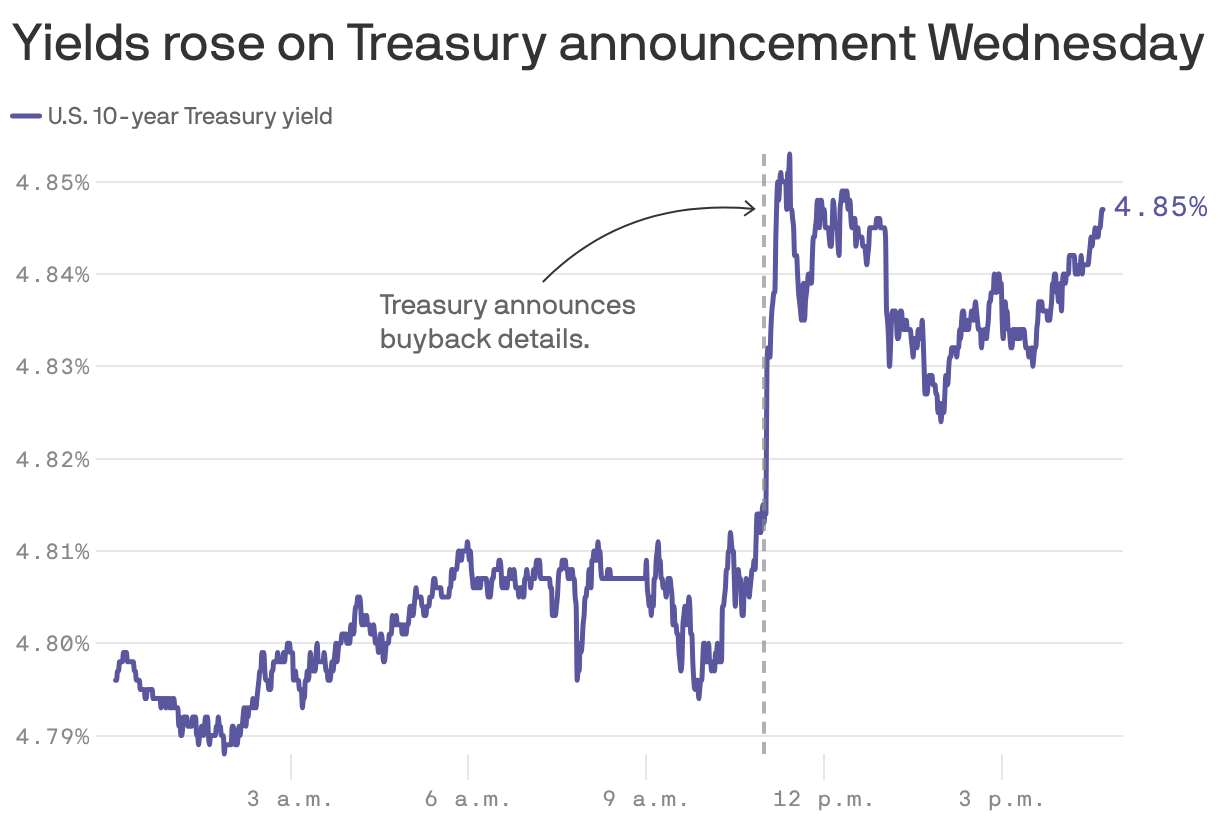
The Treasury Department failed to cow the bond market Wednesday with its amped-up buyback announcement, as rates still rose.
Why it matters: The reaction suggests that Treasury Secretary Scott Bessent's unusual showdown with the markets could itself add to upward pressure on interest rates — precisely the opposite of what most think he's trying to achieve.
Trump makes a familiar promise: $5,000 checks for everyone
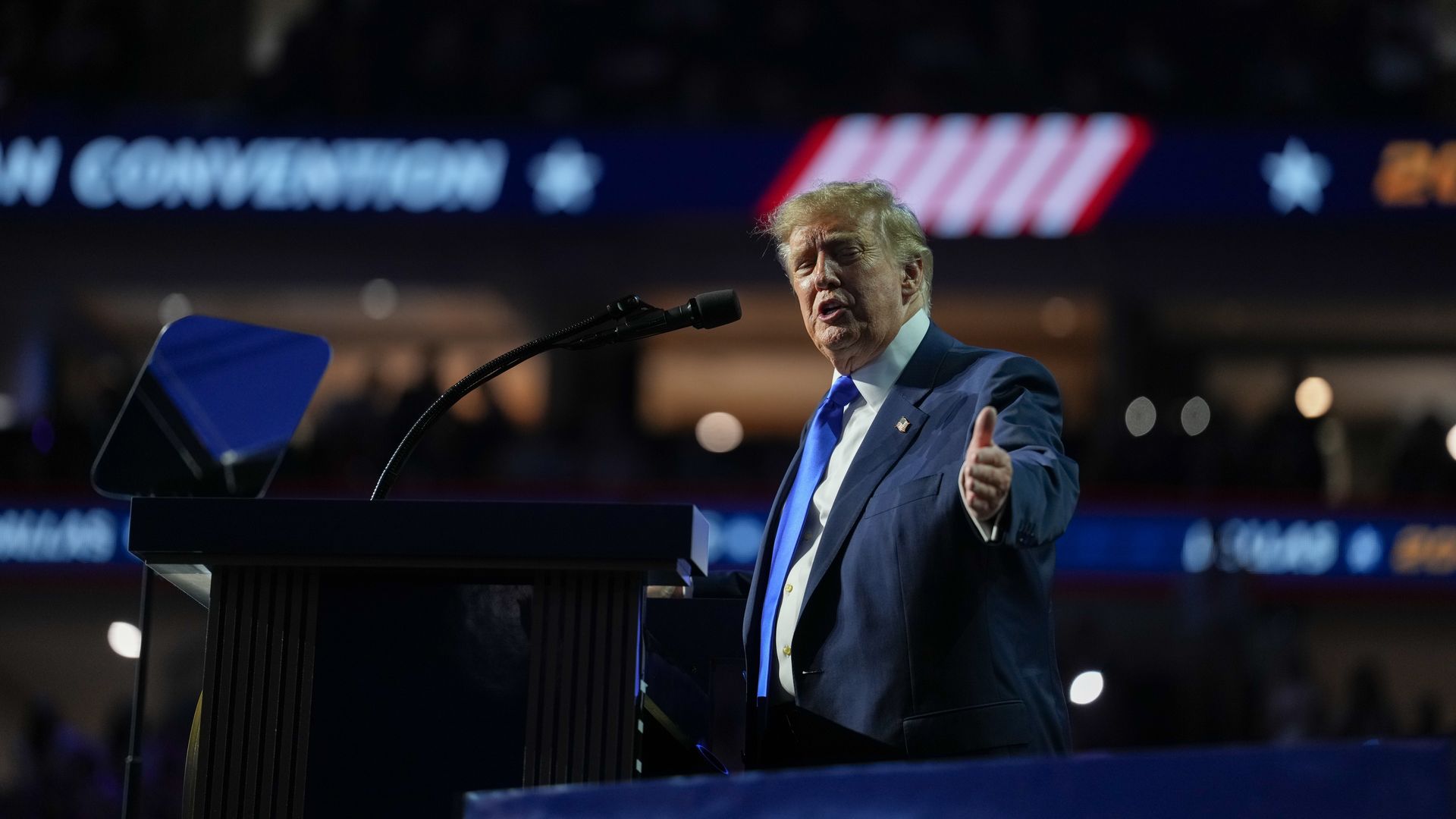
President Trump is promising $5,000 checks for every adult U.S. citizen if Republicans retain control of Congress in the upcoming midterm election.
Why it matters: He's made similar suggestions before, many times, none of which ever came to pass.