Exclusive: Prediction markets and sports betting are "two separate things," regulator says

Add Axios as your preferred source to
see more of our stories on Google.
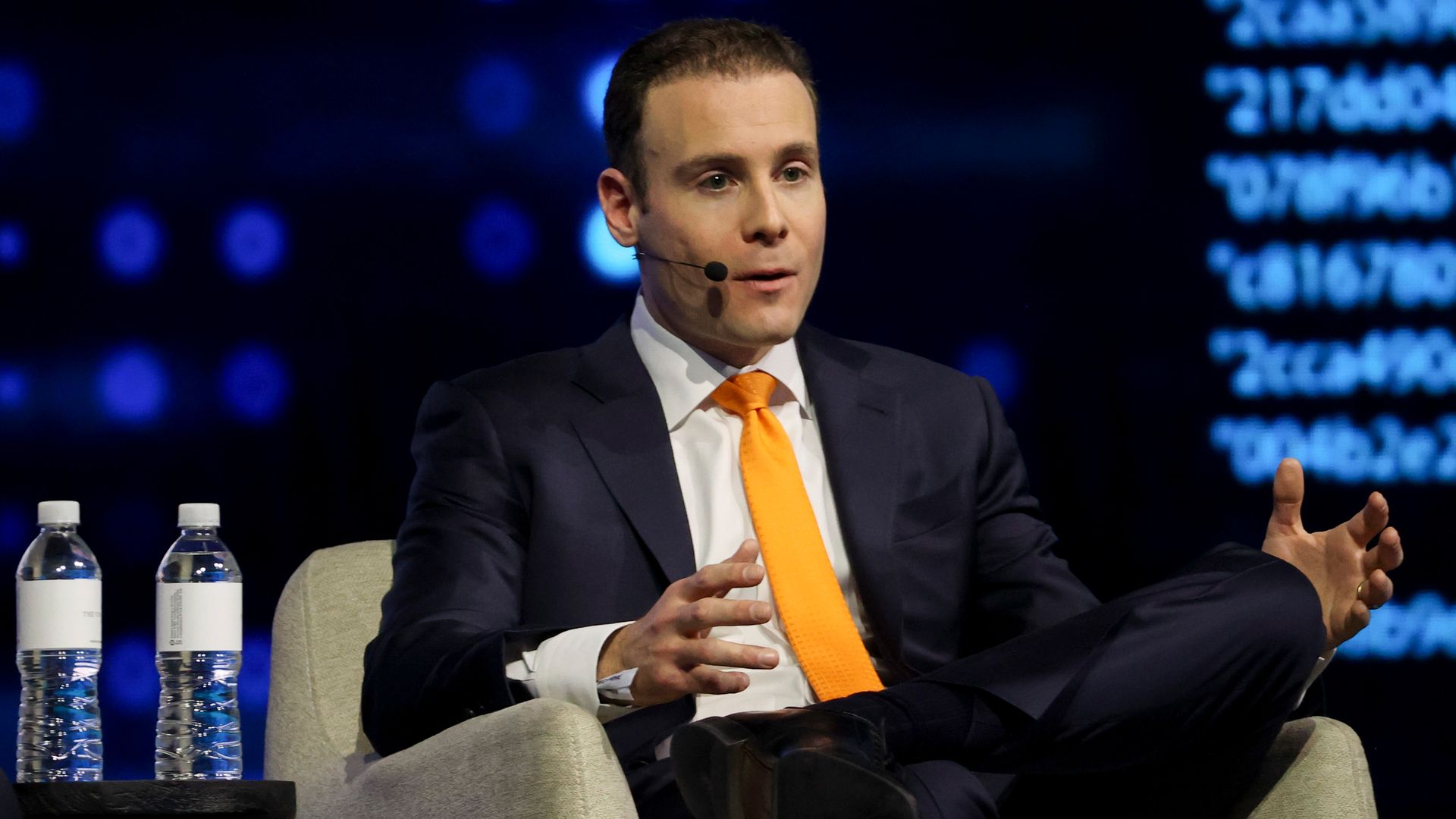
Michael Selig, chair of the Commodity Futures Trading Commission, speaks during the Bitcoin 2026 conference in Las Vegas on April 27. Photo: Ian Maule/Bloomberg via Getty Images
The chief U.S. regulator of increasingly popular prediction markets says he'll treat them as financial products, arguing that most people aren't using prediction markets for "entertainment."
Why it matters: Prediction markets like Kalshi and Polymarket are soaring in popularity, and most of their trading volume is on sports — fueling a growing fight with state gambling regulators.
Zoom in: Michael Selig, chair of the Commodity Futures Trading Commission, tells Axios in a rare interview that prediction markets and sportsbooks are "two separate things."
- "They're different models. The conventional sportsbooks and casinos are entertainment and they have a lot of authority to be able to kick people out when they keep winning," Selig said in an interview.
- "When you go to the derivatives markets, that's not allowed. You keep winning? Great. You take your earnings."
He noted, for example, how sportsbooks limited the ability of political analyst and gambler Nate Silver to win bets on the NBA, which Silver chronicled in his book "On the Edge."
- "What you're seeing is markets versus entertainment," Selig said. "For those that want the discipline and integrity of a market, it's a better model. For those that want entertainment, the casinos might be the model for them."
The intrigue: The Trump-appointed Selig is the only sitting member of the conventionally five-commissioner CFTC, giving him significant sway over the development of the budding prediction markets industry.
- He acknowledged that "there may be some cross-pollination" of people who use both sportsbooks and prediction markets, but he said he'll continue to regulate prediction markets "as financial markets, not as entertainment."
The other side: The American Gaming Association — which represents the casino industry — argues that prediction markets offer gambling "outside the state and tribal regulatory frameworks that protect consumers."
- "They override voter decisions, bypass key consumer protections, ignore state and tribal laws, and avoid licensing and taxes," the AGA says.
Friction point: Growing concerns over insider trading on prediction markets have spawned a slew of bills in Congress to ban or limit the ability of people to make lucrative trades based on nonpublic information.
- Selig said the CFTC's restrictions on insider trading in derivatives markets are "nearly identical" to the SEC's laws against insider trading in securities.
- "An insider is defined as someone who misappropriates nonpublic information where they have a duty of confidence, whether it's their employer, their patient, their client or anybody else where there's a duty," he said.
The CFTC will bring enforcement actions using its existing authority, Selig said, authority he described as "very broad."
- "We'll continue to be an aggressive policeman when it comes to insider trading on our markets, as will the DOJ," he said.
- But he acknowledged that "there's questions" on who can and can't act on insider information: for example, when information is passed along to a friend of a friend of a friend.
What we're watching: The regulatory battle: Opponents say prediction markets are equivalent to sports betting and should be regulated by state gaming commissions.
- The CFTC has sued to block states from usurping its authority to oversee these markets — and Selig said Tuesday in a speech at a Financial Industry Regulatory Authority conference that he will continue to fight the states.
- Many experts expect the dispute to end up at the Supreme Court.
The bottom line: The fight over prediction markets is just beginning.
