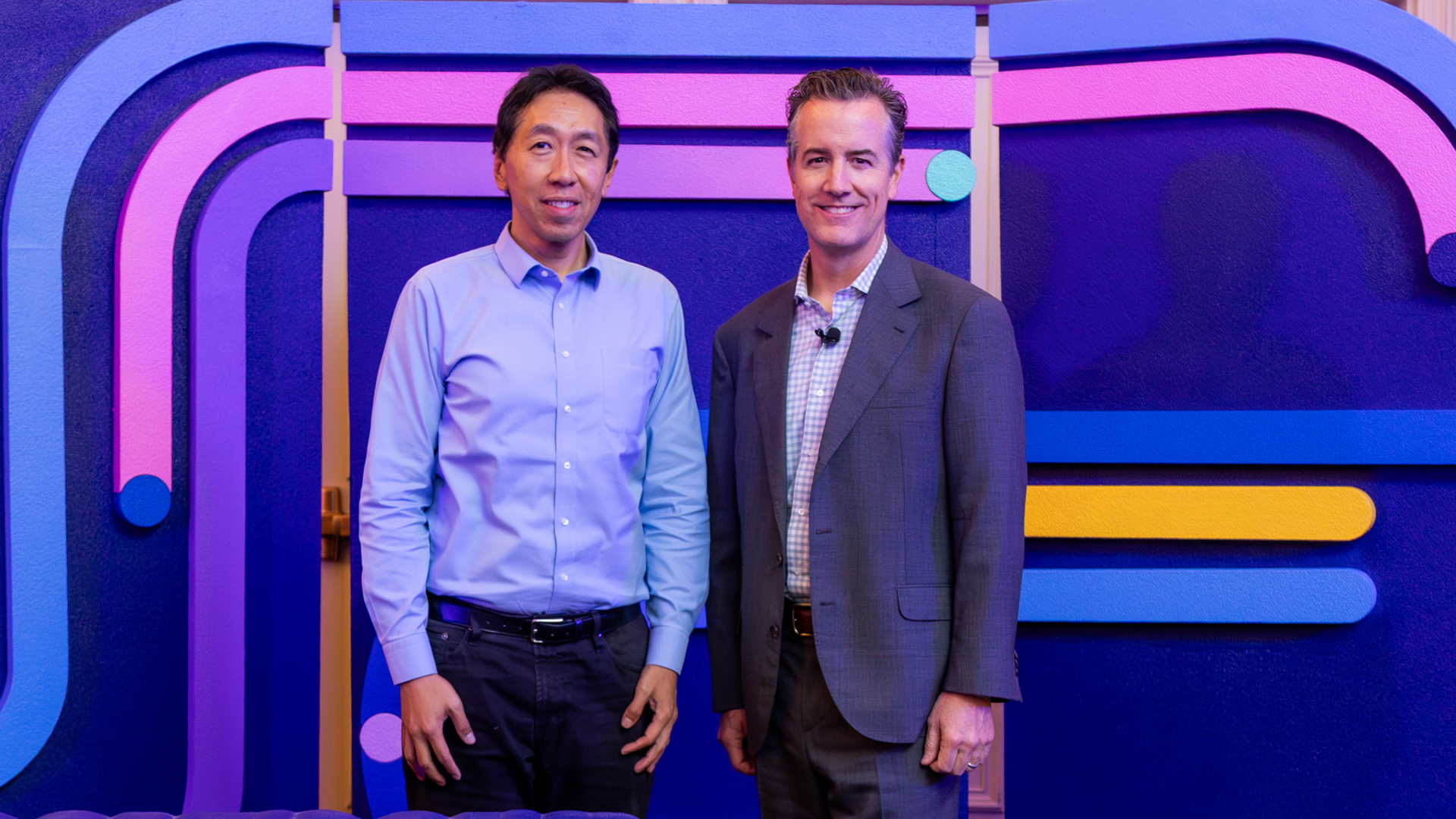
Coursera is putting $100 million into LearnVector, a new AI education company founded by Andrew Ng, a pioneer in AI and Coursera's chairman and co-founder, the companies shared first with Axios.
Why it matters: The investment is one of the largest public bets yet by an established education technology company on AI-native learning, and marks Andrew Ng's latest stab at redefining how people learn using technology.
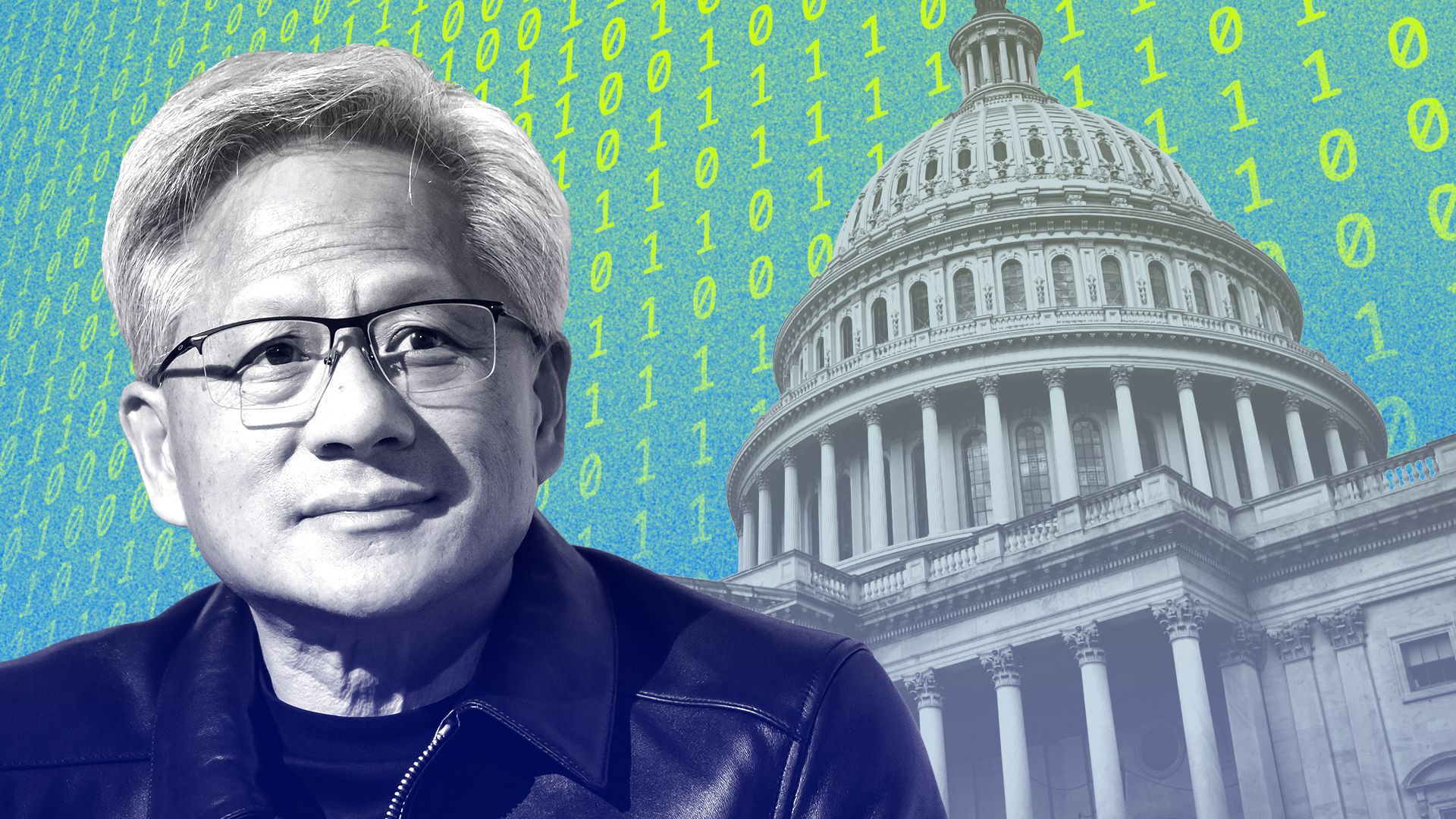
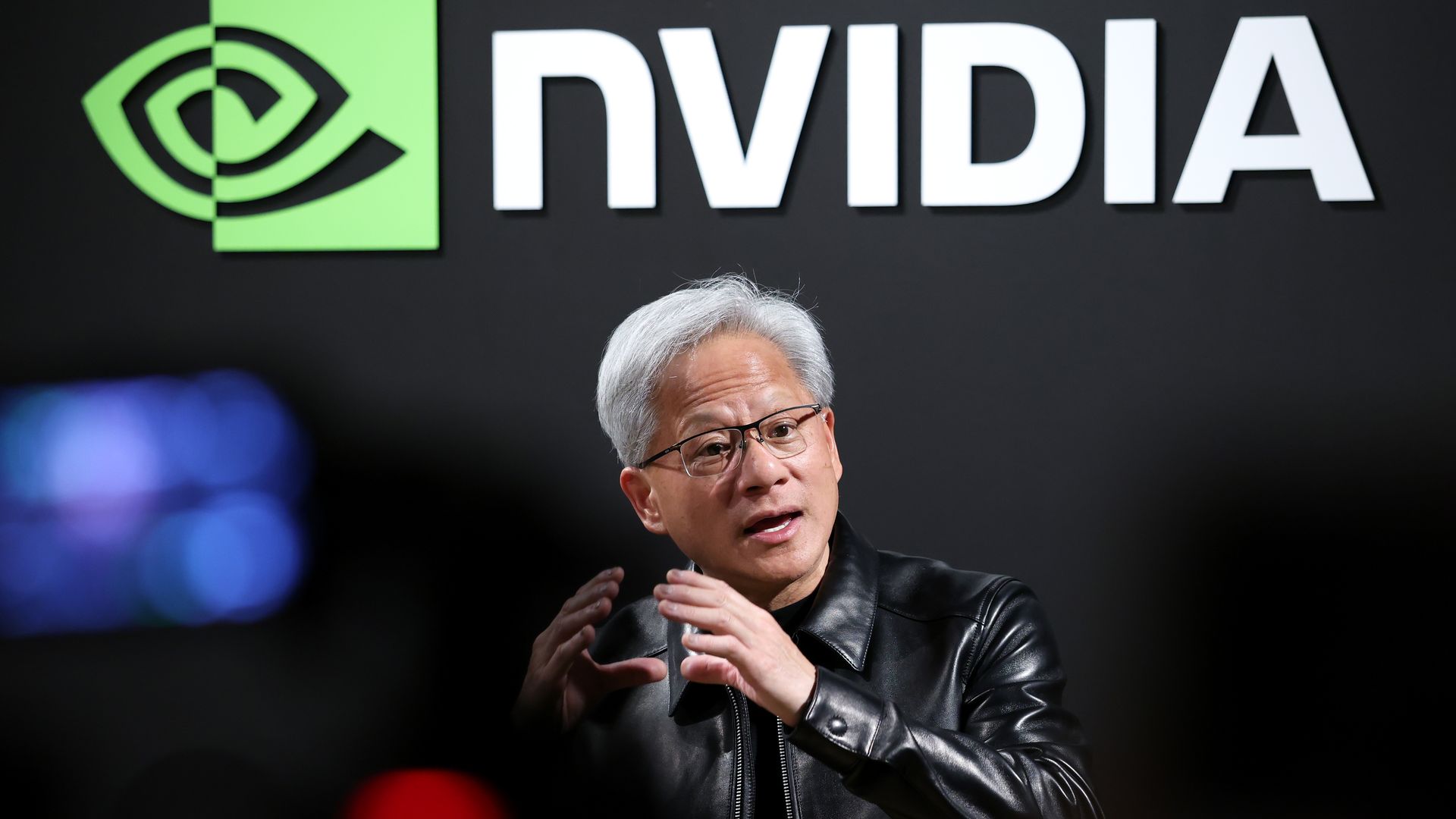
Nvidia CEO Jensen Huang met Tuesday with Commerce Secretary Howard Lutnick as the Trump administration investigates potential violations involving Nvidia chip exports to China, according to a source familiar.
Why it matters: Huang is in Washington as the Trump administration finalizes a framework that would give the government early access to the most advanced AI models before their release.
America's AI investment boom may be playing a bigger role in the U.S. economy than headline economic statistics suggest.
Why it matters: The AI boom depends on enormous imports of hardware that the U.S. doesn't make. That creates an unusual disconnect between the scale of the investment and how it appears in the government's economic statistics, particularly GDP.
AI appears to improve workers' efficiency in a number of sectors. The U.S. has experienced a surge in economy-wide productivity in the last couple of years. But the former isn't necessarily driving the latter.
The big picture: Companies are achieving more output per person-hour of labor because they are making better use of existing capital, a provocative new analysis finds — not, at the moment at least, by making major use of AI.
Venture funding for nuclear energy startups — both fusion and advanced fission — is surging.
By the numbers: Global investment is over $4.5 billion for 81 companies so far this year, according to PitchBook, putting 2026 on pace to smash last year's record haul of $6.2 billion for 93 companies.
Ares Management has held talks to acquire Los Angeles-based buyout shop Leonard Green & Partners, per the Financial Times.
Why it matters: Private equity is an AUM weak spot for Ares, when compared to other listed alt asset firms. Adding Leonard Green would help it fill the hole.
Apple's market valuation leapfrogged Nvidia's Monday for the first time since May 2025.
Why it matters: It's another sign that investors are keeping some distance from companies making giant bets on AI infrastructure — even longtime favorites like Nvidia.
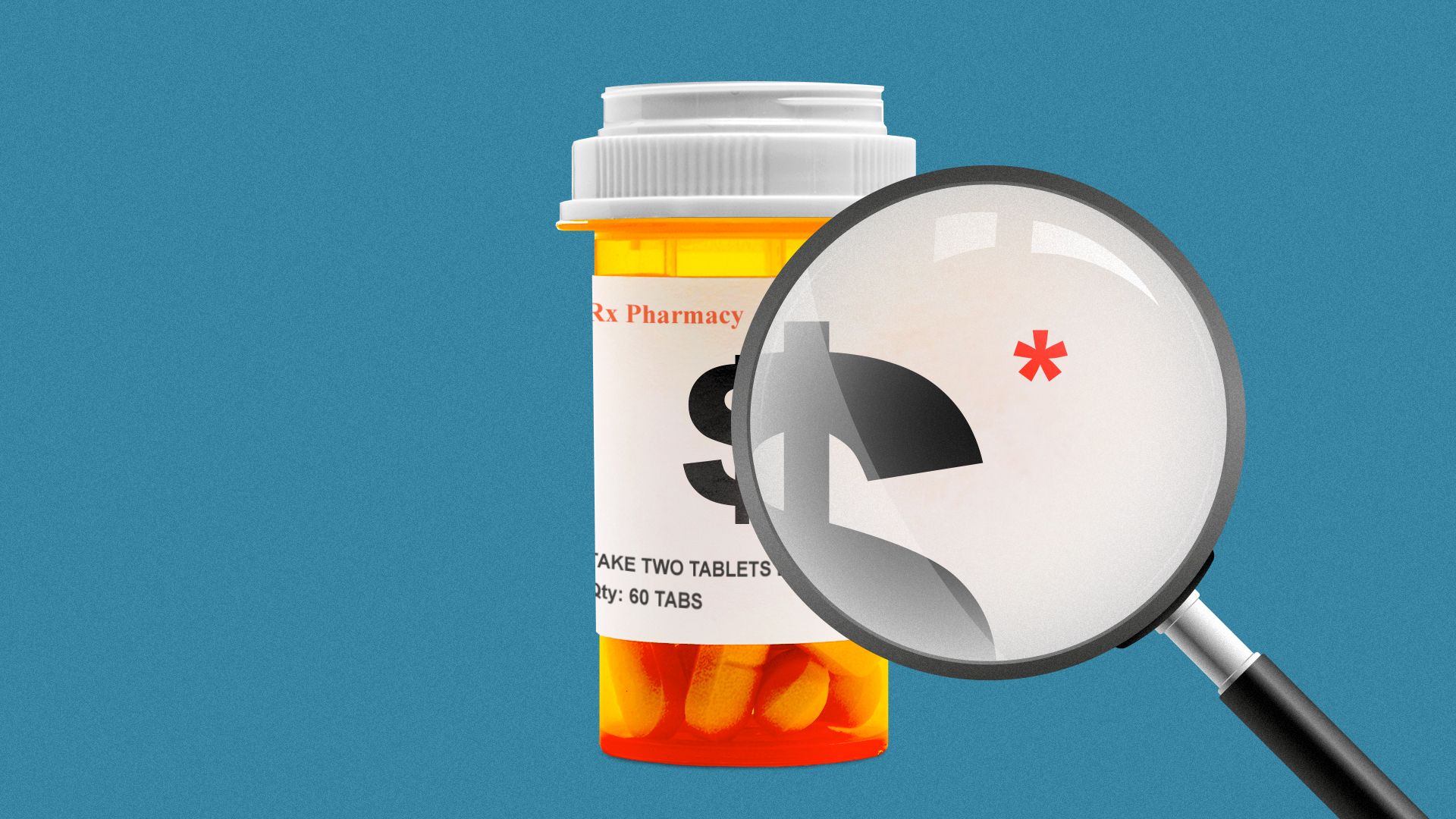
President Trump's planned tariffs for generic drugs are the clearest test yet of whether the administration can keep its promises to both increase U.S. drug manufacturing and lower prescription costs.
Why it matters: Tariffs could give the country more control over the supply chain, but they could also make some of the country's cheapest medicines more expensive at a time when consumers are clamoring for relief.
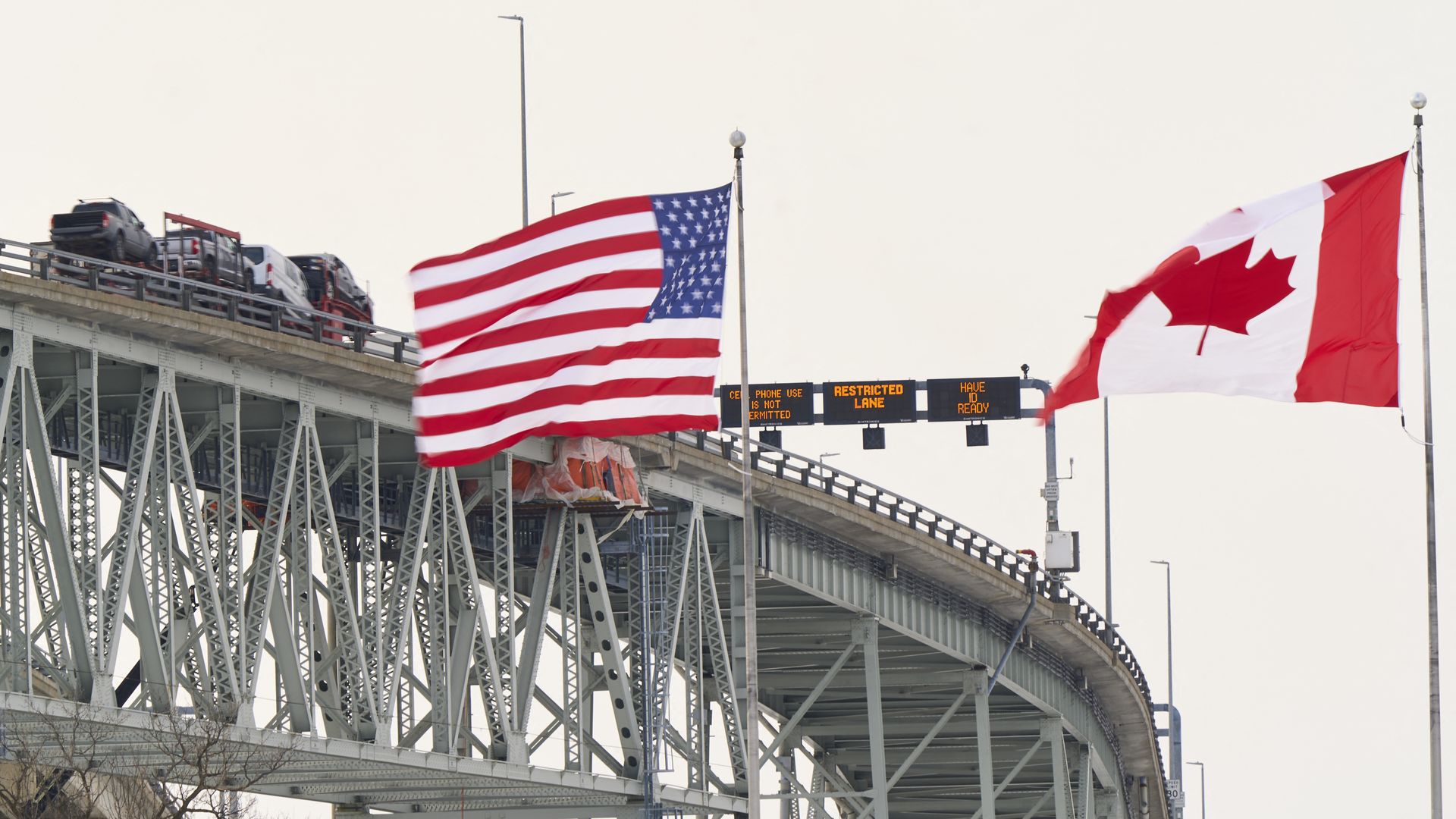
Canadian travel to the U.S. fell 25% last year, according to a new Canadian government report, which says early 2026 data show the decline has persisted.
Why it matters: The report provides some of the clearest measures yet of the economic cost to the U.S. tourism industry after trade tensions, tariffs and President Trump's repeated "51st state" comments led many Canadians to vacation elsewhere.
President Trump's economic assault on Iran has drawn a fraction of the attention devoted to his bombing campaign, even as senior U.S. officials believe it may ultimately do more damage to the regime in Tehran.
Why it matters: U.S. intelligence and open-source media reports point to a deepening economic crisis inside Iran, including gasoline shortages in one of the world's most oil-rich countries.
The small businesses behind high-profile legal challenges to President Trump's trade agenda are suing again to block his latest import taxes.
Why it matters: The lawsuits set up another legal test of Trump's tariff agenda after courts this year rejected one tariff regime and another remains tied up in court.
President Trump's economic sales pitch is colliding with voters' sour moods on high prices and the economy as the 2026 midterms loom.
Why it matters:Economic frustration is giving Democrats an opening on the issue that often decides elections — and could help them erase Republicans' narrow congressional majorities in November.
Nvidia appears poised to tighten its ties with OpenAI as it reportedly explores a deal to backstop financing for a massive data center to power the ChatGPT maker's ambitions.
Why it matters: The potential deal underscores the swift pace of the AI economy, but it also renews concerns that the increasingly "circular" nature of AI deals could create systemic financial risks.
Nvidia shares tumbled 4.5% in late morning trading.
The Federal Reserve typically telegraphs its interest rate moves in advance, then follows through. This week will provide the clearest evidence yet on whether chairman Kevin Warsh is ending the era of the no-surprises Fed.
The big picture: Markets are now putting meaningful odds on the Fed delivering an interest rate hike at the conclusion of its two-day meeting this week.
If the Federal Open Market Committee were to do so, it would suggest a new era in which the central bank is less predictable — accepting more volatility and surprise as the price to be paid for greater policy nimbleness.
President Trump told Axios on Monday that he decided to pause U.S. strikes on Iran in order to give negotiations another chance, but stressed that he could order a return to expanded military operations if diplomacy fails.
Why it matters: The current negotiations are focused on a new deal that would reopen the Strait of Hormuz and relaunch talks on a comprehensive nuclear deal.
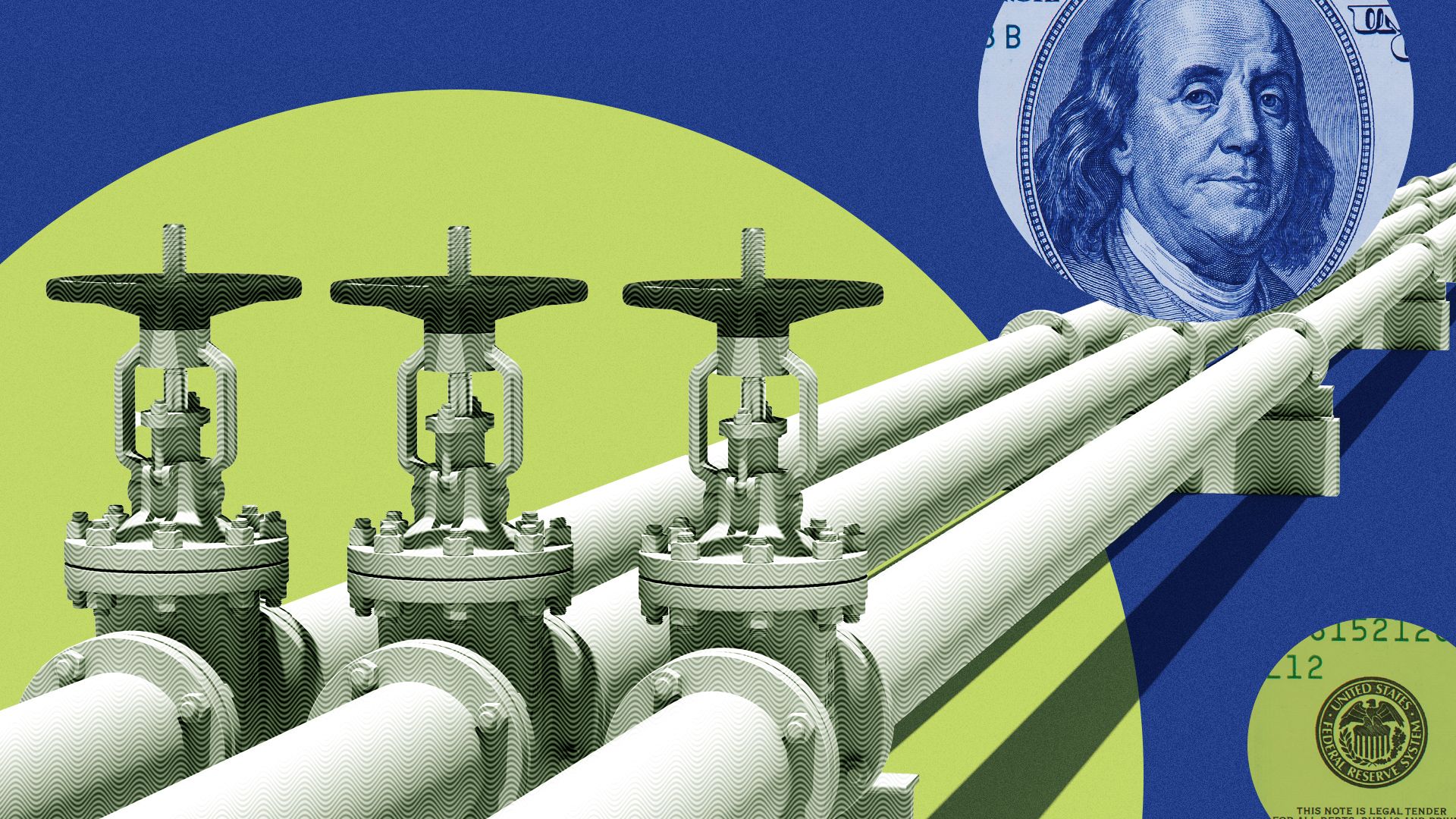
Kuwait's government has signed a $16 billion crude oil pipeline deal with North American private equity firms Blackstone, Brookfield Asset Management, and KKR.
Why it matters: This comes amid attacks on Kuwait's energy infrastructure by Iran, in retaliation for U.S. strikes.