Nvidia's $100B OpenAI investment fuels AI bubble fears

Add Axios as your preferred source to
see more of our stories on Google.
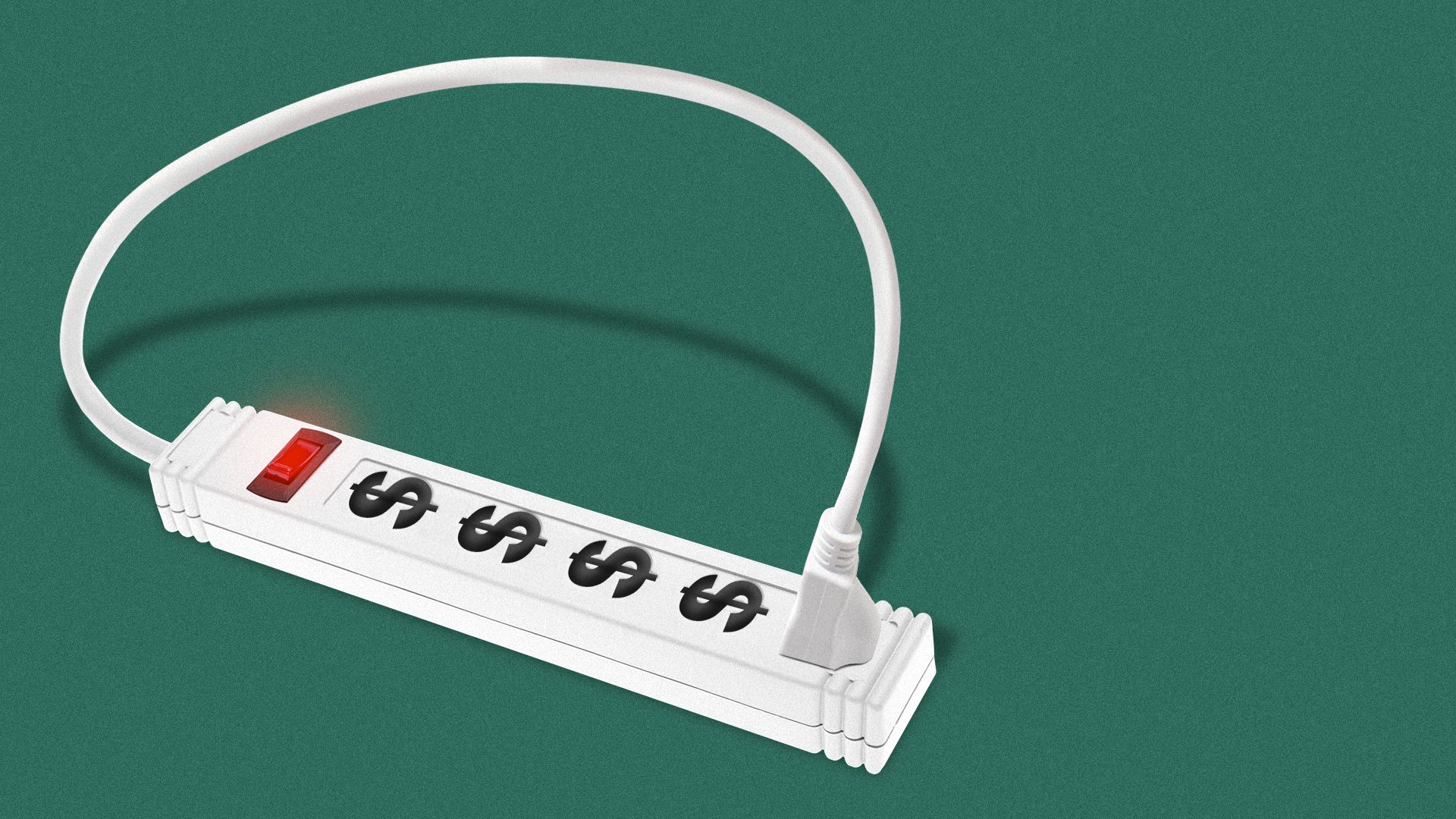
Illustration: Lindsey Bailey/Axios
Nvidia's $100 billion investment in OpenAI has investors questioning whether we're seeing too much circular investing: companies using their free cash flow to give their biggest customers money that will make a round trip back home.
Why it matters: Wall Street is already concerned about an AI bubble, and this kind of funding just adds fuel to the froth fire.
Catch up quick: Nvidia's OpenAI investment is meant to support data center buildouts.
- These data centers will likely run on "millions" of Nvidia chips, according to a statement from the company.
- Nvidia told the research firm Bernstein that its investment in OpenAI would not be used for any "direct purchases" of Nvidia products.
Zoom out: It's not just about Nvidia. All the large-cap tech firms are jumping on the circular financing train.
- Meta is in talks with Oracle about a $20 billion cloud computing deal, while Microsoft is pursuing a similar deal.
- Microsoft, Meta, Amazon, Alphabet and Tesla account for over 40% of Nvidia's revenue as they buy Nvidia's AI chips.
- The highly interconnected nature of the Big Tech names has Wall Street concerned about how much the market could drop if the AI bubble pops.
What they're saying: "It's kind of like having your parents co-sign on your first mortgage," Jay Goldberg, an analyst with Seaport Global Securities, said on Bloomberg Television, adding that the deal is "bubble-like."
- Goldberg is one of Wall Street's biggest Nvidia bears. He has the lowest price target on the stock among analysts tracked by Bloomberg, at $100 a share, 43% below the current Nvidia share price.
Yes, but: Other analysts tell Axios that circular investing is just how public companies and markets work.
- "I don't get why that is a problem," says Max Kettner, chief multi-asset strategist at HSBC. "That's the nature of business."
- If Nvidia is paying its customers to "just buy the AI capex," Kettner tells Axios, "in three years, once it's gone too high, too far, cool. You stop."
Flashback: Previous examples of vendor financing produced some "horror stories," according to a recent note from investor and Capital Gains substack author Bryne Hobart.
- Cisco in the 1990s: Lent money to telecom equipment companies because buildouts were expensive and demand was huge.
- This led to an overbuild, and Cisco's stock has been tarnished by the dot-com bust since.
- Hobart noted that this amounted to charitable donations for streaming platforms using this bandwidth later on.
The lesson? Suppliers can juice demand by lending, but there are overshoot risks.
- The hope? That it's different this time.
Threat level: Knowing when to stop buying and even sell is obviously the key question for investors who've been happy to ride this AI rally straight to the bank.
- One sell signal would be "an earning season where margins suddenly surprised to the downside by 1 or 2 percentage points," HSBC's Kettner says.
- To him, the bigger risk is not riding the rally rather than realizing a little too late that it's over.
What we're watching: Earnings estimates, which have not hit unbeatable levels just yet.
- If estimates outpace results, that could be the Kettner signal to sell.
