Trump to Axios: I'm ready for "strong military action" if Iran talks fail

Add Axios as your preferred source to
see more of our stories on Google.
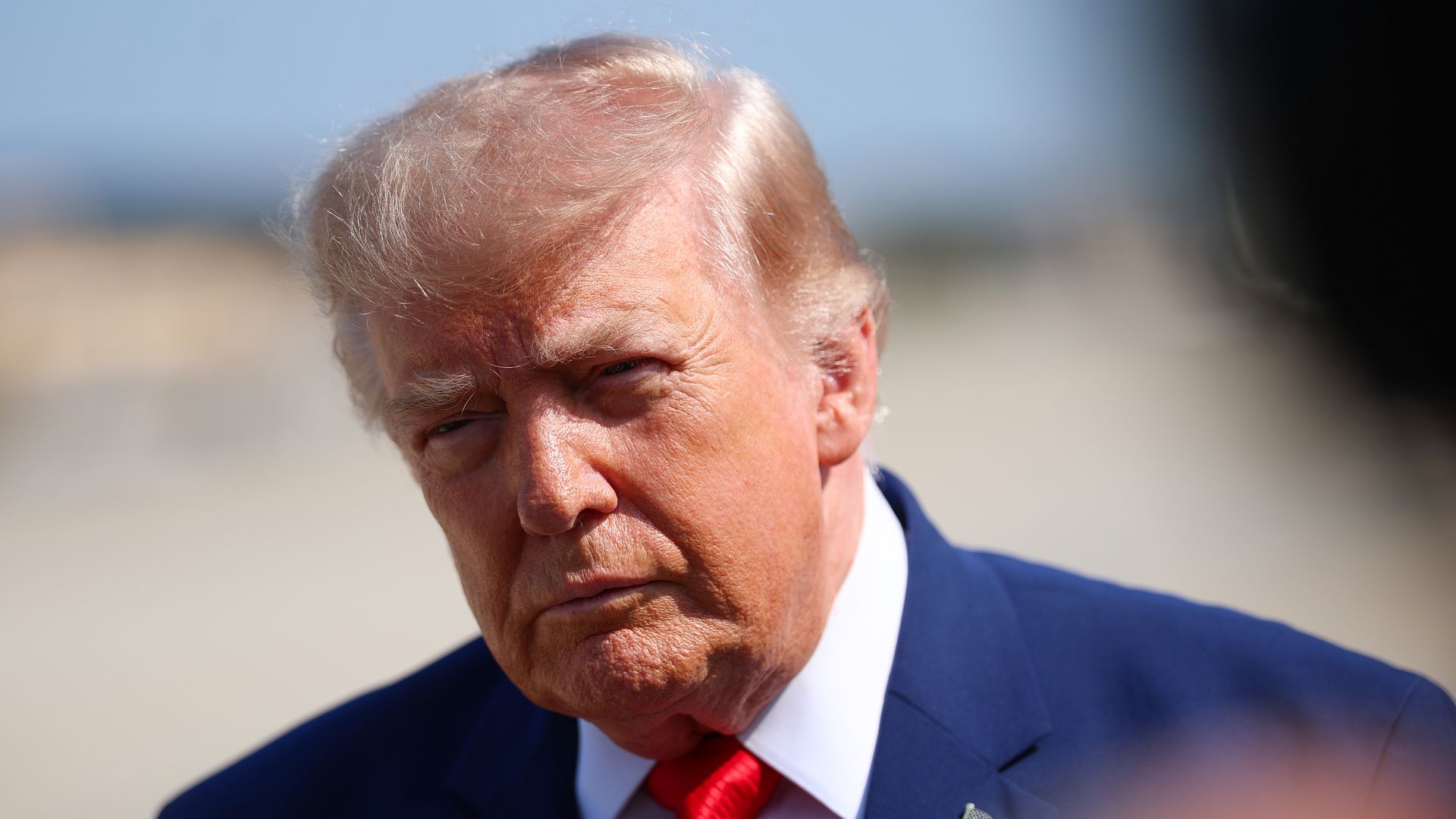
President Trump at Joint Base Andrews last week. Photo: Kevin Dietsch/Getty Images
President Trump told Axios on Monday that he decided to pause U.S. strikes on Iran in order to give negotiations another chance, but stressed that he could order a return to expanded military operations if diplomacy fails.
Why it matters: The current negotiations are focused on a new deal that would reopen the Strait of Hormuz and relaunch talks on a comprehensive nuclear deal.
- The talks are being conducted mainly between Iran and Oman, but Qatar, Pakistan, Egypt and Trump's envoys, Steve Witkoff and Jared Kushner, are actively involved.
What he's saying: "We are in very deep talks with Iran. If they don't work out, we will go back to very strong military action," Trump said in the interview.
- Asked how long he's willing to give diplomacy, the president said: "Not much time. Either it goes fast or not at all."
Behind the scenes: Trump said he decided to pause strikes on Friday because the countries that are mediating as well as other countries in the region asked him to give negotiations another chance.
- "All of the people that deal with Iran asked me: 'Don't fire,'" Trump said, stressing that he thinks Iran wants to make a deal.
Between the lines: "Nothing gained, nothing lost," Trump said when he explained why he agreed to the mediators' request.
- He noted that oil prices dropped and the stock market went up after he paused the attacks.
Driving the news: For the first time in two weeks, Trump ordered the military on Friday to hold fire and not conduct strikes against Iranian targets around the southern coast of Iran and in the Strait of Hormuz area.
- The decision came after a meeting with top advisers and military officials who presented him with a new strike plan for the day.
- In the days before the meeting, Trump had been leaning toward returning to major combat operations, but his mindset started to change on Thursday evening, sources said.
- His decision to pump the brakes on bombing the strait solidified on Friday.
State of play: Regional sources said negotiations between Oman and Iran have made progress but that no agreement has been reached.
- Omani Foreign Minister Badr al-Busaidi held phone calls on Monday with a number of his counterparts in Iran, Qatar, Saudi Arabia, Kuwait and Egypt.
- He said in a statement that the discussions "focused on ways to enhance the prospects for reaching practical, fair and sustainable arrangements for maritime navigation ... through the Strait of Hormuz."
- One idea is to allow Iran, Oman and other countries in the region to collect "reasonable service fees" for maritime security, environmental protection and other services, according to one regional source.
- The source pointed to the Strait of Malacca — where Malaysia, Indonesia and Singapore charge vessels for specific services rather than a blanket transit fee — as a possible model.
- Another possibility would be to direct the fees into a joint fund administered with the involvement of the International Maritime Organization.
What to watch: Trump will meet Tuesday at the White House with Israeli Prime Minister Benjamin Netanyahu.
- "I am going to talk to Bibi about the fact that if I weren't president, Iran would have had nuclear weapons by now and Israel would have been destroyed," Trump said.
