The Supreme Court's end-of-term bombshell drop continued today with three business-related decisions.
Why it matters: The cases decided today are of the sort less likely to cause disruption in, say, an upcoming presidential debate. But they're important.
💊 In perhaps the day's biggest headline grabber, the court blocked a national settlement crafted in bankruptcy court that would've ended claims against disgraced opioid maker Purdue Pharma and members of the Sackler family, owners of the OxyContin maker.
The 5-4 decision did not fall along any kind of discernible ideological lines. Biden-appointee Ketanji Brown Jackson joined some of the conservatives — Samuel Alito, Amy Coney Barrett, Neil Gorsuch and Clarence Thomas — in the majority.
Walgreens said it plans to close more underperforming U.S. stores as part of a "significant multiyear" program, as the pharmacy retail giant moves through a painful turnaround strategy.
Why it matters: The company has been reeling from a string of issues including worker walkouts and debt issues, Axios' Nathan Bomey and Kelly have reported.
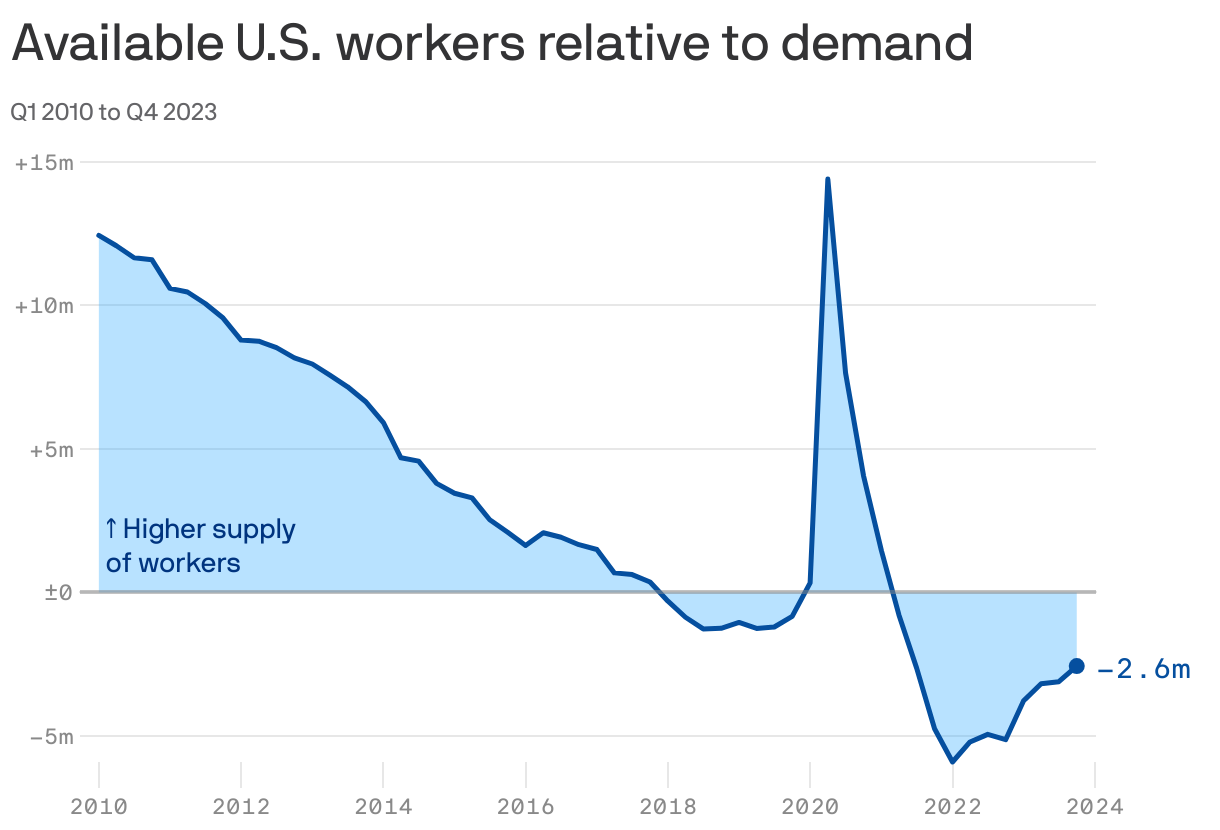
The core economic fact of the 2010s was that there were not enough jobs. The key to understanding the economy of the 2020s is that there aren't enough workers.
Why it matters: Labor shortages that first emerged in the pandemic aftermath are likely to stick around, a new report from the McKinsey Global Institute finds — along with the benefits it entails for workers, headaches it causes for employers, and strains on inflation and growth.
On the blockchains, a good idea is only a great idea one time.
After that it becomes an OK idea, sometimes even a bad one.
Why it matters: Founders might be better off continuing to think about what's next to do, rather than copying existing models.
The big picture: Copying is a big thing in the crypto world, but it's seldom the case that the copycats do well. Much of the time, they waste loads of money, energy and community spirit.
The greatest example is Bitcoin. There can only ever be one Bitcoin. The engineering and the technology can be easily recreated, but Bitcoin had what might be called an immaculate conception.
Fairshake, the crypto PAC (or, really, PACs) organized by major leaders in the cryptocurrency industry, has a strong track record.
Why it matters: If the industry can show it has teeth in electoral politics, electeds might think twice before making its founders into villain-of-the-week.
By the numbers: CNBC credits Fairshake with coming out ahead in 33 of the 35 races it has entered.
CoinDesk, meanwhile, counts 20 races in which Fairshake played a role in a win, for both Democrats and Republicans.
Yes, but: It's always hard to say exactly who influenced any given election. For example, one race Fairshake entered set a record for the most money spent in pursuit of a U.S. House seat. Rep. Jamaal Bowman (D-NY) is the incumbent.
Coinbase filed a pair of lawsuits Thursday seeking to compel financial regulators to hand over internal documents and communications related to past investigations and industry actions.
Why it matters: The U.S.'s largest crypto exchange is seeking information on what it suspects has been a concerted effort to kneecap the industry.
The National Transportation Safety Board (NTSB) issued a rare series of sanctions against Boeing after the aerospace giant "blatantly" violated federal investigative regulations, the board announced Thursday.
Why it matters: The investigative agency said it was coordinating with the Department of Justice's fraud division, which is investigating whether Boeing breached its obligations under a 2021 settlement to avoid criminal charges stemming from two fatal crashes.
Uber will pay 175 people in seven U.S. and Canadian cities $1,000 to ditch their cars for a month and use alternate transportation in its "One Less Car trial."
Amazon hit a significant milestone today, hitting the $2 trillion market cap club.
The big picture: While much has been made lately of Nvidia's explosion through the $3 trillion threshold, joining Microsoft and Apple, a couple trillion is nothing to sneeze at.
Besides those three, only Google's parent Alphabet is above the $2 trillion mark.
Amazon closed up 3.9% today to hit the mark, and it's up 29% since the start of the year.
Totally Cool, a Maryland company, has recalled nearly 70 ice cream products sold under 13 brand names because they could be contaminated with listeria.
Why it matters: Listeria monocytogenes can cause serious and sometimes fatal infections in young children, frail or elderly people and others with weakened immunes systems, according to the recall notice on the Food & Drug Administration website.
Between the lines: NFTs are released in collections, with some having rarer traits. Floor prices refer to the price of the most common items in a collection.
Meme coins are still the driving narrative among retail crypto investors, but there are early, early signs that traders might be getting interested in decentralized finance (DeFi) again.
What they're saying: Wintermute, the giant trading shop and market maker, noted in its most recent market report that some of the best meme coins are a bit down (like dogecoin and pepecoin 👆) and DeFi is a bit up (like Lido and Aave 👆).
What we're watching: The narrative might switch soon.
Two founders of a project that released a token called HYDRO are headed to prison.
Why it matters: The Justice Department has put market manipulators on notice.
Driving the news: Shane Hampton and Michael Kane received prison sentences (the former for just under three years, the latter for just under four).
The gist of the complaint against them: Contracting to spin up fake volume to make it look like people wanted their token.
Kane pleaded guilty last year and Hampton wasconvicted in the Southern District of Florida in February. In total, four men have been convicted of various charges, from price manipulation to wire fraud.
A new force is emerging that may bring inflation down further in the coming months: Americans are increasingly intolerant of price hikes.
Why it matters: Anecdotes from corporations suggest that consumers who were once unfazed by price hikes are now resisting them — and businesses have to do more to entice shoppers in a way not seen since before the pandemic.
The Biden administration is making a not-so-subtle push to encourage companies to exercise pricing restraint, using both carrots and sticks.
The intrigue: Companies that announce splashy price reductions can expect public praise from the highest levels of government. For those that don't, attacks on sky-high profit margins, so-called junk fees, and the like.
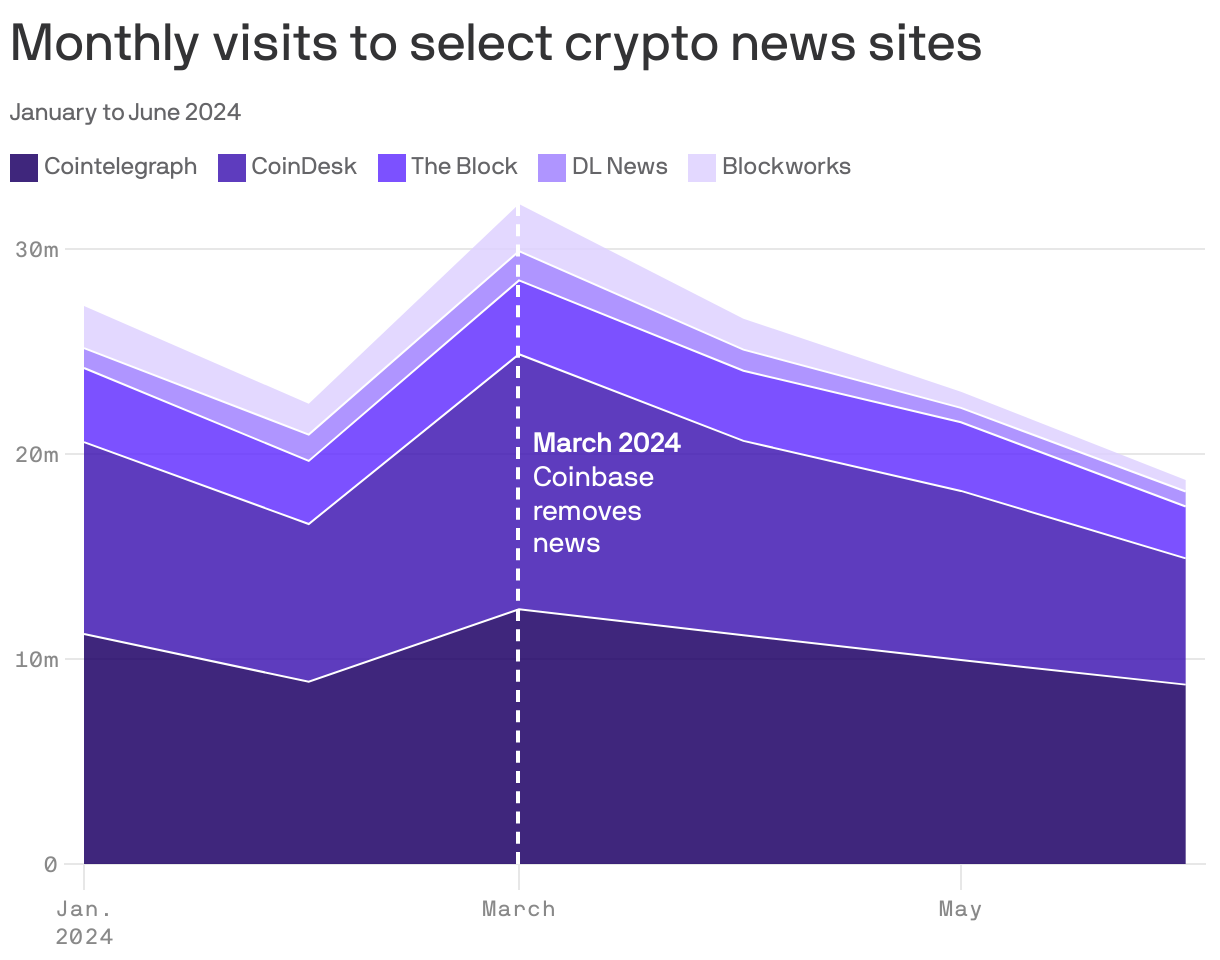
Coinbase, the U.S.'s largest crypto exchange, quietly removed the newsfeed from its app a few months back.
Why it matters: Crypto media publications are suffering traffic woes, likely for a lot of the same reasons mainstream sites are — but the change at Coinbase removed a constant source of eyeballs that the industry's media could count on.
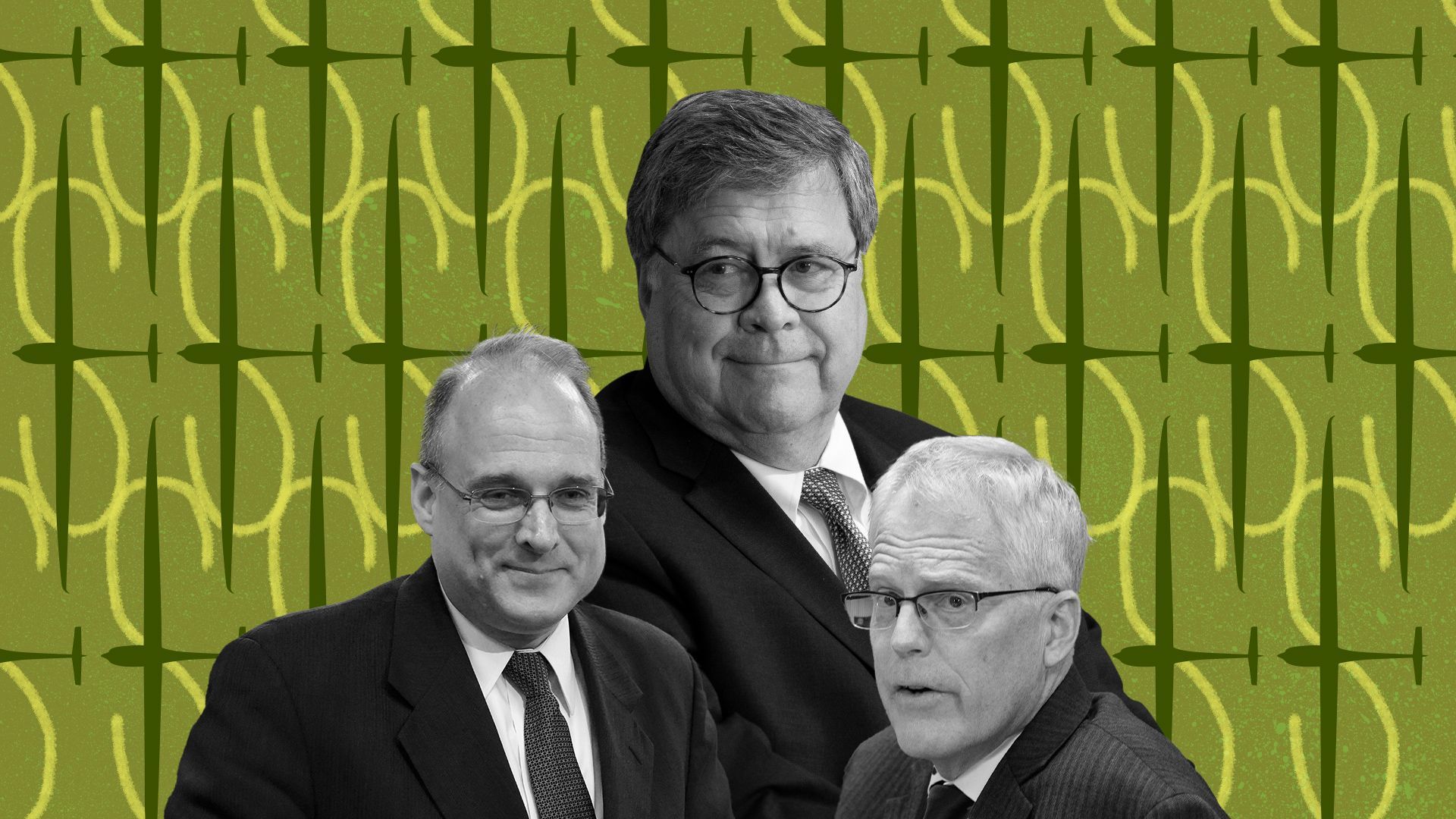
Bill Barr, the former U.S. attorney general, is advising military drone maker Dzyne following its acquisition of defense tech companyHigh Point Aerotechnologies, Axios has learned.
Why it matters: This is his only gig advising a defense company, and Barr is one of several Trump administration alumni now at Dzyne, pronounced "design."
That's locals' unofficial motto for Virginia's capital, an oft-overlooked yet culturally rich, midsize East Coast city with a lower-than-average cost of living.
Republicans are twice as likely as Democrats to blame the government for inflation while Democrats are twice as likely as Republicans to blame corporate greed, according to the latest Axios Vibes survey by The Harris Poll.
Why it matters: A messaging battle over who's most responsible for higher prices on goods and services in the post-pandemic world — and what to do about it — may take center stage when President Biden and former President Trump meet for Thursday night's debate.