Medium's abrupt change of course announced Tuesday came as a surprise to editorial employees; many of whom now need to decide in upcoming days whether to take a buyout offer or a different job at the company.
Why it matters: This isn't the first time Medium has abruptly cut in-house editorial operations after heavily investing in and hiring journalists and editors, though it's given a different reason each time.
A huge container ship got stuck in the Suez Canal late Tuesday, causing a massive maritime traffic jam.
Why it matters: The Suez accounts for approximately 30% of container shipping volumes, and blocking it for even a short time will cause oil prices to rise — and remind us that the entire global economy relies on really, really big ships.
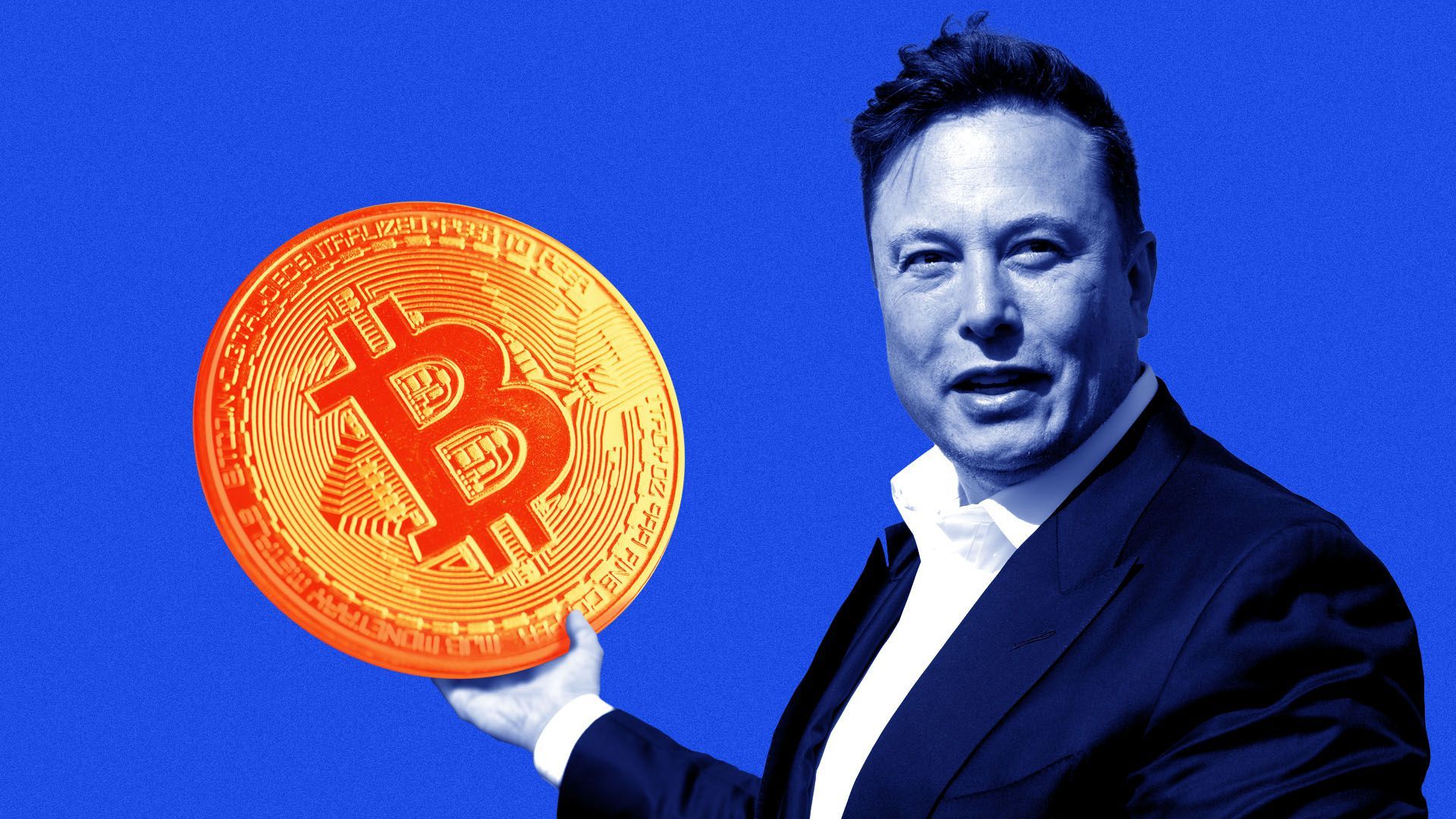
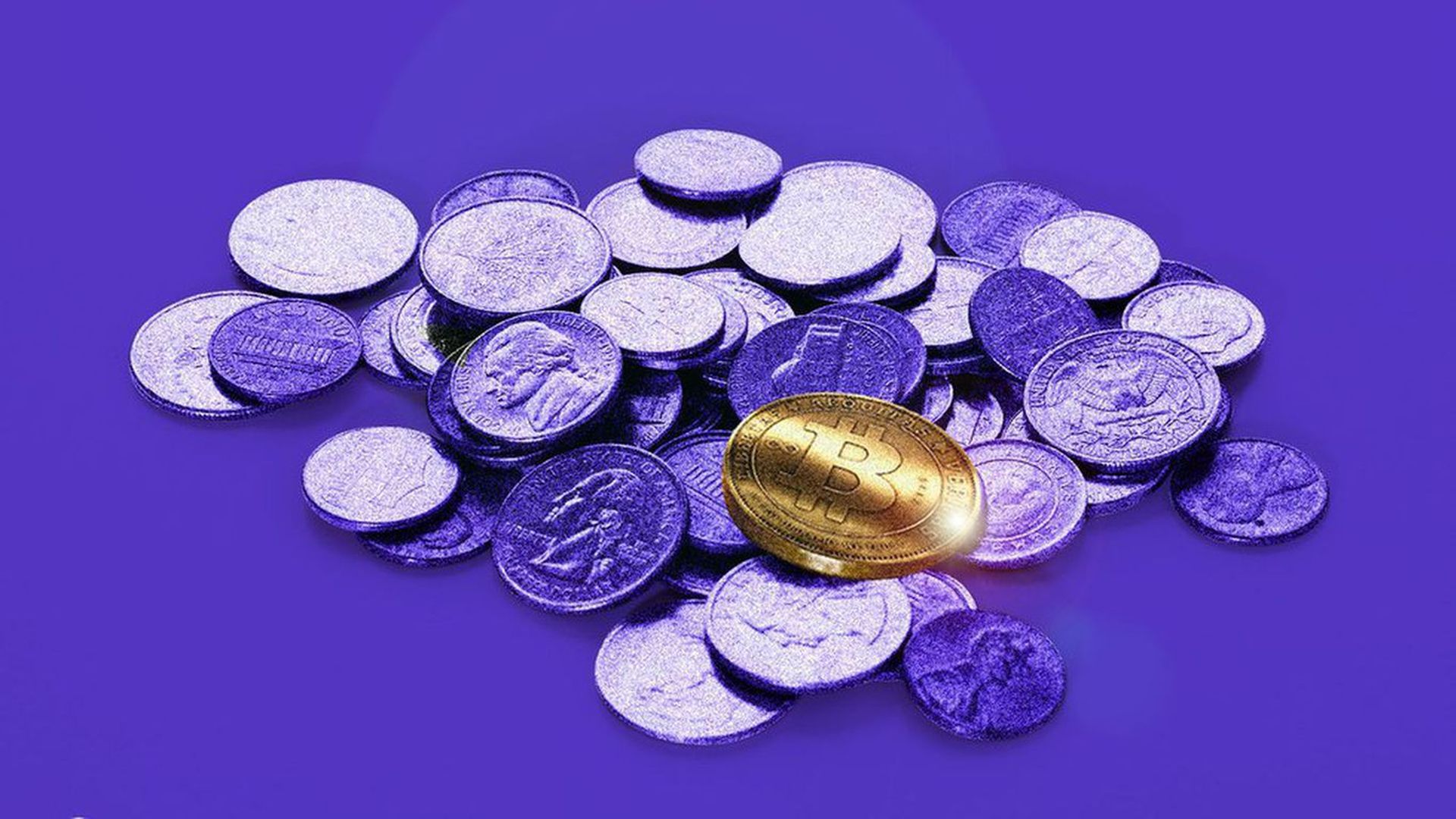
The short list of what you can buy with bitcoin is about to get a tad longer, courtesy of Elon Musk.
Why it matters: Musk is going where other companies have failed — trying to transform bitcoin from a speculative investment to a form of payment. It hasn't taken off in the decade-plus that the digital currency has been around.
The House on Thursday is scheduled to hold its first Big Tech hearing of 2021, with witnesses to include Facebook CEO Mark Zuckerberg, Google CEO Sundar Pichai and Twitter CEO Jack Dorsey.
Axios Re:Cap goes deeper with Rep. Anna Eshoo (D-Calif.), who represents part of Silicon Valley, about what she hopes to learn and why she's more interested in algorithms than moderators.
Eight members of GameStop's board of directors will leave the company after the gaming retailer's annual meeting in June, according to a new filing.
Why it matters: The "significant changes" will ensure a near-total transformation of board leadership for a company riding a stock market rollercoaster. It also affirms that new board members, led by Chewy co-founder Ryan Cohen, will chart the company's future.
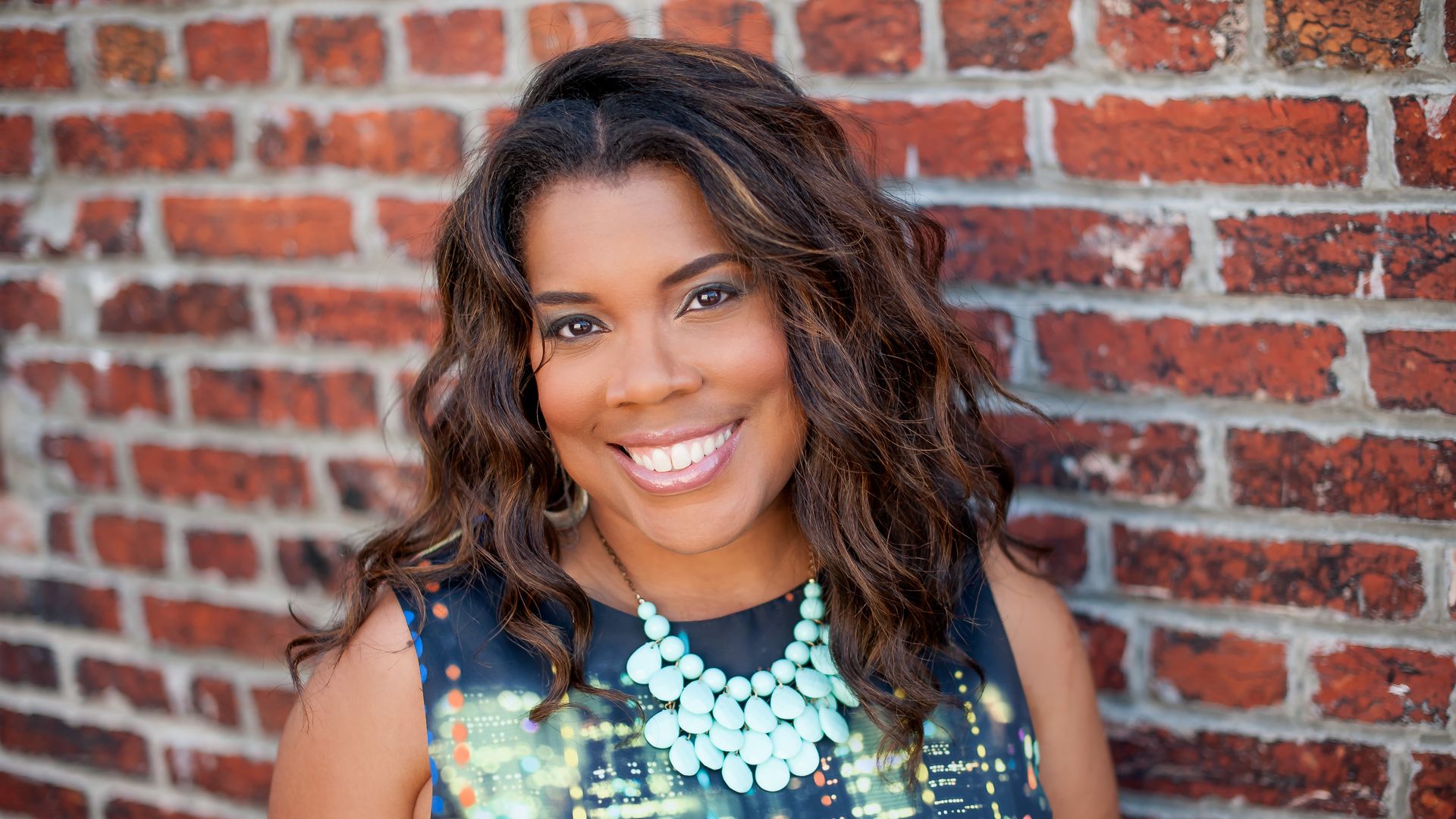
BuzzFeed named Danielle Belton its new editor-in-chief of HuffPost on Wednesday.
Why it matters: The announcement comes shortly after BuzzFeed said it laid off 47 employees from HuffPost following its acquisition of the progressive news site in February. Belton is presently the editor-in-chief of The Root.
Spark Capital's decision to publicly sever ties with retro camera app Dispo has caused other company investors to get cold feet, Axios has learned.
Why it matters: This is the latest shoe to drop after rape allegations against a former collaborator of Dispo co-founder and social media star David Dobrik.
Pat Gelsinger, who recently returned to Intel as CEO, announced Tuesday that the company will invest $20 billion to build two new chip manufacturing plants in Arizona.
Why it matters: The move comes amid a global chip shortage and as Intel is facing production problems that have hampered its ability to move to the latest generation of its semiconductors.
Associated Press journalist Thein Zaw has been released from custody in Myanmar after he was arrested three weeks ago while covering a protest against the coup, the outlet reports.
Why it matters: Zaw's case highlighted the diminishing press freedoms around the world — especially in countries that are on the precipice of democracy. Zaw was one of six members of the media who were charged with violating a Myanmar law that punishes journalists who incite fear, an arbitrary action, within the public.
Some of Silicon Valley’s biggest VCs are backing a buzzy new project—and Crypto Twitter is up in arms about it.
Why it matters: BitClout has divided even the industry's top investors, with some openly backing it in hopes it's the next social-media-on-the-blockchain success, while others are staying far away.
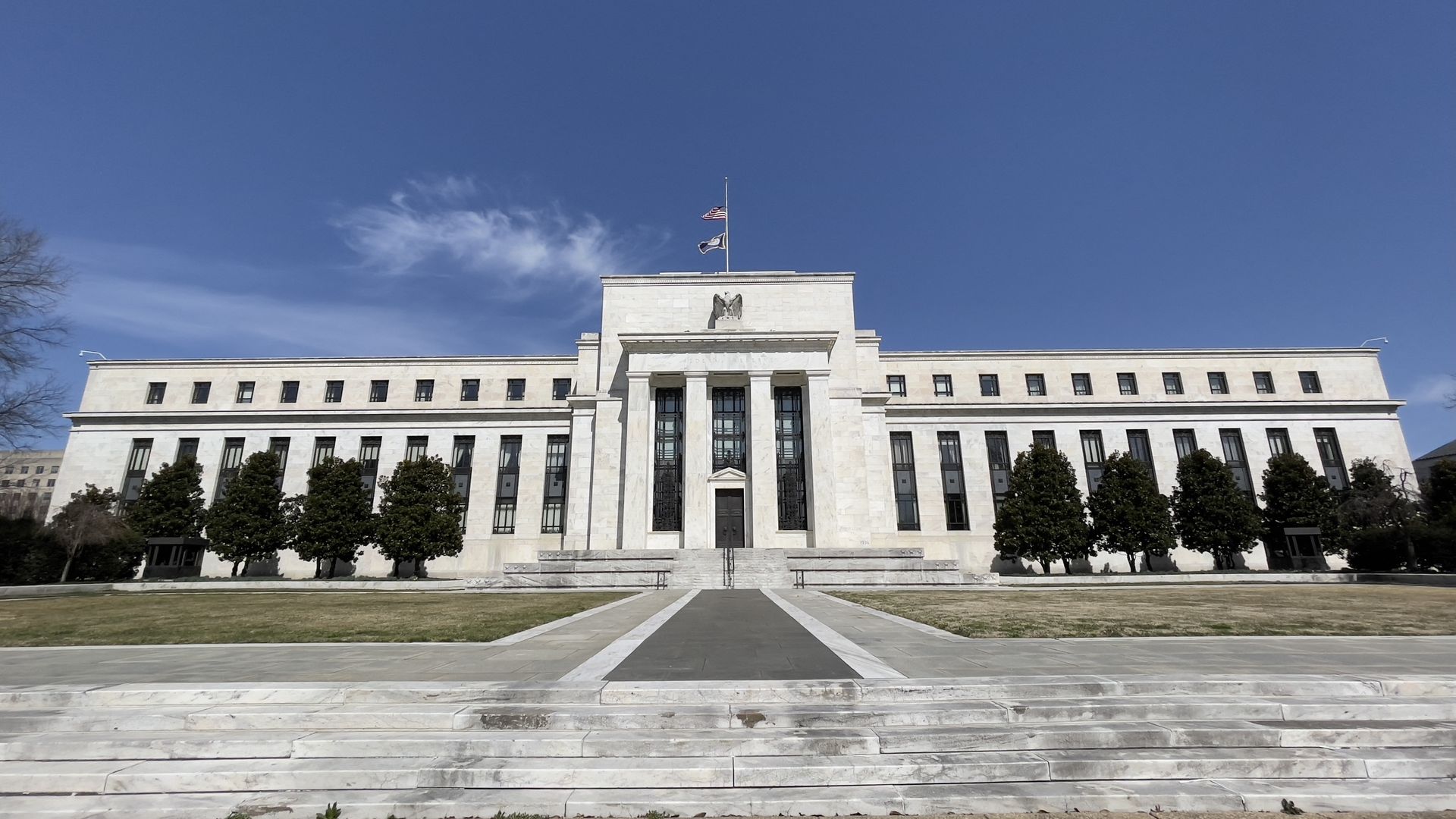
Federal Reserve board member Lael Brainard said the Fed is creating a "Financial Stability Climate Committee" (FSCC) to, as the name suggests, "identify, assess, and address climate-related risks to financial stability."
Why it matters: The group, announced in a speech Tuesday, is just the latest in a widening series of moves by the central bank to get a better handle on climate-related financial risks.
New International Energy Agency analysis of coal consumption helps explain why global carbon emissions have rebounded so quickly from the pandemic-fueled drop.
The big picture: It notes that overall global coal consumption fell 4% in 2020, with reductions concentrated in the early part of the year.
The U.S. current account deficit, the difference between what goods, services and investments Americans are buying from other countries versus what they are selling, jumped to $188.5 billion in the fourth quarter.
Why it matters: That was the largest shortfall since 2007.
GameStop shares responded to big misses on both the top and bottom lines in its latest earnings report just as one should expect — jumping 8.4% following the report's release after market close and then cratering by 21.8%.
By the numbers: The company reported revenue of $2.12 billion for the fourth quarter versus $2.21 billion expected, and adjusted earnings of $1.34 per share versus estimates of $1.43.
New home sales fell 18.2% in February to the lowest in nine months, but prices streaked to their highest level ever. The average new American home now costs $349,400, as the median new home prices rose 5.3% from a year ago.
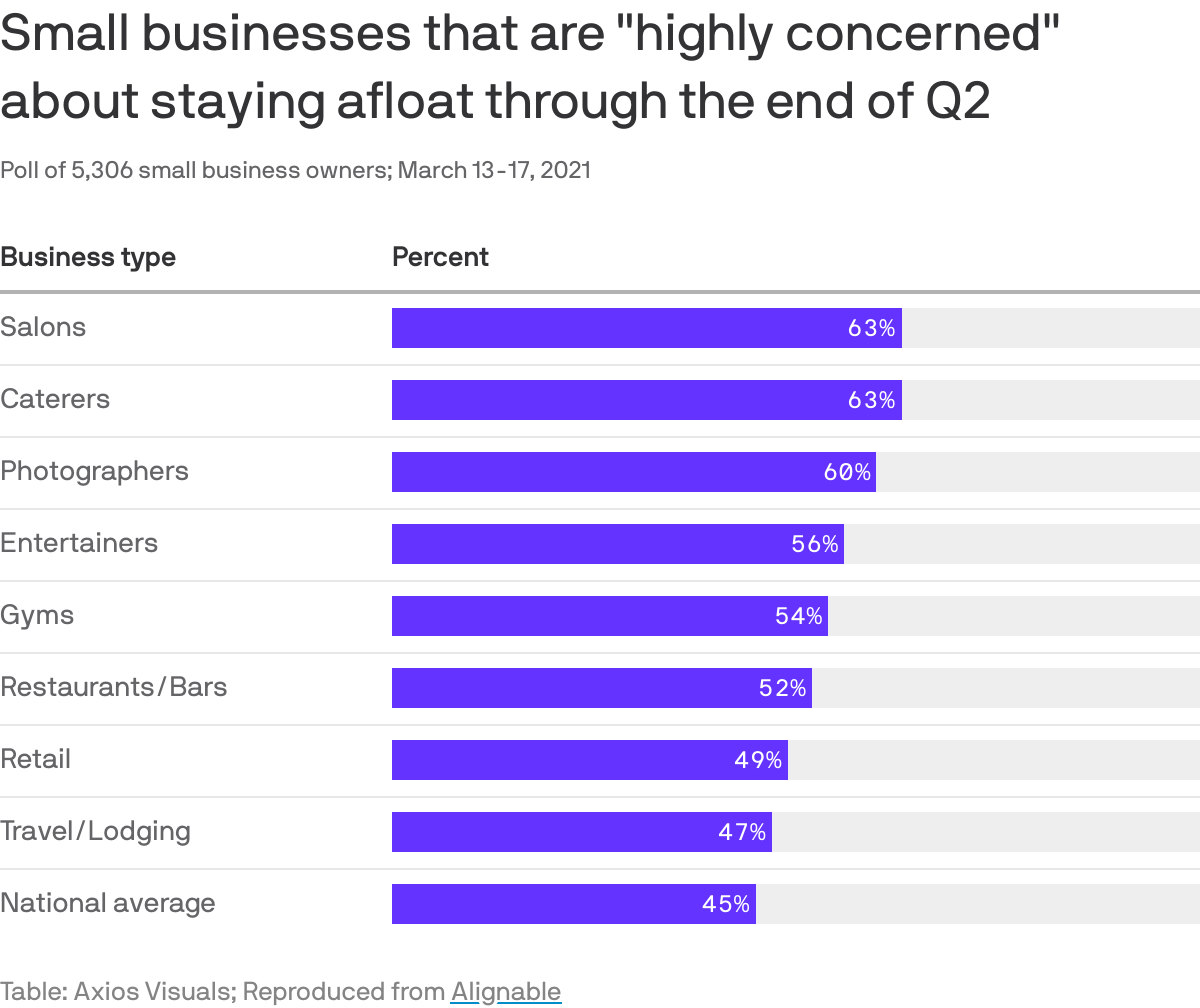
Half of all women-owned businesses and nearly 6 in 10 small businesses owned by people of color (59%) are "highly concerned" about keeping their firms solvent through the end of the second quarter, a new survey from Alignable shows.
The big picture: Almost half of all businesses (45%) said they were "highly concerned" about their ability to keep the lights on, including close to two-thirds of all beauty salons (63%) and caterers (63%).
A new era of sports fandom is upon us, one in which fans increasingly come for snacks (highlights) instead of meals (live games).
By the numbers: Among U.S. sports fans ages 18–34, 58% of MLB fans, 54% of NBA fans and 48% of NFL fans say they prefer watching highlights to full games, according to a survey by Variety Intelligence Platform.
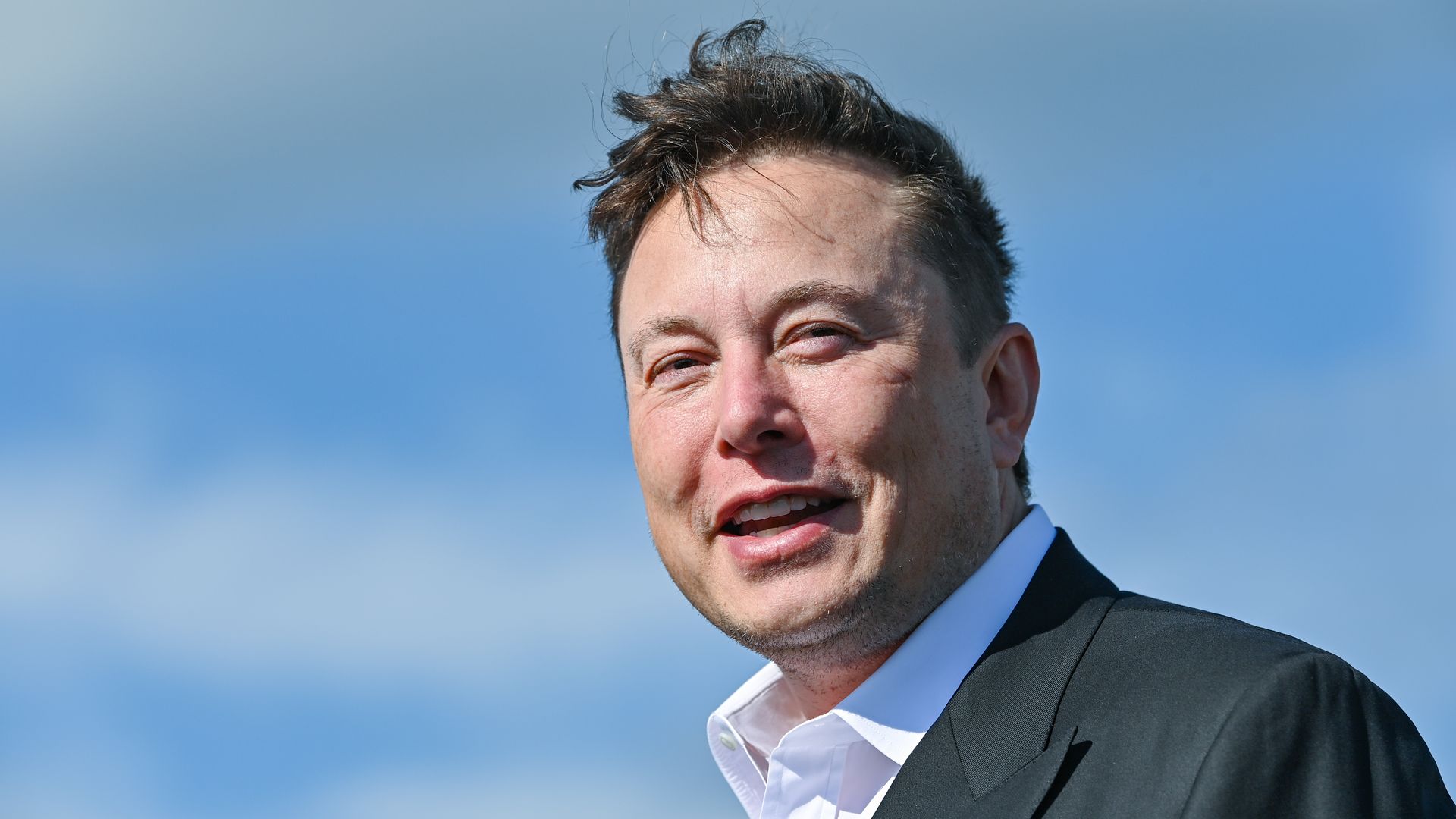
Elon Musk announced on Twitter Wednesday that Tesla cars can now be bought in the U.S. using bitcoin.
Why it matters: The decision comes after the company bought $1.5 billion worth of bitcoin in February, a move which makes Musk "something of a hero to the bitcoin faithful. Those people are often affluent, tech-savvy early adopters — exactly the market that Tesla is targeting with its cars," Axios' Felix Salmon writes.
Event software business Bevy raised $40 million in Series C funding led by Accel at a $325 million valuation, and says that 20% of the capital came from Black investors.
Why it matters: The company is the latest to diversify who gets to share in the upside of a startup — typically it's white men, while others have historically been shut out of deals.
At first, it was just the Silicon Valley tech giants embracing remote work forever. Now, firms in other industries are jumping on board.
Driving the news: The Ford Motor Company is offering permanent telework as an option to all of its white-collar workers who are able to complete the tasks of their jobs remotely. That's about 30,000 of its 186,000 employees, per CBS.
The pandemic has popularized "workcations" — going on a vacation, but working while there.
Why it matters: Just because work-from-anywhere means we can work on vacation doesn't mean we should. Experts warn that the pandemic's upending of work-life balance could drastically worsen burnout in the U.S.
Nearly 50% of Americans now say the stock market is "rigged against individual investors," a new survey from Bankrate.com and YouGov shows — and surprisingly a solid majority of those investing in the stock market (56%) believe the market is rigged as well.
Why it matters: Underlying the results is "widening wealth inequality where young people in particular just may not have a sense of hope or fairness in the markets," Greg McBride, Bankrate.com's chief financial analyst, told Axios.