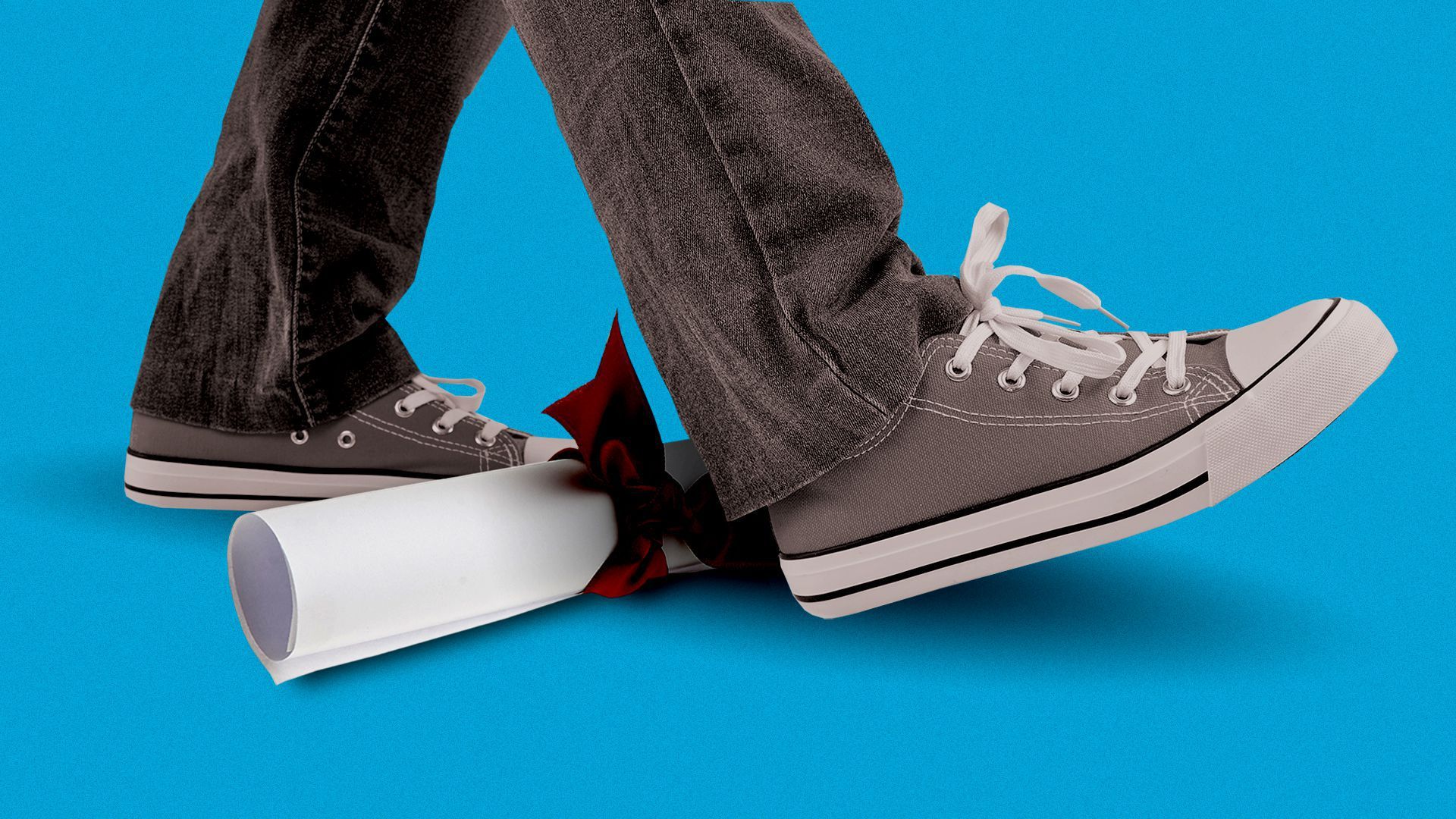
When the coronavirus pandemic turned college into a series of Zoom meetings, millions of college students decided to defer — or drop out entirely — and get jobs instead.
By the numbers: 22% of college students across all four years are planning not to enroll this fall, according to a College Reaction/Axios poll. Of those not returning to school, most — 73% — are working full time."
The big picture: Early on, the pandemic walloped hiring across the wage spectrum and in every sector. Now, states have opened up, and the lower-wage retail and restaurant jobs have slowly come back — but higher-paying jobs are lagging behind.
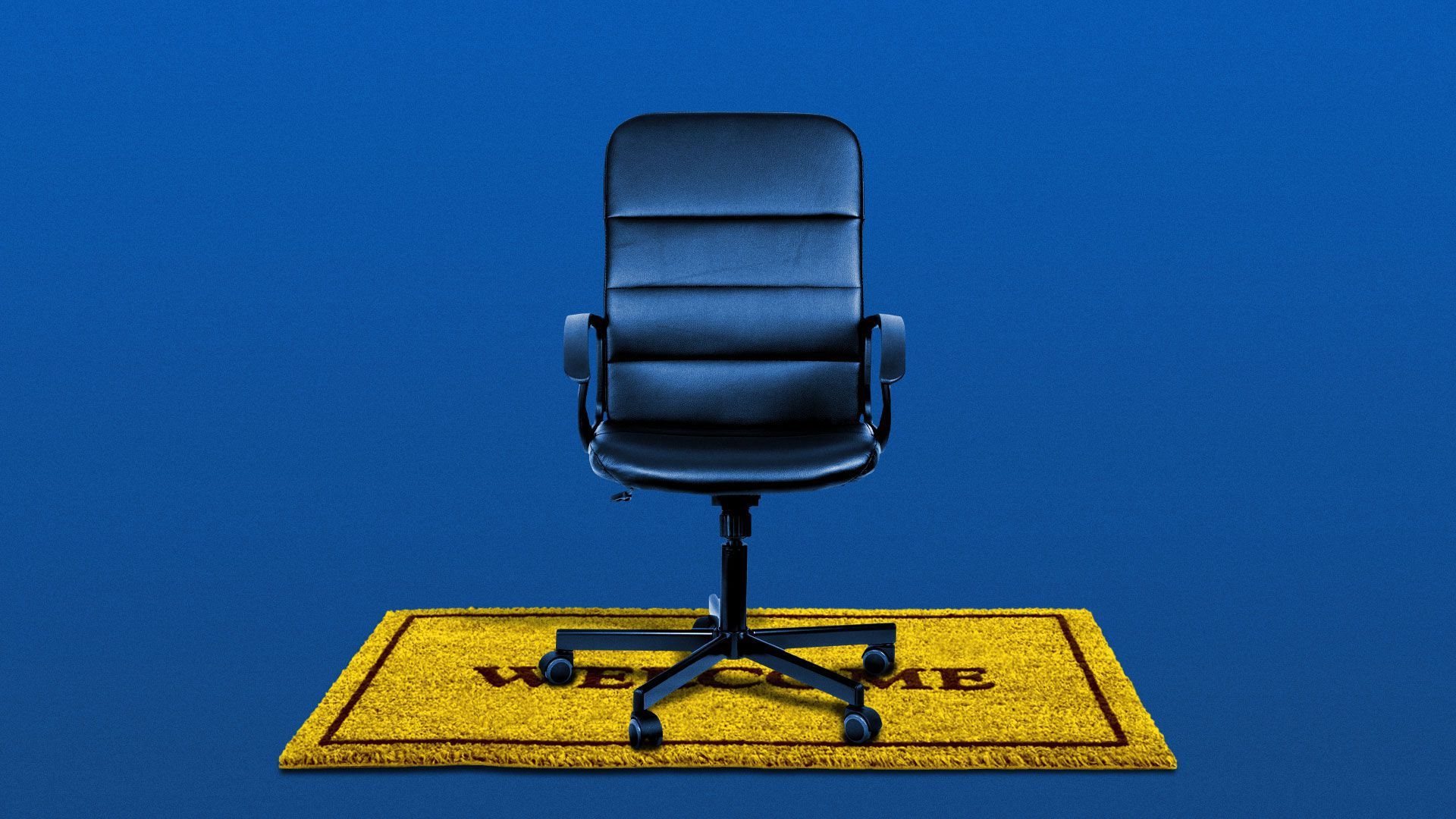
We can officially declare the 9-to-5, five-days-a-week, in-office way of working dead. But offices themselves aren't dead. And neither are cities.
The big picture: Since the onset of pandemic-induced telework, companies have oscillated between can't-wait-to-go-back and work-from-home-forever. Now, it's becoming increasingly clear that the future of work will land somewhere in the middle — a remote/in-person hybrid.
Around 70% of all immigration detention centers are run by private companies, including the one at the heart of a new whistleblower complaint that alleges systemic medical neglect and malpractice.
Axios Re:Cap digs into the business of immigrant detention, including oversight and profit incentives, with Jonathan Blitzer, a staff writer for the New Yorker who’s covered the subject for years.
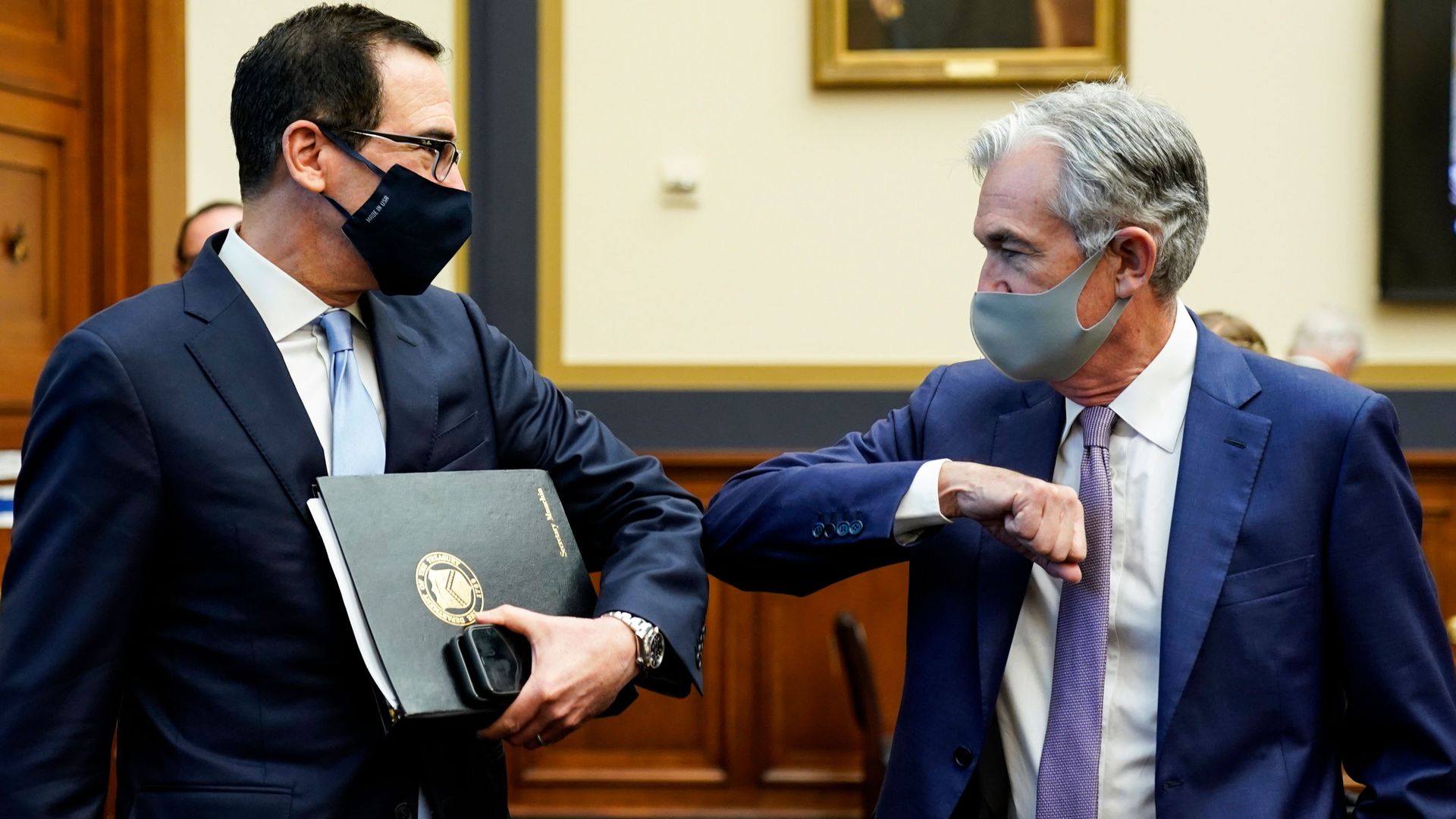
Federal Reserve Chairman Jerome Powell told the House Financial Services Committee on Tuesday that the expiration of Congress' coronavirus stimulus will weigh on the U.S. economy.
Why it matters: Powell warned that the effects of dried-up benefits are a looming risk to the economy, even if the consequences aren't yet visible.
YouTube said Tuesday that it has updated its technology to enable the tech giant to better enforce its age restriction policies.
Why it matters: The company has been criticized and penalized for its policies and architecture that displayed harmful content to kids and violated children's data privacy.
Jessica Rosenworcel, a Federal Communications Commissioner, said Tuesday that she hopes smart cities and 5G could eventually predict and ensure the safety of its residents, even from natural disasters like wildfires.
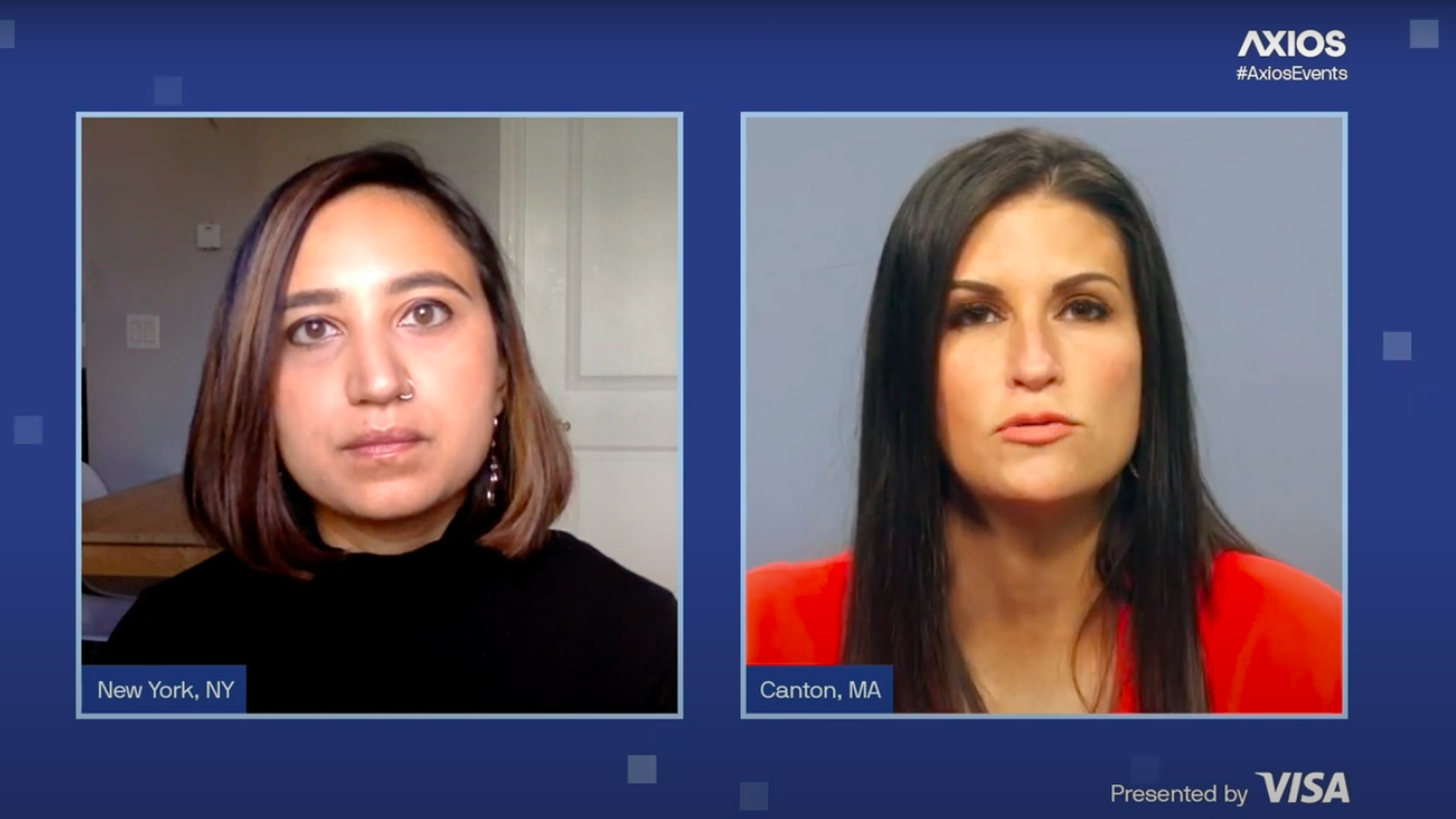
What she's saying: "Wouldn’t it be fantastic if we knew those kind of things well in advance, if we had a predictive ability that exceeds what we have today because we are looking at patterns at a scale that previously we haven’t been able to do? I think that those things are real and they are not so in the far-off future," she told Axios' Erica Pandey at a virtual event.
China's economic planning and targeted subsidies have increased the competitiveness of Chinese firms in the global economy to the direct detriment of U.S. industry, an academic study has found.
Why it matters: When it comes to American industries and workers, the rise of Chinese industrial policy hasn’t been a win-win — researchers found for every 100 factories opened in China, 12.5 U.S. factories in the same industry closed.
About 20% of Dunkin' Brands' customer transactions are digital in some form, Kate Jaspon, the company's chief financial officer, said Tuesday during an Axios virtual event.
Why it matters: Many restaurants and fast-food chains have had to drastically change or speed up their investment in technology services to make orders hands-free, cashless and safer for customers and workers during the coronavirus pandemic.
ABC News tells Axios that for the first time in 24 years, "World News Tonight," anchored by David Muir, won the season (2019-2020) as the #1 newscast in total viewers, adults 25-54 and adults 18-49.
Why it matters: In a sign of our times, Muir's dinnertime newscast out-delivered primetime, daytime, morning, late-night and cable.
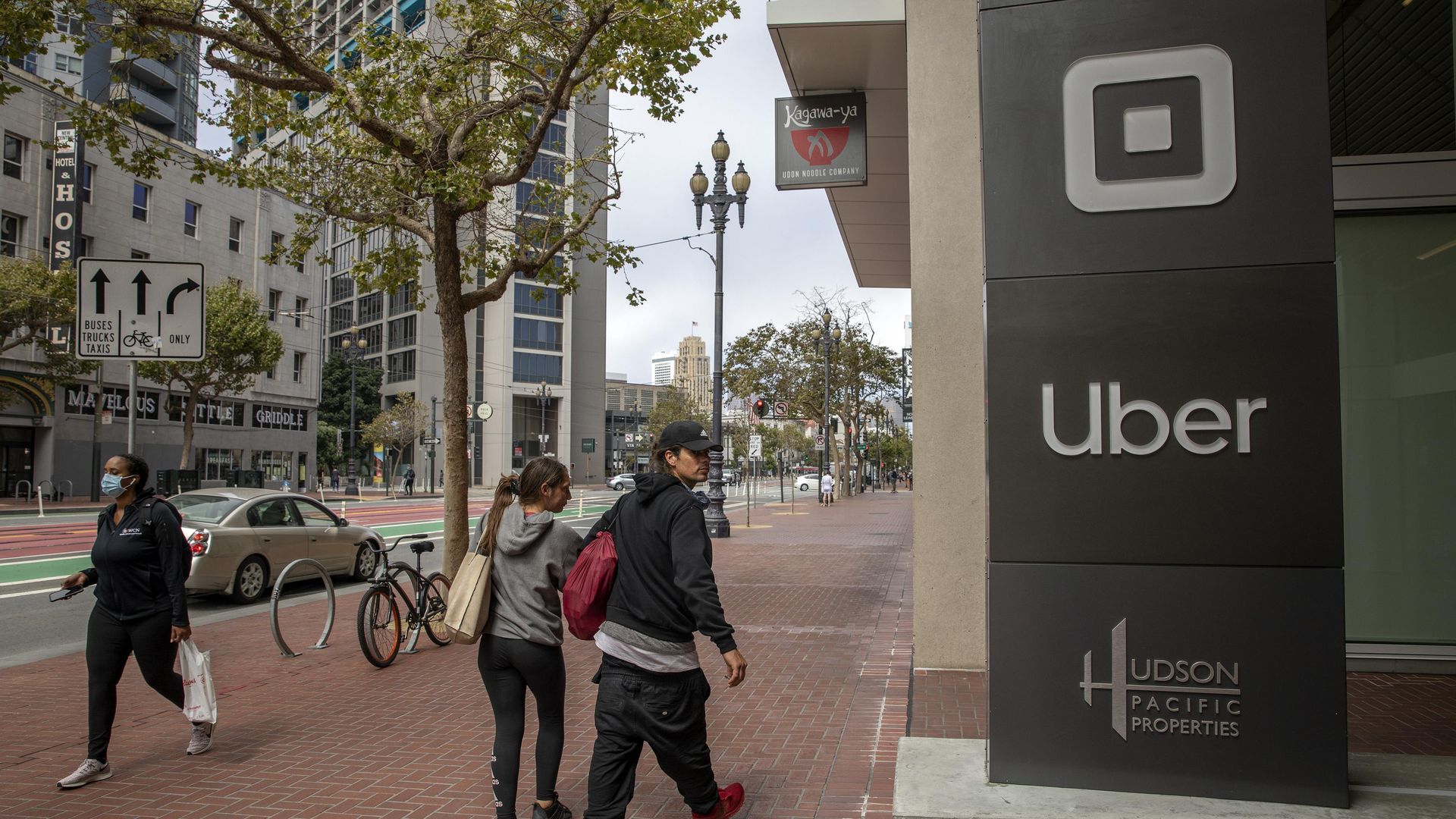
Part of the challenge of bringing employees back to work is making sure they are safe traveling to and from the job, and that they don't risk getting sick on their lunch break.
Why it matters: Companies can deep-clean their workplaces and rethink office layouts in preparation for their staff's return. But if employees are riding public transit to work, or streaming out to nearby restaurants at lunchtime, they could be putting everyone at risk.
The advertising market is expected to recover next year, according to the latest forecast from Magna, an advertising agency.
By the numbers: "If the mainstream macro-economic scenario holds, and the U.S. GDP grows by 3.2%, we are looking at a total ad market that would recover by 4% next year," says Vincent Letang, EVP and Managing Partner of Global Market Intelligence at Magna.
The big picture: WeChat's ban has had a lower profile than TikTok's, but the fate of the app, widely used by Chinese people around the world to stay in touch with family and friends, is at least as consequential.
Facebook will continue to be the face of the biggest industry campaign against misinformation leading up to the election, according to Jonathan Greenblatt, CEO of the Anti-Defamation League
Driving the news: In an interview with Axios, Greenblatt, whose group is part of the Stop Hate for Profit social media boycott campaign, said that the group plans to focus its boycott efforts on Facebook, because of its scale and because he says the company is less proactive than rivals like Twitter and YouTube on policing misinformation and hate speech.
Dotdash, the IAC-owned digital publishing company that grew from About.com, has acquired two new digital publishers, Simply Recipes and Serious Eats, executives tell Axios. The deal closed Monday.
Why it matters: The acquisitions make Dotdash one of the biggest digital food and beverage publishers — following behemoths like All Recipes Food Group/Meredith and Food and Cooking Discovery Network.
Two-thirds of business leaders think the coronavirus pandemic has exposed vulnerabilities that will require permanent changes, according to research provided to Axios by Aon, the global professional services firm.
The big picture: Aon surveyed 800 executives in August (V.P. level and above, with 500 or more employees) — half in the U.S., and half in Europe and the U.K.
The Ad Council, a 75-year-old non-profit, has nearly tripled the amount of media support for public service announcements (PSAs) over the six months that it typically manages in a year, its CEO tells Axios.
By the numbers: In total, it has generated nearly $370 million of donated media support around the coronavirus, compared to what it used to consider record contributions of $100 million for messaging around disasters like Hurricane Katrina and 9/11.
The trading card boom shows no signs of slowing down, and new companies are emerging to serve — and build upon — the evolving landscape.
Driving the news:Alt is a new platform set to launch on Oct. 1 that will allow investors to manage trading cards and other alternative assets similarly to the way they manage more traditional assets like stocks and bonds.
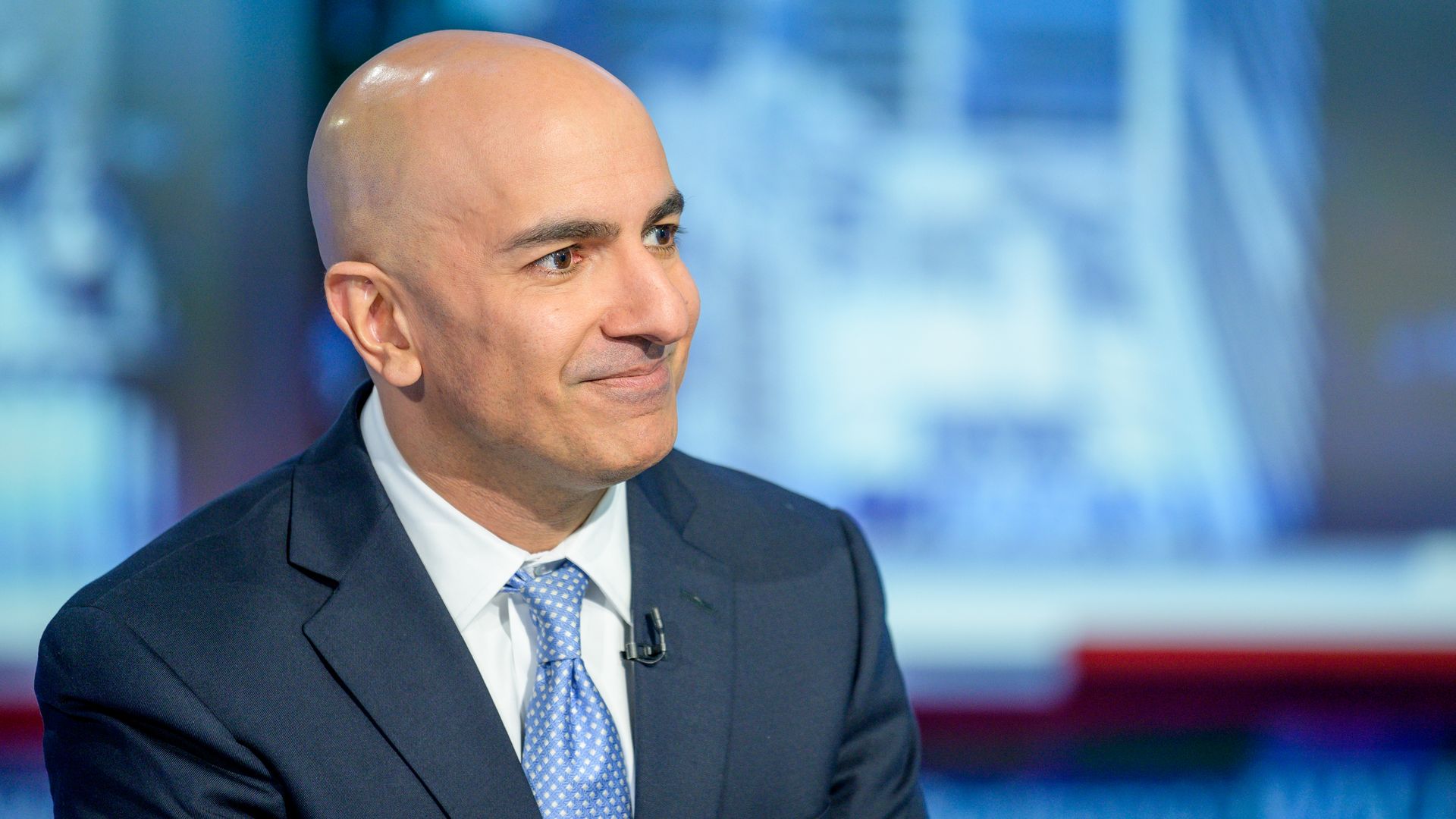
Minneapolis Fed president Neel Kashkari and Dallas Fed president Robert Kaplan are both in favor of keeping U.S. interest rates at zero for years in an effort to help buoy the economy and spur inflation.
But, but, but: But the two dissented at the Fed's latest policy meeting because of disagreements about what should come next.
U.S. household net worth rose by the most ever in the second quarter, thanks largely to the record-breaking rise in stock prices.
By the numbers: Household net worth increased by $7.6 trillion, or 6.8%, to $119 trillion. The gain was the largest on record dating back to 1952, new Fed data show.
The dollar gained nearly 1% against the euro on Monday and rose to its highest since early August after about two weeks of declines.
Details: The dollar index, which tracks the greenback's value against six major global currencies, also strengthened, touching its highest in six weeks.
The fight over a new Supreme Court justice will take Washington's partisan bickering to a new level and undermine any chance for needed coronavirus relief measures before November's election, Wall Street analysts say.
What we're hearing: "With the passing of Justice Ginsburg, the level of rhetorical heat has increased, if that seemed even possible," Greg Staples, head of fixed income for the Americas at DWS Group, tells Axios in an email.
Joe Biden's campaign released on Tuesday a letter signed by 13 winners of the Nobel Prize in economics who say that while their views are different, they all think his policies "will result in economic growth that is faster, more robust, and more equitable."
Our thought bubble, via Axios Hans Nichols: These economist letters are often little more than veiled job applications from academics hoping for a Fed or White House position. But given that these laureates are éminence grises of American economics, they probably just want to be on the record supporting Biden.
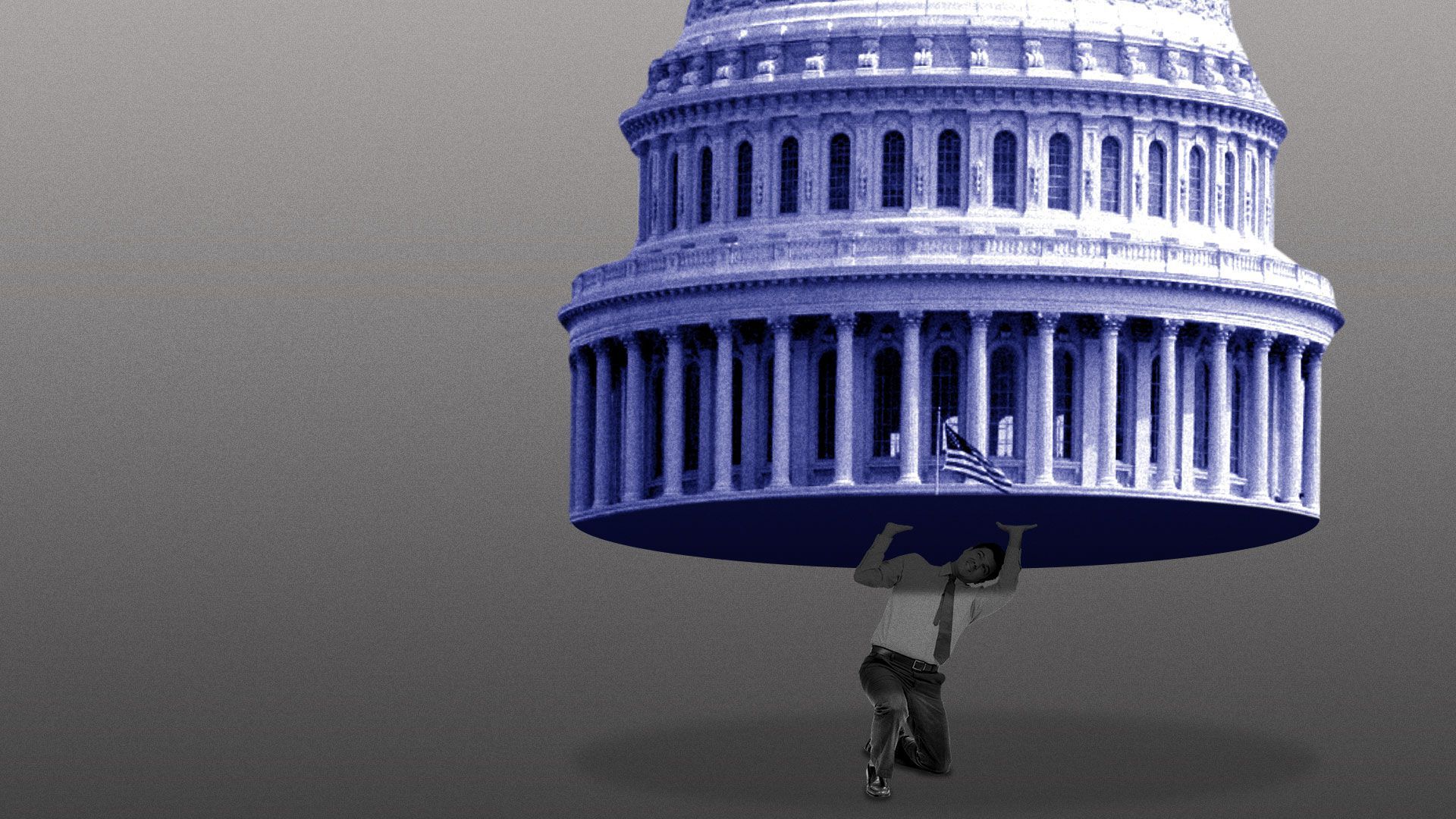
America's elected representatives have failed America.
Why it matters: The bipartisan inability to deliver economic stimulus could impede economic growth for months to come. It will create widespread damage across America — from small businesses to large industries to schools and day cares — and leave many Americans without jobs or homes.




/2020/09/22/1600791898642.gif?w=3840)