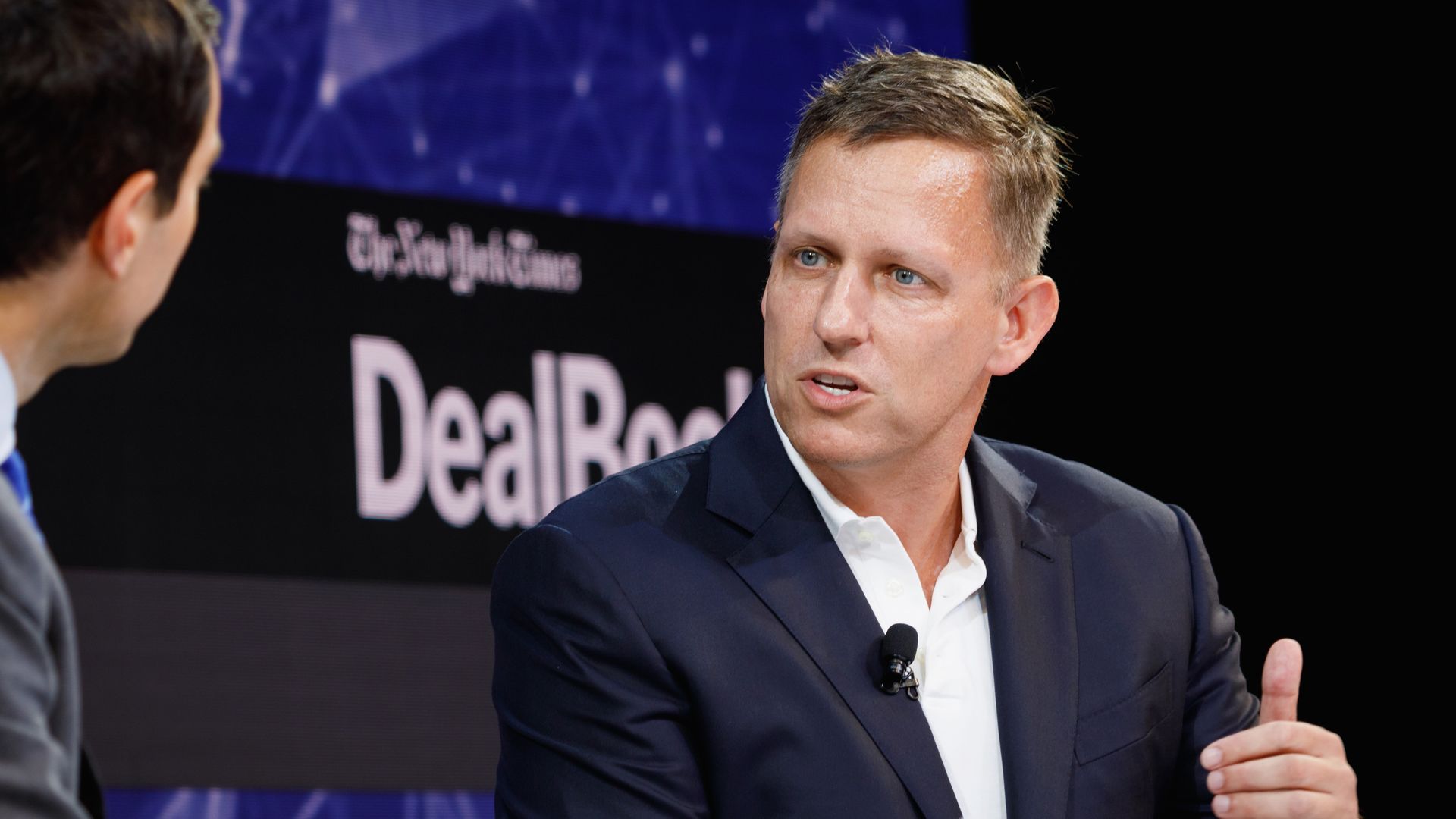
Peter Thiel is involved in a new SPAC that on Wednesday filed for a $575 million IPO, becoming the latest Silicon Valley tech investor to ride Wall Street's hottest wave.
Why it matters: Thiel, who co-founded PayPal, is one of the few top Silicon Valley investors who have close ties to the Trump administration. He also sits on the board of Facebook.
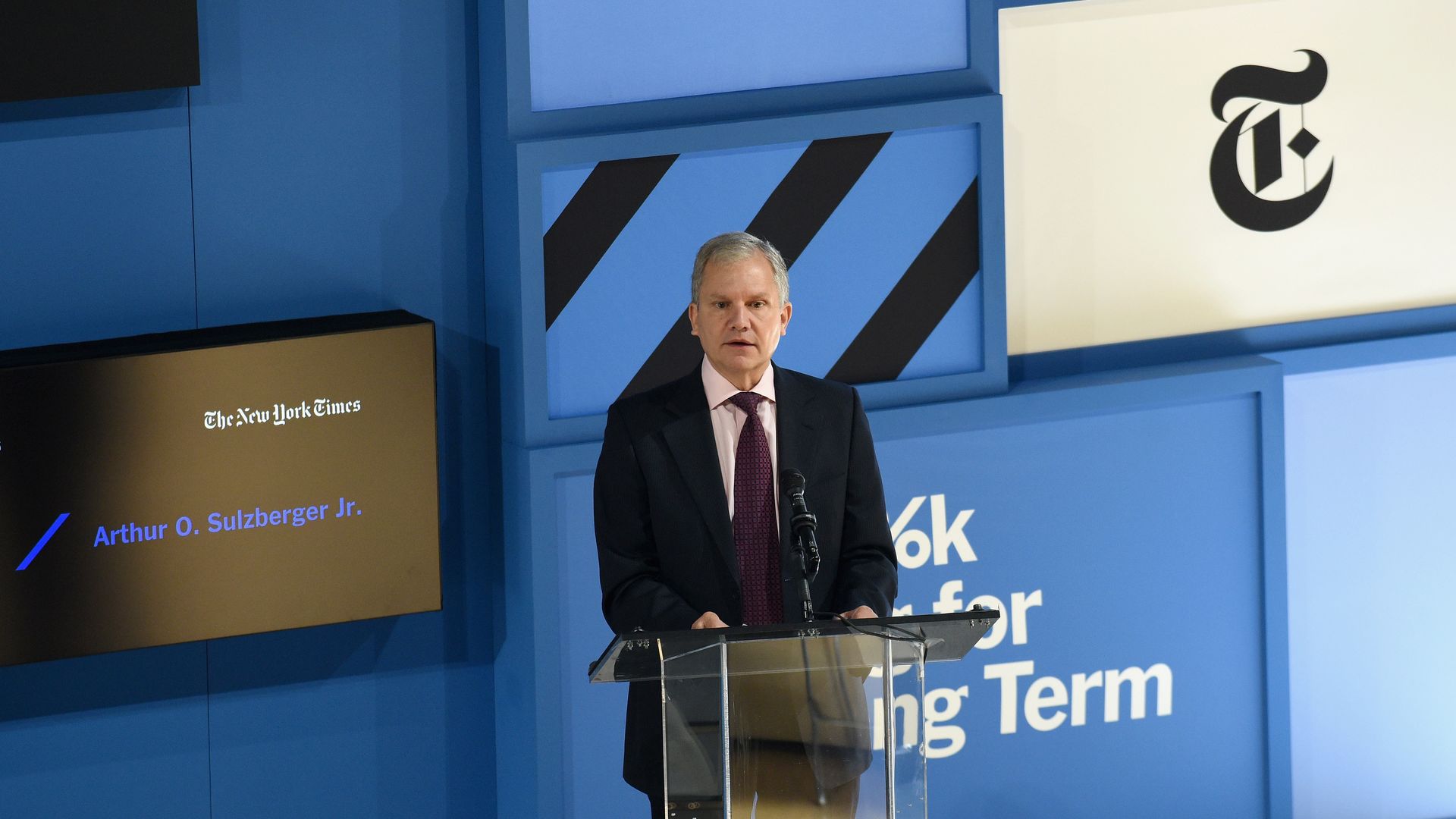
The New York Times announced Wednesday that Arthur Ochs Sulzberger Jr., the current chair of its board, is retiring at the end of 2020. His son A.G. (Arthur George) Sulzberger, the publisher of the Times since 2018, will replace him.
Why it matters: Sulzberger led the Times’ board during its historic digital transformation over the past decade.
Silicon Valley venture capitalists are no longer content with investing in startups and then eventually handing them off. Instead, many are now forming SPACs, or blank-check acquisition companies, to ride tech unicorns into the public markets themselves.
Axios Re:Cap digs into this trend with the co-founders of a new tech SPAC called Reinvent Technology Partners: Reid Hoffman, a co-founder of LinkedIn and partner at Greylock, and Mark Pincus, the founder and former CEO of Zynga.
The Paycheck Recovery Act could serve as an "automatic stabilizer" in future unemployment crises like the coronavirus pandemic by offering direct grants to affected businesses, the bill's sponsor, Rep. Pramila Jayapal (D-Wash.), said Wednesday at an Axios virtual event.
The big picture: Under Jayapal's proposal, which has bipartisan support and is under consideration in the House Financial Services Committee, the federal government would subsidize the benefits and salaries of qualified workers if unemployment hits 7% or higher. The intent is to limit the number of people filing jobless claims.
The blank-check boom of 2020is sapping the 2021 IPO market of prospective issuers.
Driving the news: SPAC godfather Alec Gores this morning announced the market's largest-ever deal, with Gores Holdings IV (Nasdaq: GHIV) agreeing to buy wholesale mortgage lender UWM at an enterprise value of approximately $16.1 billon.
Hollywood entertainment company MRC and media conglomerate Penske Media Corp., which owns publications like Rolling Stone, Variety and Deadline, announced on Wednesday a deal to create two joint ventures in publishing and content.
Why it matters: Nearly all of the major U.S. publications covering Hollywood will be housed under one joint venture.
A closely-watched CEO economic confidence index rose for the first time after declining for nine straight quarters, according to a survey of 150 chief executives of the biggest U.S. companies by trade group Business Roundtable.
Why it matters: The index, which still remains at a decade low, reflects corporate America's expectations for sales, hiring and spending — which plummeted amid uncertainty when the pandemic hit.
A new note from RBC Capital Markets explains why electric and hydrogen truck startup Nikola may be poised to succeed despite now-departed founder Trevor Milton's allegedly false claims about its progress and tech.
Details: Instead, "What made NKLA unique was [the opportunity] to sell 'routes' via fuel cell truck leases, and helping industry solve 'chicken and egg' problem associated with hydrogen infrastructure build-out."
For decades, the black market — which consists of offshore sports books and local "bookies" — has been the only option for U.S. sports bettors looking to place wagers.
Now that states can legalize and regulate sports betting, those offshore books — most of which are located in the Caribbean — are facing competition from well-financed companies running legal operations in the U.S.
As legal sports betting advances, some believe the offshore market will shrink and become a shell of itself, while others believe the two will live side by side with legal books unable to match what offshore books can offer.
The state of play: Sports betting is currently legal and operational in 18 states plus Washington, D.C. It's legal but not yet operational in four more states, and another seven have active legislation.
The housing market continued its boom in August and U.S. existing home sales surged to their highest level in nearly 14 years, setting a new record for average home price.
What happened: Following July's record-shattering 24.7% gain, sales increased 2.4% to a seasonally adjusted annual rate of 6 million, according to the National Association of Realtors.
The big picture: Early on, the pandemic walloped hiring across the wage spectrum and in every sector. Now, states have opened up, and the lower-wage retail and restaurant jobs have slowly come back — but higher-paying jobs are lagging behind.
Airbnb is rolling out a new dashboard that will let participating cities and tourism organizations directly view and interact with listings and activities within their jurisdictions.
Why it matters: Municipalities have long asked for direct access to information about listings and the ability to take immediate take action against those violating local laws. And Airbnb has long resisted giving it to them.
The death of Justice Ruth Bader Ginsburg and President Trump's vow to name her replacement to the Supreme Court before November's election are amplifying Wall Street's worries about major volatility and market losses ahead of and even after the election.
The big picture: The 2020 election is the most expensive event risk on record, per Bloomberg — with insurance bets on implied volatility six times their normal level, according to JPMorgan analysts. And it could take days or even weeks to count the record number of mail-in ballots and declare a winner.
GoodRx, a price comparison app for prescription drugs at local pharmacies, on Tuesday night raised $1.14 billion in its IPO, Axios has learned.
By the numbers: GoodRx priced its shares at $33 a piece, above its $24-$28 per share offering range, which will give it an initial market cap of around $12.7 billion.