Friday's economy & business stories

How the banking crisis could ripple through the economy

The U.S. banking system appears to be stabilized, for now, following extraordinary government actions to head off an all-out disaster after Silicon Valley Bank's failure.
Yes, but: Wall Street economists and the Fed increasingly expect fallout from that collapse to linger in the months ahead, as regional and community banks ease up on lending activity.

Deutsche Bank stock falls amid "dragnet on global banks"

Deutsche Bank — ever the source of global financial drama — took center stage once again as soaring default insurance costs and a slumping stock converged with bank sector fears.
Why it matters: Nothing suggests Deutsche's solvency is in question, but jittery investors are training a microscope on anything that resembles banking stress. Weeks of ugly headlines include the Credit Suisse fire sale to UBS, the collapse of Silicon Valley Bank and the demise of New York's Signature Bank.
- Bespoke Investment Group analysts said Friday the current turmoil represents nothing less than a "dragnet on global banks."
Driving the news: Deutsche shares were down more than 8% at one point Friday on the New York Stock Exchange, after the price of the bank's credit-default swaps (a derivative that lets investors offset bond risk) hit a four-year high, Bespoke data showed.
- Other headlines may also have contributed to concerns about Deutsche, Reuters noted, including a Bloomberg report that the Department of Justice is scrutinizing banks that may have helped Russian oligarchs evade sanctions.
The big picture: Deutsche Bank has been accused of a litany of misdeeds over the years, including money laundering accusations on behalf of Russian oligarchs.
- "Given the tendency of the bank to always find itself right in the middle of any issue related to banking troubles, it’s almost surprising that it didn’t happen sooner," Bespoke writes.
Zoom in: Investors may be especially worried about the language in contingent convertible (CoCo) bond documents, giving "regulators discretion to write down the value of those bonds," Bespoke wrote.
- Axios' Felix Salmon noted earlier this week that CoCo bonds are supposed to convert into equity when a bank gets into trouble.
The big question: Whether investors are overreacting to Deutsche's issues, which some analysts believe is the case.
- “We view this as an irrational market,” Citi analysts including Andrew Coombs said in a note cited by Bloomberg. But the risk remains of "a knock-on impact from various media headlines."
- German Chancellor Olaf Scholz weighed in Friday, calling it "fundamentally modernized," "very profitable” and nothing "to be concerned about," according to the Financial Times.
- The company's shares pared back their losses and closed down 3.1%.
- Deutsche Bank declined to comment.
The bottom line: Deutsche is accustomed to scrutiny, but this time it might not have done anything wrong.

Fed rejected Custodia due to run risk
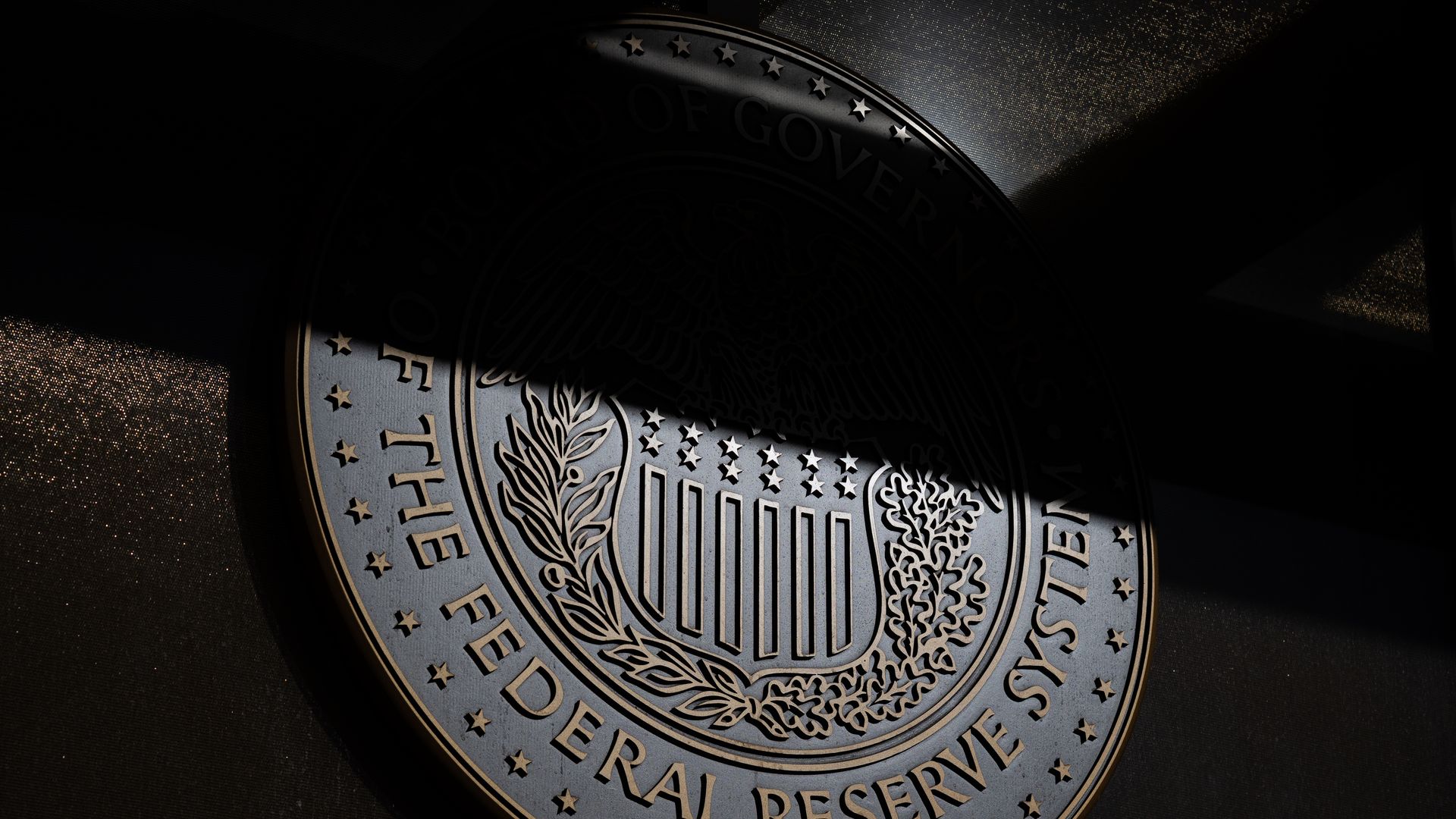
The Federal Reserve, in an order published Friday, explained that it rejected Custodia Bank's application to become a member bank due to possible runs on the bank, among other risks.
Why it matters: The state-chartered Wyoming special purpose depository institution (SPDI) has been pushing a new banking model that makes money on fees, not by investing deposits.
The big picture: Two running narrative threads in crypto converge in the Custodia saga. One, that there is a coordinated effort to shut down the industry, and two, that crypto poses serious safety and soundness risk to the U.S. financial system and therefore should be kept out of it.
What they're saying: In its 86-page order, the Fed pretty much says the latter (And the industry would say the Fed's actions confirm the effective crypto prohibition).
- "The absence of deposit insurance coverage at Custodia could increase the firm’s risk of runs and contagion."
Yes, but: In the wake of real, less theoretical bank runs, CEO Caitlin Long has pointed out that Custodia had always proposed holding $1.08 in cash per dollar deposited.
Details: The Fed evaluates on factors in considering membership, and it found that in terms of financial, managerial, corporate powers, Custodia's application was "inconsistent."
- On the managerial factor that includes risk. "In general, the Board has heightened concerns about banks with business plans focused on a narrow sector of the economy."
- On the financial factor: Custodia's reliance on crypto means that it's "without a materially diversified business."
- On the corporate powers factor: "The Board does not believe that this business model is consistent with the purposes of the Federal Reserve Act."
Quicktake: It's the crypto.
Of note: The Fed focused in on what it refers to as Custodia's "stablecoin," dollar-denominated tokens that would facilitate crypto transactions between counterparties or what Custodia calls Avits.
What we're watching: Custodia is suing the Fed, saying it cannot deny them.

Credit Suisse bankers in limbo
Credit Suisse investment bankers remain in the dark about their fate, with no word from leadership when sources say it appears the vast majority of them could soon lose their jobs.
Why it matters: The rescue acquisition of Credit Suisse by UBS, arranged by the Swiss government, has left thousands of bankers in limbo.
Driving the news: UBS has shrunk its investment bank and publicly said it is not interested in taking on Credit Suisse's own division.
- Credit Suisse's investment bank was expected to spin off as CS First Boston, led by board director Michael Klein.
- Sources say that the UBS rescue has scuttled that plan, and Klein is expected to negotiate some type of agreement that dissolves the spin off plan.
- That leaves thousands of Credit Suisse investment bankers in the sales and trading, fixed income, capital markets, fixed income and other IB divisions waiting to lose their jobs once the UBS deal closes on June 1. They face a tough hiring market, as banks across the globe cut costs.
- In addition, the Swiss government said this week that it's temporarily suspending deferred remuneration granted to Credit Suisse employees in the years up to 2022.
Yes, but: Some Credit Suisse bankers have been able to get hired.
- Bloomberg reported that Credit Suisse healthcare banker John Hoffman is expected to join Royal Bank of Canada's RBC Capital Markets team. personnel changes.
- Credit Suisse ECM technology sector banker Justin Sterling is expected to join Wells Fargo, according to Bloomberg.
Of note: Despite these examples of poaching, big bank executives issued a warning to staff to tread carefully and avoid the appearance of taking advantage of the situation.
Zoom in: A Credit Suisse banker said he instinctively reached into his bag for his business cards before leaving his hotel room this week for a networking event. And then he stopped.
- "I thought to myself, 'Why? Why do I need these?'" said the banker, who did not want to be named. "If I hand my card to someone, it's just going to be awkward."
What we're watching: Two things: What Michael Klein does in lieu of the spin off plan, and what Credit Suisse tells its bankers about their future.
- "UBS I think will likely keep some sector bankers with a big client list, in sectors they want to grow, like healthcare," said a former Credit Suisse banker. "Other than that, I think 90% will lose their job."
Credit Suisse declined to comment.

Good news in the Fed balance sheet


The precarious situation of banks has made the weekly release of the Fed's balance sheet — every Thursday at 4:30pm ET — extra important, and this week's numbers offer some good news that the situation is contained.
State of play: As of Wednesday, the Fed had $53.7 billion extended through its Bank Term Funding Program announced March 12 in response to the SVB panic. That was up from $12 billion a week earlier.
- But use of the discount window, the Fed's long-standing option for banks in need of quick cash, declined by a similar amount.
Translation: Total emergency lending to banks changed little over the last week, with combined lending through the two programs actually declining by $869 million.
- That is evidence that American banks aren't experiencing mass runs that would force them to go to the Fed for cash.
Of note: The discount window lending occurred through the "primary credit" program, which is for banks that regulators view as healthy. There was zero "secondary credit" outstanding as of Wednesday, which are emergency loans on more stringent terms for banks in grave peril.
- "No institutions shifted from primary credit to secondary credit," wrote Moody's Investors Service analysts, "which indicates that US bank supervisors continue to consider the banks that needed emergency support 'healthy' and not at elevated risk of imminent failure."

Banking giants to staff: Do not take advantage of stressed banks
A number of high-profile U.S. banks have a message for their employees: Tread carefully and do not take advantage of banks under major stress from the banking crisis.
Why it matters: Some banking institutions — including Stifel and Wells Fargo — have recently been poaching employees away from stressed-out banks amid the recent banking turmoil, Axios' Dan Primack writes.


TikTok's fate may be decided by the courts

TikTok's future in the U.S. is most likely to be determined by the courts, rather than by politicians, executives or influencers.
Driving the news: Congress gave the social media company no quarter yesterday, in a four-hour hearing that mostly vacillated between moral panic and red scare.

Axios HQ raises $20 million

Axios HQ, the communications software company that spun off of Axios last year, has raised $20 million in Series A funding at nearly a $100 million post-money valuation.
Why it matters: It's rare for media companies to create software startups.

Dunkin' heats up breakfast wars with new tacos

Dunkin’ is taking the latest shot in the ongoing fast-food breakfast wars by getting into the taco business.
Why it matters: Breakfast is big business for fast-food and quick-service restaurants with brands including McDonald's, Wendy’s, Starbucks and Taco Bell seeing growth in morning sales as more people return to pre-pandemic routines.

How "too big to fail" banks became a symbol of safety
/2023/03/23/1679609227892.gif?w=3840)
Once upon a time, "too big to fail" was shorthand to villainize big banks — these days, it's a way to say "your money is safe."
Why it matters: The shift in meaning raises the possibility that more banks will become too big to fail (TBTF) — through regulation or simply through consolidation.

Utah becomes first state to sign law limiting kids' social media use

Utah became on Thursday the first state to enact legislation that restricts children and teens from using social media without their parents' consent.
Driving the news: Gov. Spencer Cox (R) signed two bills into law aimed at limiting when and where anyone younger than 18 years old can interact online, and to stop companies from luring minors to certain websites.

Axios Finish Line: Confronting bad managers

It's hard enough to give candid feedback to a friend or subordinate. Giving it to your boss is so much harder — and can get you booted if you botch it.
- Why it matters: Very few of us make it through life without running into moronic, mushy or mediocre managers. But there are ways to raise concerns directly, safely and effectively.
Tom Brady becomes part owner of WNBA team
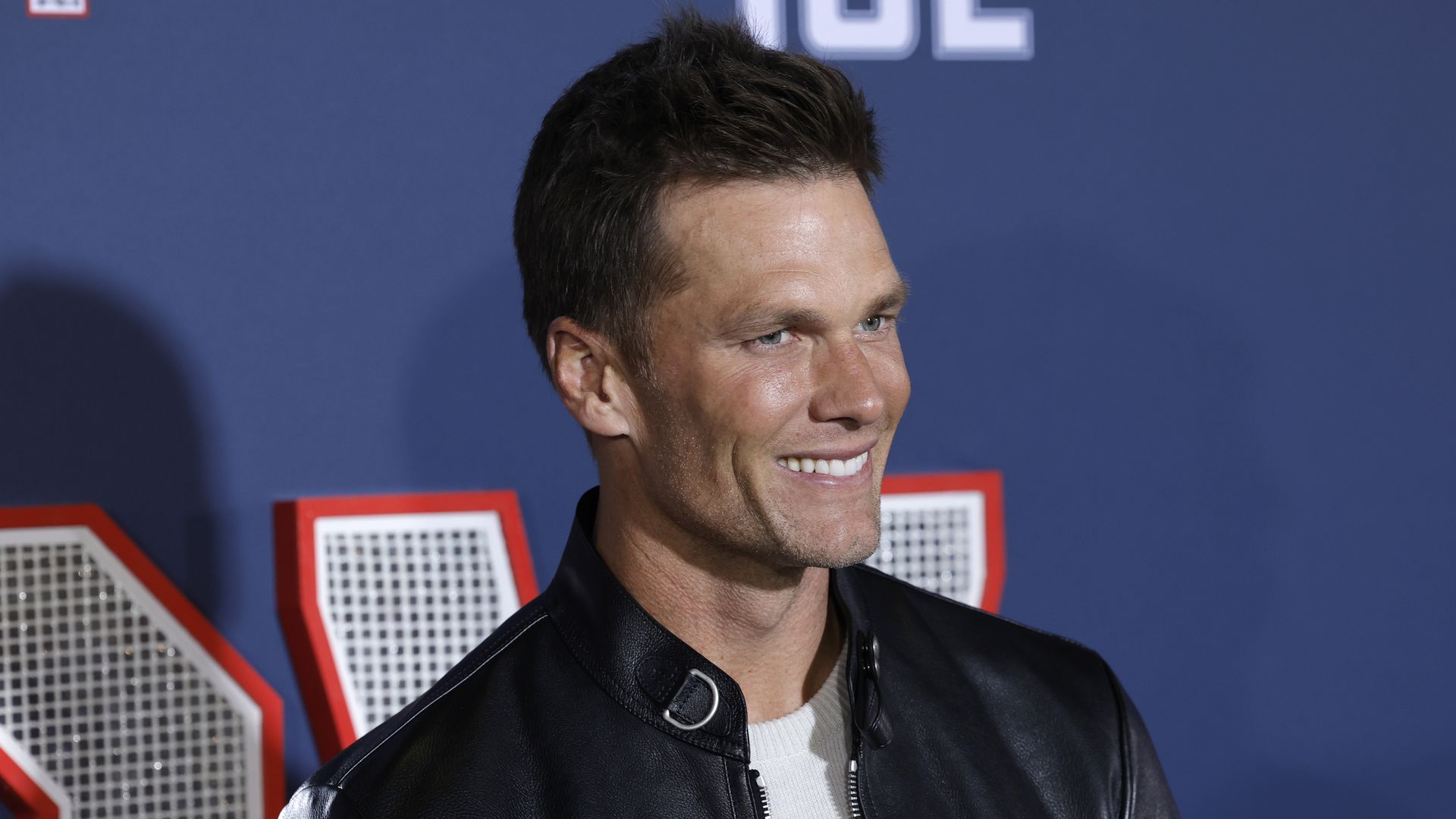
Tom Brady is now part owner of the WNBA's Las Vegas Aces, he announced in a video Thursday.
Driving the news: "Since I purchased the Aces, our goal has been to win on and off the court," Aces and Raiders owner Mark Davis said in a statement. "Tom Brady is a win not only for the Aces, and the WNBA, but for women’s professional sports as a whole."