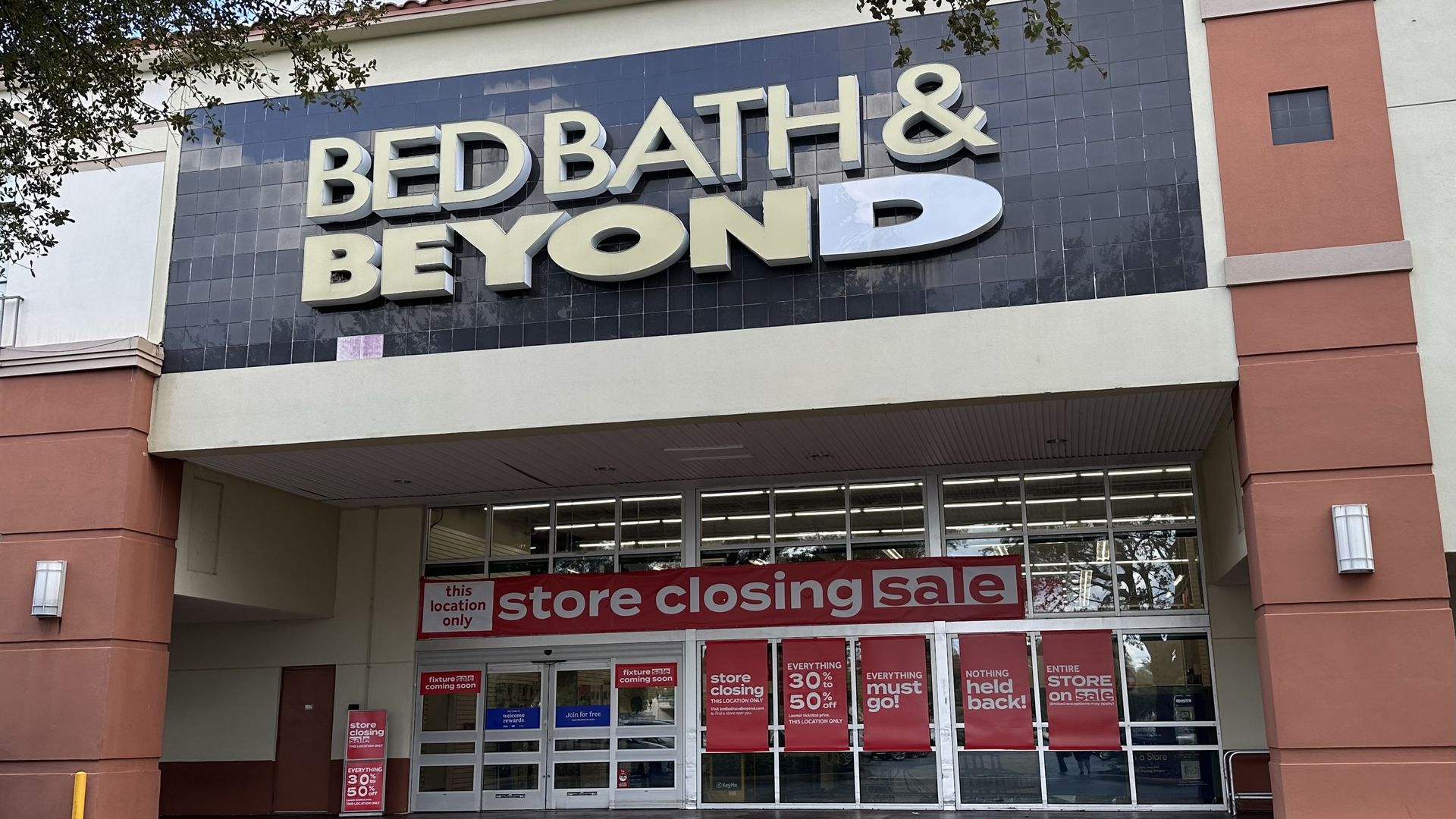
Bed Bath & Beyond hasn't formally filed for bankruptcy, but the message from the bond market is clear: It's certain to do so. Once that happens, absent some miracle, the value of its shares will go to zero.
Why it matters: As often happens on the brink of bankruptcy, Bed Bath & Beyond's share price is being highly volatile. It dropped from a high of $2.74 last Tuesday to a low of $1.27, and has since rallied to close at $1.66 today.
After a brief respite in 2021, public pension plans are reeling from a one-two punch: the fallout from 2022's market rout and heightened demands to deliver cost-of-living-adjustments (COLA).
Driving the news: At the end of 2022, the average public pension plan had 77.3% of the funding it needed to pay its promised benefits, down from 83.9% after 2021's market peak, according to new estimates published Tuesday by the nonpartisan Equable Institute.
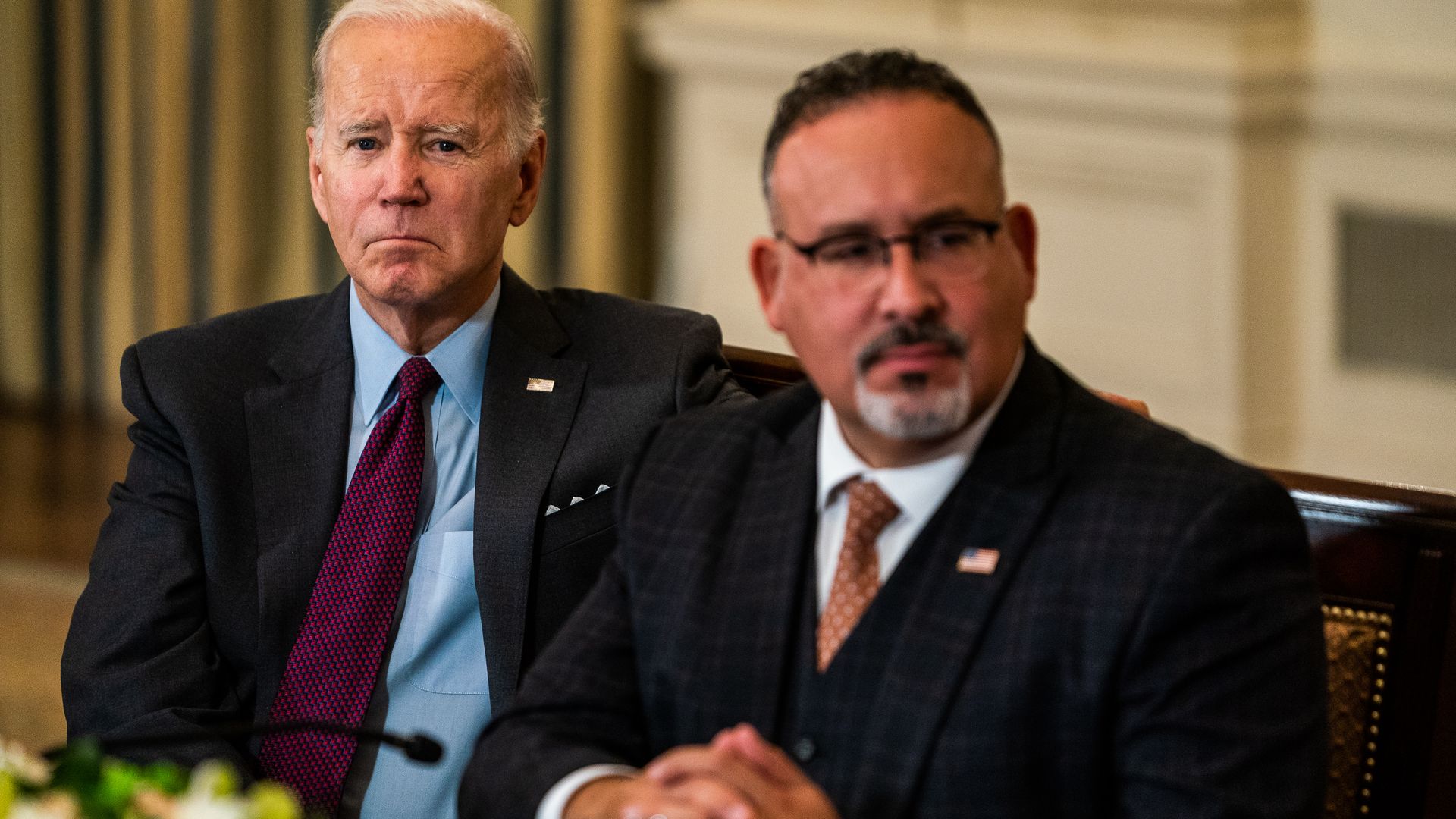
A new student loan payment proposal unveiled by the Department of Education on Tuesday would lower monthly payment amounts for some Americans while completely pausing payments for others.
Why it matters: The regulatory changes to the Education Department's existing income-driven loan repayment plan could provide student loan relief after the total pause on repayments, which was extended to the end of June 2023, is lifted.
Driving the news: The retailer, which also operates buybuy Baby stores and Harmon, released a list of 120-plus closing stores, which includes 62 new Bed Bath & Beyond closings and the 56 closing stores announced in September.
The United States needs more people, whether through Americans having more babies or more immigrants settling in this country. Failure to increase the U.S. population is among the biggest economic risks for the years and decades ahead.
That is our takeaway from a new volume from a group led by former top officials. It sheds light on how some leading thinkers see the high-level economic challenges of the 2020s and beyond.
Why it matters: For much of the 21st century, a lack of adequate demand has been a predominant challenge, with policymakers turning the knobs of fiscal and monetary policy to address it. Now, the central challenge is supply: improving the ability of the economy to make stuff.
But worsening demographic trends imply persistent labor shortages, slumping growth, and struggles to fund Social Security and other retirement programs.
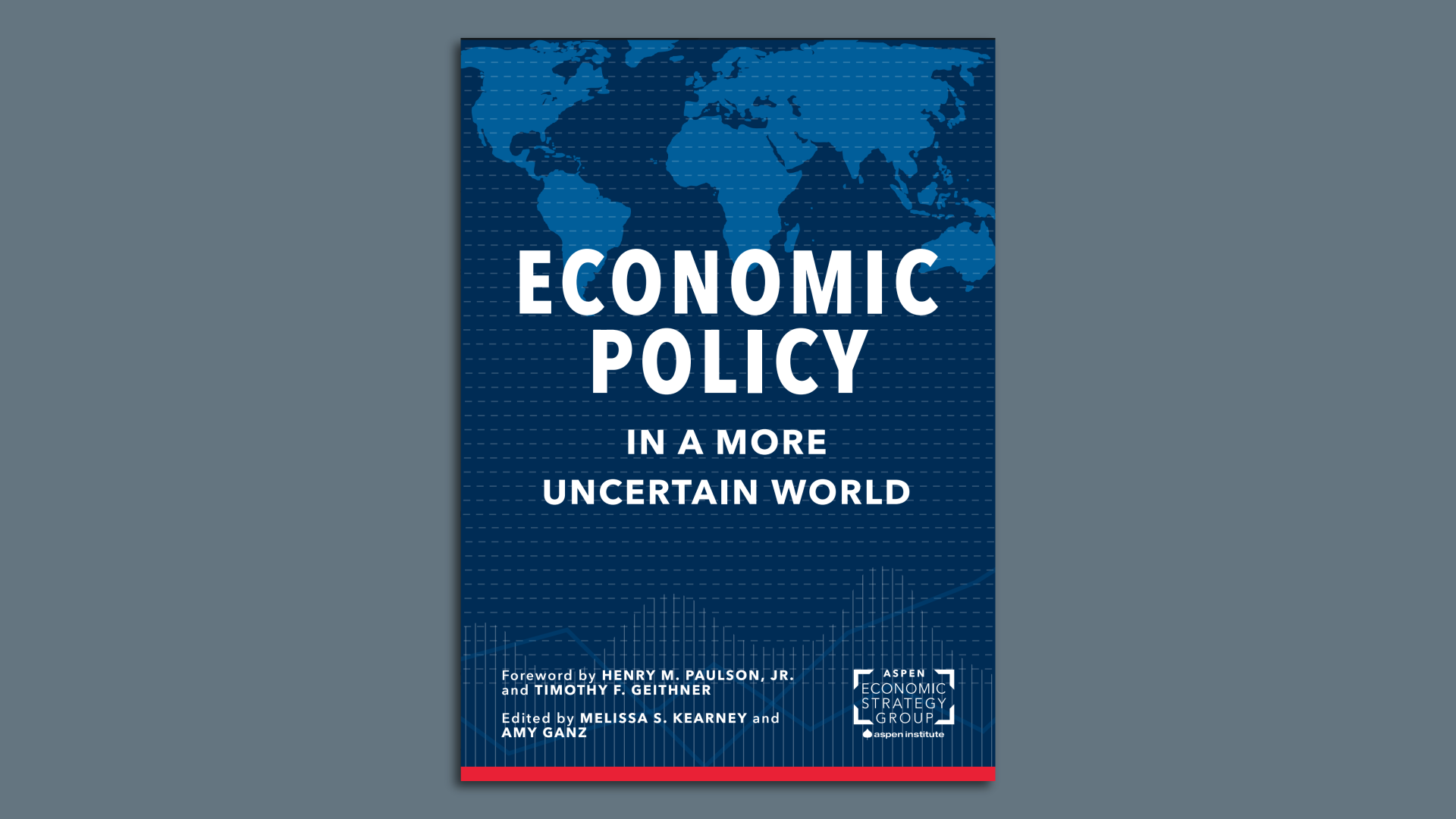
Driving the news: The Aspen Economic Strategy Group, an arm of the Aspen Institute led by former Treasury Secretaries Hank Paulson and Tim Geithner, published a new volume of research this week focused on this and related themes, called "Economic Policy in a More Uncertain World."
Disclosure: Neil is a member of the Aspen group, attending its gatherings in his capacity as a journalist. He was not involved in preparing the new book.
The details: The U.S. fertility rate has fallen sharply since 2007, Melissa Kearney and Phillip Levine write. It is well below the "replacement rate" that implies a steady population, in the absence of immigration.
The "total fertility rate," the average number of children born to a woman over her lifetime, was 2.12 in 2007, they found. It was down to 1.65 in 2021, the lowest ever recorded in the U.S. A key reason is shifting priorities among young adults.
"Low or falling fertility will eventually reduce the size of the U.S. workforce and its overall population, reducing innovation and productivity," Kearney and Levine write.
They argue that projections for the long-term finances of Social Security and Medicare haven't adequately factored in the likelihood of continued low fertility.
Between the lines: In the years following the global financial crisis — the response to which was managed by Paulson and Geithner — the central problems facing the U.S. economy were different.
Now, "the U.S. economy is confronting a wholly different set of economic headwinds," Paulson tells Axios, including around demographics, debt and decoupling with China.
"These challenges threaten to constrain our productive capacity and reduce future standards of living," he said. "However, America's economic course is not determined. We should play to our strengths by welcoming the world's talent, unleashing innovation, and providing a stable, open and competitive business environment."
Regulators are coming for venture capital. And it could get messy.
Driving the news #1: Reuters reports that the SEC "is seeking details about FTX investors' due diligence," including information on firm policies and if those policies were followed.
CVS Health is exploring a takeover of Chicago-based Oak Street Health, a Medicare-focused operator of a network of value-based primary care centers, per Bloomberg. A deal could be valued north of $10 billion, including assumed debt.
Why it matters: This news topped off a very busy Monday for America's largest pharmacist, as industry executives and investors descended on San Francisco for the annual JPM Healthcare Conference.
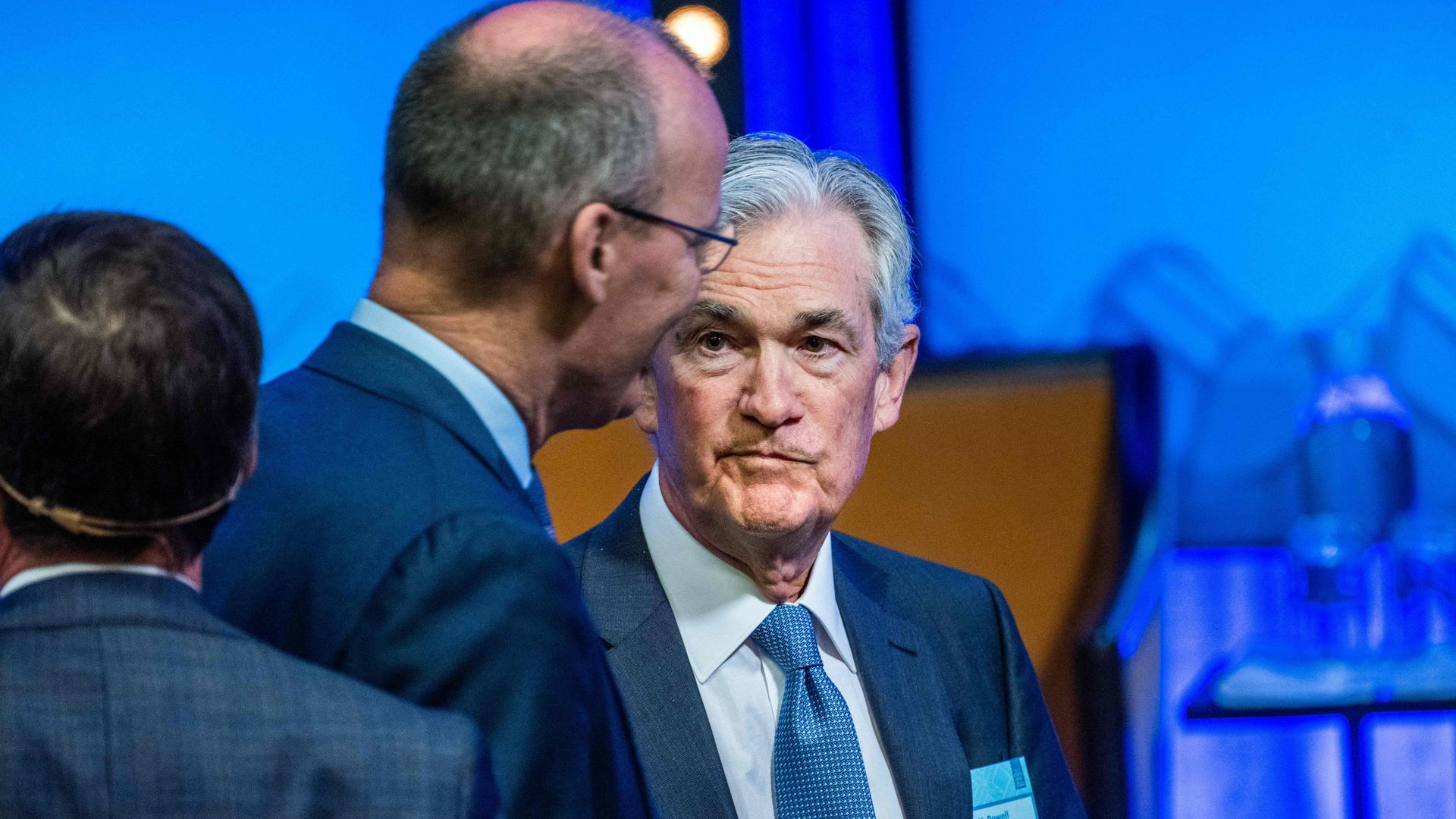
Federal Reserve chair Jerome Powell said in a speech on Tuesday the central bank is not a "climate policymaker," though acknowledged the Fed has a duty to ensure banks understand the financial risks associated with climate change.
Why it matters: How and if the Fed incorporates climate change initiatives into policymaking will continue to be a political flashpoint in the coming year. Powell seems to be drawing a clear line of how the Fed will maneuver the issue.
Home prices could decline by between 4% and 10% before hitting bottom, per a new note from analysts at Barclays.
Driving the news: "The likelihood of a sharp house price correction has intensified," the authors write, emphasizing that the uncertainty in the market right now is around the trajectory of interest rates.
There are various different ways to make hundreds of millions of dollars, but historically "starting a nonprofit" has not been one of them. Silicon Valley, however, has managed to find a way, at ChatGPT creator OpenAI.
Why it matters: OpenAI pivoted from nonprofit to for-profit status in 2019, a mere four years after it was founded with $1 billion of donations from Elon Musk and others. It's now reportedly in talks to raise $10 billion from Microsoft, much of which is likely to go straight into shareholders' pockets.