Michael Saylor, who led MicroStrategy, the enterprise software company he co-founded in 1989 to make a $4 billion investment in bitcoin, will drop his role as CEO the company announced on Tuesday.
Driving the news: Saylor will stay on as executive chairman, while Phong Le, the president and previously the company's chief financial officer, will be the new CEO, effective Aug. 8.
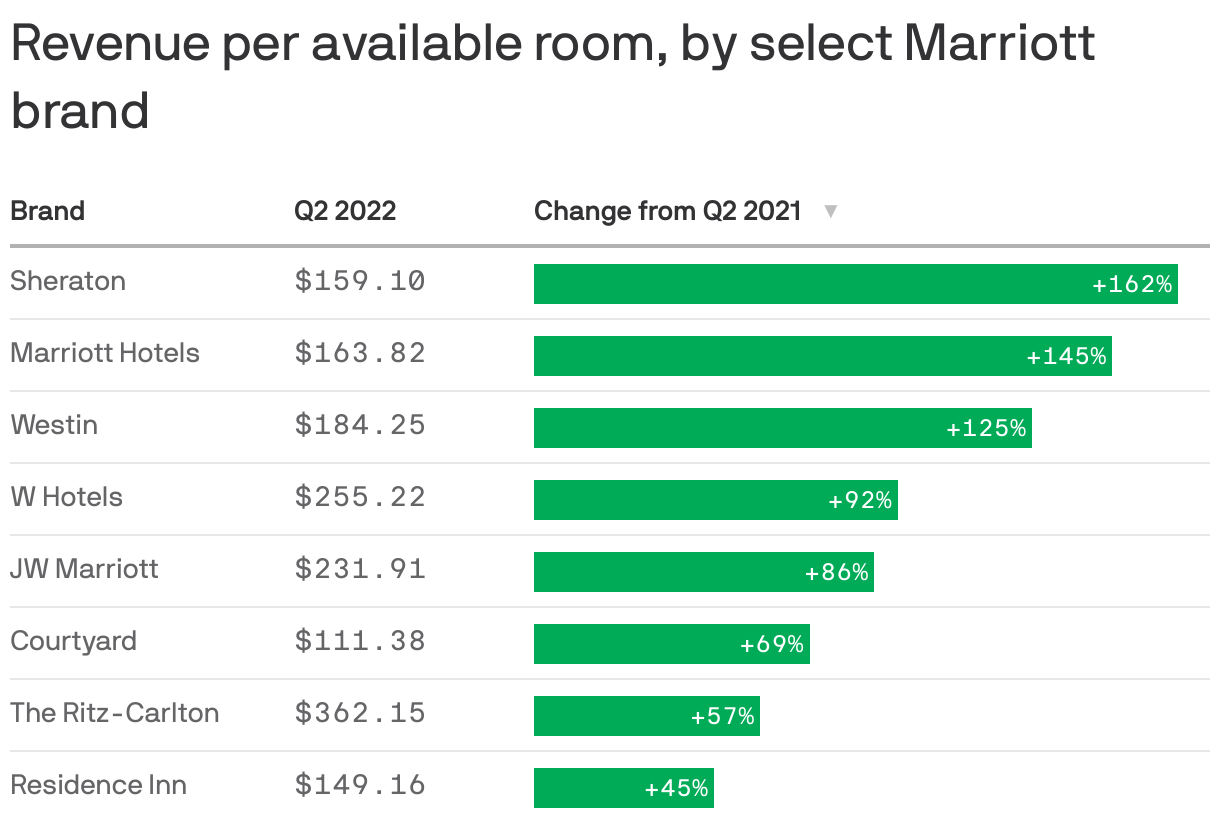
The world’s largest hotel company said it’s not noticing any signs of consumers balking at traveling despite concerns about the economy.
Driving the news: Marriott International posted a 70% year-over-year increase in second-quarter revenue to $5.34 billion as people grew more comfortable traveling during the pandemic.
House Speaker Nancy Pelosi’s trip to Taiwan, and China’s bellicose response, has the potential to become another geopolitical flashpoint a jittery market doesn’t need.
Driving the news: Pelosi is the most senior U.S. lawmaker to visit Taiwan since 1997, when then-Speaker Newt Gingrich paid a visit to the island. Although rhetoric between the U.S. and China is getting heated, few expect the dispute to become a full-fledged crisis.
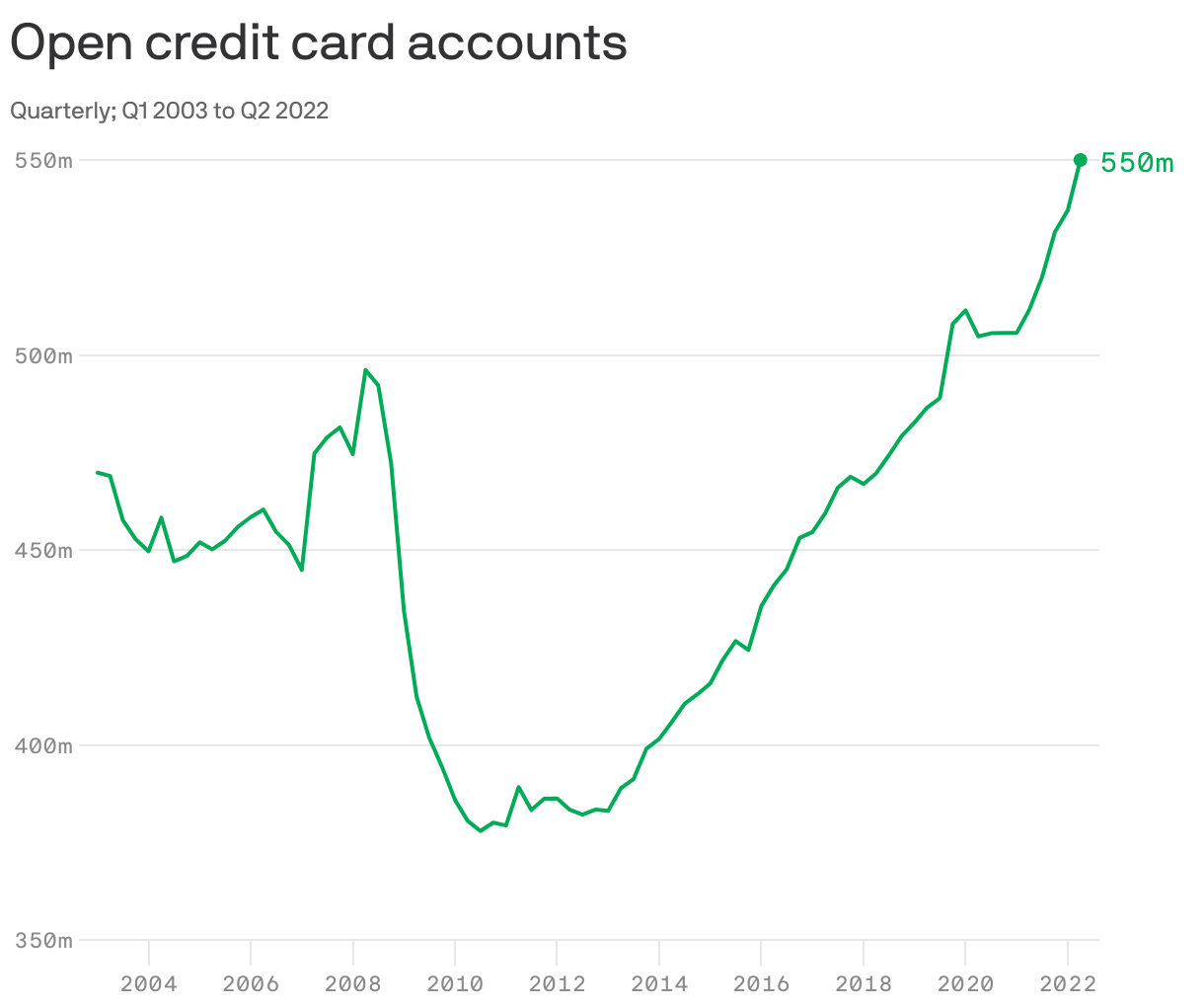
Data: Federal Reserve Bank of New York; Chart: Skye Witley
Credit card balances are ballooning at the quickest pace in decades, reflecting higher prices and more open accounts than ever before.
Why it matters: The debt will get costlier for borrowers to carry as the Fed raises interest rates quickly to tamp down scorching hot inflation. There are early signs lower-income consumers are starting to fall behind on payments.
Trading app Robinhood on Tuesday announced that it is laying off around 23% of its workforce, just months after cutting 9%.
The big picture: Robinhood rose during the bull market for stocks, and then soared even higher alongside cryptocurrencies. The layoffs reflect the company's lower trading volumes and revenue, as both markets have retreated.
Drivers have been flocking to Uber despite high gas prices, the company's second quarter earnings report shows.
Driving the news: The number of Uber drivers and delivery earners reached a record last quarter — of nearly 5 million, up 31% from last year — the company reported this morning.
How much would the Inflation Reduction Act actually reduce inflation? In the calculations starting to emerge from economic modelers, the answer is "a little, maybe."
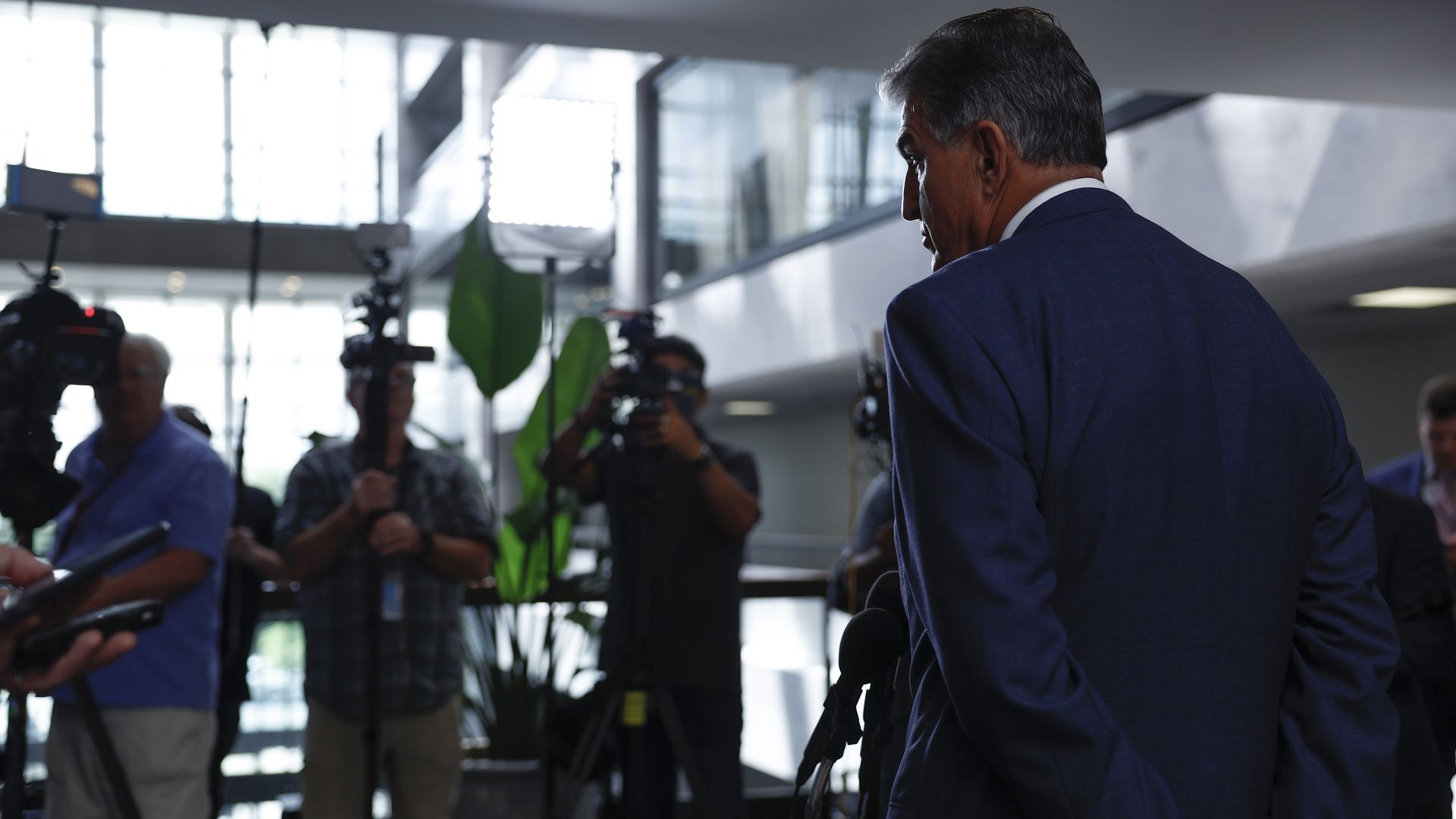
The big picture: Last week, Sen. Joe Manchin agreed to support legislation aimed at addressing global warming, reducing prescription drug costs, and cutting the deficit. Early estimates of how much it would reduce inflation, however, suggest a minimal impact.
BuzzFeed and more than 90 of its former employees remain locked in a legal fight over the company's public listing last December, during which the ex-employees claim to have been improperly prevented from selling their shares.
Why it matters: The two sides are currently bickering over venue, and the outcome could be consequential for other companies that go public via SPAC.
The big picture: The fast-food chain brought back the pizza in May after axing it in 2020, but quickly experienced supply shortages and greater than expected demand.
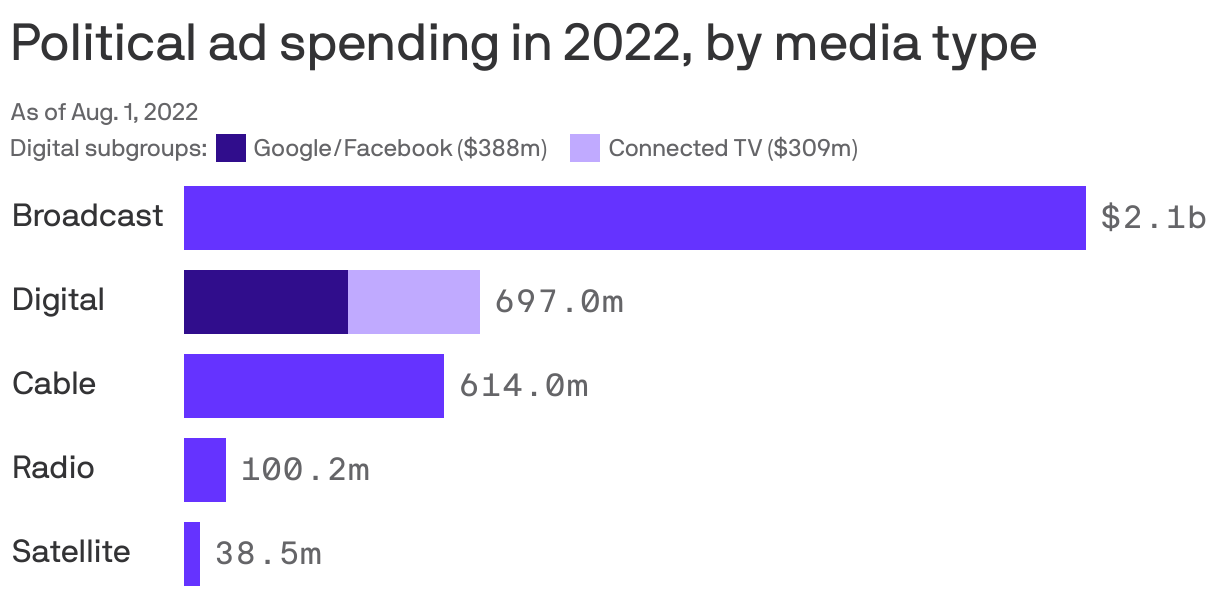
Nearly $3.6 billion has been spent on political and issue ads so far this year, putting the 2022 elections on pace to obliterate 2018's record as the largest midterm election year by ad spend, according to new data provided to Axios by AdImpact, an analytics firm.
Why it matters: A record percentage of ad dollars have shifted to streaming this cycle, allowing campaigns to target potential voters or funders with more precision than ever before.
Reproduced from KBRA Analytics; Chart: Axios Visuals
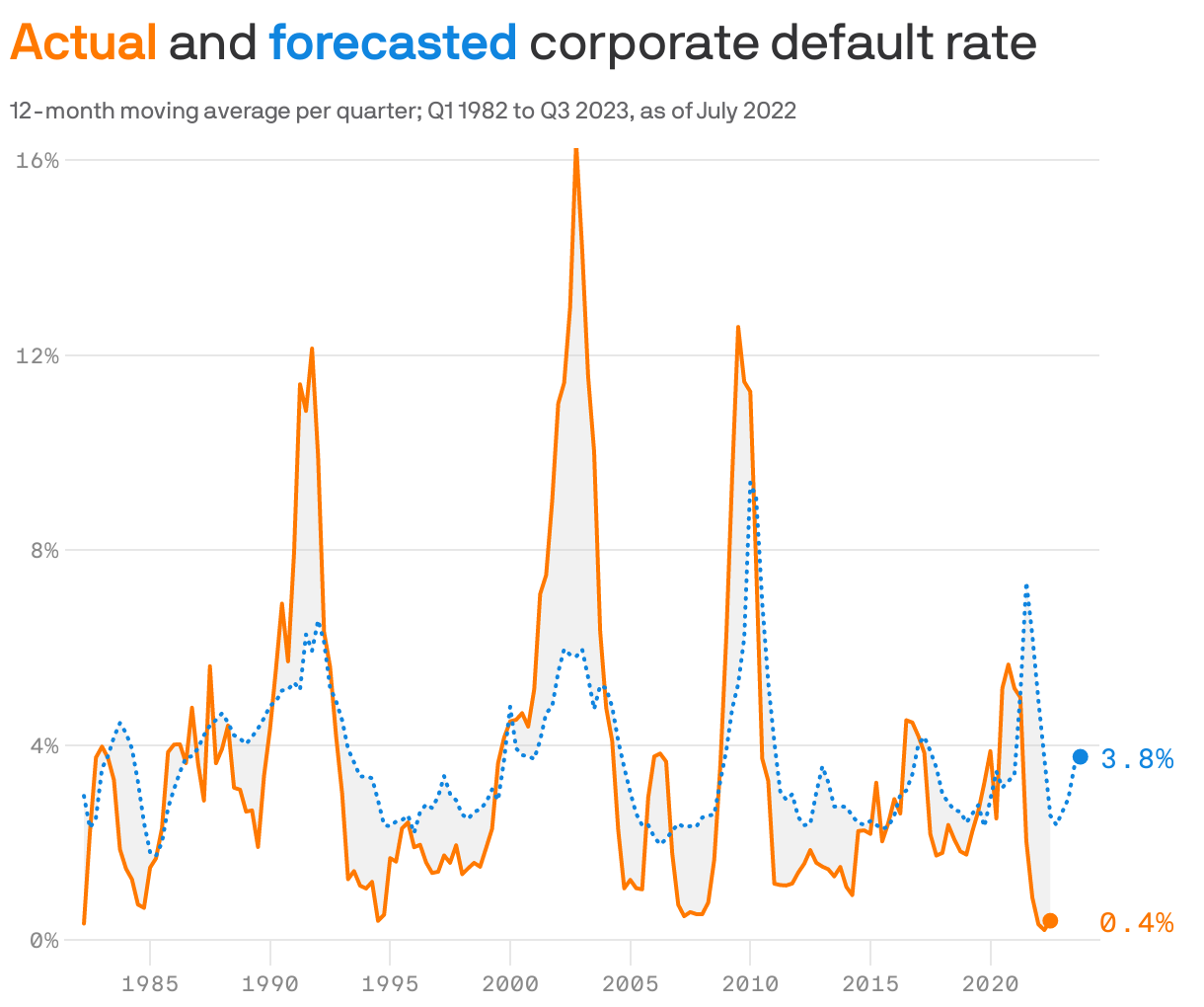
Default rates in the U.S. corporate bond market hit all-time lows near zero last year — but they’re starting to tick back up.
Why it matters: With recession worries hitting a fever pitch, the question isn’t whether defaults will rise — it’s how high they’ll go, and how much damage that'll inflict on investors.
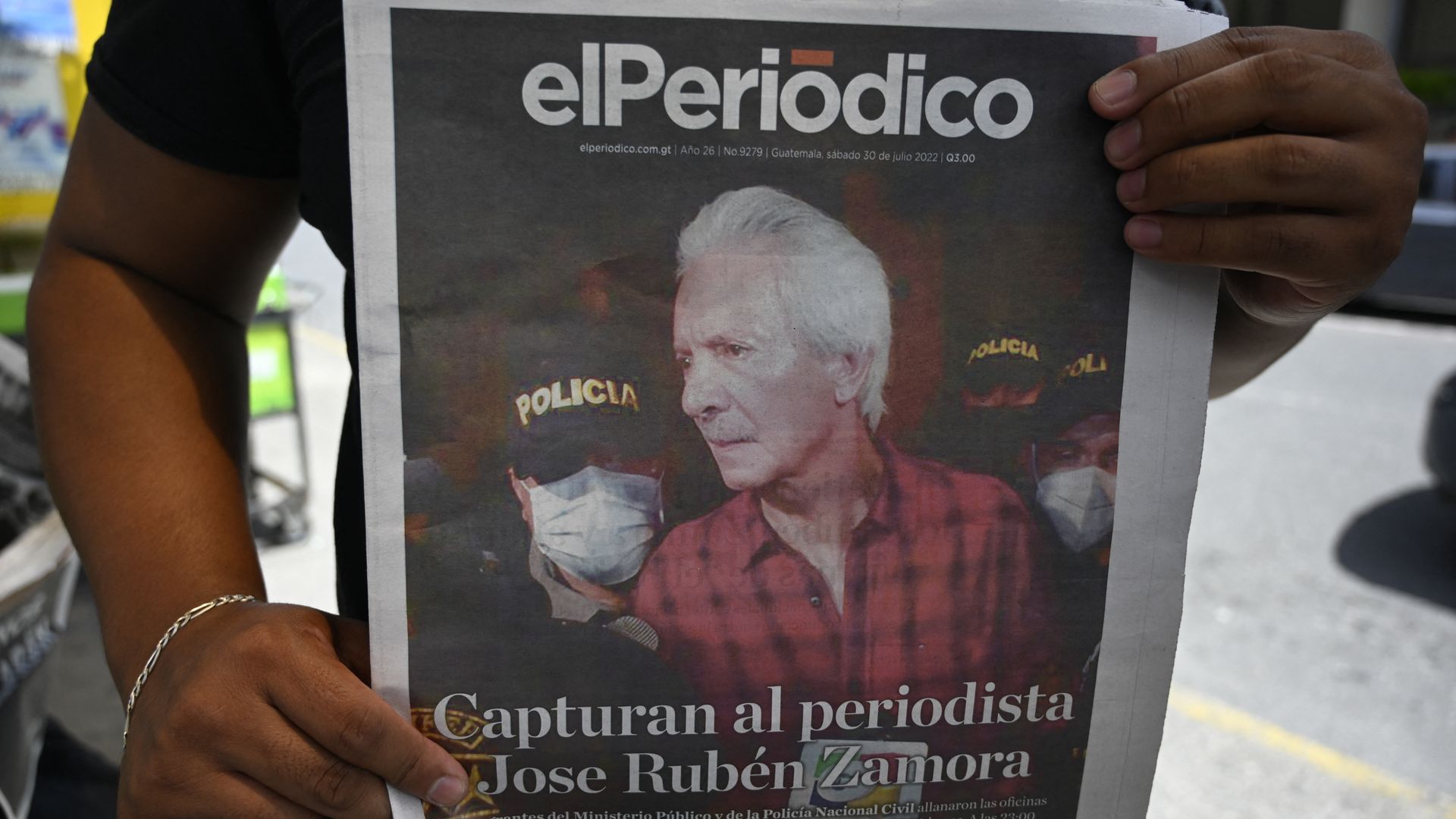
Guatemalan police have arrested Jose Rubén Zamora, an outspoken government critic and president of the elPeriódico newspaper, prompting an international outcry from free press groups.
Why it matters: His son, Jose Carlos Zamora, a longtime Spanish media executive in the U.S., told Axios the arrest is "definitely censorship."
Data: S&P Global Market Intelligence; Chart: Axios Visuals
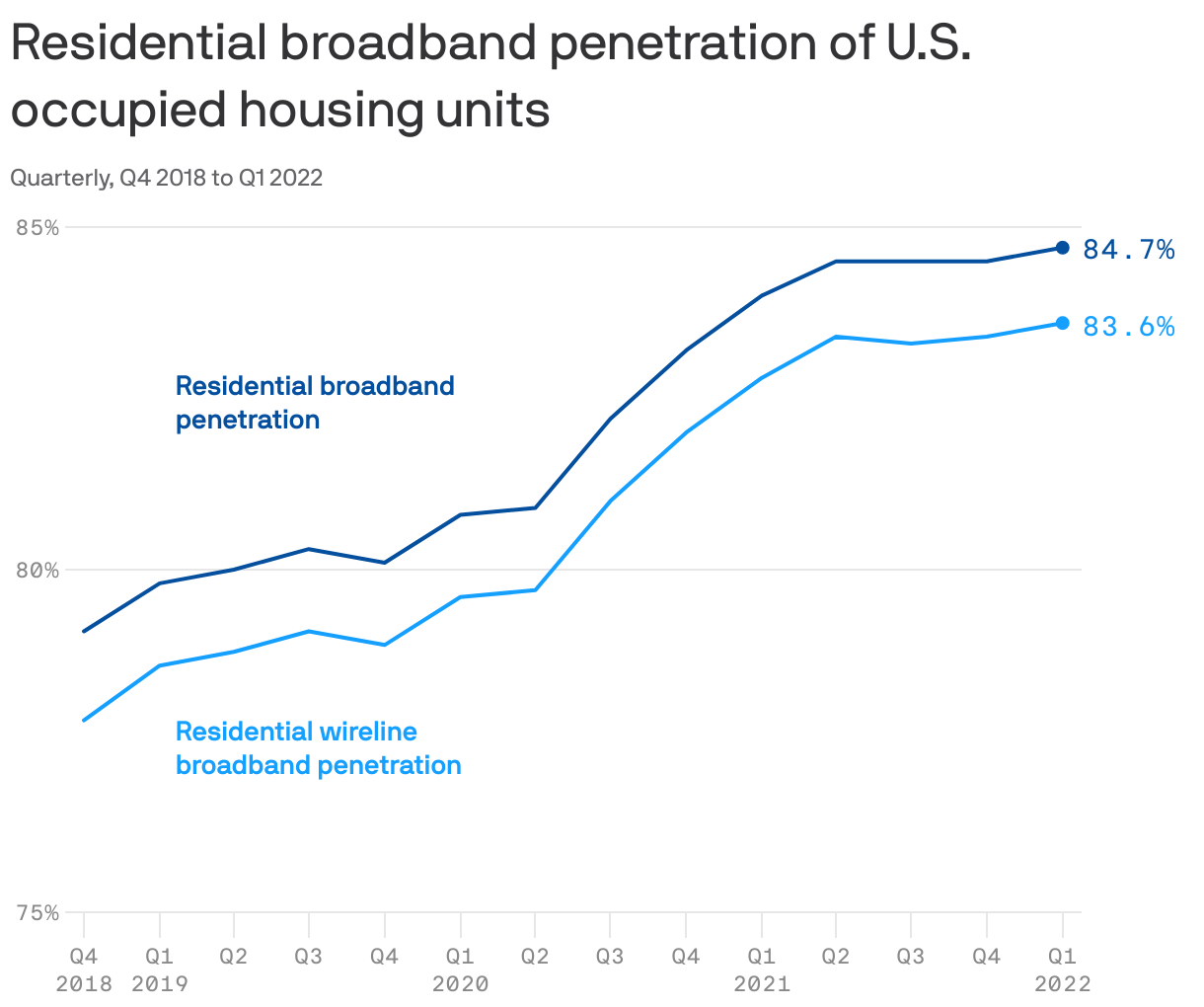
Cable companies are being downgraded by Wall Street analysts in response to weak broadband growth coming out of the pandemic.
Why it matters: Cable companies have managed to stay afloat amid the cord-cutting crisis thanks to their booming broadband businesses. But some analysts see that safety net beginning to fade.
Advertisers and digital publishers are nowhere near an agreement on how to replace third-party tracking cookies, and instead have clung to various ad hoc solutions that don't all work well together and lack sufficient oversight.
Why it matters: The push to be more privacy-centric has muddled an already messy digital ad ecosystem, and many of the changes being introduced could easily be upended by future legislation.
It's the summer of sharing, as people seeking a taste of the luxe lifestyle book everything from boats to swimming pools on flourishing, Airbnb-style rental marketplaces.
Why it matters: People can increasingly rent the lifestyle they desire for a fraction of the cost of ownership. That's created a cottage industry for entrepreneurs to manage their own mini-fleets of rental cars, boats or homes for listing.