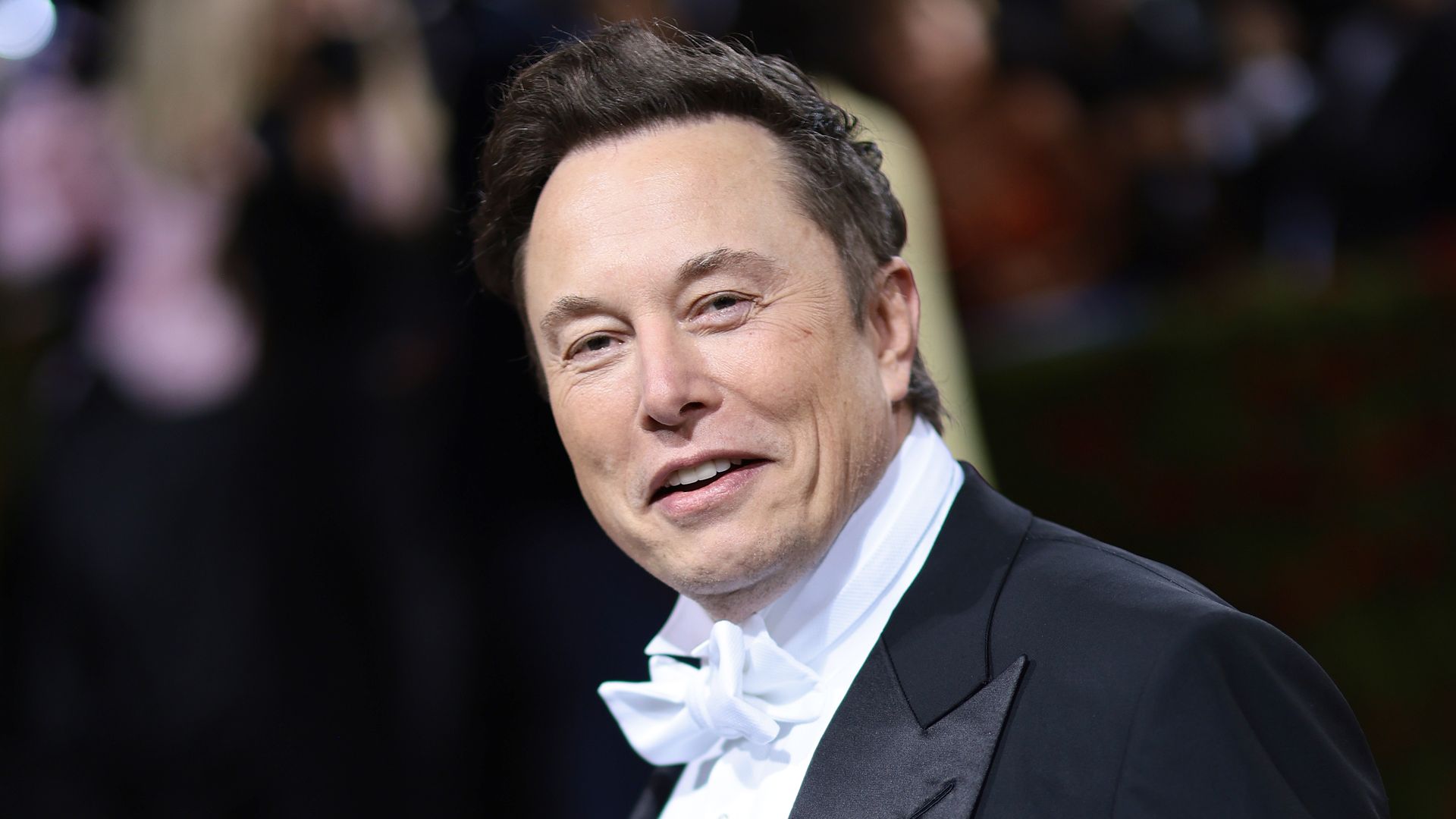
Elon Musk's decision to try to terminate his deal to buy Twitter has set up a massive court fight in Delaware, and has significantly reduced the range of possible outcomes.
Why it matters: At stake is the future of one of the most powerful social networks in the world.
Ahead of Amazon Prime Day this year, I recently visited an Amazon fulfillment center in Carteret, New Jersey, which handles 3.5 million packages a week.
My main takeaway: The ease with which we buy our things online masks the labor and logistics required to fulfill those orders.
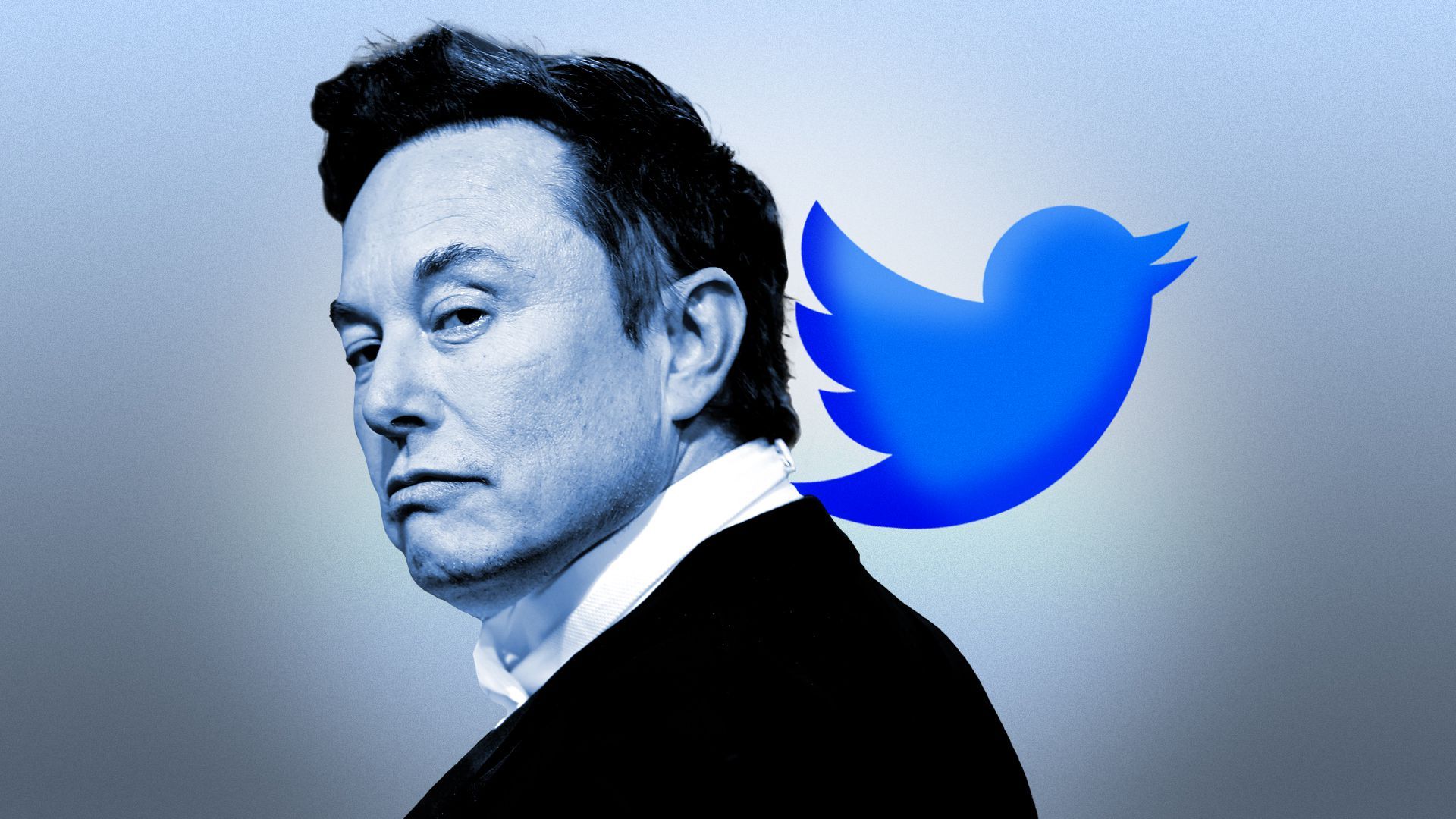
Elon Musk will try to bail on his $44 billion agreement to buy Twitter, claiming that the social media company hasn't met its contractual obligations, according to a statement filed with the U.S. Securities & Exchange Commission.
Why it matters: This could set up a massive legal fight between Musk and Twitter, with a Delaware court as the deal's ultimate arbiter.
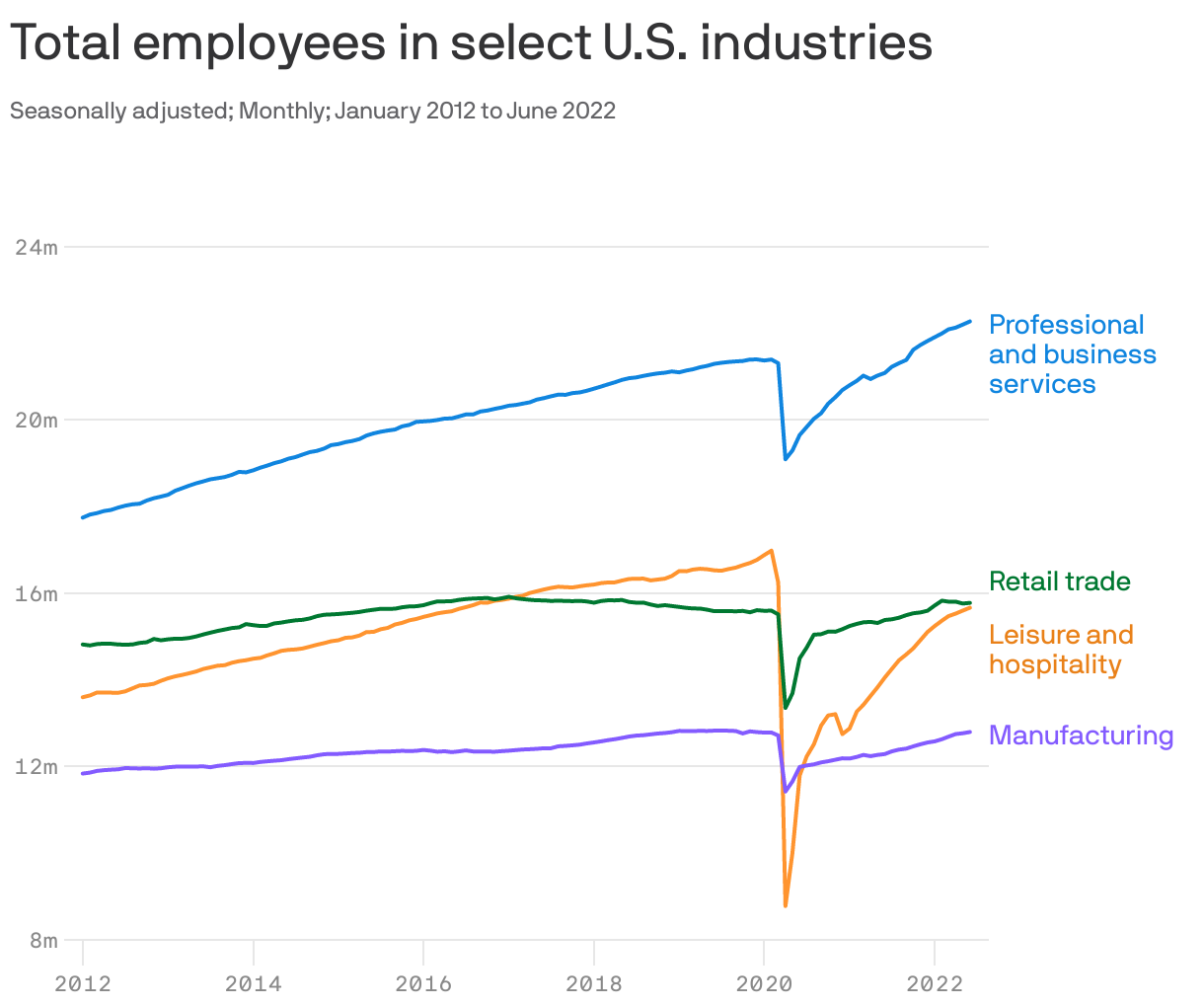
Data: Bureau of Labor Statistics; Chart: Baidi Wang/Axios
In industries like professional and business services, manufacturing and leisure and hospitality, it still looks like boom times if the job market is any indication.
Driving the news: The job market shrugged off talk of a recession in June, adding 372,000 jobs, about 100,000 more than economists had expected. The unemployment rate remained at 3.6% for the fourth straight month, near a 50-year low.
Pet food is looking pretty tasty to human food companies.
Why it matters: Facing pressure to diversify their businesses as consumers gravitate toward products viewed as healthier, packaged food companies are eager to find new markets.
Tether, the world's biggest stablecoin issuer, liquidated a $900 million loan made to troubled crypto lender Celsius, a Tether spokesperson confirms for Axios.
Why it matters: This crypto market downward spiral has been marked by a buildup of debt that big-time players couldn't pay at exactly the wrong time — to what degree these firms were connected with each other is being revealed in drips and drabs as some file for bankruptcy proceedings and others, sue.
Aave, the #2 protocol in decentralized finance (DeFi), has set its sites on blowing up the spot of MakerDAO, the #1.
Why it matters: Crypto has been a speculator's game, but if it can make it easier for real world enterprises to get off the ground, that starts to look like tangible wealth creation.
Over the last few months, the great debate has been over whether 2021's hyper-growth will end with a soft landing — a gradual slowdown — or a hard landing that becomes a nasty recession.
Despite what many people thought at the onset of the pandemic, the "ancient greeting" of handshakes was always going to come back. And it has.
Driving the news:Business travel has rebounded, so have in-person conferences. And corporate retreats have become more popular amid the rise of virtual teams.
The U.S. economy added 372,000 jobs last month, while the unemployment rate held at 3.6%, close to the lowest level in a half-century, the government said on Friday.
Why it matters: Jobs growth remains healthy, even as the Federal Reserve tries to slam the brakes on the economy to contain decades-high inflation.
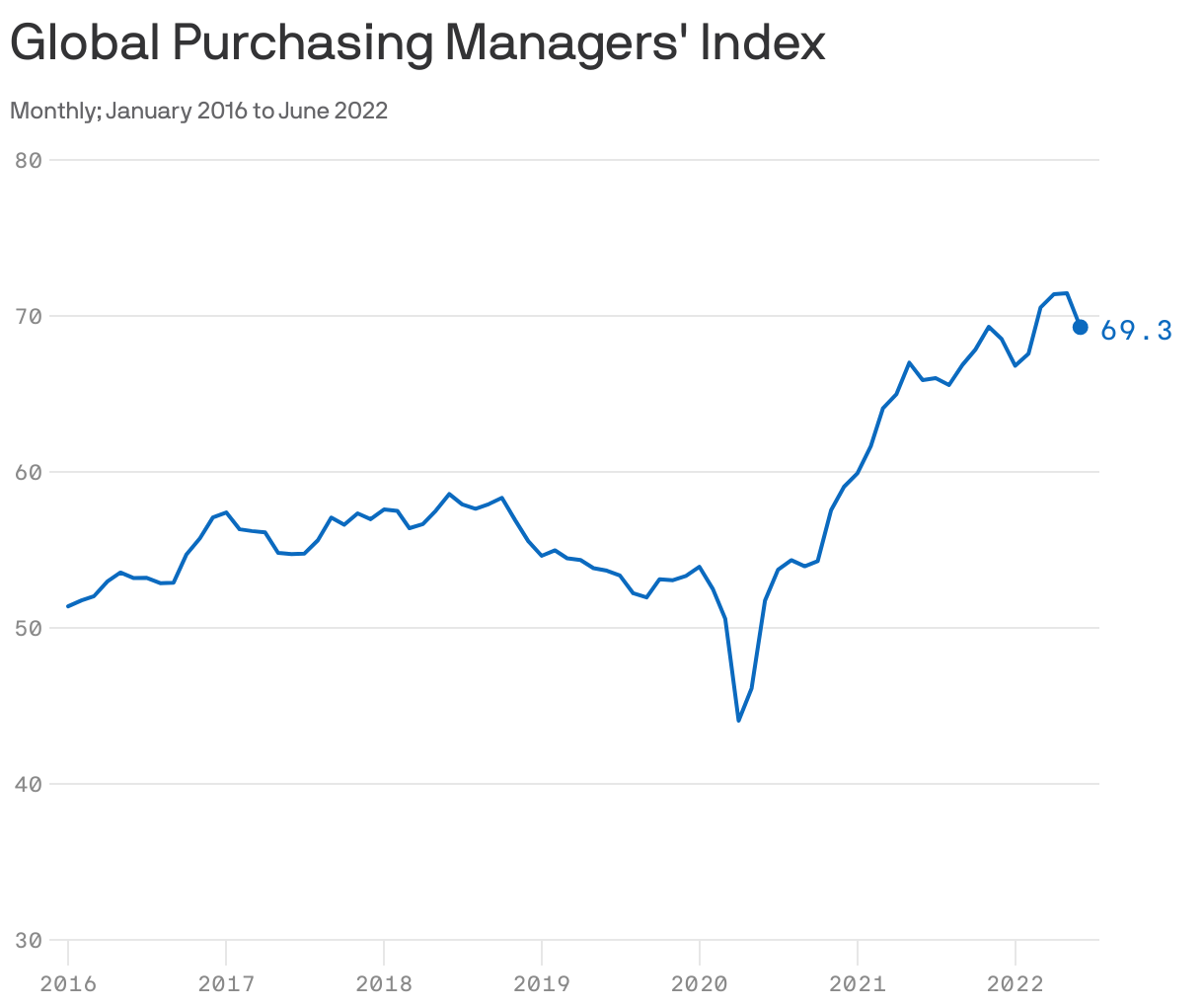
The latest sign that the wild ride of soaring demand and prices we've seen over the past year might be slowing: A global index that tracks costs among companies across both the manufacturing and services sectors fell to a four-month low in June.
The big picture: The pullback is due to a mix of easing supply chain woes, less inventory buildup by producers, and a "gloomier economic outlook," writes Chris Williamson, chief business economist at S&P Global Market Intelligence, which compiled the index from surveys of companies in 45 countries.
One signalthat America's demand for goods is cooling: The cost of shipping is receding quickly.
What's happening: The spot price to ship in a key corridor, from China and east Asia to the U.S. west coast, will now run you $7,600 per 40-foot container — down a whopping 62% from the brief high above $20,000 last September, according to Freightos, a booking and payments platform for international freight.
The second quarter is behind us, but no one knows how fast the economy grew during those months — or even whether it grew.
Why it matters: The economics and statistics professions are still a very long way from the dream of being able to access a rich stream of real-time data to get a handle on what's happening, broadly, in the economy as a whole.
The known total of Elon Musk's kids rose to nine when Insider reported he had twins in November with Shivon Zilis, a director at Neuralink, the brain-interface company where Musk is a founder and co-CEO.
Driving the news: Neither has spoken publicly about the twins. Insider obtained Austin court documents approving a name change for the babies.


/2022/07/08/1657312305451.gif?w=3840)






/2022/07/08/1657294163000.gif?w=3840)