The maker of Oreos and Sour Patch Kids, Mondelēz International, announced Thursday that customers should expect prices to rise for their products beginning in the new year, NPR reports.
Driving the news: The company, which produces over 150 brands, expects prices to rise 6% to 7%; it's the latest example of global supply chain issues that make products more expensive.
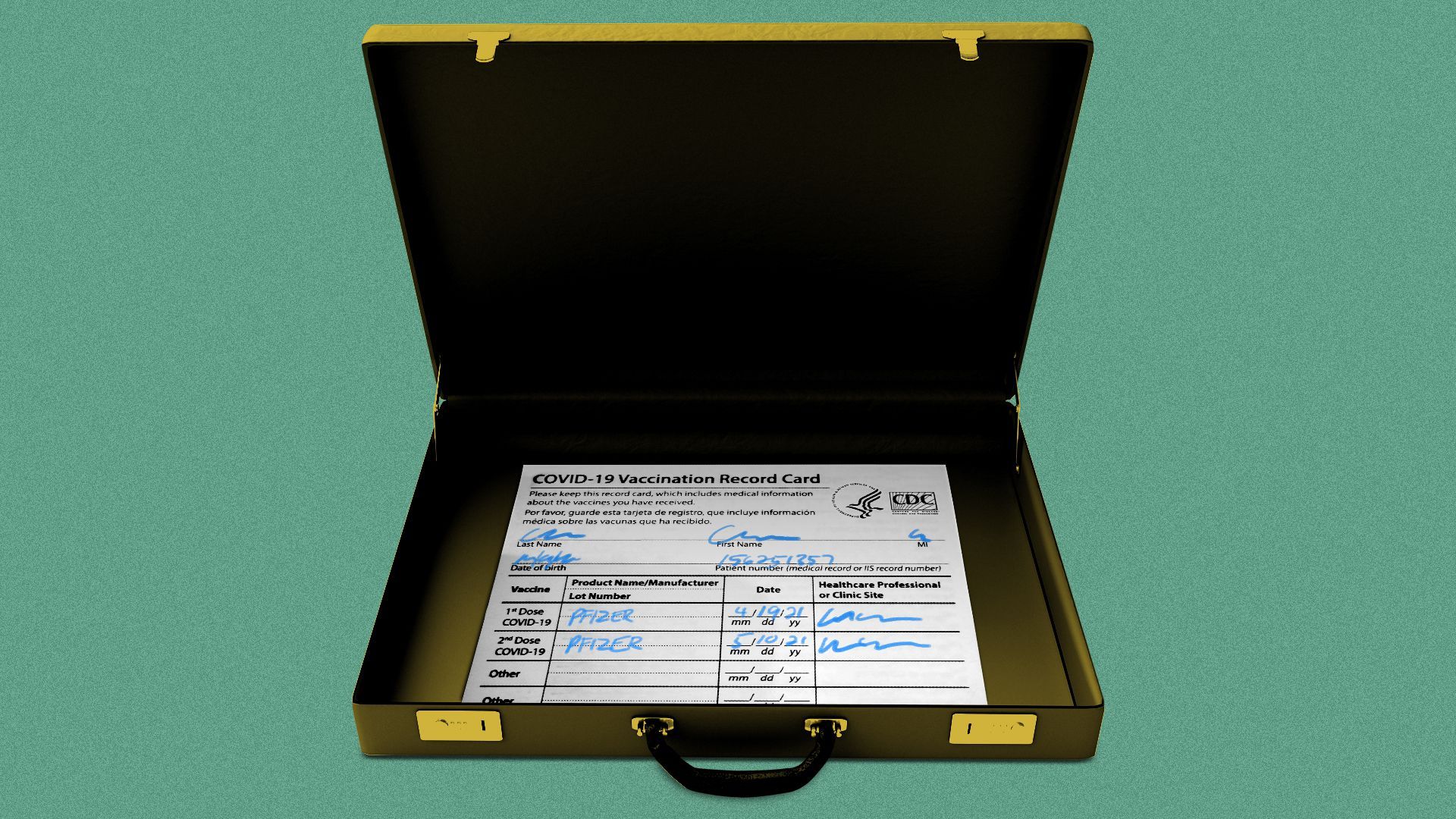
The White House on Thursday unveiled rules requiring people working for private companies with at least 100 employees to be either fully vaccinated or tested weekly for COVID-19.
Why it matters: This should significantly increase the number of vaccinated American adults, thus reducing death and virus transmission. It also could create a relatively small group of workers who are voluntarily unemployed.
Jeff Bezos' Blue Origin has lost its lawsuit against NASA over the space agency's decision to not award the private space company a contract to build a lander to bring astronauts back to the Moon's surface.
Why it matters: The ruling deals a blow to Blue Origin's attempt to get back in the running to build a lander for NASA after the agency selected SpaceX as the sole winner of a $2.9 billion contract.
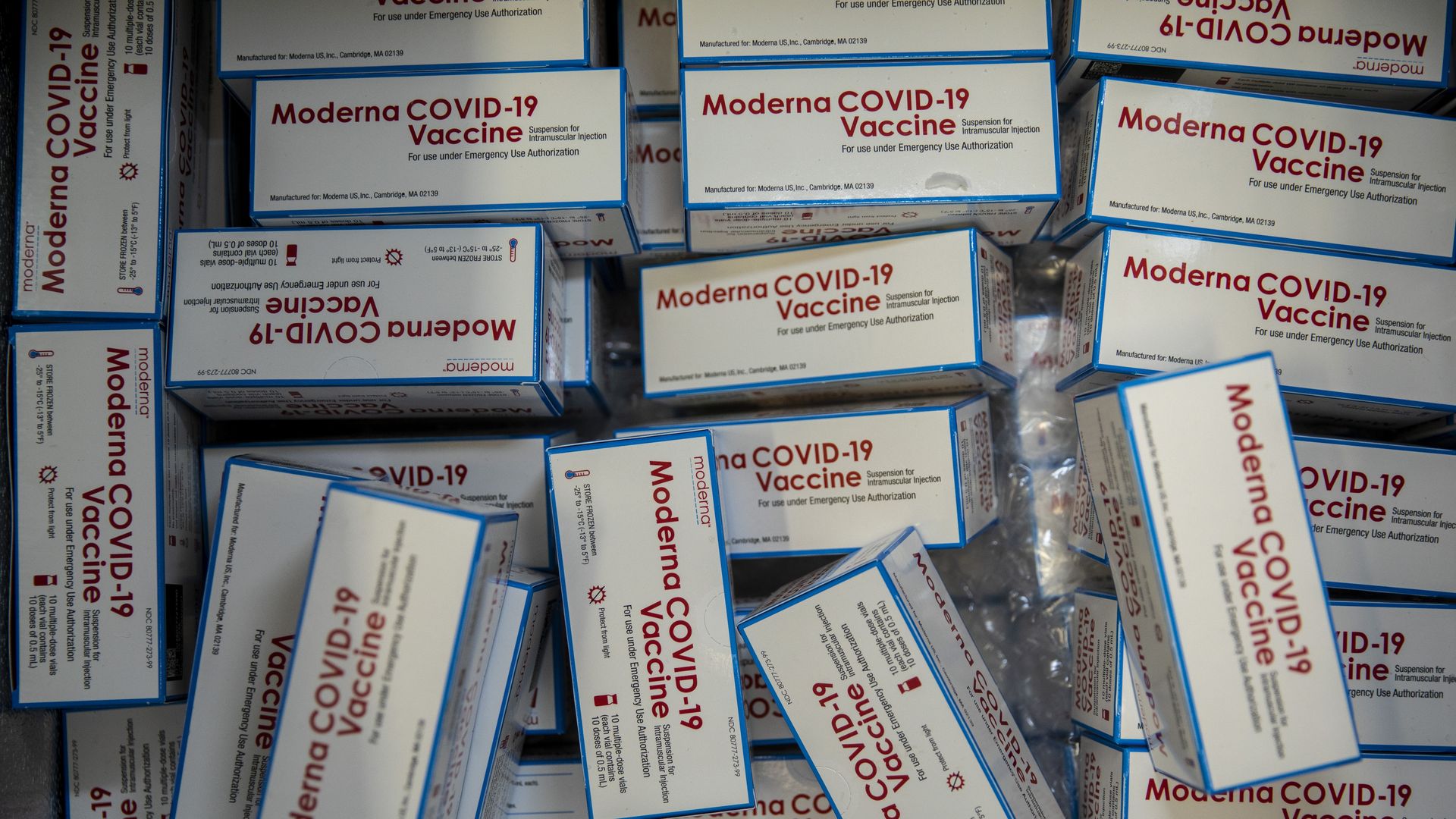
Moderna lowered the expected number of its COVID-19 vaccine doses that will be delivered this year, from a previous high of 1 billion doses down to 800 million.
Driving the news: Exporting vaccines outside of the U.S. to more countries took longer than expected, and is the primary reason behind the reduced shipments, CEO Stéphane Bancel said on an earnings call Thursday.
Fox plans to double down on its investments in blockchain technology by introducing more NFTs (non-fungible tokens) and digital collectibles for its shows and franchises in the coming months, a top executive tells Axios.
Why it matters: Fox Entertainment was the first major TV studio to debut its own blockchain division in May. At the time, the company said it would put at least $100 million behind the effort to build what it hopes will become a major part of its top line revenue growth in the years ahead.
It's Ape Fest this week in New York, which is about as edifying as you'd expect.
Catch up quick: Bored apes (2021) are the buzziest current exemplar of community-based NFTs, which have replaced art-object NFTs as the hot part of the crypto market for people looking to get rich quick. They're the latest in a line of such projects that dates back to CryptoPunks and Crypto Kitties, both of which launched in 2017.
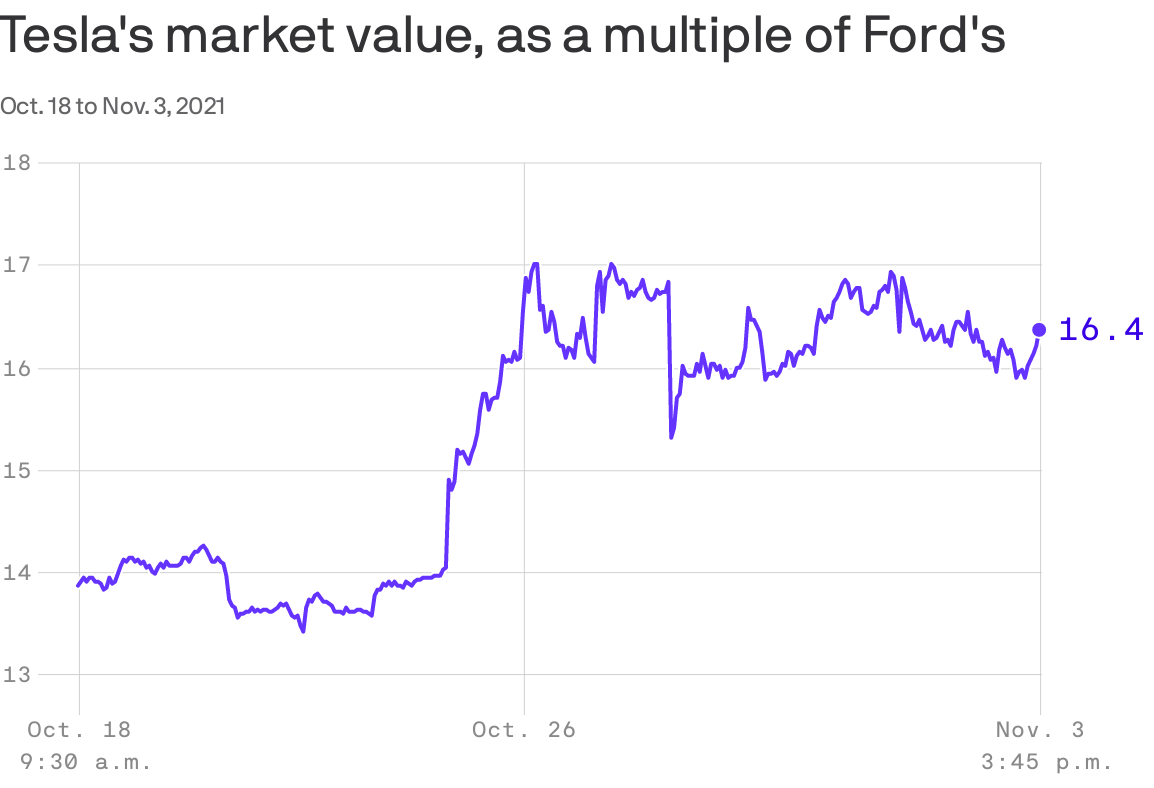
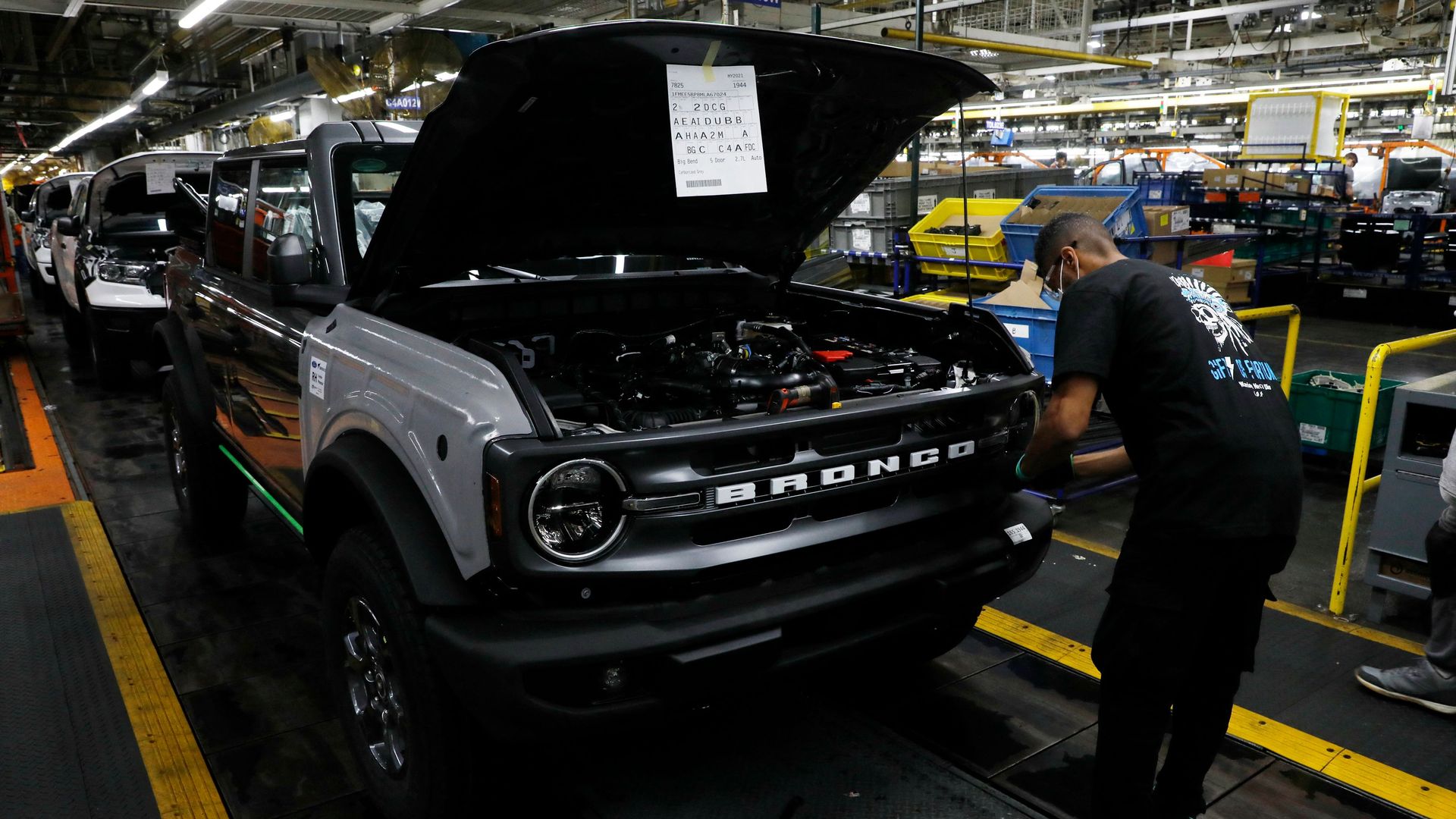
Ford is arguably the most exciting electric-vehicle manufacturer in the U.S. at the moment. Even so, its market value is just 6% of Tesla's.
Why it matters: Ford's valuation is barely a rounding error compared to that of Tesla — indeed, Tesla's valuation rose by more than two Fords in a single day last month.
The United Nation's Food and Agriculture Organization (FAO) said Thursday that world food prices reached their highest level since July 2011 in October, rising for a third month in a row.
Why it matters: Costlier food contributes to political discontent around the world, especially in countries where large portions of the population live close to the edge of hunger, writes Axios' Bryan Walsh.
The democratization of IPOs is accelerating, at a time when IPO performance is sagging.
Driving the news: Robinhood Wednesday launched a directed share program via its "IPO Access" platform, which means that participating companies can set aside IPO shares at the IPO price for select groups of people (employees, customers, etc.).
Novartis agreed to sell its nearly one-third stake in fellow Swiss drugmaker Roche back to the company for around $20.7 billion.
Why it matters: This is the final chapter of a story that began in 2001, when Novartis launched an unsuccessful effort to buy its crosstown rival. It will help Novartis further streamline its business — selling generics unit Sandoz could be next — while Roche gets to rid itself of a competitor having veto rights.
This will not be a historic year for making progress on addressing climate change — it can't be, with the Chinese premier Xi Jinping refusing to make new pledges and not even showing up at the COP26 summit in Glasgow. But that doesn't mean the summit was a wash.
Why it matters: Substantial progress has already been made at this year's summit; it's worth taking a minute to celebrate three of the most important wins for the planet.
“Transitory” officially reached buzzword status midyear — when it exited the realm of financial wonks and seeped into the outside world where everyday people were talking about inflation.
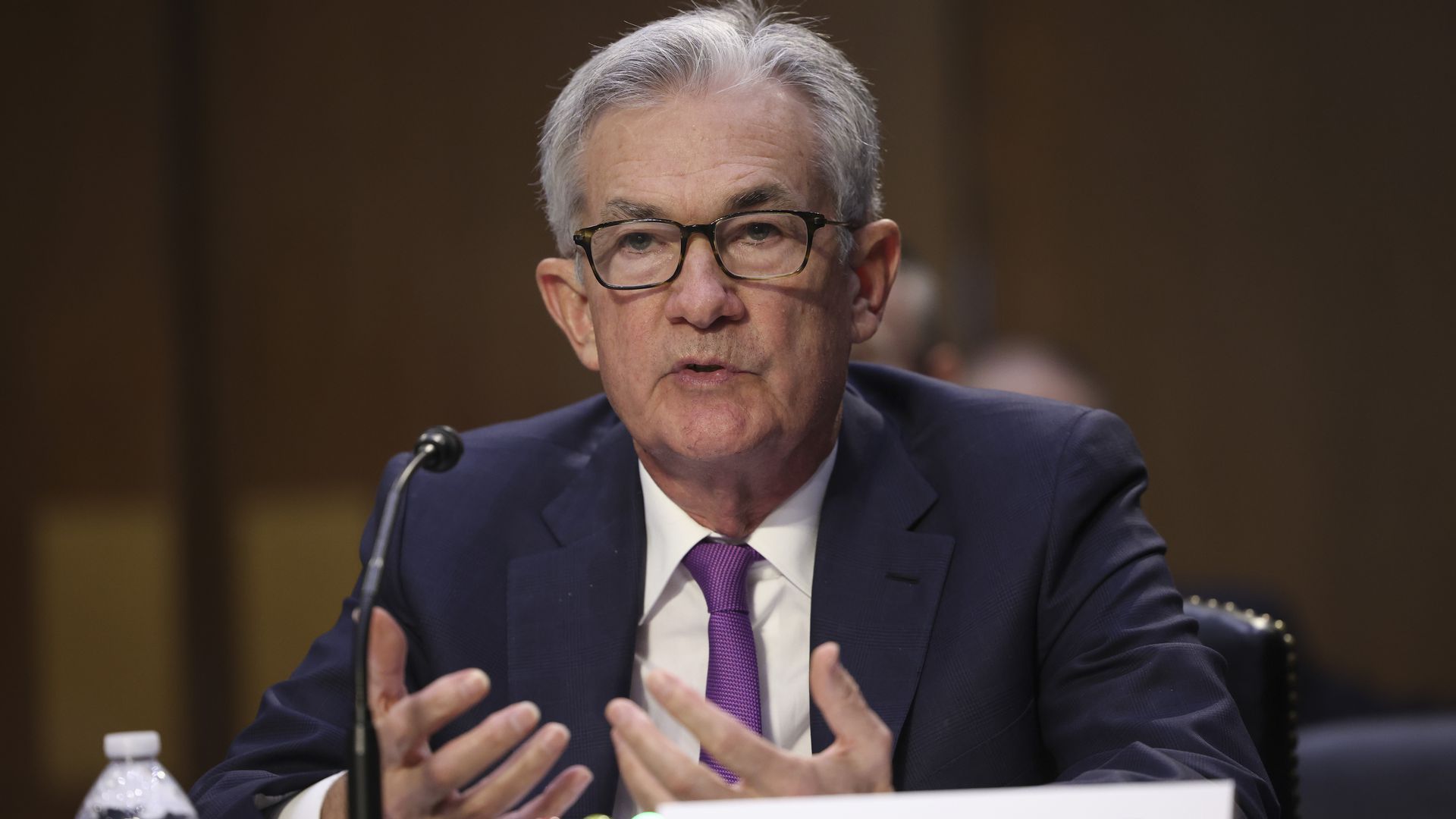
The latest: Even so, no one knew exactly what it meant in the context of inflation — because the Federal Reserve has never really defined it. On Wednesday, though, Fed chair Jerome Powell went further than he has before in explaining how he interprets the term.
The Delta variant’s impact on the economy is receding into the past — business activity surged in October, per a closely watched index.
Driving the news: The ISM Services PMI, an index that measures all nonmanufacturing activity, jumped by a record 4.8 points to a reading of 66.7 (also an all-time record high).
Mandatory vaccine deadlines have now come and gone for millions of workers — and most of them have either bit the bullet or taken advantage of wiggle room offered by their employers.
Why it matters: These mandates have become one of the most polarizing policies in America, but predictions that they'd drive workers away in droves, voluntarily or not, simply aren't coming to fruition.
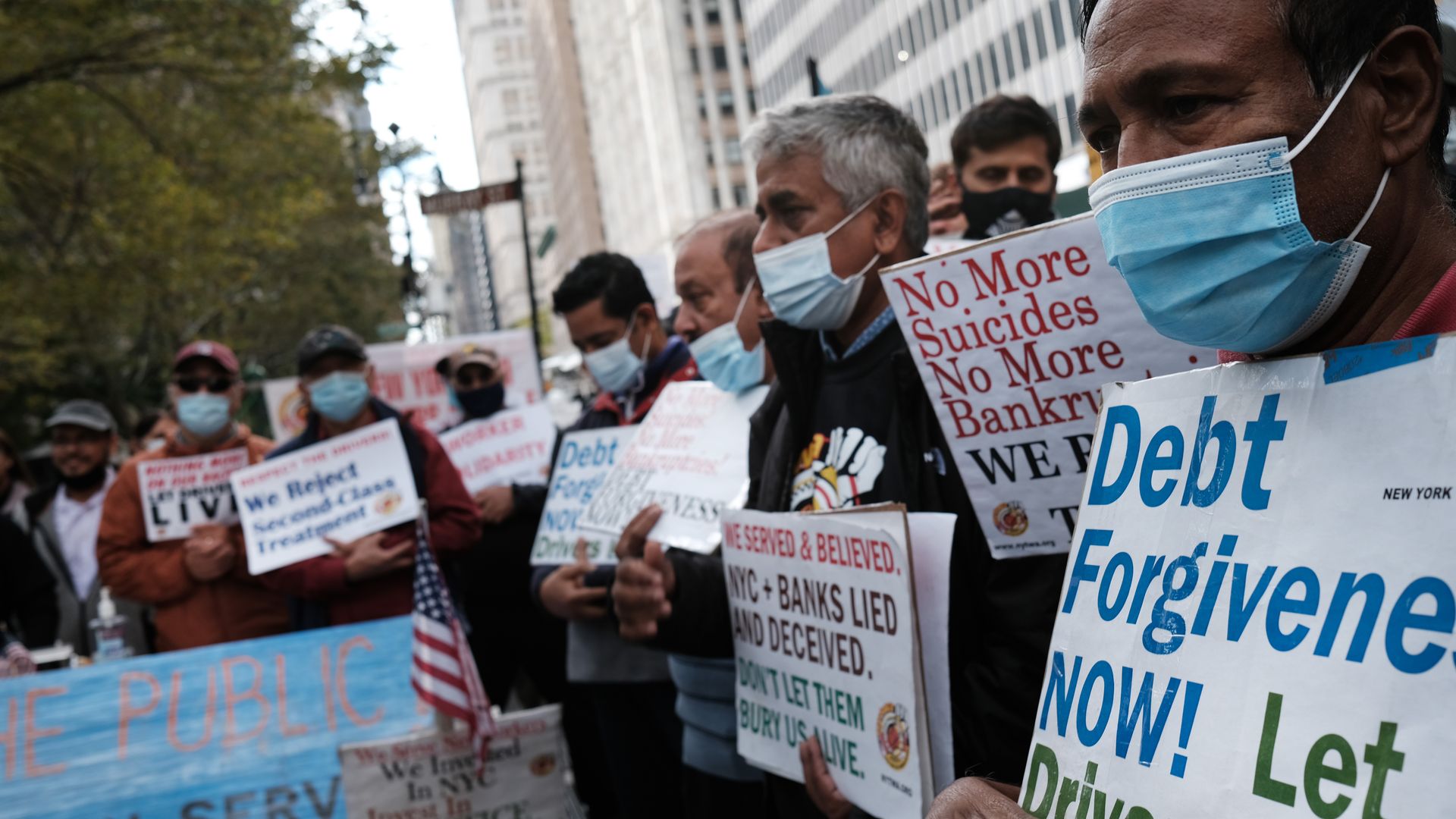
Why it matters: New York officials reached the agreement after a two-week hunger strike by members of the city's largest taxi drivers union, who called on the city to expand a debt relief program for drivers.