Twitter on Monday said it agreed to pay $809.5 million to settle a class-action lawsuit that alleged the tech giant misled investors about user metrics.
Why it matters: Tech companies have long faced criticism for the accuracy of the metrics they report publicly. Facebook has faced similar lawsuits.
When Meagan Loyst joined VC firm Lerer Hippeau, less than two years out of Boston College, she was still living with her parents. She had virtually no online brand presence, and the pandemic made it impossible to build a professional network via in-person meetings.
Why it matters: Loyst wasn't alone. Venture firms have accelerated hiring in line with record deal activity, often seeking younger investors who can spot trends that fly below the radar (or intrinsic understanding) of older partners.
Thomas H. Lee Partners agreed to buy the semiconductor manufacturing automation business of Brooks Automation (Nasdaq: BRKS) for $3 billion.
Why it matters: This is a structural shift for Chelmsford, Mass.-based Brooks, which previously said it would split its chip manufacturing unit from its life sciences unit, with each to operate as independent public companies.
Large real estate companies are putting $140 million into a climate tech fund that aims to help decarbonize the sector, according to an announcement Monday morning from the venture firm Fifth Wall.
Why it matters: The funding round, which includes some of the largest players in the industry, signals growing momentum toward backing new technologies needed to slash carbon emissions to net-zero by midcentury and achieve negative emissions thereafter.
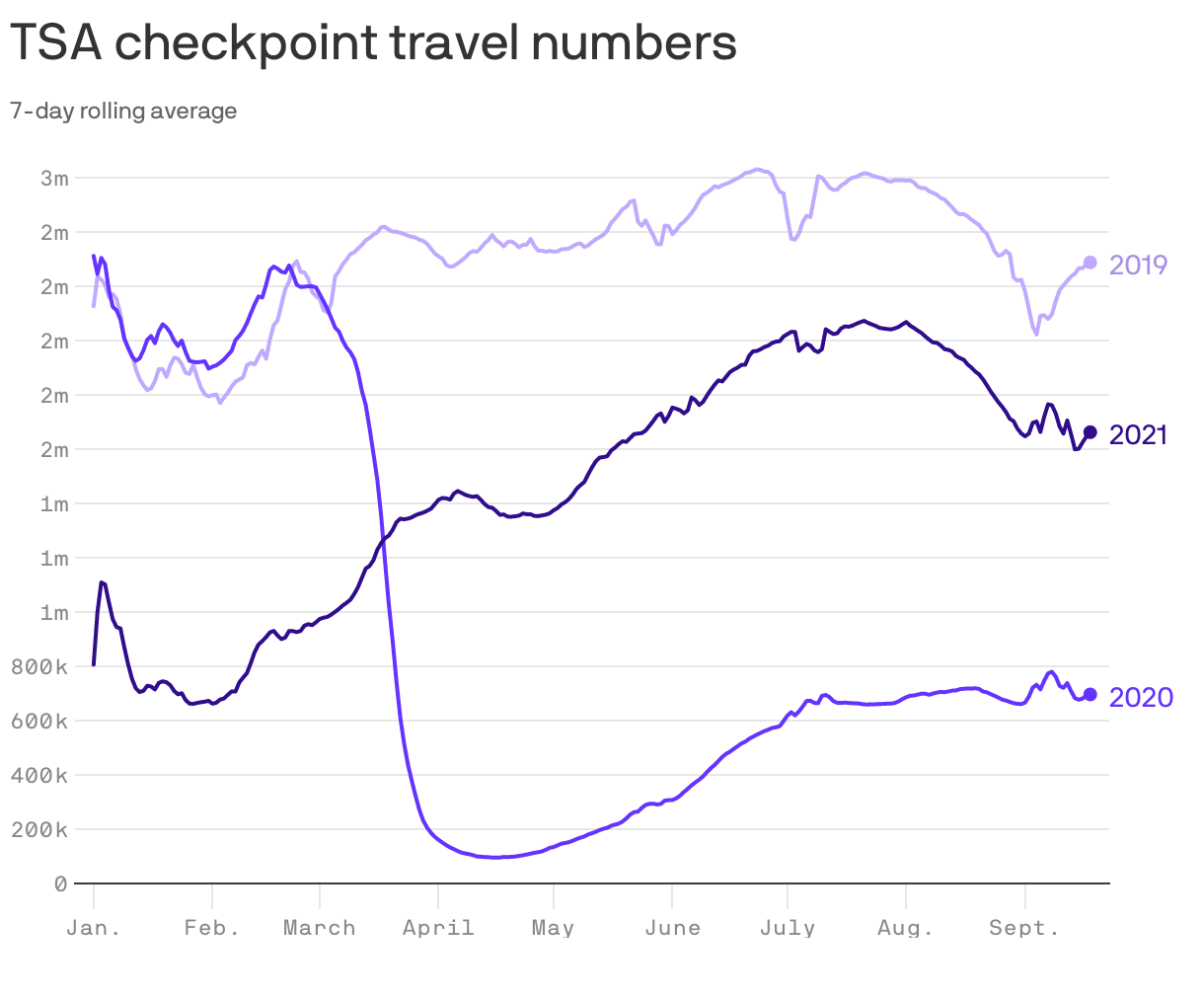
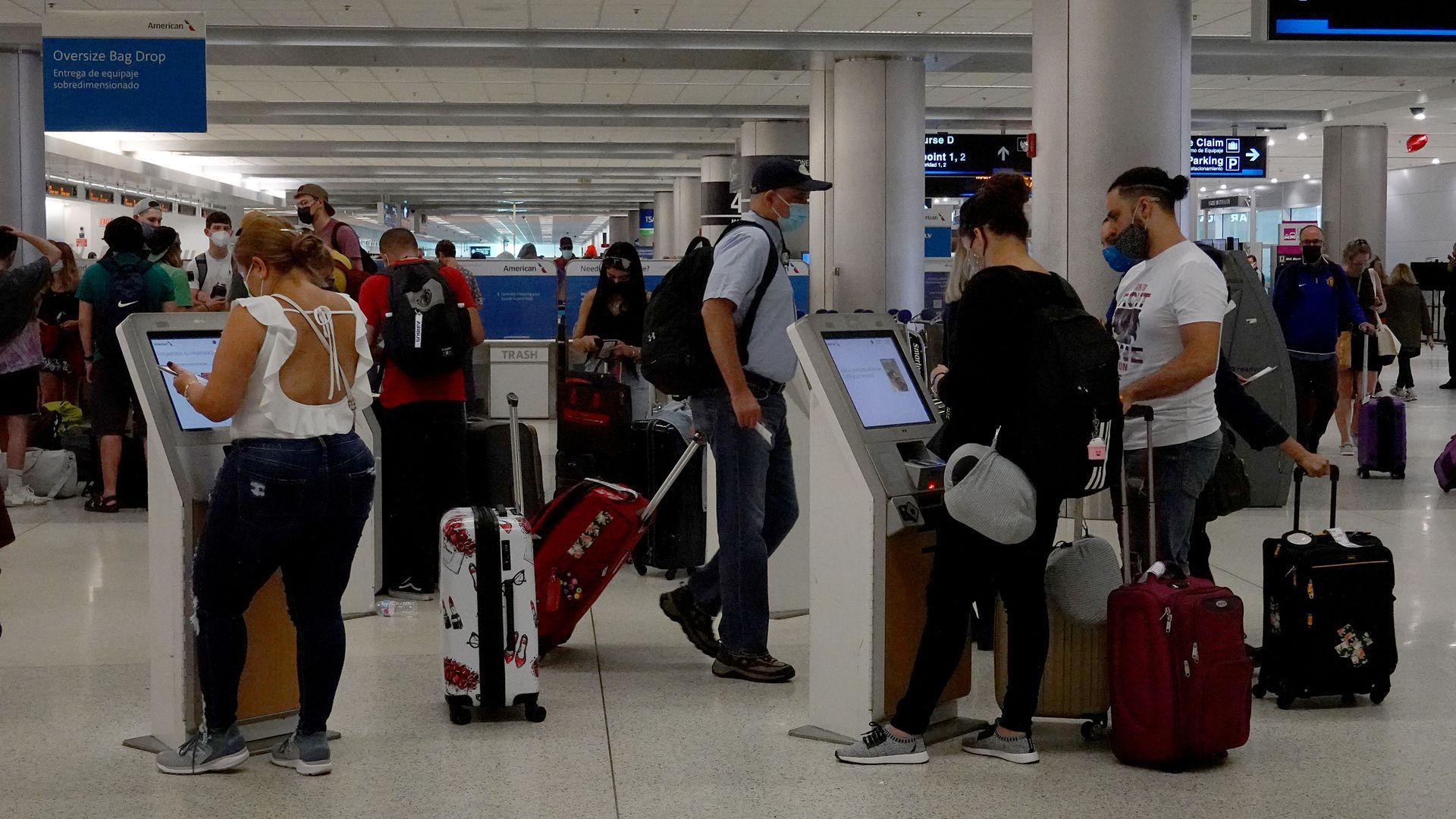
Continued worries about the Delta variant are derailing fall travel plans.
Driving the news: Thanksgiving domestic flight bookings in August were 18% lower this year compared with 2019, according to a new Adobe Digital Economy Index report out Monday morning.
This week will showcase how more big companies are taking steps to cut emissions — and why corporate pledges only go so far.
The big picture: It's Climate Week. That's the annual New York City event that brings together businesses, governments and activists for speeches, symposiums and pledges. The event typically serves as a venue for corporations to announce their latest efforts, and that's already starting.
Two years of COVID shutdowns brought Music City to its knees and pushed venues, performers, and executives to the brink.
The latest: Americana Fest, which begins Wednesday and spans 30 venues across the city, will be the largest music event in Nashville since the pandemic hit.
Why it matters: The region’s largest festivals, CMA Fest and Bonnaroo, were both canceled the last two years. Now, the Americana Fest represents a glimmer of hope for Nashville’s booking agencies, touring companies, and musicians.
Wall Street has long had a reputation for being a boys club with a diversity problem. But recently, the biggest banks have done something surprising: elevated women and minority-owned banks as partners in deals.
Why it matters: Firms owned by underrepresented groups are getting a real shot at demonstrating what they bring to the table when it comes to raising capital for blue-chip American companies.
The newly formed Coalition for Urban Innovation consists of 14 companies and nonprofits "dedicated to advancing federal policies that make our cities more sustainable and equitable through technology and innovation."
Why it matters: With the infrastructure bill still a congressional work-in-progress, the group aims to tilt money and policy toward smart infrastructure, energy efficiency, clean energy, reducing the carbon footprint of buildings and the like.
Airbnb CEO Brian Chesky will argue this week that the world is undergoing a "travel revolution," in which some parts of the industry stay shrunk but the sector ultimately comes back "bigger than ever."
Why it matters: Chesky, who faced the abyss when the world shut down last year, foresees a significant shift in how people move around, with more intentional gatherings of family, friends and colleagues — even if routine business travel is never what it once was.
Planes used to be the only aircraft crisscrossing the sky. Now there are drones, more frequent rocket ships and — soon — flying taxis, elbowing their way into the National Airspace System.
Why it matters: Managing the congestion up above is becoming an urgent mission for America's traffic cops in the sky. While the Federal Aviation Administration has a stellar safety record when it comes to commercial aviation, its challenge is infinitely more complex today.
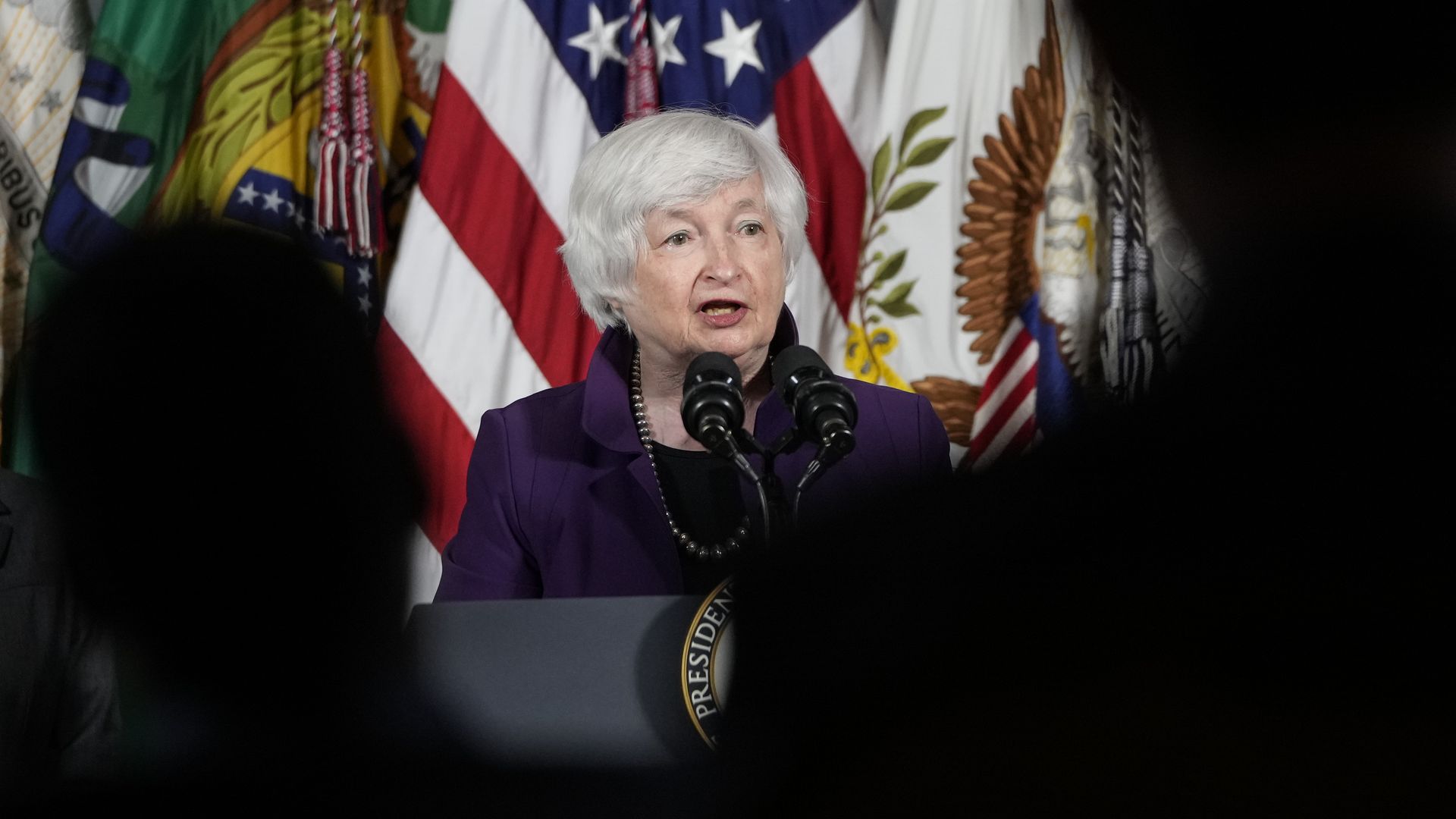
Treasury Secretary Janet Yellen warned in a Wall Street Journal op-ed on Sunday that the U.S. could face a fresh financial crisis if Congress failed to raise or suspend the country's debt ceiling.
Why it matters: The U.S. has never defaulted on its debt, but some Republican lawmakers have threatened to vote against raising the debt ceiling, arguing that it would only promote more government spending.
















/2021/09/17/1631904254404.gif?w=3840)