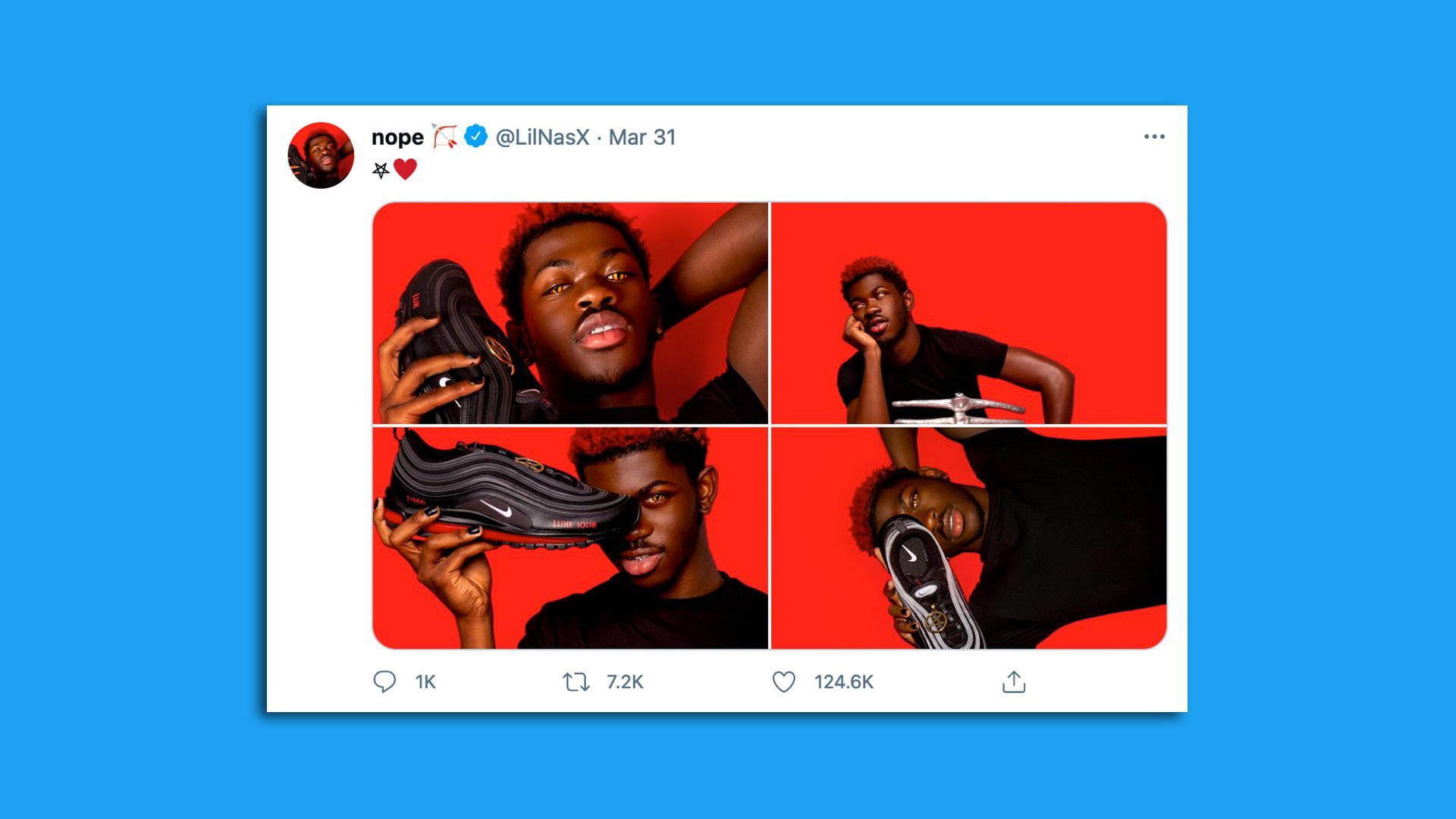
A federal judge has blocked the sale of the satanic-themed Nikes from stunt company MSCHF and rapper Lil Nas X that caught the attention of celebrities and politicians.
Catch up quick: Nike quickly distanced itself from the product — which supposedly contains a drop of human blood — and sued MSCHF over the "unauthorized" shoe.
Carmakers saw gangbuster sales in March, boosted by consumers' $1,400 stimulus checks, but analysts warned of volatility ahead as production troubles mount.
Why it matters: Car prices are rising because of inventory shortages, and as the spring selling season begins and consumer sentiment improves, it could be harder for shoppers to find the vehicle they want at an affordable price.
Driving the news: Automakers reported strong demand in March, and forecasters say they expect overall first-quarter sales to rise about 8 percent over a pandemic-wracked early 2020, Automotive News reported.
Toyota, Honda, Kia and Hyundai were among those reporting strong sales in March.
"The first quarter ended strong, setting the market up for an incredible spring from a demand perspective," said Jonathan Smoke, chief economist at Cox Automotive.
Stimulus payments, tax refunds, vaccination progress and warmer weather are all helping to boost consumer sentiment, he said.
"All those things are coming together right now, and the industry would likely be setting all-time sales records if it were not for tight supplies and elevated prices."
What's happening: After two months of factory shutdowns early in the pandemic, the industry is now getting hit with shortages of key components, notably computer chips that power vehicle electronics.
The chip shortage has snowballed into a bigger crisis, with multiple factories temporarily closed, said Jessica Caldwell, Edmunds’ executive director of insights.
"We’re seeing the industry being hit hard on both sides: Retail customers are being offered fewer choices and paying higher prices, while fleet customers are likely seeing their orders delayed."
By the numbers: New vehicle inventory on sale at dealerships is down by 36% in March 2021 compared with a year ago, according to Edmunds.
The average transaction price for new vehicles in March was estimated to be $40,563, versus $38,601 a year ago.
Used vehicles sold for an estimated $22,663, on average, up from $20,273 last year.
Trucks and SUVs have been hit the hardest. Although their high profit margins have been a bright spot for automakers during the pandemic, supplies are running low because of the chip shortage.
Truck inventory was down by 60% in March compared to a year ago, per Edmunds.
The average transaction price for a new full-size pickup is estimated at $54,763 compared to $51,164 a year ago.
The bottom line: It's a basic issue of supply and demand.
UnitedMasters, a music distribution platform that feels a little like Substack for singers, on Thursday raised $50 million from investors including Apple (which almost never invests in startups).
Axios Re:Cap talks with UnitedMasters CEOSteve Stoute, known for producing albums by artists like Nas and Mariah Carey, about his company, the uncertain future of record labels and why it's important for musicians to own their own music.
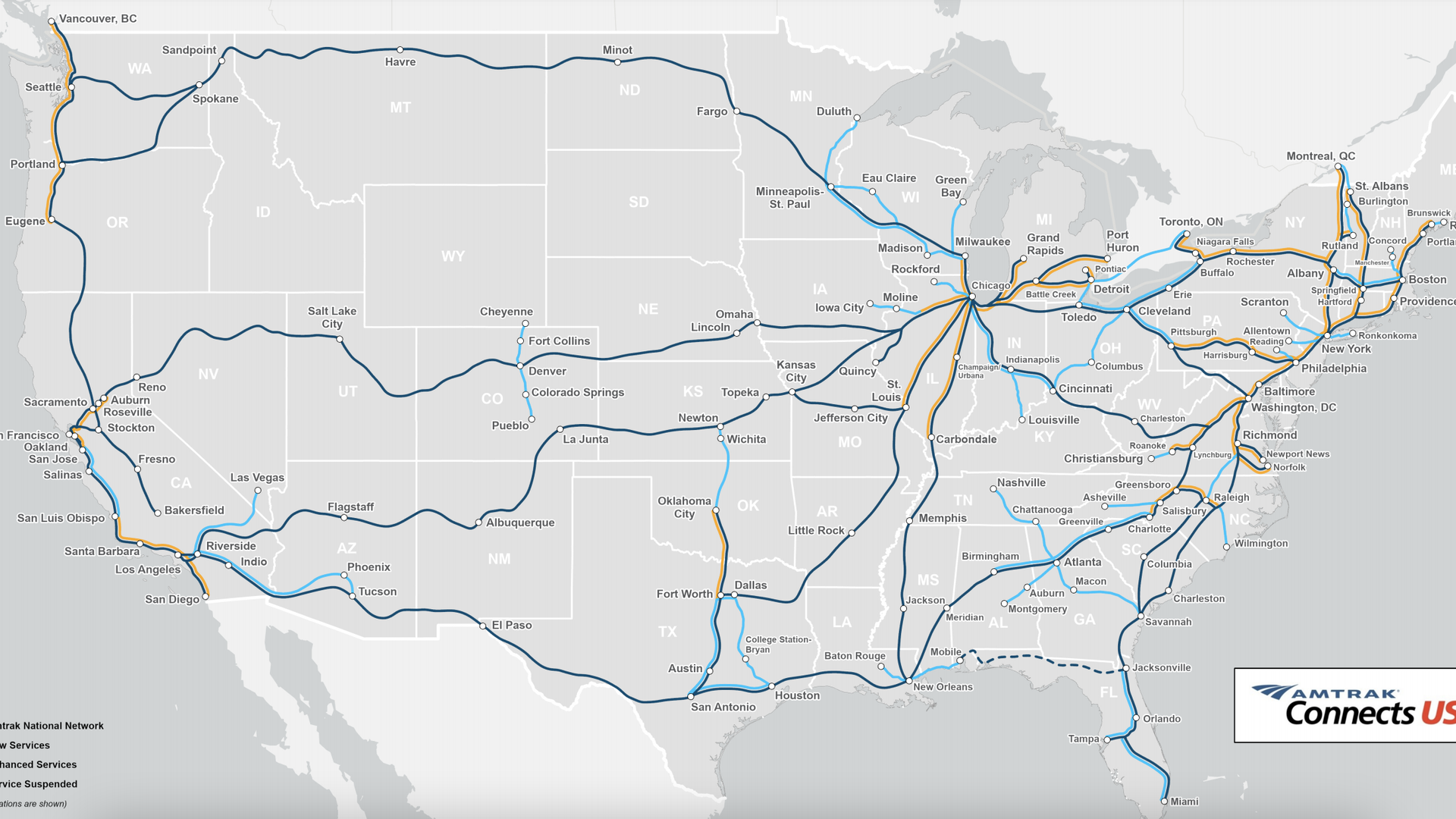
Amtrak released a proposed map Wednesday of an expanded U.S. rail system that could be built with funding from President Biden's infrastructure plan.
Why it matters: The expanded rail system — funded with the $80 billion Biden's infrastructure plan allocates to rail specifically—would "create jobs, improve the quality of life, reduce carbon emissions and generate economic growth,” Amtrak said in a statement.
The bubble didn't burst. That's the main lesson to be drawn from the failures of Greensill and Archegos — headline-grabbing implosions that were certainly bad for Credit Suisse, among others, but that did nothing to slow the broader market's surge to new all-time highs.
The big picture: Speculative financial bubbles tend to be self-fueling. Investors using cheap borrowed money invest in assets that go up in value, generating paper profits that in turn get levered up even further and invested even more aggressively.
Some of the shine might be coming off NFTs. The platforms selling them, however, fresh off of raising hundreds of millions of dollars in new capital, are likely to relish the challenge.
Driving the news: Daily volume has dropped to about $3 million, down from a peak of $19 million. Still, Dapper Labs managed to raise $305 million in its most recent round, at a valuation of $2.6 billion.
Razor maker Harry's announced $155 million in new funding, one year after the FTC blocked its agreement to be bought by Schick parent Edgewell for $1.37 billion in cash and stock.
Driving the news: The new money will be used for acquisitions, particularly smaller CPG brands that could leverage the Harry's distribution and production network, co-CEO Jeff Raider tells Axios.
"Bro" culture, gender bias and micromanagement were top concerns among women in tech who were dissatisfied with their employers, according to a survey from Elpha, the results of which were shared first with Axios.
Why it matters: Hiring bias is only one cause of tech's gender imbalance. Another problem is that women leave the industry because they find the environment works against their success.
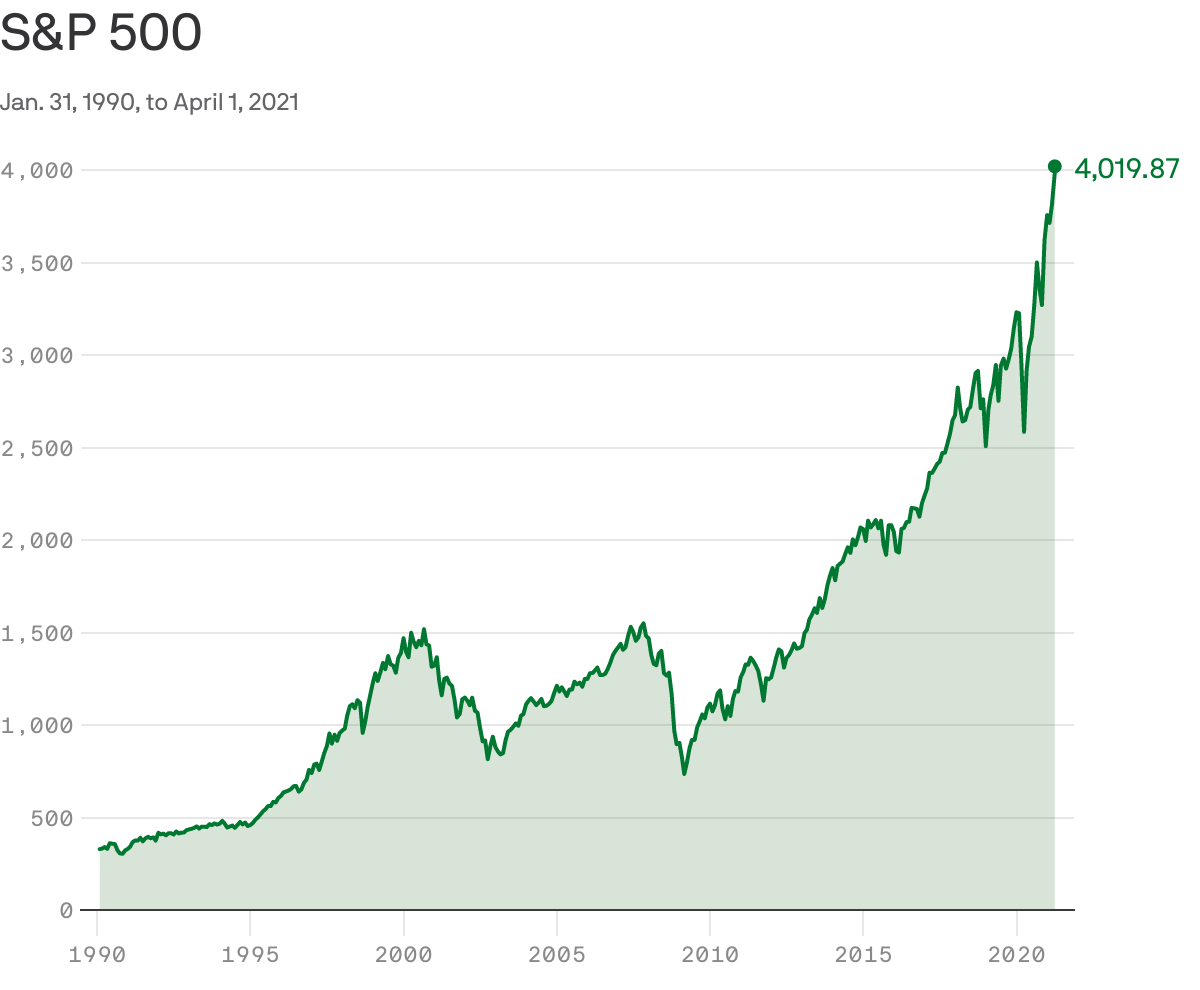
The S&P 500 crossed the 4,000 mark on Thursday,a little over a year after the index hit its pandemic low.
Why it matters: Stocks don't only go up. From a peak of 1,552 at the height of the dot-com bubble in 2000, the S&P 500 dropped to a low of 667 in 2009, at the worst point of the financial crisis. Since then, however, the strength of the stock market's 12-year ascent has astonished investors and market strategists.
The pandemic proved a large swath of the population can produce services and consume goods without leaving their homes — if supported by other workers.
Why it matters: We risk becoming an even more divided society — with Peloton-riding, Amazon Prime-ordering office workers living within a convenient, luxurious stay-at-home economy and essential workers servicing that lifestyle while scraping by themselves.
San Francisco Fed President Mary Daly does not expect President Joe Biden's proposed $2 trillion infrastructure package to alter the central bank's path on interest rate increases or change its outlook for inflation, she tells Axios in an exclusive interview.
Why it matters: Many have worried the combination of trillions in spending on coronavirus relief, the Fed's ultra-loose monetary policy, and Biden's big stimulus plans for infrastructure, education and manufacturing will set the table for out-of-control price increases.
Fed Chair Jerome Powell has avoided the subject or outright denied the Fed's involvement in increasing economic inequality in the U.S., but San Francisco Fed President Mary Daly and other members of the Fed have been much more proactive.
Where it stands: While Daly does insist that the answer to the question of whether the Fed has increased inequality "is not yes or no," she does concede it is an issue that the Fed has had a hand in and could do more to reduce.
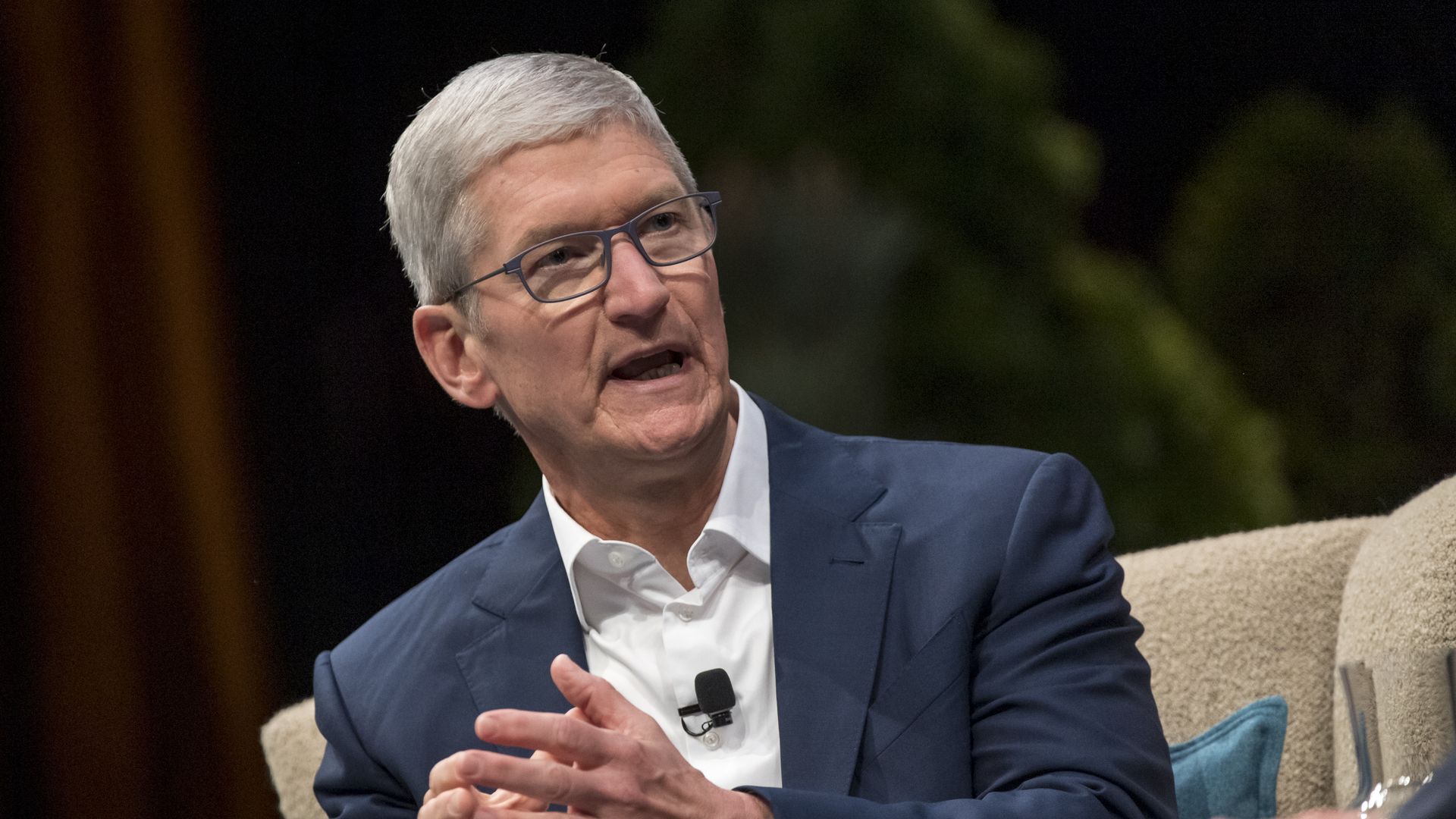
Apple CEO Tim Cook,an Alabama native with a lifelong interest in civil rights, joins condemnations of Georgia's new voting law, in a statement provided first to Axios.
What he's saying: "The right to vote is fundamental in a democracy. American history is the story of expanding the right to vote to all citizens, and Black people, in particular, have had to march, struggle and even give their lives for more than a century to defend that right."
President Biden doesn't publicly talk about stock market performance during his time in office, but he's slightly outpacing his more boastful predecessor.
By the numbers: The S&P 500 increased by 4.6% during the first 50 trading days of the Biden presidency, from market close on Jan. 19 to market close on March 31. Trump's first 50-day bump was 4.4%, whereas President Obama was down 6.1%.
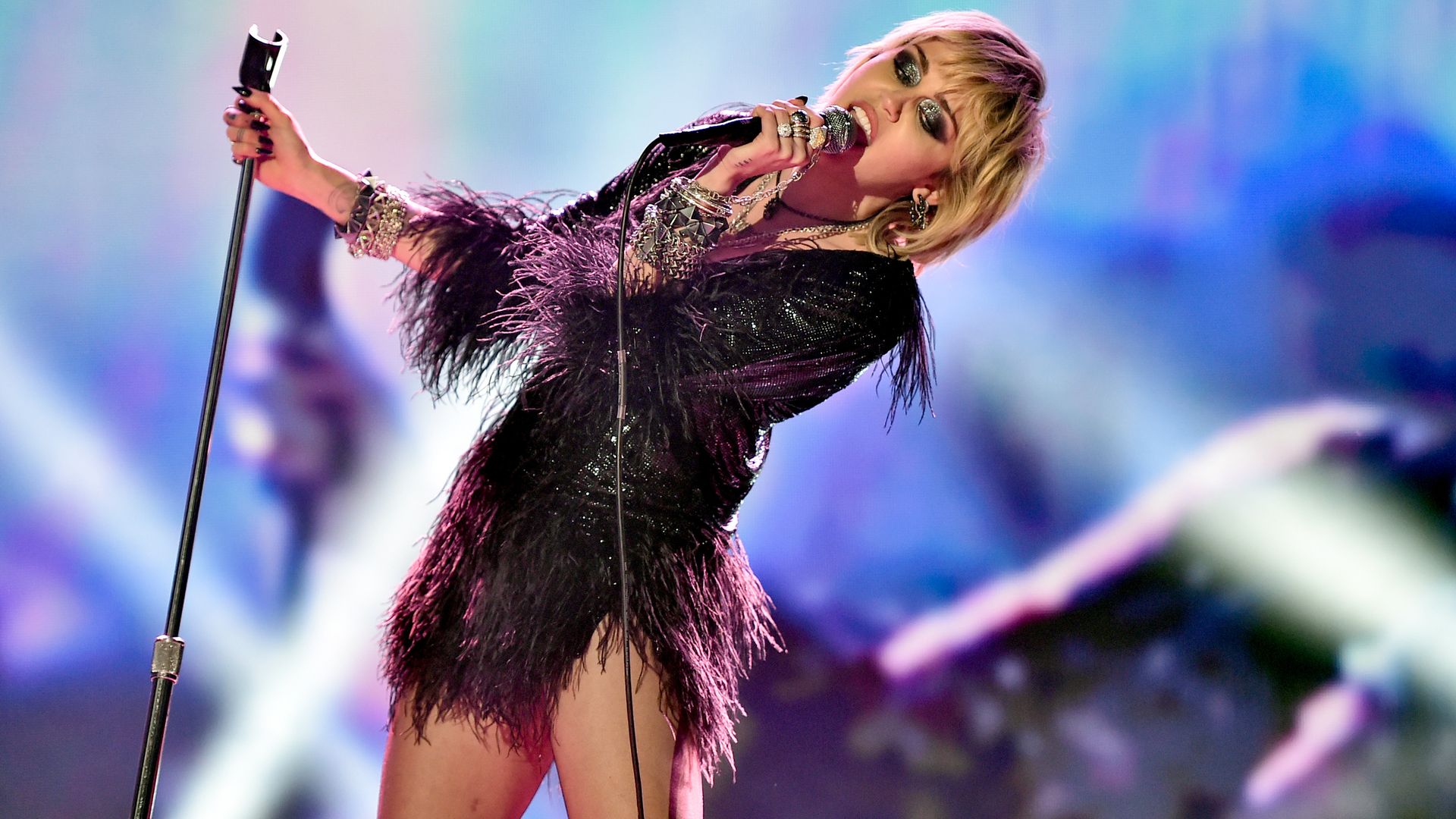
April is financial literacy month, which means you should expect a steady stream of celebrities like Miley Cyrus exhorting us to "learn more about stocks."
Why it matters: Financial illiteracy is a real problem, but it's not one that can be fixed with a 90-second video or a jaunty slideshow.
A Hong Kong court has found media tycoon Jimmy Lai, barrister Martin Lee and five other pro-democracy leaders guilty of participating in an an authorized protest in 2019, per Bloomberg. They'll receive sentences at a later date.
Why it matters: The verdict is a further blow for the city's pro-democracy movement. It comes a day after China's government a passed a law that critics say effectively ends democratic elections in Hong Kong. The pro-democracy figures were convicted under a draconian national security law the Chinese government imposed on the territory last year.
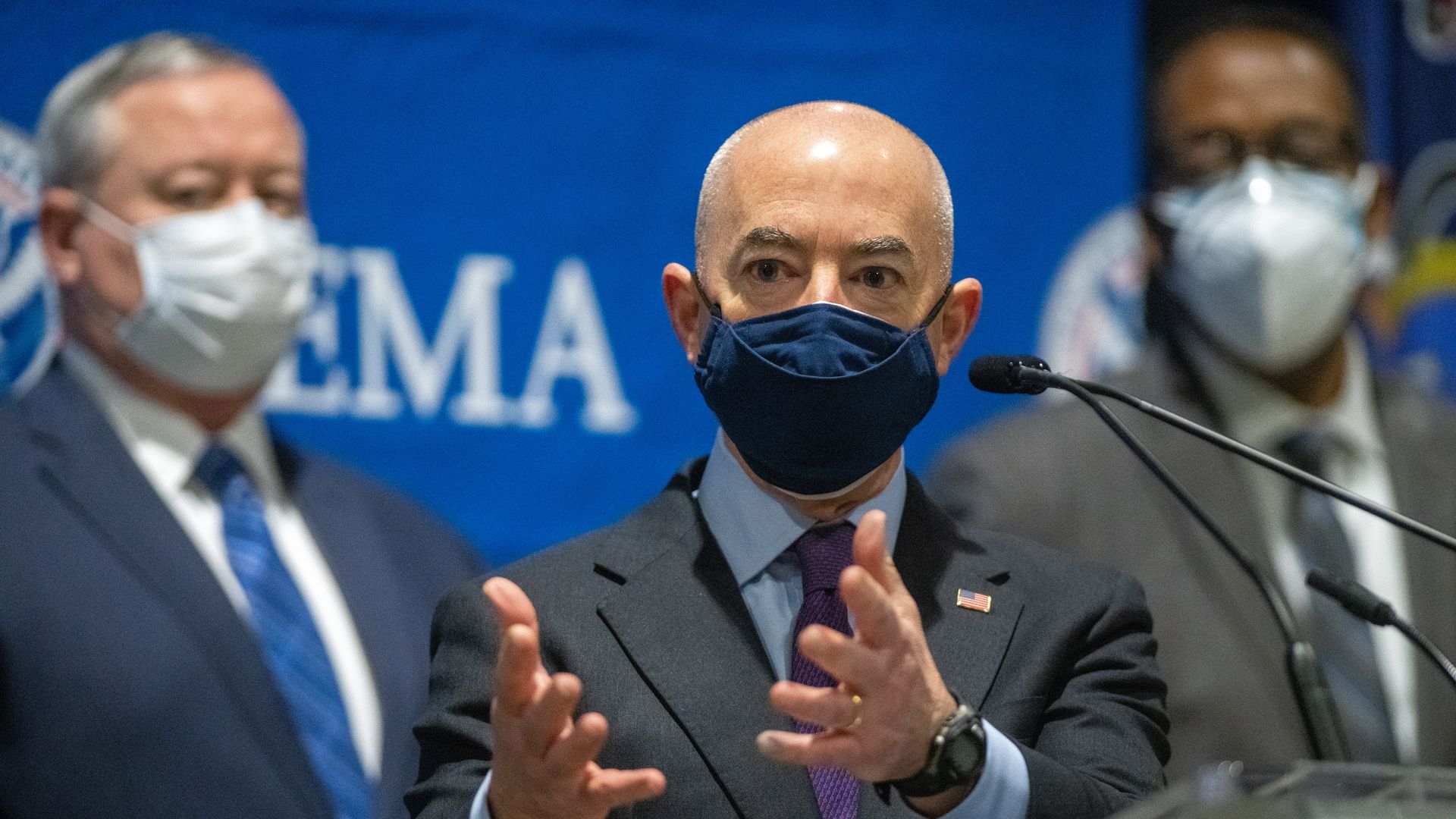
Homeland Security Secretary Alejandro Mayorkas on Wednesday warned that "cyberthreats are coming dangerously close to threatening our lives" as he announced a series of "sprints" designed to counter online attacks.
Why it matters: "Our government got hacked last year and we didn’t know about it for months," Mayorkas said. It wasn't until cybersecurity firm SolarWinds "got hacked itself and alerted the government" when federal officials learned the extent of the problem, he noted.