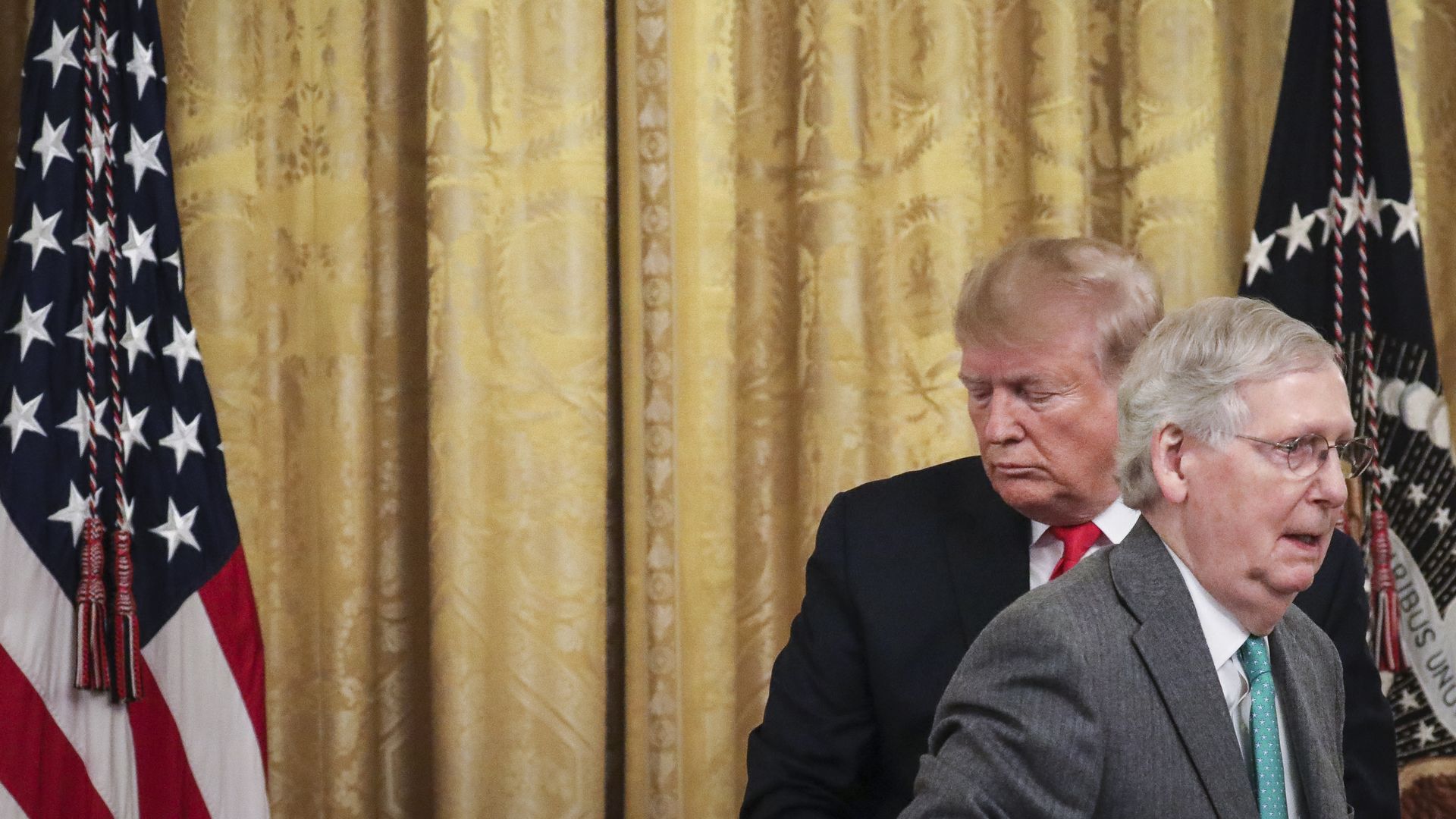
During a meeting at the White House on Wednesday, Senate Majority Leader Mitch McConnell stressed to President Trump that the next coronavirus relief package cannot exceed $1 trillion, and should be narrowly focused on getting money in people's hands immediately, sources familiar with the meeting tell Axios.
The big picture: Senate Republicans' backlash against House Democrats' $3 trillion bill has been so severe that it has eased pressure on McConnell to act instantly on a "phase 4" bill, and McConnell is focused on ensuring that the next bill is much smaller.
Europe came one step closer to the long-held dream of fiscal union this week, as both France and Germany signed on to the idea of the EU itself — rather than member states — raising money on the bond market that could then be spent on crisis relief.
Flashback: In April, I praised a Spanish proposal that the EU issue €1.5 trillion in perpetual bonds and then give the proceeds to the member states most hurt by the pandemic. The problem was that while Spain would be a net winner from the scheme, none of the net losers seemed inclined to sign on.
The S&P 500 hit a curious milestone earlier this month: Less than 10% of its market capitalization was made up of financial services companies. That ratio was as high as 22% in 2007, before the 2008 financial crisis.
Why it matters: This is not a financial crisis. America's banks are well capitalized, the Fed has restored liquidity to the markets, and trust in the financial sector is hitting new highs. Still, banks are severely underperforming the stock-market recovery.
In an internal meeting with staff on Thursday, Facebook CEO Mark Zuckerberg said the company is planning to shift the majority of its workforce to be able to work remotely in the next 5-10 years.
Why it matters: The coronavirus pandemic has forced many companies to quickly adopt remote working strategies. Tech companies, which are well-equipped for remote work, are preparing to make remote work the new normal for most of their employees.
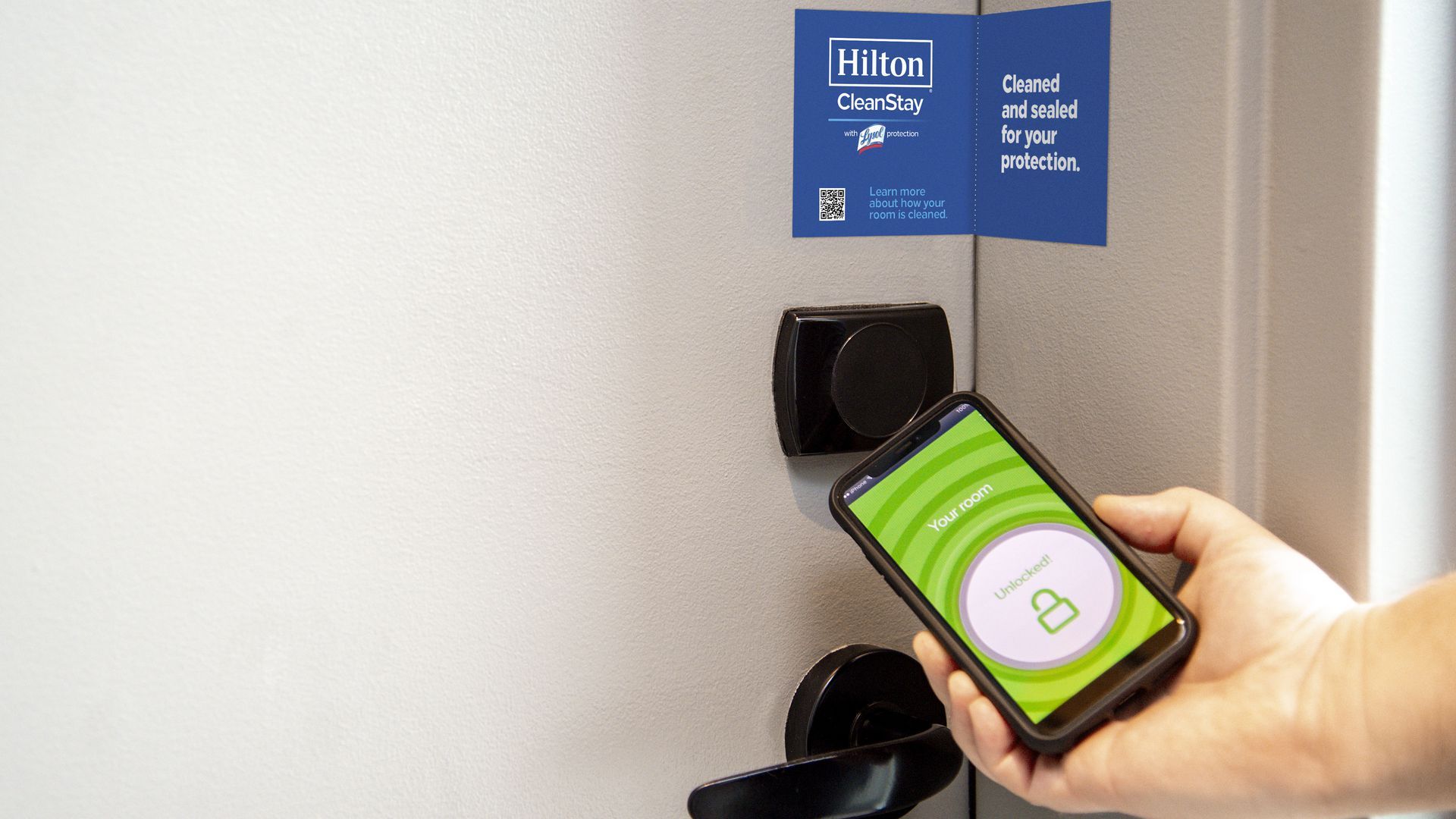
The travel and tourism sector has been one of the hardest hit by the pandemic, and is desperate to reassure potential customers that they will be safe from the novel coronavirus when and if they start traveling again.
The bottom line: The only two things that will always thrive in a crisis are cockroaches and co-branding opportunities.
Never has the stock market seen so much gambling. Volume is at record highs, with individual stocks and the market as a whole feeling almost manic. More people than ever are betting more money than ever on which way stocks will move, in a frenzy that feels more like a casino than a safe place for long-term capital appreciation.
Why it matters: Legendary value investor Ben Graham said that in the short term, the market is a voting machine, but that in the long term it's a weighing machine. Right now there is no shortage of votes, but few people believe that the weight readings are remotely reliable.
This year's real-estate outlook is bleak, but commercial property rents are expected to improve over the next two years, according to the Urban Land Institute's annual survey of real estate economists and analysts.
The state of play: Brick-and-mortar retailers, which were already shrinking before the pandemic, are suffering across the board. Meanwhile, e-commerce is rapidly increasing its market share.
Both Congress and the Nasdaq this week made it harder for Chinese companies to list their stocks in the U.S. Dan digs in with Alexandra Stevenson, a Hong Kong-based business reporter with the New York Times.
Ex-Juul CEO Kevin Burns is in advanced talks to join SoftBank-backed digital pharmacy Alto, Axios has learned from multiple sources.
Why it matters: He'd be going from a company that was the scourge of public health officials to one that seeks to become an integral part of America's health care delivery system.
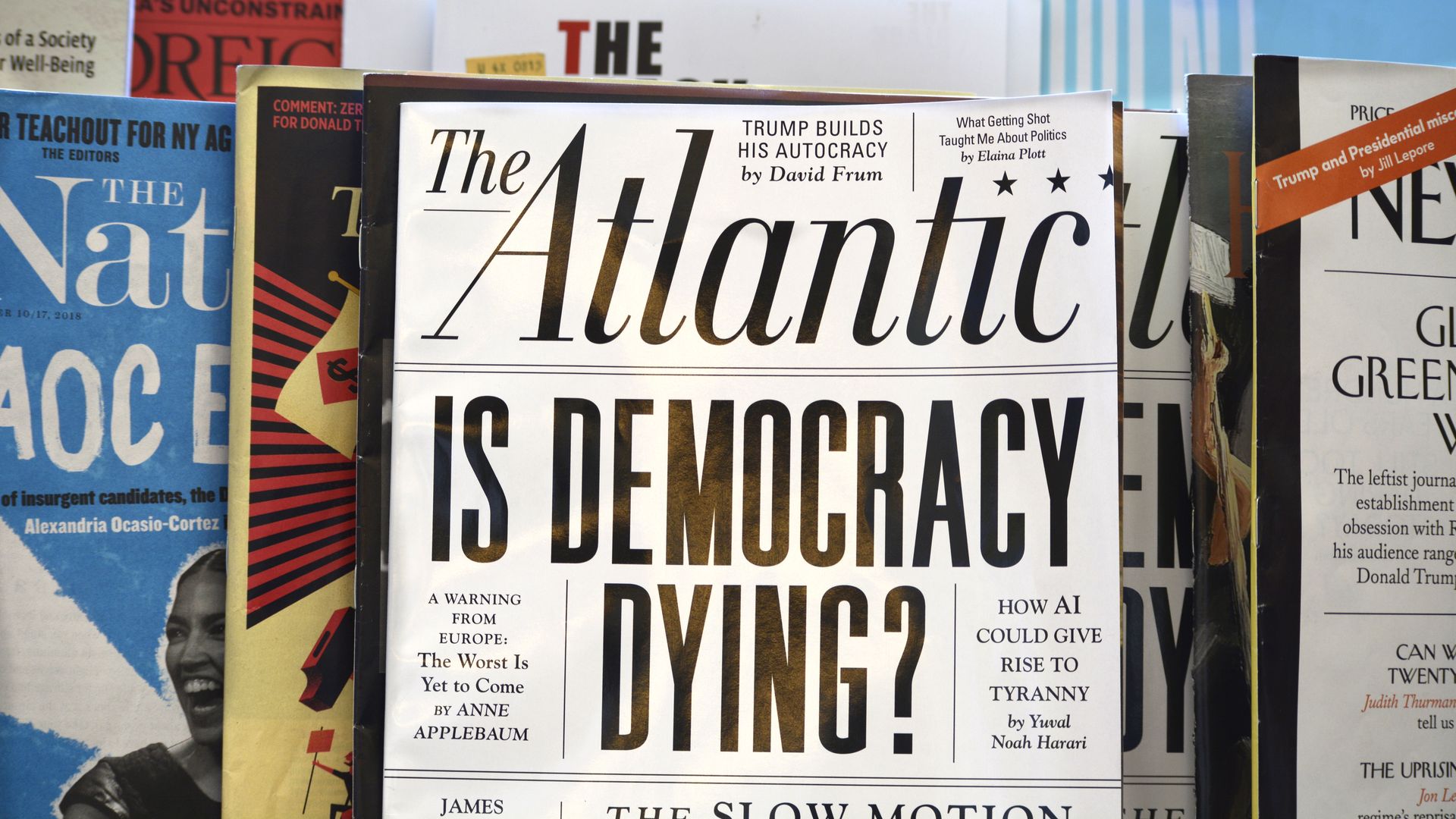
The Atlantic is laying off nearly 20% of staff, according to an internal note from David Bradley, the publication's chairman, that was obtained by Axios.
Why it matters: It's the latest media company that's been been forced to take drastic measures to survive the economic fallout from the coronavirus pandemic.
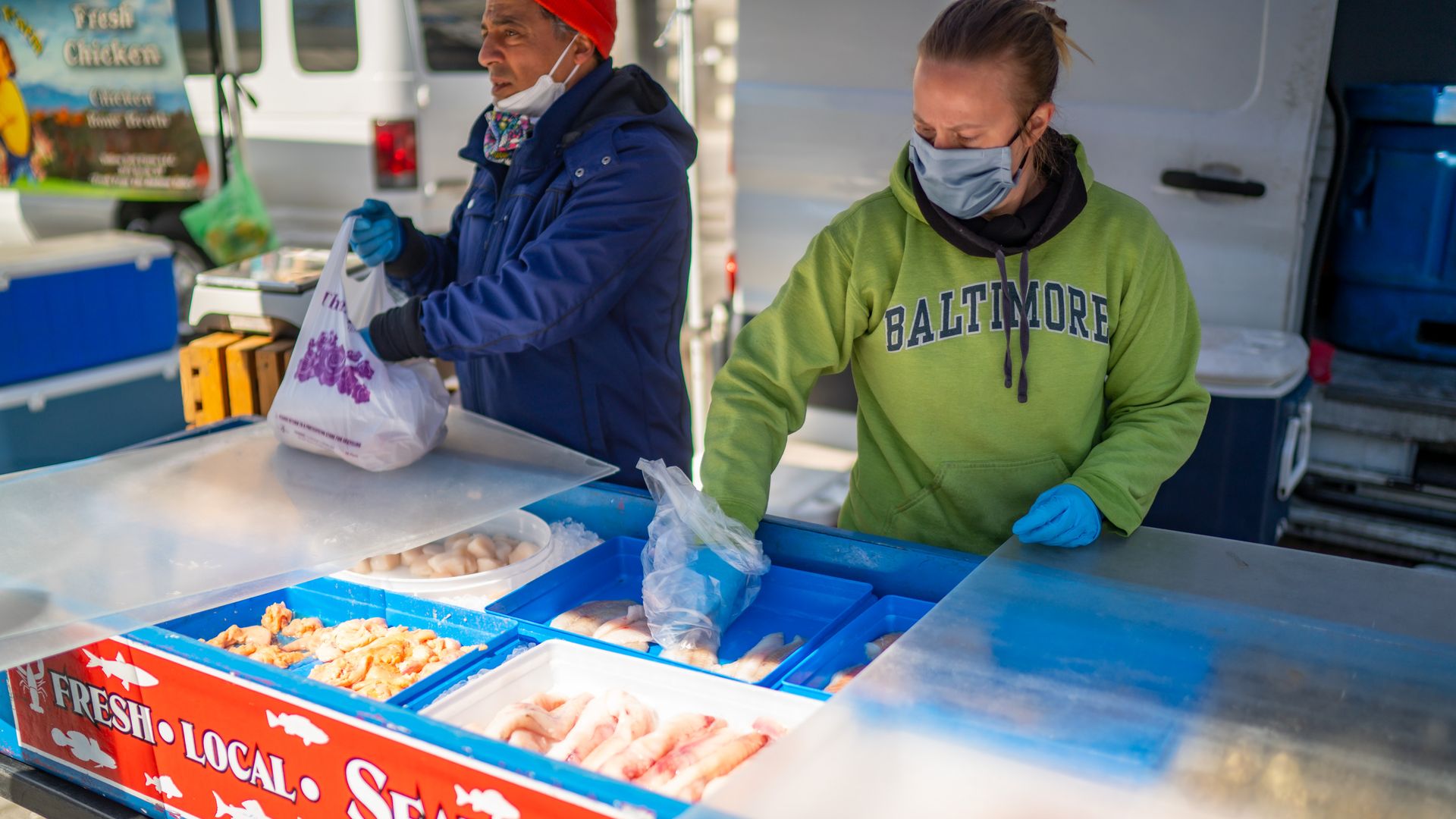
The seafood industry continues to struggle due to the coronavirus, even as more Americans are buying fish and shellfish at the grocery store, the Wall Street Journal reports.
Why it matters: The rise in seafood sales at the grocery store isn't enough to offset the economic loss the industry is dealing with. Nearly 70% of seafood sold is eaten at restaurants, which are either closed or are open in a limited capacity.
The coronavirus pandemic is remaking city landscapes worldwide, and the ultimate scope and duration of the changes will influence the future of urban mobility, pollution and even global oil demand.
Driving the news: Many cities are changing street uses and restricting cars (to varying degrees) to create new and socially distant opportunities for pedestrians, cyclists and diners.
The number of borrowers not making payments on their credit cards and auto loans rose by thousands of percentage points in April as nearly 15 million credit cards and 3 million auto loans were placed in financial hardship programs.
The state of play: The numbers have surged from March, when less than 0.01% of credit cards and about 0.6% of auto loans were in the programs, according to data from credit reporting agency TransUnion.
Barely five months into the year, U.S. investment-grade companies already have issued more than $1 trillion in debt — nearly as much as in all of 2019, which was well above average.
Why it matters: And buying shows no sign of letting up, thanks in large part to ultra-low interest rates and the Fed's promise of "no limit" purchases of Treasury, investment-grade corporate and even junk bonds.
Driven by a dramatic rise in unemployment, more than 1 in 3 Louisiana residents now lives in food insecure communities due to COVID-19, according to an analysis by data firm Urban Footprint.
Why it matters: People living in food deserts — usually more than a mile from a supermarket in a city or more than 10 miles in rural areas — have to make difficult choices between meeting basic needs like health care and food.
Shorter menus, pricier food, less service, servers wearing masks and surgical gloves: The future of dining out looks far from festive.
Why it matters: Eating in restaurants is a creature comfort that matters a lot to many people, and the fact that the experience won't just go back to normal will unnerve and disappoint everyone who wishes the coronavirus would simply go away.














/2020/05/21/1590070294442.gif?w=3840)