Making sure we can safely return to work and public life post-coronavirus will require new rules, new equipment — and even whole new jobs.
The big picture: The U.S. needs anywhere from 100,000 to 300,000 contact tracers, whose job it is to keep track of people who have been exposed to the virus and give them advice on how to contain it, the New York Times' Jacey Fortin writes.
Led by the Silicon Valley tech giants, more and more companies are extending their timelines for remote work — and some are weighing letting employees work from home forever.
Why it matters: It's becoming clear that there's no going back to the way work and workplaces were structured before the coronavirus pandemic.
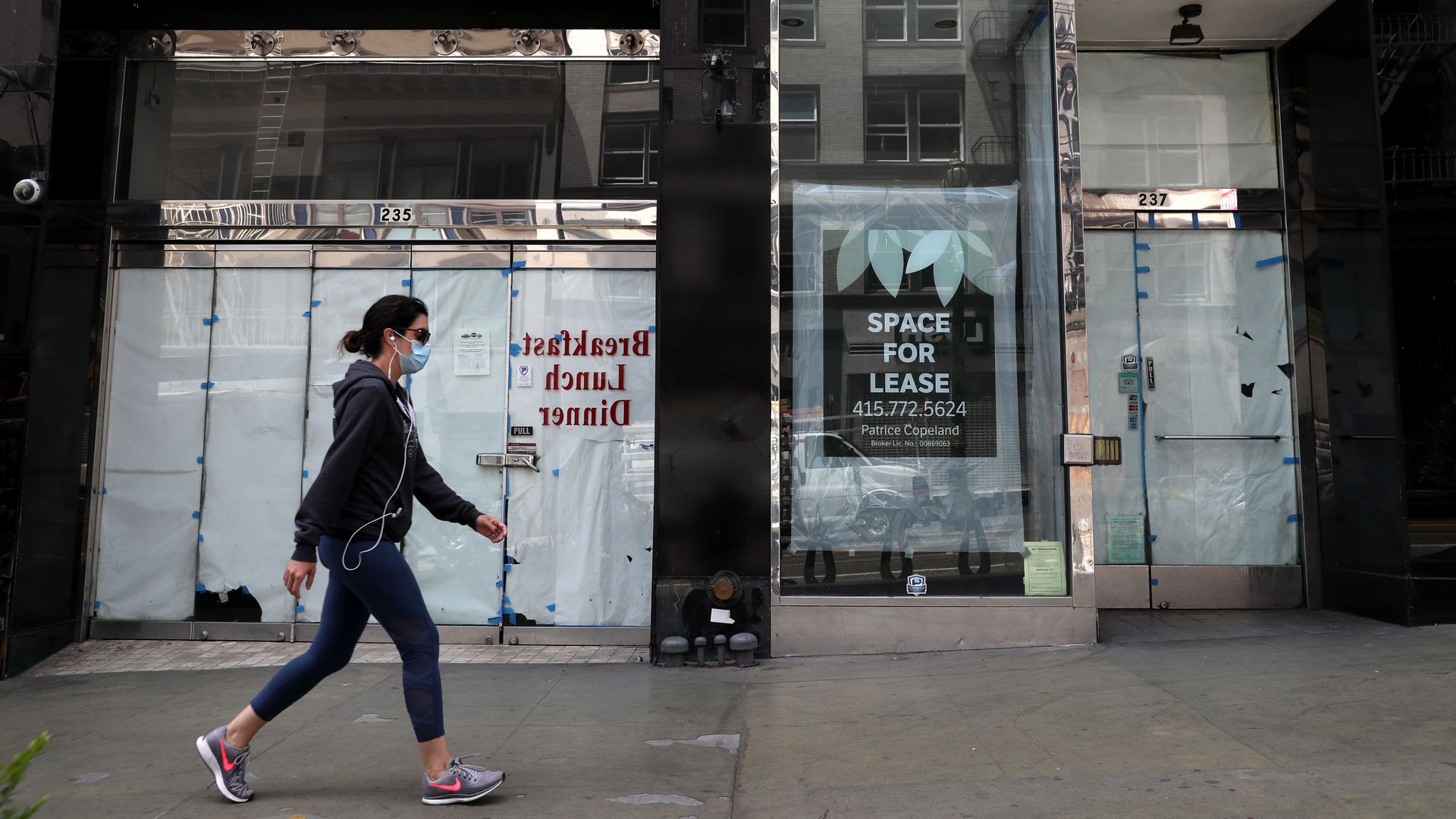
Pier 1 Imports filed a motion seeking bankruptcy approval on Tuesday, planning to initiate the closure of its approximately 541 stores and liquidate its inventory and assets after COVID-19 retail restrictions are lifted, per a statement.
Why it matters: This is the latest in a string of nonessential retail closure announcements throughout the coronavirus pandemic. Chains that were already struggling financially have faced amplified shortfalls due to social distancing regulations and market uncertainty.
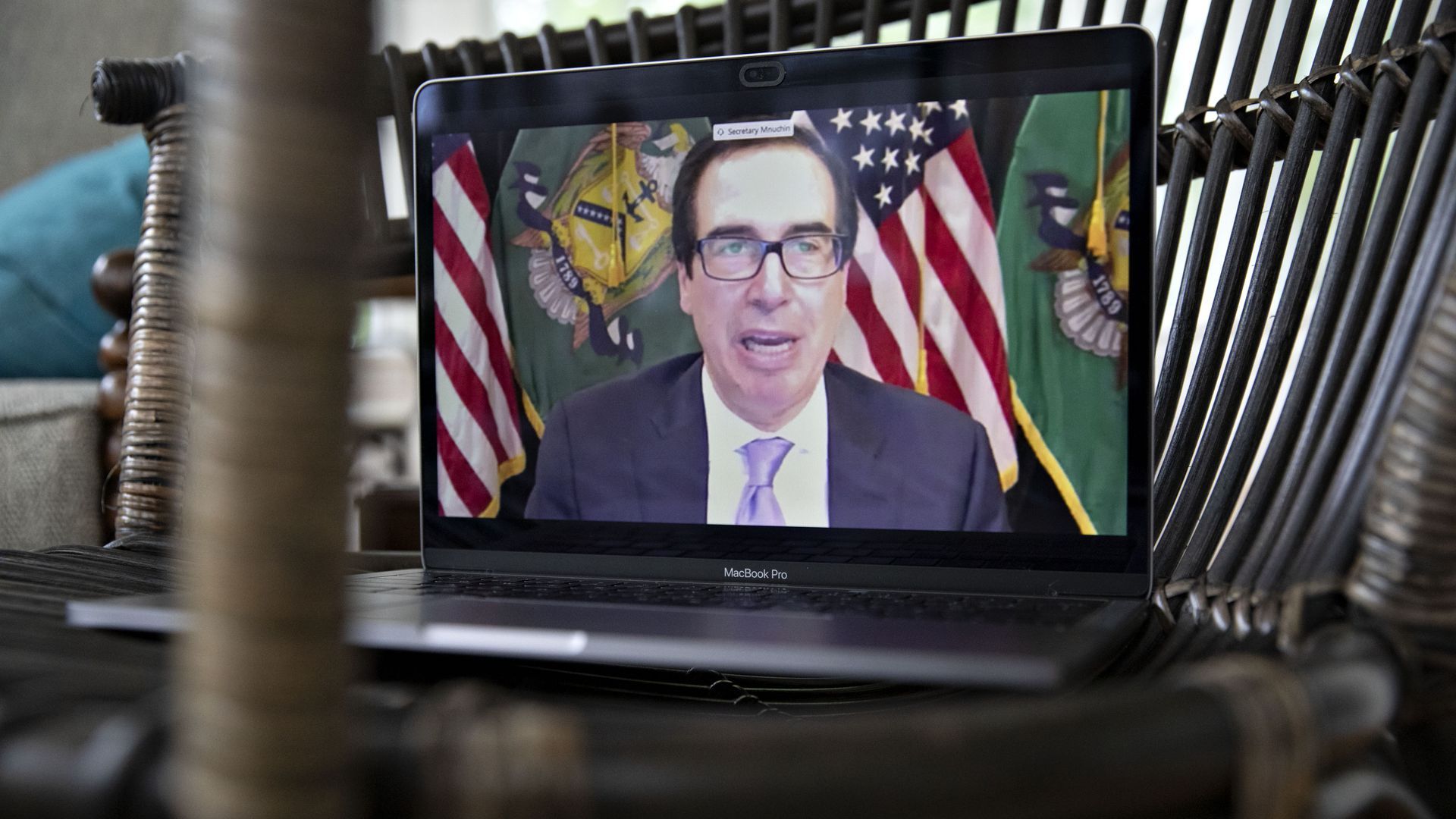
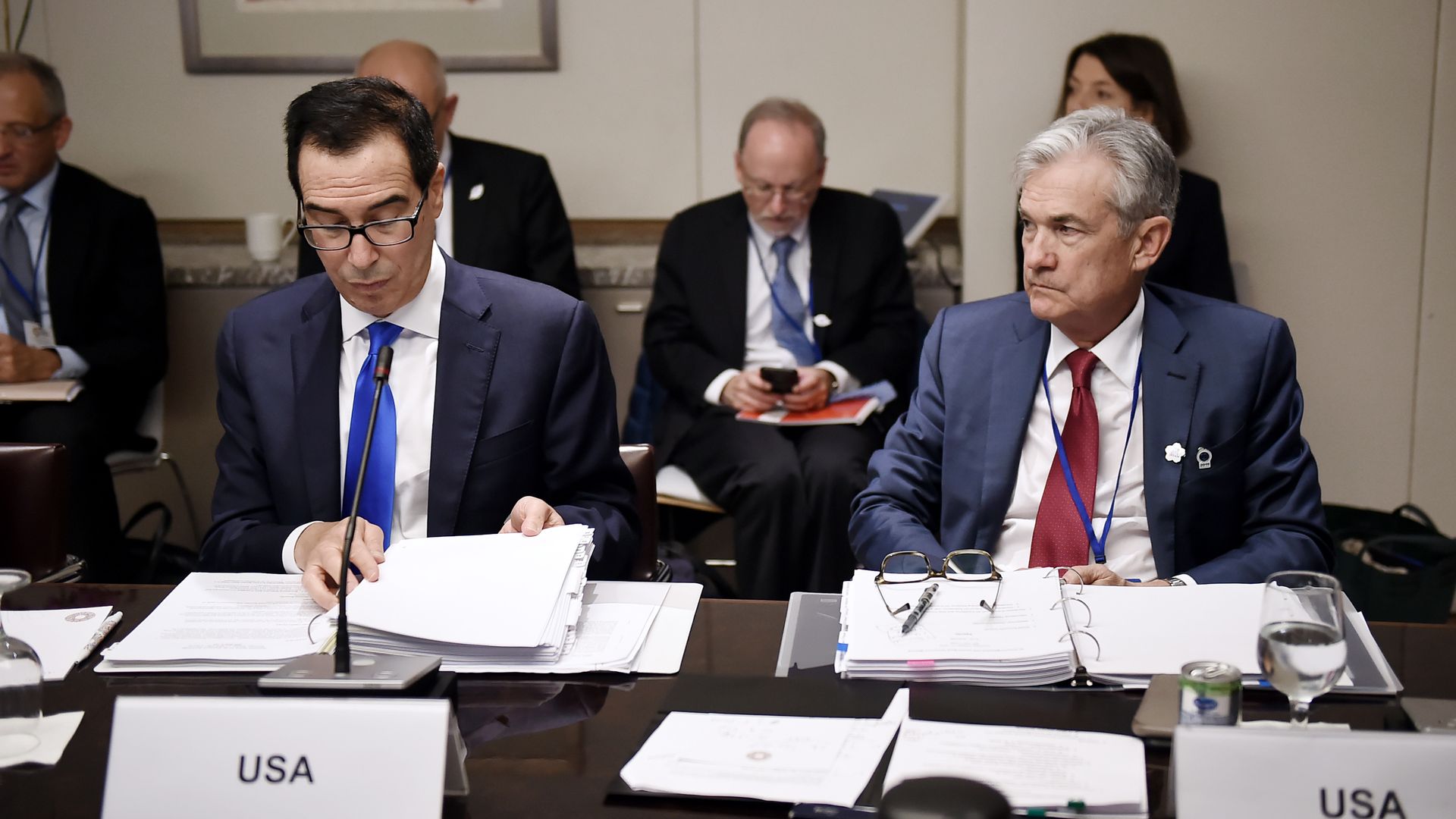
One takeaway from Tuesday's Senate coronavirus bailout hearing: The Treasury Department and Federal Reserve both think the worst could be yet to come for America's economy.
Why it matters: Fed Chair Jerome Powell reiterated his belief that a full recovery may not come until there's a vaccine, and Treasury Secretary Steven Mnuchin said there's the risk of "permanent damage" if states delay reopening.
The state of play: Research firm Tourism Economics projects that U.S. travel spending during Memorial Day weekend will total $4.2 billion this year — approximately one-third of the $12.3 billion spent in 2019. Tourism makes up 2.8% of the U.S. economy, as of last year.
The popular podcast "The Joe Rogan Experience" is moving exclusively to Spotify this year, host Joe Rogan announced on social media Tuesday. Spotify says it's a multi-year deal.
Why it matters: The move could be a watershed moment for the medium. Most Americans subscribe to only one audio subscription service, according to Nielsen. But that could soon change if more podcasts begin to be offered exclusively on certain services.
New York University announced on Tuesday that it will resume in-person classes this fall after finishing its spring semester remotely due to the coronavirus pandemic, NYU Local reports, citing an email from the school's provost.
Why it matters: K-12 schools and colleges across the country are grappling with plans for their fall term. Some schools will continue classes online to promote social distancing, while others argue that another remote semester could financially debilitate institutions and decrease retention.
Facebook is launching a new online shopping marketplace called Facebook Shops, CEO Mark Zuckerberg announced Tuesday.
Why it matters: To date, most Facebook commerce has taken place between users via its Marketplace tab, a Craigslist-like feature, but Facebook Shops is at the center of its push to create an e-commerce platform for businesses.
The world's daily carbon dioxide (CO2) emissions fell by 17% in April — the peak of global lockdowns aimed at slowing the spread of the coronavirus — when compared to 2019 levels, according to a study published in the journal Nature Climate Change on Tuesday.
The big picture: Though researchers say CO2 emission levels are again increasing as lockdowns are gradually lifted, they estimate that total emissions this year will be between 4% and 7% lower than 2019's total, which would be the largest annual decrease since the end of World War II.
SoftBank Group reportedly is seeking to sell around $20 billion worth of shares in T-Mobile US, which it acquired via T-Mobile's recently closed merger with Sprint. One buyer is expected to be Germany's Deutsche Telekom, which currently holds a 43.6% stake in T-Mobile US.
Why it matters: This could give Deutsche Telekom a majority stake in America's second-largest mobile carrier (depending on how you crunch the numbers), and give SoftBank some much-needed liquidity.
Small business loan recipients, or at least their lawyers, will be glued to their computers today, as both Treasury Secretary Steve Mnuchin and Fed Chair Jay Powell testify "in front" of the Senate Banking Committee.
On the grill: Expect lots of questions about the Paycheck Protection Program, in terms of application, effectiveness and possible changes.
One strange takeaway from the pandemic has been that when forced to stay at home, users are more likely to abandon audio content for video.
The big picture: A lot of audio streaming occurs on daily commutes, where users don't have bandwidth to stare at screens. But commuting, of course, has been put off during the pandemic.
TheSkimm is planning to launch a full-fledged digital membership model later this summer called "Teal Memb’rship," Axios has learned.
Why it matters: The company has been affected by the coronavirus crisis, with 20% staff layoffs a few weeks ago. Like many media companies, its heavy reliance on advertising revenue left it exposed to the economic downturn.
What they're saying: The much ballyhooed retail apocalypse is poised to benefit budget retail names like Ross and Kohl's that have gained market share in recent years.
Biotech company Moderna had a day for the ages on Monday and finished by announcing the issue of $1.34 billion of new stock at a hefty price.
What happened: A small number of healthy patients given the first doses of Moderna's coronavirus vaccine appeared to have generated antibody responses to the virus, according to early phase one trial data released by the company Monday.
The big picture: Walmart leads the list for the eighth year in a row as Amazon jumps to No. 2, its highest spot ever. Additionally, 17 companies made their debut, including Uber (No. 228), the new Fox Corp. (No. 280), and Science Applications International (No.466).
Over 500 people in the U.S. news media were laid off last week, indicating that many companies' initial efforts at the start of the pandemic to avoid job cuts, like reducing executive pay, weren't sufficient to protect their work forces.
Why it matters: Layoffs in bulk can deeply injure any organization's psyche — particularly in the situation where companies end up doing it more than once, which is why often execs are advised to cut deeply once rather than minimize a first round.
The coronavirus pandemic has upended the adult content industry, pushing thousands of new people to present adult performances online to make money while also creating more ways for viewers seeking intimacy while in lockdown to make personal connections with performers online.
Why it matters: The result has been a shift in power from the big porn producers and distributors to thousands of individual performers and models. Executives at several adult websites tell Axios that they're seeing explosive growth in part because the industry is moving to more individual engagement as a result of the pandemic.
Hospitals and outpatient offices have canceled elective procedures and surgeries en masse to prepare for the coronavirus, but some treatments have been more "elective" than others.
The big picture: Health care services have fallen across the board. The most pronounced drops have come in eye, spine and joint replacement surgeries.