Billionaire Mark Cuban tweeted a thread on Sunday calling for the federal government to train and hire millions of Americans as coronavirus contact tracers in order to "dent unemployment with stable jobs."
What he's saying: "It's time to face the fact that [the Paycheck Protection Program] didn't work. Great plan, difficult execution. No one's fault. The only thing that will save businesses is consumer demand. No amount of loans to businesses will save them or jobs if their customers aren't buying."
Federal Reserve chair Jerome Powell said in an excerpt from CBS' "60 Minutes" on Sunday that the U.S. economy may not experience a full recovery until a coronavirus vaccine is available.
The big picture: Earlier Sunday, Health and Human Services Secretary Alex Azar predicted the U.S. will be able to return to some degree of normalcy thanks to "traditional public health tools" and that "everything does not depend on a vaccine."
Jio Platforms, a telecom subsidiary of India's Reliance system, has raised about $870 million from private equity firm General Atlantic at a valuation of $65 billion.
Why it matters: In less than a month, the company has raised nearly $9 billion from Facebook, Silver Lake, Vista Equity Partners, and now General Atlantic.
The coronavirus has already changed consumers' willingness to travel, and the fallout will wreak havoc on hospitality workers and places that rely on tourism.
Why it matters: States like Hawaii and Nevada that depend on tourist dollars are seeing their economies upended with widespread unemployment and no relief in sight.
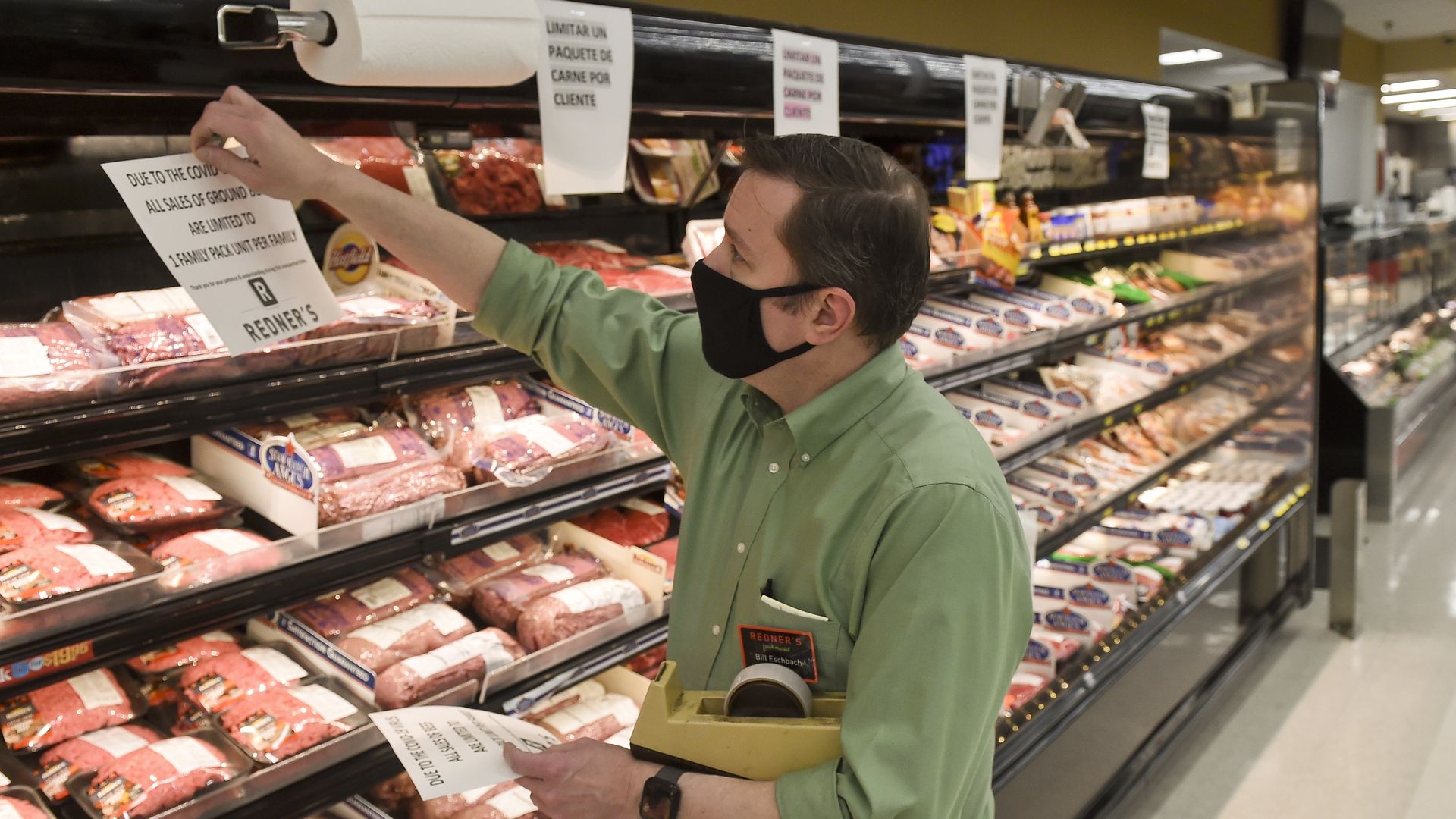
Groceries, drug stores and retailers are trying a variety of methods to enforce face mask mandates and protect employees, following customer complaints and assaults across the U.S., The Wall Street Journal reports.
Why it matters: State governments are implementing face covering orders, but have provided businesses with little guidance on how to enforce the rules when mask-less customers enter stores. Retailers are weighing "public-health requirements against the risk of putting their workers in harm’s way," the Journal writes.
The COVID-19 pandemic has spurred new interest in a movement that wants to reverse the pace of economic growth.
The big picture: Degrowth advocates believe that the only way to save the Earth is to stop focusing on growth at all costs in favor of a more equitable redistribution of resources. The pandemic is providing a crash test of those principles — for better and for worse.
High levels of corporate debt are among the risks that could make the fallout from the coronavirus economic shock even worse, the Federal Reserve warned in its twice-yearly report released on Friday.
Why it matters: Low interest rates and a flourishing economy tamped down concerns about companies' rising debt levels. With the U.S. in the worst economic downturn since the Great Depression, the Fed says those debt loads could "amplify the adverse effects of the Covid-19 outbreak."