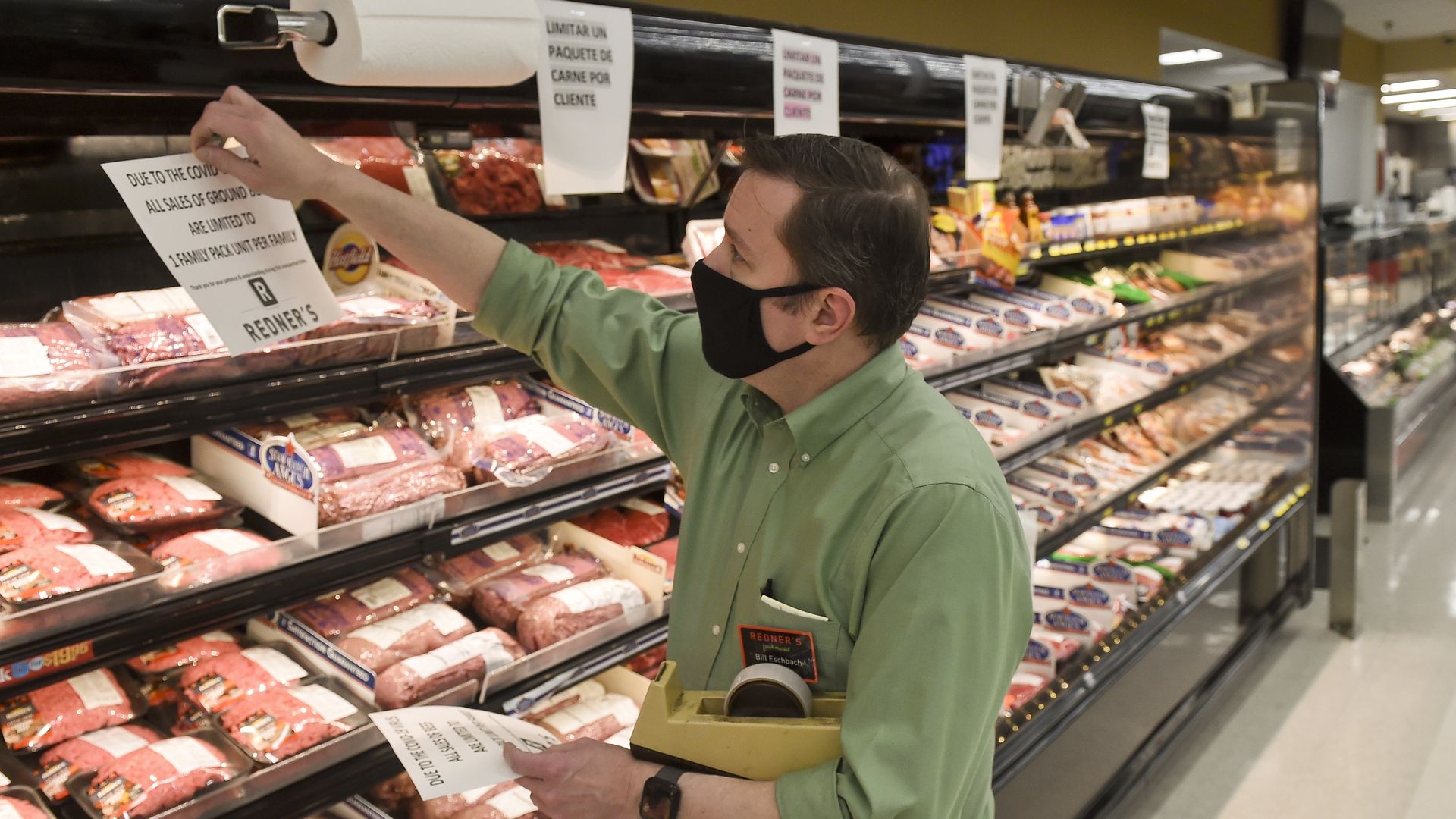
Groceries, drug stores and retailers are trying a variety of methods to enforce face mask mandates and protect employees, following customer complaints and assaults across the U.S., The Wall Street Journal reports.
Why it matters: State governments are implementing face covering orders, but have provided businesses with little guidance on how to enforce the rules when mask-less customers enter stores. Retailers are weighing "public-health requirements against the risk of putting their workers in harm’s way," the Journal writes.
The COVID-19 pandemic has spurred new interest in a movement that wants to reverse the pace of economic growth.
The big picture: Degrowth advocates believe that the only way to save the Earth is to stop focusing on growth at all costs in favor of a more equitable redistribution of resources. The pandemic is providing a crash test of those principles — for better and for worse.
High levels of corporate debt are among the risks that could make the fallout from the coronavirus economic shock even worse, the Federal Reserve warned in its twice-yearly report released on Friday.
Why it matters: Low interest rates and a flourishing economy tamped down concerns about companies' rising debt levels. With the U.S. in the worst economic downturn since the Great Depression, the Fed says those debt loads could "amplify the adverse effects of the Covid-19 outbreak."
JCPenney filed for Chapter 11 bankruptcy protection on Friday, following prolonged store closures amid the coronavirus pandemic.
Why it matters: This is the third major brick-and-mortar retail bankruptcy of the month, after J.Crew and Neiman Marcus, but by far the largest. The 118-year-old department store has 846 locations that employed around 90,000 people.
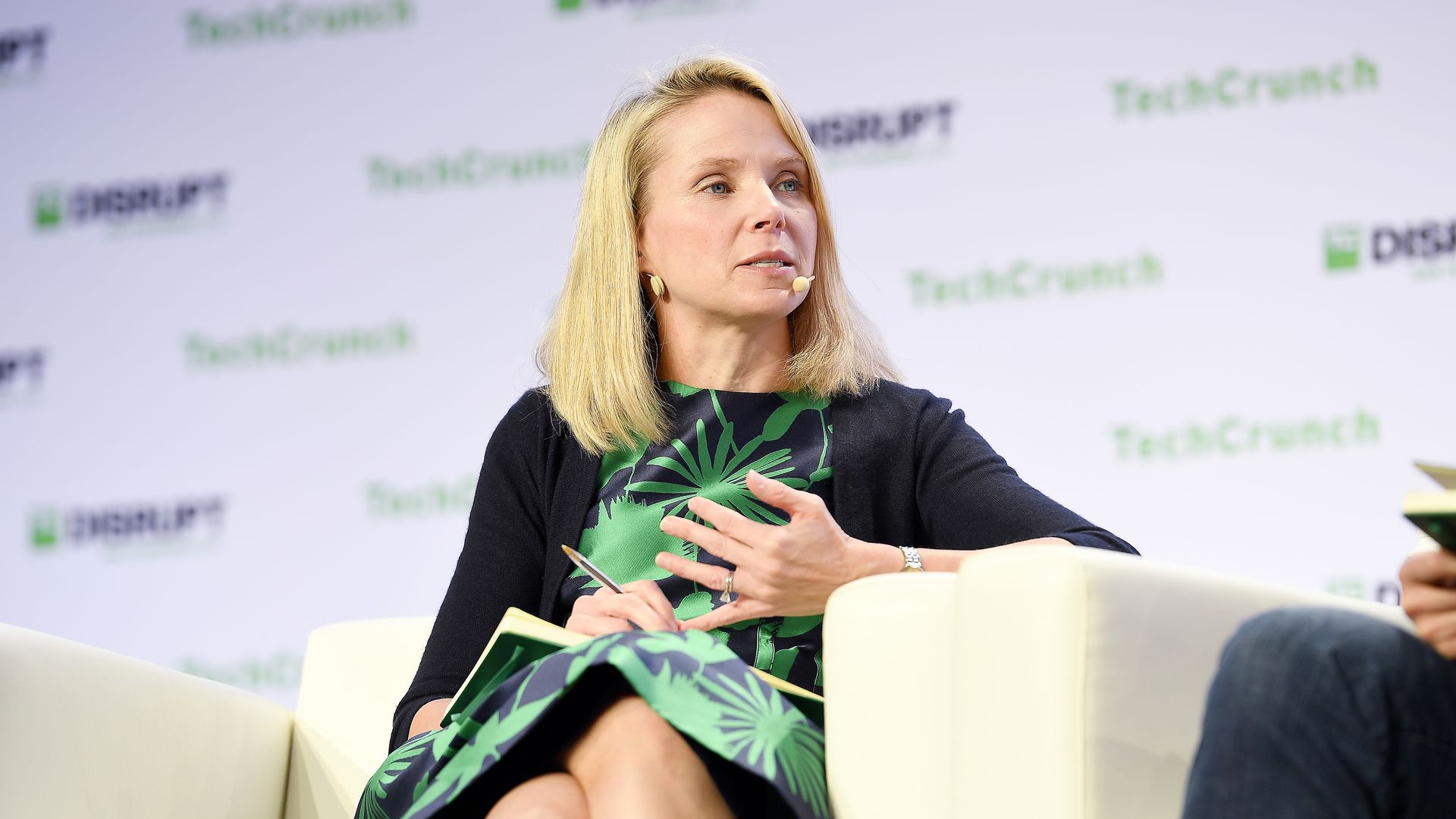
Lumi Labs, a consumer app incubator co-founded by former Yahoo CEO Marissa Mayer, has raised $20 million in venture capital funding, according to an SEC filing.
The intrigue: Lumi is based at 165 University Ave. in Palo Alto, where Google was headquartered in 1999 when Mayer became one of its earliest employees. She declined to comment when contacted by Axios.
Some nursing homes and assisted living facilities have forced residents who are on Medicaid to sign over their federal coronavirus stimulus checks, saying the money must be used to pay for their stays, the Federal Trade Commission said Friday.
The bottom line: These facilities, who are going after their poorest and most vulnerable residents, legally do not have the right to seize these payments.
It's not just restaurants and bars: The reopening of America will be centered around reducing our pre-virus conceptions of how many people can congregate together indoors.
The big picture: Social distancing and spacing is strongly encouraged by the CDC in its new guidelines for reopening various parts of American life.
Clubhouse, the voice chat app that's captivated Silicon Valley's elite, has agreed to a new $12 million investment led by Andreessen Horowitz, Axios has learned from multiple sources.
Why it matters: Several top-tier venture capital firms competed for the deal, with some even offering more than the $100 million valuation Clubhouse secured from Andreessen Horowitz. They view the app as a cross between Slack and sports talk radio, with users able to drop in and out of conversations.
The Economist Group is laying off 90 roles from its staff of 1,300, sources tell Axios. Its life and culture print publication, 1843, will move to a digital-only publication. Sources say that the company's editorial team hasn't been impacted.
Why it matters: It's the latest media company that's been been forced to take drastic measures to survive the economic fallout of the coronavirus.
Vice Media is laying off 155 employees, according to an internal memo from CEO Nancy Dubuc obtained by Axios. Vice's digital group will be the most heavily impacted by the cuts.
Why it matters: It's the latest media company that's been been forced to take drastic measures to survive the economic fallout of the coronavirus.
Virgin Australia (ASX: VAH), Australia's second-largest airline, which filed for bankruptcy last month, is expected to receive upwards of eight indicative takeover bids today, per Reuters.
Why it matters: Because it reflects the high value of duopoly, even in the midst of a pandemic that has been catastrophic for airlines.
Facebook has agreed to buy Giphy, the popular platform of sharable animated images, Axios has learned from multiple sources. The total deal value is around $400 million.
Background: A source close to the situation says that the two companies first began talking prior to the pandemic, although that was more about a partnership than an acquisition.
Federal regulators still haven't provided the required guidance on Paycheck Protection Program loan forgiveness, a scant 18 days past deadline, but it's become less important for the vast majority of small business recipients.
Driving the news: The key buzzword this week was "safe harbor."
Oil giants' pace of clean energy deals has slowed greatly as oil prices have collapsed, the research firm BloombergNEF said in a tally of activity by ExxonMobil, Chevron, Shell, BP and others.
What they found: "Up to 14 deals were announced in 1Q 2020, with only three reaching completion. This compares with 17 deals closed in 1Q 2019," the firm said in a brief note.
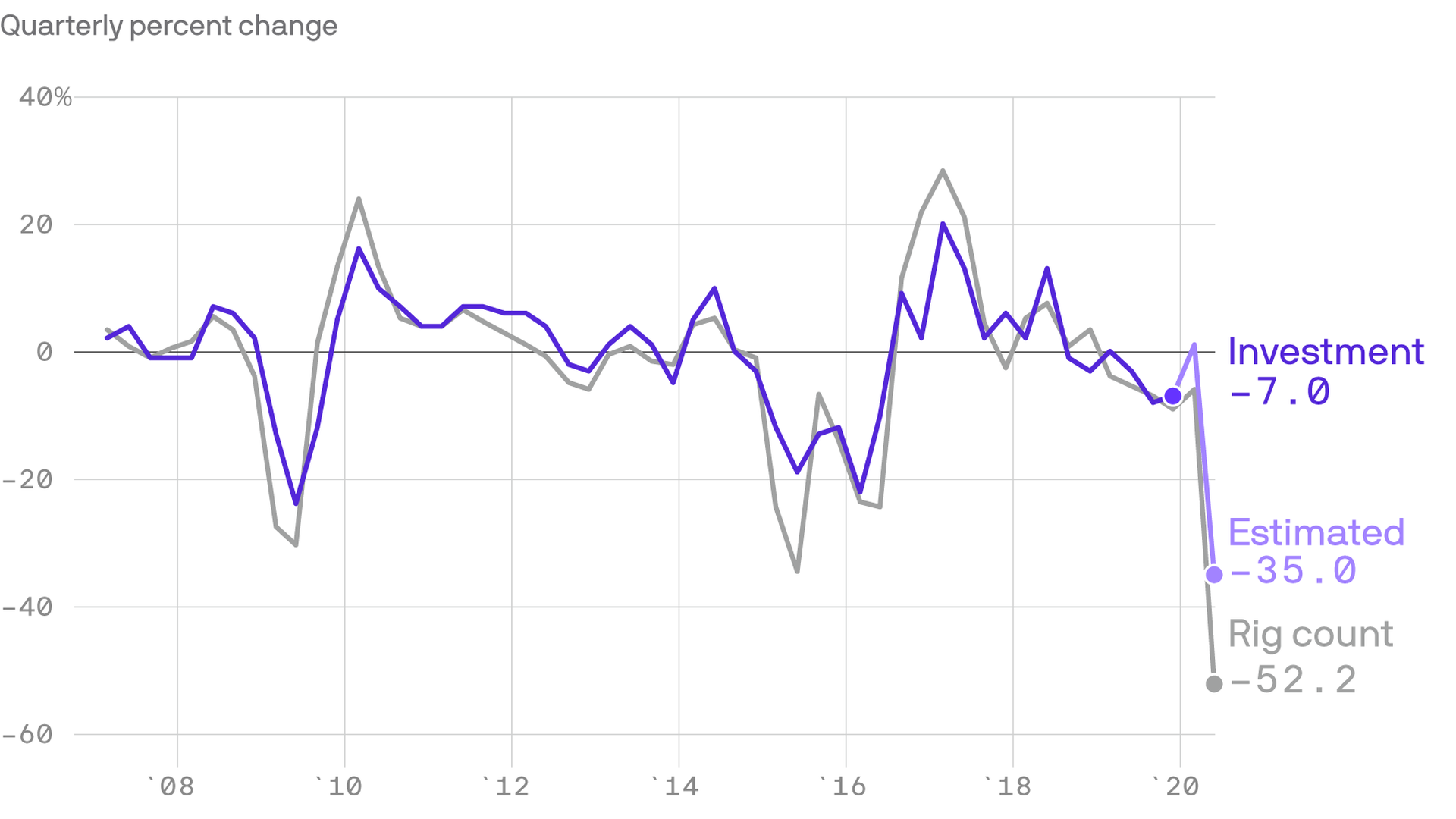
A Dallas Fed report helps put the oil industry's response to the price and demand collapse into historical context. They find that U.S. producers' capital spending will decline by at least 35% in the second quarter en route to an even steeper annual decline.
Why it matters: That's bigger than declines in the 2008-2009 financial crisis and the oil price collapse in the mid-2010s (check out the chart above).
Disney announced on Thursday it will be pulling "Frozen" the musical from Broadway after nearly a year as the coronavirus pandemic continues to take its toll on large events and shows, The Washington Post reports.
Why it matters: The show had been financially performing well and was bringing in $1.5 million a week. However, there is a worry that when Broadway comes back there won't be enough people coming to the shows, the Post writes. Most of Disney's Broadway audience is composed of families and people visiting from out of town.
Today is the two-month anniversary of Pro Rata for Kids, which we launched as a daily newsletter feature to help give work-from-home parents some time to... well, work.
U.S. retail sales fell 16.4% in April, even worse than the previous record fall set in March, as consumers pulled back on spending during the coronavirus economic lockdown.
Why it matters: It's another indication of how the pandemic is curtailing consumer spending, which is the main driver of the U.S. economy, as people stay home and a record number of Americans are out out work.
A report from the Census Bureau finds that three out of four U.S. small businesses have sought financial assistance through the Small Business Administration’s Paycheck Protection Program, but data show that just a fraction of those have received funding.
The state of play: While the first iteration of the PPP exhausted its $349 billion of capital in two weeks, the second round of the program still has nearly 40% of its funding left, almost three weeks after being launched.
Coronavirus hospitalizations have declined in many states — another indication that social distancing has been effective at curbing the virus' spread.
Why it matters: Hospitalizations are an important metric to watch to gauge the severity of the outbreak, especially because testing shortfalls have skewed some other measurements. Those numbers aren't falling everywhere, and any approach to reopening needs to be carefully managed to prevent them from spiking yet again.
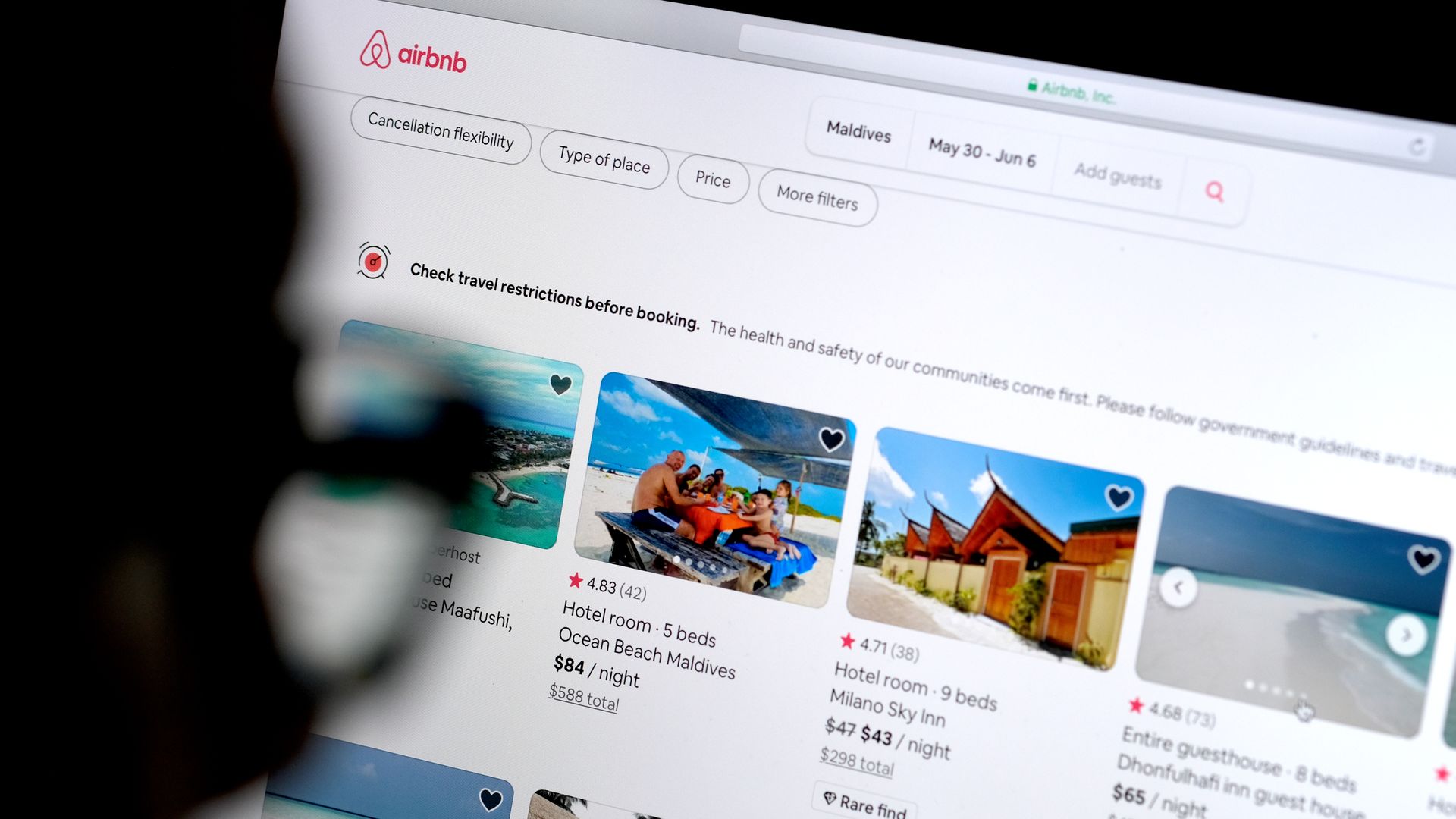
Airbnb has hired Tara Bunch as its new head of global operations, overseeing customer service, trust and safety, and payments. Bunch is currently Apple's vice president of AppleCare.
The big picture: Bunch is filling a crucial gap since the departure of Airbnb's chief operations officer Belinda Johnson last year, especially as Airbnb, which has been hit hard by the collapse of the travel business during the pandemic, starts trying to make consumers comfortable staying in other people's homes again.













/2020/05/15/1589573330937.gif?w=3840)