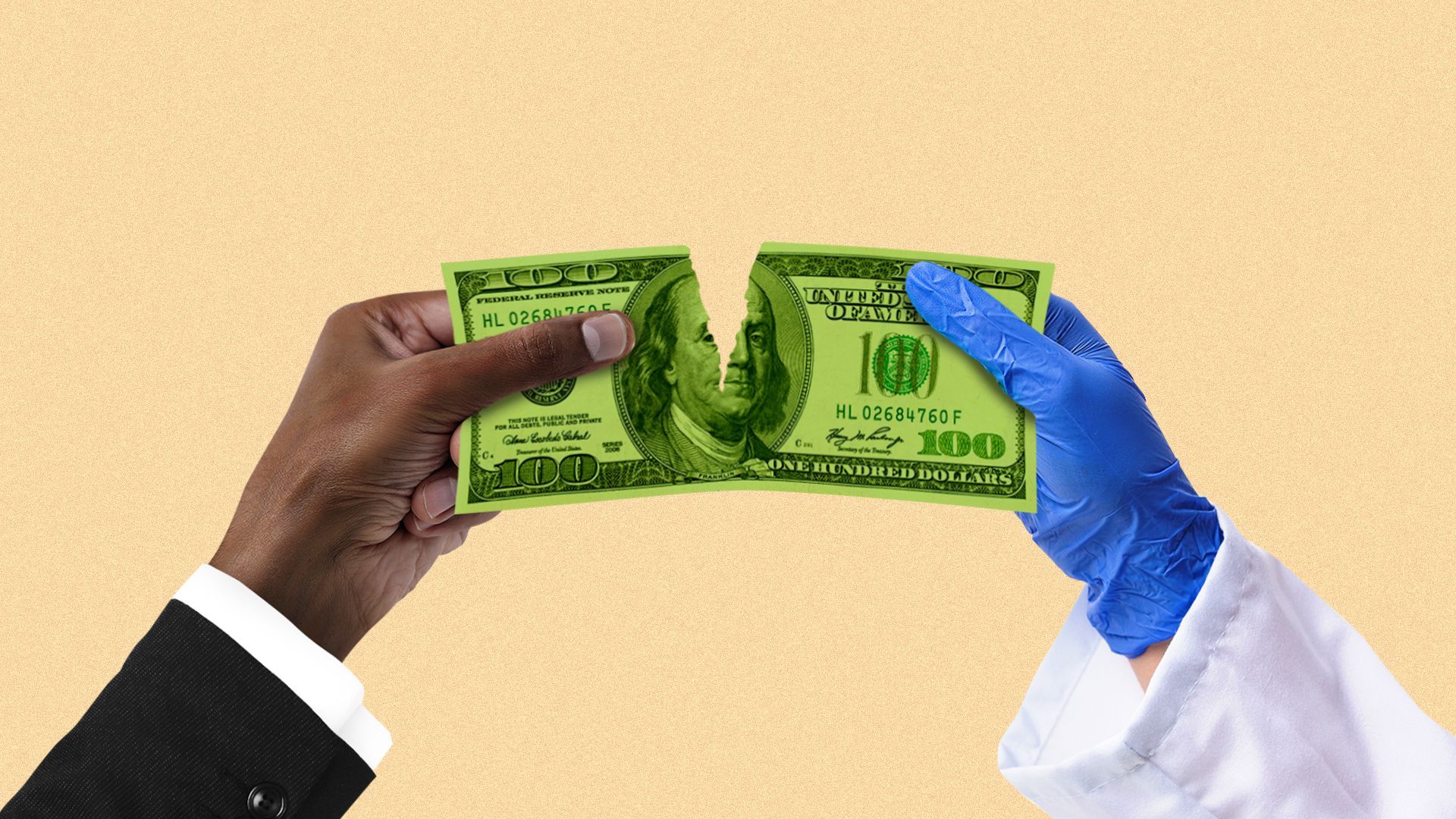
Democratic and Republican lawmakers have lined up on opposing sides of the Federal Reserve's decision to expand its $600 billion Main Street Lending Program and give loans to a wider range of businesses suffering from the economic effects of the coronavirus.
The big picture: The changes, urged by oil state Republicans like Sens. Kevin Cramer of North Dakota, Ted Cruz of Texas, and Alaska’s Lisa Murkowski, will allow oil and gas companies to qualify for the aid, Bloomberg reports.
Fed chair Jerome Powell made clear the U.S. central bank had no plans to raise interest rates anytime soon and expects the economy to need monetary assistance for some time.
In his Wednesday remarks, Powell expressed concern about "considerable risks" to the economic outlook over the "medium term," which he defined as at least over the next year.
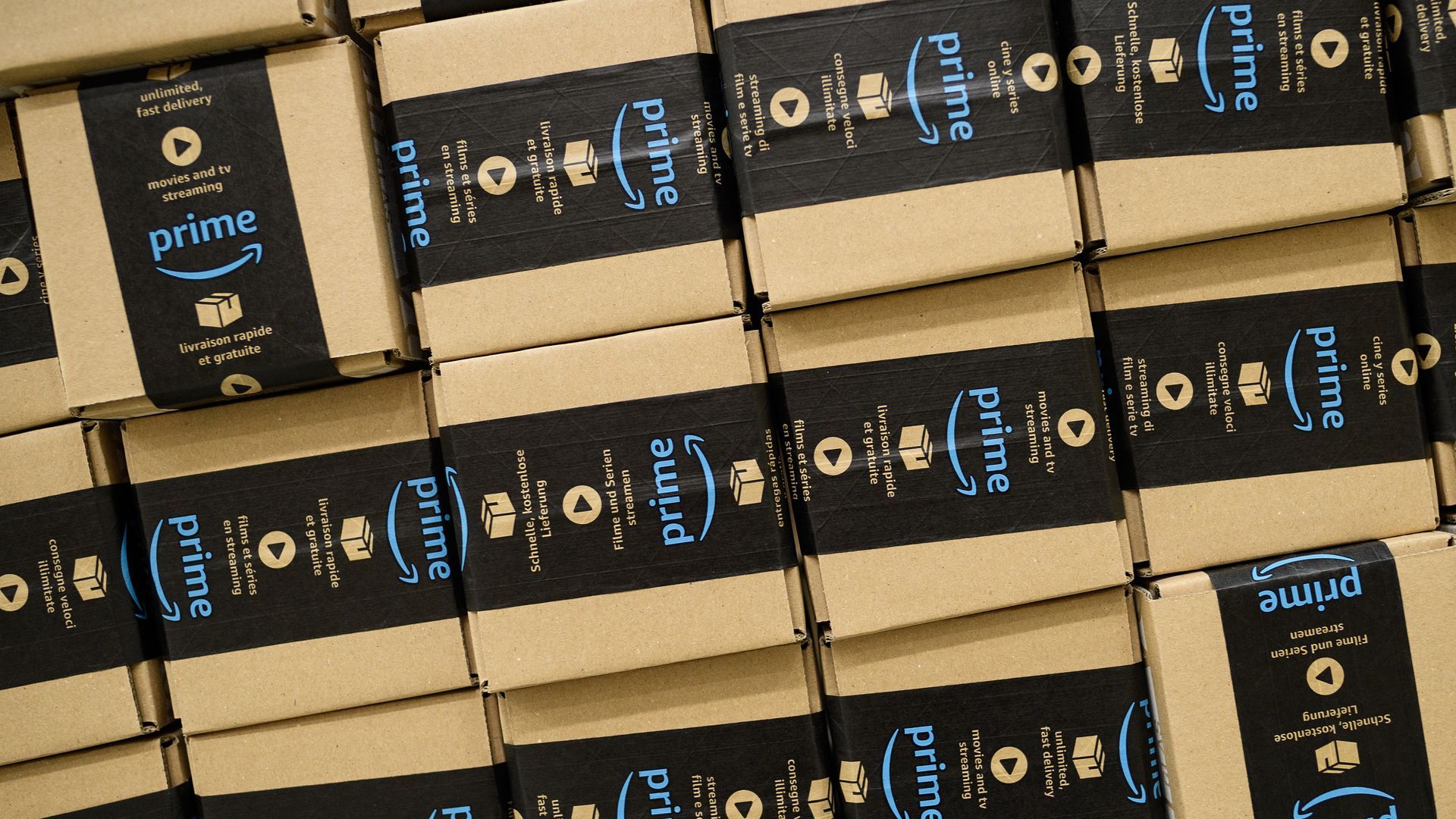
Amazon's stock was down nearly 5% in after-hours trading Thursday after the tech giant said that shareholders should expect coronavirus-related costs to eat up all the $4 billion in profits it would expect for Q2.
"If you’re a shareowner in Amazon, you may want to take a seat, because we’re not thinking small."
Good restaurants are by their nature small businesses — and they're bearing the brunt of the coronavirus shutdown as locked-down retail and service-sector businesses can shut down and reopen much more easily.
Why it matters: The CARES Act has earmarked hundreds of billions of dollars to help small businesses through this crisis, but it has largely failed small restaurants.
Regional food is a kind of language. It lives through hard-earned knowledge and practice, shared among a sufficiently large group of people, passed on through generations.
Why it matters: It can die of neglect. Or, it turns out, of COVID-19.
Texas energy regulators will decide on Tuesday whether to mandate oil production cuts in the state.
Why it matters: Demand for oil has crashed as the pandemic-hit world locks down. That dynamic is already forcing some U.S. producers to cut back. The Texas measure, if passed, would force any stragglers to do likewise.
Large farms, food processors and restaurant operators have much brighter prospects than their smaller counterparts grappling with the coronavirus crisis.
The big picture: They have access to capital markets, including the trillions of dollars being injected into the fixed-income markets by the Federal Reserve.
As restaurants in some areas begin reopening their doors, their performance will provide a first big test of Americans' readiness to resume life outside their homes.
Why it matters: Restaurants play a major role in just about every downtown core, shopping district and office hub. But that doesn't mean people will be ready to slide into a booth right away.
Verizon has seen a 1,200% spike in the use of online collaboration tools during the coronavirus pandemic, CEO Hans Vestberg said at an Axios event Thursday.
What he's saying: "I don't think we're going to see a normal situation by the end of the year. I think there's going to be a new enterprise. It's a new way to work."
The Paycheck Protection Program (PPP) has approved loans for millions of small businesses, but has also created a ton of finger-pointing. Dan digs in with Axios Markets editor Dion Rabouin.
Leadership is getting people to believe in the possibility of something, that "people are capable of something they didn’t think possible," Slack co-founder and CEO Stewart Butterfield said at an Axios virtual event on Thursday.
What he's saying: Butterfield said his flaws in own leadership were not taking into account how the message is delivered or how others feel.
Nekesa Mumbi Moody has been named editorial director of The Hollywood Reporter, joining the publication after more than two decades with the Associated Press, most recently as its global entertainment and lifestyles editor.
Why it matters: She replaces Matthew Belloni, who exited following reported disputes with the publication's owners over its editorial coverage.
Stash, a New York-based investing and savings platform, raised $112 million in Series F funding led by LendingTree at a valuation north of $800 million.
Why it matters: This reflects confidence that the current economic catastrophe won't prompt the same the formative risk aversion as did the financial crisis, when many young people swore off investing.
As more and more venture capital-backed startups acknowledge having received Paycheck Protection Program (PPP) loans, many have wondered why their VCs didn't bail them out.
What's happening: It comes down to the deep pocket fallacy. Venture capital funds are not the same as the rich uncle. They have their own investors, or limited partners, to whom they owe a fiduciary duty.
The vast majority of people across 34 countries surveyed by Pew Research Center say it's important for women to have the same rights as men — but majorities in many countries still believe men should take priority when jobs are scarce.
The big picture: Opinions vary widely across the countries as to whether men currently have better lives than women, with majorities in countries like France (70%), Sweden (62%) and the U.S. (57%) believing that is the case, but pluralities in Poland, Russia, Nigeria and India believing men and women have equally good lives.
Royal Dutch Shell said Thursday that it's cutting shareholder dividends for the first time since World War II as the company reported a steep drop in quarterly profits.
Why it matters: The decision underscores how the coronavirus-fueled collapse in prices and demand is upending the oil landscape and forcing even the most powerful companies to scramble to protect their finances.
The U.S. marriage rate fell by 6% in 2018 to only 6.5 new unions for every 1,000 people, per a report from the CDC's National Center for Health Statistics.
Why it matters: It's the lowest rate recorded since the federal government began collecting data in 1867, according to the Wall Street Journal.
Twitter said Thursday that it beat first-quarter revenue expectations and added more "monetizable" daily users than investors had anticipated.
Why it matters: It was the fourth major internet company to post strong earnings in the past week, suggesting that Big Tech will continue its dominance over the advertising ecosystem as a result of the coronavirus pandemic.
3.8 million people filed for unemployment last week, the Labor Department announced Thursday.
Why it matters: While the pace of unemployment filings has slowed since its peak in late March, the number of workers who have lost their jobs in recent weeks — as efforts to contain the coronavirus pandemic slammed the labor market — tops 30 million.
Online brokerages have seen a record number of new accounts opened this year as so-called mom and pop retail investors look to buy the dips and cash in on the market's late February selloff.
What's happening: "The rush of retail investors into U.S. equities is at least partly a function of a world with no casinos, no sports betting to speak of (horses and ping-pong aside), and little to do outside the home," DataTrek Research co-founder Jessica Rabe points out in a note to clients.
Initially hailed as a savior of Brazil's economy as stock prices climbed to record highs after his election, President Jair Bolsonaro now has the country's markets on a crash course.
What's happening: Brazil's benchmark stock index has been one of the world's worst performers, down by nearly 30% in its local currency so far this year, and lower by 46% in U.S. dollar terms.
Microsoft delivered the goods in its earnings report Wednesday, announcing increased profit and sales that not only beat analysts' expectations but showed the company could continue its impressive growth trajectory in the face of the coronavirus pandemic.
Why it matters: The impact of Microsoft's strong earnings is magnified by the fact that it is one of the five Big Tech companies that account for around 20% of the entire S&P 500's market cap — along with Apple, Amazon, Alphabet and Facebook — the index's highest level of concentration since the 2000 tech bubble.
New York State Attorney General Letitia James has joined a growing group of critics in calling on cable and satellite TV providers to rebate pay-TV fees to consumers.
Why it matters: Her argument is that consumers shouldn't have to pay the same amount for cable and satellite packages, which include expensive sports networks, when those sports networks aren't carrying any live sports.
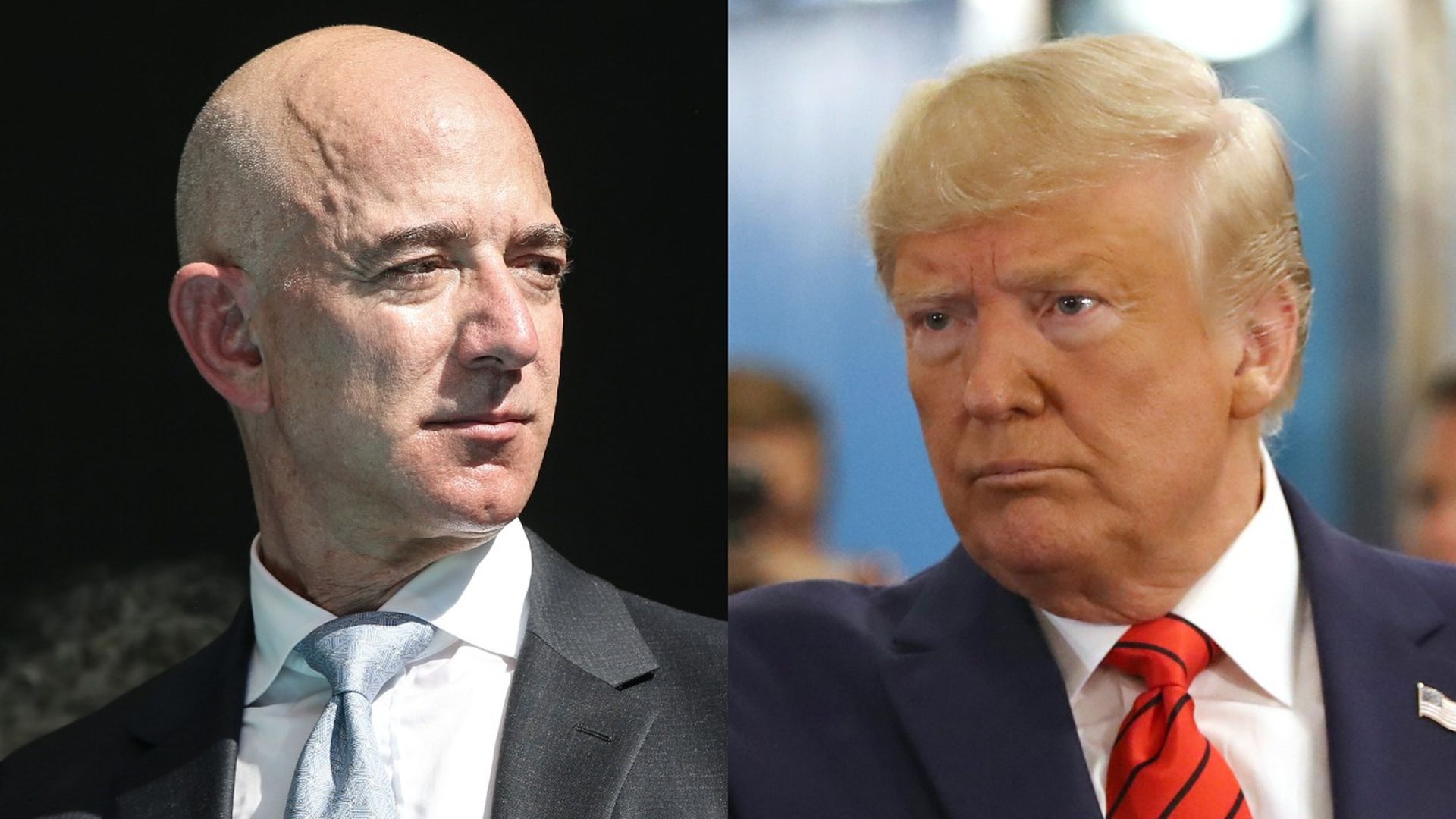
Amazon blasted an unusual accusation in an annual report by saying President Trump's trade office as a "purely political act" that's part of a "personal vendetta."
What happened: U.S. Trade Representative Robert Lighthizer's office put five of Amazon’s overseas domains (Canada, France, Germany, India and the U.K.) on a list of "notorious markets” where pirated goods are sold, AP reports.
Nearly one-third of Americans are considering moving to a less densely populated area because of the novel coronavirus outbreak, according to a Harris Poll survey released Thursday.
The big picture: "Space now means something more than square feet," Harris Poll CEO John Gerzema said. "Already beset by high rents and clogged streets, the virus is now forcing urbanites to consider social distancing as a lifestyle."
In the beginning, we thought we would just miss out on a few weeks of spring. Now it’s becoming clear that a large chunk — if not all — of summer will also be lost to the coronavirus pandemic.
The big picture: Even as some states take steps to open up their economies, huge parts of our lives will stay shuttered well through August and possibly beyond. That will have an enormous impact on families, education and businesses, not to mention our mental health that needs a summer break more than ever.
Several large employer groups this week refused to sign on to funding requests they consider a "handout" for hospitals and insurers, according to three people close to the process.
The big picture: Coronavirus spending bills are sharpening tensions between the employers that fund a significant portion of the country's health care system and the hospitals, doctors and insurers that operate it.
President Trump’s order to reopen meat processing plants, despite the fact that they're coronavirus hot spots, raises a tangle of liability issues that could keep courts and trial lawyers busy for years.
Why it matters: The scrap over meat plants — which is just heating up — may be a microcosm of the ones other businesses will face once commerce opens up more broadly.
If you feel like you're suffering whiplash from the new, conflicting study data on Gilead Sciences' experimental coronavirus drug, remdesivir, you're not alone.
The big picture: Remdesivir could provide some help and lay the groundwork for more research, but this drug on its own does not appear to be any kind of "cure" for the novel coronavirus.
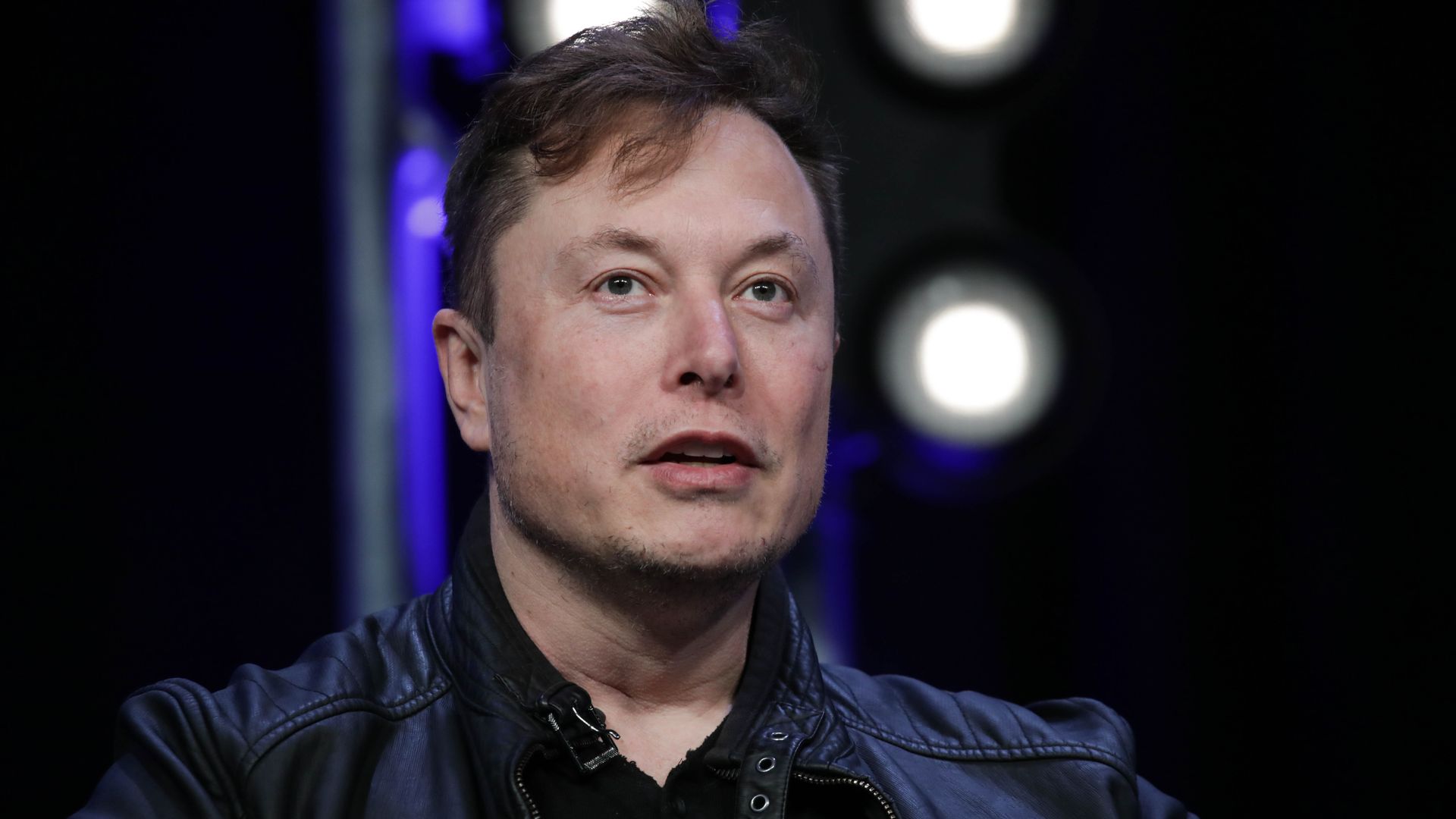
Tesla CEO Elon Musk launched into a mini-tirade about government stay-at-home orders during the coronavirus pandemic, calling them "fascist" and "an outrage" on an earnings call Wednesday.
What he said: [T]he extension of the shelter-in-place or, frankly, I would call it, forcibly imprisoning people in their homes against all their constitutional rights — in my opinion — breaking people's freedoms in ways that are horrible and wrong and not why people came to America or built this country What the f--k?"







/2020/04/30/1588271583309.gif?w=3840)




























/2020/04/29/1588180770236.gif?w=3840)