The nationwide shortage of medical equipment to fight the coronavirus pandemic seems like a breakthrough opportunity for 3D printing technology. But in this urgent crisis, its uses are limited.
Why it matters: America needs to manufacture tens of thousands of ventilators and billions of face masks and other protective gear in the next few weeks, and then distribute them in a hurry to hospitals around the country to ward off the worst-case public health scenarios.
It's the most stunning chart of this crisis yet — the number of people filing for unemployment spiked to 3.3 million last week, a number unprecedented in U.S. history.
Why it matters: This is a picture of what happens when a huge swath of the economy comes to a very sudden stop. But it tells us very little about how badthis recession is turning out to be. We're not going to get useful data on that for another month or so.
Nearly every segment of the media and entertainment industry, including movies, television, radio, news outlets and more, says it feels at least somewhat relieved by Congress' $2 trillion coronavirus stimulus package that the House is expected to vote on Friday.
Why it matters: The media and entertainment sector is heavily reliant on out-of-home venues, freelancers and in-person staffing. As a result, the industry has been completely upended by the COVID-19 pandemic.
U.S. stocks shrugged off news of a record-breaking 3.3 million unemployment claims last week, closing higher for the third straight day as Congress moved closer to passing a $2 trillion coronavirus relief package.
Driving the news: Speaker Nancy Pelosi said Thursday that she expects the House to pass the Senate's rescue bill — the largest of its kind in U.S. history — on Friday, before moving on to a potential "Phase 4" package.
One of the biggest silver linings of the current crisis is the fact that the U.S. has the deepest capital markets in the world.
Why it matters: The stock and bond markets are places for people to store their wealth in case they need it in the future. We're currently experiencing a major global crisis in which millions of individuals and businesses need liquidity. By selling investments, those fortunate enough to have stored wealth can access much-needed cash almost immediately.
We've gone on holiday by mistake. And we're going to have to stay here for a while.
The big picture: During normal, scheduled holidays — the period between Christmas and New Year's, for instance, or all of August in France — GDP plunges to well below normal levels, no one much minds, and then economic activity bounces happily back again.
It can be distasteful to see government bailout funds going to companies that have harmed workers, evaded taxes, degraded the environment and enriched their executives with socially useless financial engineering. But it's still necessary.
Why it matters: Vacations work in capitalist countries because employees remain on the payroll throughout and can seamlessly rejoin their employer upon their return. As millions of Americans embark on an involuntary vacation, the same principle applies.
Morgan Stanley CEO James Gorman today pledged that the Wall Street firm will not reduce headcount in 2020, according to an internal memo seen by Axios.
Why it matters: Morgan Stanley employs around 60,000 people, and every job counts at a time when millions of people are losing them.
OfferUp, a Bellevue, Washington-based peer-to-peer marketplace for local goods, agreed to buy New York-based rival Letgo in an all-stock deal.
Why it matters: This is one of the few deals that was helped, not hurt, by the coronavirus pandemic. Sources say that the two companies had been discussing a tie-up for more than a year, but talks intensified as America's economy began shutting down — a crisis leading to compromise.
The Senate late last night passed a $2.2 trillion safety net for the American people and American businesses. But not all businesses were included. The package left out thousands of small companies owned by private equity firms.
Details: The legislation includes $350 billion in small-business loans for companies with fewer than 500 employees. That's a liberalization of typical SBA rules, which are more industry-specific in terms of employee number and revenue.
Online ticket resale firm StubHub confirmed on Wednesday that it had put a significant portion of its workforce on unpaid leave. Some 450 employees, two-thirds of StubHub's workforce, were affected, Business Insider reported.
The big picture: StubHub is just one of many tech companies whose business has dried up overnight because the coronavirus has decimated a wide swath of industries, from entertainment to travel to health and beauty.
The Treasury market is getting back to normal after the Fed's massive bond-buying announcement earlier this week.
What to watch: Yields on Treasury bills were negative out to three months, closing in the red late Wednesday, as traders continued to favor paying to loan the government money over buying longer-dated bonds.
Online grocery shopping has had a renaissance over the past month as the coronavirus outbreak has sequestered more people indoors.
The state of play: The number of people who say they are doing more grocery shopping online has risen from 11% on March 1 to 41% on March 22, fresh data from CivicScience shows.
Investors pulled $153 billion out of mutual funds and ETFs for the week ending March 18, the largest outflows ever, data from the Investment Company Institute showed.
The state of play: The outflows were more than eight times higher than the previous week when investors pulled $19 billion from mutual funds and ETFs that included bond, equity, hybrid and commodity funds.
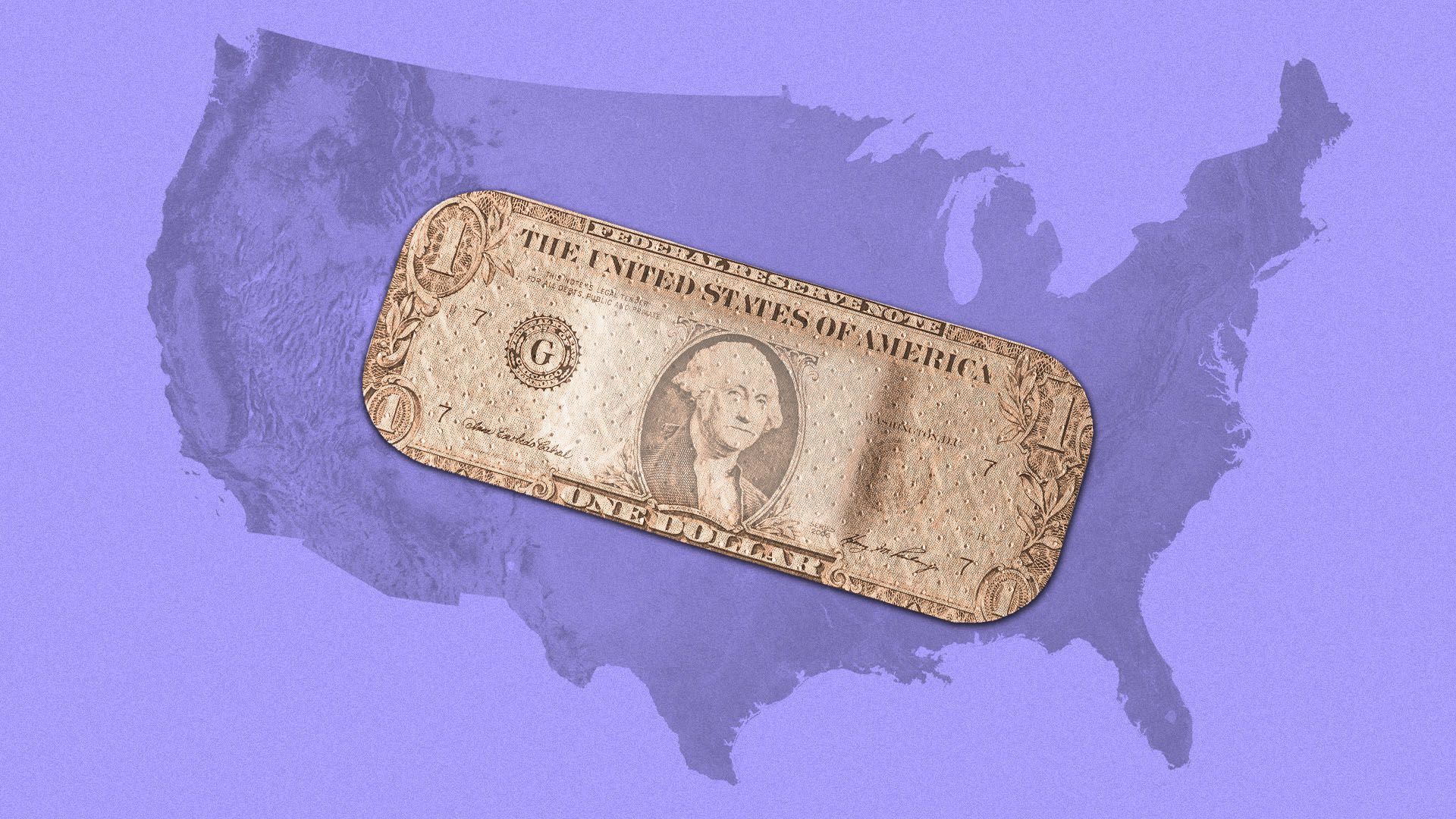
Perhaps the most important thing about the $2.2 trillion stimulus bill the Senate passed late Wednesday night is that it is not a stimulus bill at all.
It is not intended to stimulate growth and spending to offset a potential downturn; it is designed to prevent mass homelessness, starvation and a wave of business closures not seen since the height of the Great Depression.
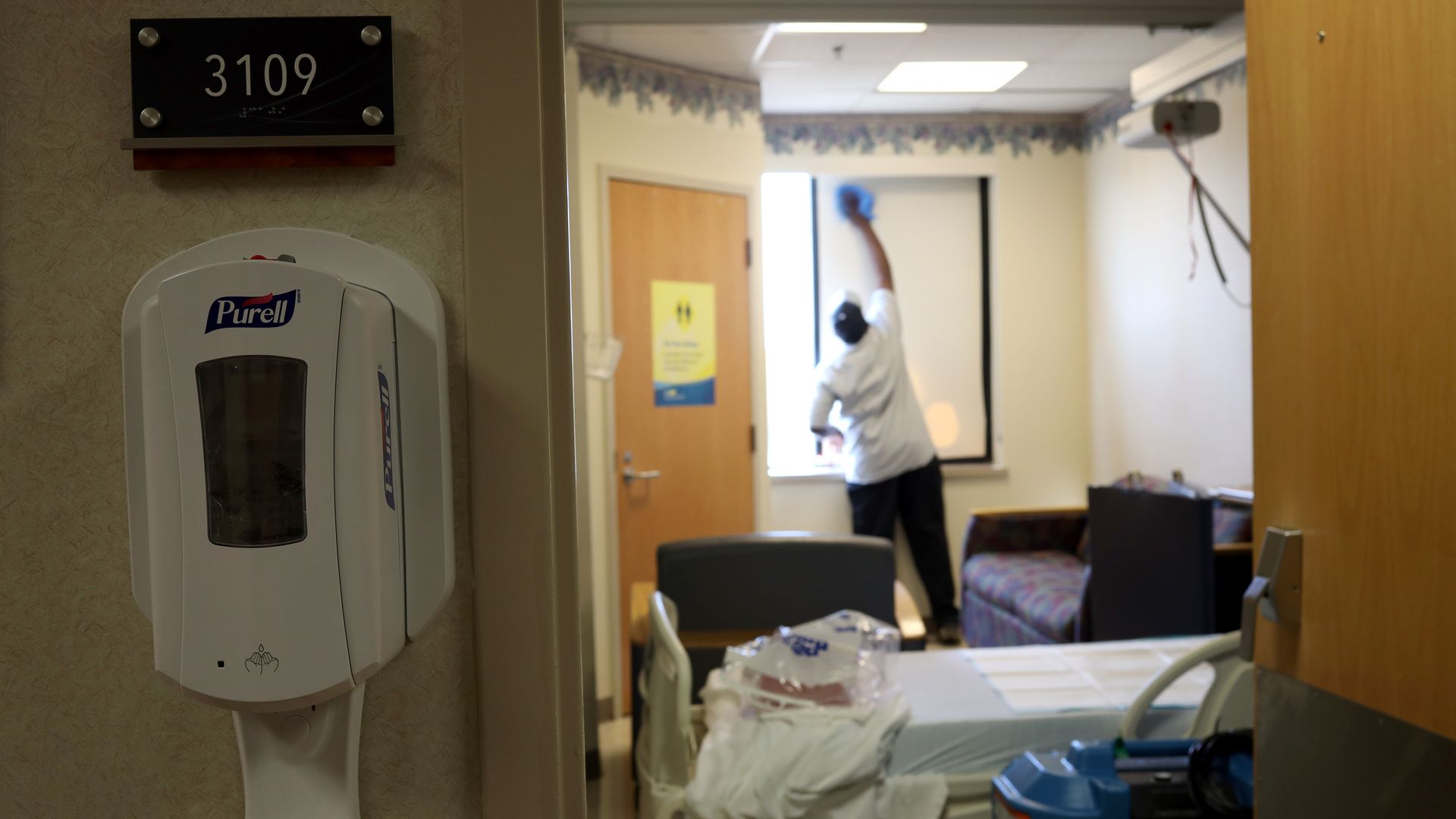
Congress' big stimulus package will provide more than $100 billion and several favorable payment policies to hospitals, doctors and others in the health care system as they grapple with the coronavirus outbreak.
The big picture: Hospitals, including those that treat a lot of rural and low-income patients, are getting the bailout they asked for — and then some.
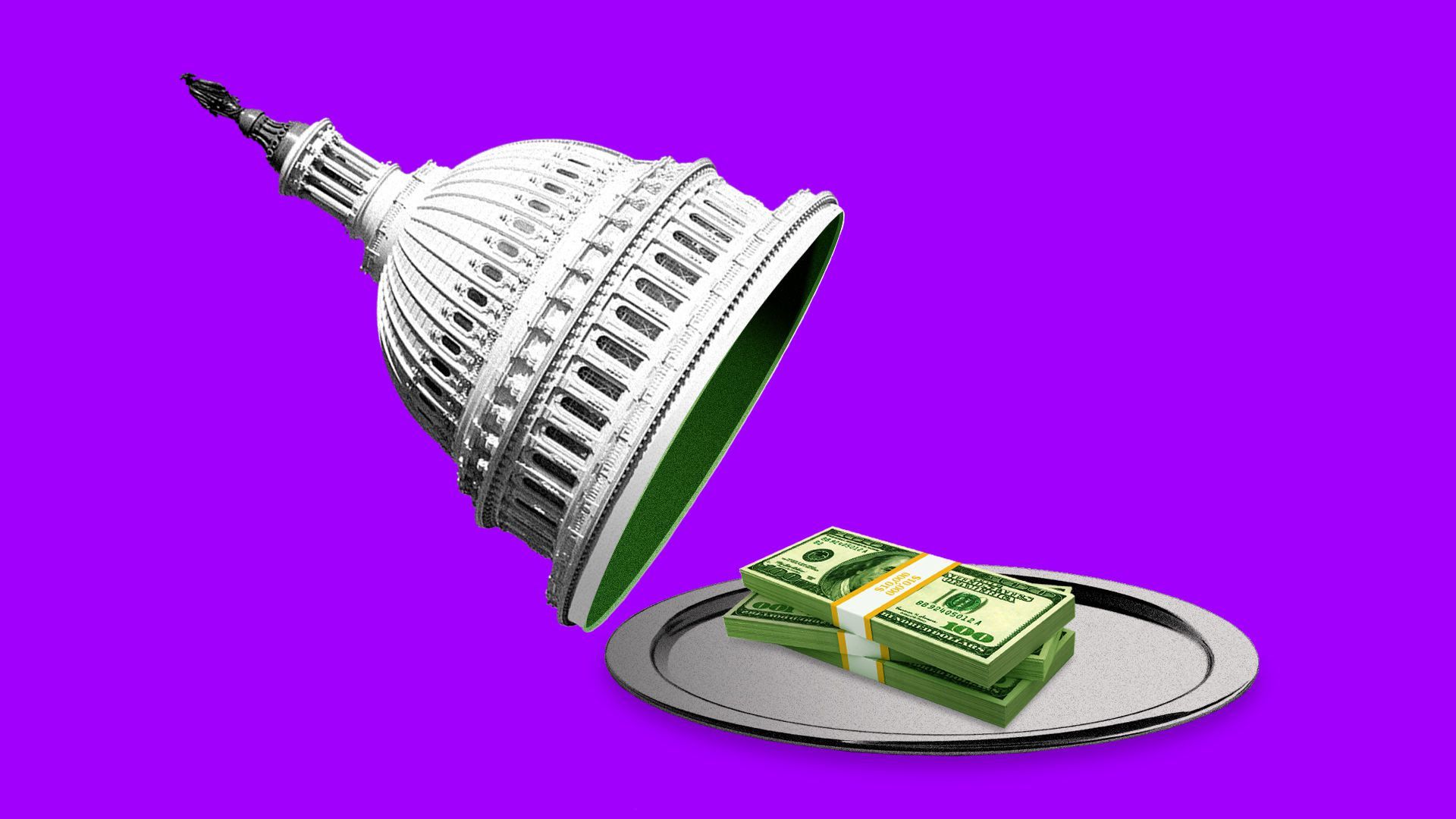
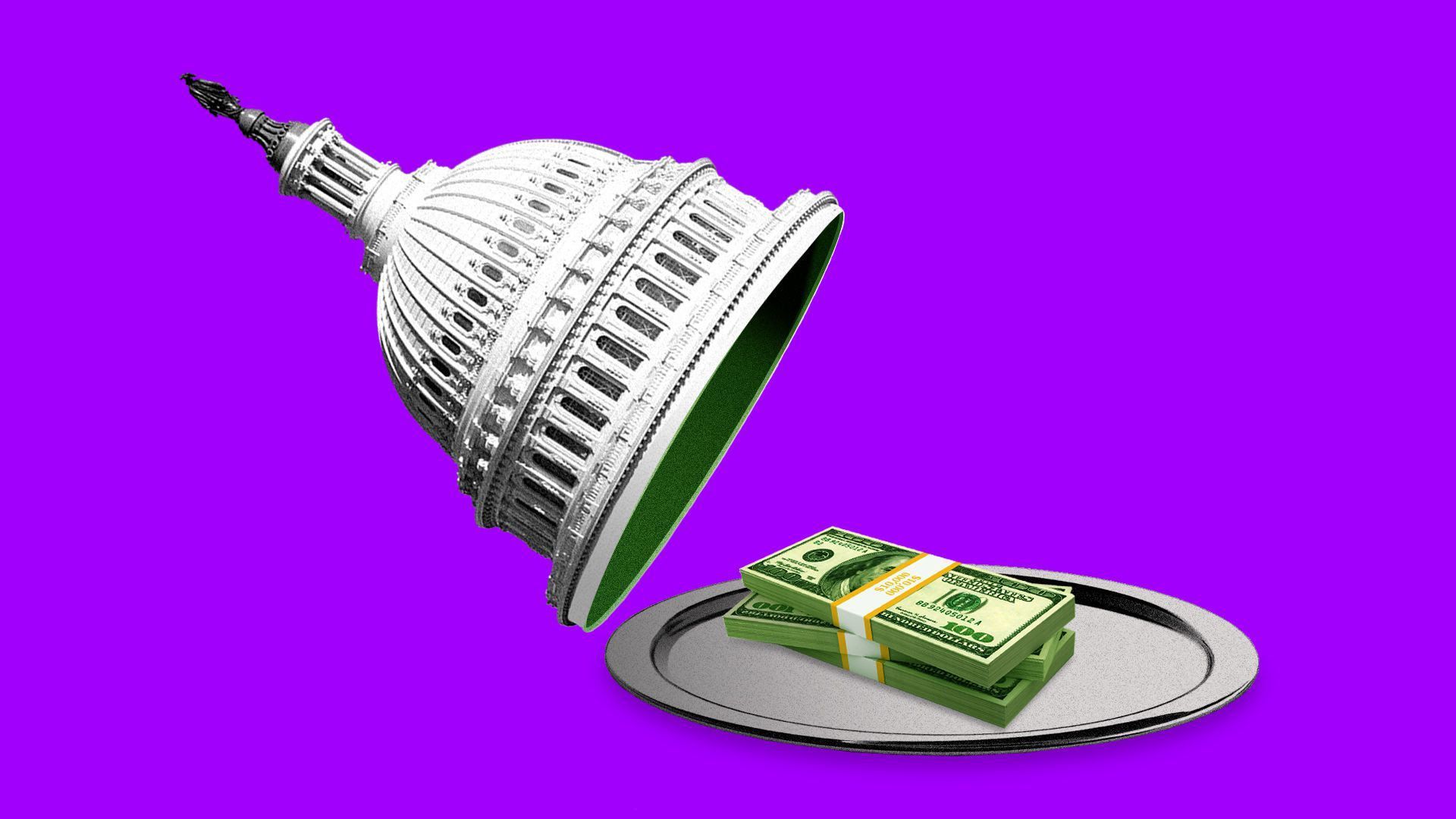
Congress' $2 trillion coronavirus stimulus package is the rare legislative agreement that will have an immediate — and lasting — impact on ordinary citizens across the country.
Why it matters: The 883-page bill, titled the "CARES Act," includes thousands of dollars in direct payments to most Americans, and huge loan packages designed to help keep small businesses and corporations afloat.
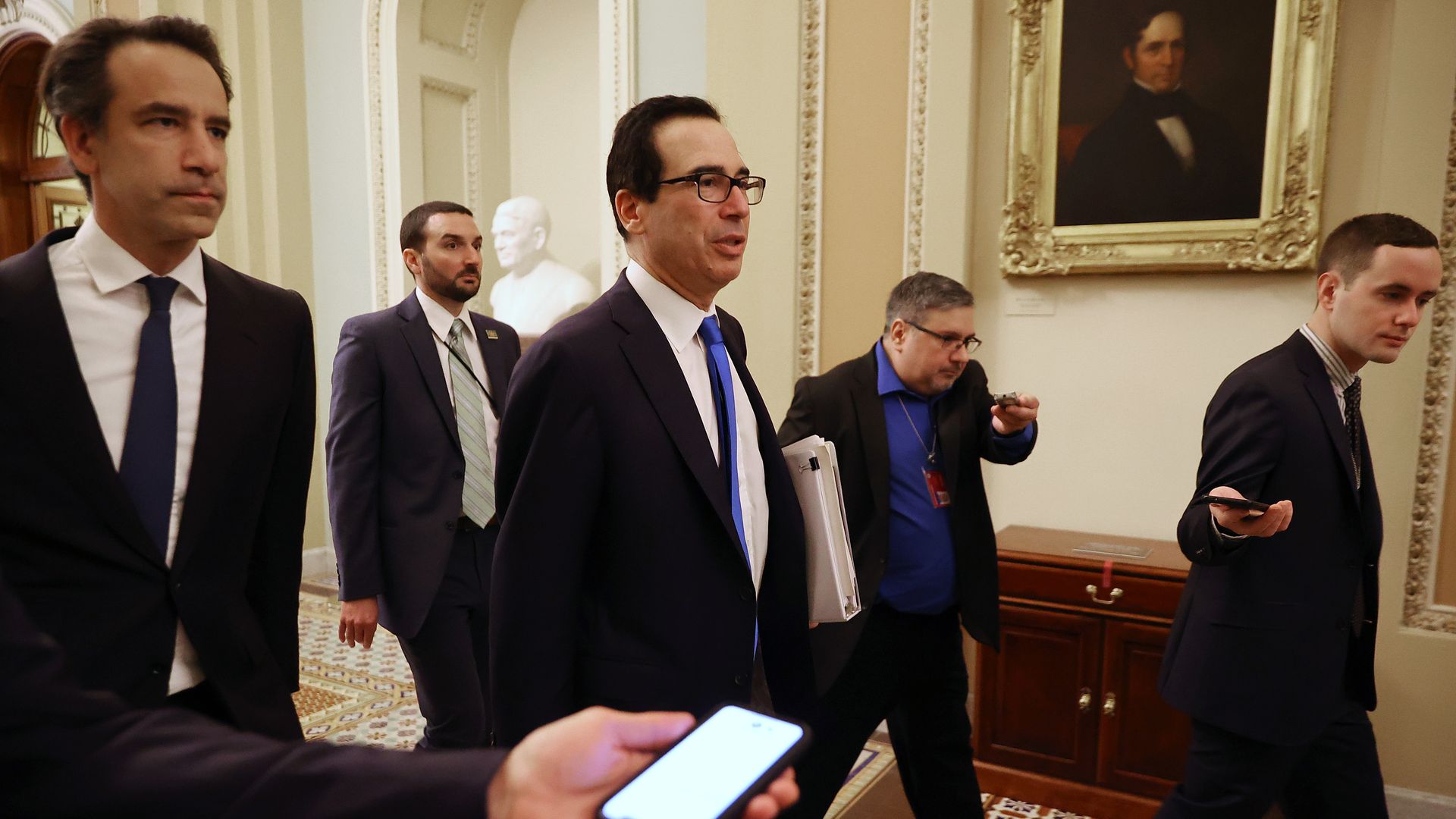
After several days of intense negotiations and an 11th-hour standoff over a key provision, the Senate has released the final legislative text for its $2 trillion bill to combat the novel coronavirus.
Why it matters: The bill is the largest rescue package in modern history, and it offers thousands of dollars in direct aid to American families, billions in emergency loans to small businesses and industries hardest hit by COVID-19, and desperately needed resources to hospitals.













/2020/03/26/1585223284838.gif?w=3840)