A potential U.S. strike on Iran is exposing a quiet but consequential split inside the Senate Democratic caucus.
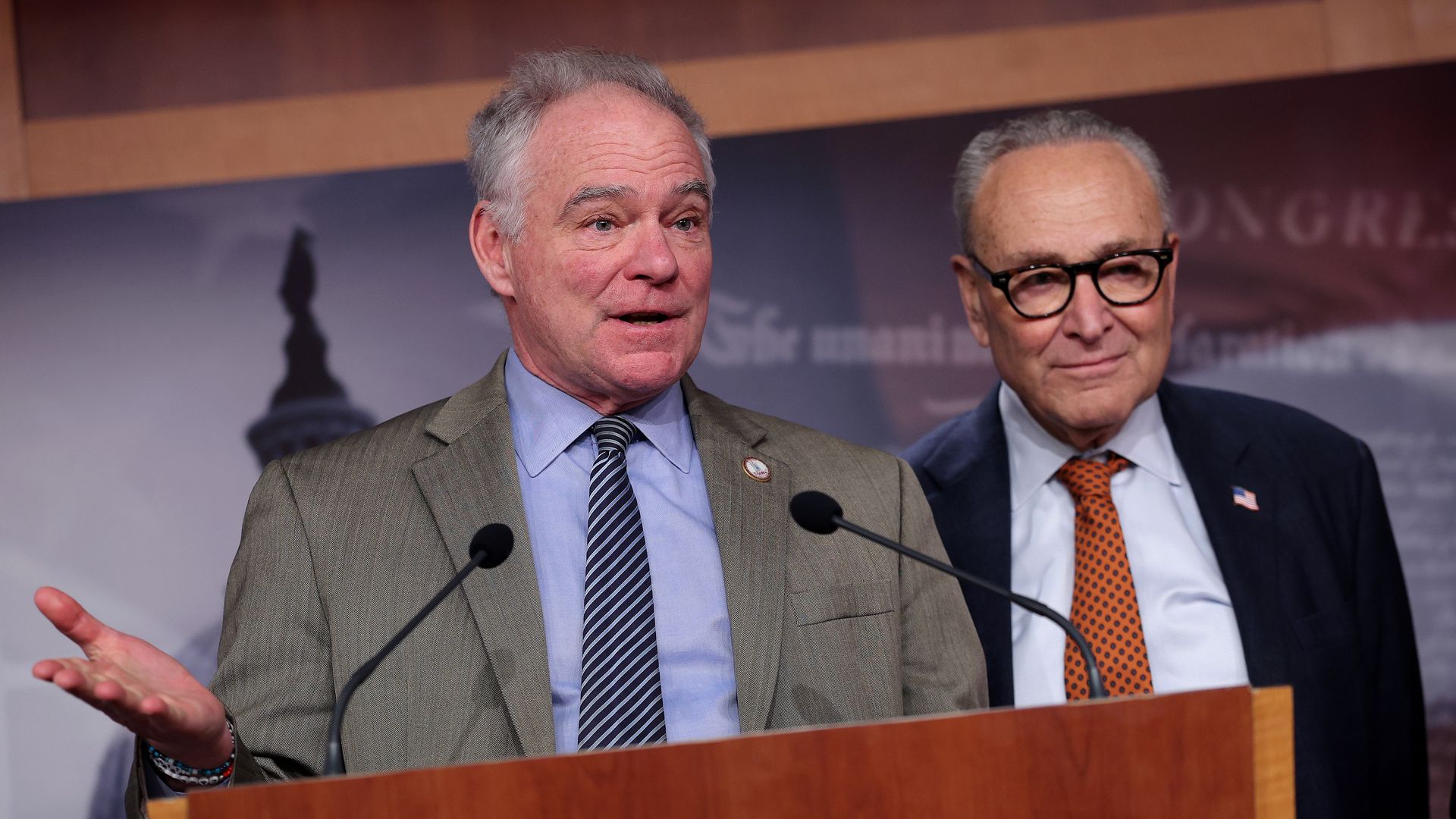
Why it matters: The Democratic base strongly opposes war with Iran, but some of Senate Minority Leader Chuck Schumer's (D-N.Y.) colleagues are more open to military action — provided Congress has a say.
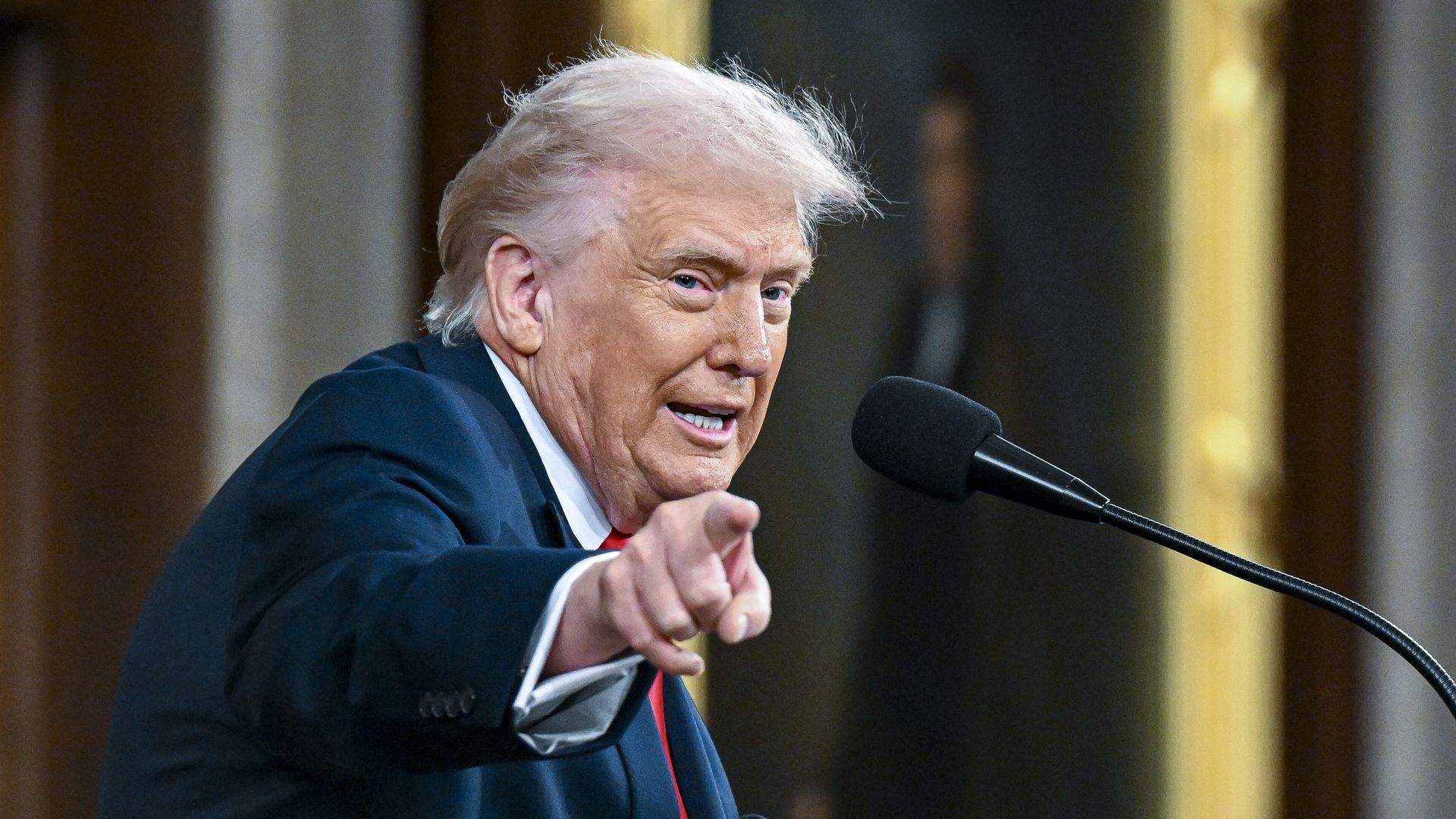
President Trump on Friday expressed frustration about nuclear talks with Iran, but said he hasn't decided yet whether to launch a military campaign.
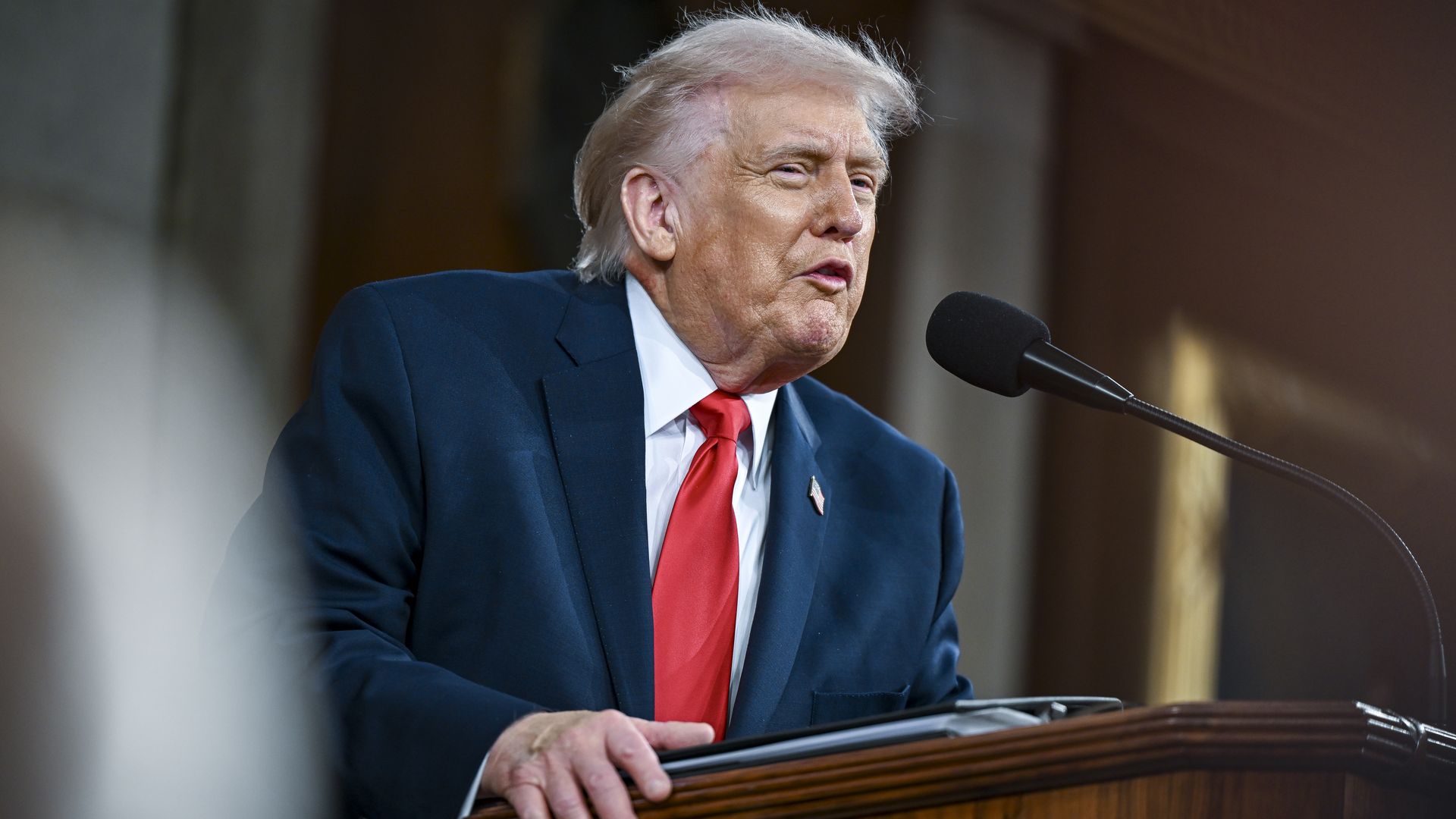
Why it matters: With the region on high alert and growing signals that war could be imminent, Trump is maintaining ambiguity and sending messages that could be interpreted as either alarming or reassuring.
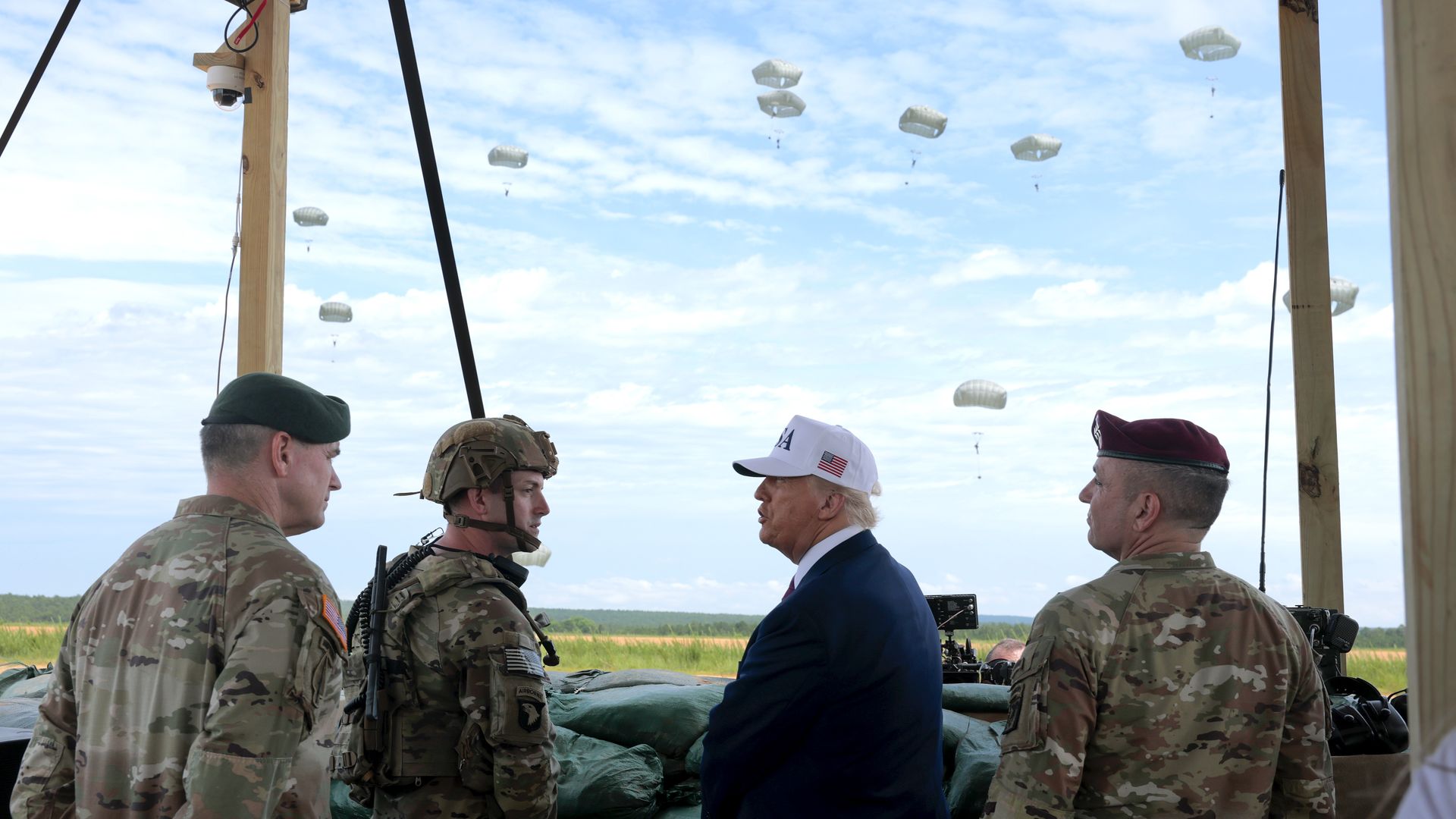
President Trump hasn't been shy about deploying the U.S. military during his second term.
Why it matters: Despite promoting himself as a president of peace, he's deployed the U.S. military in multiple American cities and across the globe, striking Iran and others, raiding Venezuela and striking suspected drug boats in the Caribbean.
The U.S. State Department announced on Friday that it started evacuating "non-emergency" government personnel from the embassy in Israel and their family members, citing "safety risks" amid growing tensions with Iran.
Why it matters: The decision signals that a joint U.S.-Israeli military campaign against Iran could be imminent. In such a case, Iran could launch ballistic missiles toward Israel and U.S. targets in the region.
For the first time in 25 years of Gallup polling, more Americans say they sympathize with Palestinians than with Israelis — a striking shift in U.S. public opinion.
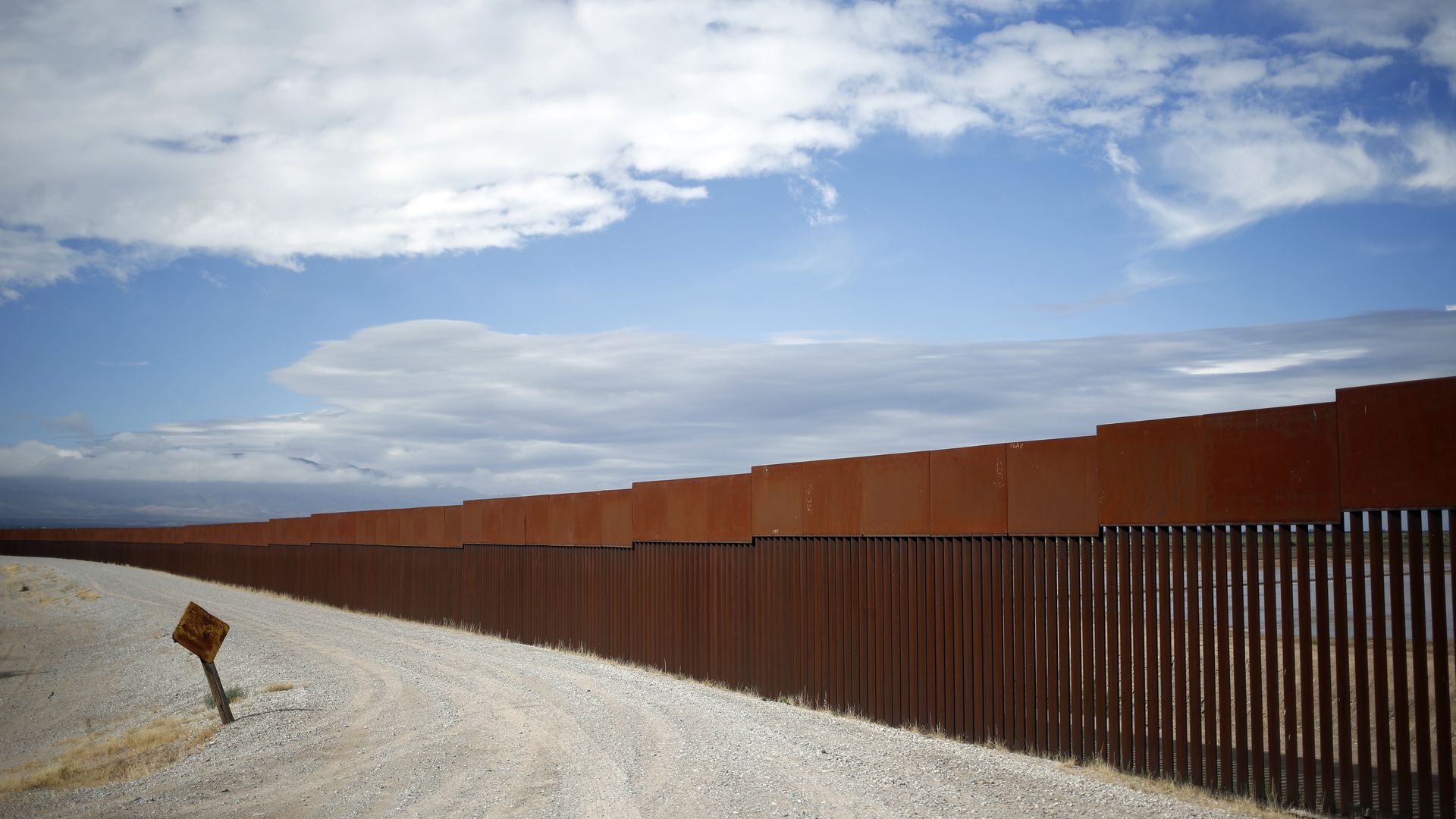
The Federal Aviation Administration prohibited flights in a Texas region near the border with Mexico after the Defense Department accidentally shot down a border patrol drone on Thursday, an administration official told Axios.
The big picture: Per an FAA notice, the agency issued airspace restrictions "for Special Security Reasons" after the Pentagon shot down the drone in the area around Fort Hancock, just over 50 miles southeast of El Paso — the scene of a similar airspace closure earlier this month.
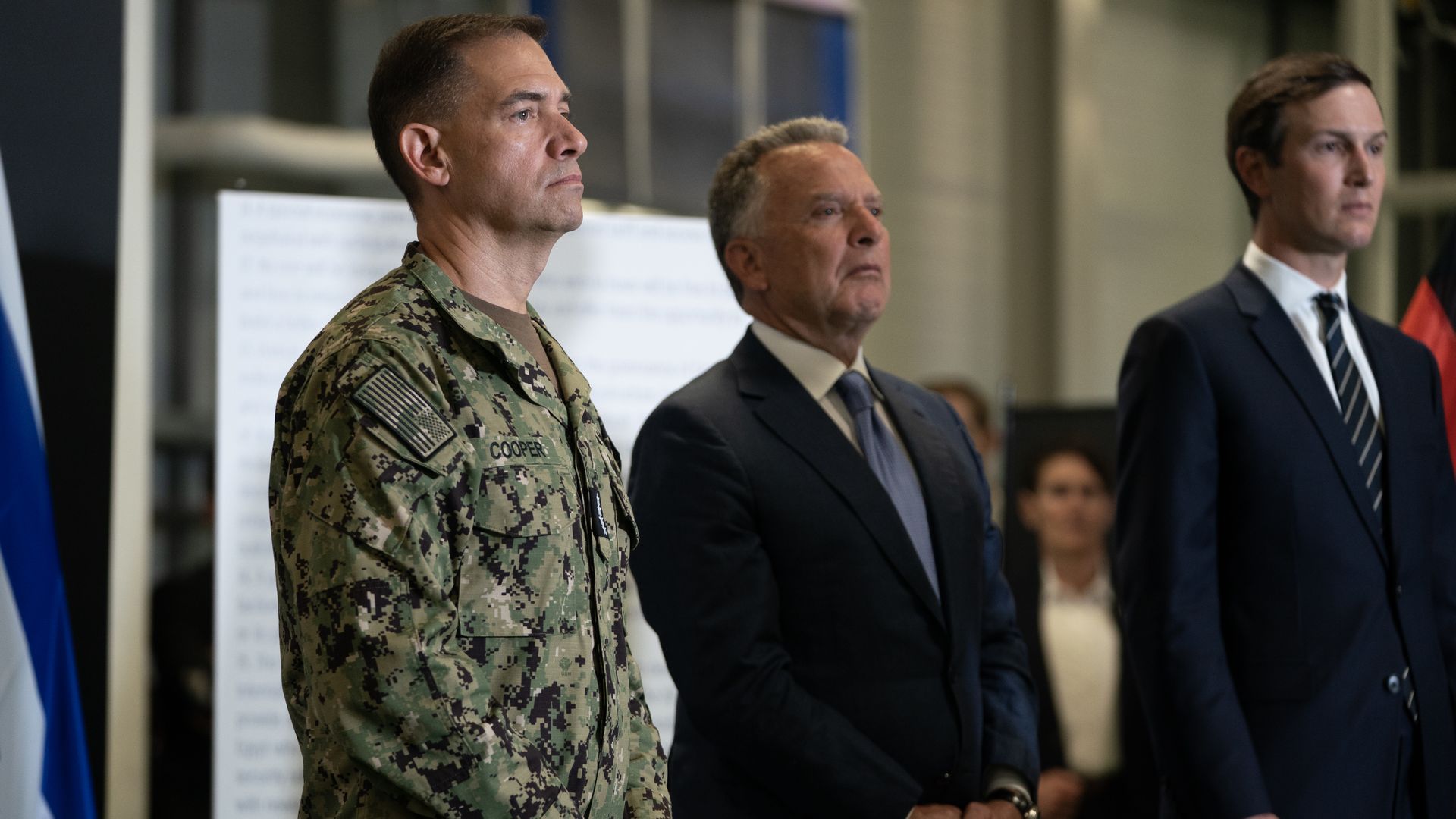
The top U.S. military commander in the Middle East briefed President Trump on Thursday about the options for military action against Iran, according to a U.S. official and a source with knowledge of the meeting.
Why it matters: This was the first time the commander of the U.S. military Central Command Adm. Brad Cooper briefed Trump since the beginning of the crisis with Iran last December.
Thursday's nuclear negotiations between the U.S. and Iran in Geneva led to understandings on some issues and left gaps on others, with another round set for next week, Iran's foreign minister said at the conclusion of the talks.
A senior U.S. official told Axios the talks were "positive" but did not immediately provide additional details.
Why it matters: The meeting was seen by many in the Trump administration as a last chance for diplomacy before President Trump decides whether to launch a war.
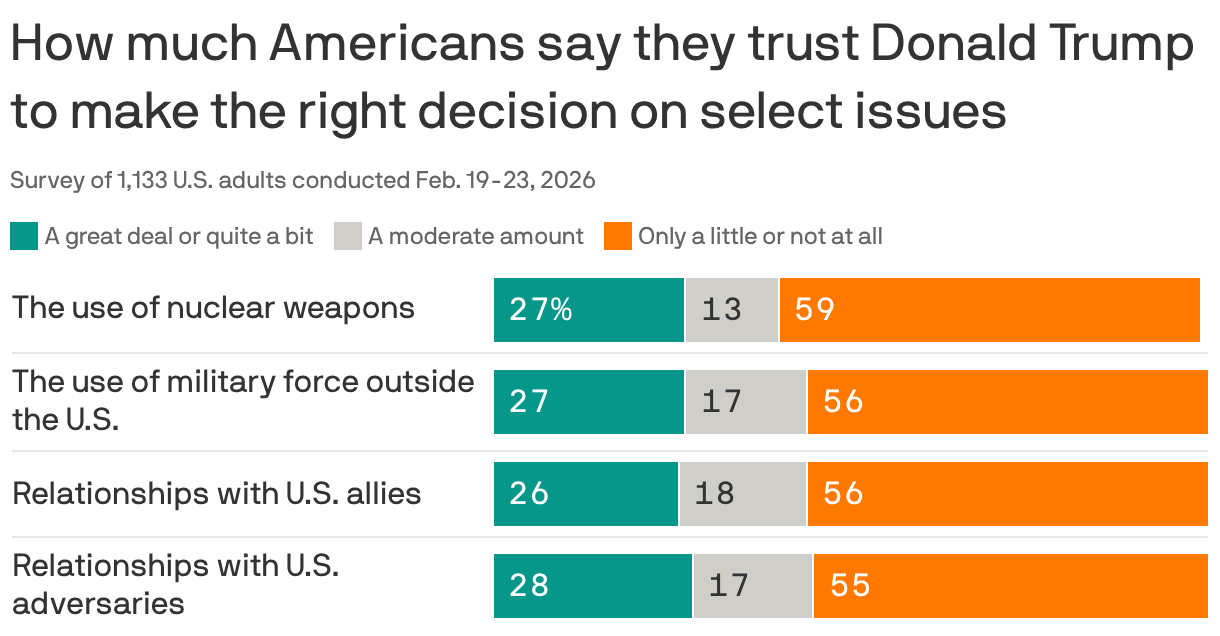
Most U.S. adults are concerned about the threat Iran poses to the U.S., but a majority say they don't trust President Trump's handling of foreign affairs, according to a new AP-NORC poll.
Why it matters: Thursday's nuclear talks between the Trump administration and Iran could be the last chance for a diplomatic solution before the president opts for military action.
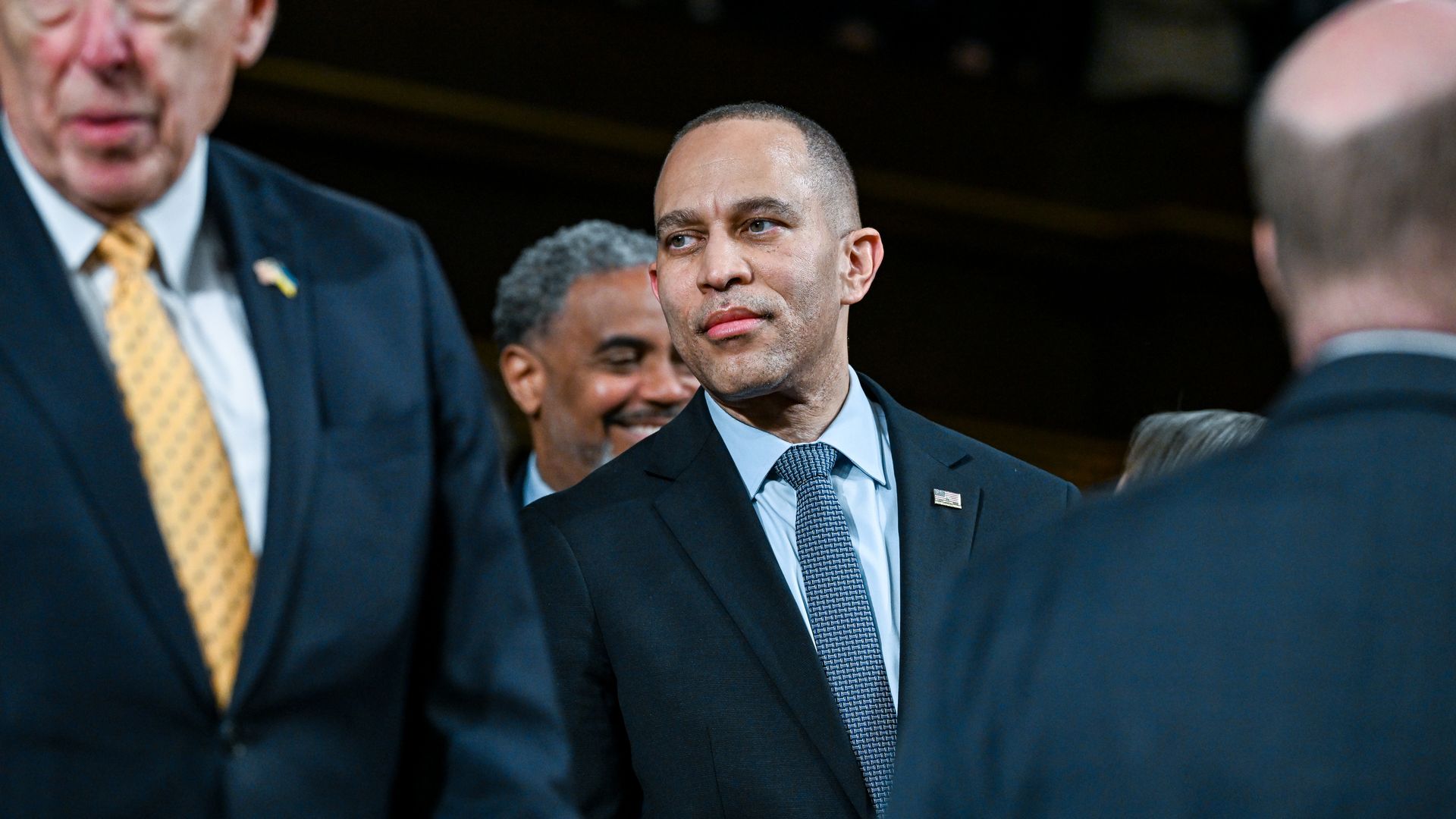
House Democratic leadership on Thursday announced plans to force a vote next week on a resolution that would require President Trump to seek congressional authorization to use military force in Iran.
Why it matters: The vote has a chance to pass in the House, with even some House Republicans expressing opposition as the White House inches closer to a potential major war in the Middle East.
World Economic Forum leader Børge Brende announced his resignation Thursday, the latest casualty of the Epstein files fallout rocking business, politics and academia.
The big picture: The files have captured some of the world's most powerful people in a far-reaching shadow of shame, effectively ending the careers of captains of industry, academic big shots and prominent politicians. And the dominoes keep falling.
U.S. officials are looking into an announcement by Cuba's government that it killed four people aboard a Florida-tagged boat near the Villa Clara coast on Wednesday, Secretary of State Marco Rubio said.
Why it matters: The Trump administration has already signaled an openness to regime change in Cuba, and the incident that Cuban officials claim was "intended to carry out an infiltration for terrorist purposes" risks another escalation between Washington and Havana.
At the Winter Olympics this year, I added a new title to my reporting job: credentialed photographer.
The big picture: The gig gave me a literal front-row seat to history in Milan. Covering my third Olympics for Axios, it also dealt me a learning curve I had to navigate for more of the events than in past years.
Armed with some of the best gear on earth, I still felt like a novice — fumbling the focus, missing split-second moments, wondering if I was in over my head.