What I learned photographing the Milan Olympics

Add Axios as your preferred source to
see more of our stories on Google.
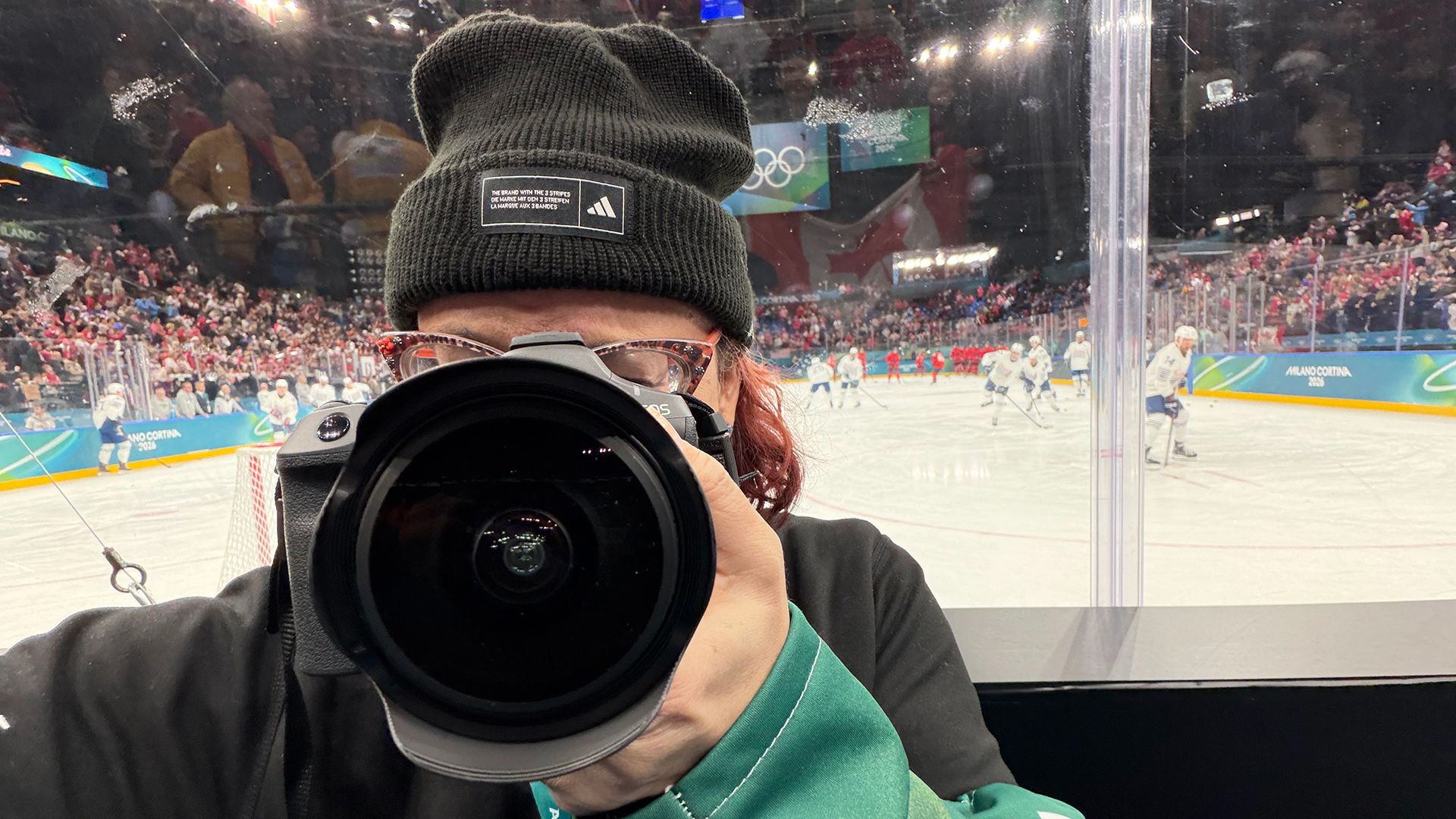
Photo: Ina Fried (Self-portrait)
At the Winter Olympics this year, I added a new title to my reporting job: credentialed photographer.
The big picture: The gig gave me a literal front-row seat to history in Milan. Covering my third Olympics for Axios, it also dealt me a learning curve I had to navigate for more of the events than in past years.
Armed with some of the best gear on earth, I still felt like a novice — fumbling the focus, missing split-second moments, wondering if I was in over my head.
The surprise: The photographers around me were generous and encouraging, offering tips between plays.
- "You learn every time you pick up a camera," New York Times photographer Doug Mills told me as we shot side-by-side at the women's hockey bronze medal game. Like me, he was using the Olympics as a chance to step outside his usual beat covering the White House.
Between the lines: What stayed with me most weren't just the action shots I did or didn't get, or even the medal ceremonies, but rather the very human moments that came just after the formal festivities wrapped up.
- There were the expected scenes: flags draped over shoulders, selfies, athletes goofing off on the ice.
But there were also quieter, unscripted ones, as athletes rushed to the stands to share the moments with family and friends — something that wasn't possible during the last Winter Games in Beijing due to the still-raging Covid epidemic. I witnessed:
- American Laila Edwards, fresh off of becoming the first Black woman to win Olympic hockey gold, patiently take selfies with seemingly anyone who asked.
- Switzerland's Laure Mériguet skate straight to her best friend, while teammate Ivana Wey went straight to her adoring sister, Alexandra, after their overtime win to capture the bronze in women's ice hockey.
Standing there with a camera, I realized the lessons weren't just about photography. They were about life.
My advice after the experience:
1. Experiment.
- I tried different sports, lenses and angles whenever I could — a fisheye lens for players crashing into the boards; a giant zoom that required a monopod; shooting from ice level and from high in the stands.
- At hockey, the spot behind the net was thrilling — and occasionally put me on TV — but I eventually learned the side angle worked better for me. Trying things is the only way to find your lane.
2. Go all in.
- I couldn't be everywhere. I chose short-track speed skating over a men's hockey quarterfinal that turned into an overtime thriller.
- The lesson: Embrace the moment you're in, not the one you might be missing — whether it's an event, a job or simply the seat you've got.
3. Stay curious.
- Each day I tried to identify the one thing holding me back.
- Often, it was something simple — a technical setting I still didn't fully understand, even after owning the camera for a year. Progress came from asking for help, not pretending I had the answers.
4. Don't give up.
- Missed shots happen. The bigger mistake was dwelling on them long enough to miss the next opportunity.
The bottom line: I came to Milan to write about the Olympics. I left reminded that starting something new — even in the middle of a career — is uncomfortable, humbling and deeply rewarding.
- Sometimes the best lessons aren't in the story you're covering, but in the way you choose to see it.


Go deeper: NBCUniversal draws biggest Winter Games audience since 2014
