Trump is frustrated about Iran — but says he hasn't decided whether to strike

Add Axios as your preferred source to
see more of our stories on Google.
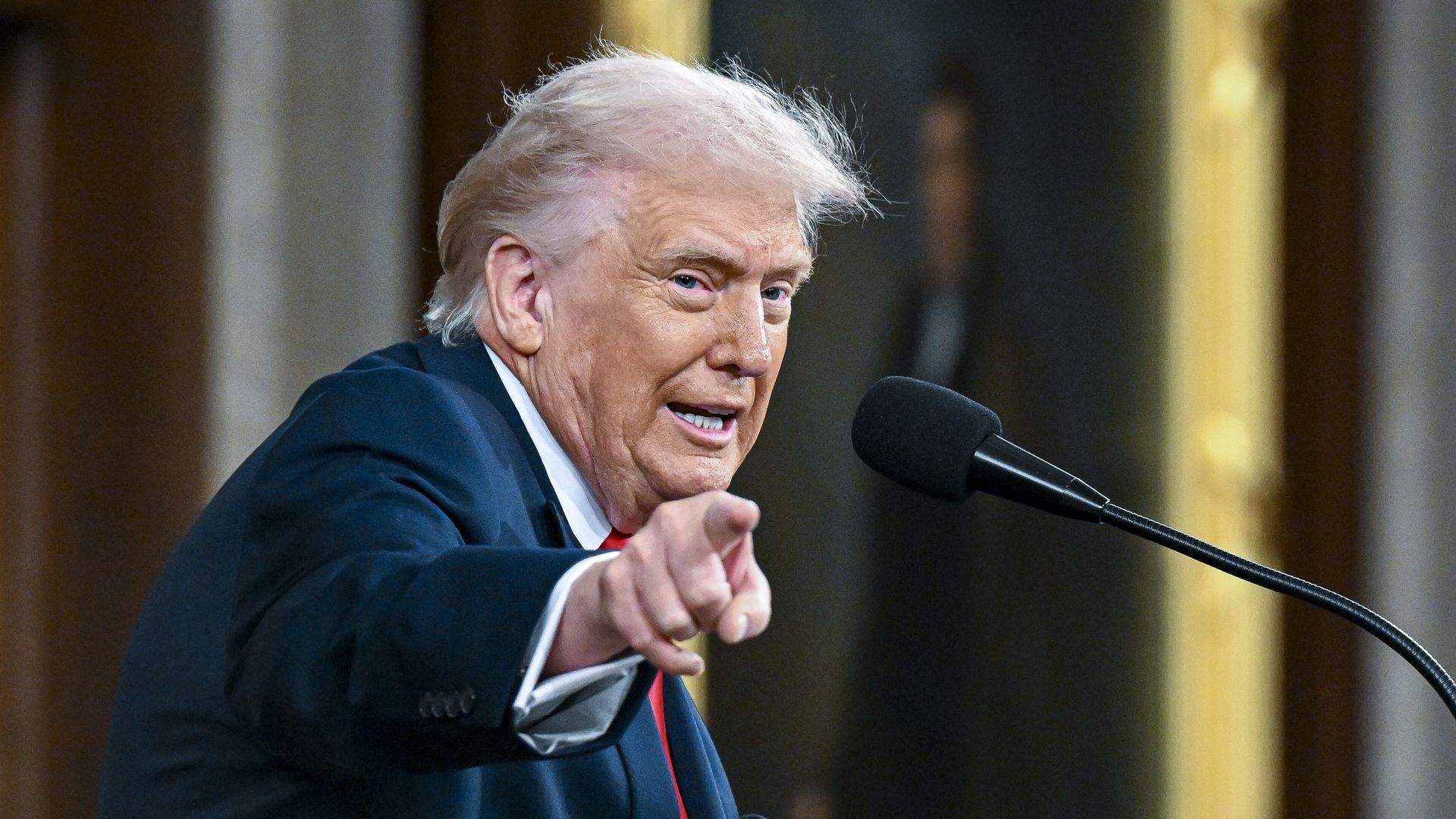
President Trump. Photo by Kenny Holston-Pool/Getty Images
President Trump on Friday expressed frustration about nuclear talks with Iran, but said he hasn't decided yet whether to launch a military campaign.
Why it matters: With the region on high alert and growing signals that war could be imminent, Trump is maintaining ambiguity and sending messages that could be interpreted as either alarming or reassuring.
- Yet several signs point to war: The ongoing U.S. military buildup in the Middle East, Trump's military briefings, the evacuation of staff from the U.S. embassy in Israel (a potential target for Iranian retaliation), and the disappointment felt by Trump envoys Jared Kushner and Steve Witkoff after talks in Geneva yesterday.
What he's saying: Trump told reporters Friday that he hasn't made a final decision on striking Iran, but hasn't ruled it out.
- While stressing there is a risk in every military attack, Trump noted that his previous military operations against Iran were successful.
- "It would be nice if we could do it without [military force], but sometimes you have to," he said while leaving the White House for Texas.
Trump echoed his team's disappointment with Iran's positions during the nuclear talks in Geneva, saying he wasn't "thrilled" with the way the Iranians negotiated.
- "I'm not happy with the fact that they're not willing to give us what we have to have. We'll see what happens. I'm not happy with the way they're going ... it would be wonderful if they negotiate in good faith and conscience — but so far they are not getting there."
The latest: Talking to reporters in Texas on Friday afternoon, Trump said Iran is "not ready to go far enough" in the negotiations "and it's too bad."
- "They don't want to say the key words, 'We are not going to have a nuclear weapon.' They can't get there. They want to enrich a little bit. You don't have to enrich when you have that much oil. I say: no enrichment. No 20%, no 30%," Trump said.
- He said the U.S. will not "put up with" Iran's behavior "too long," but declined to say how close he is to making a decision on launching a military campaign.
- The president added that he isn't concerned that a strike on Iran would raise oil prices. "I am concerned about people's lives."
Behind the scenes: Two pro-strike people who spoke to Trump over the last two days say he offered contradictory messages.
- One heard that Trump understands the Iranian regime is weaker than ever, and that a window of opportunity exists. The other heard that Trump still wants a deal.
What we're watching: More negotiations are taking place Friday, Trump said.
- Vice President J.D. Vance met in Washington Friday with Omani Foreign Minister Badr al-Busaidi, the key mediator between the U.S. and Iran.
- Al-Busaidi on X after the meeting: "I shared with the Vice President details of the ongoing negotiation between the U.S. and Iran and the progress achieved so far. I am grateful for their engagement and look forward to further and decisive progress in the coming days. Peace is within our reach."
- U.S. envoys Witkoff and Kushner skipped the meeting, which was a last ditch effort to stop the talks from collapsing.
- Trump told reporters in Texas that Vance briefed him after the meeting.
What's next: Secretary of State Marco Rubio is expected to visit Israel on Monday — but some U.S. and Israeli officials think he might not go if Trump gives the order to strike Iran.
The bottom line: While more negotiations are set for next week, war could start sooner.
