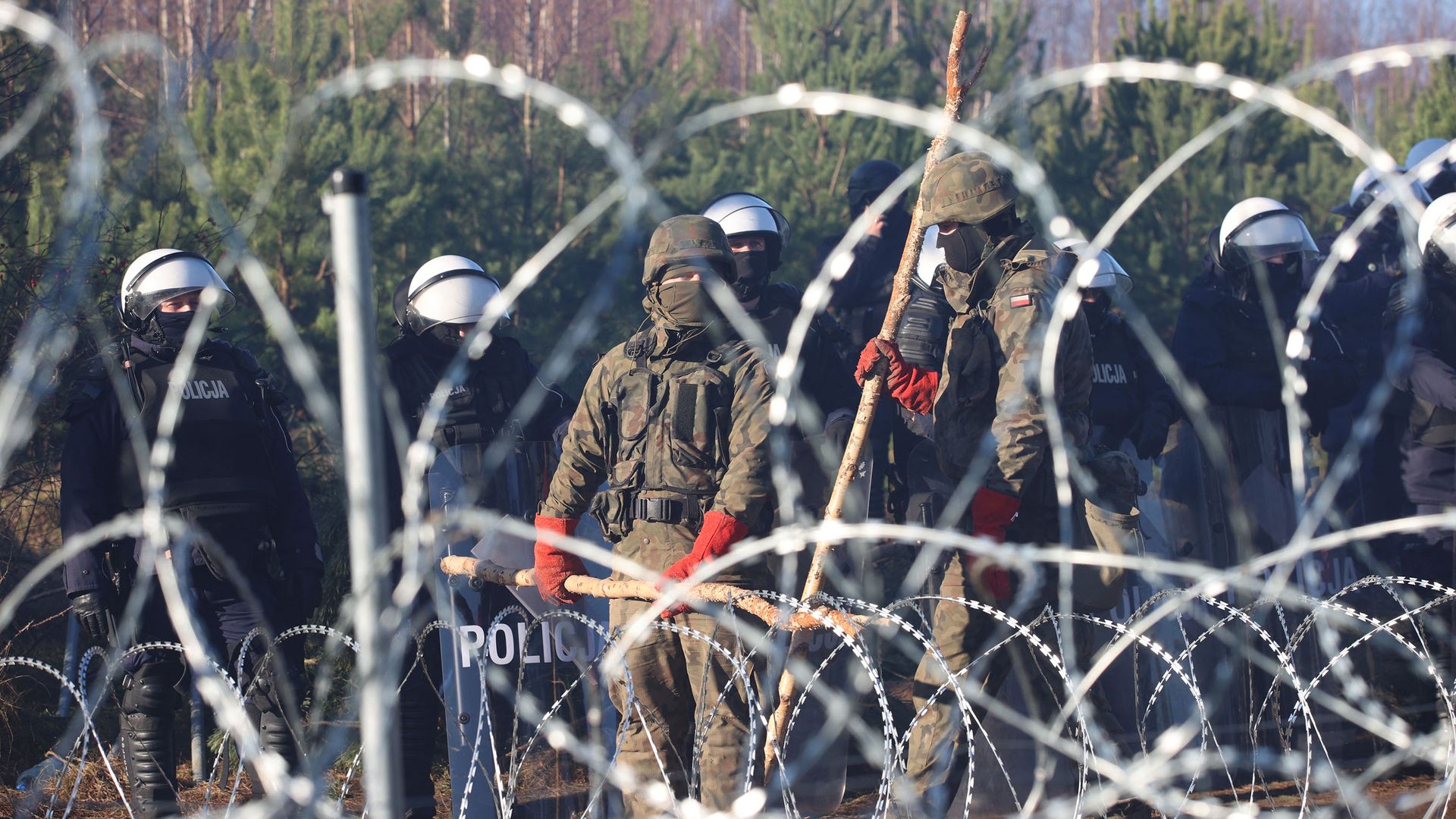
Two events over the past week — an attempted drone assassination and a partially engineered migrant crisis — show the changing nature of conflicts.
Why it matters: Outright wars between states remain extremely rare, but new technologies and strategies are enabling countries and groups to wage conflict by other, hybrid means.
Secretary of State Antony Blinken said during a press briefing with Ukraine Foreign Minister Dmytro Kuleba Wednesday that the U.S. is "concerned" Russia may try" to rehash" its 2014 invasion of Ukraine, noting that "any escalatory or aggressive actions would be of grave concern" to the U.S.
What he's saying: "We're concerned by reports of unusual Russian military activity near Ukraine," Blinken said. "We're monitoring the region very closely."
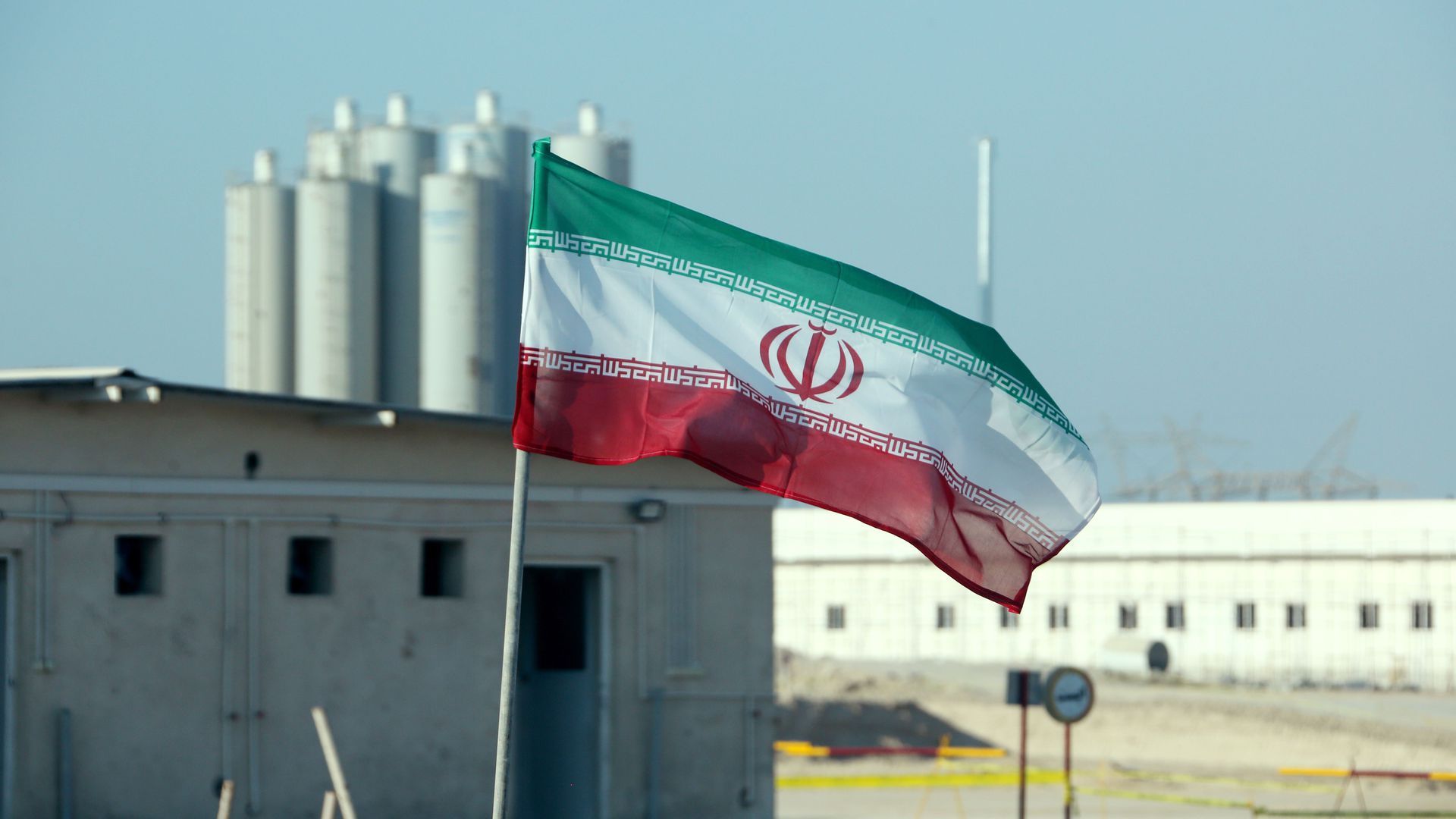
Less than three weeks before indirect negotiations are set to resume between the U.S. and Iran about a possible return to the 2015 nuclear deal, Iran is holding talks with other signatories to the agreement to try to set the stage for the new round of negotiations.
Why it matters: The talks on Nov. 29 in Vienna will be the seventh round of negotiations since President Biden assumed office and the first round since Ebrahim Raisi was inaugurated as president of Iran.
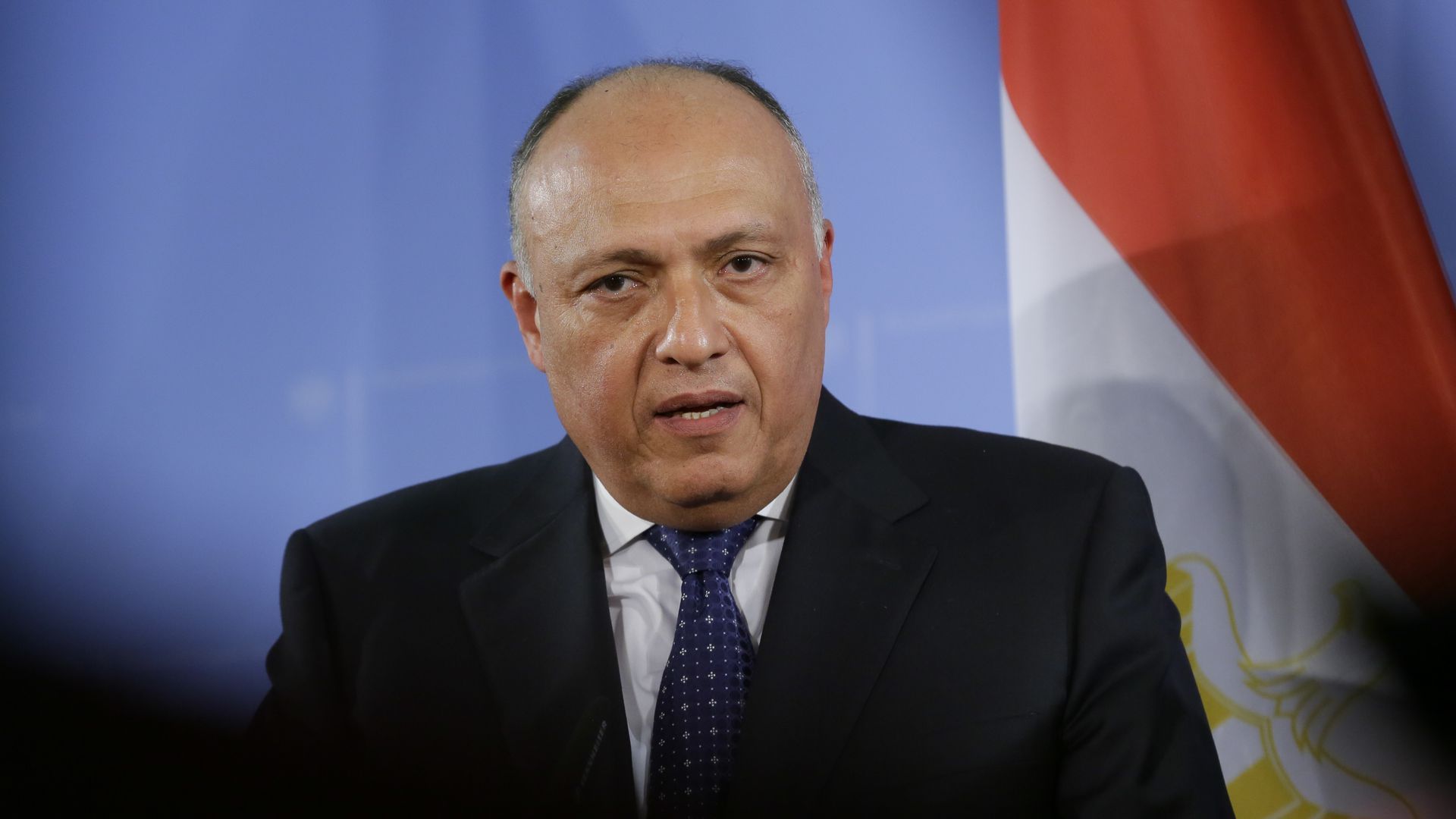
Egypt and the U.S. are working to decrease friction between the countries around human rights issues, Egyptian Foreign Minister Sameh Shoukry told a group of representatives from several American Jewish organizations in a closed meeting in Washington on Tuesday, people who attended the meeting told me.
Why it matters: U.S. criticism of Egypt's human rights record cooled relations between the two countries early in the Biden administration. Egypt played a key role in establishing a ceasefire in the Gaza strip in May, but human rights remains a sticking point in the strategic partnership between Egypt and the U.S.
The Biden administration finds itself stuck between its pledge to the Palestinians to reopen the U.S. Consulate in Jerusalem and strong Israeli government opposition to this move.
Why it matters: Any decision by the Biden administration on this issue is likely to anger either Israel or the Palestinians and lead to tensions.
The U.S. mediator in the maritime border dispute between Israel and Lebanon told the parties if they can’t get an agreement before the March 2022 parliamentary election in Lebanon, he will stop dealing with the issue, Israeli officials said.
Why it matters: The direct message from U.S. energy envoy Amos Hochstein seems to be aimed at making it clear to the parties they will have to make compromises.
The latest big COP26 pledge aims to greatly speed the transition to electric vehicles, but it has split the auto industry and lacks buy-in from key countries.
Driving the news: The nonbinding commitment from a suite of companies, nations, cities and others calls for all car and van sales to be zero-emissions globally by 2040, and by 2035 in "leading markets."
Since China Evergrande began flaking on debt payments in September, the world’s focus has turned from whether its collapse represents a Lehman Brothers-like moment of systemic peril (it doesn’t) — to whether China’s whole property sector is set for a string of defaults (it probably is).
Why it matters: Lehman or not, the Federal Reserve warned this week that financial fallout from China’s real estate shakeout “could pose some risks to the U.S. financial system.”
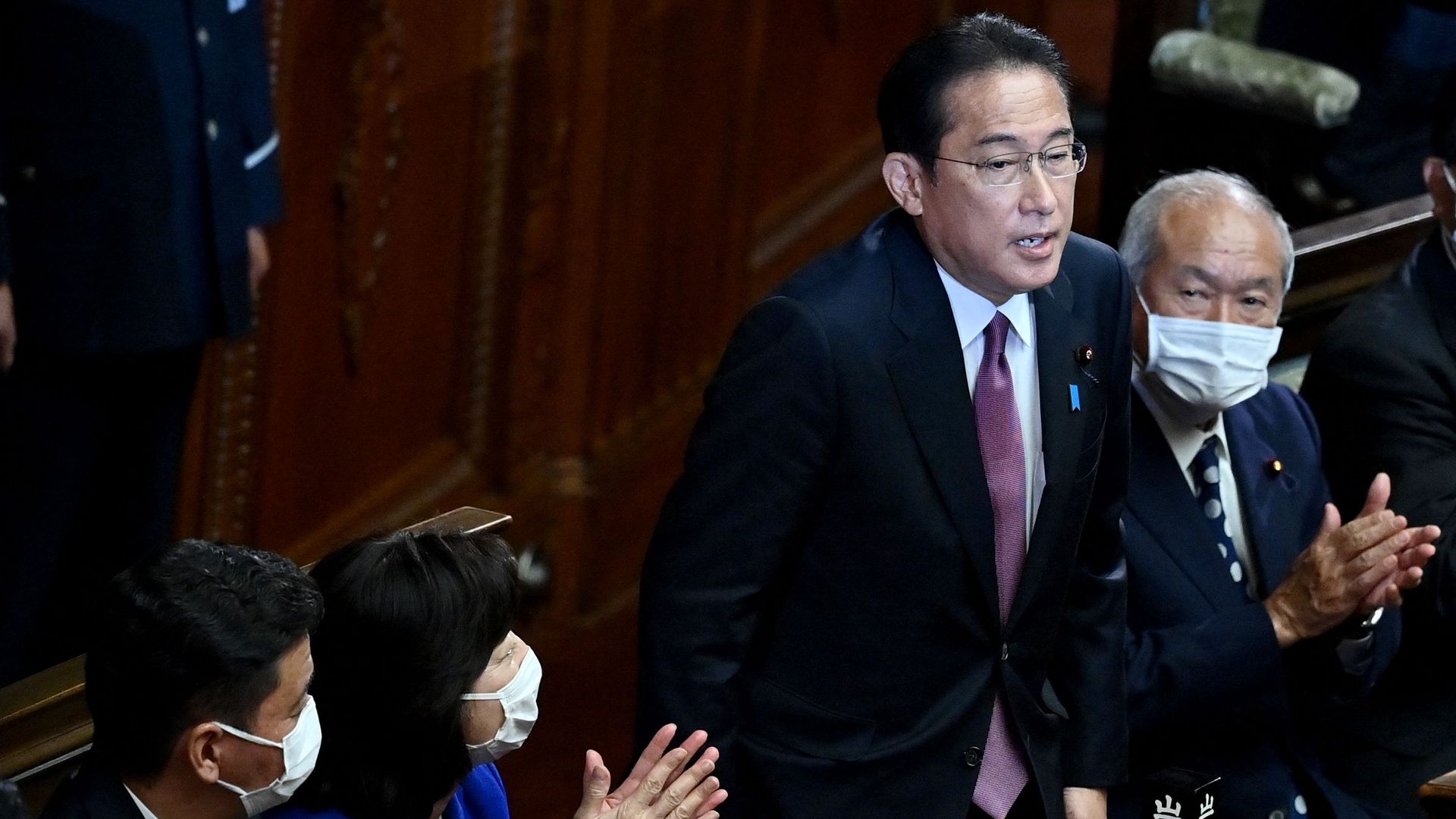
Fumio Kishida was re-elected as Japan's prime minister Wednesday in a parliamentary session after his ruling Liberal Democratic Party (LDP) won a majority in the House of Representatives election, per AP.
Why it matters: The 261 seats the LDP won in the 465-member lower house at the Oct. 31 election puts Kishida in a more powerful position, as he prepares to protect Japan from a potential COVID-19 resurgence while trying to revive the world's third-largest economy and working with the U.S. and other allies to address security threats.
Sixteen United Nations staff members and some dependents are detained in Ethiopia's capital, Addis Ababa, while another six have been released, UN spokesperson Stéphane Dujarric confirmed at a press briefing Tuesday afternoon.
Driving the news: The yearlong fight between government and opposition forces has intensified in recent weeks. Last week, Ethiopia declared a state of emergency as rival forces from the northern region of Tigray moved toward the capital.
The American Civil Liberties Union has filed an administrative complaint to the U.S. Departments of Commerce and Justice, asserting claims of false arrest and civil conspiracy on behalf of a Chinese American scientist who was cleared of espionage-related charges in 2015.
Why it matters: Hydrologist Sherry Chen's ordeal has spanned three presidential administrations and is adding to growing concerns about U.S. government profiling of Chinese American scientists.
"I can't and won't quit China." That was a prominent U.S. growth equity investor, when I asked if Beijing's business crackdown was causing him to reconsider his firm's China strategy.
Driving the news: It's the same message I've heard repeatedly over the past 24 hours, albeit not usually so pithy. My questions came after SoftBank reported a $3.5 billion third-quarter loss, plus a $54 billion dip in net asset value, that it largely pinned on China.
One criticism of new pledges at COP26 is that they're vague and squishy, but a U.S.-led push to help decarbonize several major industries features specific commitments by corporate giants.
Driving the news: The burst of announcements included the First Movers Coalition.
A report released today by the U.S. Holocaust Memorial Museum states the museum is "gravely concerned" the "Chinese government may be committing genocide against the Uyghurs."
Why it matters: A growing number of governments and other institutions are concluding the Chinese government's policies toward the Uyghur ethnic minority aren't just repression, but in fact constitute genocide.
A billion people will endure extreme heat stress if global temperatures were to increase by 2°C (3.6°F), research announced Tuesday by the U.K.'s Met Office at the COP26 climate summit warns.
Why it matters: Current targets being discussed at COP26 in Glasgow, Scotland, would see global average temperatures overshoot the Paris Agreement's most ambitious target of 1.5ºC of warming, compared to preindustrial levels, per Axios' Andrew Freedman.
Four astronauts on the SpaceX Crew-2 mission splashed down in the Gulf of Mexico near Pensacola, Florida, Monday night after a six-month stay on the International Space Station.
The big picture: The return of NASA's Shane Kimbrough and Megan McArthur, Japanese astronaut Akihiko Hoshide and the European Space Agency's Thomas Pesquet comes ahead of another SpaceX launch to the ISS of four more crew members that's scheduled for Wednesday.
Two weeks after the European Parliament voted 580-26 on a resolution to strengthen EU-Taiwan relations, an official delegation of lawmakers traveled to Taiwan for the first time to deliver a simple message: "You are not alone."
Why it matters: Taiwan is an industrialized democracy that has faced growing military intimidation from the Chinese government, which views the self-governing island as a breakaway territory that must be brought under its control.
The international community's top representative in Bosnia is sounding the alarm over the "very real" possibility of a return to conflict, citing secessionist maneuvers by the Serb member of the country's tripartite presidency.
Catch up quick: The end of the Bosnian war in 1995 was marked by the signing of the Dayton Peace Agreement, which established two regional entities in Bosnia — the Republika Srpska and the Bosniak-Croat Federation, linked by a central government.









/2021/11/10/1636547553668.gif?w=3840)