Younger people and those who interact regularly with people of other races and ethnicities are far more likely to view increased diversity favorably, according to Pew data from 11 countries.
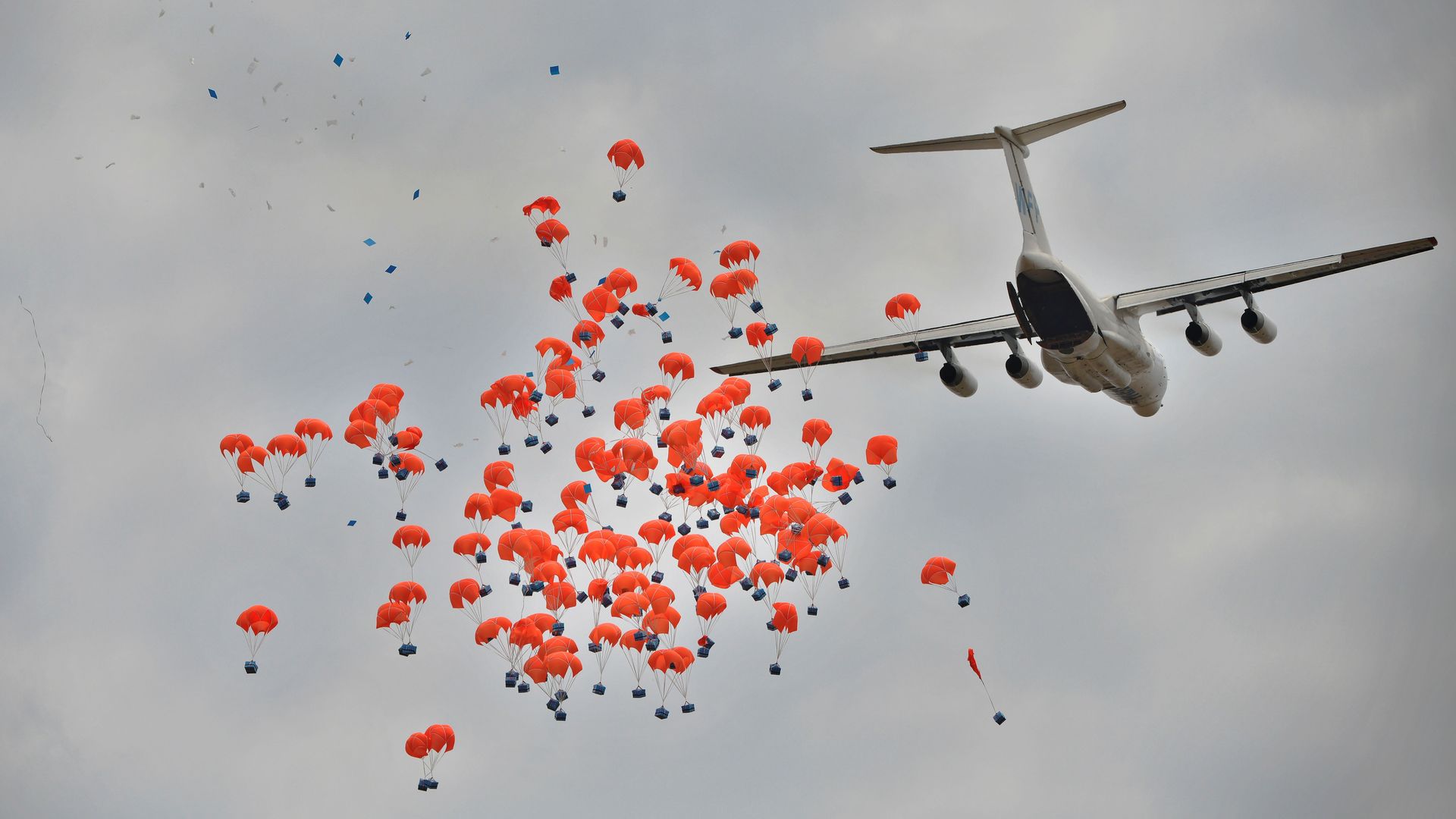
The pandemic is not only making it harder for people in developing countries to afford food, it's making it harder to get food and supplies into those countries in the first place.
Zoom in: The UN’s World Food Programme (WFP) is tasked with filling many of those gaps, supplying food aid to 100 million people. Since late March, it has also been transporting health workers, medical supplies and other humanitarian cargo all over the world through its Humanitarian Air Service.
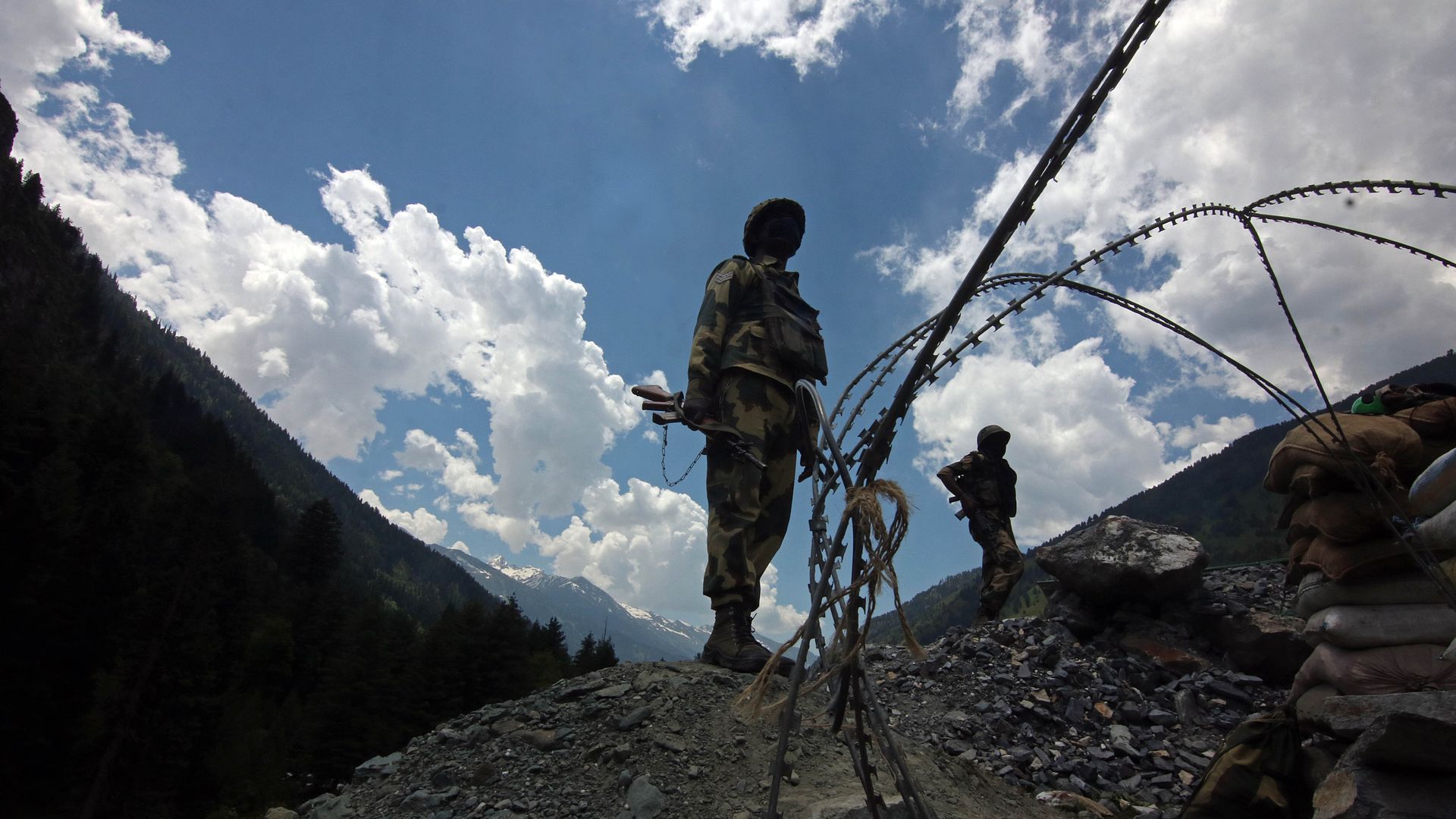
On a mountain ridge, in darkness, with improvised weapons that appear almost medieval, Indian and Chinese soldiers fought to the death.
Driving the news: They slung stones but not bullets. Many of the casualties — 20 Indian and an unknown number of Chinese — fell to their deaths. They were the first fatalities from combat between India and China in at least 45 years.
A quantum key for encrypting and decrypting messages has been shared between two ground stations about 700 miles apart, a team of researchers in China reported this week.
Why it matters: It's the latest milestone in an effort to create a long-range and theoretically ultra-secure quantum communications network.
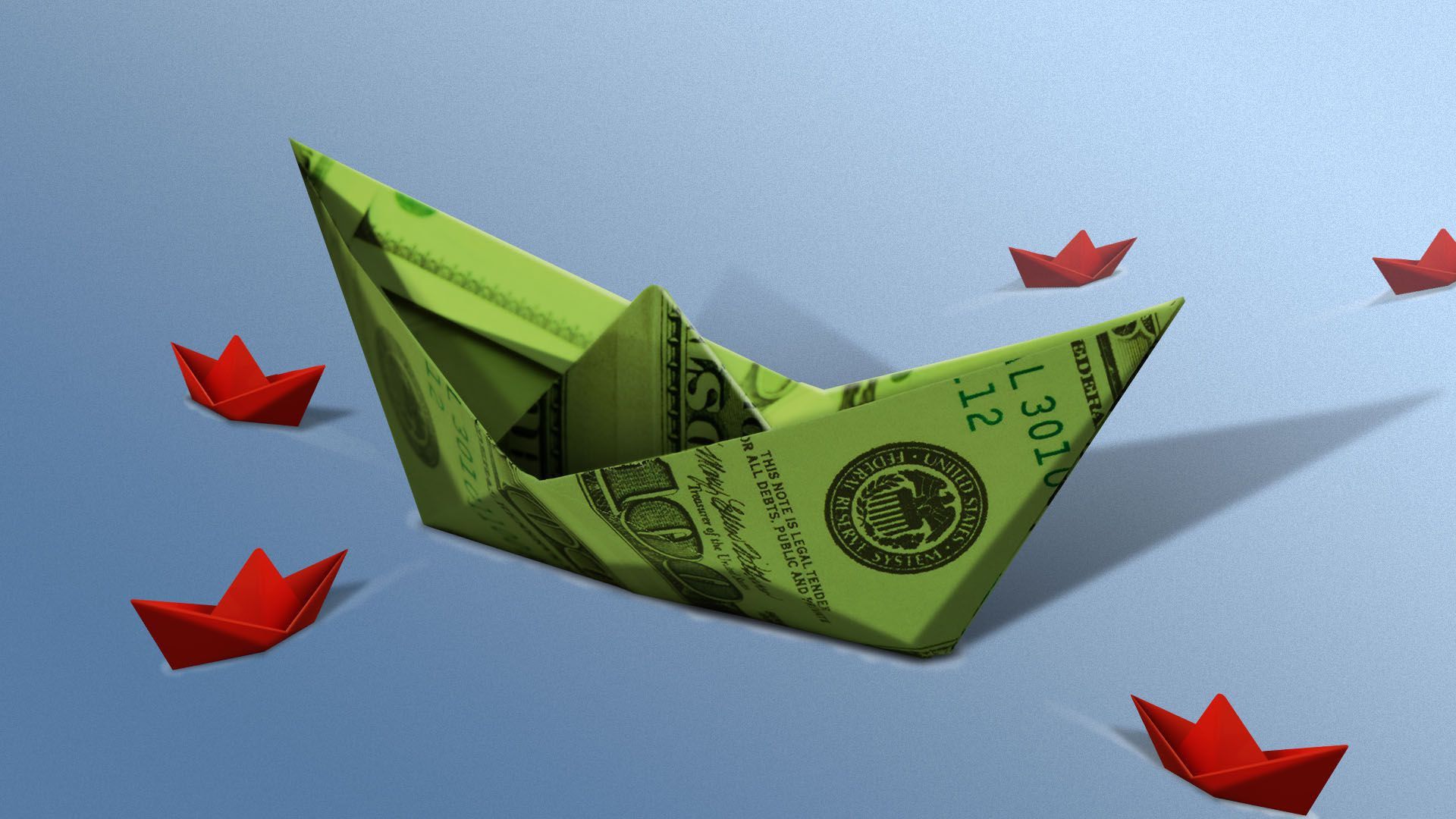
America's increasing dissatisfaction with capitalism, and its concomitant embrace of socialism, is rooted in the degree to which inequality has increased in recent decades. When all new wealth is retained in the top 1%, the morality of wealth creation switches from good to bad.
Why it matters: Greed — the desire for economic growth — creates perennial wishful thinking with respect to the anticipated consequences of that growth.
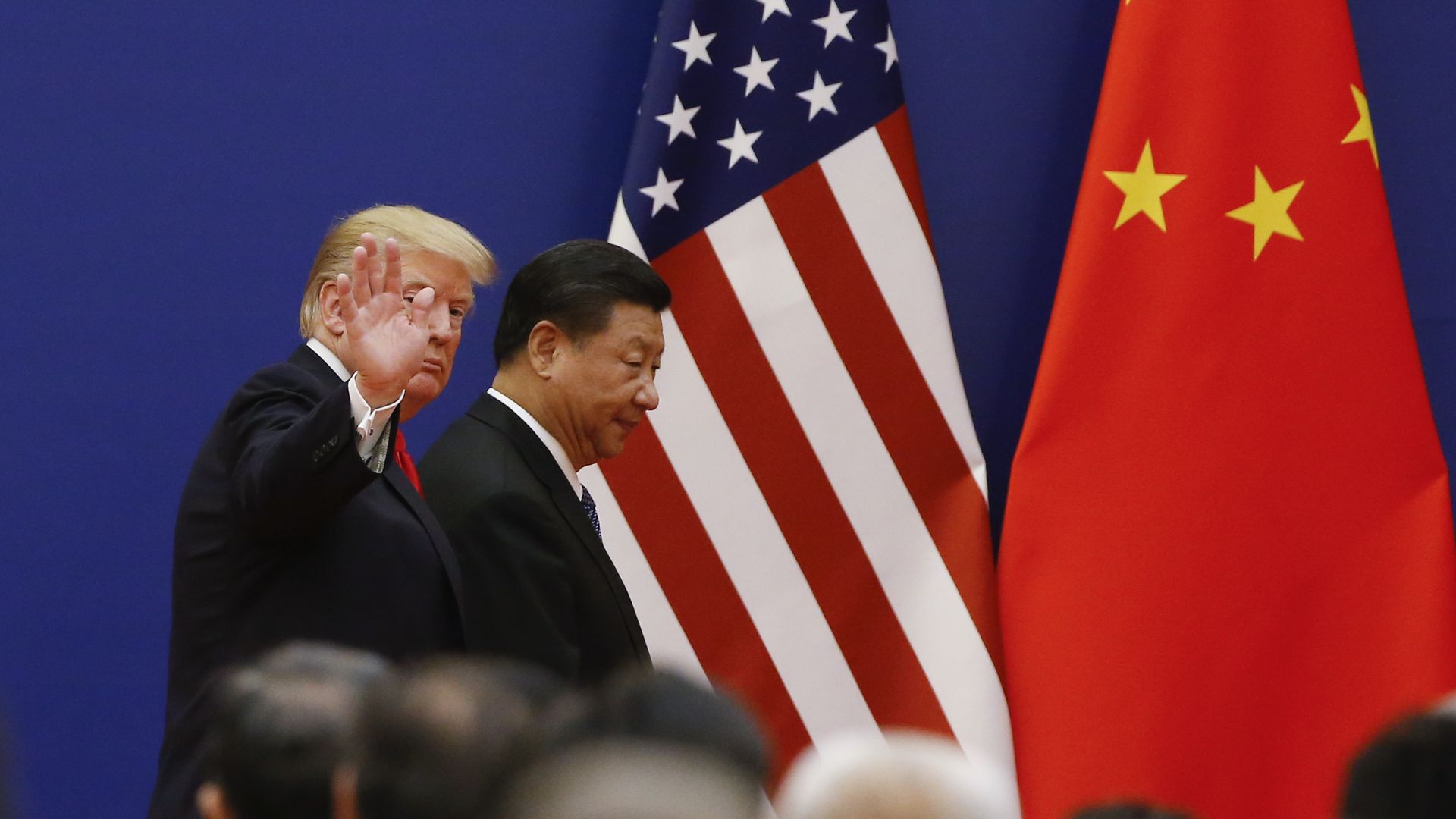
President Trump allegedly told Chinese President Xi Jinping in June 2019 to continue building camps used to detain 1 million–2 million Uighur Muslims, according to an excerpt published in the Wall Street Journal from former national security adviser John Bolton's book. Trump denied the claims in an interview with the WSJ later Wednesday.
Why it matters: China's internment camps have used mass surveillance, arbitrary detentions, brainwashing and even torture on the persecuted minority group living in the Xinjiang region, as exposed by journalists, NGOs and former detainees.
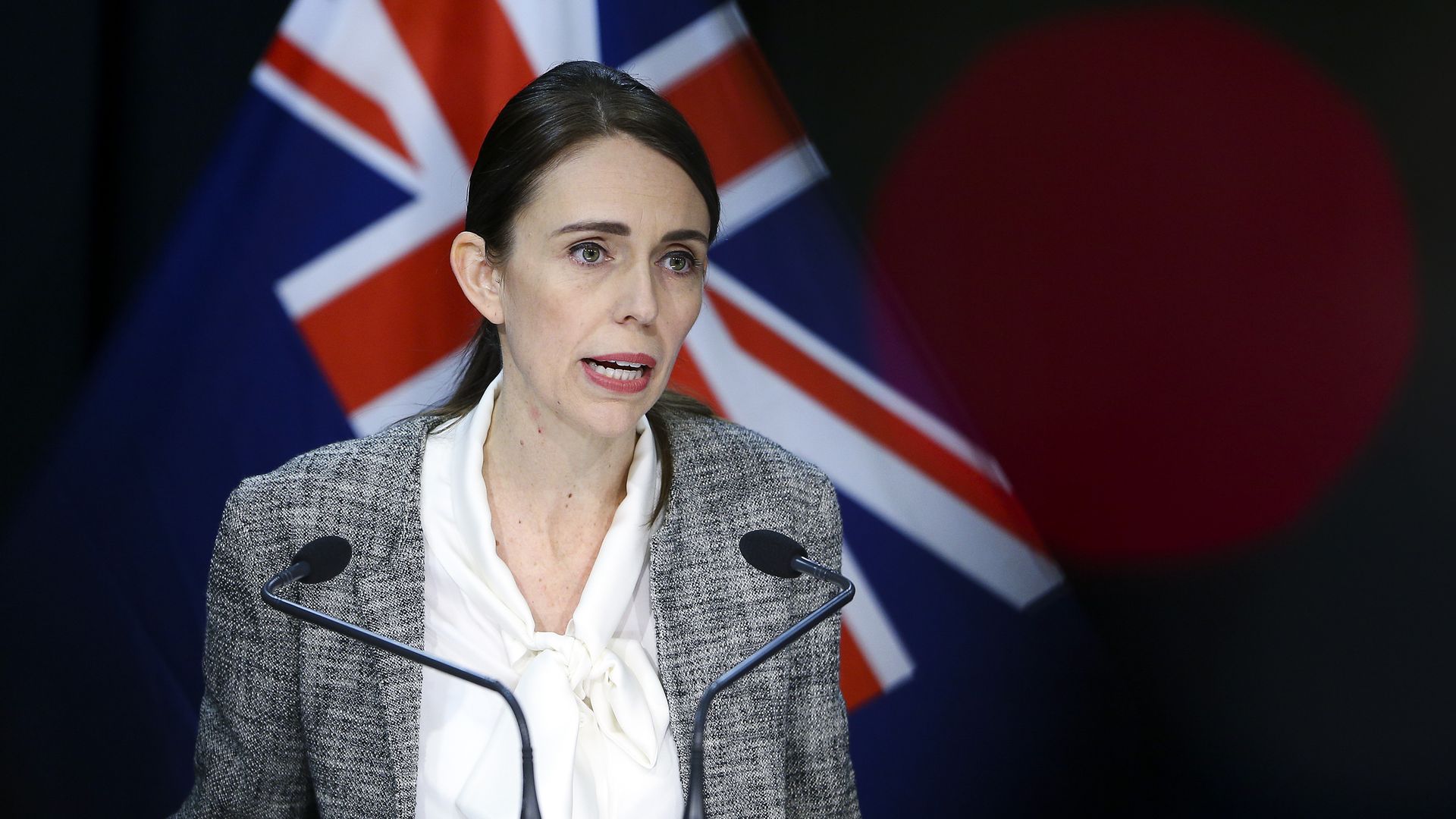
New Zealand's Defense Force will now oversee the isolation of new arrivals and audit the coronavirus quarantine process, Prime Minister Jacinda Ardern announced at a news conference on Wednesday.
Driving the news: The country's top health official told a briefingon Thursday afternoon local time that another traveler had tested positive for COVID-19 after arriving at the border, which is closed to all travelers but NZ citizens and residents. Two women returning from the U.K. tested positive on Tuesday — ending New Zealand's 24-day run of no new infections.
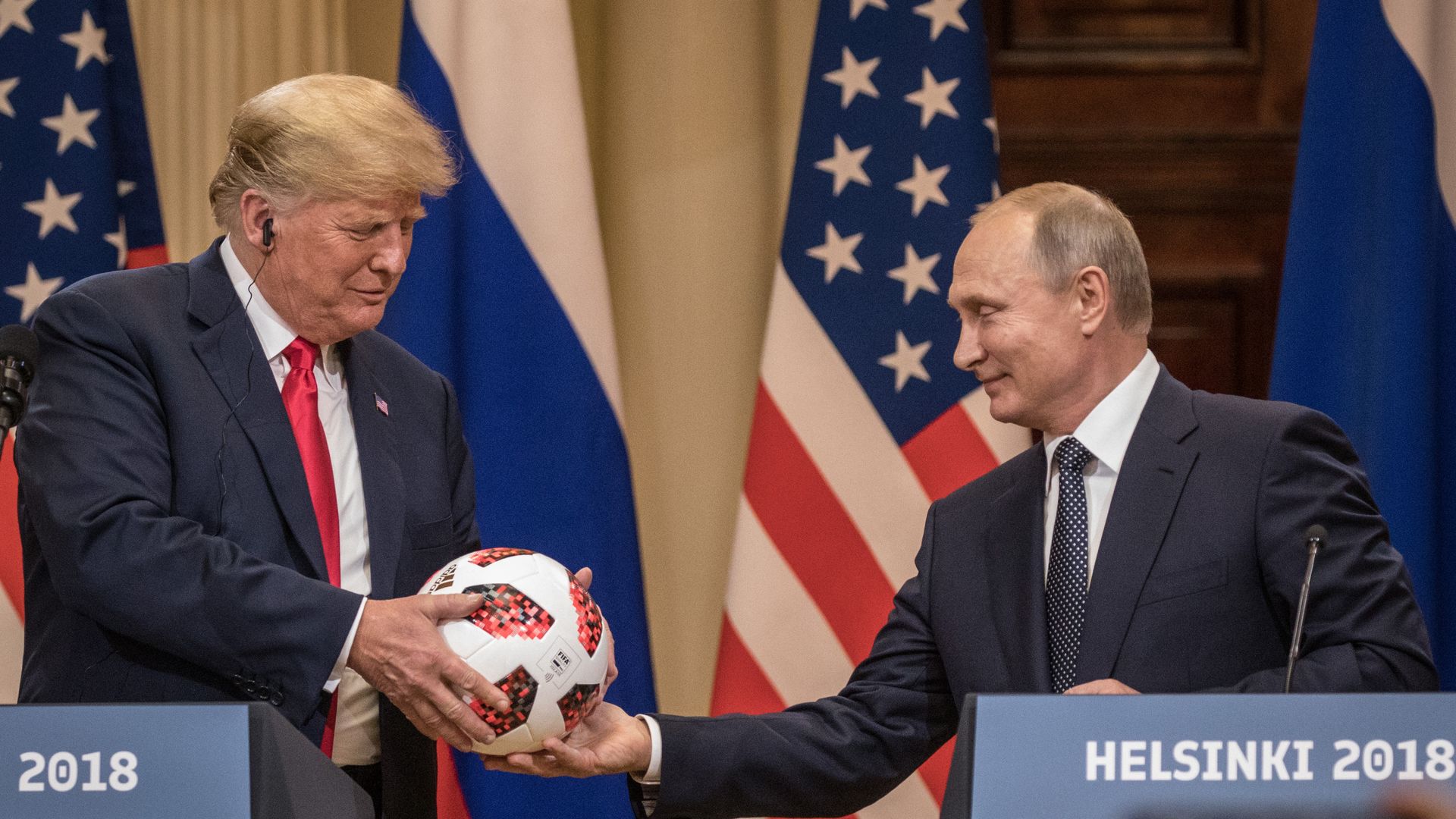
Former national security adviser John Bolton said in an excerpt of an upcoming interview with ABC's "This Week" Wednesday that he believes Russian President Vladimir Putin thinks he can play President Trump "like a fiddle," adding: "I think he sees that he's not faced with a serious adversary here."
Why it matters: This is the first on-camera interview that features Bolton since explosive excerpts from his tell-all memoir were published on Wednesday. Bolton alleges — among other things — that Trump asked Chinese President Xi Jinping to help with his re-election.
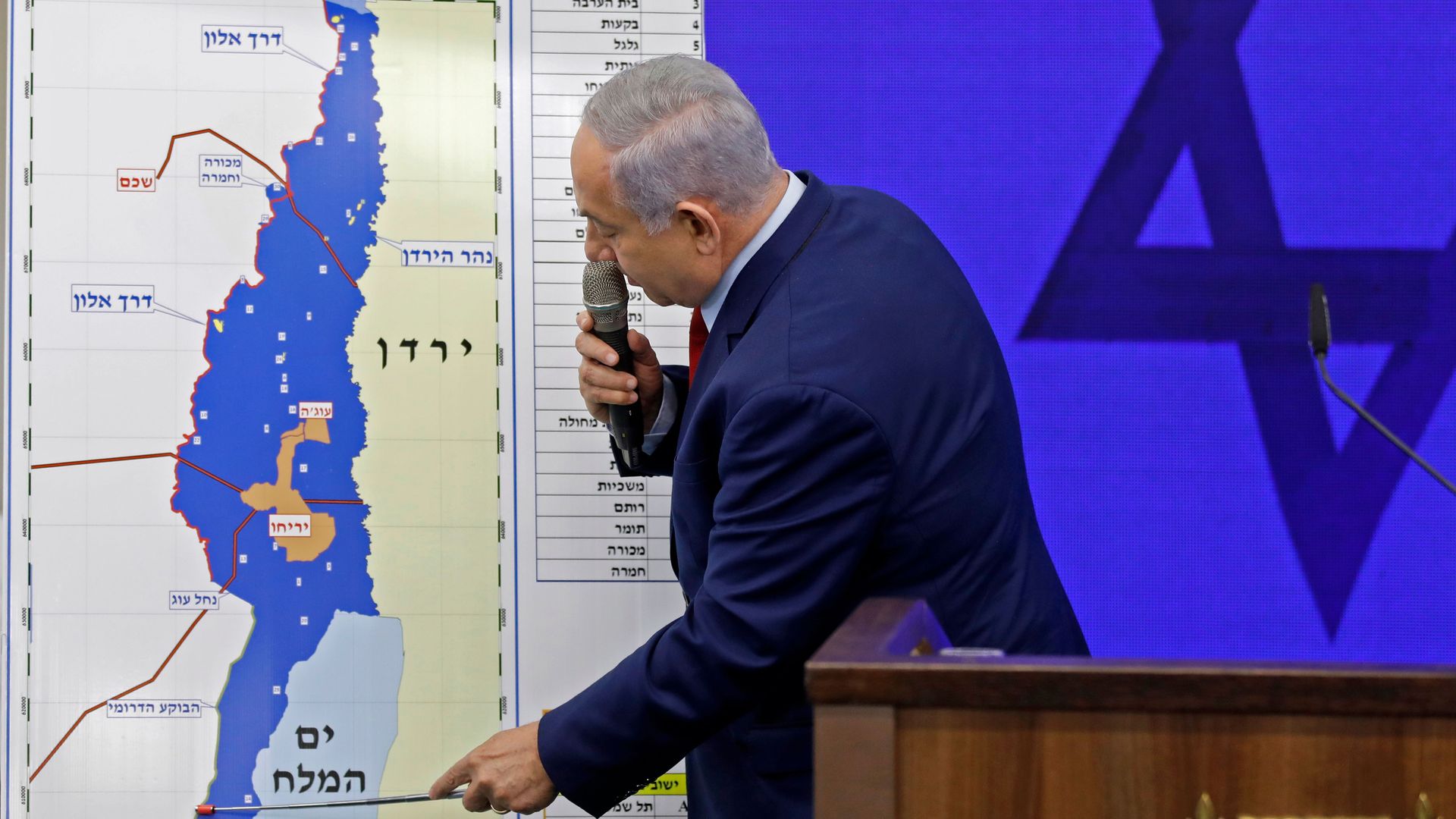
Israeli Prime Minister Benjamin Netanyahu presented four annexation scenarios in a meeting tonight with Defense Minister Benny Gantz and Foreign Minister Gabi Ashkenazi — from annexing 30% of the West Bank to a more symbolic annexation of a small amount of land, an Israeli official briefed on the meeting tells me.
Why it matters: Netanyahu has vowed to move forward with annexation of at least some territory in the West Bank as soon as July 1. He's been hoping for a green light from the White House, which has said it will only agree if Israel's top leaders are unified behind the plan.
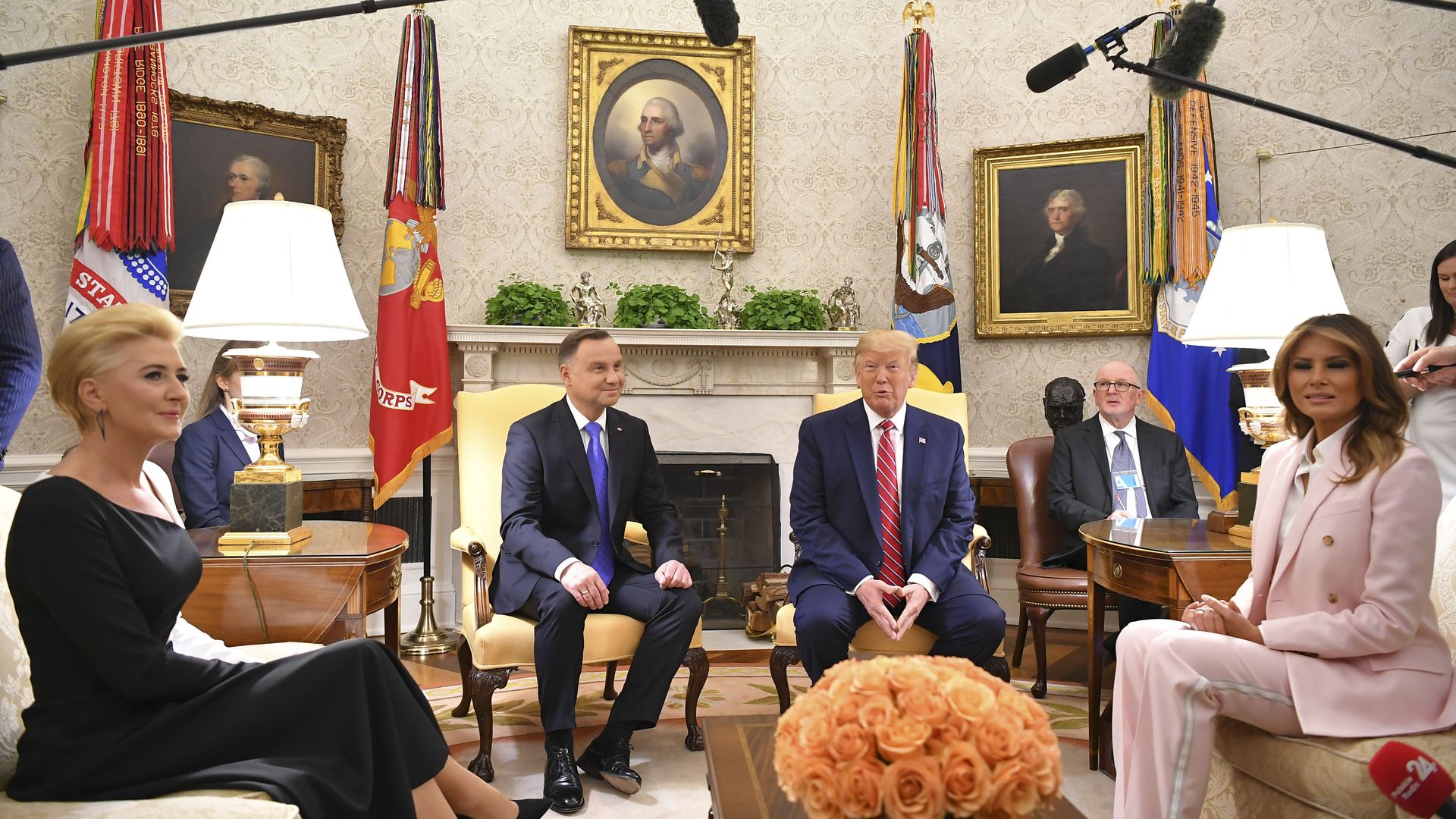
President Trump will welcome his Polish counterpart, Andrzej Duda, to the White House on Wednesday, four days before the Polish presidential election.
Why it matters: The visit is the first from a foreign leader since early March, and a political gift to Duda and Poland's populist ruling party, Law and Justice. It also comes as Trump is considering increasing the U.S. troop presence in Poland and decreasing it in Germany. Trump has embraced the Polish government during its showdown with the EU over encroachment on the rule of law.
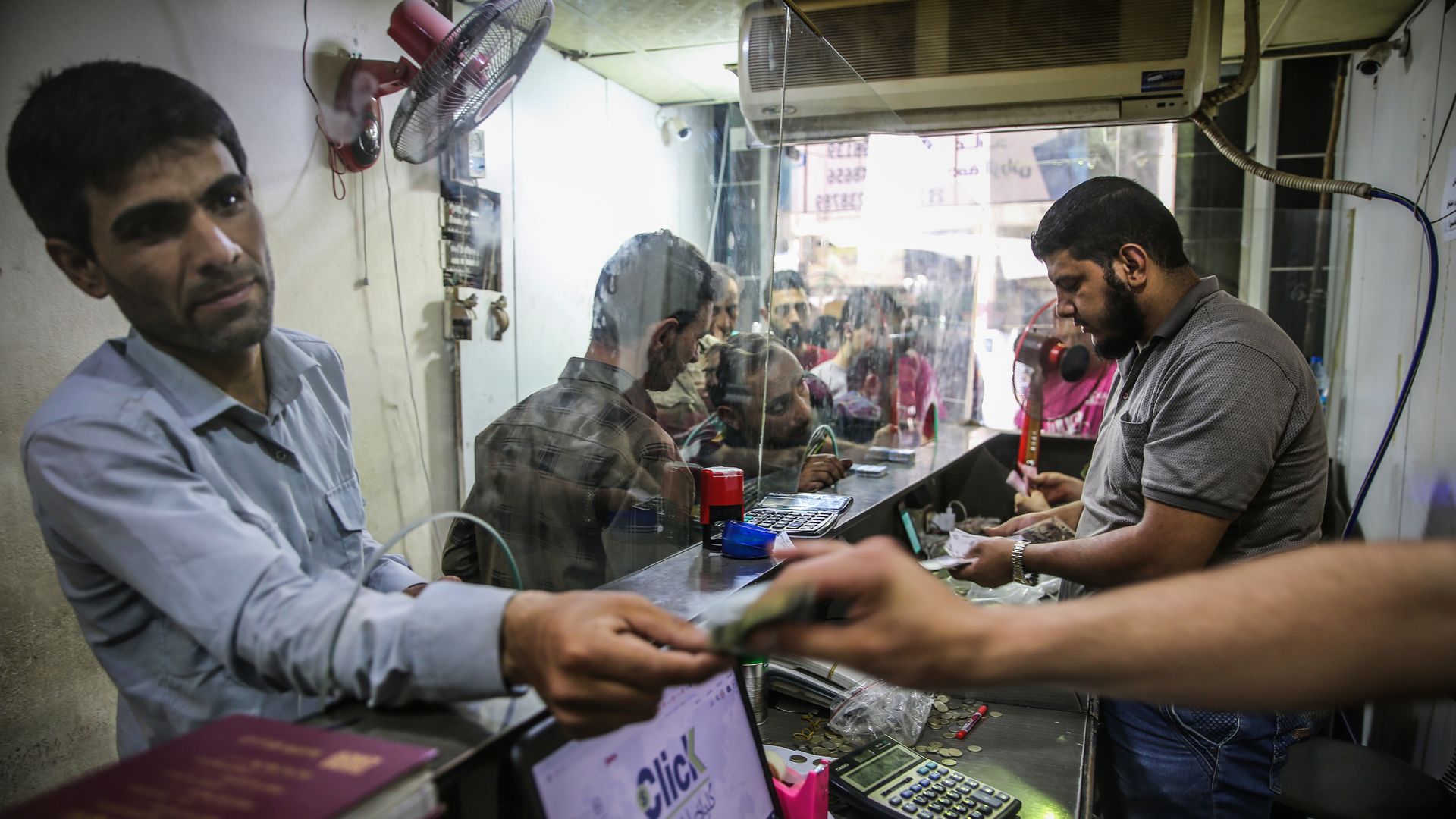
New U.S. sanctions targeting Syria's Bashar al-Assad regime and those who fund it are likely to increase pressure on the Syrian government and deepen the country's economic crisis.
Why it matters: Assad has survived nine years of civil war, but Syria's dictator now faces protests in the street, a currency shock and internal divisions highlighted by a public feud with his billionaire cousin, Rami Makhlouf. The people of Syria continue to suffer.
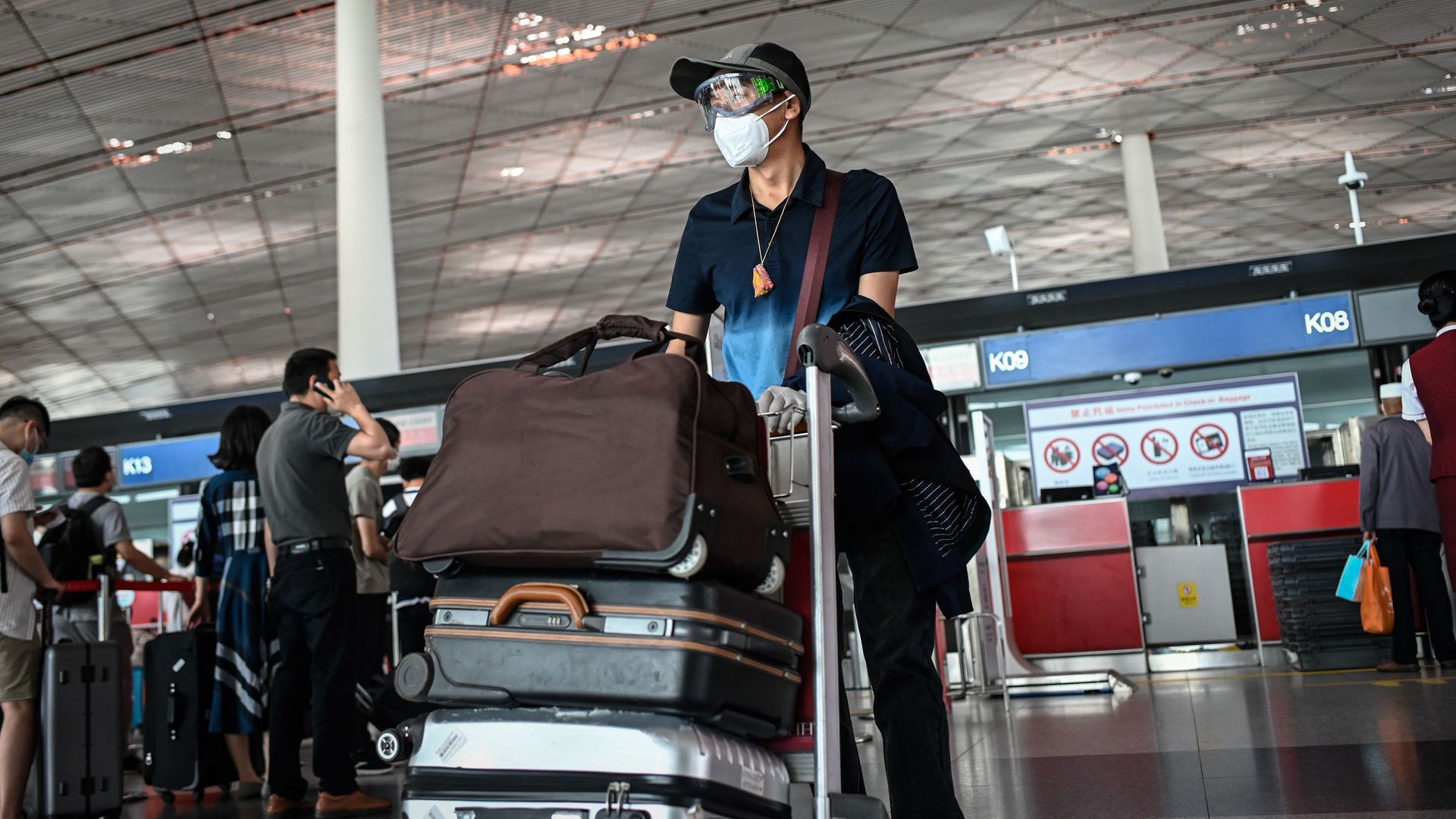
At least 1,255 flights in and out of Beijing's two major airports — roughly two-thirds of those scheduled — were canceled Wednesday as China moved to contain a new coronavirus outbreak in its capital, AP reports.
Why it matters: Beijing, home to more than 20 million people, has reported at least 137 new cases since last week and raised its emergency barometer to its second-highest level, which requires the government to close schools, suspend the reopenings of businesses and mandate stronger social-distancing requirements.
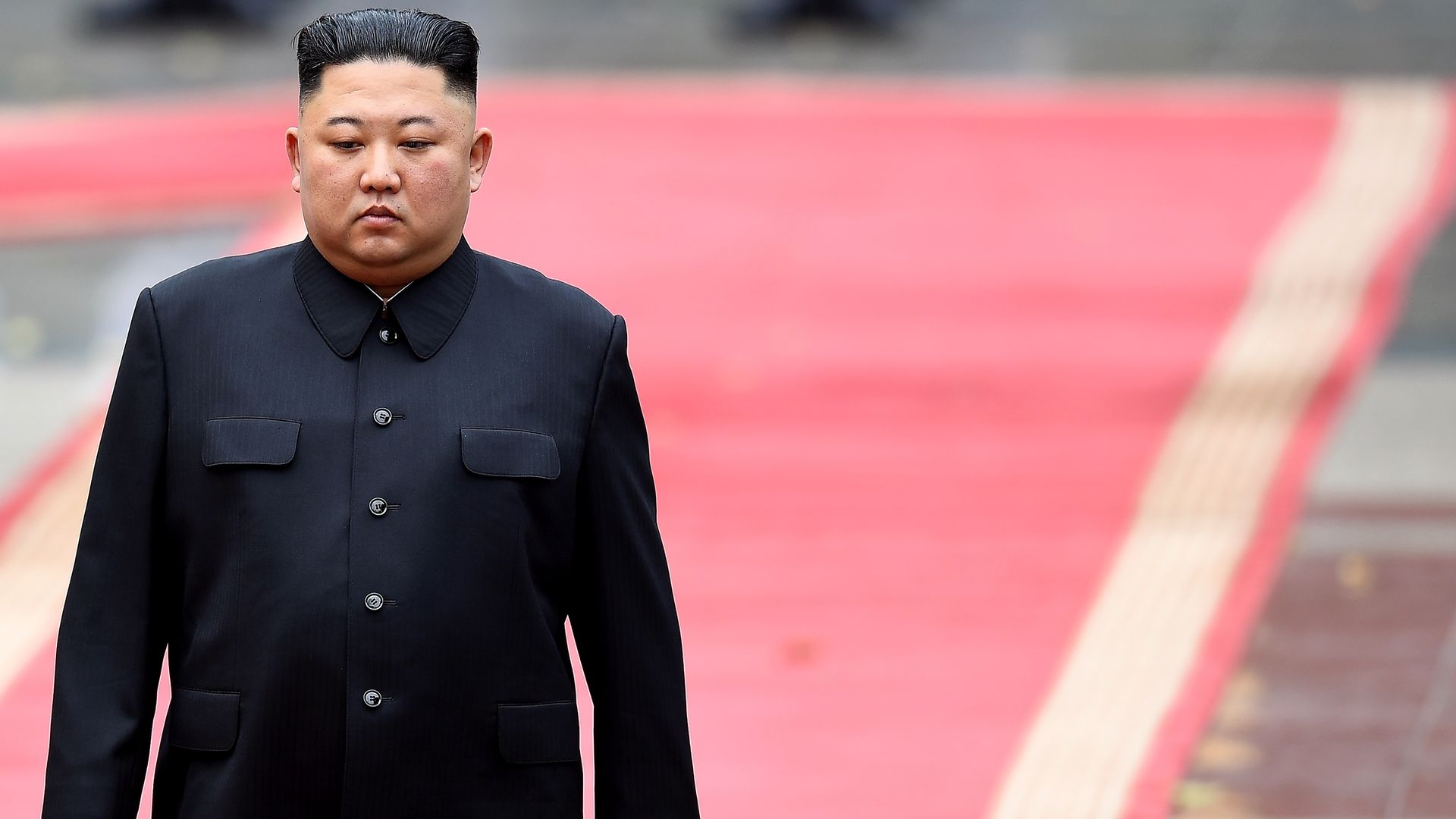
Why it matters: North Korea is wiping out all remnants of the detente with South Korea that began in 2018, and taking dramatic symbolic steps to signal a new more hostile era in relations. Pyongyang has also said it will resume military exercises and reestablish guard posts near the heavily fortified border.