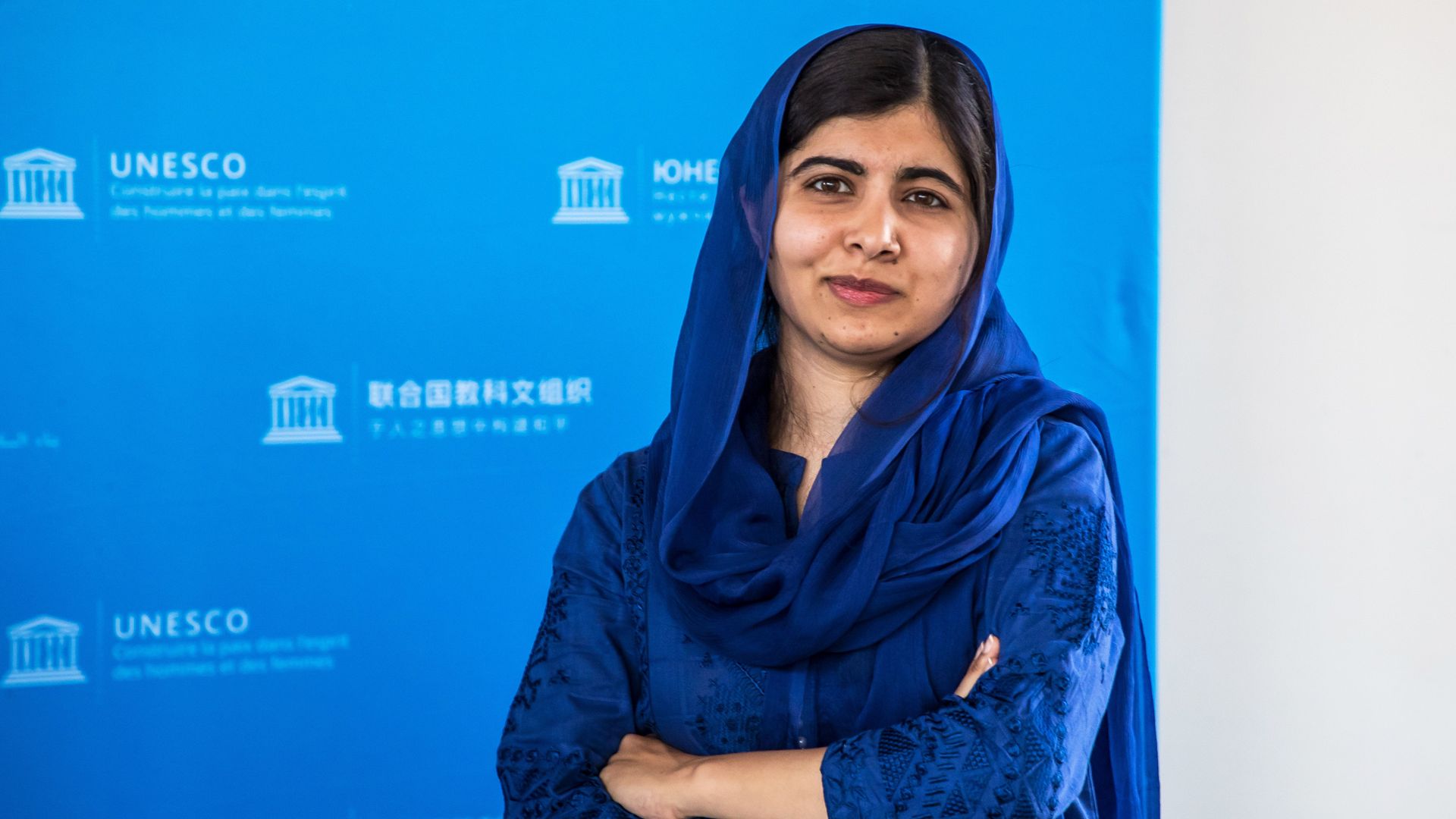
Malala Yousafzai, a Pakistani activist and the world's youngest Nobel Prize laureate, announced that she graduated from the University of Oxford nearly eight years after she was shot by a Taliban gunman for advocating for girls' education.
The state of play: Yousafzai founded, along with her father, the Malala Fund, a nonprofit organization advocating girls’ education. The 22-year-old completed her degree in philosophy, politics and economics. Students were cleared from Oxford's campus in March because of the coronavirus pandemic. The university has said it plans to reopen for the 2020-2021 academic year.
Younger people and those who interact regularly with people of other races and ethnicities are far more likely to view increased diversity favorably, according to Pew data from 11 countries.
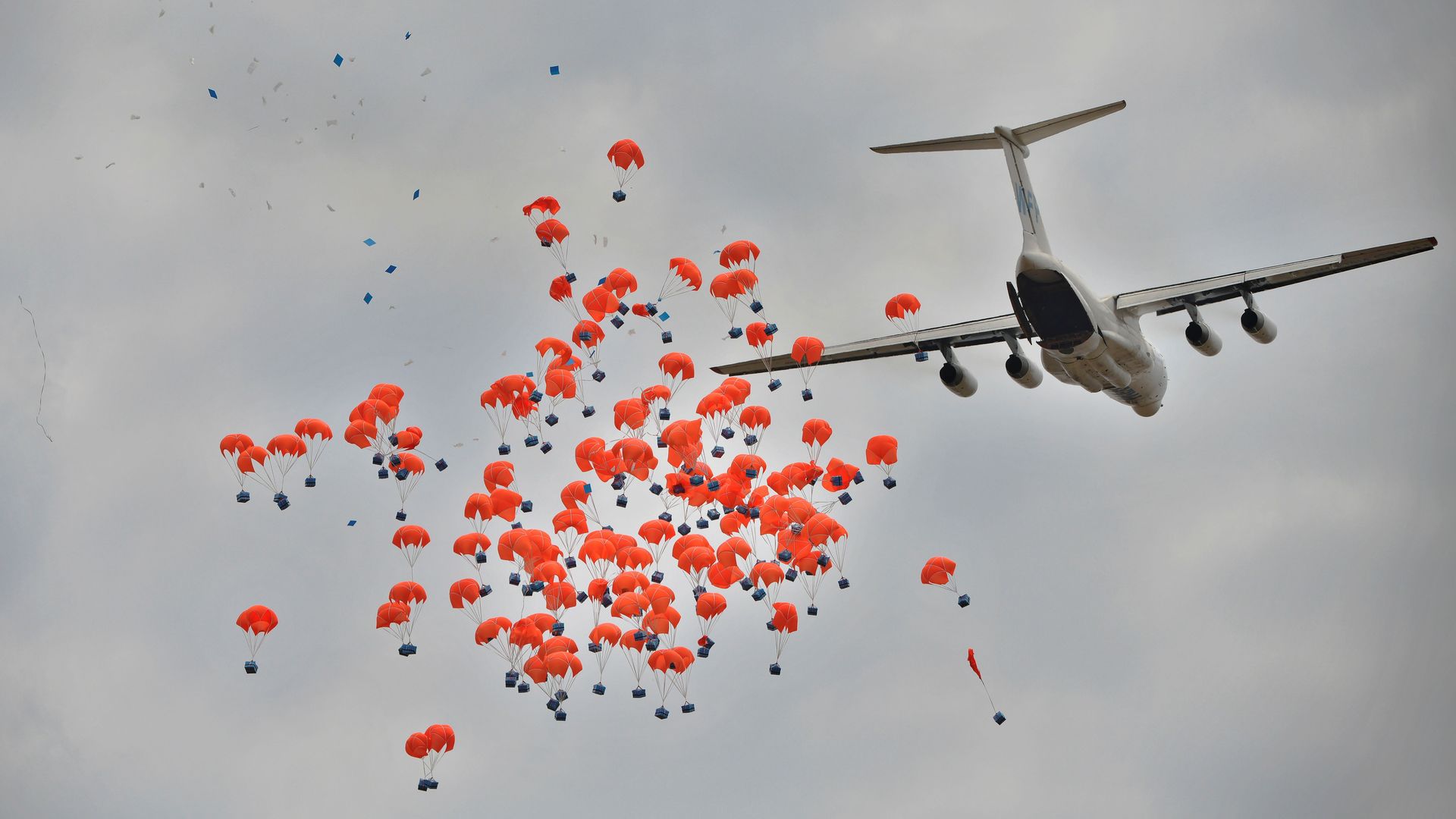
The pandemic is not only making it harder for people in developing countries to afford food, it's making it harder to get food and supplies into those countries in the first place.
Zoom in: The UN’s World Food Programme (WFP) is tasked with filling many of those gaps, supplying food aid to 100 million people. Since late March, it has also been transporting health workers, medical supplies and other humanitarian cargo all over the world through its Humanitarian Air Service.
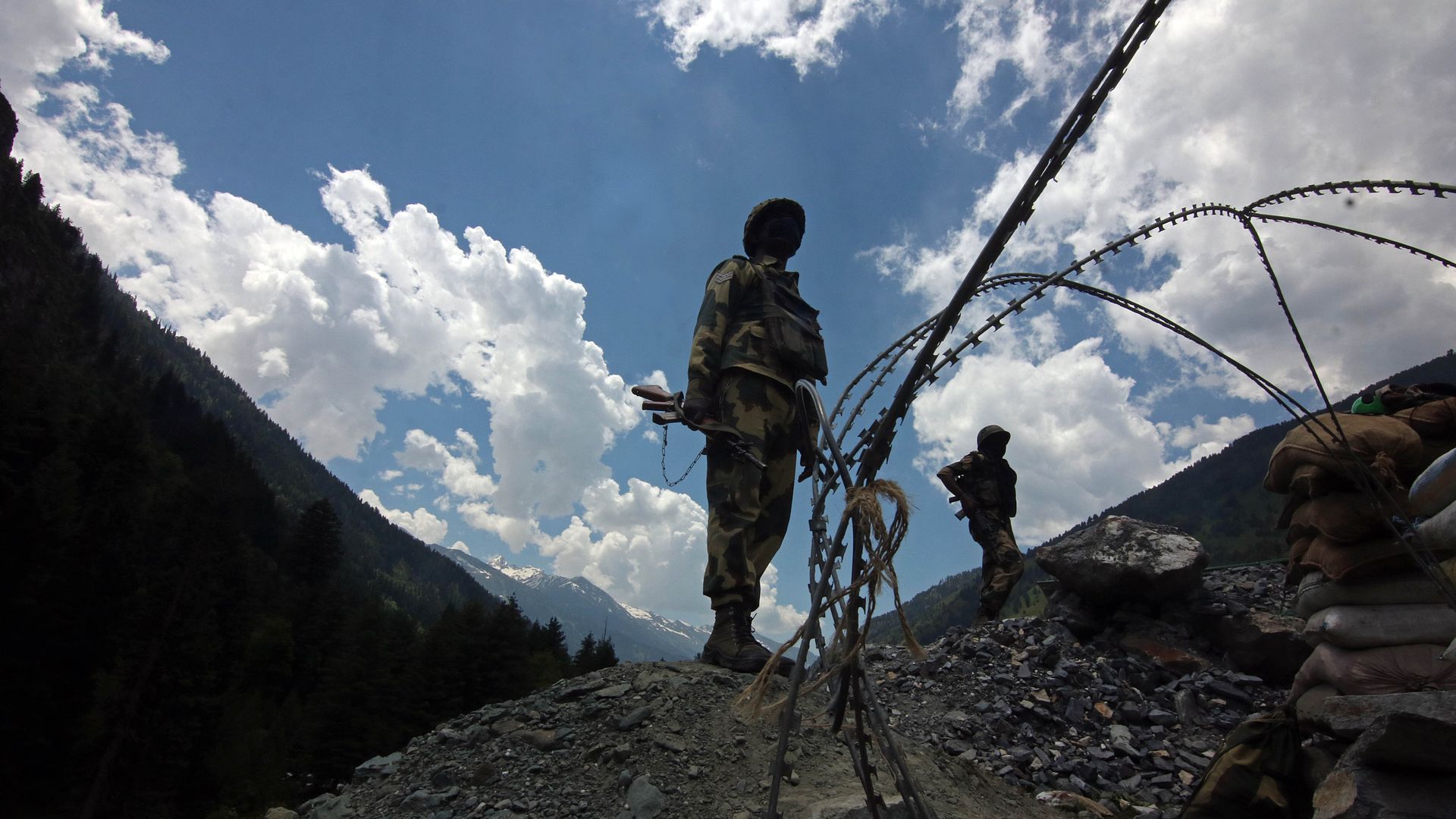
On a mountain ridge, in darkness, with improvised weapons that appear almost medieval, Indian and Chinese soldiers fought to the death.
Driving the news: They slung stones but not bullets. Many of the casualties — 20 Indian and an unknown number of Chinese — fell to their deaths. They were the first fatalities from combat between India and China in at least 45 years.
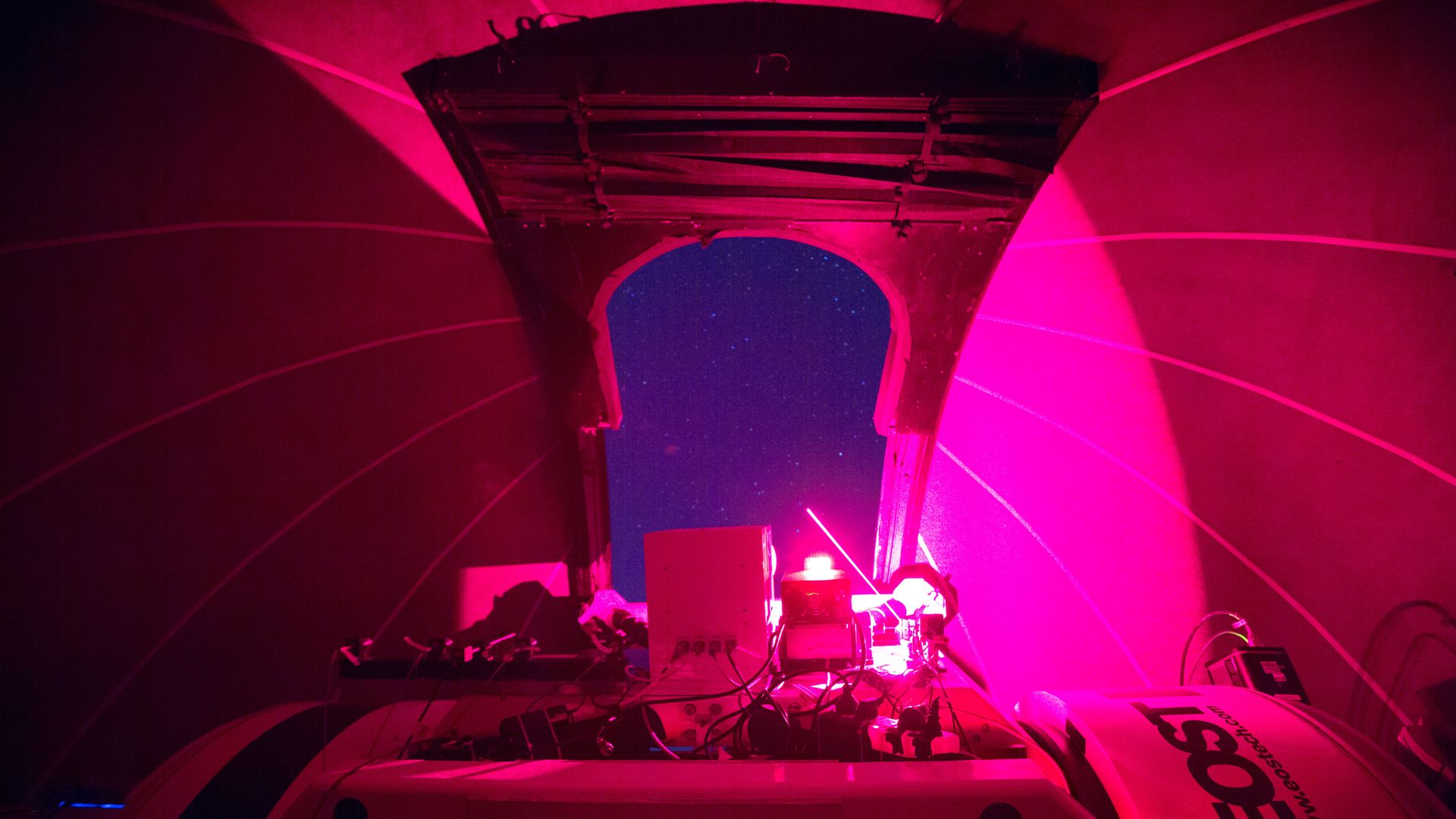
A quantum key for encrypting and decrypting messages has been shared between two ground stations about 700 miles apart, a team of researchers in China reported this week.
Why it matters: It's the latest milestone in an effort to create a long-range and theoretically ultra-secure quantum communications network.
America's increasing dissatisfaction with capitalism, and its concomitant embrace of socialism, is rooted in the degree to which inequality has increased in recent decades. When all new wealth is retained in the top 1%, the morality of wealth creation switches from good to bad.
Why it matters: Greed — the desire for economic growth — creates perennial wishful thinking with respect to the anticipated consequences of that growth.
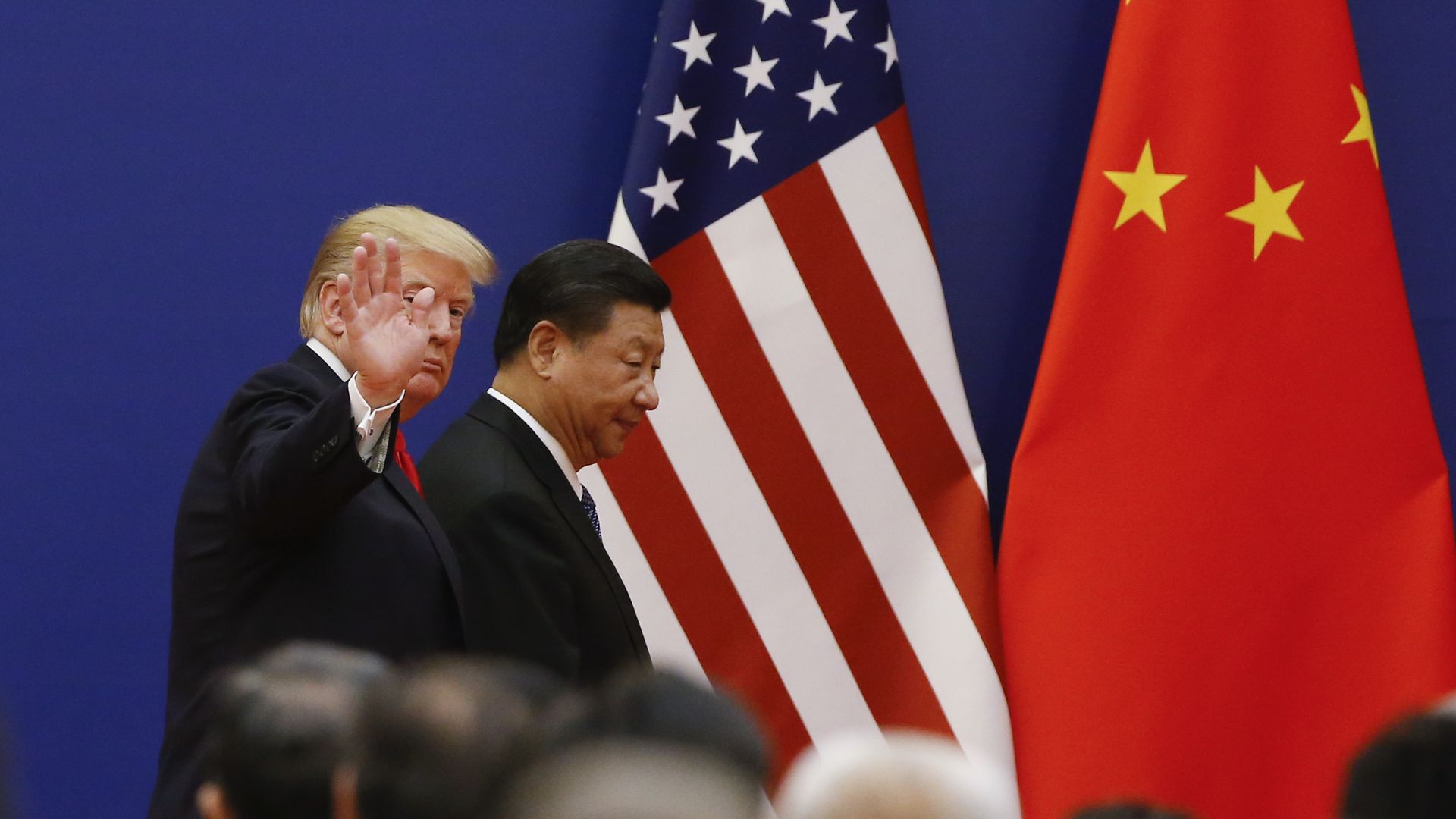
President Trump allegedly told Chinese President Xi Jinping in June 2019 to continue building camps used to detain 1 million–2 million Uighur Muslims, according to an excerpt published in the Wall Street Journal from former national security adviser John Bolton's book. Trump denied the claims in an interview with the WSJ later Wednesday.
Why it matters: China's internment camps have used mass surveillance, arbitrary detentions, brainwashing and even torture on the persecuted minority group living in the Xinjiang region, as exposed by journalists, NGOs and former detainees.
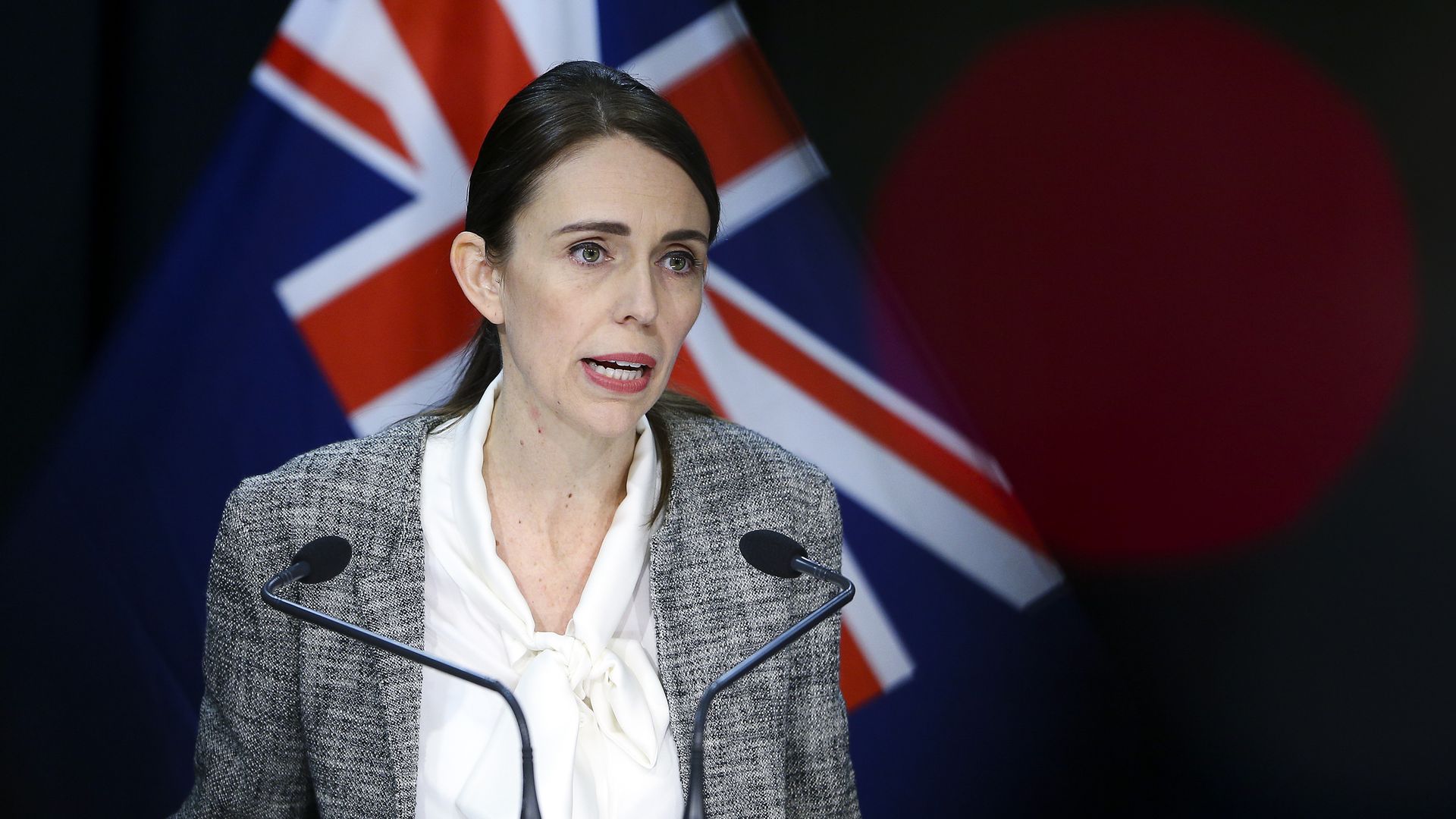
New Zealand's Defense Force will now oversee the isolation of new arrivals and audit the coronavirus quarantine process, Prime Minister Jacinda Ardern announced at a news conference on Wednesday.
Driving the news: The country's top health official told a briefingon Thursday afternoon local time that another traveler had tested positive for COVID-19 after arriving at the border, which is closed to all travelers but NZ citizens and residents. Two women returning from the U.K. tested positive on Tuesday — ending New Zealand's 24-day run of no new infections.