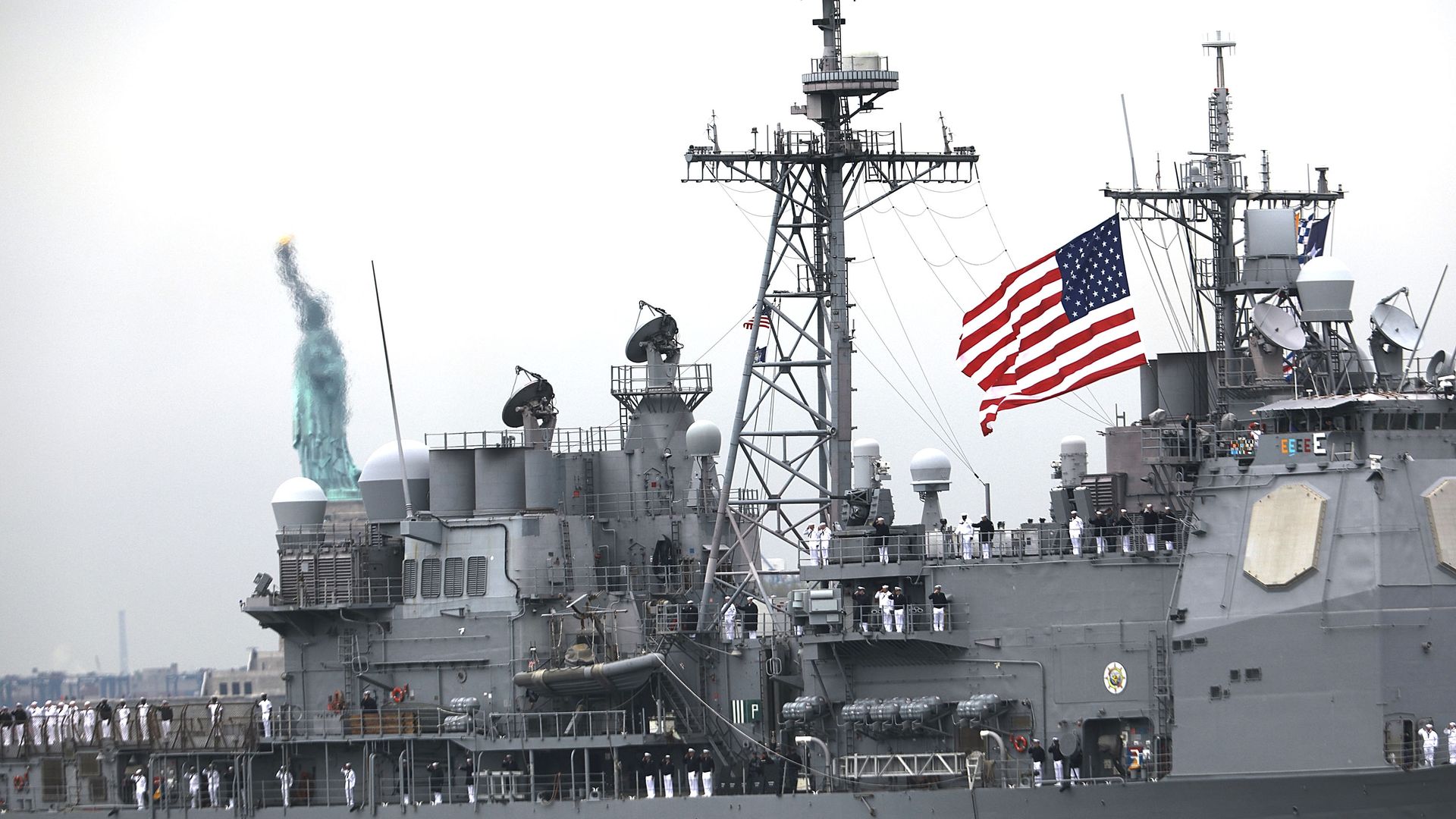
At the beginning of this year, Chinese government hackers retrieved troves of highly classified information regarding undersea warfare, the Washington Post reports.
The details: The hackers stole the data from a Naval Undersea Warfare Center contractor in Rhode Island, per the Post, compromising "hundreds of mechanical and software systems." This hack follows other breaches as China works towards disrupting the U.S. military technology advantages.
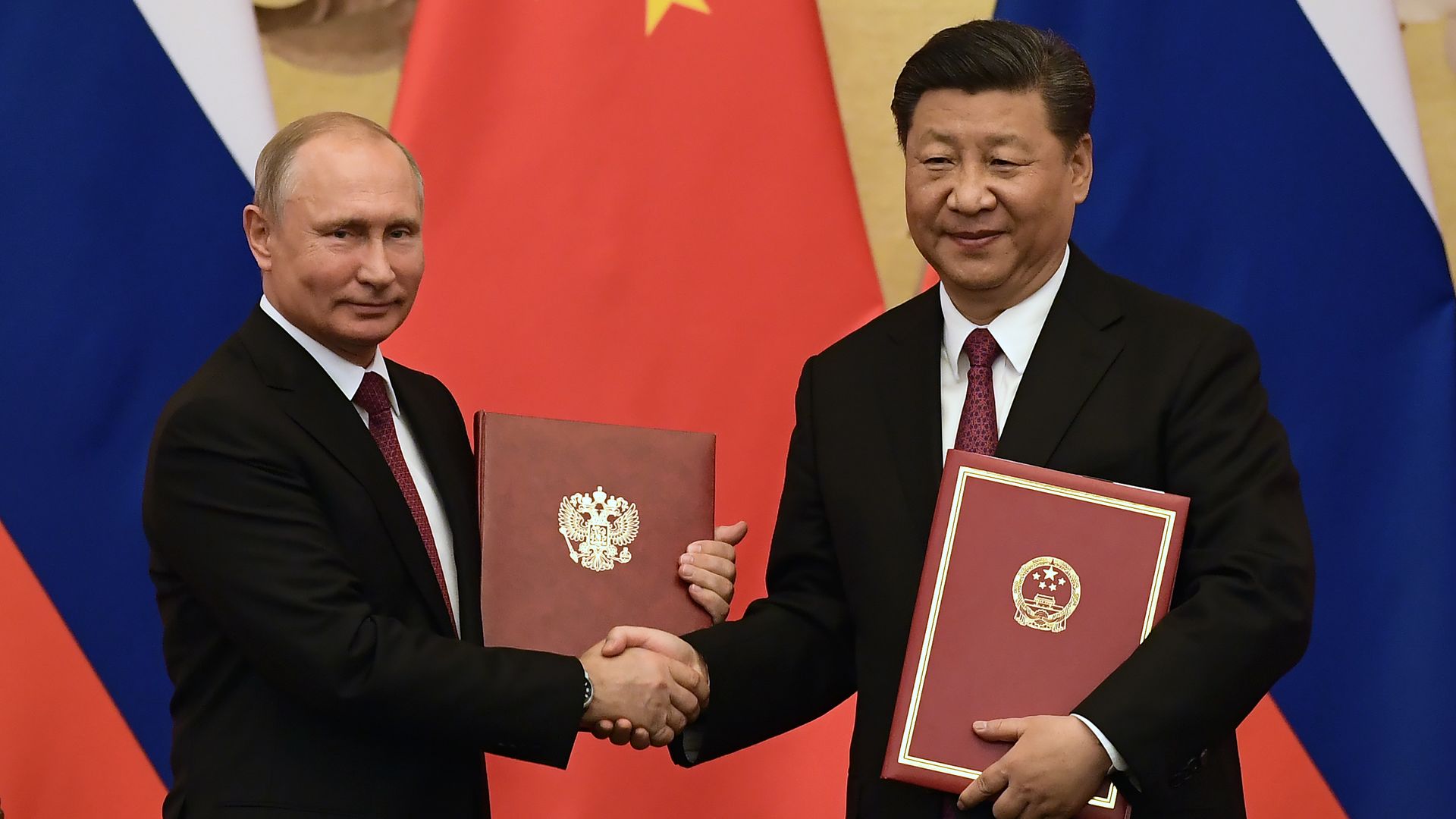
Russian President Vladimir Putin is on a state visit to China, which will include attending the 18th Shanghai Cooperation Organization (SCO) summit, June 9-10.
What we're hearing: Chinese President Xi Jinping awarded Putin the inaugural friendship medal of the People's Republic of China, and praised his "contribution and efforts to building a peaceful world."
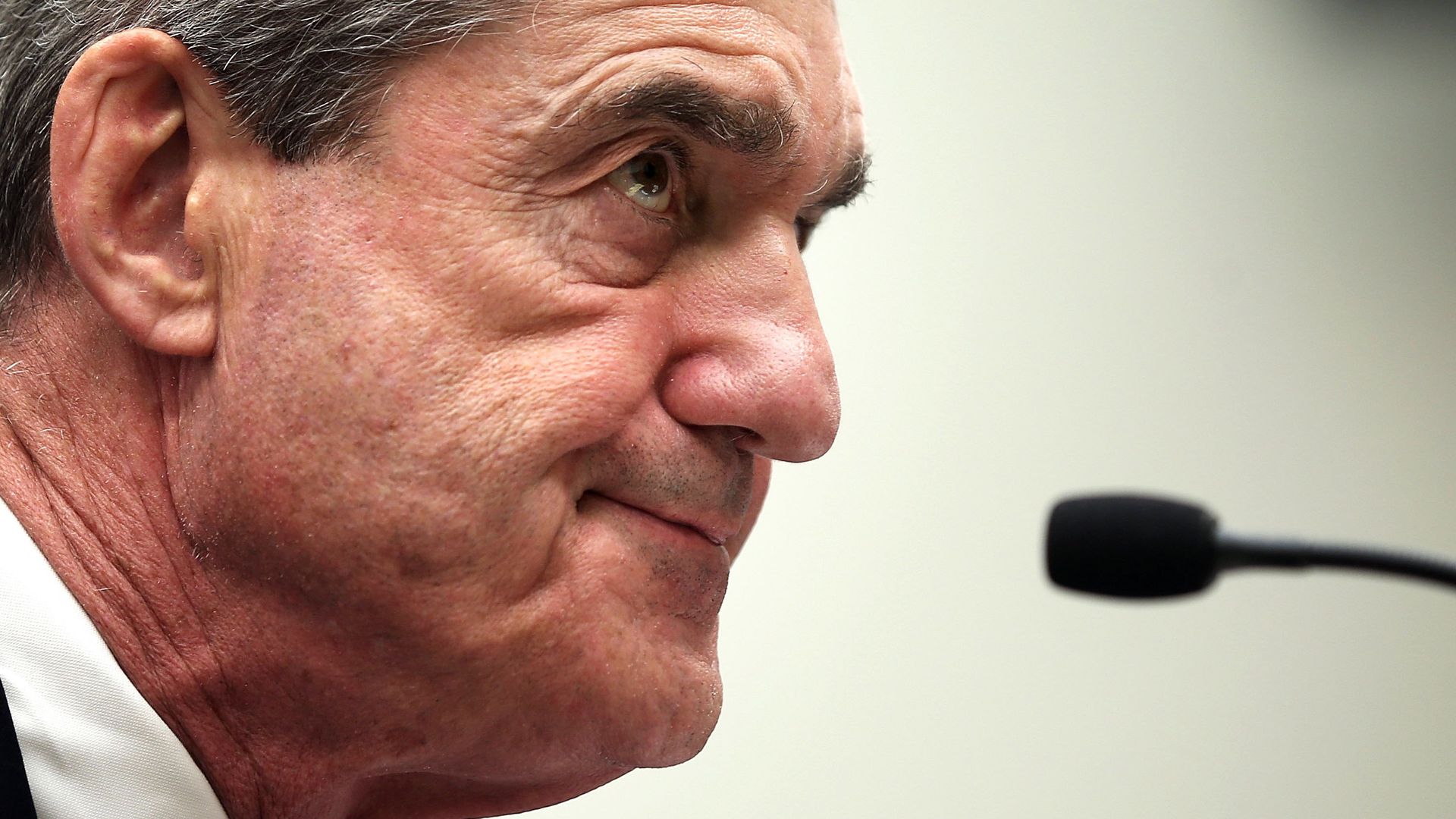
New charges have been brought by special counsel Robert Mueller against former Trump campaign chairman Paul Manafort and Konstantin Kilimnik — a former aide to Manafort who has been suspected of having ties to Russian intelligence and worked for Manafort's company and oversaw its office in Kiev.
China's biggest tech companies have thrived at home, easily beating out what little foreign competition they face and monopolizing several industries at once — but at a steep cost.
The bottom line: The Chinese government gives its corporate champions nearly unfettered access to the country's 770 million internet users, but that comes with the fear that Chinese President Xi Jinping could make it disappear in an instant. And as China's tech giants get bigger and richer, the Communist Party gets more nervous.
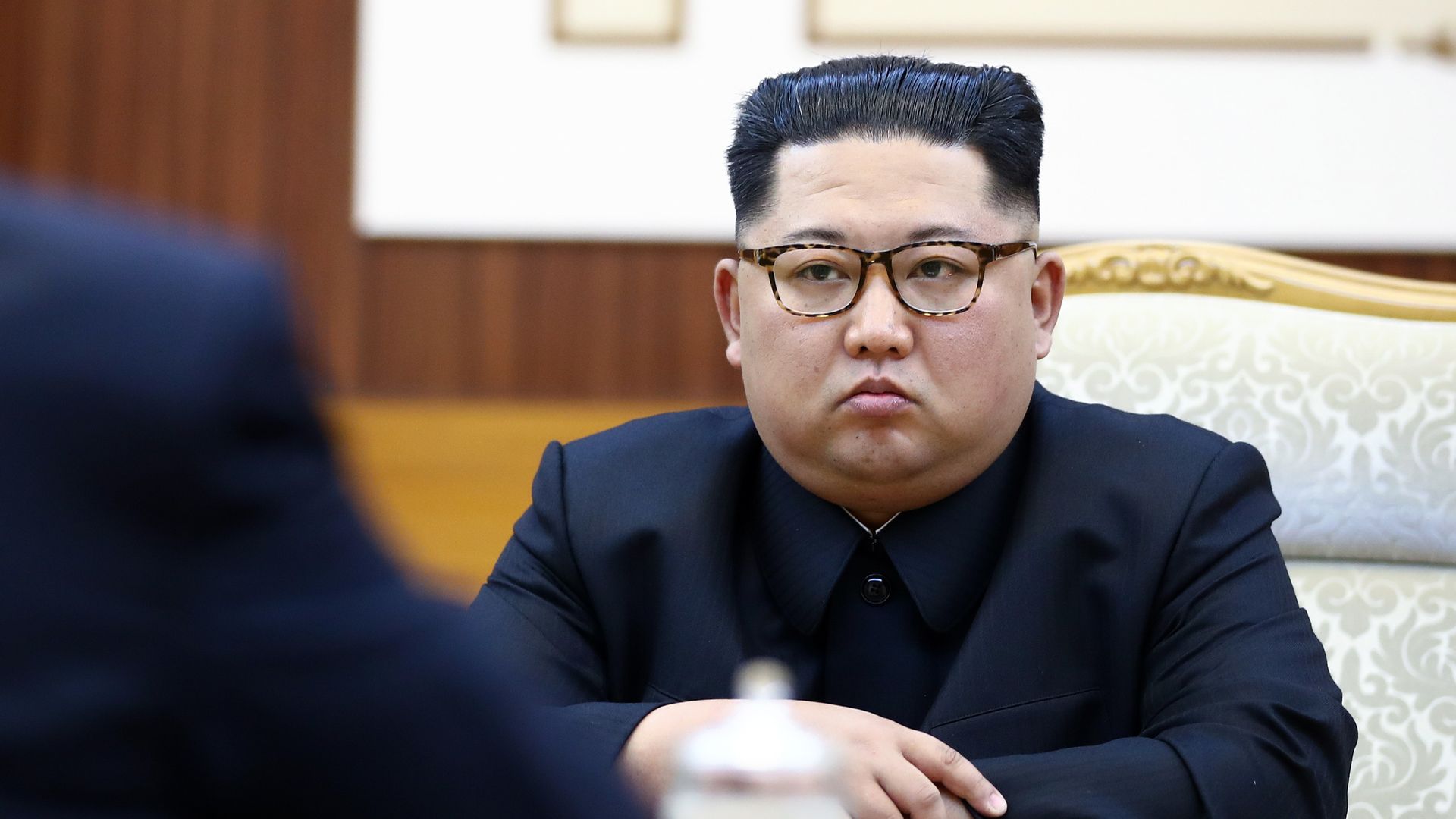
President Trump will soon sit across the table from a man who, as of three months ago, was an enigma even to the CIA. He hadn’t left his country as leader, and his most high-profile summit was with Dennis Rodman. Not long ago we debated whether he was crazy — now there’s concern he might be too shrewd.
Between the lines: Kim’s emergence onto the world stage has been swift and, thus far, remarkably successful. Once a pariah, he’s now being courted by foreign leaders. Commitment to maximum pressure is dwindling around the world, and even in Washington. Trump is looking for a breakthrough in Singapore. Kim has already had one.
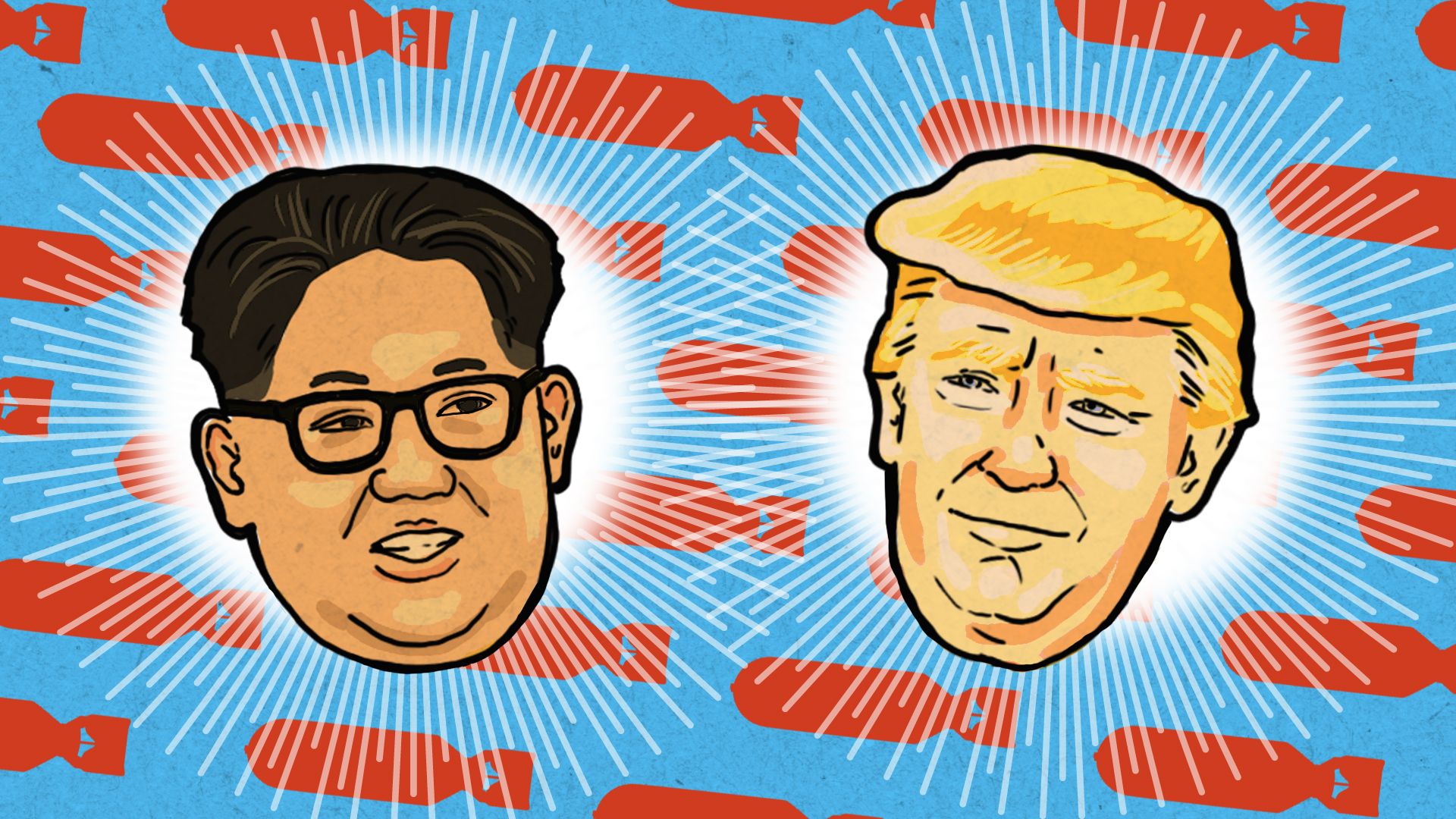
President Trump's upcoming summit with North Korean leader Kim Jong-un follows a saga of tumultuous exchanges between the two leaders.
The big picture: The highly anticipated meeting is back on for June 12, after President Trump had canceled it in response to a threatening statement from North Korea's vice minister of foreign affairs. As both parties make their way to Singapore and solidify their negotiating strategies, let's take a look at how we got here.
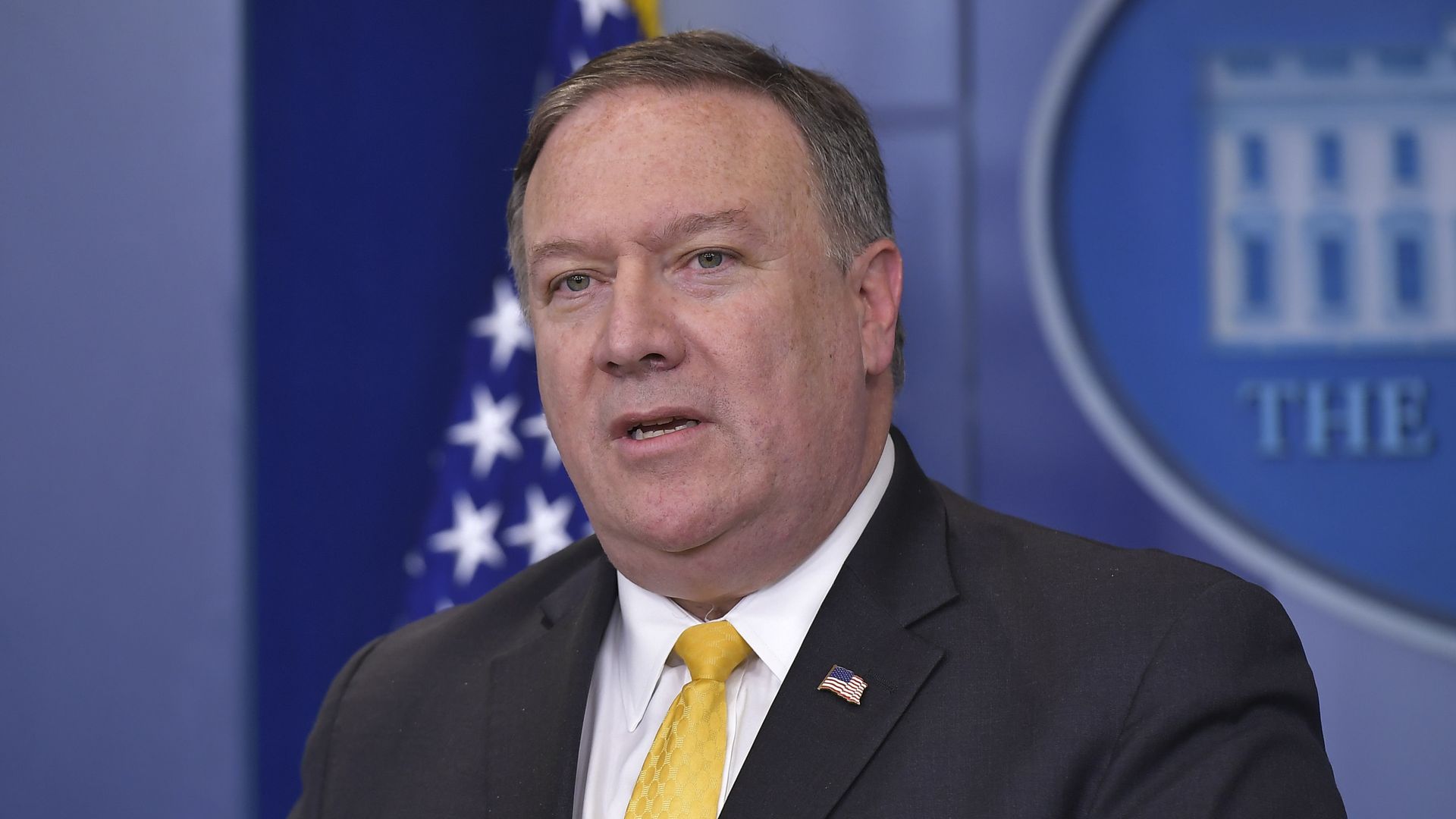
Secretary of State Mike Pompeo stated Thursday that North Korean leader Kim Jong-un has "indicated to me personally that he's prepared to denuclearize, that he understands that the current model doesn't work."
Why it matters: Pompeo said the only acceptable outcome to Tuesday's summit in Singapore is one in which North Korea permanently denuclearizes, and that Kim is open to that outcome. The problem, though, is the two sides don’t seem to have reached a consensus on what denuclearization actually looks like.
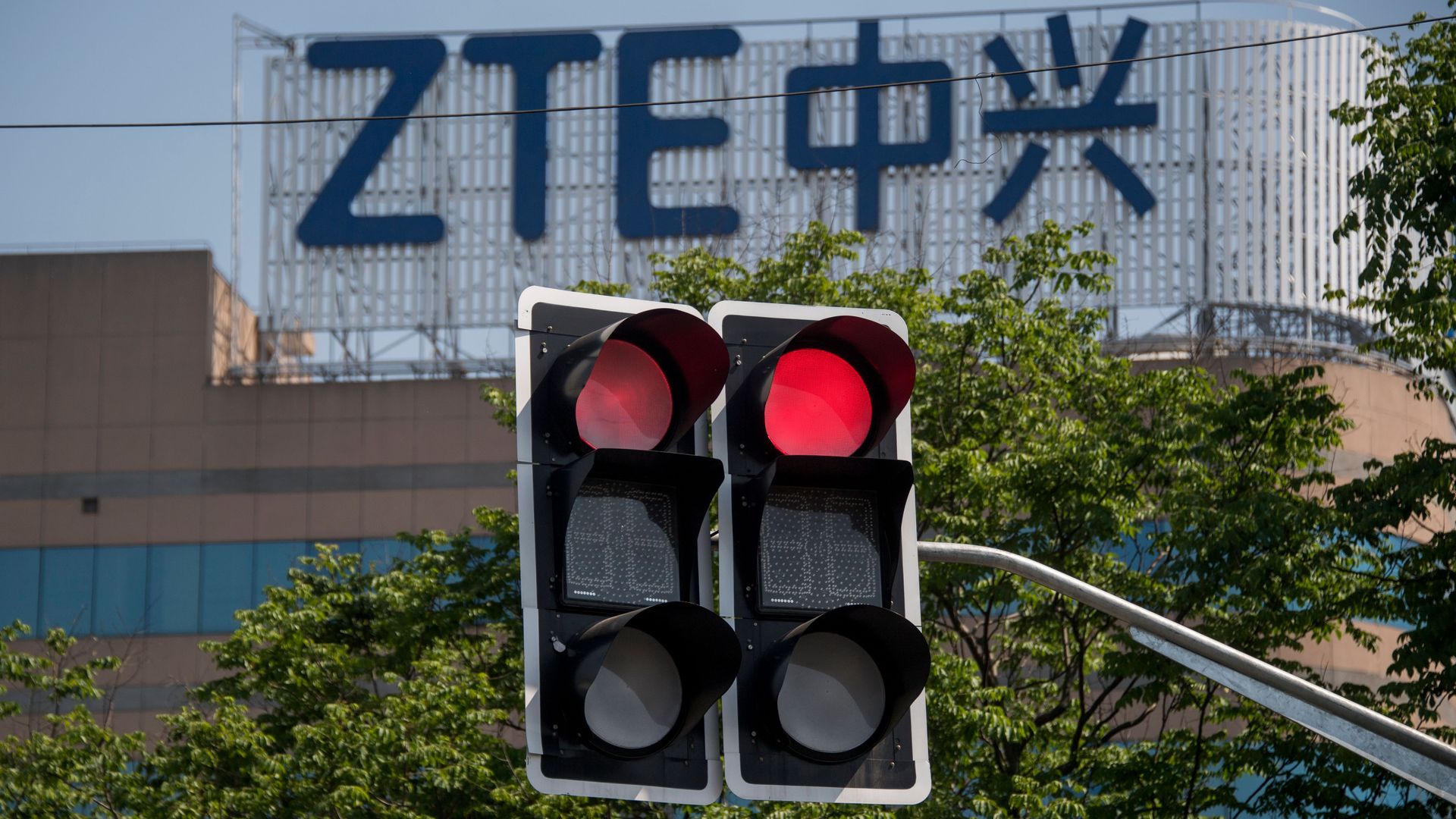
A bipartisan group of senators introduced legislation to reverse a deal the White House struck with Chinese telecom equipment maker ZTE.
The backdrop: The U.S. has twice caught ZTE selling banned technology to North Korea and Iran. In April, the Department of Commerce punished the firm by barring them from using U.S. technology, including microprocessors. That effectively would have killed ZTE, but the White House announced Thursday the penalty would be reduced to a $1.3 billion fine with additional oversight measures put in place.
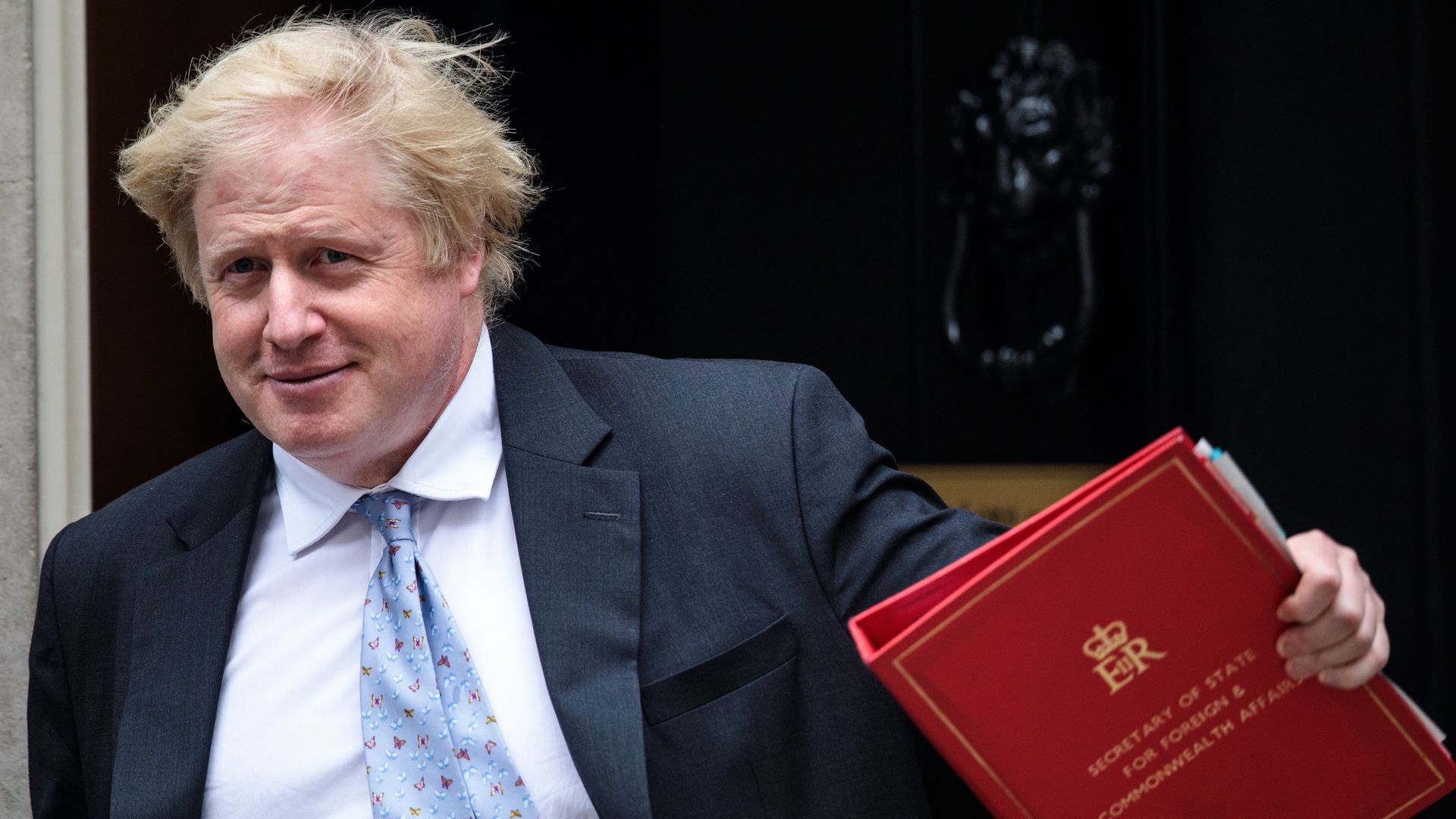
In a leaked recording from a closed-door dinner, U.K. Foreign Secretary Boris Johnson discussed President Trump, Russia, China, and more, BuzzFeed reports.
One key quote: "I am increasingly admiring of Donald Trump. I have become more and more convinced that there is a method in his madness." Johnson also said: "Imagine Trump doing Brexit. He’d go in bloody hard… There’d be all sorts of breakdowns, all sorts of chaos. Everyone would think he’d gone mad. But actually you might get somewhere. It’s a very, very good thought.”
Trump said he doesn't believe he has to prepare much for his upcoming meeting with Kim Jong-un next week. "I think I’m very well prepared," he told reporters as Japanese Prime Minister Shinzo Abe arrived at the White House.
Why it matters: Trump is going into the high-stakes meeting having bypassed the normal preparations the U.S. typically undergoes before such a high-level meeting, but White House officials have been preparing for all possibilities. Although North Korea hasn't yet committed to ridding their nuclear arsenal, this summit will likely be a starting point for future negotiations to get to the U.S.' goal of a full, verifiable, and permanent denuclearization.
The last 24 hours have seen the British government waging an internal war over Brexit — and, once again, it's forced Prime Minister Theresa May to face off with the pro-Brexit wing of her Conservative Party, led by Brexit Secretary David Davis.
What's at issue: The latest battle has been over the legal wording of a "backstop" trade deal after the U.K. leaves the EU. Conservatives pushing for a hard Brexit want that backstop time-limited, fearing that May's preferred option of an indefinite solution — a supposed requirement for the EU —could leave the U.K. permanently attached to Europe.
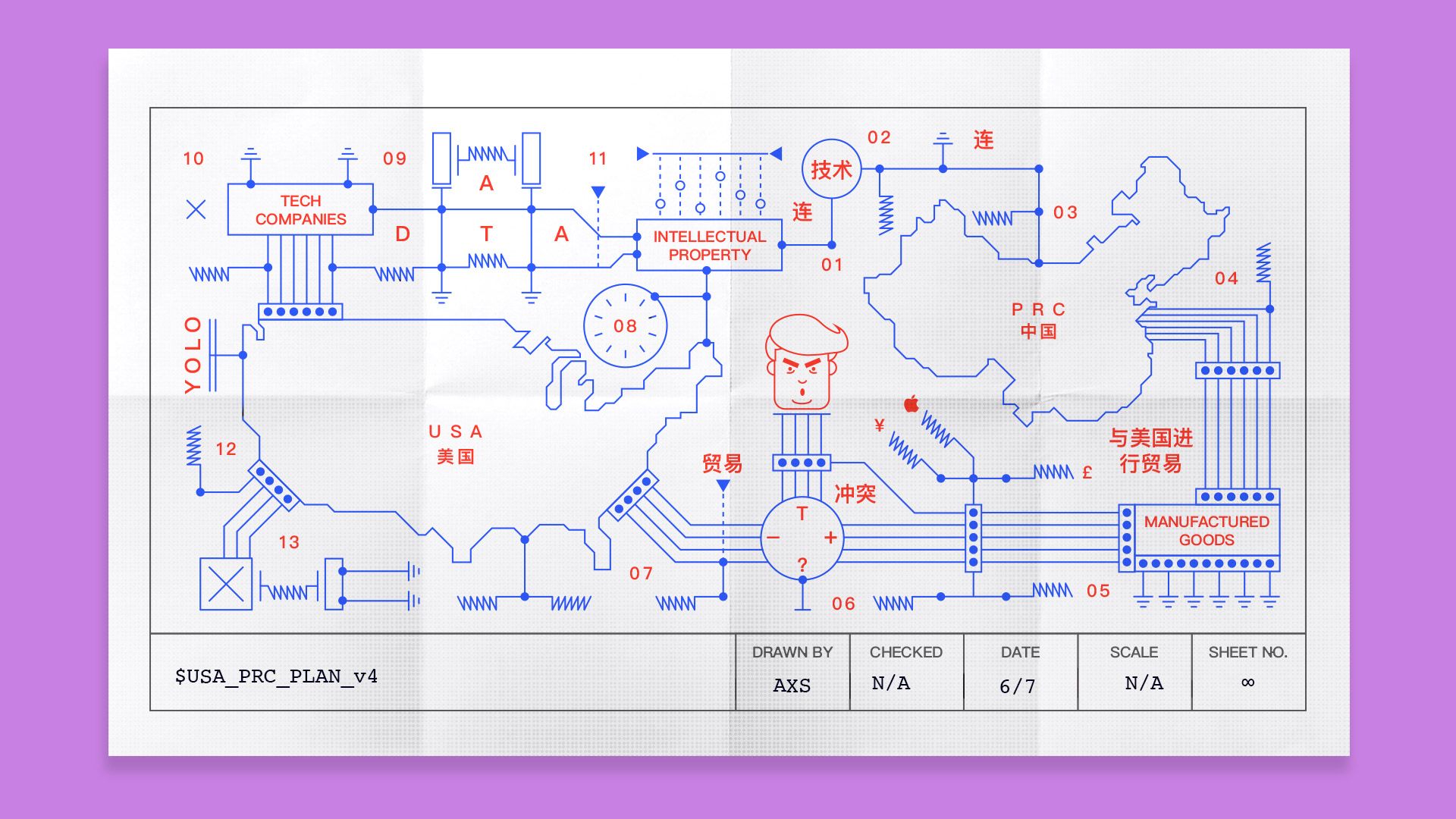
As tech companies get drawn into the deepening trade fight between the U.S. and China, sound bites are winning at the expense of a smarter understanding of the two nations' web of competition and cooperation.
The bottom line: Understanding where the U.S. is vis-à-vis China means accepting hard and competing truths. It's true that China would love its tech industry to take over more of the leadership and value the U.S. has in areas like chips, software and internet services. And it's equally true that the U.S. is utterly dependent on China.