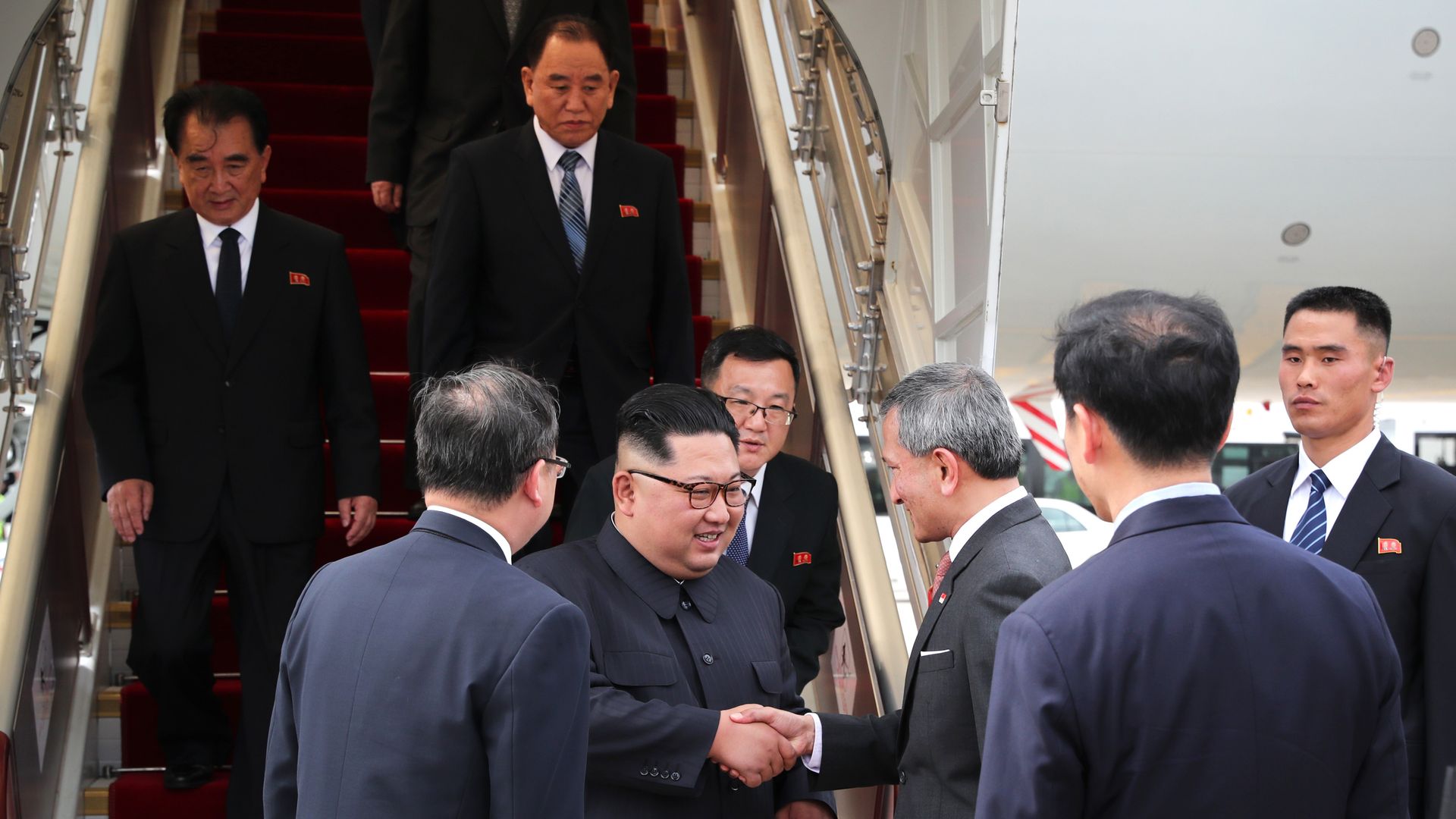
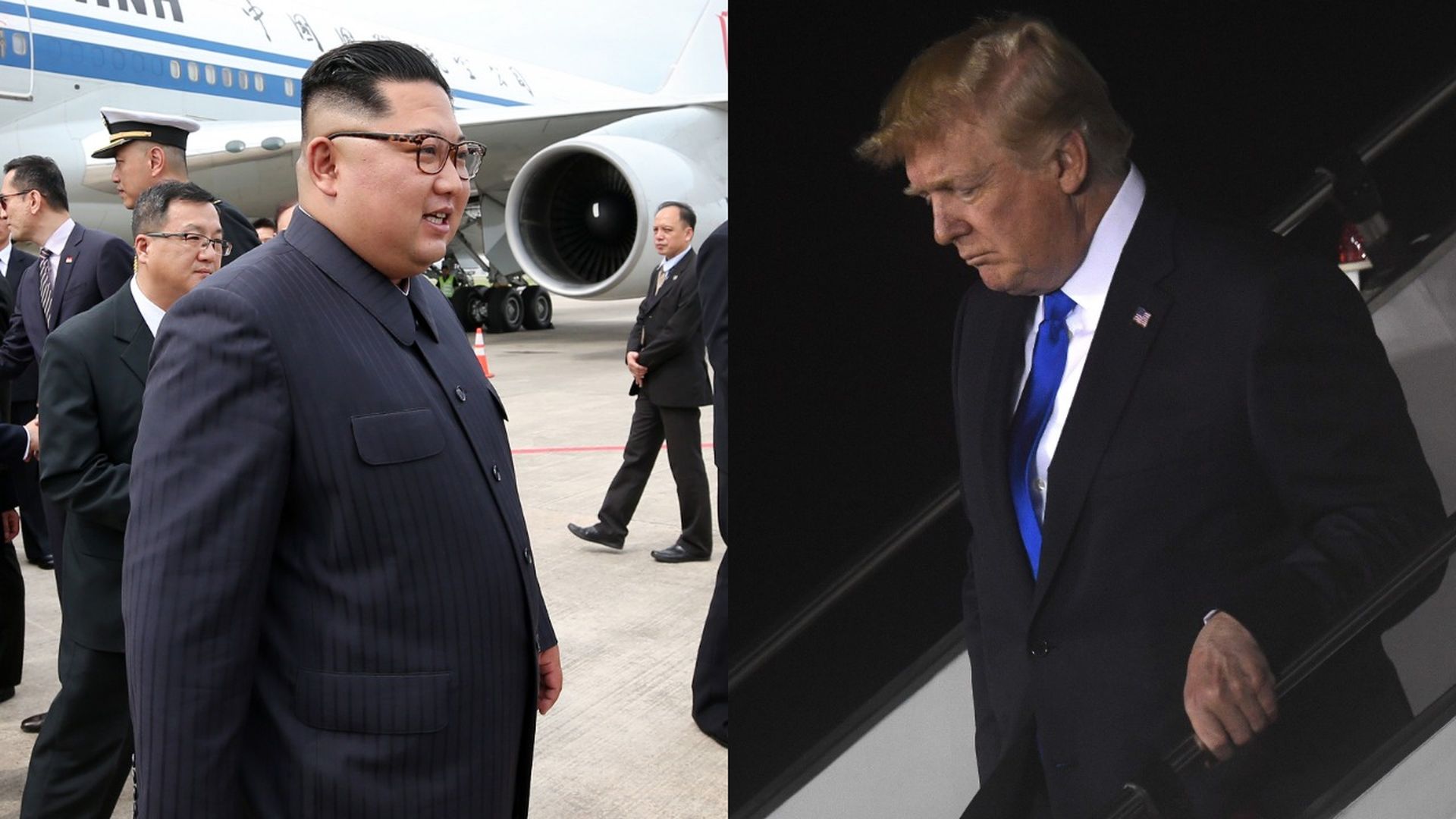
North Korea's state-run Korean Central News Agency reported on Monday morning in Pyongyang that leader Kim Jong-un is in Singapore for Tuesday’s historic summit with President Trump — breaking its silence to citizens who have long been kept in the dark about the timing of the momentous occasion, the AP reports.
The details: A report by the outlet, the AP notes, said both leaders will exchange “wide-ranging and profound views” on establishing a new relationship, building a “permanent and durable peace mechanism” and the denuclearization of the Korean Peninsula.
Some experienced North Korea analysts believe hardline elements within the North Korean intelligence apparatus have been opposed to the idea of the summit between Kim Jong-un and Trump.
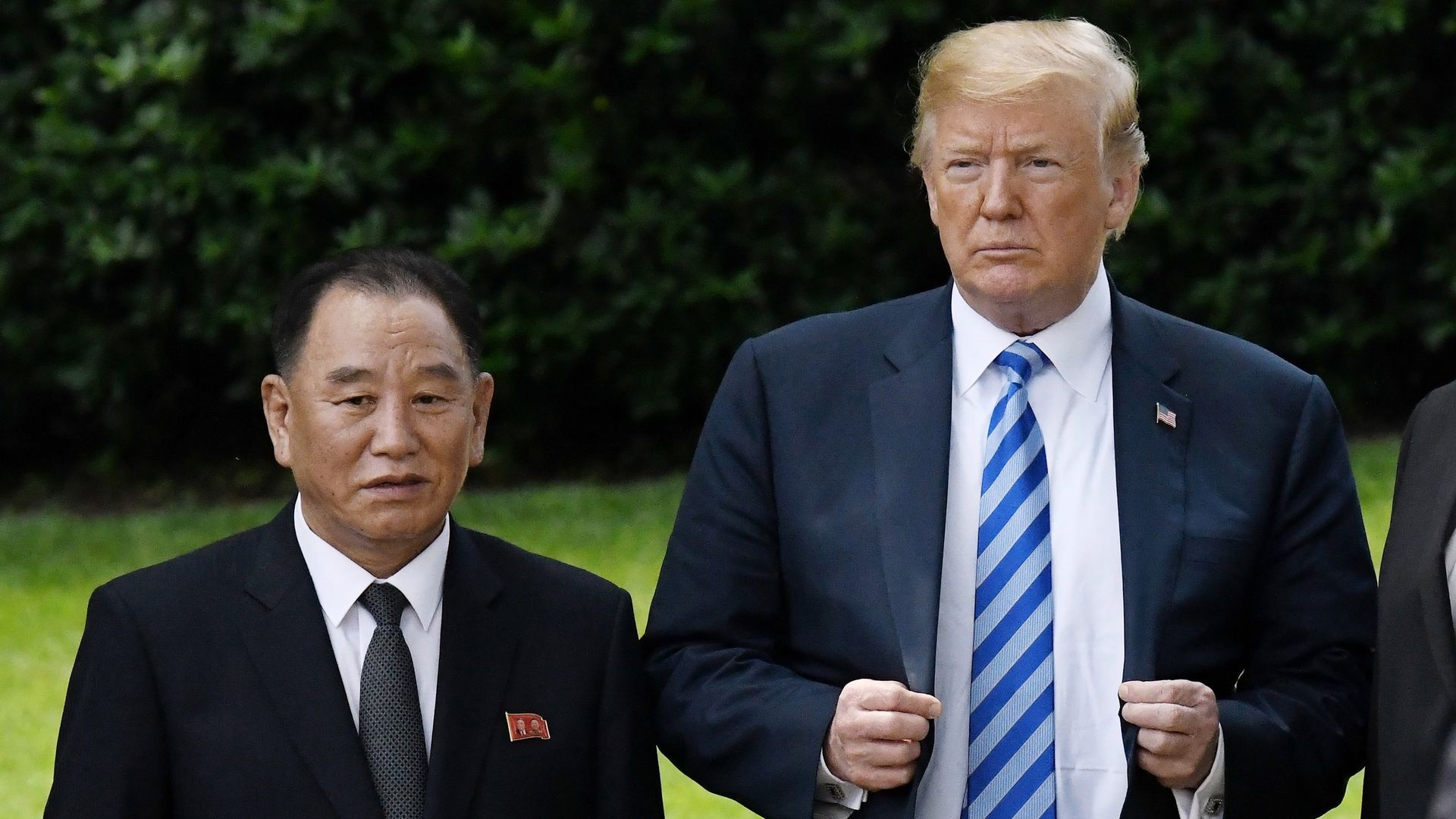
Between the lines: One source said Kim Jong-un's decision to send the former spy chief Gen. Kim Yong-chol to the U.S. was likely designed to signal to any internal skeptics that he's taking a tough-minded approach.
No matter what happens during the summit on June 12, it will be impossible to know immediately afterwards whether it's been a success.
The big picture: Trump himself has acknowledged as much, playing down expectations in his public statements and describing this as the first of a potential series of meetings designed to thaw relations and ultimately denuclearize the Korean Peninsula.
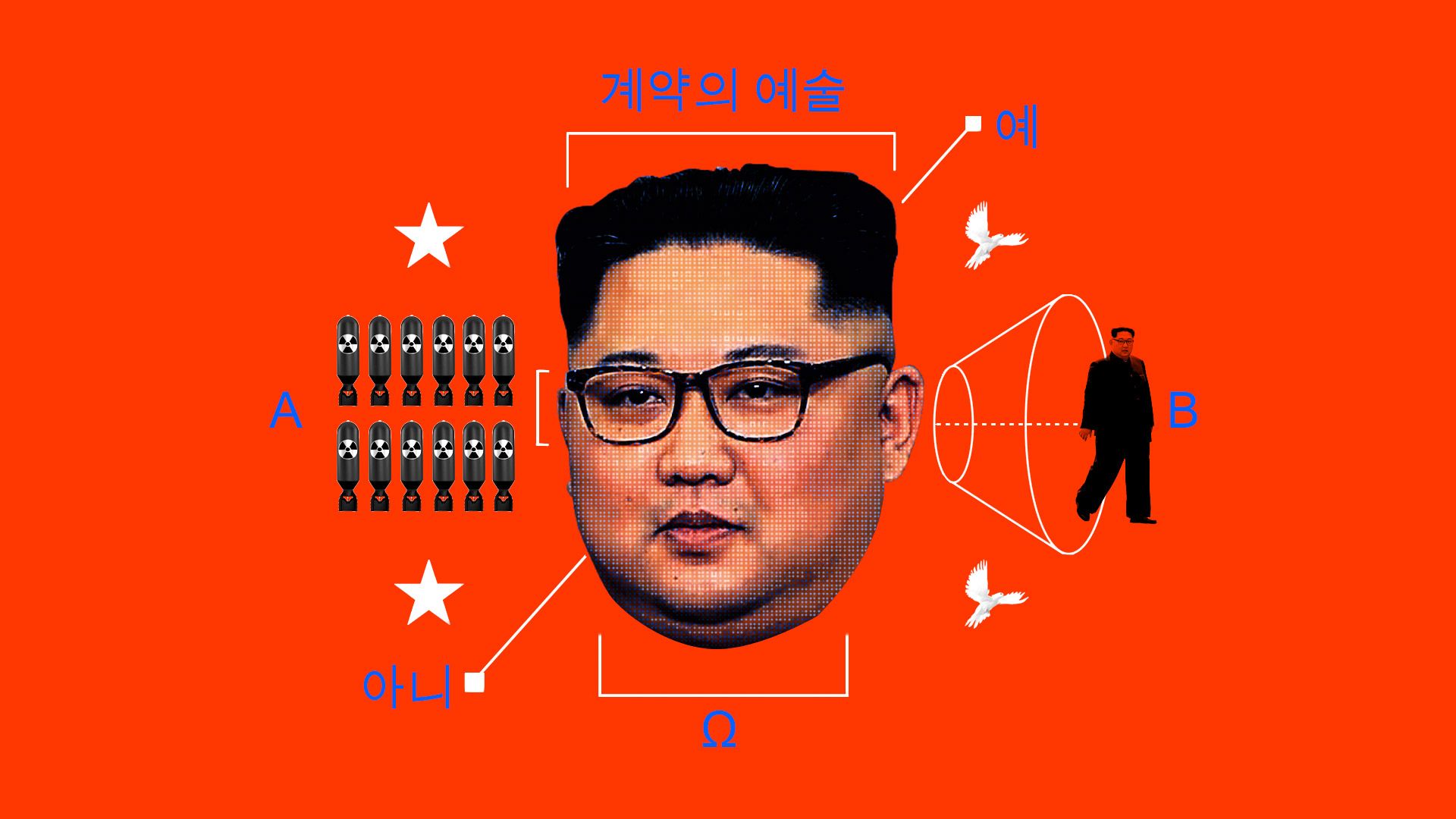
Over the past decade, allied intelligence agencies have pieced together a profile of the young Kim Jong-un from extensive interviews with teachers, students, food preparers, and other staff at the elite Swiss school that Kim attended during his adolescence, according to a source who has carefully studied the classified binder on Kim.
The big picture: "The picture that emerged from literally dozens of interviews bears a striking similarity with the man he has emerged into today," the source said. "Gluttonous, prone to fits of anger and swaggering around his classmates. Kim Jong-un was an in-attendant student but demanded slavish loyalty from other children in his wake."
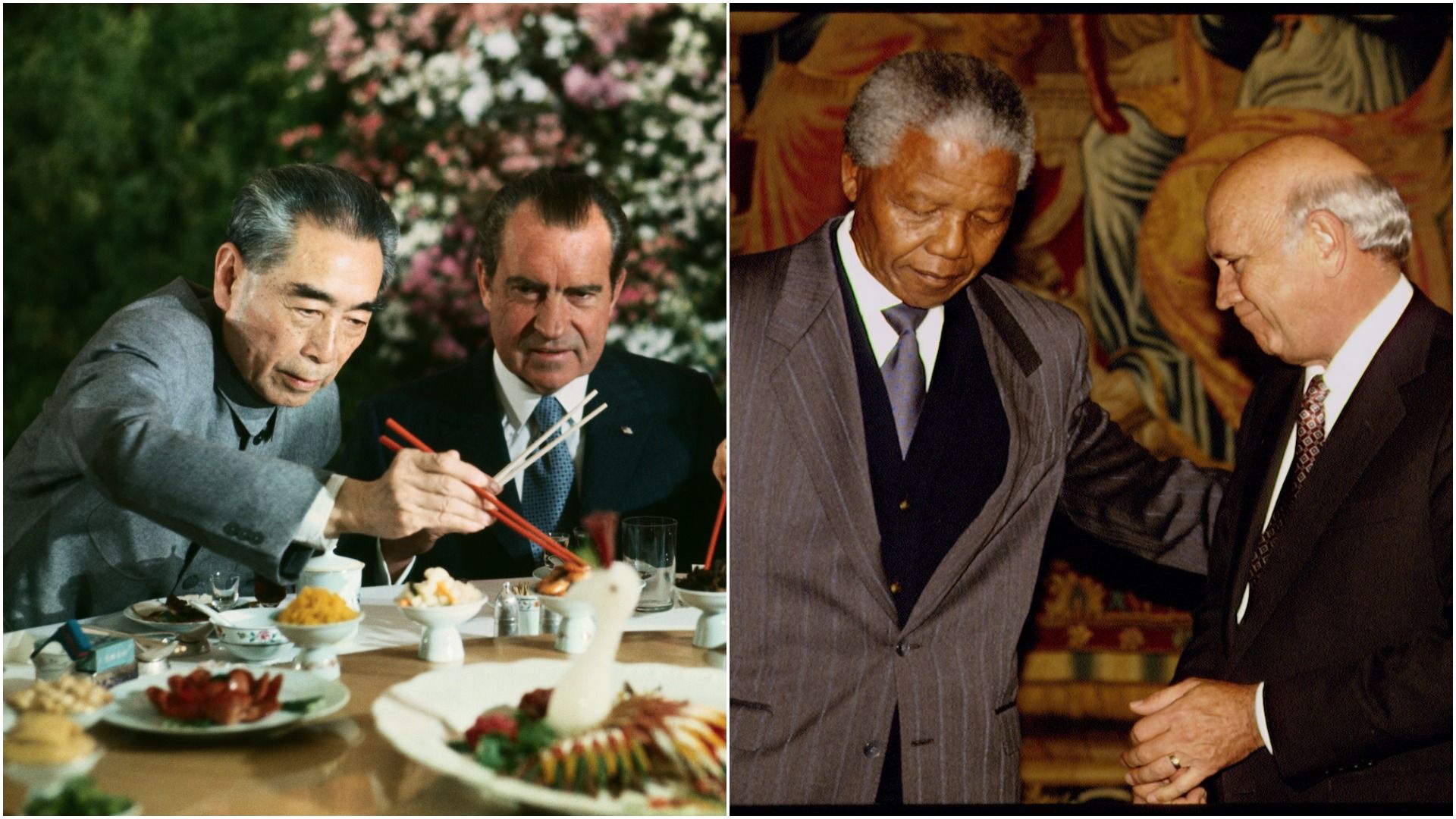
President Trump and Kim Jong-un have arrived in Singapore for a historic summit between two adversaries looking to strike a nuclear deal that could also have huge economic consequences for both sides — and it's a crossroads that other leaders have faced before.
The big picture: While Trump has stated that he doesn't think he has to prepare much for the long-awaited summit, both leaders might look to history for key lessons on how to make their meeting successful. Two prime examples are President Nixon's 1972 trip to China and apartheid South Africa's attempt at denuclearization.
For the first time, Chinese people can expect to be healthy longer than Americans, according to the most recent data from the World Health Organization, even though Americans are still expected to live about two years longer than Chinese citizens.
Between the lines: Since 2010, the healthy life expectancy for Americans has dropped by 0.2 years, but for Chinese people it has increased by more than one whole year. Yun Sun, director of the China program at the Stimson Center, told Axios that as China's economy continues to boom, its people are pursuing healthier lifestyles. She added that obesity and drug use are not as common in China.
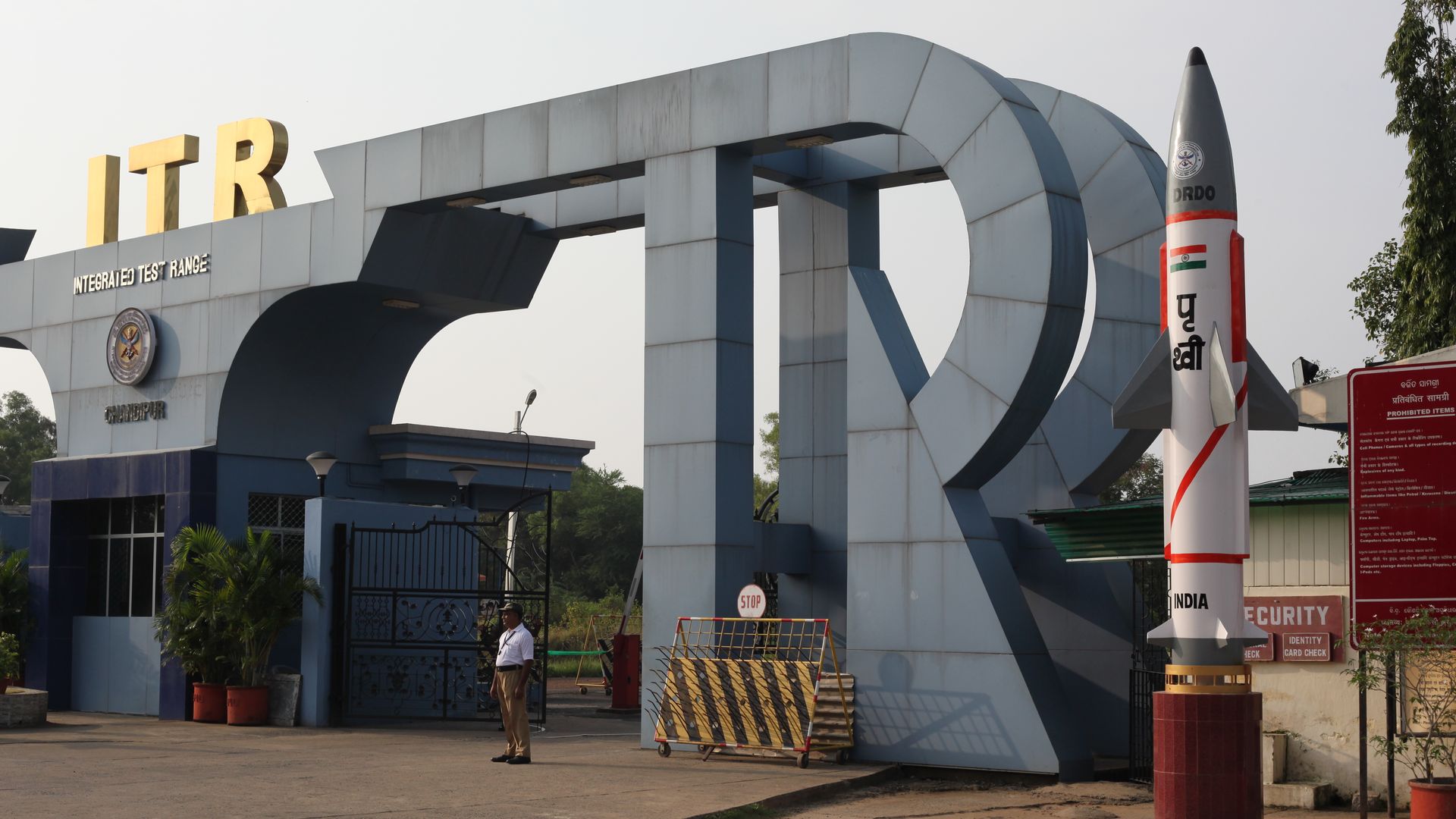
For all the attention North Korea is getting, there’s a web of nuclear threats around the world that risk setting off an arms race all on their own — even if the North Korean threat goes away.
The big picture: It’s worth taking the time to focus on the other standoffs. Heightened risk is not a certainty that nuclear conflict breaks out, but the web is tangled enough that a spark of conflict could have wide-ranging global consequences.
China was already building the largest single infrastructure project since the Marshall Plan — the Belt and Road Initiative, echoing planet-spanning 19th and 20th century moves by the British and then the United States to set the rules for global commerce.
What's happening: But now Beijing is looking to amplify its reach far beyond what the U.K. and the U.S. accomplished in their respective heydays.
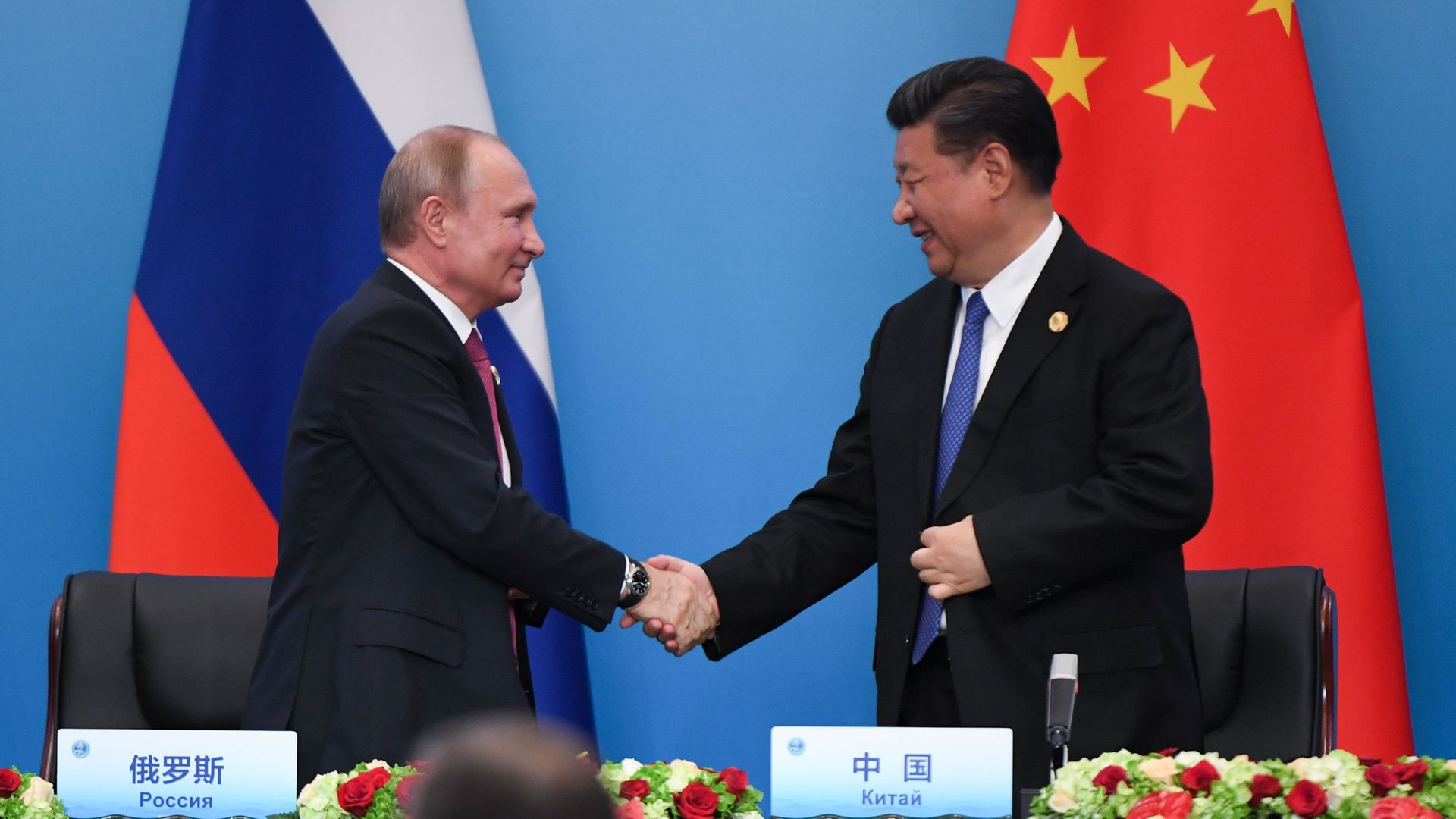
Chinese leader Xi Jinping and Russia's Vladimir Putin are strategizing how to reposition themselves for a new, more powerful future amid a rapid deterioration of the U.S.-led global order.
What we're hearing: Xi and Putin, meeting Friday in Beijing and again yesterday in the city of Qingdao, don't appear to think they have the cachet — even combined — to create an entirely new system. Nor is it clear that at the moment they would want to trash the U.S.-led institutions that have anchored the global economy and political order since World War II.
"An opinion poll published [today] shows deep divisions between Israelis and American Jews, particularly in relation to President Donald Trump, highlighting the growing rift between the world's two largest Jewish communities," AP reports from Jerusalem.
By the numbers: "The survey of the American Jewish Committee showed 77 percent of Israelis approved of the president's handling of U.S.-Israel relations, while only 34 percent of American Jews did. Fifty-seven percent of U.S. Jews disapproved, while only 10 percent of Israelis did."
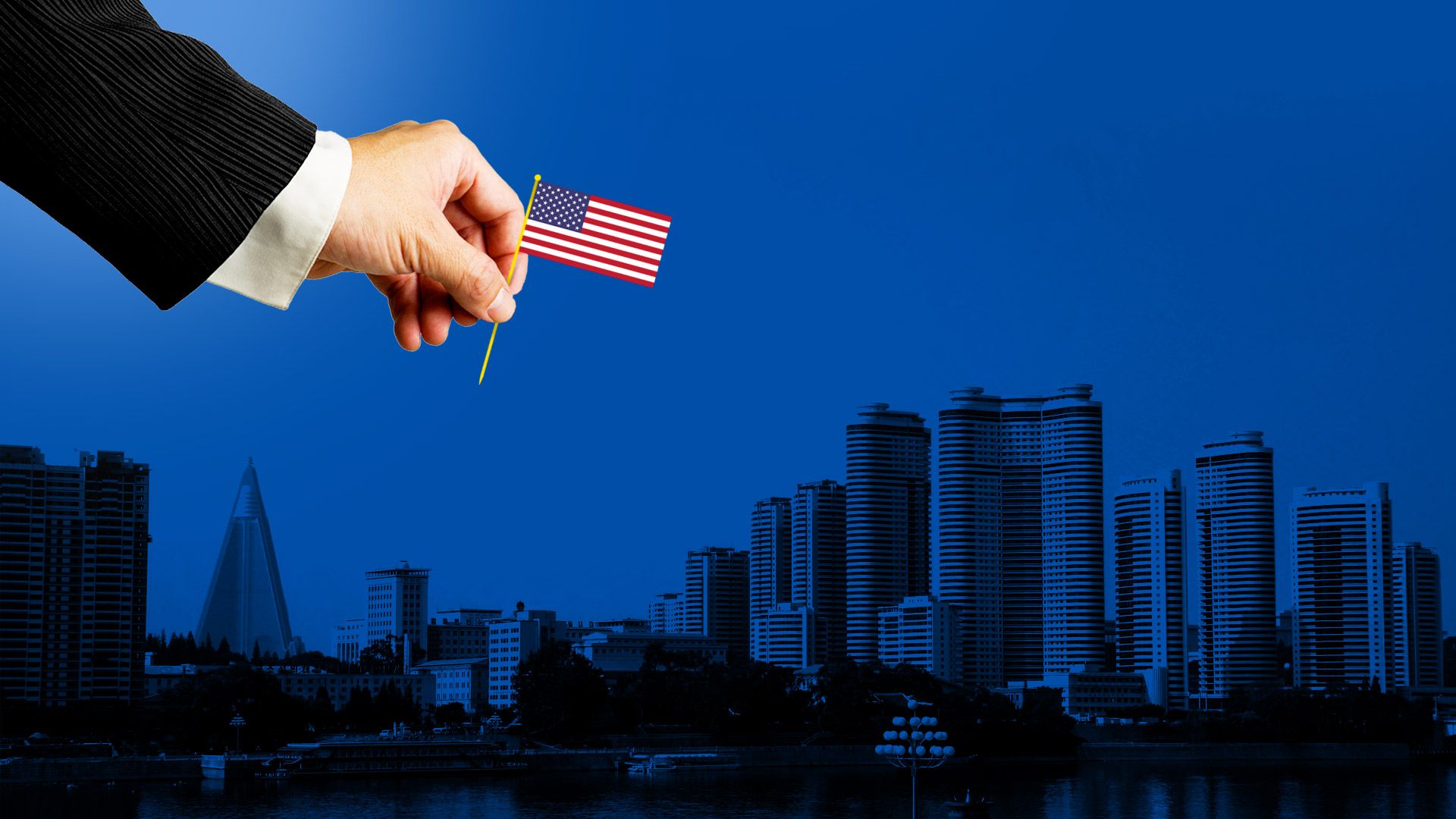
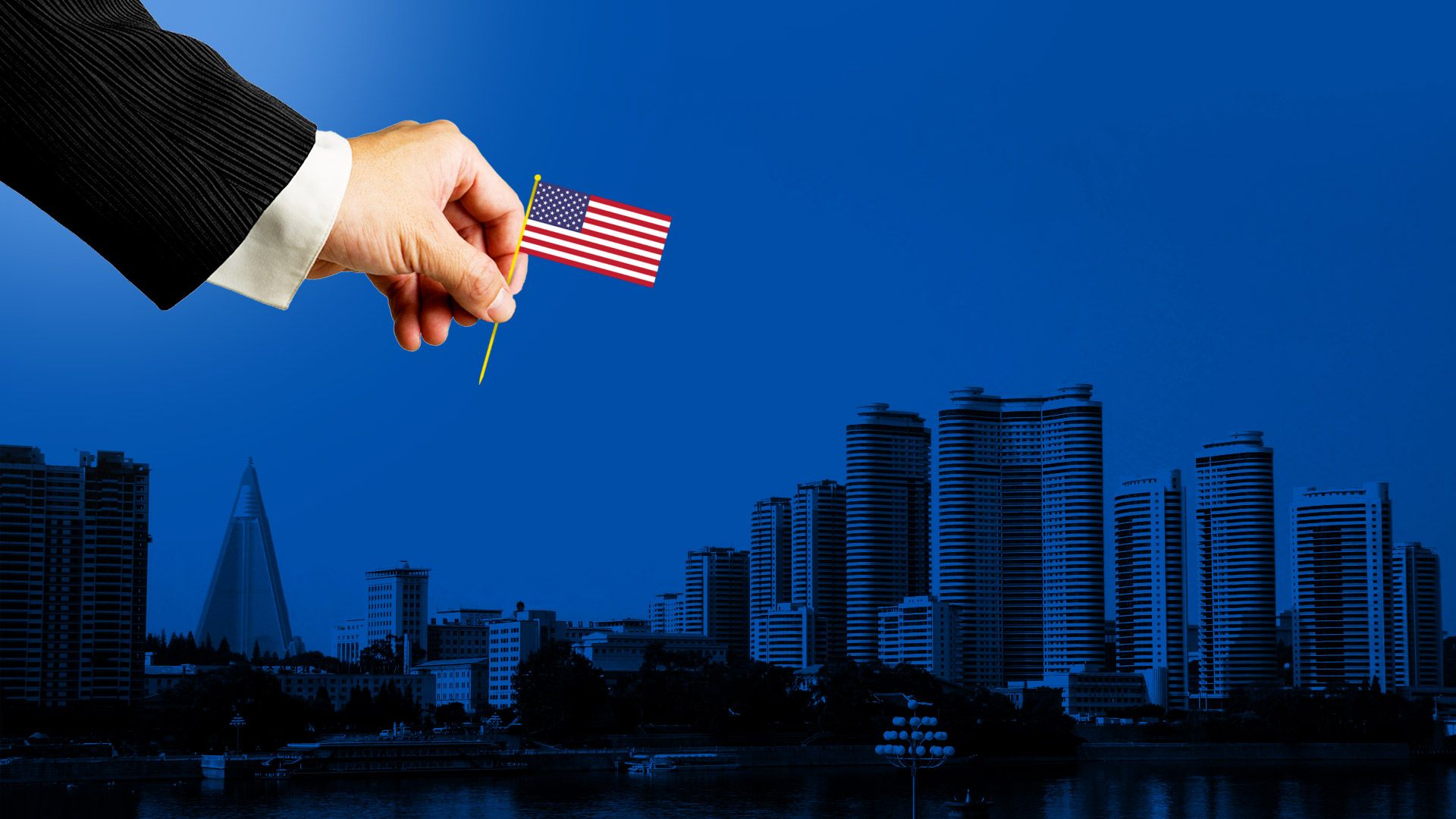
President Trump will confront Kim Jong-un using "a strategy to impress as well as intimidate" — and is open to planting a U.S. embassy in North Korea.
The big picture: U.S. officials involvedin the summit preparations have even discussed enlisting gymnasts and musicians to bring the cultures together, sources familiar with summit prep tell Axios.
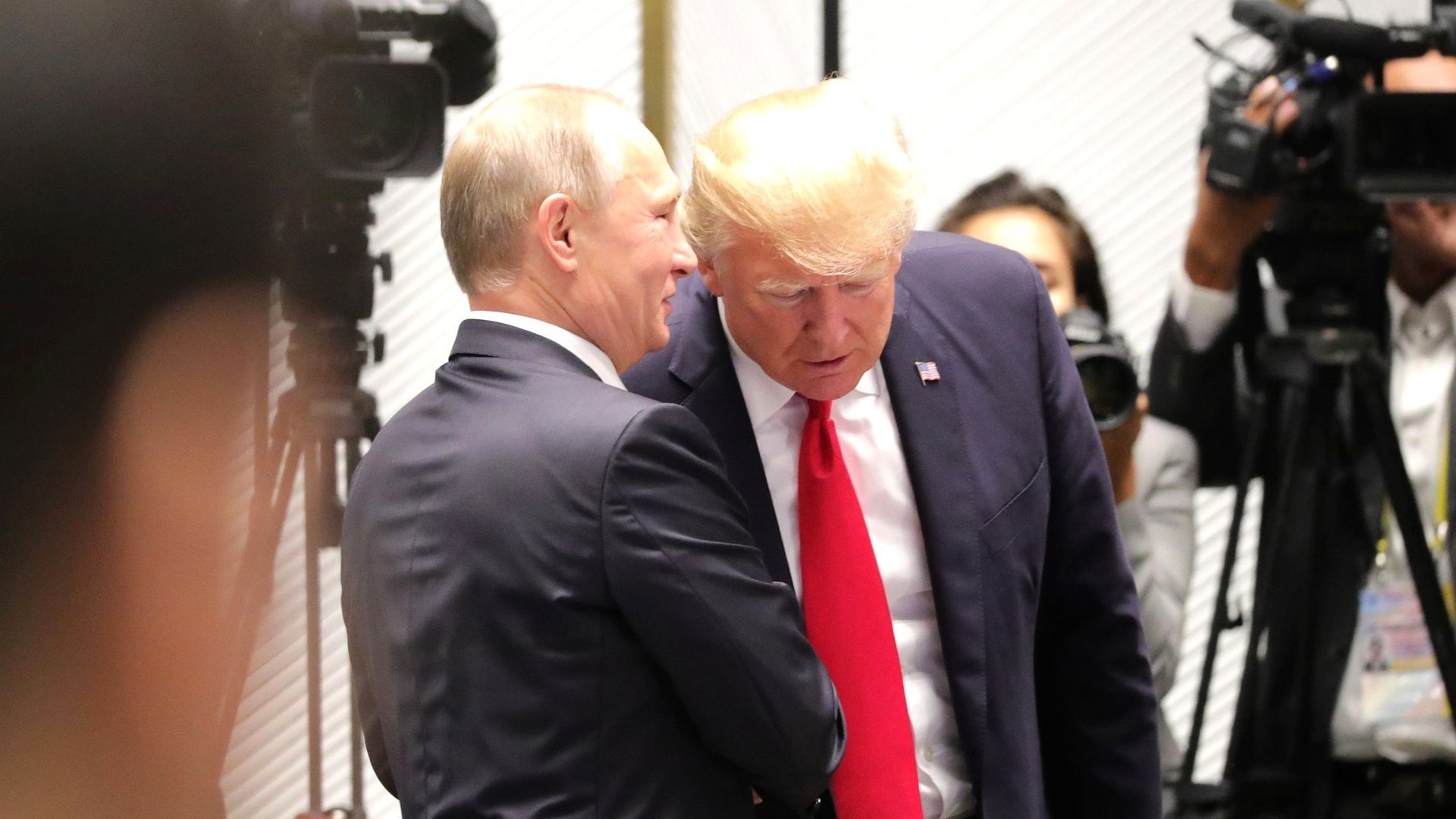
Russian President Vladimir Putin said that he is ready to hold a summit with President Trump whenever the U.S. is ready, reports AP. During a visit to China, he also "welcomed Trump’s call to bring Moscow back into the G7" and said he shares Trump's concern about the escalation of an arms race between the U.S. and Russia.
“The U.S. president has repeatedly said that it’s reasonable to hold such a meeting. As soon as the U.S. side is ready, the meeting will take place, depending, of course, on my working schedule.”
The details: The Kremlin floated Vienna as a possible meeting place for the two world leaders yesterday.
North Korean leader Kim Jong-un and President Trump have both arrived in Singapore ahead of their Tuesday summit. Kim and his delegation landed on Sunday afternoon while Trump touched down at 8:21 p.m. local time after an eventful exit from the G7 in Canada last night.
The big picture: Highlighting his isolation on the international scene, this is Kim's first known international trip as North Korea's leader outside China — where he only visited for the first time in March.
President Trump is willing to consider establishing official relations with North Korea and even eventually putting an embassy in Pyongyang, according to two sources familiar with preparations for the Singapore summit. "It would all depend what he gets in return," said a source close to the White House. "Denuclearization would have to be happening."
The sources stressed that this is one of many topics that could be discussed at the summit, and that certainly nothing like that has been decided or is necessarily expected to emerge from Trump’s historic mano a mano with North Korean leader Kim Jong-un.