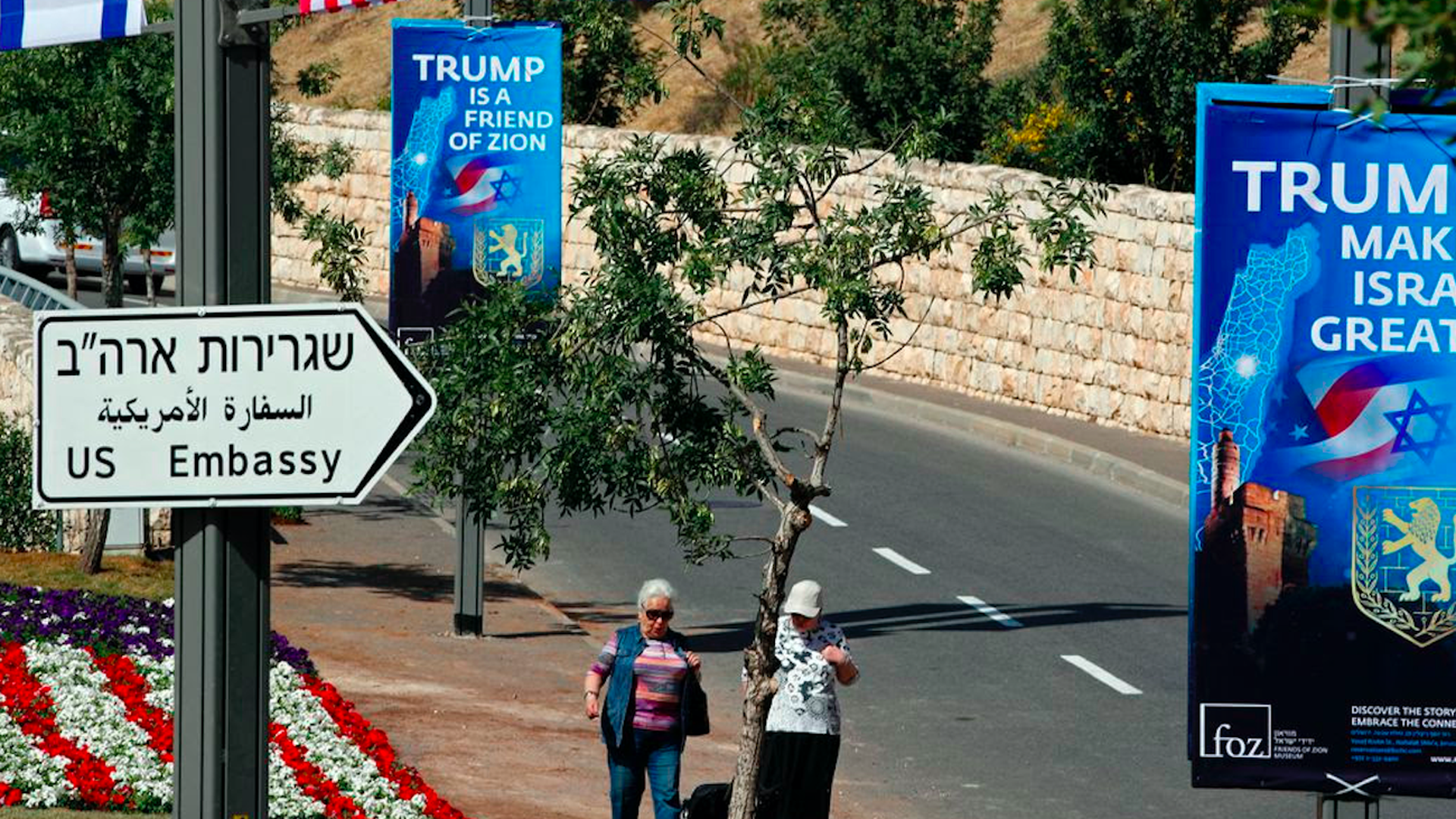
Palestinian President Mahmoud Abbas has decided to recall the head of the PLO office in Washington in protest over the opening of the new U.S. embassy in Jerusalem.
Why it matters: This move further deepens the crisis between the U.S. and the Palestinian Authority. Since President Trump's December 6th announcement recognizing Jerusalem as the capital of Israel, Palestinian leadership has boycotted the White House and suspended almost all contacts with the Trump administration.
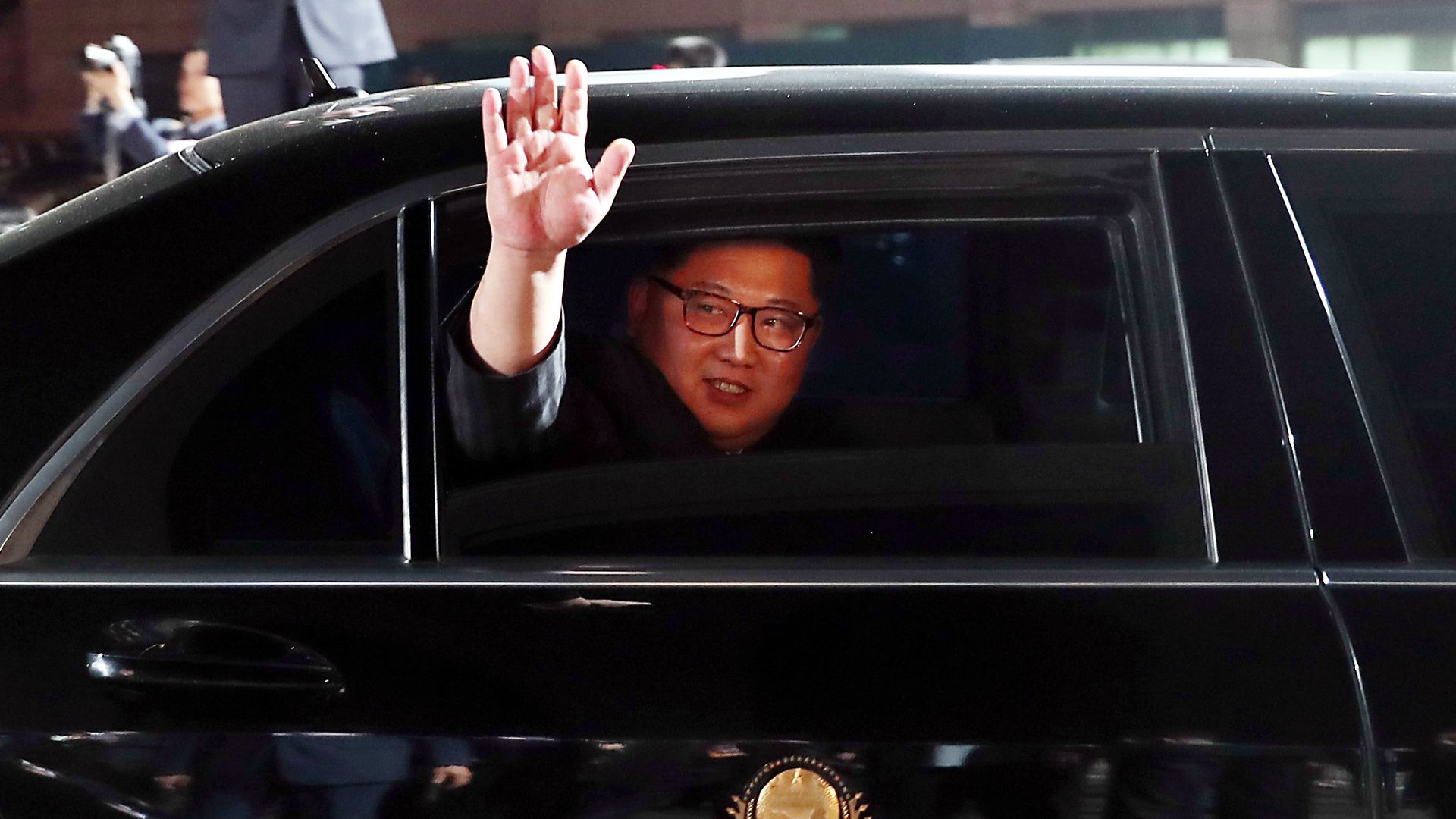
North Korea has cancelled talks with South Korea scheduled for Wednesday, and threatened to cancel next month's summit between President Trump and North Korean leader Kim Jong-un over joint U.S.-South Korean military drills, according to South Korean news agency Yonhap.
Why it matters: This is a dramatic change in tone from North Korea, which recently released three U.S. prisoners and began dismantling a nuclear test site as part of efforts to lay the groundwork for talks with Trump. North Korea has long viewed joint drills as rehearsals for invasion, but had remained uncharacteristically silent about exercises last month. Tuesday's objections were over an air force drill that began last week.
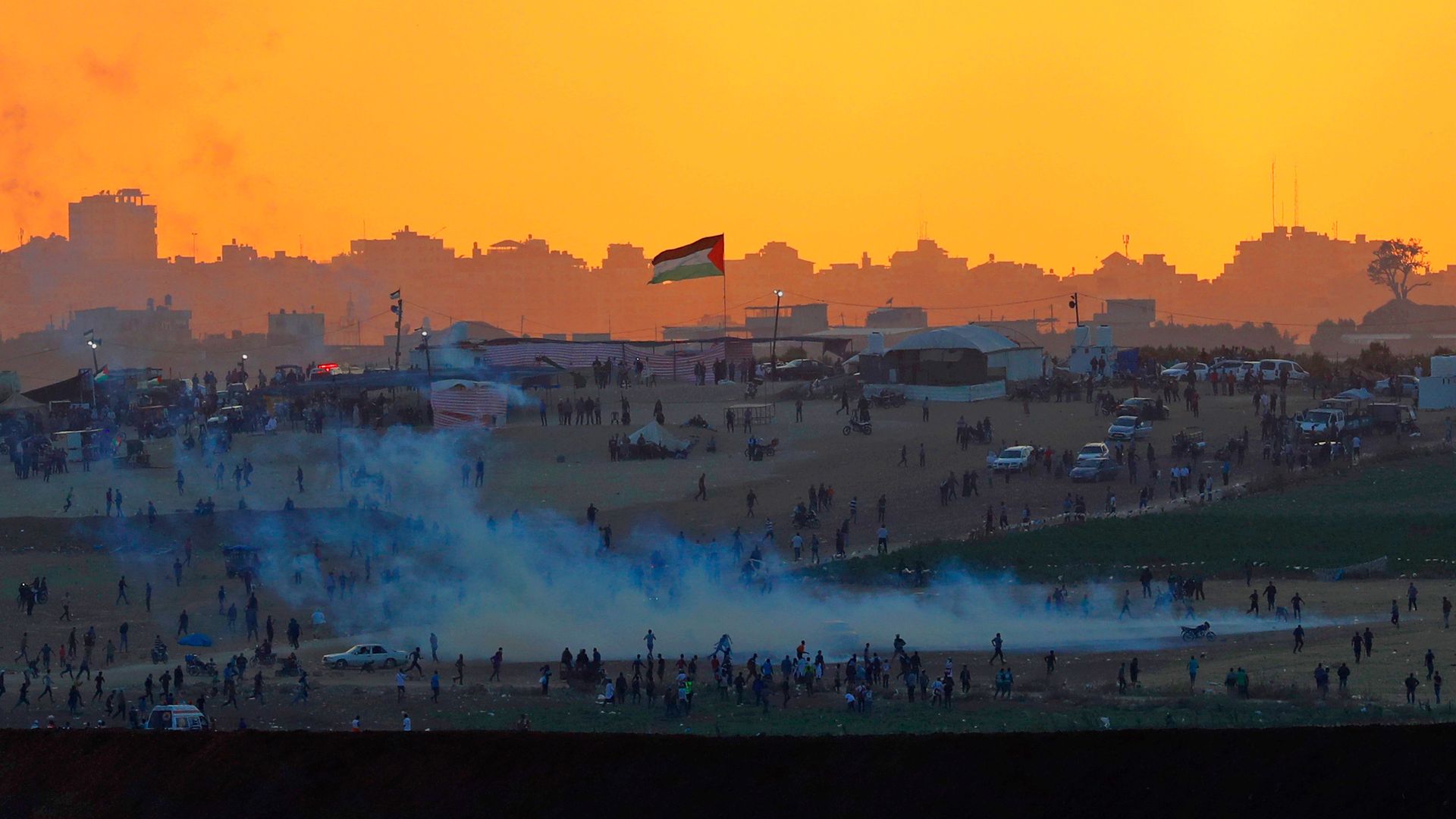
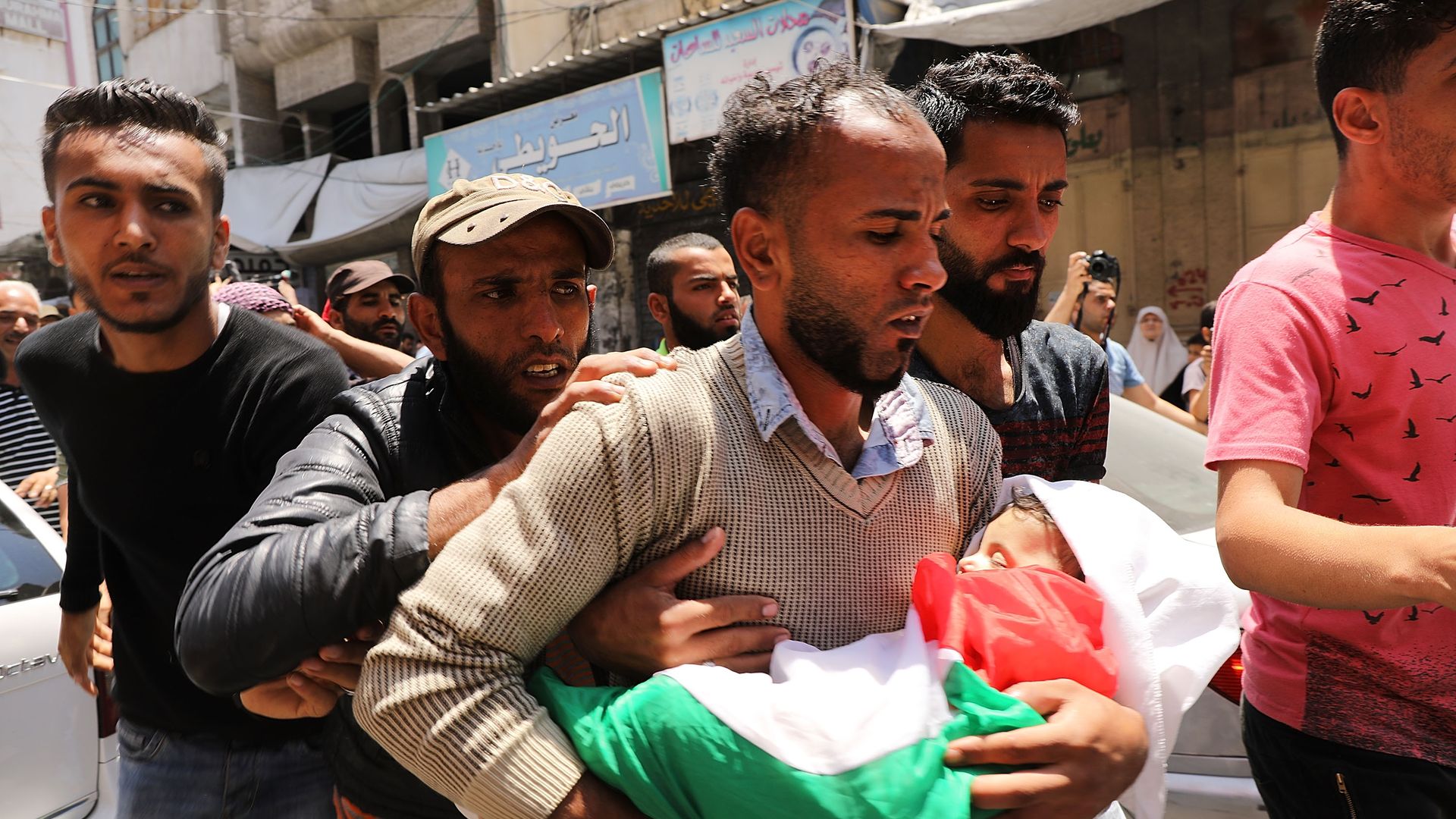
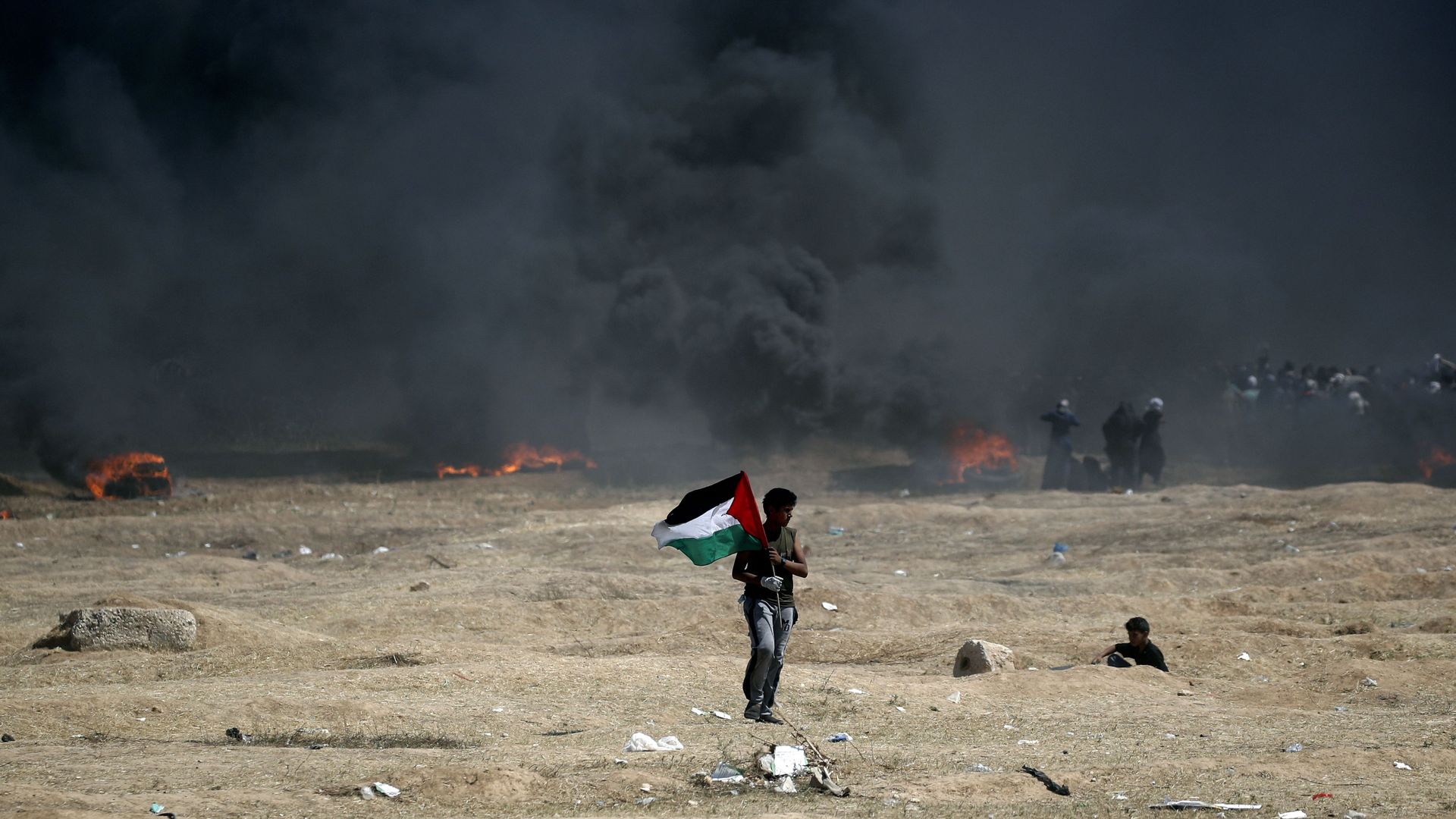
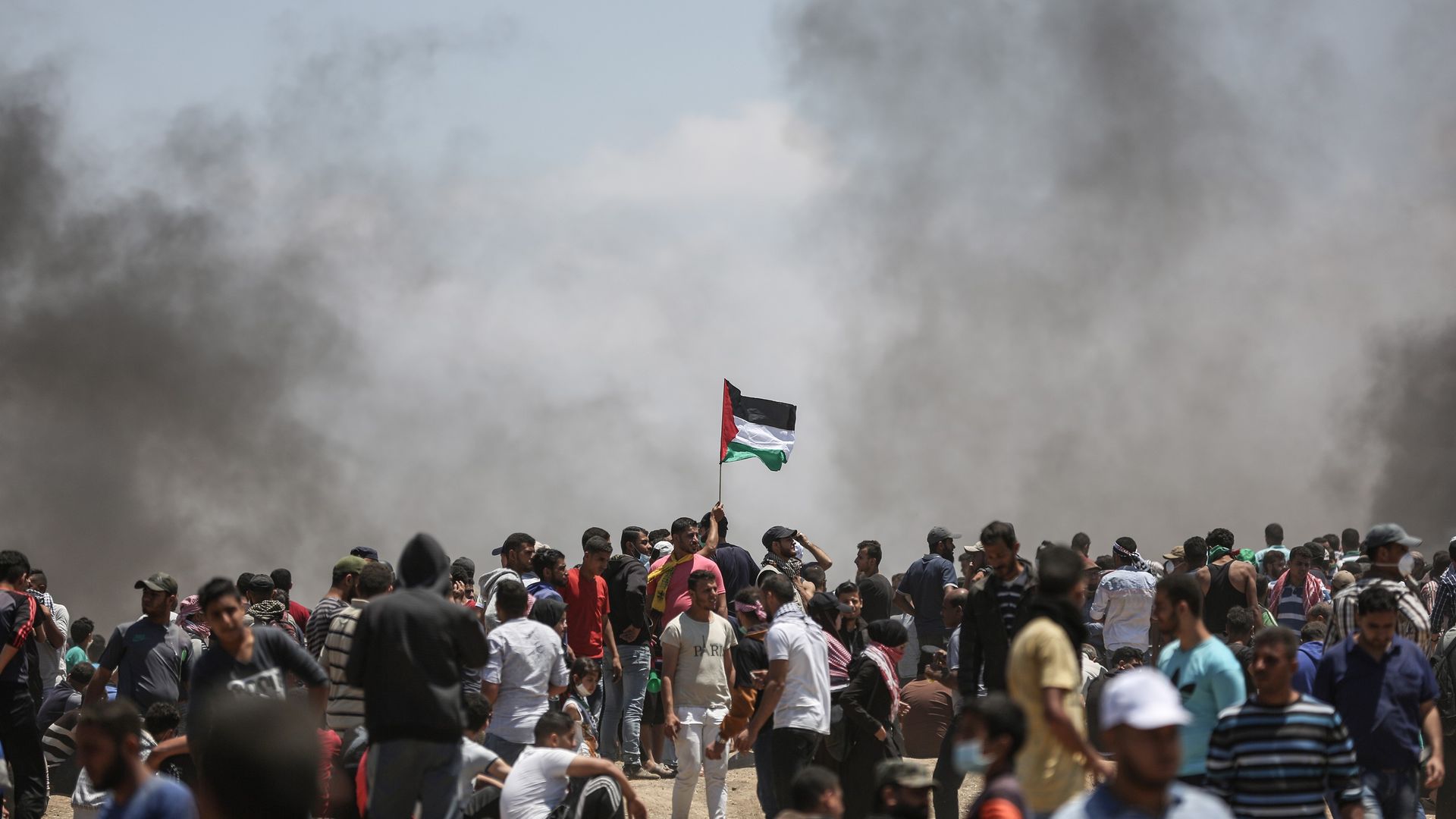
At least two Palestinians have been killed today by Israeli forces near the Gaza border, the AP reports, citing health officials. Today's protests follow the bloodiest day in Gaza since 2014, when almost 60 Palestinians were killed.
The backdrop: Yesterday's events have caused a major international dispute, with the U.S. supporting Israel's claim that deadly force was needed to defend its borders, and opposing an investigation into the deaths despite calls for one from allies like the U.K. and Germany.
The U.S. stance: UN ambassador Nikki Haley said, "No country in this chamber would act with more restraint than Israel has," and echoed the White House response from yesterday, that Hamas bears all responsibility for the bloodshed. That comes as countries around the region and wider world have condemned the use of force on the protesters, and allies like the U.K. and France have implored Israel to show more restraint.
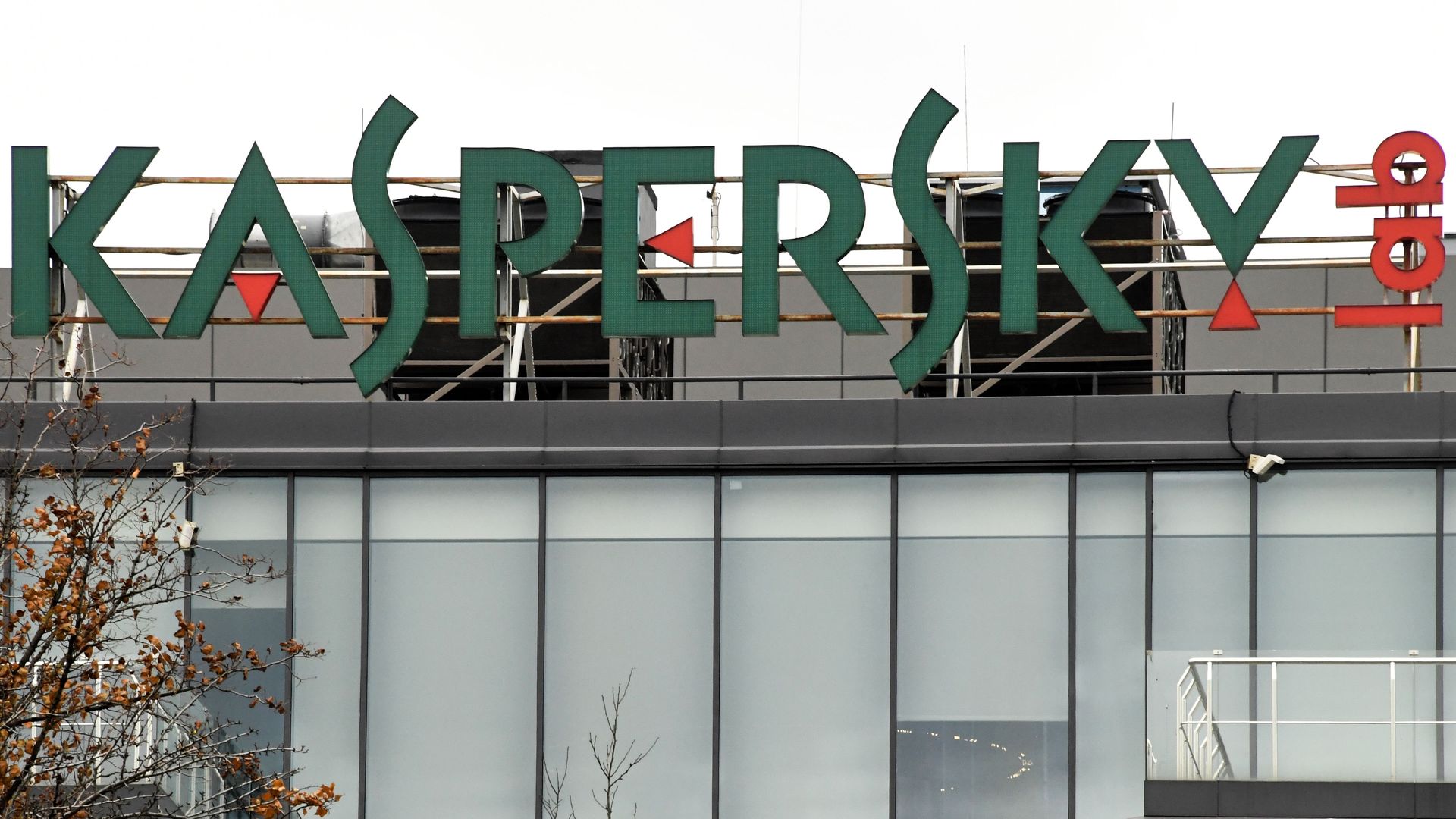
Moscow-based Kaspersky Lab is moving its data processing and storage for many customers, as well as its software assembly, to Zurich "to address the growing challenges of industry fragmentation and a breakdown of trust."
Why it matters: The beleaguered security company, still a major international player in security research, has come under fire in the United States over the past year for possible links to the Russian government.
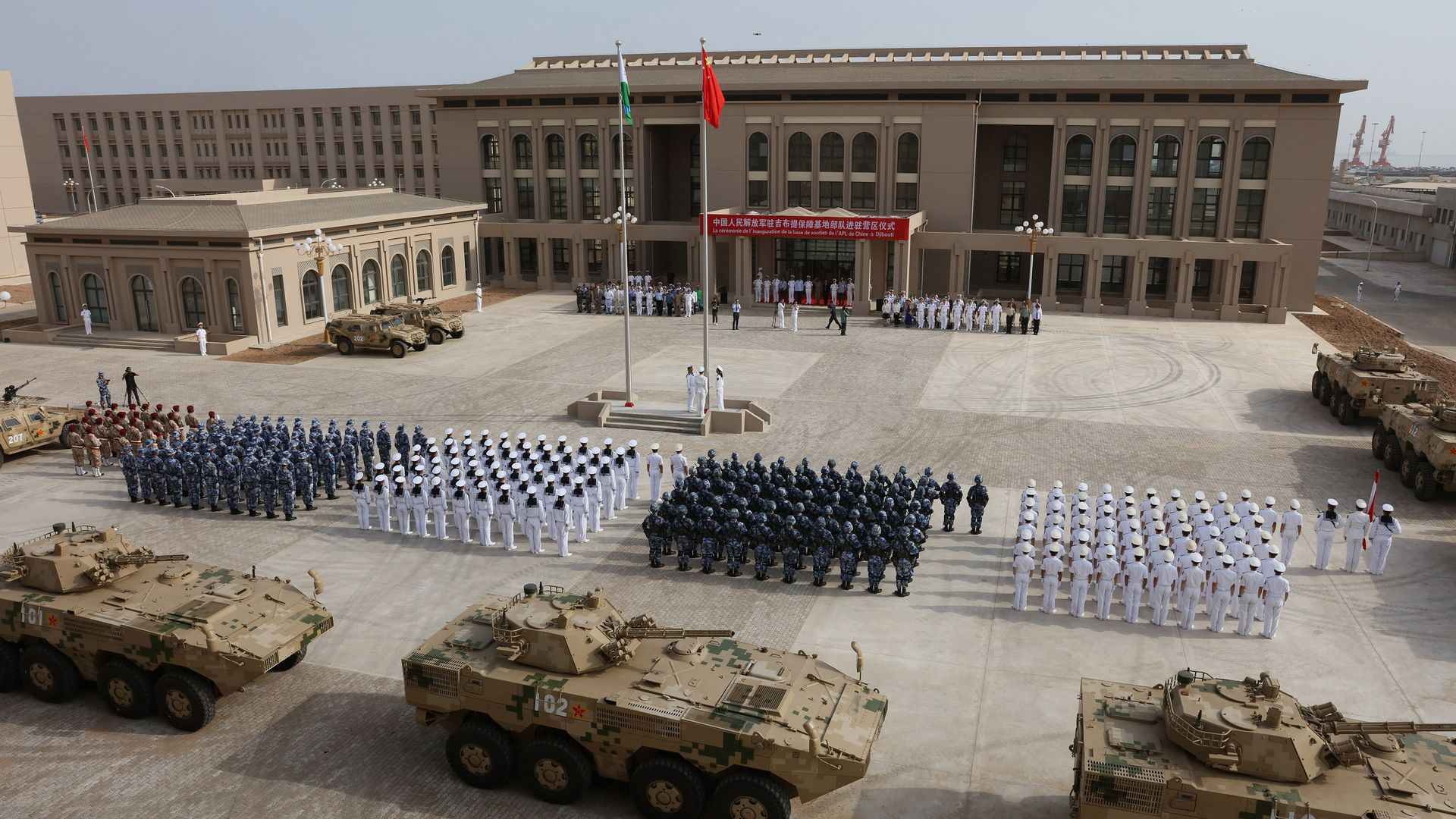
China is leveraging debts to gain control of strategic ports and secure primary access to African oil in Angola, Kenya and Djibouti.
Why it matters: The Chinese are offering up attractive infrastructure projects to the countries that need them most and following up with escalating demands for influence. That approach will spread to even more of the globe under Beijing's trillion-dollar Belt and Road Initiative.
The clashes along the border between Israel and the Gaza strip which led to the death of more than 50 Palestinians today are turning into an international diplomatic crisis.
What's next: Israeli Prime Minister Netanyahu had a conference call with Israeli security chiefs to consult about today's event and to prepare for tomorrow's demonstrations in Gaza. They are expected to be even larger, as May 15th is Nakba Day, which commemorates the displacement of Palestinians during Israel's founding.
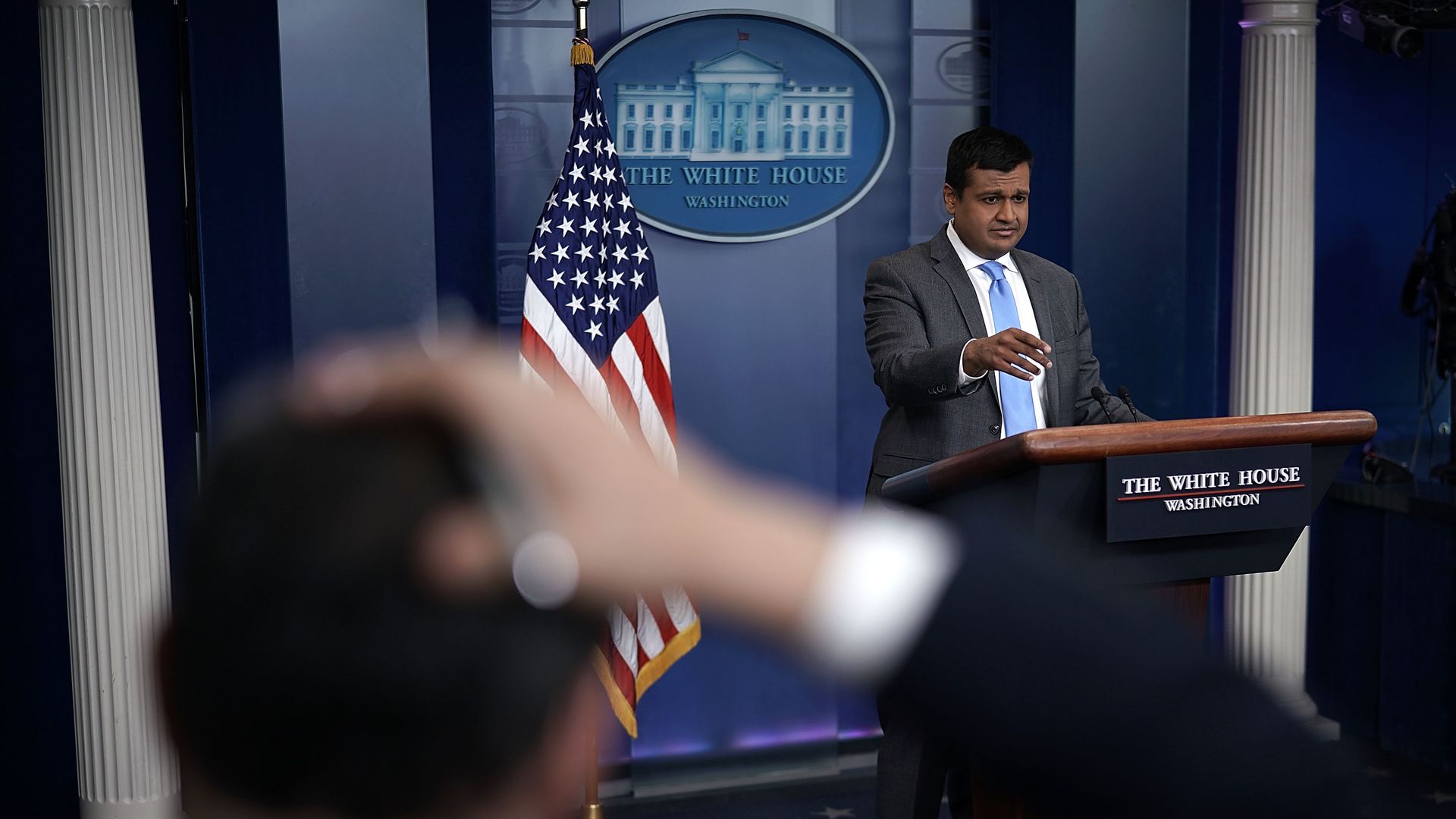
White House Deputy Press Secretary Raj Shah told reporters on Monday that responsibility for the dozens of Palestinian protestors killed in Gaza "rests squarely with Hamas" and that "Israel has the right to defend itself."
The big picture: The White House said it still hopes to help foster a peace agreement between Israel and the Palestinian territories and believes that the protests — sparked by the opening of the new U.S. embassy in Jerusalem — and deaths don't change that.
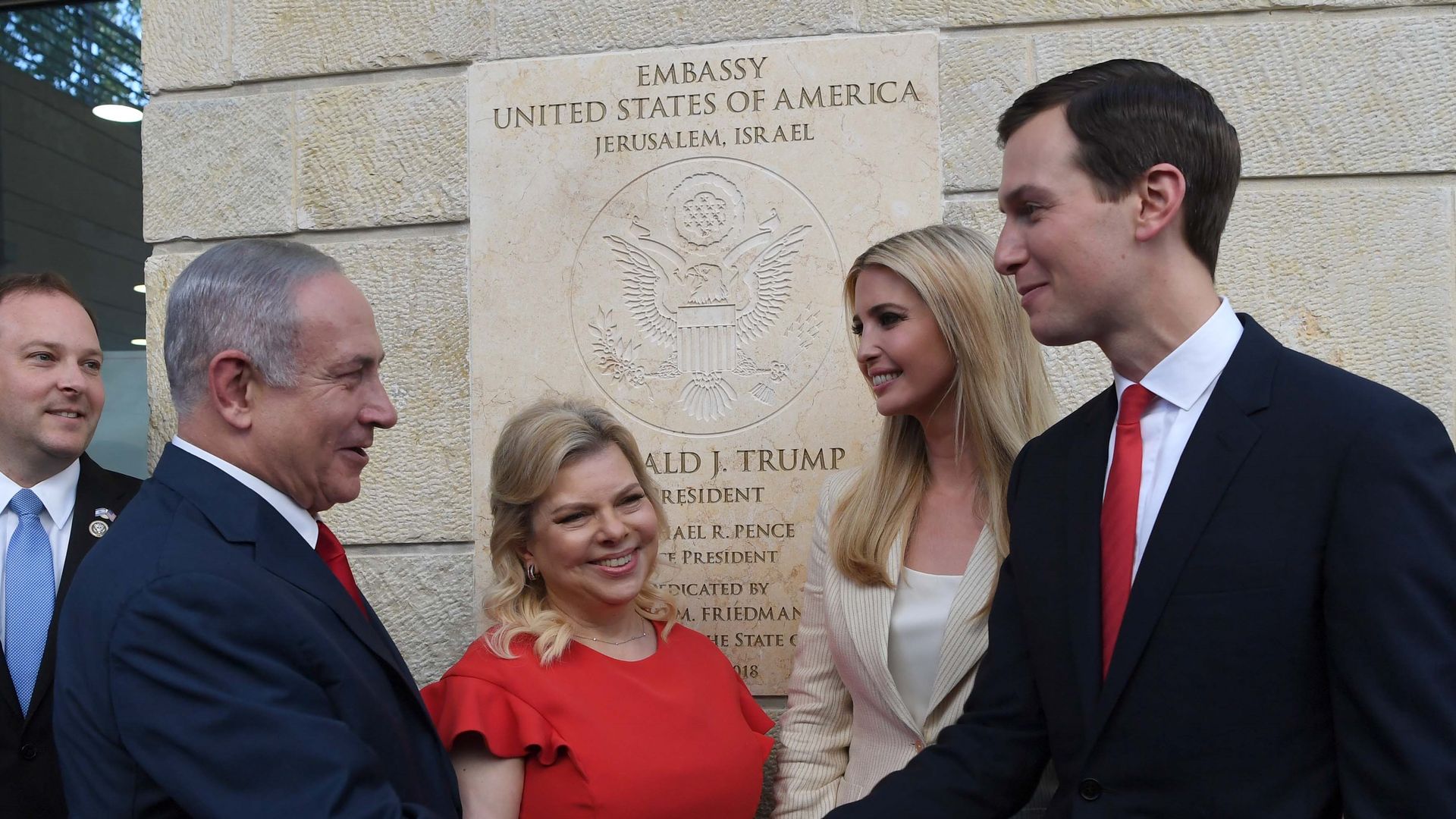
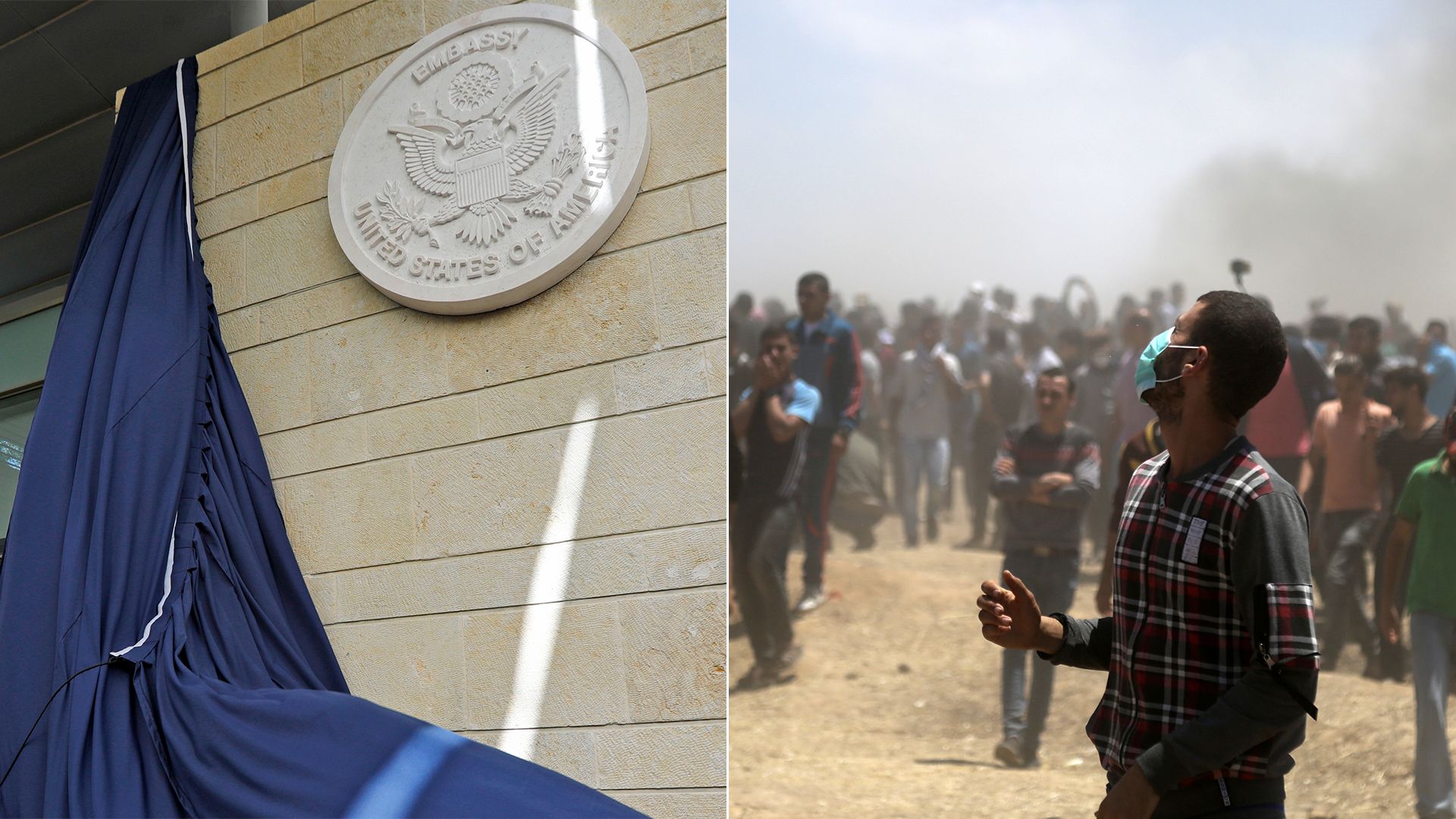
The contrast could not be starker between the celebratory proceedings marking the opening of the U.S. embassy in Jerusalem and the border clashes on Monday that have resulted in 52 casualties — the bloodiest day for Gaza since the 2014 war between Hamas and Israel.
Why it matters: Both events add more fuel to the already combustible dynamics between the Palestinians and Israel. The embassy move has led the Palestinian Authority to sever contact with President Trump's administration, severely reducing any chances for the resumption of peace diplomacy, while the deaths of Gazan protestors have increased the possibility of another war between Israel and Hamas.
Between the lines: This is a remarkable split-screen moment. Most speakers at the embassy ceremony chose to ignore the events in Gaza, but Jared Kushner said "those provoking violence are part of the problem and not part of the solution,” while Prime Minister Netanyahu praised the “brave soldiers protecting the borders of Israel.”
President Trump has laid out what a successful outcome from his talks with North Korea looks like: "They get rid of their nukes."
But, but, but: North Korea may well make such a promise, but “it is going to be emphatically impossible to conclude definitively that North Korea has given up all of its nuclear material," James Acton, a physicist and verification expert, tells Axios. "The big challenge is not verifying the dismantlement of those they tell us” about, he says, “it’s verifying that they haven’t maintained materials secretly.”
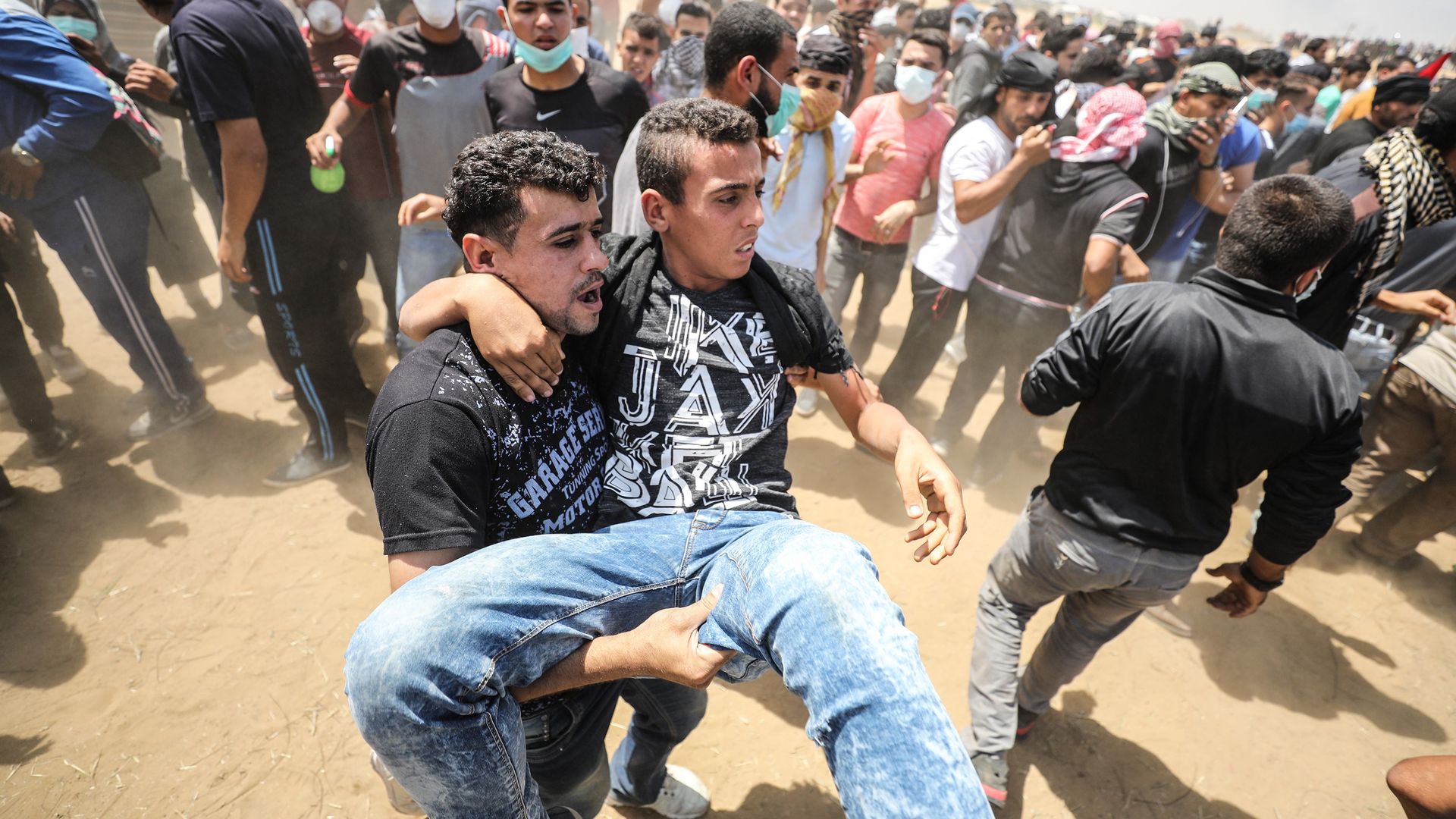
Israeli troops fired at hundreds of Palestinian protesters near the Gaza border on Monday, killing at least 58 people and injuring thousands of others, ahead of the opening of the U.S. Jerusalem embassy, reports Haaretz. Gaza health officials are continuing to update the numbered fatalities.
The big picture: This is now the bloodiest day in the Palestinian-Israeli conflict since 2014. Protesters have been setting tires on fire and throwing stones at troops in the West Bank, drawing live fire from Israeli forces. Hamas leaders have said they believe a border breach is possible Monday, and "Israel has warned it would prevent protesters from breaking through the barrier at any cost," reports the AP.
The United States will delight Israel and infuriate Palestinians today at 9 a.m. ET with the dedication of an interim embassy in Jerusalem, officially marking the move from Tel Aviv.
Why it matters: President Trump's decision to move the embassy to Jerusalem is a huge milestone in U.S.-Israeli relations. Even if Trump does nothing else until the end of his term regarding Israel, he has already gotten himself into the history books.